Free Republic
Browse · Search
Religion
Topics · Post Article

Skip to comments.

Catholic Caucus: Daily Mass Readings 28-August-2024
Universalis/Jerusalem Bible ^

Posted on 08/28/2024 4:45:03 AM PDT by annalex

28 August 2024

Saint Augustine, Bishop, Doctor
on Wednesday of week 21 in Ordinary Time


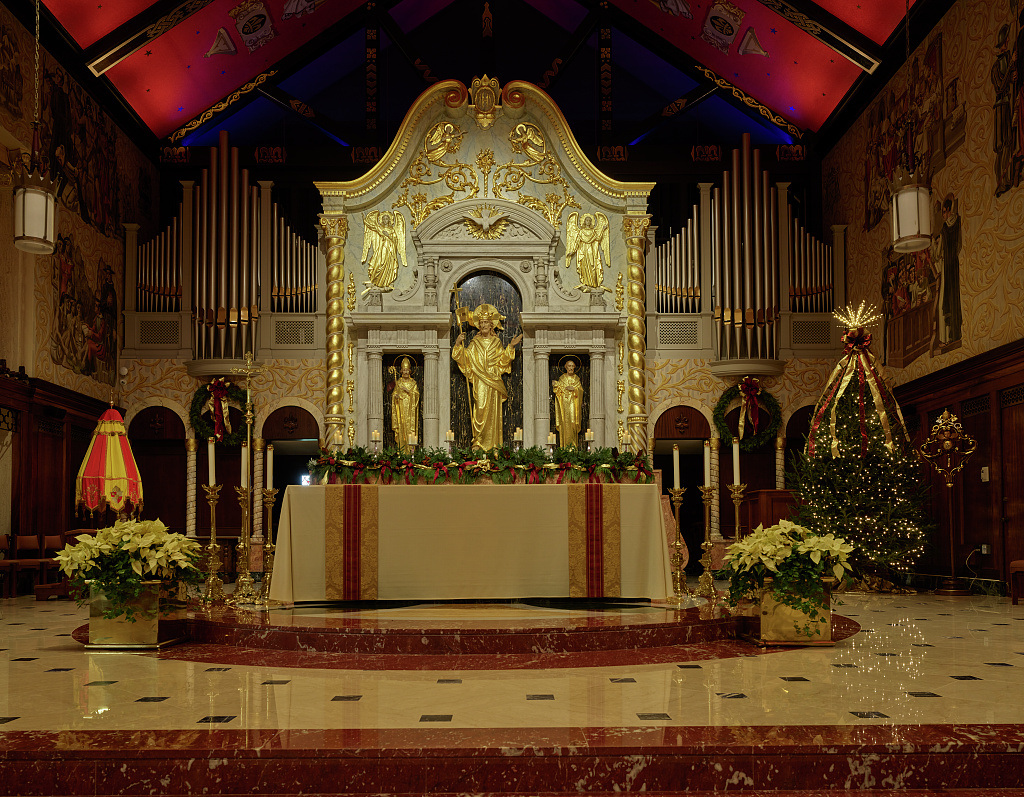
Cathedral of St. Augustine, St. Augustine, FL

Readings at Mass

Liturgical Colour: White. Year: B(II).

Readings for the feria

Readings for the memorial

These are the readings for the feria


First reading
2 Thessalonians 3:6-10,16-18

We worked night and day not to be a burden on you

In the name of the Lord Jesus Christ, we urge you, brothers, to keep away from any of the brothers who refuses to work or to live according to the tradition we passed on to you.
  You know how you are supposed to imitate us: now we were not idle when we were with you, nor did we ever have our meals at anyone’s table without paying for them; no, we worked night and day, slaving and straining, so as not to be a burden on any of you. This was not because we had no right to be, but in order to make ourselves an example for you to follow.
  We gave you a rule when we were with you: do not let anyone have any food if he refuses to do any work. May the Lord of peace himself give you peace all the time and in every way. The Lord be with you all.
  From me, PAUL, these greetings in my own handwriting, which is the mark of genuineness in every letter; this is my own writing. May the grace of our Lord Jesus Christ be with you all.

Responsorial Psalm
Psalm 127(128):1-2,4-5
O blessed are those who fear the Lord.
O blessed are those who fear the Lord
  and walk in his ways!
By the labour of your hands you shall eat.
  You will be happy and prosper.
O blessed are those who fear the Lord.
Indeed thus shall be blessed
  the man who fears the Lord.
May the Lord bless you from Zion
  all the days of your life!
O blessed are those who fear the Lord.

Gospel AcclamationMt4:4
Alleluia, alleluia!
Man does not live on bread alone,
but on every word that comes from the mouth of God.
Alleluia!
Or:1Jn2:5
Alleluia, alleluia!
Whenever anyone obeys what Christ has said,
God’s love comes to perfection in him.
Alleluia!

Gospel
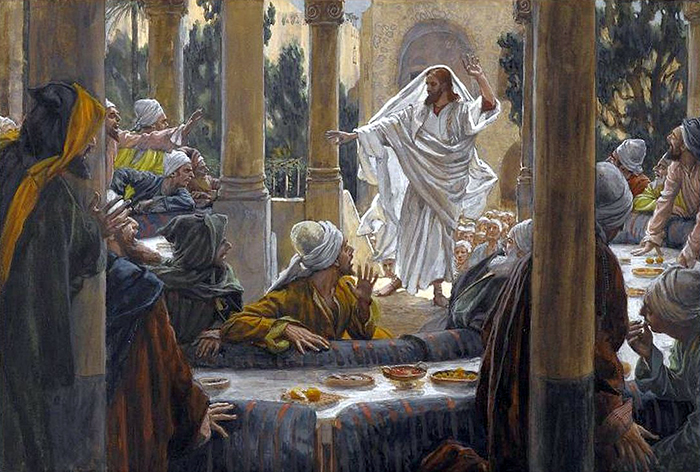
Matthew 23:27-32

You are the sons of those who murdered the prophets

Jesus said: ‘Alas for you, scribes and Pharisees, you hypocrites! You who are like whitewashed tombs that look handsome on the outside, but inside are full of dead men’s bones and every kind of corruption. In the same way you appear to people from the outside like good honest men, but inside you are full of hypocrisy and lawlessness.
  ‘Alas for you, scribes and Pharisees, you hypocrites! You who build the sepulchres of the prophets and decorate the tombs of holy men, saying, “We would never have joined in shedding the blood of the prophets, had we lived in our fathers’ day.” So! Your own evidence tells against you! You are the sons of those who murdered the prophets! Very well then, finish off the work that your fathers began.’

Continue

These are the readings for the memorial


First reading1 John 4:7-16

Let us love one another, since love comes from God

My dear people,
let us love one another
since love comes from God
and everyone who loves is begotten by God and knows God.
Anyone who fails to love can never have known God,
because God is love.
God’s love for us was revealed
when God sent into the world his only Son
so that we could have life through him;
this is the love I mean:
not our love for God,
but God’s love for us when he sent his Son
to be the sacrifice that takes our sins away.
My dear people,
since God has loved us so much,
we too should love one another.
No one has ever seen God;
but as long as we love one another
God will live in us
and his love will be complete in us.
We can know that we are living in him
and he is living in us
because he lets us share his Spirit.
We ourselves saw and we testify
that the Father sent his Son
as saviour of the world.
If anyone acknowledges that Jesus is the Son of God,
God lives in him, and he in God.
We ourselves have known and put our faith in
God’s love towards ourselves.
God is love
and anyone who lives in love lives in God,
and God lives in him.

Responsorial Psalm
Psalm 118(119):9-14
Lord, teach me your statutes.
How shall the young remain sinless?
  By obeying your word.
I have sought you with all my heart;
  let me not stray from your commands.
Lord, teach me your statutes.
I treasure your promise in my heart
  lest I sin against you.
Blessed are you, O Lord;
  teach me your statutes.
Lord, teach me your statutes.
With my tongue I have recounted
  the decrees of your lips.
I rejoiced to do your will
  as though all riches were mine.
Lord, teach me your statutes.

Gospel AcclamationMt23:9,10
Alleluia, alleluia!
You have only one Father,
  and he is in heaven;
you have only one Teacher,
  the Christ.
Alleluia!

GospelMatthew 23:8-12

The greatest among you must be your servant

Jesus said to his disciples, ‘You must not allow yourselves to be called Rabbi, since you have only one master, and you are all brothers. You must call no one on earth your father, since you have only one Father, and he is in heaven. Nor must you allow yourselves to be called teachers, for you have only one Teacher, the Christ. The greatest among you must be your servant. Anyone who exalts himself will be humbled, and anyone who humbles himself will exalted.’

Continue


Christian Art

Illustration

Each day, The Christian Art website gives a picture and reflection on the Gospel of the day.

The readings on this page are from the Jerusalem Bible, which is used at Mass in most of the English-speaking world. The New American Bible readings, which are used at Mass in the United States, are available in the Universalis apps, programs and downloads.

You can also view this page with the Gospel in Greek and English.


TOPICS: Catholic; General Discusssion; Prayer; Worship
KEYWORDS: catholic; mt23; ordinarytime; prayer
For your reading, reflection, faith-sharing, comments, questions, discussion.

1 posted on 08/28/2024 4:45:04 AM PDT by annalex
[ Post Reply | Private Reply | View Replies]

To: nickcarraway; NYer; ELS; Pyro7480; livius; ArrogantBustard; Catholicguy; RobbyS; marshmallow; ...

Alleluia Ping

Please FReepmail me to get on/off the Alleluia Ping List.


2 posted on 08/28/2024 4:45:50 AM PDT by annalex (fear them not)
[ Post Reply | Private Reply | To 1 | View Replies]

To: annalex
My dad is back in the hospital. [JimRob update at 242]
Jim still needs our prayers. Thread 2
Prayer thread for Salvation's recovery
Pray for Ukraine
Prayer thread for Fidelis' recovery
Update on Jim Robinson's health issues
3 posted on 08/28/2024 4:46:10 AM PDT by annalex (fear them not)
[ Post Reply | Private Reply | To 2 | View Replies]

To: annalex
Matthew
 English: Douay-RheimsLatin: Vulgata ClementinaGreek NT: Byzantine/Majority Text (2000)
 Matthew 23
27Woe to you scribes and Pharisees, hypocrites; because you are like to whited sepulchres, which outwardly appear to men beautiful, but within are full of dead men's bones, and of all filthiness. Væ vobis scribæ et pharisæi hypocritæ, quia similes estis sepulchris dealbatis, quæ a foris parent hominibus speciosa, intus vero pleni sunt ossibus mortuorum, et omni spurcitia !ουαι υμιν γραμματεις και φαρισαιοι υποκριται οτι παρομοιαζετε ταφοις κεκονιαμενοις οιτινες εξωθεν μεν φαινονται ωραιοι εσωθεν δε γεμουσιν οστεων νεκρων και πασης ακαθαρσιας
28So you also outwardly indeed appear to men just; but inwardly you are full of hypocrisy and iniquity. Sic et vos a foris quidem paretis hominibus justi : intus autem pleni estis hypocrisi et iniquitate.ουτως και υμεις εξωθεν μεν φαινεσθε τοις ανθρωποις δικαιοι εσωθεν δε μεστοι εστε υποκρισεως και ανομιας
29Woe to you scribes and Pharisees, hypocrites; that build the sepulchres of the prophets, and adorn the monuments of the just, Væ vobis scribæ et pharisæi hypocritæ, qui ædificatis sepulchra prophetarum, et ornatis monumenta justorum,ουαι υμιν γραμματεις και φαρισαιοι υποκριται οτι οικοδομειτε τους ταφους των προφητων και κοσμειτε τα μνημεια των δικαιων
30And say: If we had been in the days of our Fathers, we would not have been partakers with them in the blood of the prophets. et dicitis : Si fuissemus in diebus patrum nostrorum, non essemus socii eorum in sanguine prophetarum !και λεγετε ει ημεν εν ταις ημεραις των πατερων ημων ουκ αν ημεν κοινωνοι αυτων εν τω αιματι των προφητων
31Wherefore you are witnesses against yourselves, that you are the sons of them that killed the prophets. itaque testimonio estis vobismetipsis, quia filii estis eorum, qui prophetas occiderunt.ωστε μαρτυρειτε εαυτοις οτι υιοι εστε των φονευσαντων τους προφητας
32Fill ye up then the measure of your fathers. Et vos implete mensuram patrum vestrorum.και υμεις πληρωσατε το μετρον των πατερων υμων

4 posted on 08/28/2024 4:49:26 AM PDT by annalex (fear them not)
[ Post Reply | Private Reply | To 3 | View Replies]

To: annalex

Catena Aurea by St. Thomas Aguinas

23:27–28

27. Woe unto you, Scribes and Pharisees, hypocrites! for ye are like unto whited sepulchres, which indeed appear beautiful outward, but are within full of dead men’s bones, and of all uncleanness.

28. Even so ye also outwardly appear righteous unto men, but within ye are full of hypocrisy and iniquity.

ORIGEN. As above they are said to be full of extortion and excess, so here they are full of hypocrisy and iniquity, and are likened to dead men’s bones, and all uncleanness.

PSEUDO-CHRYSOSTOM. Justly are the bodies of the righteous said to be temples, because in the body of the righteous the soul has dominion, as God in His temple; or because God Himself dwells in righteous bodies. But the bodies of sinners are called sepulchres of the dead, because the sinner’s soul is dead in his body; for that cannot be deemed to be alive, which does no spiritual or living act.

JEROME. Sepulchres are whitened with lime without, and decorated with marble painted in gold and various colours, but within are full of dead men’s bones. Thus crooked teachers who teach one thing and do another, affect purity in their dress, and humility in their speech, but within are full of all uncleanness, covetousness, and lust.

ORIGEN. For all feigned righteousness is dead, forasmuch as it is not done for God’s sake; yea, rather it is no righteousness at all, any more than a dead man is a man, or an actor who represents any character is the man whom he represents. There is therefore within them so much of bones and uncleanness as are the good things that they wickedly pretend to. And they seem righteous outwardly, not in the eyes of such as the Scripture calls Gods, (Ps. 82:6.) but of such only as die like men.

GREGORY. (Mor. xxvi. 32.) But before their strict Judge they cannot have the plea of ignorance, for by assuming in the eyes of men every form of sanctity, they witness against themselves that they are not ignorant how to live well.

PSEUDO-CHRYSOSTOM. But say, hypocrite, if it be good to be wicked, why do you not desire to seem that which you desire to be? For what it is shameful to seem, that it is more shameful to be; and what to seem is fair, that it is fairer to be. Either therefore be what you seem, or seem what you are.

23:29–31

29. Woe unto you, Scribes and Pharisees, hypocrites! because ye build the tombs of the prophets, and garnish the sepulchres of the righteous,

30. And say, If we had been in the days of our fathers, we would not have been partakers with them in the blood of the prophets.

31. Wherefore ye be witnesses unto yourselves, that ye are the children of them which killed the prophets.

JEROME. By a most subtle syllogism He proves them to be the sons of murderers, while to gain good character and reputation with the people, they build the sepulchres of the Prophets whom their fathers put to death.

ORIGEN. Without just cause He seems to utter denunciations against those who build the sepulchres of the Prophets; for so far what they did was praiseworthy; how then do they deserve this woe?

CHRYSOSTOM. (Hom. lxxiv.) He does not blame them for building the sepulchres, but discovers the design with which they built them; which was not to honour the slain, but to erect to themselves a triumphal monument of the murder, as fearing that in process of time the memory of this their audacious wickedness should perish.

PSEUDO-CHRYSOSTOM. Or, they said within themselves, If we do good to the poor not many see it, and then but for a moment; were it not better to raise buildings which all may see, not only now, but in all time to come? O foolish man, what boots this posthumous memory, if, where you are, you are tortured, and where you are not there you are praised? While He corrects the Jews, He instructs the Christians; for had these things been spoken to the former only, they would have been spoken, but not written; but now they were spoken on their account, and written on ours. When one, besides other good deeds, raises sacred buildings, it is an addition to his good works; but if without any other good works, it is a passion for worldly renown. The martyrs joy not to be honoured with money which has caused the poor to weep. The Jews, moreover, have ever been adorers of saints of former times, and contemners, yea persecutors, of the living. Because they could not endure the reproaches of their own Prophets, they persecuted and killed them; but afterwards the succeeding generation perceived the error of their fathers, and thus in grief at the death of innocent Prophets, they built up monuments of them. But they themselves in like manner persecuted and put to death the Prophets of their own time, when they rebuked them for their sins. This is what is meant, And ye say, If we had been in the days of our fathers, we would not have been partakers with them in the blood of the Prophets.

JEROME. Though they speak not this in words, they proclaim it by their actions, in ambitious and magnificent structures to their memory.

PSEUDO-CHRYSOSTOM. What they thought in their hearts, that they spoke by their deeds. Christ lays bare here the natural habit of all wicked men; each readily apprehends the other’s fault, but none his own; for in another’s case each man has an unprejudiced heart, but in his own case it is distorted. Therefore in the cause of others we can all easily be righteous judges. He only is the truly righteous and wise who is able to judge himself. It follows, Wherefore ye be witnesses unto yourselves, that you are the children of them which killed the Prophets.

CHRYSOSTOM. What kind of accusation is this, to Call one the son of a murderer, who partakes not in his father’s disposition? Clearly there is no guilt in being so; wherefore this must be said in proof of their resemblance in wickedness.

PSEUDO-CHRYSOSTOM. The character of the parents is a witness to the sons; if the father be good and the mother bad, or the reverse, the children may follow sometimes one, sometimes the other. But when both are the same, it very rarely happens that bad sons spring of good parents, or the reverse, though it be so sometimes. This is as a man is sometimes born out of the rule of nature, having six fingers or no eyes.

ORIGEN. And in the prophetic writings, the historical sense is the body, the spiritual meaning is the soul; the sepulchres are the letter and books themselves of Scripture. They then who attend only to the historical meaning, honour the bodies of the Prophets, and set in the letter as in a sepulchre; and are called Pharisees, i. e. ‘cut off,’ as it were cutting off the soul of the Prophets from their body.

23:32–36

32. Fill ye up then the measure of your fathers.

33. Ye serpents, ye generation of vipers, how can ye escape the damnation of hell?

34. Wherefore, behold, I send unto you prophets, and wise men, and Scribes; and some of them ye shall kill and crucify; and some of them shall ye scourge in your synagogues, and persecute them from city to city:

35. That upon you may come all the righteous blood shed upon the earth, from the blood of righteous Abel unto the blood of Zacharias son of Barachias, whom ye slew between the temple and the altar.

36. Verily I say unto you, All these things shall come upon this generation.

CHRYSOSTOM. He had said against the Scribes and Pharisees, that they were the children of those who killed the Prophets; now therefore He shews that they were like them in wickedness, and that that was false that they said, If we had been in the days of our fathers, we would not have been partakers with them in the blood of the Prophets. Wherefore He now says, Fill ye up the measure of your fathers. This is not a command, but a prophecy of what is to be.

PSEUDO-CHRYSOSTOM. He foretels, that as their fathers killed the Prophets, so they also should kill Christ, and the Apostles, and other holy men. As suppose you had a quarrel with some one, you might say to your adversary, Do to me what you are about to do; but you do not therein bid him do it, but shew him that you are aware of his manæuvres. And in fact they went beyond the measure of their fathers; for they put to death only men, these crucified God. But because He stooped to death of His own free choice, He does not lay on them the sin of His death, but only the death of the Apostles and other holy men. Whence also He said, Fill up, and not Fill over; for a just and merciful Judge overlooks his own wrongs, and only punishes those done to others.

ORIGEN. They fill up the measure of their fathers’ sins by their not believing in Christ. And the cause of their unbelief was, that they looked only to the letter and the body, and would understand nothing spiritual in them.

HILARY. Because then they will fill up the measure of their fathers’ purposes, therefore are they serpents, and an offspring of vipers.

JEROME. The same had been said by John the Baptist. Wherefore as of vipers are born vipers, so of your fathers who were murderers are you born murderers.

PSEUDO-CHRYSOSTOM. He calls them offspring of vipers, because the nature of vipers is such that the young burst the womb of their dam, and so come forth; and in like manner the Jews condemned their fathers, finding fault with their deeds. He says, How shall ye escape the damnation of hell? By building the tombs of the saints? But the first step of piety is to love holiness, the next, to love the saints; for it is not reasonable in him to honour the righteous, who despises righteousness. The saints cannot be friends to those to whom God is an enemy. Shall ye be saved by a mere name, because ye seem to be among God’s people! Forasmuch as an open enemy is better than a false friend, so is he more hateful to God, who calls himself the servant of God, and does the commands of the Devil. Indeed, before God he who has resolved to kill a worm is a murderer before the deed is done, for it is the will that is rewarded for good, or punished for evil. Deeds are evidence of the will. God then does not require deeds on His own account that He may know how to judge, but for the sake of other men, that they may perceive that God is righteous. And God affords the opportunity of sin to the wicked, not to make them sin, but to manifest the sinner; and also to the good He gives opportunity to shew the purpose of their will. In this way then He gave the Scribes and Pharisees opportunity of shewing their purposes, Behold, I send unto you Prophets, and wise men, and Scribes.

HILARY. That is, the Apostles, who, as foretelling things to come, are Prophets; as having knowledge of Christ, are wise men; as understanding the Law, are Scribes.

JEROME. Or, as the Apostle writes to the Corinthians (1 Cor. 12.) that there are various gifts among Christ’s disciples; some Prophets, who foretel things to come; some wise men, who know when they ought to speak; others Scribes taught in the Law; of whom Stephen was stoned, Paul killed, Peter crucified, and the disciples of the Apostles beaten, in the Acts; and they persecuted them from city to city, driving them out of Judæa, that they might go to the Gentiles.

ORIGEN. Or the Scribes who are sent by Christ, are Scribes according to the Gospel, whom the spirit quickens and the letter does not kill, as did the letter of the Law, which whoso followed ran into vain superstitions. The simple words of the Gospel are sufficient for salvation. But the Scribes of the Law do yet scourge the Scribes of the New Testament, by detracting from them in their synagogues; and the heretics also, who are spiritual Pharisees, with their tongues murder the Christians, and persecute them from city to city, sometimes in the body, sometimes also in the spirit, seeking to drive them from their own city of the Law, the Prophets, and the Gospel, into another Gospel.

CHRYSOSTOM. Then to shew them that they should not do this without punishment, He holds out an unspeakable terror over them, That upon you may come all the righteous blood.

RABANUS. That is, all the vengeance due for the shedding of the blood of the righteous.

JEROME. Concerning the Abel here spoken of, there is no doubt that it is he whom his brother Cain murdered. He is proved to have been righteous, not only by this judgment of the Lord, but by the passage in Genesis, which says that his offerings were accepted by God. But we must enquire who is this Zacharias, son of Barachias, because we read of many Zachariases; and that we might not mistake, here it is added, whom ye slew between the temple and the altar. Some say that it is that Zacharias who is the eleventh among the twelve Prophets, and his father’s name agrees to this, but when he was slain between the temple and the altar, Scripture does not mention; but above all, in his time there were scarce ‘even the ruins of the temple. Others will have it to be Zacharias the father of John.

ORIGEN. A tradition has come down to us, that there was one place in the temple in which virgins were allowed to worship God, married women being forbidden to stand there. And Mary, after the Saviour’s birth, going into the temple, stood to pray in this place of the virgins. And when they who knew that she had borne a Son were hindering her, Zacharias said, that forasmuch as she was still a virgin, she was worthy of the place of the virgins. Whereupon, as though he manifestly were contravening the Law, he was slain there between the temple and the altar by the men of that generation; and thus this word of Christ is true which He spake to those who were standing there, whom ye slew.a

JEROME. But as this has no Scripture authority, it is as readily despised as offered. Others will have it to be that Zacharias who was killed by Joas, king of Judah, between the temple and the altar, that is, in the court of the temple. (2 Chron. 24:21.) But that Zacharias was not the son of Barachias, but of Jehoiada the Priest. But Barachias in our language is interpreted ‘Blessed of the Lord,’ so that the righteousness of Joiada the Priest is expressed by this Hebrew word. But in the Gospel which the Nazarenes use, we find written ‘son of Joiada’ instead of son of Barachias.

REMIGIUS. It should be enquired too how He says, to the blood of Zacharias, since the blood of many more saints was afterwards shed. This is thus explained. Abel a keeper of sheep was killed in the field, Zacharias a priest was slain in the court of the temple. The Lord therefore names these two, because by these all holy martyrs are denoted, both of lay and priestly order.

CHRYSOSTOM. Moreover, He names Abel, to shew that it would be out of envy that they would kill Christ and His disciples. He names Zacharias, because there was a twofold resemblance in his case, the sacred place, as well as the sacred person.

ORIGEN. Zacharias is interpreted ‘The memory of God.’ Whosoever then hastes to obliterate the memory of God, seems to those to whom he gives offence to shed the blood of Zacharias the son of Barachias. For it is by the blessing of God that we retain the memory of God. Also the memory of God is slain by the wicked, when the Temple of God is polluted by the lustful, and His altar defiled by the carelessness of prayers. Abel is interpreted ‘mourning.’ He then who does not receive that, Blessed are they that mourn, sheds the blood of Abel, that is, puts away the truth of wholesome mourning. Some also shed, as it were, the blood of the Scriptures by putting aside their truth, for all Scripture, if it is not understood according to its truth, is dead.

CHRYSOSTOM. And to take away all excuse from them that they might not say, Because you sent them to the Gentiles thereat were we offended, He foretels that His disciples should be sent to them, and it is of their punishment that He adds, Verily I say unto you, all these things shall come upon this generation.

GLOSS. (ord.) He means not only those there present, but the whole generation before and after, for all were one city and one body of the Devil.

JEROME. The rule of the Scriptures is only to know two generations, one of good the other of bad. Of the generation of the good it is said, The generation of the righteous shall be blessed. (Ps. 112:2.) And of the bad it is said in the present passage, Generation of vipers. These then, because they did against the Apostles like things as Cain and Joas, are described as of one generation.

CHRYSOSTOM. Otherwise; Because He delayed the punishment of hell which He had threatened them with, He pronounces against them threats of present evil, saying, All these things shall come upon this generation.

PSEUDO-CHRYSOSTOM. As all the good things which had been merited by all the saints in each generation since the foundation of the world were bestowed upon that last generation which received Christ; so all the evil that all the wicked in every generation from the foundation of the world had deserved to suffer, came upon that last generation of the Jews which rejected Christ. Or thus; Assail the righteous of former saints, yea, of all the saints, could not merit that so great grace as was given to men in Christ; so the sins of all the wicked could not deserve so much evil as came upon the Jews, that they should suffer such things as these suffered from the Romans, and that in after time every generation of them to the end of the world should be cast off from God, and be made a mock by all the Gentiles. For what is there worse than to reject and in such sort to put to death the Son coming in mercy and lowliness! Or thus; Nations and states when they sin are not thereupon immediately punished by God, but He waits for many generations; but when He sees fit to destroy that state or nation, He then seems to visit upon them the sins of all former generations, and one generation suffers the accumulation of all that former generations have deserved. Thus this generation of the Jews seems to have been punished for their fathers; but in truth they suffered not for others, but on their own account.

CHRYSOSTOM. For he who having seen many sinning yet remains uncorrected, but rather does the same or worse, is obnoxious to heavier punishment.

Catena Aurea Matthew 23

5 posted on 08/28/2024 4:52:11 AM PDT by annalex (fear them not)
[ Post Reply | Private Reply | To 4 | View Replies]

To: annalex


Prophet Jeremiah and Christ

Master of the Aix Annunciation

1443-45
Oil on panel, 152 x 86 cm (each)
Musées Royaux des Beaux-Arts, Brussels

6 posted on 08/28/2024 4:52:49 AM PDT by annalex (fear them not)
[ Post Reply | Private Reply | To 5 | View Replies]

To: annalex

Saint of the Day for August 28

(November 13, 354 – August 28, 430)


Saint Augustine’s Story

A Christian at 33, a priest at 36, a bishop at 41: Many people are familiar with the biographical sketch of Augustine of Hippo, sinner turned saint. But to get to really know the man is a rewarding experience.

There quickly surfaces the intensity with which he lived his life, whether his path led away from or toward God. The tears of his mother, the instructions of Ambrose and, most of all, God himself speaking to him in the Scriptures, redirected Augustine’s love of life to a life of love.

Having been so deeply immersed in creature-pride of life in his early days and having drunk deeply of its bitter dregs, it is not surprising that Augustine should have turned, with a holy fierceness, against the many demon-thrusts rampant in his day. His times were truly decadent: politically, socially, morally. He was both feared and loved, like the Master. The perennial criticism leveled against him: a fundamental rigorism.

In his day, Augustine providentially fulfilled the office of prophet. Like Jeremiah and other greats, he was hard-pressed but could not keep quiet. “I say to myself, I will not mention him/I will speak in his name no more/But then it becomes like fire burning in my heart/imprisoned in my bones/I grow weary holding it in/I cannot endure it” (Jeremiah 20:9).


Reflection

Augustine is still acclaimed and condemned in our day. He is a prophet for today, trumpeting the need to scrap escapisms and stand face-to-face with personal responsibility and dignity.


Saint Augustine is a Patron Saint of:

Converts to Christianity
Printers
Theologians


franciscanmedia.org
7 posted on 08/28/2024 4:56:29 AM PDT by annalex (fear them not)
[ Post Reply | Private Reply | To 6 | View Replies]

To: annalex


The earliest portrait of Saint Augustine in a 6th century fresco, Lateran, Rome.

6th century

8 posted on 08/28/2024 4:59:03 AM PDT by annalex (fear them not)
[ Post Reply | Private Reply | To 7 | View Replies]

To: annalex
NAVARRE BIBLE COMMENTARY (RSV)

Ad Majorem Dei Gloriam (To the Greater Glory of God)

First Reading:

From: 2 Thessalonians 3:6-10, 16-18

Avoiding Idleness. Earning One's Living
---------------------------------------------------
[6] Now we command you, brethren, in the name of our Lord Jesus Christ, that you keep away from any brother who is living in idleness and not in accord with the tradition that you received from us. [7] For you yourselves know how you ought to imitate us; we were not idle when we were with you, [8] we did not eat any one's bread without paying, but with toil and labor we worked night and day, that might not burden any of you. [9] It was not because we have not that right, but to give you in our conduct an example to imitate. [10] For even when we were with you, we gave you this command: If any one will not work, let him not eat.

Prayer and Farewell Wishes
----------------------------------
[16] Now may the Lord of peace himself give you peace at all times in all ways. The Lord be with you all.

***********************************************************************

Commentary:

6. St. Paul wants to prevent the misconduct of some Christians spreading to others; and at the same time he wants to help the transgressors to turn back--which they may do if they are made to feel isolated. Excessive tolerance of irregular behavior does nothing to encourage reform and only helps the spread of permissiveness.

That was the Apostle's usual policy: "I wrote to you in my letter not to associate with immoral men; not at all meaning the immoral of this world, or the greedy and robbers, or idolaters, since then you would need to go out of the world. But rather I wrote to you not to associate with any one who bears the name of brother if he is guilty of immorality or greed, or is an idolater, reviler, drunkard, or robber" (1 Cor 5:10-11).

7-12. Some of the Thessalonians, wrongly thinking that the Parousia was about to happen, had given up working and were living in idleness, minding everyone's business but their own. So the Apostle reminds them all that when he was among them he worked to keep himself and was a burden on no one.

The Second Vatican Council underlines the value of work when it exhorts "Christians, as citizens of both cities, to perform their duties faithfully in the spirit of the Gospel." Far from neglecting earthly responsibilities, they should, as the Council goes on, realize that by their faith they "are bound all the more to fulfill these responsibilities according to the vocation of each one (cf. 2 Thess 3:6-13; Eph 4:28)" ("Gaudium Et Spes", 43).

"For the love of God, for the love of souls, and to live up to our Christian vocation, we must give good example. So as not to give scandal, or to provoke even the faintest suspicion that the children of God are soft and useless, so as not to disedify..., you must strive to show an example of balanced justice, to behave properly as responsible people. The farmer who ploughs his field while constantly raising his heart to God, just as much as the carpenter, the blacksmith, the office worker, the academic--all Christians in fact--have to be an example for their colleagues at work, and to be humble about it. Therefore, everyone, in his job, in whatever place he has in society, must feel obliged to make his work God's work, sowing everywhere the peace and joy of the Lord" (St. J. Escriva, "Friends of God", 70).

16. "The Lord of peace", or "the God of peace", is a title found in a number of St. Paul's letters (cf. Rom 15:33; 2 Cor 13:11; Phil 4:9; 1 Thess 5;23), because Redemption, by wiping out sin, establishes people's friendship with God and with one another. The wish expressed by the Apostle here echoes the greeting Christians normal used with one another, a greeting our Lord himself recommended: "Whatever house you enter, first say, 'Peace be to this house' (Lk 10:5). The Jews used and continue to use the same greeting--"Shalom" (=peace). When a Christian greets someone in this way it should be a sincere expression of his love of God and love of others and not just mere polite well-wishing, hoping people will "enjoy themselves".

Referring to empty, selfish peace of that sort, our Lord said that he had come to bring not peace but a sword (cf. Mt 10:34). He also warned us that the peace he gives is not peace of the type the world gives (cf. Jn 14:27), but a peace which comes from the Holy Spirit (cf. Gal 5:22) and which "passes all understanding" (Phil 4:7). "It is useless to call for exterior calm if there is no calm in men's consciences, in the center of their souls" (St. J. Escriva, "Christ Is Passing By", 73).

We should therefore always be "eager to maintain the unity of the Spirit in the bond of peace" (Eph 4;3). If we are, we will be builders of peace and will receive the reward Christ promised when he proclaimed, "Blessed are the peacemakers, for they shall be called sons of God" (Mt 5:9). In this connection John Paul II has said, "Peace is work we have to do; it calls for commitment and solidarity with one another. But it is also (inseparably and above all) something in God's gift: we need to pray for it" ("Address", 8 December 1978).

9 posted on 08/28/2024 7:01:06 AM PDT by fidelis (Ecce Crucem Domini! Fugite partes adversae! Vicit Leo de tribu Juda, Radix David! Alleluia!)
[ Post Reply | Private Reply | To 8 | View Replies]

Gospel Reading:

From: Matthew 23:27-32

Jesus Indicts the Scribes and Pharisees (Continuation)
------------------------------------------------------
(Jesus said to the scribes and Pharisees,) [27] "Woe to you, scribes and Pharisees, hypocrites! for you are like white-washed tombs, which outwardly appear beautiful, but within they are full of dead men's bones and all uncleanness. [28] So you also outwardly appear righteous to men, but within you are full of hypocrisy and iniquity.

[29] "Woe to you, scribes and Pharisees, hypocrites! for you build the tombs of the prophets and adorn the monuments of the righteous, [30] saying, `If we had lived in the days of our fathers, we would not have taken part with them in shedding the blood of the prophets.' [31] Thus you witness against yourselves, that you are sons of those who murdered the prophets. [32] Fill up, then, the measure of your fathers." [33] You serpents, you brood of vipers, how are you to escape being sentenced to hell?

***********************************************************************
Commentary:

27-28. The Jews used to whitewash tombs annually, shortly before the feast of the Passover. The whitewash made the tombs more visible and helped to avoid people brushing against them, which would have meant incurring legal uncleanness for seven days (Numbers 19:16; Luke 11:44).

In the sunlight, these tombs sparkled radiantly white, but inside they held corruption.

29-32. Our Lord shows them that they are cut off from the same cloth as their ancestors--not because they erect mausoleums in honor of prophets and just men but because they are guilty of the same sin as those who killed the prophets. Hence their hypocrisy, which makes them even worse than their fathers. With pained irony Jesus tells them that they are compounding the sins of their ancestors.

Clearly this is referring to His passion and death: if the ancients killed the prophets, by causing Him to suffer and die our Lord's contemporaries will still be more cruel.

10 posted on 08/28/2024 7:01:28 AM PDT by fidelis (Ecce Crucem Domini! Fugite partes adversae! Vicit Leo de tribu Juda, Radix David! Alleluia!)
[ Post Reply | Private Reply | To 9 | View Replies]

Click here to go to the My Catholic Life! Devotional thread for today’s Gospel Reading.

11 posted on 08/28/2024 7:03:49 AM PDT by fidelis (Ecce Crucem Domini! Fugite partes adversae! Vicit Leo de tribu Juda, Radix David! Alleluia!)
[ Post Reply | Private Reply | To 10 | View Replies]

To: annalex
He is also the Patron Saint of

Brewers
Repentant sinners.

Prayer of St Augustine

BEFORE Thine eyes, O Lord, we bring our sins, and we compare them with the stripes we have received.
If we examine the evil we have wrought, what we suffer is little, what we deserve is great.
What we have committed is very grievous, what we have suffered is very slight.
We feel the punishment of sin, yet withdraw not from the obstinacy of sinning.
Under Thy lash our inconstancy is visited, but our sinfulness is not changed.
Our suffering soul is tormented, but our neck is not bent. Our life groans under sorrow, yet amends not in deed.
If Thou spare us, we correct not our ways: if Thou punish, we cannot endure it.
In time of correction we confess our wrongdoing: after Thy visitation we forget that we have wept.
If Thou stretchest forth Thy hand, we promise amendment; if Thou withholdest the sword, we keep not our promise.
If Thou strikest, we cry out for mercy; if Thou sparest, we again provoke Thee to strike
Here we are before Thee, O Lord, confessedly guilty; we know that unless Thou pardon we shall deservedly perish.
Grant then, O almighty Father, without our deserving it, the pardon we ask; Thou Who madest out of nothing those

Who ask Thee. Through Christ our Lord. Amen

V. Deal not with us, O Lord, according to our sins.
R. Neither reward us according to our iniquities.

Let us pray.—O God, Who by sin art offended and by penance pacified, mercifully regard the prayers of Thy suppliant people, and turn away the scourges of Thy wrath, which we deserve for our sins.
Through Christ our Lord.
R. Amen.

12 posted on 08/28/2024 11:41:54 AM PDT by frogjerk (More people have died trusting the government than not trusting the government.)
[ Post Reply | Private Reply | To 7 | View Replies]

Disclaimer: Opinions posted on Free Republic are those of the individual posters and do not necessarily represent the opinion of Free Republic or its management. All materials posted herein are protected by copyright law and the exemption for fair use of copyrighted works.

Free Republic
Browse · Search
Religion
Topics · Post Article

FreeRepublic, LLC, PO BOX 9771, FRESNO, CA 93794
FreeRepublic.com is powered by software copyright 2000-2008 John Robinson