Posted on 07/20/2024 6:24:16 AM PDT by fidelis
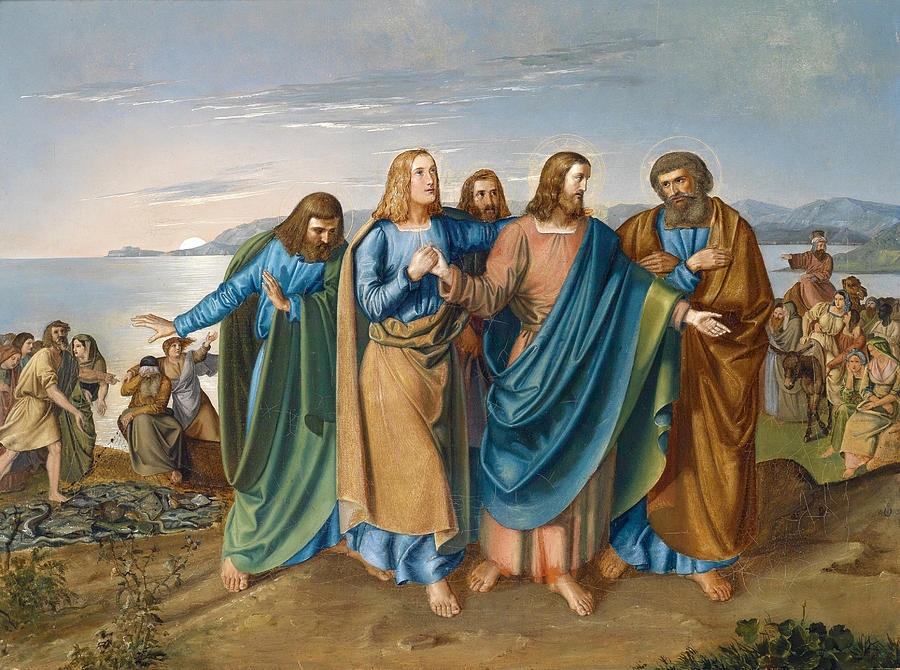
The Pharisees went out and took counsel against Jesus to put him to death. When Jesus realized this, he withdrew from that place. Many people followed him, and he cured them all, but he warned them not to make him known. Matthew 12:14–16
This passage goes on to say that Jesus withdrew to a more deserted place to fulfill the prophecy of Isaiah the Prophet (Isaiah 42:1–4). That prophecy is the first of what is referred to as “The Songs of the Suffering Servant.” In these songs or poems of Isaiah, the Messiah is presented to us as one who would be sent on a mission from God, would suffer injustice for the sake of others, would be rejected, and ultimately be vindicated and exalted. The mission of the Suffering Servant was to bring justice and salvation to all, including to the Gentiles.
At that time, the idea of a messianic king was still prominent in the minds of many. They anticipated the coming of a messiah who would be a political leader and would lead the people of Israel out of oppression, making them a free, prosperous and powerful nation. But Jesus acts in the opposite manner. Instead of raising up an army to combat the evil intentions of the Pharisees and to overthrow the Romans, Jesus withdrew from them and invited people to come to Him for healing and to receive His teachings.
Jesus perfectly fulfills the prophecy of Isaiah by becoming the Suffering Servant. And because His messianic role was much different than what many people had anticipated, Saint Matthew points us to the Old Testament prophecy of Isaiah as a way of clearly showing that Jesus truly was the promised Messiah. He was just not the form of messiah that many expected. He was One Who was humble and gentle of heart. He was One Who would redeem people by the Blood of His Cross. And He was One Who would extend salvation to all people, not only the people of Israel.
One lesson this teaches us is that even today we can have false expectations of God. It is easy for us to set forth our own idea of what God should do and what true justice demands. But we also read in Isaiah, “For my thoughts are not your thoughts, neither are your ways my ways, says the Lord. For as the heavens are higher than the earth, so are my ways higher than your ways and my thoughts than your thoughts” (Is. 55:8–9).
Just as it must have been difficult for the people of Israel to come to accept the promised Messiah as a servant Who suffers and Who redeems all people through that suffering, so it is often difficult for us to accept our Lord as He is. It is difficult to shed our own ideas of what we want God to do and this is especially difficult when He calls us to share in His own suffering and servanthood. To serve, suffer, sacrifice our lives, and the like can be difficult to accept. But this is the way of our Lord—it is the way of the Suffering Servant of God.
Reflect, today, upon your own expectations of God. Do you have a long list of things that you think God should do? Do you pray for that list of your ideas, thinking that if you only ask enough, God will grant your requests? If your requests flow from His perfect will, then praying for them in faith will bring them about. But if they flow more from you and your own ideas of what God should do, then all the prayers in the world will not bring them to be. If this is your struggle, then try to start anew by turning your eyes to the Servant Who Suffers for the salvation of all. Reflect upon the fact that God’s thoughts and ways are most often very far above your own thoughts and ways. Try to humble yourself before the Suffering Servant and abandon all ideas that do not flow from His Heart.
My Suffering Servant, I thank You for Your suffering and death and for the redemption that flows from Your sacrifice of love. Help me to shed all false expectations that I have of You, dear Lord, so that I will be guided by You and Your mission of salvation alone. Jesus, I trust in You.
Please keep in mind that this is a Catholic Caucus/Devotional thread for the purpose of prayerful reflection on the Sacred Scriptures and is closed to debate of any kind. Per FR policy on Religion Caucus threads, off-topic, argumentative, and abusive comments are not allowed and will be submitted to the Mods for deletion. Thanks, and God bless you.
Let us pray.
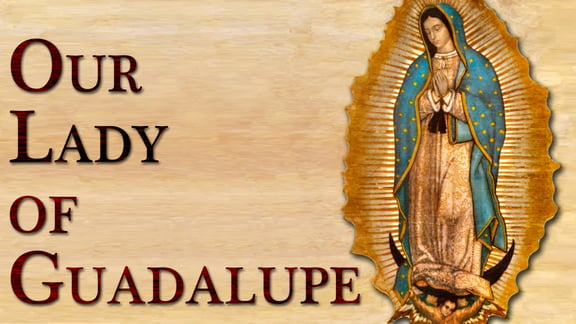
O Virgin Mother of God, we fly to your protection and beg your intercession against the darkness and sin which ever more envelop the world and menace the Church. Your Son, Our Lord Jesus Christ, gave you to us as our mother as He died on the Cross for our salvation. So too, in 1531, when darkness and sin beset us, He sent you, as Our Lady of Guadalupe, on Tepeyac to lead us to Him Who alone is our light and our salvation.
Through your apparitions on Tepeyac and your abiding presence with us on the miraculous mantle of your messenger, Saint Juan Diego, millions of souls converted to faith in your Divine Son. Through this novena and our consecration to you, we humbly implore your intercession for our daily conversion of life to Him and the conversion of millions more who do not yet believe in Him. In our homes and in our nation, lead us to Him Who alone wins the victory over sin and darkness in us and in the world.
Unite our hearts to your Immaculate Heart so that they may find their true and lasting home in the Most Sacred Heart of Jesus. Ever guide us along the pilgrimage of life to our eternal home with Him. So may our hearts, one with yours, always trust in God's promise of salvation, in His never-failing mercy toward all who turn to Him with a humble and contrite heart. Through this novena and our consecration to you, O Virgin of Guadalupe, lead all souls in America and throughout the world to your Divine Son in Whose name we pray. Amen.
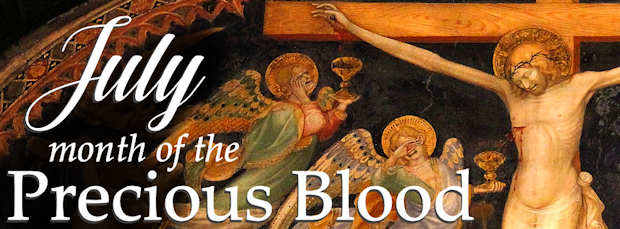
"If we walk in the light, as he is in the light, we have fellowship with one another, and the blood of Jesus his Son cleanses us from all sin.”
(1 John 1:7)
Ad Majorem Dei Gloriam (To the Greater Glory of God)
First Reading:
From: Micah 2:1-5
The prophet denounces social injustice
------------------------------------------------
[1] Woe to those who devise wickedness and work evil upon their beds! When the morning dawns, they perform it, because it is in the power of their hand. [2] They covet fields, and seize them; and houses, and take them away; they oppress a man and his house, a man and his inheritance. [3] Therefore thus says the Lord: Behold, against this family I am devising evil, from which you cannot remove your necks; and you shall not walk haughtily, for it will be an evil time.
[4] In that day they shall take up a taunt song against you, and wail with bitter lamentation, and say, "We are utterly ruined: he changes the portion of my people; how he removes it from me! Among our captors he divides our fields." [5] Therefore you will have none to cast the line by lot in the assembly of the Lord.
***************************************************************************
Commentary:
2:1-5. This is an oracle beginning with "Woe!", and it is directed against the social injustice perpetuated by the well-to-do who take advantage of the poorer members of society. Micah speaks very clearly in this denunciation. The people with power seem to spend all their time coveting, robbing and cheating: they spend their nights making their plans, and their days carrying them out (vv. 1-2). The odd thing is that these men seem to be men of faith, for the words that the prophet puts on their lips (v. 4) are an acknowledgment that the Lord giveth and the Lord taketh away. Micah's teachings are practical applications of the fifth and tenth commandments which prohibit respectively "violence and injustice" and "coveting the goods of another, as the root of theft, robbery and fraud, which the seventh commandment forbids. 'Lust of the eyes' leads to the violence and injustice forbidden by the fifth commandment" (“Catechism of the Catholic Church,’ 2534).
The Lord tells what punishment will apply to such sins -- the oppression in exile (v. 3), and confiscation of property (v. 4). It seems to be a veiled example of the application of the law of vengeance, though to the Christian reader it sounds somewhat like our Lord's warning: "the measure you give will be measure you get" (Mt 7:2).
From: Matthew 12:14-21
Jesus, the Suffering Servant of Yahweh
--------------------------------------
[14] But the Pharisees went out and took counsel against Him, how to destroy Him. [15] Jesus, aware of this, withdrew from there. And many followed Him, and He healed them all, [16] and ordered them not to make Him known. [17] This was to fulfill what was spoken by the prophet Isaiah: [18] "Behold my servant whom I have chosen, my beloved with whom my soul is well pleased. I will put my Spirit upon Him, and He shall proclaim justice to the Gentiles. [19] He will not wrangle or cry aloud, nor will any one hear His voice in the streets; [20] He will not break a bruised reed or quench a smoldering wick, till He brings justice to victory; [21] and in His name will the Gentiles hope."
***********************************************************************
Commentary:
17-21. Once again the sacred text points out the contrast between the contemporary mistaken Jewish notion of a spectacular messianic kingdom and the discernment which Jesus asks of those who witness and accept His teaching and miracles. By providing this long quotation from Isaiah (42:1-4), the Evangelist is giving us the key to the teaching contained in Chapters 11 and 12: in Jesus the prophecy of the Servant of Yahweh is fulfilled: the lovable and gentle teacher has come to bring the light of truth.
When narrating the passion of our Lord, the Gospels will once again remind us of the figure of the Servant of Yahweh, to show that in Jesus the suffering and expiatory aspect of the death of the Servant finds fulfillment (cf. Matthew 27:30, with reference to Is 50:6; Matthew 8:17 and Isaiah 53:4; John 1:38 and Isaiah 53:9-12; etc.).
17. Isaiah 42:1-4 speaks of a humble servant, beloved of God, chosen by God. And in fact Jesus, without ceasing to be the Son of God, one in substance with the Father, took the form of a servant (cf. Philippians 2:6). This humility led him to cure and care for the poor and afflicted of Israel, without seeking acclaim.
18. See the note on Matthew 3:16.
[Note on Matthew 3:16 states: 16. Jesus possessed the fullness of the Holy Spirit from the moment of His conception. This is due to the union of human nature and divine nature in the person of the Word (the dogma of hypostatic union). Catholic teaching says that in Christ there is only one person (who is divine) but two natures (divine and human). The descent of the Spirit of God spoken of in the text indicates that just as Jesus was solemnly commencing His messianic task, so the Holy Spirit was beginning His action through Him. There are very many texts in the Old Testament which speak of the showing forth of the Holy Spirit in the future Messiah. This sign of the Spirit gave St. John the Baptist unmistakable proof of the genuineness of his testimony concerning Christ (cf. John 1:29-34). The mystery of the Holy Trinity is revealed in the baptism of Jesus: the Son is baptized; the Holy Spirit descends on Him in the form of a dove; and the voice of the Father gives testimony about His Son. Christians must be baptized in the name of the Three Divine Persons. "If you have sincere piety, the Holy Spirit will descend on you also and you will hear the voice of the Father saying to you from above: "This was not My son, but now after Baptism he has been made My son" (St. Cyril of Jerusalem, "De Baptismo", 14).]
19. The justice proclaimed by the Servant, who is filled with the Holy Spirit, is not a noisy virtue. We can see the loving, gentle way Jesus worked His miracles, performing righteousness in all humility. This is how He brings about the triumph of His Father's Justice, His plan of revelation and salvation--very quietly and very effectively.
20. According to many Fathers, including St. Augustine and St. Jerome, the bruised reed and the smoldering wick refer to the Jewish people. They also stand for every sinner, for our Lord does not seek the sinner's death but his conversion, and his life (cf. Ezekiel 33:11). The Gospels often bear witness to this reassuring truth (cf. Luke 15:11-32), the parable of the prodigal son; Matthew 18:12-24, the parable of the lost sheep; etc.).
Disclaimer: Opinions posted on Free Republic are those of the individual posters and do not necessarily represent the opinion of Free Republic or its management. All materials posted herein are protected by copyright law and the exemption for fair use of copyrighted works.