Posted on 07/19/2024 10:30:29 AM PDT by fidelis
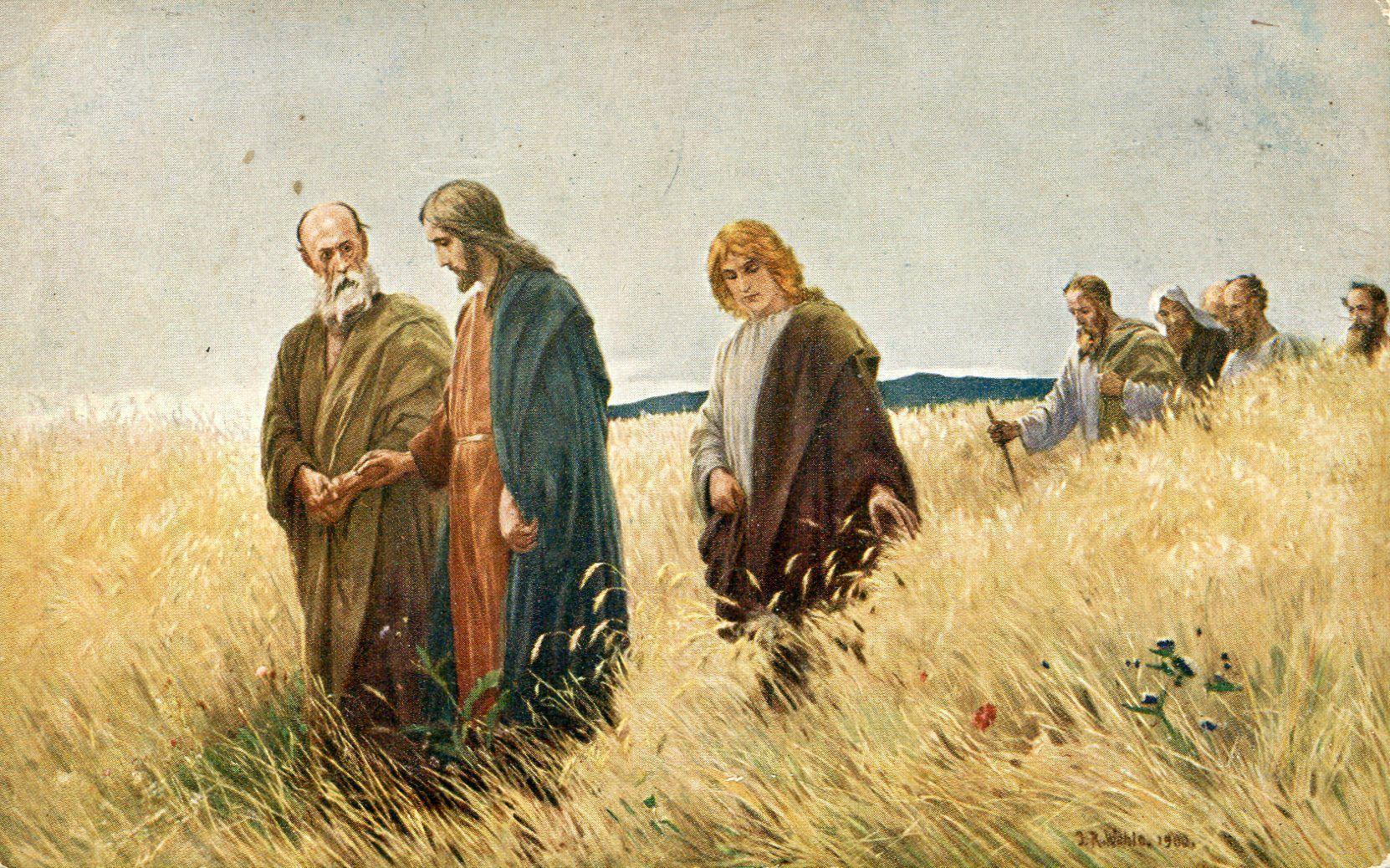
Jesus was going through a field of grain on the sabbath. His disciples were hungry and began to pick the heads of grain and eat them. When the Pharisees saw this, they said to him, “See, your disciples are doing what is unlawful to do on the sabbath.” Matthew 12:1–2
When Moses gave the Ten Commandments to the people, there was a prohibition against working on the Sabbath. The Third Commandment said, in part, that “you shall not do any work” on the Sabbath (Exodus 20:10). By the time of Jesus, the Pharisees had added much commentary to this law and expanded it to include as many as 39 different forms of work that they believed was forbidden. Included in their list were the practices of harvesting and milling of grain. For that reason, when the Pharisees saw that the disciples were picking heads of grain and rubbing the grain off the husks so that they could eat it, the Pharisees condemned them for violating what they interpreted to be an offense against the Third Commandment.
The first thing we can note from this passage is that the disciples were hungry. They were exceptionally devoted to Jesus and had been traveling with Him from town to town so that He could preach the Gospel. They had given up occupation, home, family and income so as to be singly devoted to Jesus and His mission. And as a result of this, they were living in poverty and relying upon the generosity of others. It is in this context that they chose to eat the most humble of foods: grain that they picked as they walked. They didn’t complain that there wasn’t a hot meal waiting for them at their destination. They were accepting of the many long journeys by foot that they made. They were okay with the fact that they did not get to sleep in their own bed every night. But they did have the basic human need for food, so they picked this grain as they walked to fulfill this basic need of hunger.
Though there are many lessons we can learn from this passage, one clear lesson is that of the temptation to judge and condemn others. When we fall into the trap of judging others, there are a few things that are common. First, judging and condemning often is based on perceived wrongs that are inflated and exaggerated. The Pharisees clearly inflated and exaggerated this “sin” of the disciples. In our lives, judgmentalness almost always makes the perceived sin of another far more serious than it is, if it is sin at all.
Another common temptation that flows from a judgmental and condemning heart is the failure to even understand the condemned party. In this case above, the Pharisees did not even inquire into the reason the disciples were picking and eating grain. They didn’t ask if they had been without food for some time or how long they had been traveling. It didn’t matter to them that they were hungry, and most likely, very hungry. So also with us, it is common that when we judge and condemn another, we arrive at our verdict without even seeking to understand the situation.
Lastly, it needs to be said that judging others is not our right. Doing so is usually reckless and caused by our own self-centeredness...
Reflect, today, upon any tendency you have toward being judgmental and condemning of others. If you see this tendency within yourself, spend time thinking about the Pharisees. Their self-righteousness was ugly and damaging. The negative example they set should inspire us to turn away from such acts of condemnation and to reject those temptations the moment they come.
My divine Judge of All, You and You alone know the heart, and You and You alone are capable of acting as Judge. Please exercise Your authority in my life so that I can perceive my own sin. As You do, please also free me from the tendency to judge and condemn. Fill me, instead, with a heart full of mercy and truth toward all. Jesus, I trust in You.
Please keep in mind that this is a Catholic Caucus/Devotional thread for the purpose of prayerful reflection on the Sacred Scriptures and is closed to debate of any kind. Per FR policy on Religion Caucus threads, off-topic, argumentative, and abusive comments are not allowed and will be submitted to the Mods for deletion. Thanks, and God bless you.
Let us pray.
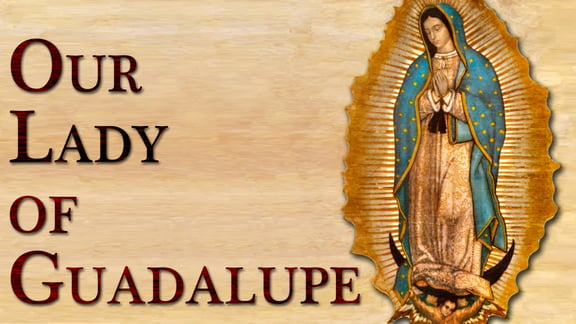
O Virgin Mother of God, we fly to your protection and beg your intercession against the darkness and sin which ever more envelop the world and menace the Church. Your Son, Our Lord Jesus Christ, gave you to us as our mother as He died on the Cross for our salvation. So too, in 1531, when darkness and sin beset us, He sent you, as Our Lady of Guadalupe, on Tepeyac to lead us to Him Who alone is our light and our salvation.
Through your apparitions on Tepeyac and your abiding presence with us on the miraculous mantle of your messenger, Saint Juan Diego, millions of souls converted to faith in your Divine Son. Through this novena and our consecration to you, we humbly implore your intercession for our daily conversion of life to Him and the conversion of millions more who do not yet believe in Him. In our homes and in our nation, lead us to Him Who alone wins the victory over sin and darkness in us and in the world.
Unite our hearts to your Immaculate Heart so that they may find their true and lasting home in the Most Sacred Heart of Jesus. Ever guide us along the pilgrimage of life to our eternal home with Him. So may our hearts, one with yours, always trust in God's promise of salvation, in His never-failing mercy toward all who turn to Him with a humble and contrite heart. Through this novena and our consecration to you, O Virgin of Guadalupe, lead all souls in America and throughout the world to your Divine Son in Whose name we pray. Amen.
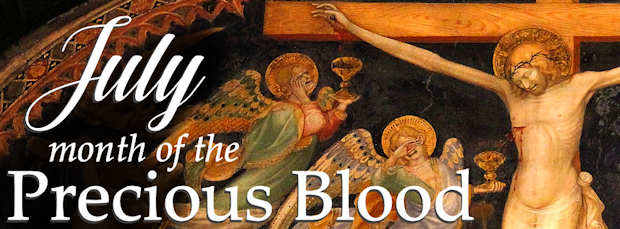
"If we walk in the light, as he is in the light, we have fellowship with one another, and the blood of Jesus his Son cleanses us from all sin.”
(1 John 1:7)
Amen
Ad Majorem Dei Gloriam (To the Greater Glory of God)
First Reading:
From: Isaiah 38:1-6, 21-22, 7-8
Illness and cure of Hezekiah
-----------------------------------
In those days Hezekiah became sick and was at the point of death. And Isaiah the prophet the son of Amoz came to him, and said to him, "Thus says the Lord: Set your house in order; for you shall die, you shall not recover." [2] Then Hezekiah turned his face to the wall, and prayed to the Lord, [3] and said, "Remember now, O Lord, I beseech thee, how I have walked before thee in faithfulness and with a whole heart, and have done what is good in thy sight." And Hezekiah wept bitterly. [4] Then the word of the Lord came to Isaiah: [5] "Go and say to Hezekiah, Thus says the Lord, the God of David your father: I have heard your prayer, I have seen your tears; behold, I will add fifteen years to your life. [6] I will deliver you and this city out of the hand of the king of Assyria, and defend this city.
[21] Now Isaiah had said, "Let them take a cake of figs, and apply to the boil, that he may recover." [22] Hezekiah also had said, "What is the sign that I shall go up to the house of the Lord?"
[7] "This is the sign to you from the Lord, that the Lord will do this thing that he has promised: [8] Behold, I will make the shadow cast by the declining sun on the dial of Ahaz turn back ten steps." So the sun turned back on the dial the ten steps by which it had declined.
*******************************************************************
Commentary:
38:1-22. Hezekiah's faith and devotion were tested during the siege of Jerusalem: now comes a further test: the king falls gravely ill, even though he is still a young man. This time, too, he turns to God, and his prayer is answered. Isaiah's intervention (vv. 4-8) assures the king that his health will he restored; the defence of the city requires it.
Here we are given a further example of Hezekiah's trust in the Lord as against Ahaz's lack of faith. The Lord offers him a sign (just as he did his father) that he will keep his word (vv. 7-8; cf. 7:14). After this, Hezekiah's canticle is inserted (vv. 9-20) -- a passage which does not appear in the parallel texts in 2 Kings and 2 Chronicles, and which has features of the sapiential writing style. The poem takes the form of a thanksgiving psalm spoken by the king. When all seemed lost (vv. 10-12), he had recourse to the Lord in humble and trusting prayer (vv.13-16), and God saved him from death (v. 17). Therefore, the psalmist expresses his great desire to worship the Lord in the temple (cf. v. 22) along with the rest of the community (vv. 18-20). Verses 21-22 fit in better (as St Jerome points out) after vv. 6-7, which is where they appear in the parallel account (2 Kings 20:7).
38:8. From the text of the book of Isaiah found at Qumran we know that Ahaz had built a flight of steps that worked as a sundial, so that the time could he told depending on which steps were in shadow. "Turning the sun back" meant extending the day by a few hours -- a sign that God would grant the king some more years of life.
From: Matthew 12:1-8
The Question of the Sabbath
---------------------------
[1] At that time Jesus went through the grainfields on the Sabbath; His disciples were hungry, and they began to pluck ears of grain and to eat. [2] But when the Pharisees saw it, they said to Him, "Look, Your disciples are doing what is not lawful to do on the Sabbath." [3] He said to them, "Have you not read what David did, when he was hungry, and those who were with him: [4] how he entered the house of God and ate the bread of the Presence, which it was not lawful for him to eat nor for those who were with him, but only for the priests? [5] Or have you not read in the law how on the Sabbath the priests in the temple profane the Sabbath, and are guiltless? [6] I tell you, something greater than the temple is here. [7] And if you had known what this means, `I desire mercy, and not sacrifice,' you would not have condemned the guiltless. [8] For the Son of Man is Lord of the Sabbath."
***********************************************************************
Commentary:
2. "The Sabbath": this was the day the Jews set aside for worshipping God. God Himself, the originator of the Sabbath (Genesis 2:3), ordered the Jewish people to avoid certain kinds of work on this day (Exodus 20:8-11; 21:13; Deuteronomy 5:14) to leave them free to give more time to God. As time went by, the rabbis complicated this divine precept: by Jesus' time they had extended to 39 the list of kinds of forbidden work.
The Pharisees accuse Jesus' disciples of breaking the Sabbath. In the casuistry of the scribes and the Pharisees, plucking ears of corn was the same as harvesting, and crushing them was the same as milling--types of agricultural work forbidden on the Sabbath.
3-8. Jesus rebuts the Pharisees' accusation by four arguments—the example of David, that of the priests, a correct understanding of the mercy of God and Jesus' own authority over the Sabbath.
The first example which was quite familiar to the people, who were used to listening to the Bible being read, comes from 1 Samuel 21:2-7: David, in flight from the jealousy of King Saul, asks the priest of the shrine of Nob for food for his men; the priest gave them the only bread he had, the holy bread of the Presence; this was the twelve loaves which were placed each week on the golden altar of the sanctuary as a perpetual offering from the twelve tribes of Israel (Leviticus 24:5-9). The second example refers to the priestly ministry to perform the liturgy, priests had to do a number of things on the Sabbath but did not thereby break the law of Sabbath rest (cf. Numbers 28:9). On the other two arguments, see the notes on Matthew 9:13 and Mark 2:26-27, 28.
[The notes on Matthew 9:13 states: 13. Here Jesus quotes Hosea 6:6, keeping the hyperbole of the Semitic style. A more faithful translation would be: "I desire mercy MORE THAN sacrifice". It is not that our Lord does not want the sacrifices we offer Him: He is stressing that every sacrifice should come from the heart, for charity should imbue everything a Christian does—especially his worship of God (see 1 Corinthians 13:1-13; Matthew 5:23-24).]
[The notes on Mark 2:26-27, 28 states: 26-27. The bread of the Presence consisted of twelve loaves or cakes placed each morning on the table in the sanctuary, as homage to the Lord from the twelve tribes of Israel (cf. Leviticus 24:5-9). The loaves withdrawn to make room for the fresh ones were reserved to the priests. Abiathar's action anticipates what Christ teaches here. Already in the Old Testament God had established a hierarchy in the precepts of the Law so that the lesser ones yielded to the main ones.
This explains why a ceremonial precept (such as the one we are discussing) should yield before a precept of the natural law. Similarly, the commandment to keep the Sabbath does not come before the duty to seek basic subsistence. Vatican II uses this passage of the Gospel to underline the value of the human person over and above economic and social development: "The social order and its development must constantly yield to the good of the person, since the order of things must be subordinate to the order of persons and not the other way around, as the Lord suggested when He said that the Sabbath was made for man and not man for the Sabbath. The social order requires constant improvement: it must be founded in truth, built on justice, and enlivened by love" ("Gaudium Et Spes", 26).
Finally in this passage Christ teaches God's purpose in instituting the Sabbath: God established it for man's good, to help him rest and devote himself to Divine worship in joy and peace. The Pharisees, through their interpretation of the Law, had turned this day into a source of anguish and scruple due to all the various prescriptions and prohibitions they introduced.
By proclaiming Himself `Lord of the Sabbath', Jesus affirms His divinity and His universal authority. Because He is Lord he has the power to establish other laws, as Yahweh had in the Old Testament.
28. The Sabbath had been established not only for man's rest but also to give glory to God: that is the correct meaning of the expression "the Sabbath was made for man." Jesus has every right to say He is Lord of the Sabbath, because He is God. Christ restores to the weekly day of rest its full, religious meaning: it is not just a matter of fulfilling a number of legal precepts or of concern for physical well-being: the Sabbath belongs to God; it is one way, suited to human nature, of rendering glory and honor to the Almighty. The Church, from the time of the Apostles onwards, transferred the observance of this precept to the following day, Sunday--the Lord's Day--in celebration of the resurrection of Christ.
"Son of Man": the origin of the messianic meaning of this expression is to be found particularly in the prophecy of Dan 7:13ff, where Daniel, in a prophetic vision, contemplates `one like the Son of Man' coming down on the clouds of Heaven, who even goes right up to God's throne and is given dominion and glory and royal power over all peoples and nations. This expression appears 69 times in the Synoptic Gospels; Jesus prefers it to other ways of describing the Messiah--such as Son of David, Messiah, etc.--thereby avoiding the nationalistic overtones those expressions had in Jewish minds at the time (cf. "Introduction to the Gospel According to St. Mark", p. 62 above.]
Disclaimer: Opinions posted on Free Republic are those of the individual posters and do not necessarily represent the opinion of Free Republic or its management. All materials posted herein are protected by copyright law and the exemption for fair use of copyrighted works.