Pinging the weekly Sacred Page list!
Posted on 06/15/2024 2:34:06 PM PDT by fidelis
In this week’s Mass readings, Jesus teaches us about himself and the Church using agricultural images.
It is the Eleventh Sunday of Ordinary Time. The Gospel is moving ad seriatim (sequentially) through Mark. We are going to read virtually all of Mark this year by the end of November, with the exception of the Passion and Resurrection accounts (Mark 14-16), which were already read during the Triduum. The second reading at this time of year is moving through Paul’s Epistles to the Corinthians. The first readings for the rest of the year are selections from the Old Testament chosen to complement the Gospel reading.
(1) This Sunday’s first reading, Ezekiel 17:22-24, provides crucial background for understanding Jesus’ parable in the Gospel:
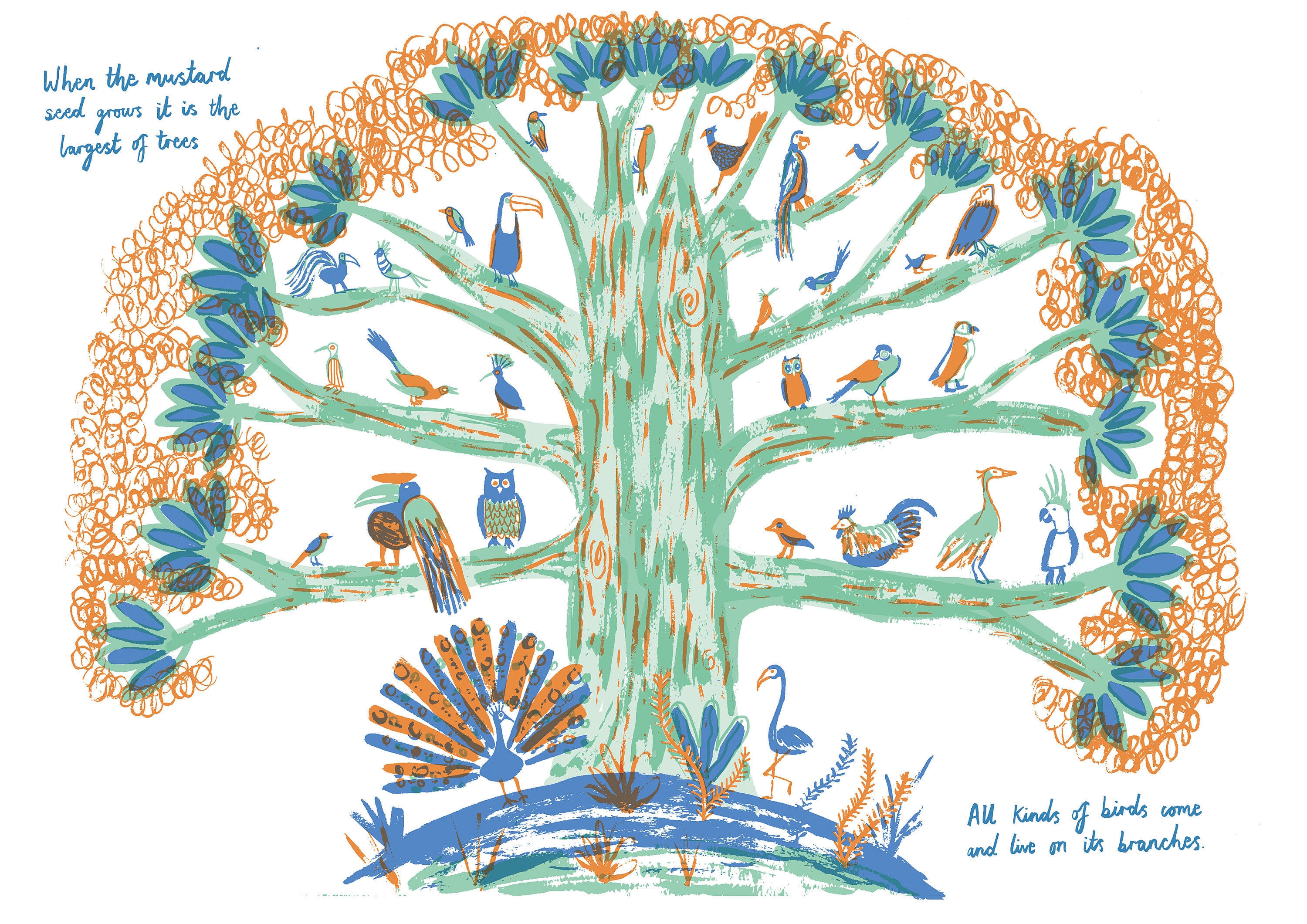
Thus says the Lord GOD: I, too, will take from the crest of the cedar, from its topmost branches tear off a tender shoot, and plant it on a high and lofty mountain; on the mountain heights of Israel I will plant it. It shall put forth branches and bear fruit, and become a majestic cedar. Birds of every kind shall dwell beneath it, every winged thing in the shade of its boughs. And all the trees of the field shall know that I, the LORD, bring low the high tree, lift high the lowly tree, wither up the green tree, and make the withered tree bloom. As I, the LORD, have spoken, so will I do.
The good homilist should explain the background of this reading a little. Ezekiel is prophesying during the time when the Kingdom of David was nearing its end (early 500’s BC). Only the southern tribe of Judah was left for the son of David to rule over. Northern Israel had already been exiled by Assyria, and Babylon had already deported/exiled many Judeans, especially of the upper classes, included the high-ranking priests and the king himself. In a few years, Jerusalem and its Temple would be completely destroyed.
In the midst of this quite depressing time in the history of God’s people, Ezekiel gives a prophesy of hope: God will preserve the dynasty of David, and it will grow once more.
The “cedar tree” in this parable is the Kingdom of Israel, the “crest” is the royal house, the House of David, and the “tender shoot” is an heir, a Son of David. God promises to “transplant” this “shoot” to the mountain heights of Israel (=Jerusalem) and he would grow again, becoming an international kingdom. The oracle seemed hopelessly optimistic and out-of-touch in light of historical events in Ezekiel’s day.
(2) The responsorial psalm (Ps 92:2-3, 13-14, 15-16) continues to develop the “tree” motif:
R. (cf. 2a) Lord, it is good to give thanks to you.
It is good to give thanks to the LORD,
to sing praise to your name, Most High,
To proclaim your kindness at dawn
and your faithfulness throughout the night.
R. Lord, it is good to give thanks to you.
The just one shall flourish like the palm tree,
like a cedar of Lebanon shall he grow.
They that are planted in the house of the LORD
shall flourish in the courts of our God.
R. Lord, it is good to give thanks to you.
They shall bear fruit even in old age;
vigorous and sturdy shall they be,
Declaring how just is the LORD,
my rock, in whom there is no wrong.
R. Lord, it is good to give thanks to you.
In this psalm, the “just one” is compared to a tree that flourishes, grows, and bears fruit. This is an image used elsewhere in the psalms, most notably in Psalm 1. At the back of it is the image of the Tree of Life, the ideal tree in Eden, the primordial garden-temple of God. The “just”—those who live their lives according to God’s will—become like the Tree of Life. They bear the fruit that Adam and Eve didn’t taste, because they chose unwisely.
The “just one” in this psalm is first of all Jesus Christ—the only one who is truly “just.” He is truly the Tree of Life who bears the good fruit perennially. Yet by extension, the “just one” can be each one of us, since we eat the fruit of Christ and (according to our faith) become him in the Mass. There is hope that we will grow spiritually strong and resilient despite life’s troubles, and bear the fruit of the Spirit and of good works.
(3) The second reading is 2 Corinthians 5:6-10:
Brothers and sisters: We are always courageous, although we know that while we are at home in the body we are away from the Lord, for we walk by faith, not by sight. Yet we are courageous, and we would rather leave the body and go home to the Lord. Therefore, we aspire to please him, whether we are at home or away. For we must all appear before the judgment seat of Christ, so that each may receive recompense, according to what he did in the body, whether good or evil.
This reading, among other things, reminds us not to make judgments based on superficial externals: “we walk by faith, not by sight.” If we walked by “sight”—making superficial judgments based on what appears on the surface—we would quickly lose our way, because in this world it often seems that evil people prosper, seem “happy,” and succeed despite or even because of their lies, distortions, and self-interest. The Church, and many who do what is right, and practice virtue, are often weak and apparently powerless against their enemies. It has always been like this, since ancient times (see Psalm 73). St. Paul reminds us to take a perspective of faith, and keep in mind the eternal: “we must all appear before the judgment seat of Christ.” The prosperity of the wicked and the suffering of the good is a reality of this life. But there is the life to come. All will be taken into account. God is a God of justice, and of mercy: “each [will] receive recompense according to what he did in the body, whether good or evil.” No one escapes the final encounter with the Truth, which is God.
(4) The Gospel (Mk 4:26-34) brings to fulfillment the “tree” motif of the first reading and the psalm:
Jesus said to the crowds: "This is how it is with the kingdom of God; it is as if a man were to scatter seed on the land and would sleep and rise night and day and through it all the seed would sprout and grow, he knows not how. Of its own accord the land yields fruit, first the blade, then the ear, then the full grain in the ear. And when the grain is ripe, he wields the sickle at once, for the harvest has come."
He said, "To what shall we compare the kingdom of God, or what parable can we use for it? It is like a mustard seed that, when it is sown in the ground, is the smallest of all the seeds on the earth. But once it is sown, it springs up and becomes the largest of plants and puts forth large branches, so that the birds of the sky can dwell in its shade." With many such parables he spoke the word to them as they were able to understand it. Without parables he did not speak to them, but to his own disciples he explained everything in private.
There are two parables here. In both of them, the “seed” is the Word of God, in two senses: (1) the proclaimed Gospel, the “Word of God”; and (2) Jesus himself, who is the Word of God (John 1:1).
In the first parable, Jesus emphasizes that the growth of God’s kingdom is something mysterious, and not something caused by human effort, any more than human effort can make something grow. This truth may remind many of us of the classic “Frog and Toad” story about the garden, when Toad gets frustrated with his plot of ground and starts yelling, “Now seeds! START GROWING!”
We are responsible to plant the seed—this is the proclamation of the Gospel. Beyond this, the workings of God in the human heart are ultimately not something that we can manipulate or control. It is the work of God.
The second parable takes up the tree theme from the earlier readings. The kingdom of heaven is like a mustard seed that grows into a great tree-like plant.
This “mustard seed” which is the “smallest of seeds” is in fact Christ himself, who is both the Word of God, and the “seed of David” (2 Sam 7:12, Hebrew zerah) whom God promised by covenant oath to “raise up”:
When your days are fulfilled and you lie down with your fathers, I will raise up your seed after you, who shall come forth from your body, and I will establish his kingdom.
Christ is the “smallest of seeds” because he is humble and lowly, despised by all:
For he grew up before him like a young plant, and like a root out of dry ground; he had no form or comeliness that we should look at him, and no beauty that we should desire him. He was despised and rejected by men; a man of sorrows, and acquainted with grief; and as one from whom men hide their faces he was despised, and we esteemed him not. (Isa 53:1-2)
Come to me, all who labor and are heavy laden, and I will give you rest. Take my yoke upon you, and learn from me; for I am gentle and lowly in heart, and you will find rest for your souls. (Matt 11:28-29)
Jesus is literally planted in the ground at his burial (John 19:41-42). He is the grain of wheat that dies, but bears much fruit:
Truly, truly, I say to you, unless a grain of wheat falls into the earth and dies, it remains alone; but if it dies, it bears much fruit. (John 12:24)
The “mustard seed” of Jesus, planted in the ground in the mountain heights of Israel (Jerusalem), rises from the dead and becomes the Church, which grows and grows throughout the world, becoming so successful that even those who hate her find it necessary to imitate her and the structures she invented: schools, universities, hospitals, hospices.
In Christ, the royal Son of David, Ezekiel’s prophecy did come true. The House of David was reestablished in Jerusalem and the Kingdom of David—manifest visibly in the Church on earth—has spread throughout the world, an international empire.
The readings for this Sunday encourage us to have faith in God. In a dark time of world history, in which Christians are suppressed, tortured, and killed in Muslim and Communist countries, and in the “free world” secularists enjoy almost total control over the institutions of education and media in order to indoctrinate society with the idea that “science” has disproven God and all human ills are traceable to religion, especially Christianity and its hated morality—in this dark time, it’s helpful to remember that times were frequently dark in the past as well: when Ezekiel prophesied under the oppression of the Babylonian empire; when Jesus prophesied under the oppression of the Roman empire. The Messiah and all connected with him perpetually look small and even pathetic: a mere mustard seed. Yet in ways unseen it grows. It does not die, it grows; it fills the whole earth, it brings eternal life to those that seek its shade.
Please keep in mind that this is a Catholic Caucus/Devotional thread for the purpose of prayerful reflection on the Sacred Scriptures and is closed to debate of any kind. Per FR policy on Religion Caucus threads, off-topic, argumentative, and abusive comments are not allowed and will be submitted to the Mods for deletion. Thanks, and God bless you and have a holy Lord’s Day.
Pinging the weekly Sacred Page list!
Let us pray.
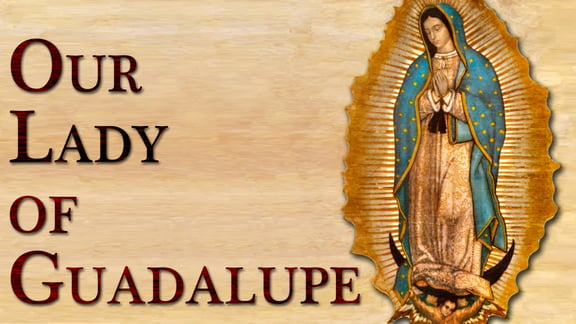
O Virgin Mother of God, we fly to your protection and beg your intercession against the darkness and sin which ever more envelop the world and menace the Church. Your Son, Our Lord Jesus Christ, gave you to us as our mother as He died on the Cross for our salvation. So too, in 1531, when darkness and sin beset us, He sent you, as Our Lady of Guadalupe, on Tepeyac to lead us to Him Who alone is our light and our salvation.
Through your apparitions on Tepeyac and your abiding presence with us on the miraculous mantle of your messenger, Saint Juan Diego, millions of souls converted to faith in your Divine Son. Through this novena and our consecration to you, we humbly implore your intercession for our daily conversion of life to Him and the conversion of millions more who do not yet believe in Him. In our homes and in our nation, lead us to Him Who alone wins the victory over sin and darkness in us and in the world.
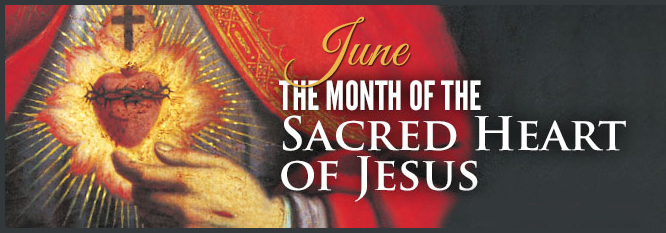
Unite our hearts to your Immaculate Heart so that they may find their true and lasting home in the Most Sacred Heart of Jesus. Ever guide us along the pilgrimage of life to our eternal home with Him. So may our hearts, one with yours, always trust in God's promise of salvation, in His never-failing mercy toward all who turn to Him with a humble and contrite heart. Through this novena and our consecration to you, O Virgin of Guadalupe, lead all souls in America and throughout the world to your Divine Son in Whose name we pray. Amen.
"Come to me, all who labor and are heavy laden, and I will give you rest. Take my yoke upon you, and learn from me; for I am gentle and lowly in heart, and you will find rest for your souls. For my yoke is easy, and my burden is light.”
(Matthew 11:28-30)
Disclaimer: Opinions posted on Free Republic are those of the individual posters and do not necessarily represent the opinion of Free Republic or its management. All materials posted herein are protected by copyright law and the exemption for fair use of copyrighted works.