Catena Aurea by St. Thomas Aguinas
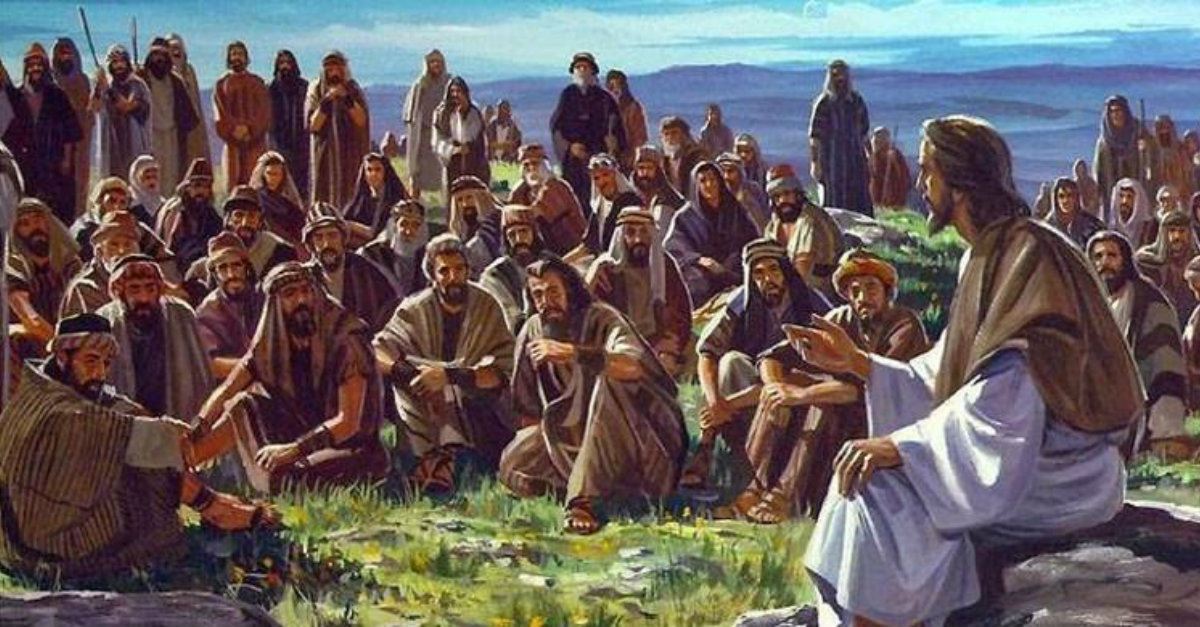
5:1–31. And seeing the multitudes, He went up into a mountain: and when He was set, His disciples came unto Him.
2. And He opened His mouth, and taught them, saying,
3. Blessed are the poor in spirit: for theirs is the kingdom of heaven.
PSEUDO-CHRYSOSTOM. Every man in his own trade or profession rejoices when he sees an opportunity of exercising it; the carpenter if he sees a goodly tree desires to have it to cut down to employ his skill on, and the Priest when he sees a full Church, his heart rejoices, he is glad of the occasion to teach. So the Lord seeing a great congregation of people was stirred to teach them.
AUGUSTINE. (de Cons. Ev. ii. 19.) Or He may be thought to have sought to shun the thickest crowd, and to have ascended the mountain that He might speak to His disciples alone.
CHRYSOSTOM. (Hom. xv.) By not choosing His seat in the city, and the market place, but on a mountain in a desert, He has taught us to do nothing with ostentation, and to depart from crowds, above all when we are to be employed in philosophy, or in speaking of serious things.
REMIGIUS. This should be known, that the Lord had three places of retirement that we read of, the ship, the mountain, and the desert; to one of these He was wont to withdraw whenever He was pressed by the multitude.
JEROME. Some of the less learned brethren suppose the Lord to have spoken what follows from the Mount of Olives, which is by no means the case; what went before and what follows fixes the place in Galilee. aMount Tabor. we may suppose, or any other high mountain.
CHRYSOSTOM. He ascended a mountain, first, that He might fulfil the prophecy of Esaias, Get thee up into a mountain; (Is. 40:9.) secondly, to shew that as well he who teaches, as he who hears the righteousness of God should stand on an high ground of spiritual virtues; for none can abide in the valley and speak from a mountain. If thou stand on the earth, speak of the earth; if thou speak of heaven, stand in heaven. Or, He ascended into the mountain to shew that all who would learn the mysteries of the truth should go up into the Mount of the Church of which the Prophet speaks, The hill of God is a hill of fatness. (Ps. 68:15.)
HILARY. Or, He ascends the mountain, because it is placed in the loftiness of His Father’s Majesty that He gives the commands of heavenly life.
AUGUSTINE. (de Serm. Dom. in Mont. i. 1.) Or, He ascends the mountain to shew that the precepts of righteousness given by God through the Prophets to the Jews, who were yet under the bondage of fear, were the lesser commandments; but that by His own Son were given the greater commandments to a people which He had determined to deliver by love.
JEROME. He spoke to them sitting and not standing, for they could not have understood Him had He appeared in His own Majesty.
AUGUSTINE. Or, to teach sitting is the prerogative of the Master. His disciples came to him, that they who in spirit approached more nearly to keeping His commandments, should also approach Him nearest with their bodily presence.
RABANUS. Mystically, this sitting down of Christ is His incarnation; had He not taken flesh on Him, mankind could not have come unto Him.
AUGUSTINE. (de Cons. Ev. ii. 19.) It causes a thought how it is that Matthew relates this sermon to have been delivered by the Lord sitting on the mountain; Luke, as He stood in the plain. This diversity in their accounts would lead us to think that the occasions were different. Why should not Christ repeat once more what He said before, or do once more what He had done before? Although another method of reconciling the two may occur to us; namely, that our Lord was first with His disciples alone on some more lofty peak of the mountain when He chose the twelve; that He then descended with them not from the mountain entirely, but from the top to some expanse of level ground in the side, capable of holding a great number of people; that He stood there while the crowd was gathering around Him, and after when He had sate down, then His disciples came near to Him, and so to them and in the presence of the rest of the multitude He spoke the same sermon which Matthew and Luke give, in a different manner, but with equal truth of facts.
GREGORY. (Moral. iv. 1.) When the Lord on the mountain is about to utter His sublime precepts, it is said, Opening his month he taught them, He who had before opened the mouth of the Prophets.
REMIGIUS. Wherever it is said that the Lord opened His mouth, we may know how great things are to follow.
AUGUSTINE. (de Serm. in Mont. i. 1.) Or, the phrase is introductory of an address longer than ordinary.
CHRYSOSTOM. Or, that we may understand that He sometimes teaches by opening His mouth in speech, sometimes by that voice which resounds from His works.
AUGUSTINE. (ubi sup.) Whoever will take the trouble to examine with a pious and sober spirit, will find in this sermon a perfect code of the Christian life as far as relates to the conduct of daily life. Accordingly the Lord concludes it with the words, Every man who heareth these words of mine and doeth them, I will liken him to a wise man, & c.
AUGUSTINE. (De Civ. Dei, xix. 1.) The chief good is the only motive of philosophical enquiry; but whatever confers blessedness, that is the chief good; therefore He begins, Blessed are the poor in spirit.
AUGUSTINE. (Id. de Serm. in Mont. i. 1.) Augmentation of ‘spirit’ generally implies insolence and pride. For in common speech the proud are said to have a great spirit, and rightly—for wind is a spirit, and who does not know that we say of proud men that they are ‘swollen,’ ‘puffed up.’ Here therefore by poor in spirit are rightly understood ‘lowly,’ ‘fearing God,’ not having a puffed up spirit.
CHRYSOSTOM. Or, He here calls all loftiness of soul and temper spirit; for as there are many humble against their will, constrained by their outward condition, they have no praise; the blessing is on those who humble themselves by their own choice. Thus He begins at once at the root, pulling up pride which is the root and source of all evil, setting up as its opposite humility as a firm foundation. If this be well laid, other virtues may be firmly built thereon; if that be sapped, whatever good yon gather upon it perishes.
PSEUDO-CHRYSOSTOM. Blessed are the poor in spirita, or, according to the literal rendering of the Greek, ‘they who beg,’ that the humble may learn that they should be ever begging at God’s almshouse. For there are many naturally humble and not of faith, who do not knock at God’s almshouse; but they alone are humble who are so of faith.
CHRYSOSTOM. Or, the poor in spirit may be those who fear and tremble at God’s commandments, whom the Lord by the Prophet Isaiah commends. Though why more than simply humble? Of the humble there may be in this place but few, in that again an abundance.
AUGUSTINE. (ubi sup.) The proud seek an earthly kingdom, of the humble only is the kingdom of Heaven.
PSEUDO-CHRYSOSTOM. For as all other vices, but chiefly pride, casts down to hell; so all other virtues, but chiefly humility, conduct to Heaven; it is proper that he that humbles himself should be exalted.
JEROME. The poor in spirit are those who embrace a voluntary poverty for the sake of the Holy Spirit.
AMBROSE. (De Officiis i. 16.) In the eye of Heaven blessedness begins there where misery begins in human estimation.
GLOSS. (interlin.) The riches of Heaven are suitably promised to those who at this present are in poverty.
5:5
5. bBlessed are the meek: for they shall inherit the earth.
AMBROSE. (in Luc. c. v. 20.) When I have learned contentment in poverty, the next lesson is to govern my heart and temper. For what good is it to me to be without worldly things, unless I have besides a meek spirit? It suitably follows therefore, Blessed are the meek.
AUGUSTINE. (Serm. in Mont. i. 2.) The meek are they who resist not wrongs, and give way to evil; but overcome evil of good.
AMBROSE. (ubi sup.) Soften therefore your temper that you be not angry, at least that you be angry, and sin not. It is a noble thing to govern passion by reason; nor is it a less virtue to check anger, than to be entirely without anger, since one is esteemed the sign of a weak, the other of a strong, mind.
AUGUSTINE. (ubi sup.) Let the unyielding then wrangle and quarrel about earthly and temporal things, the meek are blessed, for they shall inherit the earth, and not be rooted out of it; that earth of which it is said in the Psalms, Thy lot is in the land of the living, (Ps. 142:5.) meaning the fixedness of a perpetual inheritance, in which the soul that hath good dispositions rests as in its own place, as the body does in an earthly possession, it is fed by its own food, as the body by the earth; such is the rest and the life of the saints.
PSEUDO-CHRYSOSTOM. This earth as some interpret, so long as it is in its present condition is the land of the dead, seeing it is subject to vanity; but when it is freed from corruption it becomes the land of the living, that the mortal may inherit an immortal country. I have read another exposition of it, as if the heaven in which the saints are to dwell is meant by the land of the living, because compared with the regions of death it is heaven, compared with the heaven above it is earth. Others again say, that this body as long as it is subject to death is the land of the dead, when it shall b made like unto Christ’s glorious body, it will be the land of the living.
HILARY. Or, the Lord promises the inheritance of the earth to the meek, meaning of that Body, which Himself took on Him as His tabernacle; and as by the gentleness of our minds Christ dwells in us, we also shall be clothed with the glory of His renewed body.
CHRYSOSTOM. Otherwise; Christ here has mixed things sensible with things spiritual. Because it is commonly supposed that he who is meek loses all that he possesses, Christ here gives a contrary promise, that he who is not forward shall possess his own in security, but that he of a contrary disposition many times loses his soul and his paternal inheritance. But because the Prophet had said, The meek shall inherit the earth, (Ps. 36:11.) He used these well-known words in conveying His meaning.
GLOSS. (ord.) The meek, who have possessed themselves, shall possess hereafter the inheritance of the Father; to possess is more than to have, for we have many things which we lose immediately.
5:4
4. Blessed are they that mourn; for they shall be comforted.
AMBROSE. (ubi sup.) When yon have done thus much, attained both poverty and meekness, remember that you are a sinner, mourn your sins, as He proceeds, Blessed are they that mourn. And it is suitable that the third blessing should be of those that mourn for sin, for it is the Trinity that forgives sin.
HILARY. Those that mourn, that is, not loss of kindred, affronts, or losses, but who weep for past sins.
PSEUDO-CHRYSOSTOM. And they who weep for their own sins are blessed, but much more so who weep for others’ sins; so should all teachers do.
JEROME. For the mourning here meant is not for the dead by common course of nature, but for the dead in sins, and vices. Thus Samuel mourned for Saul, thus the Apostle Paul mourned for those who had not performed penance after uncleanness.
PSEUDO-CHRYSOSTOM. The comfort of mourners is the ceasing of their mourning; they then who mourn their own sins shall be consoled when they have received remittance thereof.
CHRYSOSTOM. And though it were enough for such to receive pardon, yet He rests not His mercy only there, but makes them partakers of many comforts both here and hereafter. God’s mercies are always greater than our troubles.
PSEUDO-CHRYSOSTOM. But they also who mourn for others’ sins shall be comforted, inasmuch as they shall own God’s providence in that worldly generation, understanding that they who had perished were not of God, out of whose hand none can snatch. For these leaving to mourn, they shall be comforted in their own blessedness.
AUGUSTINE. (Serm. in Mont. i. 2.) Otherwise; mourning is sorrow for the loss of what is dear; but those that are turned to God lose the things that they held dear in this world; and as they have now no longer any joy in such things as before they had joy in, their sorrow may not be healed till there is formed within them a love of eternal things. They shall then be comforted by the Holy Spirit, who is therefore chiefly called, The Paraclete, that is, ‘Comforter;’ so that for the loss of their temporal joys, they shall gain eternal joys.
GLOSS. (ap Anselm.) Or, by mourning, two kinds of sorrow are intended; one for the miseries of this world, one for lack of heavenly things; so Caleb’s daughter asked both the upper and the lower springs. This kind of mourning none have but the poor and the meek, who as not loving the world acknowledge themselves miserable, and therefore desire heaven. Suitably, therefore, consolation is promised to them that mourn, that he who has sorrow at this present may have joy hereafter. But the reward of the mourner is greater that that of the poor or the meek, for to rejoice in the kingdom is more than to have it, or to possess it; for many things we possess in sorrow.
CHRYSOSTOM. We may remark that this blessing is given not simply, but with great force and emphasis; it is not simply, ‘who have grief,’ but who mourn. And indeed this command is the sum of all philosophy. For if they who mourn for the death of children or kinsfolk, throughout all that season of their sorrow, are touched with no other desires, as of money, or honour, burn not with envy, feel not wrongs, nor are open to any other vicious passion, but are solely given up to their grief; much more ought they, who mourn their own sins in such manner as they ought to mourn for them, to shew this higher philosophy.
5:6
6. Blessed are they which do hunger and thirst after righteousness: for they shall be filled.
AMBROSE. (ubi sup.) As soon as I have wept for my sins, I begin to hunger and thirst after righteousness. He who is afflicted with any sore disease, hath no hunger.
JEROME. It is not enough that we desire righteousness, unless we also suffer hunger for it, by which expression we may understand that we are never righteous enough, but always hunger after works of righteousness.
PSEUDO-CHRYSOSTOM. All good which men do not from love of the good itself is unpleasing before God. He hungers after righteousness who desires to walk according to the righteousness of God; he thirsts after righteousness who desires to get the knowledge thereof.
CHRYSOSTOM. He may mean either general righteousness, or that particular virtue which is the opposite of covetousness. (ἡ καθόλου ἀρετή.) As He was going on to speak of mercy, He shews beforehand of what kind our mercy should be, that it should not be of the gains of plunder or covetousness, hence He ascribes to righteousness that which is peculiar to avarice, namely, to hunger and thirst.
HILARY. The blessedness which He appropriates to those who hunger and thirst after righteousness shews that the deep longing of the saints for the doctrine of God shall receive perfect replenishment in heaven; then they shall be filled.
PSEUDO-CHRYSOSTOM. Such is the bounty of a rewarding God, that His gifts are greater than the desires of the saints.
AUGUSTINE. (ubi sup.) Or He speaks of food with which they shall be filled at this present; to wit, that food of which the Lord spake, My food is to do the will of my Father, that is, righteousness, and that water of which whoever drinks it shall be in him a well of water springing up to life eternal.
CHRYSOSTOM. Or, this is again a promise of a temporal reward; for as covetousness is thought to make many rich, He affirms on the contrary that righteousness rather makes rich, for He who loves righteousness possesses all things in safety.
5:7
7. Blessed are the merciful: for they shall obtain mercy.
GLOSS. (ord.) Justice and mercy are so united, that the one ought to be mingled with the other; justice without mercy is cruelty; mercy without justice, profusion—hence He goes on to the one from the other.
REMIGIUS. The merciful (misericors) is he who has a sad heart; he counts others’ misery his own, and is sad at their grief as at his own.
JEROME. Mercy here is not said only of alms, but is in every sin of a brother, if we bear one another’s burdens.
AUGUSTINE. (ubi sup.) He pronounces those blessed who succour the wretched, because they are rewarded in being themselves delivered from all misery; as it follows, for they shall obtain mercy.
HILARY. So greatly is God pleased with our feelings of benevolence towards all men, that He will bestow His own mercy only on the merciful.
CHRYSOSTOM. The reward here seems at first to be only an equal return; but indeed it is much more; for human mercy and divine mercy are not to be put on an equality.
GLOSS. (ap. Anselm.) Justly is mercy dealt out to the merciful, that they should receive more than they had deserved; and as he who has more than enough receives more than he who has only enough, so the glory of mercy is greater than of the things hitherto mentioned.
5:8
8. Blessed are the pure in heart: for they shall see God.
AMBROSE. (in Luc. vi. 22.) The merciful loses the benefit of his mercy, unless he shews it from a pure heart; for if he seeks to have whereof to boast, he loses the fruit of his deeds; the next that follows therefore is, Blessed are the pure in heart.
GLOSS. (ap. Anselm.) Purity of heart comes properly in the sixth place, because on the sixth day man was created in the image of God, which image was shronded by sin, but is formed anew in pure hearts by grace. It follows rightly the beforementioned graces, because if they be not there, a clean heart is not created in a man.
CHRYSOSTOM. By the pure are here meant those who possess a perfect goodness, conscious to themselves of no evil thoughts, or again those who live in such temperance as is mostly necessary to seeing God according to that of St. Paul, Follow peace with all men, and holiness, without which no man shall see God. For as there are many merciful, yet unchaste, to shew that mercy alone is not enough, he adds this concerning purity.
JEROME. The pure is known by purity of heart, for the temple of God cannot be impure.
PSEUDO-CHRYSOSTOM. He who in thought and deed fulfils all righteousness, sees God in his heart, for righteousness is an image of God, for God is righteousness. So far as any one has rescued himself from evil, and works things that are good, so far does he see God, either hardly, or fully, or sometimes, or always, according to the capabilities of human nature. But in that world to come the pure in heart shall see God face to face, not in a glass, and in enigma as here.
AUGUSTINE. (Serm. in Mont. i. 2.) They are foolish who seek to see God with the bodily eye, seeing He is seen only by the heart, as it is elsewhere written, In singleness of heart seek ye Him; (Wisd. 1:1.) the single heart is the same as is here called the pure heart.
AUGUSTINE. (Civ. Dei, xxii 29.) But if spiritual eyes in the spiritual body shall be able only to see so much as they we now have can see, undoubtedly God will not be able to be seen of them.
AUGUSTINE. (de Trin. i. 8.) This seeing God is the reward of faith; to which end our hearts are made pure by faith, as it is written, cleansing their hearts by faith; (Acts 15:9.) but the present verse proves this still more strongly.
AUGUSTINE. (de Genesi ad Literam. xii. 26.) No one seeing God can be alive with the life men have on earth, or with these our bodily senses. Unless one die altogether out of this life, either by totally departing from the body, or so alienated from earnal lusts that he may truly say with the Apostle, whether in the body or out of the body, I cannot tell, he is not translated that he should see this vision.
GLOSS. (non occ.) The reward of these is greater than the reward of the first; being not merely to dine in the King’s court, but further to see His face.
5:9
9. Blessed are the peacemakers: for they shall be called the children of God.
AMBROSE. (ubi sup.) When you have made your inward parts clean from every spot of sin, that dissentions and contentious may not proceed from your temper, begin peace within yourself, that so you may extend it to others.
AUGUSTINE. (Civ. Dei, xix. 13.) Peace is the fixedness of order; by order, I mean an arrangement of things like and unlike giving to each its own place. And as there is no man who would not willingly have joy, so is there no man who would not have peace; since even those who go to war desire nothing more than by war to come to a glorious peace.
JEROME. The peacemakers (pacifici) are pronounced blessed, they namely who make peace first within their own hearts, then between brethren at variance. For what avails it to make peace between others, while in your own heart are wars of rebellious vices.
AUGUSTINE. (Serm. in Mont. i. 2.) The peacemakers within themselves are they who having stilled all disturbances of their spirits, having subjected them to reason, have overcome their carnal desires, and become the kingdom of God. There all things are so disposed, that that which is most chief and excellent in man, governs those parts which we have in common with the brutes, though they struggle against it; nay even that in man which is excellent is subjected to a yet greater, namely, the very Truth, the Son of God. For it would not be able to govern what is inferior to it, if it were not subject to what is above it. And this is the peace which is given on earth to men of good will.
AUGUSTINE. (Retract. i. 19.) No man can attain in this life that there be not in his members a law resisting the law of his mind. But the peacemakers attain thus far by overcoming the lusts of the flesh, that in time they come to a most perfect peace.
PSEUDO-CHRYSOSTOM. The peacemakers with others are not only those who reconcile enemies, but those who unmindful of wrongs cultivate peace. That peace only is blessed which is lodged in the heart, and does not consist only in words. And they who love peace, they are the sons of peace.
HILARY. The blessedness of the peacemakers is the reward of adoption, they shall be called the sons of God. For God is our common parent, and no other way can we pass into His family than by living in brotherly love together.
CHRYSOSTOM. Or, if the peacemakers are they who do not contend one with another, but reconcile those that are at strife, they are rightly called the sons of God, seeing this was the chief employment of the Only-begotten Son, to reconcile things separated, to give peace to things at war.
AUGUSTINE. Or, because peace is then perfect when there is no where any opposition, the peacemakers are called the sons of God, because nothing resists God, and the children ought to bear the likeness of their Father.
GLOSS. (ap. Anselm.) The peacemakers have thus the place of highest honour, inasmuch as he who is called the king’s son, is the highest in the king’s house. This beatitude is placed the seventh in order, because in the sabbath shall be given the repose of true peace, the six ages being passed away.
5:10
10. Blessed are they which are persecuted for righteousness’ sake: for theirs is the kingdom of heaven.
CHRYSOSTOM. Blessed are they who suffer persecution for righteousness’ sake, that is for virtue, for defending others, for piety, for all these things are spoken of under the title of righteousness. This follows the beatitude upon the peacemakers, that we may not be led to suppose that it is good to seek peace at all times.
AUGUSTINE. (Serm. in Mont. i. 2.) When peace is once firmly established within, whatever persecutions he who has been cast without raises, or carries on, he increases that glory which is in the sight of God.
JEROME. For righteousness’ sake He adds expressly, for many suffer persecution for their sins, and are not therefore righteous. Likewise consider how the eighth beatitude of the true circumcision is terminated by martyrdom.
PSEUDO-CHRYSOSTOM. (vid. Phil. 3:2:3.) He said not, Blessed are they who suffer persecution of the Gentiles; that we may not suppose the blessing pronounced on those only who are persecuted for refusing to sacrifice to idols; yea, whoever suffers persecution of heretics because he will not forsake the truth is likewise blessed, seeing he suffers for righteousness. Moreover, if any of the great ones, who seem to be Christians, being corrected by you on account of his sins, shall persecute you, you are blessed with John the Baptist. For if the Prophets are truly martyrs when they are killed by their own countrymen, without doubt he who suffers in the cause of God has the reward of martyrdom though he suffers from his own people. Scripture therefore does not mention the persons of the persecutors, but only the cause of persecution, that you may learn to look, not by whom, but why you suffer.
HILARY. Thus, lastly, He includes those in the beatitude whose will is ready to suffer all things for Christ, who is our righteousness. For these then also is the kingdom preserved, for they are in the contempt of this world poor in spirit.
AUGUSTINE. (ubi sup.) Or, the eighth beatitude, as it were, returns to the commencement, because it shews the perfect complete character. In the first then and the eighth, the kingdom of heaven is named, for the seven go to make the perfect man, the eighth manifests and proves his perfectness, that all may be conducted to perfection by these steps.
AMBROSE. (in Luc. vi. 23.) Otherwise; the first kingdom of heaven was promised to the Saints, in deliverance from the body; the second, that after the resurrection they should be with Christ. For after your resurrection you shall begin to possess the earth delivered from death, and in that possession shall find comfort. Pleasure follows comfort, and Divine mercy pleasure. But on whom God has mercy, him He calls, and he whom He calls, beholds Him that called him. He who beholds God is adopted into the rights of divine birth, and then at length as the son of God is delighted with the riches of the heavenly kingdom. The first then begins, the last is perfected.
CHRYSOSTOM. Wonder not if you do not hear ‘the kingdom’ mentioned under each beatitude; for in saying shall be comforted, shall find mercy, and the rest, in all these the kingdom of heaven is tacitly understood, so that you must not look for any of the things of sense. For indeed he would not be blessed who was to be crowned with those things which depart with this life.
AUGUSTINE. (ubi sup.) The number of these sentences should be carefully attended to; to these seven degrees of blessedness agree the operation of that seven-form Holy Spirit which Isaiah described. But as He began from the highest, so here He begins from the lowest; for there we are taught that the Son of God will descend to the lowest; here that man will ascend from the lowest to the likeness of God. Here the first place is given to fear, which is suitable for the humble, of whom it is said, Blessed are the poor in spirit, that is, those who think not high things, but who fear. The second is piety, which belongs to the meek; for he who seeks piously, reverences, does not find fault, does not resist; and this is to become meek. The third is knowledge, which belongs to those that mourn, who have learned to what evils they are enslaved which they once pursued as goods. The fourth, which is fortitude, rightly belongs to those who hunger and thirst, who seeking joy in true goods, labour to turn away from earthly lusts. The fifth, counsel, is appropriate for the merciful, for there is one remedy to deliver from so great evils, viz. to give and to distribute to others. The sixth is understanding, and belongs to the pure in heart, who with purged eye can see what eye seeth not. The seventh is wisdom, and may be assigned to the peacemakers, in whom is no rebellious motion, but they obey the Spirit. Thus the one reward, the kingdom of heaven, is put forth under various names. In the first, as was right, is placed the kingdom of heaven, which is the beginning of perfect wisdom; as if it should be said, The fear of the Lord is the beginning of wisdom. To the meek, an inheritance, as to those who with piety seek the execution of a father’s will. To those that mourn, comfort, as to persons who know what they had lost, and in what they were immersed. To the hungry, plenty, as a refreshment to those who labour for salvation. To the merciful, mercy, that to those who have followed the best counsel, that may be shewed which they have shewed to others. To the pure in heart the faculty of seeing God, as to men bearing a pure eye to understand the things of eternity. To the peacemakers, the likeness of God. And all these things we believe may be attained in this life, as we believe they were fulfilled in the Apostles; for as to the things after this life they cannot be expressed in any words.
5:11–12
11. Blessed are ye, when men shall revile you, and persecute you, and shall say all manner of evil against you falsely, for My sake.
12. Rejoice, and be exceeding glad: for great is your reward in heaven: for so persecuted they the prophets which were before you.
RABANUS. The preceding blessings were general; He now begins to address His discourse to them that were present, foretelling them the persecutions which they should suffer for His name.
AUGUSTINE. (ubi sup.) It may be asked, what difference there is between ‘they shall revile you,’ and ‘shall speak all manner of evil of you;’ to revile, it may be said, being but to speak evil of. But a reproach thrown with insult in the face of one present is a different thing from a slander cast on the character of the absent. To persecute includes both open violence and secret snares.
PSEUDO-CHRYSOSTOM. But if it be true that he who offers a cup of water does not lose his reward, consequently he who has been wronged but by a single word of calumny, shall not be without a reward. But that the reviled may have a claim to this blessing, two things are necessary, it must be false, and it must be for God’s sake; otherwise he has not the reward of this blessing; therefore He adds, falsely for my sake.
AUGUSTINE. (Serm. in Mont i. 5.) This I suppose was added because of those who wish to boast of persecutions and evil reports of their shame, and therefore claim to belong to Christ because many evil things are said of them; but either these are true, or when false yet they are not for Christ’s sake.
GREGORY. (Hom. in Ezech. i. 9. 17.) What hurt can you receive when men detract from you, though you have no defence but only your own conscience? But as we ought not to stir up wilfully the tongues of slanderers, lest they perish for their slander, yet when their own malice has instigated them, we should endure it with equanimity, that our merit may be added to. Rejoice, He says, and exult, for your reward is abundant in heaven.
GLOSS. (ap. Anselm.) Rejoice, that is, in mind, exult with the body, for your reward is not great only but abundant in heaven.
AUGUSTINE. (Serm. in Mont. i. 5.) Do not suppose that by heaven here is meant the upper regions of the sky of this visible world, for your reward is not to be placed in things that are seen, but by in heaven understand the spiritual firmament, where everlasting righteousness dwells. Those then whose joy is in things spiritual will even here have some foretaste of that reward; but it will be made perfect in every part when this mortal shall have put on immortality.
JEROME. This it is in the power of any one of us to attain, that when our good character is injured by calumny, we rejoice in the Lord. He only who seeks after empty glory cannot attain this. Let us then rejoice and exult, that our reward may be prepared for us in heaven.
PSEUDO-CHRYSOSTOM. For by how much any is pleased with the praise of men, by so much is he grieved with their evil speaking. But if you seek your glory in heaven, you will not fear any slanders on earth.
GREGORY. (Hom. in Ezech. i. 9. 17.) Yet ought we sometimes to check our defamers, lest by spreading evil reports of us, they corrupt the innocent hearts of those who might hear good from us.
GLOSS. (non occ.) He invites them to patience not only by the prospect of reward, but by example, when He adds, for so persecuted they the Prophets who were before you.
REMIGIUS. For a man in sorrow receives great comfort from the recollection of the sufferings of others, who are set before him as an example of patience; as if He had said, Remember that ye are His Apostles, of whom also they were Prophets.
CHRYSOSTOM. At the same time He signifies His equality in honour with His Father, as if He had said, As they suffered for my Father, so shall ye suffer for me. And in saying, The Prophets who were before you, He teaches that they themselves are already become Prophets.
AUGUSTINE. (ubi sup.) Persecuted He says generally, comprehending both reproaches and defamation of character.
Catena Aurea Matthew 5
Gospel Reading: From: Matthew 5:1-12
The Beatitudes
--------------
[1] Seeing the crowds, He (Jesus) went up on the mountain, and when He sat down His disciples came to Him. [2] And He opened His mouth and taught them, saying: [3] "Blessed are the poor in spirit, for theirs is the Kingdom of Heaven. [4] Blessed are those who mourn, for they shall be comforted. [5] Blessed are the meek, for they shall inherit the earth. [6] Blessed are those who hunger and thirst for righteousness, for they shall be satisfied. [7] Blessed are the merciful, for they shall obtain mercy. [8] Blessed are the pure of heart, for they shall see God. [9] Blessed are the peacemakers, for they shall be called children of God. [10] Blessed are those who are persecuted for righteousness' sake, for theirs is the Kingdom of Heaven. [11] Blessed are you when men revile you and persecute you and utter all kinds of evil against you falsely on My account. [12] Rejoice and be glad, for your reward is great in Heaven, for so men persecute the prophets who were before you."
***********************************************************************
Commentary:
1. The Discourse, or Sermon, on the Mount takes up three full chapters of St. Matthew's Gospel--Chapters 5-7. It is the first of the five great discourses of Jesus which appear in this Gospel and it contains a considerable amount of our Lord's teaching. It is difficult to reduce this discourse to one single theme, but the various teachings it contains could be said to deal with these five points: 1) the attitude a person must have for entering the Kingdom of Heaven (the Beatitudes, the salt of the earth, the light of the world, Jesus and His teaching, the fullness of the Law); 2) uprightness of intention in religious practice (here the "Our Father" would be included); 3) trust in God's fatherly providence; 4) how God's children should behave towards one another (not judging one's neighbor, respect for holy things, the effectiveness of prayer, and the golden rule of charity); 5) the conditions for entering the Kingdom (the narrow gate, false prophets and building on rock).
"He taught them": this refers both to the disciples and to the multitude, as can be seen at the end of the Sermon (Matthew 7:28).
2. The Beatitudes (5:3-12) form, as it were, the gateway to the Sermon on the Mount. In order to understand the Beatitudes properly, we should bear in mind that they do not promise salvation only to the particular kinds of people listed here: they cover everyone whose religious dispositions and moral conduct meet the demands which Jesus lays down. In other words, the poor in spirit, the meek, those who mourn, those who hunger and thirst after righteousness, the merciful, the pure in heart, the peacemakers and those who suffer persecution in their search for holiness--these are not different people or kinds of people but different demands made on everyone who wants to be a disciple of Christ.
Similarly, salvation is not being promised to different groups in society but to everyone, no matter what his or her position in life, who strives to follow the spirit and to meet the demands contained in the Beatitudes.
All the Beatitudes have an eschatological meaning, that is, they promise us definitive salvation not in this world, but in the next. But the spirit of the Beatitudes does give us, in this life, peace in the midst of tribulation. The Beatitudes imply a completely new approach, quite at odds with the usual way man evaluates things: they rule out any kind of pharisaical religiosity, which regards earthly happiness as a blessing from God and a reward for good behavior, and unhappiness and misfortune as a form of punishment. In all ages the Beatitudes put spiritual goods on a much higher plane than material possessions. The healthy and the sick, the powerful and the weak, the rich and the poor--all are called, independently of their circumstances, to the deep happiness that is experienced by those who live up to the Beatitudes which Jesus teaches.
The Beatitudes do not, of course, contain the entire teaching of the Gospel, but they do contain, in embryo, the whole program of Christian perfection.
3. This text outlines the connection between poverty and the soul. This religious concept of poverty was deeply rooted in the Old Testament (cf., e.g., Zephaniah 2:3ff). It was more to do with a religious attitude of neediness and of humility towards God than with material poverty: that person is poor who has recourse to God without relying on his own merits and who trusts in God's mercy to be saved. This religious attitude of poverty is closely related to what is called "spiritual childhood". A Christian sees himself as a little child in the presence of God, a child who owns nothing: everything he has comes from God and belongs to God. Certainly, spiritual poverty, that is, Christian poverty, means one must be detached from material things and practice austerity in using them. God asks certain people--religious--to be legally detached from ownership and thereby bear witness to others of the transitoriness of earthly things.
4. "Those who mourn": here our Lord is saying that those are blessed who suffer from any kind of affliction--particularly those who are genuinely sorry for their sins, or are pained by the offenses which others offer God, and who bear their suffering with love and in a spirit of atonement.
"You are crying? Don't be ashamed of it. Yes, cry: men also cry like you, when they are alone and before God. Each night, says King David, I soak my bed with tears. With those tears, those burning manly tears, you can purify your past and supernaturalize your present life" (St J. Escriva, "The Way", 216).
The Spirit of God will console with peace and joy, even in this life, those who weep for their sins, and later will give them a share in the fullness of happiness and glory in Heaven: these are the blessed.
5. "The meek": those who patiently suffer unjust persecution; those who remain serene, humble and steadfast in adversity, and do not give way to resentment or discouragement. The virtue of meekness is very necessary in the Christian life. Usually irritableness, which is very common, stems from a lack of humility and interior peace.
"The earth": this is usually understood as meaning our Heavenly Fatherland.
6. The notion of righteousness (or justice) in Holy Scripture is an essentially religious one (cf. notes on Matthew 1:19 and 3:15; Romans 1:17; 1:18-32; 3:21-22 and 24). A righteous person is one who sincerely strives to do the Will of God, which is discovered in the commandments, in one's duties of state in life (social, professional and family responsibilities) and through one's life of prayer. Thus, righteousness, in the language of the Bible, is the same as what nowadays is usually called "holiness" (1 John 2:29; 3:7-10; Revelation 22:11; Genesis 15:6; Deuteronomy 9:4).
As St. Jerome comments ("Comm. on Matthew", 5, 6), in the fourth Beatitude our Lord is asking us not simply to have a vague desire for righteousness: we should hunger and thirst for it, that is, we should love and strive earnestly to seek what makes a man righteous in God's eyes. A person who genuinely wants to attain Christian holiness should love the means which the Church, the universal vehicle of salvation, offers all men and teaches them to use--frequent use of the Sacraments, an intimate relationship with God in prayer, a valiant effort to meet one's social, professional and family responsibilities.
7. Mercy is not a just a matter of giving alms to the poor but also of being understanding towards other people's defects, overlooking them, helping them cope with them and loving them despite whatever defects they may have. Being merciful also means rejoicing and suffering with other people.
8. Christ teaches us that the source of the quality of human acts lies in the heart, that is, in a man's soul, in the depths of his spirit. "When we speak of a person's heart, we refer not just to his sentiments, but to the whole person in his loving dealings with others. In order to help us understand divine things, Scripture uses the expression `heart' in its full human meaning, as the summary and source, expression and ultimate basis, of one's thoughts, words and actions. A man is worth what his heart is worth" (St J. Escriva, "Christ Is Passing By", 164).
Cleanness of heart is a gift of God, which expresses itself in a capacity to love, in having an upright and pure attitude to everything noble. As St. Paul says, "whatever is true, whatever is honorable, whatever is just, whatever is pure, whatever is lovely, whatever is gracious, if there is any excellence, if there is anything worthy of praise, think about these things" (Philippians 4:8). Helped by God's grace, a Christian should constantly strive to cleanse his heart and acquire this purity, whose reward is the vision of God.
9. The translation "peacemakers" well convey the active meaning of the original text--those who foster peace, in themselves and in others and, as a basis for that, try to be reconciled and to reconcile others with God. Being at peace with God is the cause and effect of every kind of peace. Any peace on earth not based on this divine peace would be vain and misleading.
"They shall be called sons of God": this is an Hebraicism often found in Sacred Scripture; it is the same as saying "they will be sons of God". St. John's first letter (3:1) provides a correct exegesis of this Beatitude: "See what love the Father has given us, that we should be called children of God; and so we are".
10. What this Beatitude means, then, is: blessed are those who are persecuted because they are holy, or because they are striving to be holy, for theirs is the Kingdom of Heaven.
Thus, blessed is he who suffers persecution for being true to Jesus Christ and who does so not only patiently but joyfully. Circumstances arise in a Christian's life that call for heroism--where no compromise is admissible: either one stays true to Jesus Christ whatever the cost in terms of reputation, life or possessions, or one denies Him. St. Bernard ("Sermon on the Feast of All Saints") says that the eighth Beatitude is as it were the prerogative of Christian martyrs. Every Christian who is faithful to Jesus' teaching is in fact a "martyr" (a witness) who reflects or acts according with this Beatitude, even if he does not undergo physical death.
11-12. The Beatitudes are the conditions Jesus lays down for entering the Kingdom of Heaven. This verse, in a way summing up the preceding ones, is an invitation to everyone to put this teaching into practice. The Christian life, then, is no easy matter, but it is worthwhile, given the reward that Jesus promises.