Skip to comments.
Catholic Caucus: Daily Mass Readings 4-June-2024
Universalis/Jerusalem Bible ^
Posted on 06/04/2024 3:47:16 AM PDT by annalex
4 June 2024
Tuesday of week 9 in Ordinary Time
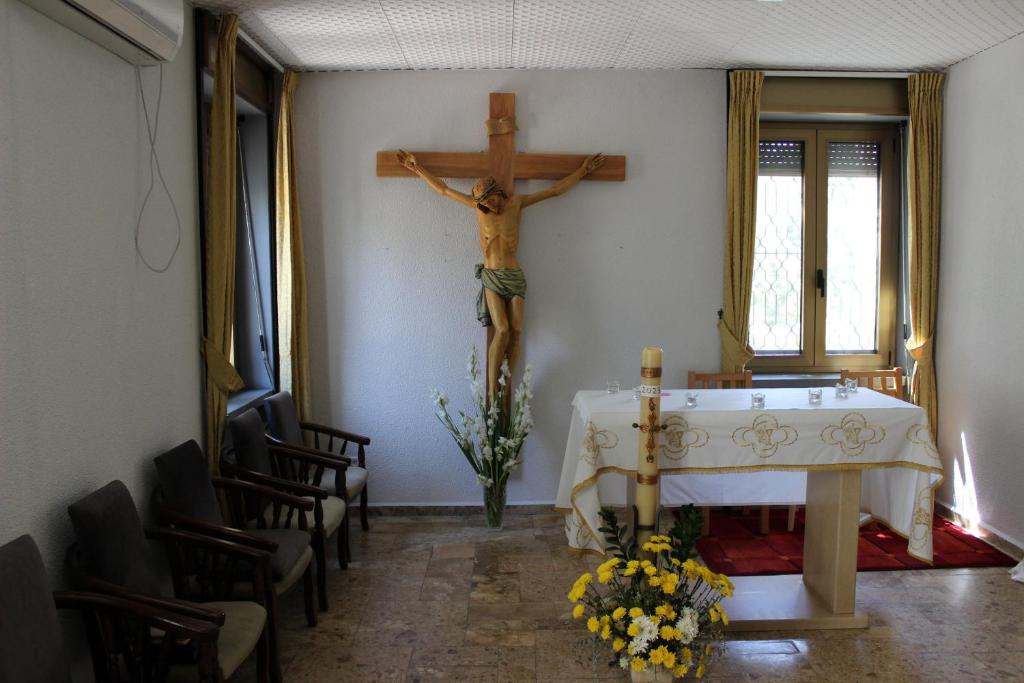
The Bridgettine Sisters Monastery, JerusalemReadings at MassLiturgical Colour: Green. Year: B(II).
| First reading |
|---|
| 2 Peter 3:11-15,17-18 © |
|---|
We are waiting for the new heaven and the new earthYou should be living holy and saintly lives while you wait and long for the Day of God to come, when the sky will dissolve in flames and the elements melt in the heat. What we are waiting for is what he promised: the new heavens and new earth, the place where righteousness will be at home. So then, my friends, while you are waiting, do your best to live lives without spot or stain so that he will find you at peace. Think of our Lord’s patience as your opportunity to be saved. You have been warned about this, my friends; be careful not to get carried away by the errors of unprincipled people, from the firm ground that you are standing on. Instead, go on growing in the grace and in the knowledge of our Lord and saviour Jesus Christ. To him be glory, in time and in eternity. Amen.
| Responsorial Psalm |
|---|
| Psalm 89(90):2-4,10,14,16 © |
|---|
O Lord, you have been our refuge from one generation to the next. Before the mountains were born or the earth or the world brought forth, you are God, without beginning or end. O Lord, you have been our refuge from one generation to the next. You turn men back to dust and say: ‘Go back, sons of men.’ To your eyes a thousand years are like yesterday, come and gone, no more than a watch in the night. O Lord, you have been our refuge from one generation to the next. Our span is seventy years, or eighty for those who are strong. And most of these are emptiness and pain. They pass swiftly and we are gone. O Lord, you have been our refuge from one generation to the next. In the morning, fill us with your love; we shall exult and rejoice all our days. Show forth your work to your servants; let your glory shine on their children. O Lord, you have been our refuge from one generation to the next.
| Gospel Acclamation | Heb4:12 |
|---|
Alleluia, alleluia! The word of God is something alive and active: it can judge secret emotions and thoughts. Alleluia! Alleluia, alleluia! May the Father of our Lord Jesus Christ enlighten the eyes of our mind, so that we can see what hope his call holds for us. Alleluia!
Give back to Caesar what belongs to Caesar and to God what belongs to GodThe chief priests and the scribes and the elders sent to Jesus some Pharisees and some Herodians to catch him out in what he said. These came and said to him, ‘Master, we know you are an honest man, that you are not afraid of anyone, because a man’s rank means nothing to you, and that you teach the way of God in all honesty. Is it permissible to pay taxes to Caesar or not? Should we pay, yes or no?’ Seeing through their hypocrisy he said to them, ‘Why do you set this trap for me? Hand me a denarius and let me see it.’ They handed him one and he said, ‘Whose head is this? Whose name?’ ‘Caesar’s’ they told him. Jesus said to them, ‘Give back to Caesar what belongs to Caesar – and to God what belongs to God.’ This reply took them completely by surprise. Christian Art Each day, The Christian Art website gives a picture and reflection on the Gospel of the day. The readings on this page are from the Jerusalem Bible, which is used at Mass in most of the English-speaking world. The New American Bible readings, which are used at Mass in the United States, are available in the Universalis apps, programs and downloads.
You can also view this page with the Gospel in Greek and English. |
TOPICS: Catholic; General Discusssion; Prayer; Worship
KEYWORDS: catholic; mk12; ordinarytime; prayer
For your reading, reflection, faith-sharing, comments, questions, discussion.
1
posted on
06/04/2024 3:47:16 AM PDT
by
annalex
To: All
KEYWORDS: catholic; mk12; ordinarytime; prayer;
2
posted on
06/04/2024 3:47:51 AM PDT
by
annalex
(fear them not)
To: nickcarraway; NYer; ELS; Pyro7480; livius; ArrogantBustard; Catholicguy; RobbyS; marshmallow; ...

Alleluia Ping Please FReepmail me to get on/off the Alleluia Ping List.
3
posted on
06/04/2024 3:48:26 AM PDT
by
annalex
(fear them not)
To: annalex
4
posted on
06/04/2024 3:48:51 AM PDT
by
annalex
(fear them not)
To: annalex
| Mark |
| | English: Douay-Rheims | Latin: Vulgata Clementina | Greek NT: Byzantine/Majority Text (2000) |
| | Mark 12
|
| 13. | And they sent to him some of the Pharisees and of the Herodians; that they should catch him in his words. | Et mittunt ad eum quosdam ex pharisæis, et herodianis, ut eum caperent in verbo. | και αποστελλουσιν προς αυτον τινας των φαρισαιων και των ηρωδιανων ινα αυτον αγρευσωσιν λογω |
| 14. | Who coming, say to him: Master, we know that thou art a true speaker, and carest not for any man; for thou regardest not the person of men, but teachest the way of God in truth. Is it lawful to give tribute to Caesar; or shall we not give it? | Qui venientes dicunt ei : Magister, scimus quia verax es, et non curas quemquam : nec enim vides in faciem hominum, sed in veritate viam Dei doces. Licet dari tributum Cæsari, an non dabimus ? | οι δε ελθοντες λεγουσιν αυτω διδασκαλε οιδαμεν οτι αληθης ει και ου μελει σοι περι ουδενος ου γαρ βλεπεις εις προσωπον ανθρωπων αλλ επ αληθειας την οδον του θεου διδασκεις εξεστιν κηνσον καισαρι δουναι η ου |
| 15. | Who knowing their wiliness, saith to them: Why tempt you me? bring me a penny that I may see it. | Qui sciens versutiam illorum, ait illos : Quid me tentatis ? afferte mihi denarium ut videam. | δωμεν η μη δωμεν ο δε ειδως αυτων την υποκρισιν ειπεν αυτοις τι με πειραζετε φερετε μοι δηναριον ινα ιδω |
| 16. | And they brought it him. And he saith to them: Whose is this image and inscription? They say to him, Caesar's. | At illi attulerunt ei. Et ait illis : Cujus est imago hæc, et inscriptio ? Dicunt ei : Cæsaris. | οι δε ηνεγκαν και λεγει αυτοις τινος η εικων αυτη και η επιγραφη οι δε ειπον αυτω καισαρος |
| 17. | And Jesus answering, said to them: Render therefore to Caesar the things that are Caesar's, and to God the things that are God's. And they marvelled at him. | Respondens autem Jesus dixit illis : Reddite igitur quæ sunt Cæsaris, Cæsari : et quæ sunt Dei, Deo. Et mirabantur super eo. | και αποκριθεις ο ιησους ειπεν αυτοις αποδοτε τα καισαρος καισαρι και τα του θεου τω θεω και εθαυμασαν επ αυτω |
5
posted on
06/04/2024 3:52:52 AM PDT
by
annalex
(fear them not)
To: annalex

Catena Aurea by St. Thomas Aguinas
12:13–17
13. And they send unto him certain of the Pharisees and of the Herodians, to catch him in his words.
14. And when they were come, they say unto him, Master, we know that thou art true, and carest for no man; for thou regardest not the person of men, but teachest the way of God in truth: Is it lawful to give tribute to Cæsar, or not?
15. Shall we give, or shall we not give? But he, knowing their hypocrisy, said unto them, Why tempt ye me? bring me a penny, that I may see it.
16. And they brought it. And he saith unto them, Whose is this image and superscription? And they said unto him, Cæsar’s.
17. And Jesus answering said unto them, Render to Cæsar the things that are Cæsar’s, and to God the things that are God’s. And they marvelled at him.
BEDE. (ubi sup.) The Chief Priests though they sought to take Him, feared the multitude, and therefore they endeavoured to effect what they could not do of themselves, by means of earthly powers, that they might themselves appear to be guiltless of His death; and therefore it is said, And they send, unto him certain of the Pharisees and of the Herodians, to catch him in his words.
THEOPHYLACT. We have said elsewhere of the Herodians, that they were a certain new heresy, who said that Herod was the Christ, because the succession of the kingdom of Judah had failed. Others however say that the Herodians were the soldiers of Herod, whom the Pharisees brought as witnesses of the words of Christ, that they might take Him, and lead Him away. But observe how in their wickedness they wished to deceive Christ by flattery; for it goes on: Master, we know that thou art true.
PSEUDO-JEROME. For they questioned Him with honied words, and they surrounded Him as bees, who carry honey in their mouth, but a sting in their tail.
BEDE. (ubi sup.) But this bland and crafty question was intended to induce Him in His answer rather to fear God than Cæsar, and to say that tribute should not be paid, so that the Herodians immediately on hearing it might hold Him to be an author of sedition against the Romans; and therefore they add, And carest for no man: for thou regardest not the person of any.
THEOPHYLACT. So that thou wilt not honour Cæsar, that is, against the truth; therefore they add, But teachest the way of God in truth. Is it lawful to give tribute to Cæsar, or not? Shall we give, or shall we not give? For their whole plot was one which had a precipice on both sides, so that if He said that it was lawful to give tribute to Cæsar, they might provoke the people against Him, as though He wished to reduce the nation itself to slavery; but if He said, that it was not lawful, they might accuse Him, as though He was stirring up the people against Cæsar; but the Fountain of wisdom escaped their snares. Wherefore there follows: But he, knowing their hypocrisy, said unto them, Why tempt ye me? bring me a penny, that I may see it. And they brought it.
BEDE. (ubi sup.) A denarius was a piece of money, accounted equal to ten smaller coins, and bearing the image of Cæsar; wherefore there follows: And he saith unto them, Whose is this image and superscription? And they said unto him, Cæsar’s. Let those who think that our Saviour asked the question through ignorance and not by an economy, learn from this that He might have known whose image it was; but He puts the question, in order to return them a fitting answer; wherefore there follows: And Jesus answering said unto them, Render unto Cæsar the things that are Cæsar’s, and unto God the things that are God’s.
THEOPHYLACT. As if He had said, Give what bears an image to him whose image it bears, that is, the penny to Cæsar; for we can both pay Cæsar his tribute, and offer to God what is His own.
BEDE. (ubi sup.) That is, tithes, first-fruits, oblations, and victims. In the same way as He gave tribute both for Himself and Peter, He also gave to God the things that are God’s, doing the will of His Father.
PSEUDO-JEROME. Render to Cæsar the money bearing his image, which is collected for him, and render yourselves willingly up to God, for the light of thy countenance, O Lord, and not of Cæsar’s, is stamped upon us. (Ps 4:7. Vulg.)
THEOPHYLACT. The inevitable wants of our bodies is as Cæsar unto each of us; the Lord therefore orders that there should be given to the body its own, that is, food and raiment, and to God the things that are God’s. It goes on: And they marvelled at him. They who ought to have believed, wondered at such great wisdom, because they had found no place for their craftiness.
Catena Aurea Mark 12
6
posted on
06/04/2024 3:53:21 AM PDT
by
annalex
(fear them not)
To: annalex

The Tribute Money
Vecellio Tiziano
1516
Oil on panel, 75 x 56 cm
Gemäldegalerie, Dresden
7
posted on
06/04/2024 3:53:53 AM PDT
by
annalex
(fear them not)
To: annalex
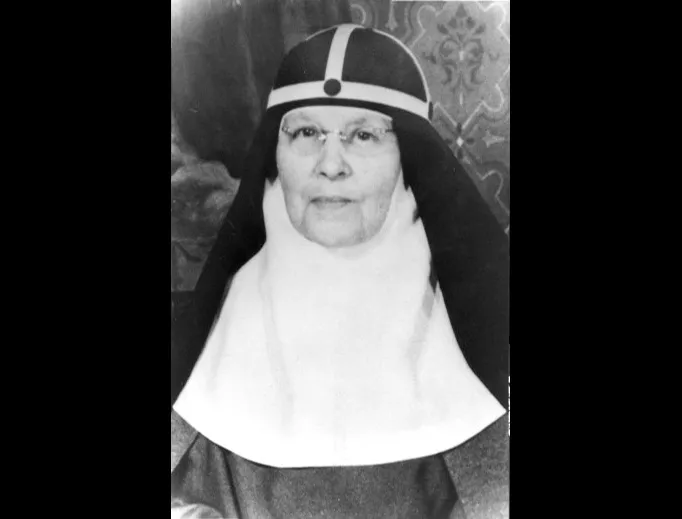
Saint Mary Elizabeth Hesselblad
Feast Day: June 4
The following story appeared in the May 26 Idaho Catholic Register.
By Emily Woodham
Staff Writer
On October 8, 1923, a Pontifical High Mass was celebrated for the first time in 350 years in Stockholm.
It was the Feast of St. Bridget of Sweden, the medieval patron saint of Sweden and Europe. The Mass also marked the return of the Bridgittine religious Order to the saint’s homeland, after 400 years of banishment.
The celebration of the Mass and the revival of the Order came about through the humble perseverance of St. Mary Elizabeth Hesselblad, a convert whose heart for a unified Church helped transform Europe.
Elizabeth Hesselblad was born on June 4, 1870 in a small town in Sweden. She was the fifth of 13 children.
The Catholic Mass had been outlawed in Sweden since the late 1500s. The Mass was seen as a threat to the state religion of Lutheranism. The few Catholics who lived in Sweden had to travel out of country to receive the sacraments. Despite the suppression of Catholicism, other branches of Protestantism were allowed in Sweden.
The Hesselblads were staunch Lutherans. While at school, Elizabeth couldn’t understand why there were so many divisions in Christianity.
Elizabeth asked Jesus to show her what He meant when He said He was the one Good Shepherd of one, united flock. She felt a voice in her heart say to her that he would show her this truth one day. Then she had a vision of the house in Rome that was used by St. Bridget of Sweden in the 14th century. Elizabeth didn’t know what to think of the vision, but she carried it with her as she grew up.
Although Elizabeth loved school, her family’s finances became so dire that she had to leave home to work. She became a nanny for a small family, but they were difficult and dishonest. After two years, she took the opportunity to go to the United States with a group of family friends, who were also seeking a better life. Only 18, she also took her younger brother, who was 11.
After a year working as a nanny in the United States, she became seriously ill with intestinal ulcers. She was hospitalized for two months. Although she was in excruciating pain and the doctors believed she would not survive, she was still aware of the suffering of other patients. She asked God to heal her enough so that she could become a nurse and help relieve the suffering of others. Miraculously, she recovered, but she suffered from ulcers throughout her life.
After becoming a nurse, she learned of Catholicism through her patients. Elizabeth decided to leave hospital work for private nursing in 1896. She became a nurse and companion to two teenage daughters of wealthy Catholics, the Cisneros family.
While in Europe with the family, she saw her first Eucharistic procession. She hid herself because she did not want to kneel, but she also did not want to be rude. She prayed silently, “I do kneel before You, God, but not here.”
Soon after praying this, she felt something stir within her. When the Bishop passed by her with the monstrance, she heard an interior voice say, “I am the One you are looking for!” She could not help but fall to her knees and worship.
She struggled with this experience and so many other signs that the Catholic Church was the one, true flock of Christ. She wanted to hold on to her Protestant beliefs, especially her love of personal freedom. She could not understand submitting to the authority of the Church, believing, instead in only the authority of scripture.
It wasn’t until 1902 that her eyes were opened to her perfectionism. She had been looking for a perfect church free of suffering. She realized that the only Church that held the full truth about sin, suffering and salvation was the Catholic Church.
When she told a Jesuit priest whom she had just met, Father Johan Hagen, S.J., that she wanted to enter the Church immediately, he did not think she was prepared. He thought she was prideful. But after examining her for hours, he had to agree that she was prepared for reception in the Church and that it would be wrong to make her wait. From then on, their friendship deepened, and he became her spiritual director.
During a visit to Rome with the Cisneros family, she stayed at the Piazza Farnese, where St. Bridget of Sweden lived. She remembered her childhood vision and felt a strong call to become a Sister and revive the Order of St. Bridget. Her journey through re-establishing the Order in Rome and Sweden was marked by setbacks, especially from other Catholic Religious who were jealous of her perseverance and hard work.
With help from Pope St. Pius X and Father Hagen, she succeeded in establishing a branch of the Bridgittines: The Order of the Most Holy Saviour. At her vows, she took the name “Mary Elizabeth.” It was in her convent in Sweden that author Sigrid Undset went to contemplate her conversion to the Church.
During World War II, Mother Mary Elizabeth and her Sisters successfully kept more than 60 Jews safe from the Nazis. (Yad Vashem, Israel’s Holocaust remembrance center, honored her posthumously in 2004 as one of the “Righteous Among the Nations,” an award given to non-Jews who helped Jews during the Holocaust.)
Toward the end of her life, she became more concerned with ecumenical efforts and for peace. She refused to water down her Catholic faith to please others. However, she believed that the best way to answer Christ’s call for unity was to reach out in friendship to everyone. She believed that it was possible for friends to have differing beliefs and that it was through everyday friendships that the world would be changed for the better.
She died on April 24, 1957. She was canonized in 2016.
St. Mary Elizabeth Hesselbad is a patron saint of the Bridgittines, nuns and nursing.
catholicidaho.org
8
posted on
06/04/2024 4:05:27 AM PDT
by
annalex
(fear them not)
To: annalex
9
posted on
06/04/2024 4:07:36 AM PDT
by
annalex
(fear them not)
To: annalex
NAVARRE BIBLE COMMENTARY (RSV)
Ad Majorem Dei Gloriam (To the Greater Glory of God)
First Reading:
From: 2 Peter 3:12-15a, 17-18
Moral Lessons to be Drawn
--------------------------------
[12] Wait for and hasten the coming of the day of God, because of which the heavens will be kindled and dissolved, and the elements will melt with fire! [13] But according to his promise we wait for new heavens and a new earth in which righteousness dwells.
[14] Therefore, beloved, since you wait for these, be zealous to be found by him without spot or blemish, and at peace. [15a] And count the forbearance of our Lord as salvation.
[17] You therefore, beloved, knowing this beforehand, beware lest you be carried away with the error of lawless men and lose your own stability. [18] But grow in the grace and knowledge of our Lord and Savior Jesus Christ. To him be the glory both now and to the day of eternity. Amen.
***********************************************************************
Commentary:
11-16. The writer now follows up these considerations with a moral exhortation, based on the conviction that the old world will disappear (v. 12) producing new heavens and a new earth (v. 13), and that men living in the period prior to this cataclysm will not know when it is going to happen (v. 15).
All this should not make Christians afraid; in fact, it should bolster their hope (vv. 12-14). God will keep his promise to grant heaven to those who persevere in good; but this hope of future reward should not lead one to neglect temporal affairs: "Far from diminishing our concern to develop the earth, the expectancy of a new earth should spur us on, for it is here that the body of a new human family grows, foreshadowing in some way the age which is to come" (Vatican II, "Gaudium Et Spes", 39).
Hope opens the way to upright conduct (v. 11) of an even higher standard (v. 14). Christians should realize that they have a pressing duty to grow in virtue as long as they live in this world (v. 15): "God may have given us just one more year in which to serve him. Don't think of five, or even two. Just concentrate on this one year, that has just started. Give it to God, don't bury it! This is the resolution we ought to make" (St J. Escriva, "Friends of God", 47).
The practice of virtue leads to holiness and enduring union with God (v. 14; cf. 1 Thess 3:13). "'While we are at home in the body we are away from the Lord' (2 Cor 5:6) and, although we have the first fruits of the Spirit, we groan inwardly (cf. Rom 8:23) in our anxiety to be with Christ (cf. Phil 1:23). The same love urges us to live more for Him who died for us and who rose again (cf. 2 Cor 5:15). We make it our aim, then, to please the Lord in all things (cf. 2 Cor 5:9) and we put on the armor of God that we may be able to stand against the wiles of the devil and resist the evil day (cf. Eph 6: 13)" ("Lumen Gentium", 48).
12. "Waiting for and hastening": these two verbs convey the idea that Christian hope is something dynamic; it is in no way passive. Contrary to a view quite widespread among the Jews of the time, it does not mean that the Parousia will come sooner, the more meritorious men are; what it means is that the more closely united to Christ they are, the nearer they are to his glory. Therefore, it is urgent that all should embrace faith in Christ. We who have this faith pray in the Our Father, "Thy kingdom come." The first Christians made the same petition in their ejaculatory prayer, "Marana tha", "Come, Lord" (1 Cor 16:22; Rev 22:20), referring to the second coming of the Lord.
"The day of God": the usual expression in the New Testament is "the day of the Lord" (1 Cor 1:8; 5:5; 1 Thess 5:2; 2 Thess 2:2; 2 Pet 3:10); both expressions refer to the point at which Christ will come to judge the living and the dead.
13. "New heavens and a new earth": one of things promised for the End is that creation will be renewed, re-fashioned: the prophets proclaimed this (cf. Is 65:17), and the New Testament speaks of drinking new wine at the heavenly banquet (cf. Mt 14:25), being given a new name (cf. Rev 2:17), singing a new song (cf. Rev 5:9), living in a new Jerusalem (Rev 21:3). All this imagery conveys the idea that the whole universe will be transformed, man included (cf. Rom 8:19-22). "We know neither the moment of the consummation of the earth and of man (cf. Acts 1:7) nor the way the universe will be transformed. The form of this world, distorted by sin, is passing away (cf. 1 Cor 7:31), and we are taught that God is preparing a new dwelling and a new earth in which righteousness dwells (cf. 2 Cor 5:2; 2 Pet 3:13), whose happiness will fill and surpass all the desires of peace arising in the hearts of men" ("Gaudium Et Spes", 39).
17-18. The letter ends with a very succinct summary of some of its main points-- pastoral concern, ways to defend oneself against false teachers, and faith in the divinity of Christ.
"Beloved": the faithful are referred to in this solicitous way elsewhere in the letter (3:1, 8, 14). The warnings and threats made by the sacred writer are born of his pastoral zeal to establish them in the truth (1:12) and remind them what the true teaching is (3:1).
When he encourages them not to lose their "own strength", he is reminding them that firmness in the faith is an essential weapon for protecting themselves against deceitful teachers who are causing their faith and morals to waver (cf. 2; 3:16). Understanding and love should be shown towards those who are in error, but this should not "make us indifferent to truth and goodness. Love, in fact, impels the followers of Christ to proclaim to all men the truth which saves ("Gaudium Et Spes", 28).
"To him be the glory": most of the doxologies which appear in the New Testament are in praise of God the Father (cf. Jude 25; Rom 16:27); this one addressed to Christ, whose divinity, as in other passages of the epistle, is openly confessed, He has the same glory as the Father: the doxology is not simply expressing a desire but stating a fact. The eternal love of Jesus Christ is the basis of the Christian's hope. "While she slowly grows to maturity, the Church longs for the completed Kingdom and, with all her strength, hopes and desires, to be united in glory with her King" ("Lumen Gentium", 5).
10
posted on
06/04/2024 7:58:10 AM PDT
by
fidelis
(Ecce Crucem Domini! Fugite partes adversae! Vicit Leo de tribu Juda, Radix David! Alleluia!)
Gospel Reading: From: Mark 12:1-17
On tribute to Caesar
-------------------------
[13] And they sent to him some of the Pharisees and some of the Hero'di-ans, to entrap him in his talk. [14] And they came and said to him, "Teacher, we know that you are true, and care for no man; for you do not regard the position of men, but truly teach the way of God. Is it lawful to pay taxes to Caesar, or not? [15] Should we pay them, or should we not?" But knowing their hypocrisy, he said to them, "Why put me to the test? Bring me a coin, and let me look at it." [16] And they brought one. And he said to them, "Whose likeness and inscription is this?" They said to him, "Caesar's." [17] Jesus said to them, "Render to Caesar the things that are Caesar's, and to God the things that are God's." And they were amazed at him.
***********************************************************************
Commentary:
13-17. Jesus uses this situation to teach that man belongs totally to his Creator: "You must perforce give Caesar the coin which bears his likeness, but let you give your whole being to God, because it is his likeness, not Caesar's that you bear" (St. Jerome, "Comm. in Marcum, in loc.").
Our Lord here asserts a principle which should guide the action of Christians in public life. The Church recognizes the rightful autonomy of earthly realities, but this does not mean that she has not a responsibility to light them up with the light of the Gospel. When they work shoulder to shoulder with other citizens to develop society, Christian lay people should bring a Christian influence to bear: "If the role of the Hierarchy is to teach and to interpret authentically the norms of morality to be followed in this matter, it belongs to lay people, without waiting passively for orders and directives, to take the initiative freely and to infuse a Christian spirit into the mentality, customs, laws and structures of the community in which they live. Changes are necessary, basic reforms are indispensable; lay people should strive resolutely to permeate them with the spirit of the Gospel" (St. Paul VI, "Populorum Progressio", 81).
11
posted on
06/04/2024 7:58:28 AM PDT
by
fidelis
(Ecce Crucem Domini! Fugite partes adversae! Vicit Leo de tribu Juda, Radix David! Alleluia!)
To: fidelis
12
posted on
06/04/2024 7:59:24 AM PDT
by
fidelis
(Ecce Crucem Domini! Fugite partes adversae! Vicit Leo de tribu Juda, Radix David! Alleluia!)
To: fidelis
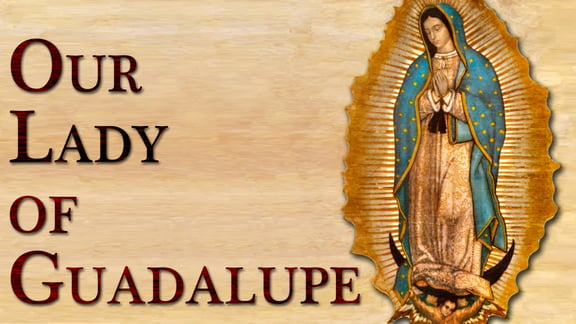 Please join Cardinal Burke’s novena to Our Lady of Guadalupe for ‘crises of our age’ (Started March 12—Never too late to join!)
Let us pray.
O Virgin Mother of God, we fly to your protection and beg your intercession against the darkness and sin which ever more envelop the world and menace the Church. Your Son, Our Lord Jesus Christ, gave you to us as our mother as He died on the Cross for our salvation. So too, in 1531, when darkness and sin beset us, He sent you, as Our Lady of Guadalupe, on Tepeyac to lead us to Him Who alone is our light and our salvation.
Through your apparitions on Tepeyac and your abiding presence with us on the miraculous mantle of your messenger, Saint Juan Diego, millions of souls converted to faith in your Divine Son. Through this novena and our consecration to you, we humbly implore your intercession for our daily conversion of life to Him and the conversion of millions more who do not yet believe in Him. In our homes and in our nation, lead us to Him Who alone wins the victory over sin and darkness in us and in the world.
Unite our hearts to your Immaculate Heart so that they may find their true and lasting home in the Most Sacred Heart of Jesus. Ever guide us along the pilgrimage of life to our eternal home with Him. So may our hearts, one with yours, always trust in God's promise of salvation, in His never-failing mercy toward all who turn to Him with a humble and contrite heart. Through this novena and our consecration to you, O Virgin of Guadalupe, lead all souls in America and throughout the world to your Divine Son in Whose name we pray. Amen.
13
posted on
06/04/2024 7:59:49 AM PDT
by
fidelis
(Ecce Crucem Domini! Fugite partes adversae! Vicit Leo de tribu Juda, Radix David! Alleluia!)
Comment #14 Removed by Moderator
To: fidelis
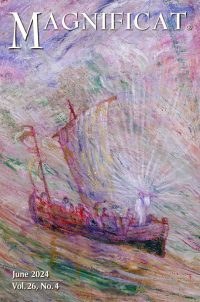
“O God of glory and compassion, you rule over the powerful of the earth and you gather up the sparrow when it falls. Grant us wisdom to see your works in our daily lives and to praise you at every turn, through our Lord Jesus Christ, your Son, who lives and reigns with you in the unity of the Holy Spirit, God, for ever and ever. Amen.” (From Magnificat magazine)
15
posted on
06/04/2024 8:00:54 AM PDT
by
fidelis
(Ecce Crucem Domini! Fugite partes adversae! Vicit Leo de tribu Juda, Radix David! Alleluia!)
To: fidelis
16
posted on
06/04/2024 8:01:19 AM PDT
by
fidelis
(Ecce Crucem Domini! Fugite partes adversae! Vicit Leo de tribu Juda, Radix David! Alleluia!)
June is the month of devotion to the Sacred Heart of Jesus: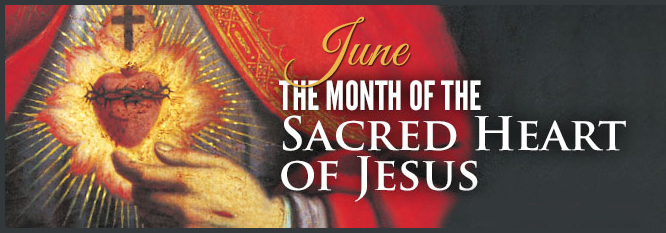
17
posted on
06/04/2024 8:01:59 AM PDT
by
fidelis
(Ecce Crucem Domini! Fugite partes adversae! Vicit Leo de tribu Juda, Radix David! Alleluia!)
Disclaimer:
Opinions posted on Free Republic are those of the individual
posters and do not necessarily represent the opinion of Free Republic or its
management. All materials posted herein are protected by copyright law and the
exemption for fair use of copyrighted works.
FreeRepublic.com is powered by software copyright 2000-2008 John Robinson