Free Republic
Browse · Search
Religion
Topics · Post Article

Skip to comments.

Catholic Caucus: Daily Mass Readings 3-June-2024
Universalis/Jerusalem Bible ^

Posted on 06/03/2024 3:44:11 AM PDT by annalex

3 June 2024

Saints Charles Lwanga and his Companions, Martyrs
on Monday of week 9 in Ordinary Time


Uganda Martyrs Catholic Shrine Basilica, Namugongo, Uganda

Readings at Mass

Liturgical Colour: Red. Year: B(II).

Readings for the feria

Readings for the memorial

These are the readings for the feria


First reading2 Peter 1:2-7 ©

You will be able to share the divine nature if you add goodness to your faith

May you have more and more grace and peace as you come to know our Lord more and more.
  By his divine power, he has given us all the things that we need for life and for true devotion, bringing us to know God himself, who has called us by his own glory and goodness. In making these gifts, he has given us the guarantee of something very great and wonderful to come: through them you will be able to share the divine nature and to escape corruption in a world that is sunk in vice. But to attain this, you will have to do your utmost yourselves, adding goodness to the faith that you have, understanding to your goodness, self-control to your understanding, patience to your self-control, true devotion to your patience, kindness towards your fellow men to your devotion, and, to this kindness, love.

Responsorial Psalm
Psalm 90(91):1-2,14-16 ©
My God, in you I trust.
He who dwells in the shelter of the Most High
  and abides in the shade of the Almighty
says to the Lord: ‘My refuge,
  my stronghold, my God in whom I trust!’
My God, in you I trust.
His love he set on me, so I will rescue him;
  protect him for he knows my name.
When he calls I shall answer: ‘I am with you.’
My God, in you I trust.
I will save him in distress and give him glory.
  With length of life I will content him;
  I shall let him see my saving power.
My God, in you I trust.

Gospel Acclamationcf.Col3:16a,17
Alleluia, alleluia!
Let the message of Christ, in all its richness,
find a home with you;
through him give thanks to God the Father.
Alleluia!
Or:cf.Rv1:5
Alleluia, alleluia!
You, O Christ, are the faithful witness,
the First-born from the dead;
you have loved us and have washed away our sins with your blood.
Alleluia!

GospelMark 12:1-12 ©

They seized the beloved son, killed him and threw him out of the vineyard

Jesus began to speak to the chief priests, the scribes and the elders in parables: ‘A man planted a vineyard; he fenced it round, dug out a trough for the winepress and built a tower; then he leased it to tenants and went abroad. When the time came, he sent a servant to the tenants to collect from them his share of the produce from the vineyard. But they seized the man, thrashed him and sent him away empty-handed. Next he sent another servant to them; him they beat about the head and treated shamefully. And he sent another and him they killed; then a number of others, and they thrashed some and killed the rest. He had still someone left: his beloved son. He sent him to them last of all. “They will respect my son” he said. But those tenants said to each other, “This is the heir. Come on, let us kill him, and the inheritance will be ours.” So they seized him and killed him and threw him out of the vineyard. Now what will the owner of the vineyard do? He will come and make an end of the tenants and give the vineyard to others. Have you not read this text of scripture:
It was the stone rejected by the builders
that became the keystone.
This was the Lord’s doing
and it is wonderful to see?
And they would have liked to arrest him, because they realised that the parable was aimed at them, but they were afraid of the crowds. So they left him alone and went away.

Continue

These are the readings for the memorial


First reading
2 Maccabees 7:1-2,9-14 ©

'The King of the world will raise us up to live for ever'

There were seven brothers who were arrested with their mother. The king tried to force them to taste pig’s flesh, which the Law forbids, by torturing them with whips and scourges. One of them, acting as spokesman for the others, said, ‘What are you trying to find out from us? We are prepared to die rather than break the laws of our ancestors.’
  With his last breath the second brother exclaimed, ‘Inhuman fiend, you may discharge us from this present life, but the King of the world will raise us up, since it is for his laws that we die, to live again for ever.’
  After him, they amused themselves with the third, who on being asked for his tongue promptly thrust it out and boldly held out his hands, with these honourable words, ‘It was heaven that gave me these limbs; for the sake of his laws I disdain them; from him I hope to receive them again.’ The king and his attendants were astounded at the young man’s courage and his utter indifference to suffering.
  When this one was dead they subjected the fourth to the same savage torture. When he neared his end he cried, ‘Ours is the better choice, to meet death at men’s hands, yet relying on God’s promise that we shall be raised up by him; whereas for you there can be no resurrection, no new life.’

Responsorial Psalm
Psalm 123(124):2-5,7-8 ©
Our life, like a bird, has escaped from the snare of the fowler.
If the Lord had not been on our side
  when men rose up against us,
then would they have swallowed us alive
  when their anger was kindled.
Our life, like a bird, has escaped from the snare of the fowler.
Then would the waters have engulfed us,
  the torrent gone over us;
over our head would have swept
  the raging waters.
Our life, like a bird, has escaped from the snare of the fowler.
Indeed the snare has been broken
  and we have escaped.
Our help is in the name of the Lord,
  who made heaven and earth.
Our life, like a bird, has escaped from the snare of the fowler.

Gospel AcclamationMt5:3
Alleluia, alleluia!
How happy are the poor in spirit:
theirs is the kingdom of heaven.
Alleluia!

GospelMatthew 5:1-12 ©

How happy are the poor in spirit

Seeing the crowds, Jesus went up the hill. There he sat down and was joined by his disciples. Then he began to speak. This is what he taught them:
‘How happy are the poor in spirit;
  theirs is the kingdom of heaven.
Happy the gentle:
  they shall have the earth for their heritage.
Happy those who mourn:
  they shall be comforted.
Happy those who hunger and thirst for what is right:
  they shall be satisfied.
Happy the merciful:
  they shall have mercy shown them.
Happy the pure in heart:
  they shall see God.
Happy the peacemakers:
  they shall be called sons of God.
Happy those who are persecuted in the cause of right:
  theirs is the kingdom of heaven.
‘Happy are you when people abuse you and persecute you and speak all kinds of calumny against you on my account. Rejoice and be glad, for your reward will be great in heaven: this is how they persecuted the prophets before you.’

Continue


Christian Art

Illustration

Each day, The Christian Art website gives a picture and reflection on the Gospel of the day.

The readings on this page are from the Jerusalem Bible, which is used at Mass in most of the English-speaking world. The New American Bible readings, which are used at Mass in the United States, are available in the Universalis apps, programs and downloads.

You can also view this page with the Gospel in Greek and English.


TOPICS: Catholic; General Discusssion; Prayer; Worship
KEYWORDS: catholic; mk12; ordinarytime; prayer
For your reading, reflection, faith-sharing, comments, questions, discussion.

1 posted on 06/03/2024 3:44:11 AM PDT by annalex
[ Post Reply | Private Reply | View Replies]

To: All

KEYWORDS: catholic; mk12; ordinarytime; prayer;


2 posted on 06/03/2024 3:44:44 AM PDT by annalex (fear them not)
[ Post Reply | Private Reply | To 1 | View Replies]

To: nickcarraway; NYer; ELS; Pyro7480; livius; ArrogantBustard; Catholicguy; RobbyS; marshmallow; ...

Alleluia Ping

Please FReepmail me to get on/off the Alleluia Ping List.


3 posted on 06/03/2024 3:45:34 AM PDT by annalex (fear them not)
[ Post Reply | Private Reply | To 2 | View Replies]

To: annalex
My dad is back in the hospital. [JimRob update at 242]
Jim still needs our prayers. Thread 2
Prayer thread for Salvation's recovery
Pray for Ukraine
Prayer thread for Fidelis' recovery
Update on Jim Robinson's health issues
4 posted on 06/03/2024 3:45:53 AM PDT by annalex (fear them not)
[ Post Reply | Private Reply | To 3 | View Replies]

To: annalex
Mark
 English: Douay-RheimsLatin: Vulgata ClementinaGreek NT: Byzantine/Majority Text (2000)
 Mark 12
1AND he began to speak to them in parables: A certain man planted a vineyard and made a hedge about it, and dug a place for the winefat, and built a tower, and let it to husbandmen; and went into a far country. Et cœpit illis in parabolis loqui : Vineam pastinavit homo, et circumdedit sepem, et fodit lacum, et ædificavit turrim, et locavit eam agricolis, et peregre profectus est.και ηρξατο αυτοις εν παραβολαις λεγειν αμπελωνα εφυτευσεν ανθρωπος και περιεθηκεν φραγμον και ωρυξεν υποληνιον και ωκοδομησεν πυργον και εξεδοτο αυτον γεωργοις και απεδημησεν
2And at the season he sent to the husbandmen a servant to receive of the husbandmen of the fruit of the vineyard. Et misit ad agricolas in tempore servum ut ab agricolis acciperet de fructu vineæ.και απεστειλεν προς τους γεωργους τω καιρω δουλον ινα παρα των γεωργων λαβη απο του καρπου του αμπελωνος
3Who having laid hands on him, beat him, and sent him away empty. Qui apprehensum eum ceciderunt, et dimiserunt vacuum.οι δε λαβοντες αυτον εδειραν και απεστειλαν κενον
4And again he sent to them another servant; and him they wounded in the head, and used him reproachfully. Et iterum misit ad illos alium servum : et illum in capite vulneraverunt, et contumeliis affecerunt.και παλιν απεστειλεν προς αυτους αλλον δουλον κακεινον λιθοβολησαντες εκεφαλαιωσαν και απεστειλαν ητιμωμενον
5And again he sent another, and him they killed: and many others, of whom some they beat, and others they killed. Et rursum alium misit, et illum occiderunt : et plures alios : quosdam cædentes, alios vero occidentes.και παλιν αλλον απεστειλεν κακεινον απεκτειναν και πολλους αλλους τους μεν δεροντες τους δε αποκτενοντες
6Therefore having yet one son, most dear to him; he also sent him unto them last of all, saying: They will reverence my son. Adhuc ergo unum habens filium carissimum, et illum misit ad eos novissimum, dicens : Quia reverebuntur filium meum.ετι ουν ενα υιον εχων αγαπητον αυτου απεστειλεν και αυτον προς αυτους εσχατον λεγων οτι εντραπησονται τον υιον μου
7But the husbandmen said one to another: This is the heir; come let us kill him; and the inheritance shall be ours. Coloni autem dixerunt ad invicem : Hic est hæres : venite, occidamus eum : et nostra erit hæreditas.εκεινοι δε οι γεωργοι ειπον προς εαυτους οτι ουτος εστιν ο κληρονομος δευτε αποκτεινωμεν αυτον και ημων εσται η κληρονομια
8And laying hold on him, they killed him, and cast him out of the vineyard. Et apprehendentes eum, occiderunt : et ejecerunt extra vineam.και λαβοντες αυτον απεκτειναν και εξεβαλον εξω του αμπελωνος
9What therefore will the lord of the vineyard do? He will come and destroy those husbandmen; and will give the vineyard to others. Quid ergo faciet dominus vineæ ? Veniet, et perdet colonos, et dabit vineam aliis.τι ουν ποιησει ο κυριος του αμπελωνος ελευσεται και απολεσει τους γεωργους και δωσει τον αμπελωνα αλλοις
10And have you not read this scripture, The stone which the builders rejected, the same is made the head of the corner: Nec scripturam hanc legistis : Lapidem quem reprobaverunt ædificantes, hic factus est in caput anguli :ουδε την γραφην ταυτην ανεγνωτε λιθον ον απεδοκιμασαν οι οικοδομουντες ουτος εγενηθη εις κεφαλην γωνιας
11By the Lord has this been done, and it is wonderful in our eyes. a Domino factum est istud, et est mirabile in oculis nostris ?παρα κυριου εγενετο αυτη και εστιν θαυμαστη εν οφθαλμοις ημων
12And they sought to lay hands on him, but they feared the people. For they knew that he spoke this parable to them. And leaving him, they went their way. Et quærebant eum tenere : et timuerunt turbam : cognoverunt enim quoniam ad eos parabolam hanc dixerit. Et relicto eo abierunt.και εζητουν αυτον κρατησαι και εφοβηθησαν τον οχλον εγνωσαν γαρ οτι προς αυτους την παραβολην ειπεν και αφεντες αυτον απηλθον

5 posted on 06/03/2024 3:49:56 AM PDT by annalex (fear them not)
[ Post Reply | Private Reply | To 4 | View Replies]

To: annalex
1. And he began to speak to them by parables. A certain man planted a vineyard, and set a hedge about it, and dug a place for the winefat, and built a tower, and let it out to husbandmen, and went into a far country.
2. And at the season he sent to the husbandmen a servant, that he might receive from the husbandmen of the fruit of the vineyard.
3. And they caught him, and beat him, and sent him away empty.
4. And again he sent to them another servant; and at him they cast stones, and wounded him in the head, and sent him away shamefully handled.
5. And again he sent another; and him they killed, and many others; beating some, and killing some.
6. Having yet therefore one son, his well-beloved, he sent him also last to them, saying, They will reverence my son.
7. But those husbandmen said among themselves, This is the heir; come, let us kill him, and the inheritance shall be ours.
8. And they took him, and killed him, and cast him out of the vineyard.
9. What shall therefore the lord of the vineyard do? he will come and destroy the husbandmen, and will give the vineyard to others.
10. And have you not read this Scripture; The stone which the builders rejected is become the head of the corner:
11. This was the Lord's doing, and it is marvelous in our eyes?
12. And they sought to lay hold on him, but feared the people: for they knew that he had spoken the parable against them: and they left him, and went their way.

GLOSS. After the Lord had closed the mouths of His tempters by a wise question, He next shows their wickedness in a parable; wherefore it is said: And he began to speak to them by parables. A certain man planted a vineyard.

PSEUDO-JEROME; God the Father is called a man by a human conception. The vineyard is the house of Israel; the hedge is the guardianship of Angels; the winefat is the law, the tower is the temple, and the husbandmen, the priests.

BEDE; Or else, the hedge is the wall of the city, the winefat is the altar, or those winefats, by which the psalms receive their name.

THEOPHYL. Or, the hedge is the law, which prohibited their mingling with strangers. There follows, And went into afar country.

BEDE; Not by any change of place, but He seemed to go away from the vineyard, that He might leave the husbandmen to act on their own freewill. It goes on: And at the season he sent to the husbandmen a servant, that he might receive from the husbandmen of the fruit of the vineyard.

PSEUDO-JEROME; The servants who were sent were the prophets, the fruit of the vineyard is obedience; some of the prophets were beaten, others wounded, others slain. Wherefore it goes on, And they caught him, and beat him, and sent him away empty.

BEDE; By the servant who was first sent, we must understand Moses, but they beat him, and sent him away empty, because they angered Moses in the tents.

There follows, And again he sent to them another servant, and they wounded him in the head, and sent him away shamefully handled. This other servant means David and the other Psalmists, but they wounded Him in time head and shamefully handled him, because they despised the songs of the Psalmists, and rejected David himself, saying, What portion have we in David?

It goes on, And he sent another; and him they killed, and many others; beating some, and killing some. By the third servant and his companions, understand the band of the prophets. But which of the prophets did they not persecute? In these three kinds of servants, as the Lord Himself elsewhere pronounces, may be included in a figure all the doctors under the law, when He says, that all things must be fulfilled which were written in the Law of Moses, and in the Prophets, and in the Psalms, concerning Me.

THEOPHYL. Or else, By the first servant, understand the prophets who lived about the time of Elias, for Zedekiah the false prophet beat Micaiah; and by the second servant whom they wounded in the head, that is, evil entreated, We may understand the prophets who lived about the time of Hosea and Isaiah; but by the third servant understand the prophets who flourished about the time of Daniel and Ezekiel. It goes on, Having yet therefore one son, his well-beloved, he sent him also last to them, saying, Perchance they will reverence my son.

PSEUDO-JEROME; The well-beloved son and the last is the Only-begotten; and in that He Says, They will reverence my son, He speaks in irony.

BEDE; Or else, this is not said in ignorance, but God is said to doubt, that freedom of will may be left to man.

THEOPHYL. Or else, He said this not as though He were ignorant of what was to happen, but to show what it was right and fitting that they should do. But those husbandmen said amongst themselves, This is the heir, come, let us kill him, and the inheritance will be ours.

BEDE; The Lord proves most clearly that the chiefs of the Jews did not crucify the Son of God through ignorance, but through envy; for they understood that this was He to whom it was said, I will give you the heathen for your inheritance. But these evil husbandmen strove to seize upon it by slaying Him, when the Jews crucifying Him tried to extinguish the faith which is by Him, and rather to bring forward their own righteousness which is by the Law, and to thrust it on the nations, and to imbue them with it.

There follows: And they took him, and killed him, and cast him out of the vineyard.

THEOPHYL. That is, without Jerusalem, for the Lord was crucified out of the city.

PSEUDO-JEROME; Or else, they cast Him out of the vineyard, that is, out of the people, saying, You are a Samaritan, and have a devil. Or, as far as in them lay, they cast Him out of their own borders, and gave Him up to the Gentiles that they might receive Him.

There follows, What then will the Lord of the vineyard do? He will come and destroy those husbandmen, and give the vineyard to other.

AUG. Matthew indeed subjoins that they answered and said, He will miserably destroy those wicked men , which Mark here says was not their answer, but that the Lord after putting the question, as it were answered Himself. But we may easily understand either that their answer was, subjoined without the insertion of, they answered, or they said, which at the same time was implied; or else, that their answer, being the truth, was attributed to the Lord, since He also Himself gave this answer concerning them, being the Truth.

THEOPHYL. The Lord of the vineyard then is the Father of the Son who was slain, and the Son Himself is He who was slain, who will destroy those husbandmen, by giving them up to the Romans, and who will give the people to other husbandmen, that is, to the Apostles. Read the Acts of the Apostles, and you will find three thousand, and five thousand on a sudden believing and bearing fruit to God.

PSEUDO-JEROME; Or else, the vineyard is given to others, that is, to those who come from the east, and from the west, and from the south, and from the north, and who sit down with Abraham, Isaac, and Jacob in the kingdom of heaven.

BEDE; But that this was done by Divine interposition he affirms, by immediately afterwards adding, And have you not read this Scripture, The stone which the builders refused is become the head-stone in the corner? As if he had said, how is this prophecy to be fulfilled, save in that Christ, being rejected and slain by you, is to be preached to the Gentiles, who will believe on Him? Thus then as a corner stone, He will found the two people on Him self, and of the two people will build for Himself a city of the faithful, one temple. For the masters of the synagogue, whom He had just called husbandmen, He now calls builders, because the same persons, who seemed to cultivate His people, that they might bear the fruits of life, like a vineyard, were also commanded to construct and adorn this people, to be, as it were, a house worthy to have God for its inhabitant.

THEOPHYL. The stone then which the builders refused, the same has become the head-stone of the corner, that is, of the Church. For the Church is, as it were, the corner, joining together Jews and Gentiles; and this corner has been made by the Lord, and is wonderful in our eyes, that is, in the eyes of the faithful; for miracles meet with detraction from the faithless. The Church indeed is wonderful, as it were resting on wonders, for the Lord worked with the Apostles, and confirmed the word with signs. And this is what is meant, when it is said, This was the Lord's doing, and it is marvelous in our eyes.

PSEUDO-JEROME; This rejected stone, which is borne by that corner where the lamb and the bread met in the supper, ending the Old and beginning the New Testament, does things marvelous in our eyes as the topaz.

BEDE; But the Chief Priests showed that those things which the Lord had spoken were true; which is proved from what follows: And they sought to lay hold on him; for He Himself is the heir, whose unjust death He said was to be revenged by the Father. Again, in a moral sense, each of the faithful, when the Sacrament of Baptism is entrusted to him, receives on hire a vineyard, which he is to cultivate. But the servant sent to him is evil entreated, beaten, and cast out, when the word is heard by him and despised, or, what is worse, even blasphemed; further, he kills, as far as in him lies, the heir, who has trampled under foot time Son of God.

The evil husbandman is destroyed, and the vineyard given to another, when the humble shall be enriched with that gift of grace, which the proud man has scorned. And it happens daily in the Church, that the Chief Priests wishing to lay hands on Jesus, are held back by the multitude, when some one, who is a brother only in name, either blushes or fears to attack the unity of the faith of the Church, and of its peace, though he loves it not, on account of the number of good brethren who dwell together within it.

Catena Aurea Mark 12
6 posted on 06/03/2024 3:52:09 AM PDT by annalex (fear them not)
[ Post Reply | Private Reply | To 5 | View Replies]

To: annalex

7 posted on 06/03/2024 3:52:34 AM PDT by annalex (fear them not)
[ Post Reply | Private Reply | To 6 | View Replies]

To: annalex

Saint of the Day for June 3

(d. between November 15, 1885 – January 27, 1887)


Saint Charles Lwanga and Companions’ Story

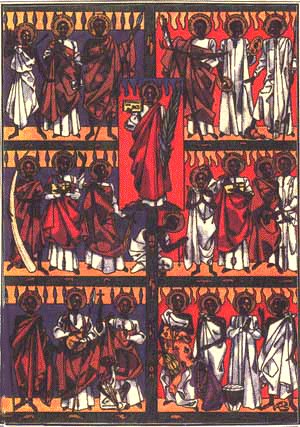
One of 22 Ugandan martyrs, Charles Lwanga is the patron of youth and Catholic action in most of tropical Africa. He protected his fellow pages, aged 13 to 30, from the sexual demands of the Bagandan ruler, Mwanga, and encouraged and instructed them in the Catholic faith during their imprisonment for refusing the ruler’s demands.

Charles first learned of Christ’s teachings from two retainers in the court of Chief Mawulugungu. While a catechumen, he entered the royal household as assistant to Joseph Mukaso, head of the court pages.

On the night of Mukaso’s martyrdom for encouraging the African youths to resist Mwanga, Charles requested and received baptism. Imprisoned with his friends, Charles’ courage and belief in God inspired them to remain chaste and faithful.

For his own unwillingness to submit to the immoral acts and his efforts to safeguard the faith of his friends, Charles was burned to death at Namugongo on June 3, 1886, by Mwanga’s order.

When Pope Paul VI canonized these 22 martyrs on October 18, 1964, he also made reference to the Anglican pages martyred for the same reason.


Reflection

Like Charles Lwanga, we are all teachers and witnesses to Christian living by the examples of our own lives. We are all called upon to spread the word of God, whether by word or deed. By remaining courageous and unshakable in our faith during times of great moral and physical temptation, we live as Christ lived.


franciscanmedia.org
8 posted on 06/03/2024 3:55:32 AM PDT by annalex (fear them not)
[ Post Reply | Private Reply | To 7 | View Replies]

To: annalex

OK... what on earth is winefat?


9 posted on 06/03/2024 3:55:56 AM PDT by Mr. K (No consequence of repealing Obamacare is worse than Obamacare)
[ Post Reply | Private Reply | To 6 | View Replies]

To: annalex


Saint Charles Lwanga (in the center) and his 21 followers

10 posted on 06/03/2024 3:58:28 AM PDT by annalex (fear them not)
[ Post Reply | Private Reply | To 8 | View Replies]

To: Mr. K
biblehub.com
11 posted on 06/03/2024 4:03:44 AM PDT by annalex (fear them not)
[ Post Reply | Private Reply | To 9 | View Replies]

To: annalex
NAVARRE BIBLE COMMENTARY (RSV)

Ad Majorem Dei Gloriam (To the Greater Glory of God)

First Reading:

From: 2 Peter 1:2-7

Greeting
----------
[2] May grace and peace be multiplied to you in the knowledge of God and of Jesus our Lord.

Divine Largesse
-------------------
[3] His divine power has granted to us all things that pertain to life and godliness, through the knowledge of him who called us to his own glory and excellence, [4] by which he has granted to us his precious and very great promises, that through these you may escape from the corruption that is in the world because of passion, and become partakers of the divine nature.

Christian Virtues
---------------------
[5] For this very reason make every effort to supplement your faith with virtue, and virtue with knowledge, [6] and knowledge with self-control, and self-control with steadfastness, and steadfastness with godliness, [7] and godliness with brotherly affection, and brotherly affection with love.

*************************************************************
Commentary:

1-2. As in other New Testament writings and in ordinary letters of the time the opening greeting gives the name of the sender, that of the addressees and the greeting as such.

"Simon": the original Greek text says "Simeon", using the Hebrew form of the same name (cf. Acts 15:14). To this he adds that of "Peter", the name the Lord gave him when he promised to make him the head of the Apostles (cf. In 1:42).

The original addressees of the letter may have been the faithful of the communities of Greece or Asia Minor (cf. the Introduction).

The greeting contains two words frequently used in this setting "grace and peace" (cf. 1 Pet 1:2 and note)--which sum up the benefits the Christian has received. The true "knowledge of God and of Jesus" is a frequent point of reference in the letter (cf. 1:1, 8; 2:20; 3:18). It is not just intellectual knowledge, but rather the knowledge that comes from familiarity with the Lord and conduct consistent with the faith (cf. 1:5-7). The author emphasizes this point from the very start, because he wants to forestall the influence of false teachings which undermine the faith.

"The righteousness of our God and Savior Jesus Christ": this may be a reference to God the Father AND Jesus; but, given that the Greek text uses only one definite article, it is probably a title of Jesus Christ,whom he calls "God and Savior", in the same way as elsewhere he describes him as "Lord and Savior" (1:11; 2:20; 3:2, 18). Thus, the divinity of Jesus Christ, which is often proclaimed in the New Testament, is openly acknowledged at the very start of the letter.

3-21. The first part of the letter is an appeal for steadfastness in the faith and for growth in Christian life. Firstly, he encourages his readers to pursue virtue; the reasoning he uses is both simple and profound (vv. 3-11): by his power, God has chosen the Apostles and conferred on them wonderful graces in which all the faithful share (vv. 3-4); they must respond to this divine initiative by practicing virtue so as to reach the goal and fullness to which the Christian is called (vv. 5-11).

He goes on (vv. 12-21) to remind them that hope in our Lord's second coming is something well founded, something that belongs to the deposit of faith: the transfiguration of our Lord was a foretaste of his final coming (vv. 16-18); it was something foretold in many prophecies and no one has the right to argue against it (vv. 19-21). Therefore, the final coming of the Lord is something quite certain and helps to keep our hope alive.

3-4. In these verses the same pronoun is repeated three times: "granted to US", called US", "granted to US"; although he may mean all Christians, it is more likely that he is referring only to the Apostles.

The basis of Christian morality and of the practice of virtue (vv. 5-9) is God's initiative in calling the Apostles (v. 3) and endowing them with graces (promises) sufficient to make all Christians "partakers of the divine nature".

"His divine power": usually in the Bible calling is attributed to God the Father (cf., e.g., 1 Pet 1:15; 2:9; 5:10); by emphasizing here that it is Jesus Christ who calls "by his own glory and excellence", the author is clearly acknowledging Jesus as God.

"His precious and very great promises": the promises made in the Old Testament, especially those to do with the coming of the Messiah and Savior. Jesus Christ brought about the Redemption, whereby all men have access to the supernatural good things of which the prophets spoke.

"Partakers of the divine nature": this succinct phrase sums up the fruits that the good things (especially grace) produce in Christians. This sharing in God's own life is both the beginning and the final goal of Christian life. It is the beginning insofar as it is incorporation in Christ through Baptism, and brings with it (through grace and adoptive divine filiation) a sharing in God's own life. It is the final goal of the Christian life since this participation attains its fullness and enduring perfection in heaven with the contemplation of God "as he is" (1 In 3:2 and note on same).

Of course, already in this life the Blessed Trinity dwells in the soul in grace (cf., e.g., Jn 14:17-23; 1 Cor 3:16; 6:19; and notes on same). "Our faith teaches us that man, in the state of grace, is divinized--filled with God" (St J. Escriva, "Christ Is Passing By", 103).

Partaking of the divine nature is a basic feature of the Christian vocation. Pope Pius XII reminds us of this marvelous fact, which is closely linked to the mystery of the Incarnation: "If the Word 'emptied himself, taking the form of a servant' (Phil 2:7), he did so in order that his brethren according to the flesh might be made partakers of the divine nature (cf. 2 Pet 1:4), both during this earthly exile by sanctifying grace and in the heavenly home by the possession of eternal beatitude. For this reason the Only-begotten of the Father chose to become a son of man, that we might be made conformable to the image of the Son of God (cf. Rom 8:29) and be renewed according to the likeness of him who created us (cf. Col 3:10)" ("Mystici Corporis", 20).

On this subject, see also the notes on Rom 8:14-15 and Gal 4:6.

5-9. Lists of Christian virtues are also to be found in other parts of the New Testament (cf., e.g., Gal 5:22-23; 1 Tim 6:11; Rev 2:19). This passage provides a list which is well conceived from a pedagogical point of view--simple to remember, because each virtue is linked with the one before it; and the emphasis is on faith and charity, which mark the beginning and end of the list. St Ignatius of Antioch commented on the value of these two theological virtues: "Given an unswerving faith and love for Jesus Christ, there is nothing in all this that will not be obvious to you; for life begins and ends with those two qualities. Faith is the beginning, and love is the end; and the two together lead to God. All that makes for a soul's perfection follows in their train, for nobody who professes faith will commit sin, and nobody who possesses love can feel hatred" ("Letter to the Ephesians", 14, 1-2).

For Christians, virtues are not an end in themselves but a means necessary for attaining knowledge of Christ (cf. note on 1:1); but union with the Lord calls for works, and if we failed to practice virtues we could not see Christ (v. 9). St Teresa of Avila constantly stresses the need to combine contemplation and action: "I repeat that if you have this in view you must not build upon foundations of prayer and contemplation alone, for, unless you strive after the virtues and practice them, you will never grow to be more than dwarfs. God grant that nothing worse than this may happen--for, as you know, anyone who fails to go forward begins to go back" ("Interior Castle", VII, 4, 9).

12 posted on 06/03/2024 8:08:59 AM PDT by fidelis (Ecce Crucem Domini! Fugite partes adversae! Vicit Leo de tribu Juda, Radix David! Alleluia!)
[ Post Reply | Private Reply | To 11 | View Replies]

Gospel Reading:

From: Mark 12:1-17

The Parable of the Wicked Tenants
---------------------------------
[1] And he began to speak to them in parables. "A man planted a vineyard, and set a hedge around it, and dug a pit for the wine press, and built a tower, and let it out to tenants, and went into another country. [2] When the time came, he sent a servant to the tenants, to get from them some of the fruit of the vineyard. [3] And they took him and beat him, and sent him away empty-handed. [4] Again he sent to them another servant, and they wounded him in the head, and treated him shamefully. [5] And he sent another, and him they killed; and so with many others, some they beat and some they killed. [6] He had still one other, a beloved son; finally he sent him to them, saying, 'They will respect my son.' [7] But those tenants said to one another, 'This is the heir; come, let us kill him, and the inheritance will be ours.' [8] And they took him and killed him, and cast him out of the vineyard. [9] What will the owner of the vineyard do? He will come and destroy the tenants, and give the vineyard to others. [10] Have you not read the scripture: 'The very stone which the builders rejected has become the head of the corner; [11] this was the Lord's doing, and it is marvelous in our eyes'?" [12] And they tried to arrest him but feared the multitude, for they perceived that he had told the parable against them; so they left him and went away.

***********************************************************************
Commentary:

1-12. This parable is a masterly summary of history of salvation. To explain the mystery of his redemptive death, Jesus makes use of one of the most beautiful allegories of the Old Testament the so-called "song of the vineyard," in which Isaiah (5:1-7) prophesied Israel's ingratitude for God's favors. On the basis of this Isaiah text, Jesus reveals the patience of God, who sends one messenger after another—the prophets of the Old Testament--until at last, as the text says, he sends "his beloved son", Jesus, whom the tenants will kill. This expression, as also that which God himself uses to describe Christ at Baptism (1:11) and the Transfiguration (9:7), points to the divinity of Jesus, who is the cornerstone of salvation, rejected by the builders in their selfishness and pride. To the Jews listening to Jesus telling this parable, his meaning must have been crystal clear. The rulers "perceived that he had told the parable against them" (v. 12) and that it was about the fulfillment of the Isaiah prophecy (cf. note on Mt 21:33-46).

13 posted on 06/03/2024 8:09:16 AM PDT by fidelis (Ecce Crucem Domini! Fugite partes adversae! Vicit Leo de tribu Juda, Radix David! Alleluia!)
[ Post Reply | Private Reply | To 12 | View Replies]

To: fidelis

Click here to go to the My Catholic Life! Devotional thread for today’s Gospel Reading

14 posted on 06/03/2024 8:10:09 AM PDT by fidelis (Ecce Crucem Domini! Fugite partes adversae! Vicit Leo de tribu Juda, Radix David! Alleluia!)
[ Post Reply | Private Reply | To 13 | View Replies]

To: fidelis

Click here for the Letters from Home audio meditations on the daily Scripture readings for today’s Mass by Dr. Scott Hahn.

15 posted on 06/03/2024 8:11:38 AM PDT by fidelis (Ecce Crucem Domini! Fugite partes adversae! Vicit Leo de tribu Juda, Radix David! Alleluia!)
[ Post Reply | Private Reply | To 14 | View Replies]

To: fidelis

Please join Cardinal Burke’s novena to Our Lady of Guadalupe for ‘crises of our age’ (Started March 12—Never too late to join!)

Let us pray.

O Virgin Mother of God, we fly to your protection and beg your intercession against the darkness and sin which ever more envelop the world and menace the Church. Your Son, Our Lord Jesus Christ, gave you to us as our mother as He died on the Cross for our salvation. So too, in 1531, when darkness and sin beset us, He sent you, as Our Lady of Guadalupe, on Tepeyac to lead us to Him Who alone is our light and our salvation.

Through your apparitions on Tepeyac and your abiding presence with us on the miraculous mantle of your messenger, Saint Juan Diego, millions of souls converted to faith in your Divine Son. Through this novena and our consecration to you, we humbly implore your intercession for our daily conversion of life to Him and the conversion of millions more who do not yet believe in Him. In our homes and in our nation, lead us to Him Who alone wins the victory over sin and darkness in us and in the world.

Unite our hearts to your Immaculate Heart so that they may find their true and lasting home in the Most Sacred Heart of Jesus. Ever guide us along the pilgrimage of life to our eternal home with Him. So may our hearts, one with yours, always trust in God's promise of salvation, in His never-failing mercy toward all who turn to Him with a humble and contrite heart. Through this novena and our consecration to you, O Virgin of Guadalupe, lead all souls in America and throughout the world to your Divine Son in Whose name we pray. Amen.

16 posted on 06/03/2024 8:12:09 AM PDT by fidelis (Ecce Crucem Domini! Fugite partes adversae! Vicit Leo de tribu Juda, Radix David! Alleluia!)
[ Post Reply | Private Reply | To 15 | View Replies]

To: fidelis
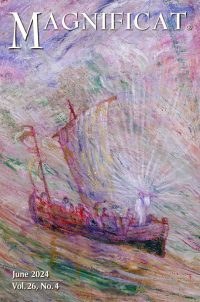
“O God of the martyrs, you called and strengthened Saint Charles and his companions to preach the Gospel by their steadfast fidelity to the commitment they had made in baptism, even unto death. Through their example and their intercession, strengthen us in faithfulness to the way of life which we have undertaken, through Christ our Lord. Amen.”

(From Magnificat magazine)


17 posted on 06/03/2024 8:13:46 AM PDT by fidelis (Ecce Crucem Domini! Fugite partes adversae! Vicit Leo de tribu Juda, Radix David! Alleluia!)
[ Post Reply | Private Reply | To 16 | View Replies]

To: fidelis

18 posted on 06/03/2024 8:14:12 AM PDT by fidelis (Ecce Crucem Domini! Fugite partes adversae! Vicit Leo de tribu Juda, Radix David! Alleluia!)
[ Post Reply | Private Reply | To 17 | View Replies]

June is the month of devotion to the Sacred Heart of Jesus:


19 posted on 06/03/2024 8:14:51 AM PDT by fidelis (Ecce Crucem Domini! Fugite partes adversae! Vicit Leo de tribu Juda, Radix David! Alleluia!)
[ Post Reply | Private Reply | To 18 | View Replies]

Disclaimer: Opinions posted on Free Republic are those of the individual posters and do not necessarily represent the opinion of Free Republic or its management. All materials posted herein are protected by copyright law and the exemption for fair use of copyrighted works.

Free Republic
Browse · Search
Religion
Topics · Post Article

FreeRepublic, LLC, PO BOX 9771, FRESNO, CA 93794
FreeRepublic.com is powered by software copyright 2000-2008 John Robinson