Posted on 11/03/2023 4:32:21 AM PDT by annalex
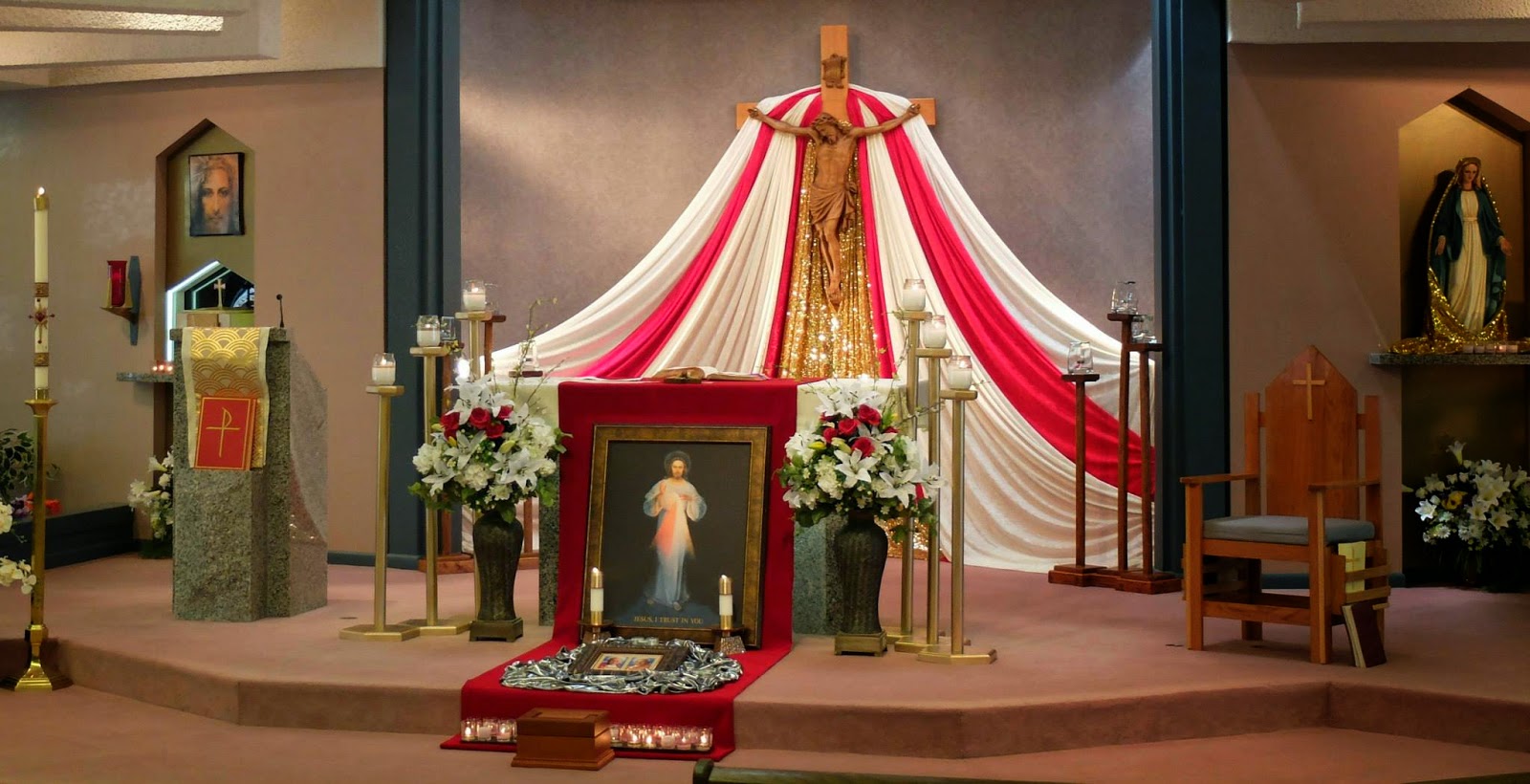
Friday of week 30 in Ordinary Time ![]() St Martin de Porres Catholic Church, Boulder, CO Readings at MassLiturgical Colour: Green. Year: A(I).
I would willingly be condemned if it could help my brothersWhat I want to say now is no pretence; I say it in union with Christ – it is the truth – my conscience in union with the Holy Spirit assures me of it too. What I want to say is this: my sorrow is so great, my mental anguish so endless, I would willingly be condemned and be cut off from Christ if it could help my brothers of Israel, my own flesh and blood. They were adopted as sons, they were given the glory and the covenants; the Law and the ritual were drawn up for them, and the promises were made to them. They are descended from the patriarchs and from their flesh and blood came Christ who is above all, God for ever blessed! Amen.
O praise the Lord, Jerusalem! O praise the Lord, Jerusalem! Zion, praise your God! He has strengthened the bars of your gates he has blessed the children within you. O praise the Lord, Jerusalem! He established peace on your borders, he feeds you with finest wheat. He sends out his word to the earth and swiftly runs his command. O praise the Lord, Jerusalem! He makes his word known to Jacob, to Israel his laws and decrees. He has not dealt thus with other nations; he has not taught them his decrees. O praise the Lord, Jerusalem!
Alleluia, alleluia! Accept God’s message for what it really is: God’s message, and not some human thinking. Alleluia!
Alleluia, alleluia! The sheep that belong to me listen to my voice, says the Lord, I know them and they follow me. Alleluia!
'Is it against the law to cure a man on the sabbath?'Now on a sabbath day Jesus had gone for a meal to the house of one of the leading Pharisees; and they watched him closely. There in front of him was a man with dropsy, and Jesus addressed the lawyers and Pharisees. ‘Is it against the law’ he asked ‘to cure a man on the sabbath, or not?’ But they remained silent, so he took the man and cured him and sent him away. Then he said to them, ‘Which of you here, if his son falls into a well, or his ox, will not pull him out on a sabbath day without hesitation?’ And to this they could find no answer. Christian Art![]() Each day, The Christian Art website gives a picture and reflection on the Gospel of the day. The readings on this page are from the Jerusalem Bible, which is used at Mass in most of the English-speaking world. The New American Bible readings, which are used at Mass in the United States, are available in the Universalis apps, programs and downloads. |
KEYWORDS: catholic; lk14; ordinarytime; prayer

Please FReepmail me to get on/off the Alleluia Ping List.
| Luke | |||
| English: Douay-Rheims | Latin: Vulgata Clementina | Greek NT: Byzantine/Majority Text (2000) | |
| Luke 14 | |||
| 1. | AND it came to pass, when Jesus went into the house of one of the chief of the Pharisees, on the sabbath day, to eat bread, that they watched him. | Et factum est cum intraret Jesus in domum cujusdam principis pharisæorum sabbato manducare panem, et ipsi observabant eum. | και εγενετο εν τω ελθειν αυτον εις οικον τινος των αρχοντων των φαρισαιων σαββατω φαγειν αρτον και αυτοι ησαν παρατηρουμενοι αυτον |
| 2. | And behold, there was a certain man before him that had the dropsy. | Et ecce homo quidam hydropicus erat ante illum. | και ιδου ανθρωπος τις ην υδρωπικος εμπροσθεν αυτου |
| 3. | And Jesus answering, spoke to the lawyers and Pharisees, saying: Is it lawful to heal on the sabbath day? | Et respondens Jesus dixit ad legisperitos et pharisæos, dicens : Si licet sabbato curare ? | και αποκριθεις ο ιησους ειπεν προς τους νομικους και φαρισαιους λεγων ει εξεστιν τω σαββατω θεραπευειν |
| 4. | But they held their peace. But he taking him, healed him, and sent him away. | At illi tacuerunt. Ipse vero apprehensum sanavit eum, ac dimisit. | οι δε ησυχασαν και επιλαβομενος ιασατο αυτον και απελυσεν |
| 5. | And answering them, he said: Which of you shall have an ass or an ox fall into a pit, and will not immediately draw him out, on the sabbath day? | Et respondens ad illos dixit : Cujus vestrum asinus, aut bos in puteum cadet, et non continuo extrahet illum die sabbati ? | και αποκριθεις προς αυτους ειπεν τινος υμων υιος η βους εις φρεαρ εμπεσειται και ουκ ευθεως ανασπασει αυτον εν τη ημερα του σαββατου |
| 6. | And they could not answer him to these things. | Et non poterant ad hæc respondere illi. | και ουκ ισχυσαν ανταποκριθηναι αυτω προς ταυτα |

14:16
1. And it came to pass, as he went into the house of one of the chief Pharisees to eat bread on the sabbath day, that they watched him.
2. And, behold, there was a certain man before him which had the dropsy.
3. And Jesus answering spake unto the Lawyers and Pharisees, saying, Is it lawful to heal on the sabbath day?
4. And they held their peace. And he took him, and healed him, and let him go;
5. And answered them, saying, Which of you shall have an ass or an ox fallen into a pit, and will not straightway pull him out on the sabbath day?
6. And they could not answer him again to these things.
CYRIL OF ALEXANDRIA. Although our Lord knew the malice of the Pharisees, yet He became their guest, that He might benefit by His words and miracles those who were present. Whence it follows, And it came to pass, as he went into the house of one of the chief Pharisees to eat bread on the sabbath day, that they watched him; to see whether He would despise the observance of the law, or do any thing that was forbidden on the sabbath day. When then the man with the dropsy came into the midst of them, He rebukes by a question the insolence of the Pharisees, who wished to detect Him; as it is said, And, behold, there was a certain man before him which had the dropsy. And Jesus answering, &c.
BEDE. When it is said that Jesus answered, there is a reference to the words which went before, And they watched him. For the Lord knew the thoughts of men.
THEOPHYLACT. But by His question He exposes their folly. For while God blessed the sabbath, (Gen. 2:1.) they forbade to do good on the sabbath; but the day which does not admit the works of the good is accursed.
BEDE. But they who were asked, are rightly silent, for they perceived that whatever they said, would be against themselves. For if it is lawful to heal on the sabbath day, why did they watch the Saviour whether He would heal? If it is not lawful, why do they take care of their cattle on the sabbath? Hence it follows, But they held their peace.
CYRIL OF ALEXANDRIA. Disregarding then the snares of the Jews, He cures the dropsical, who from fear of the Pharisees did not ask to be healed on account of the sabbath, but only stood up, that when Jesus beheld him, He might have compassion on him and heal him. And the Lord knowing this, asked not whether he wished to be made whole, but forthwith healed him. Whence it follows; And he took him, and healed him, and let him go. Wherein our Lord took no thought not to offend the Pharisees, but only that He might benefit him who needed healing. For it becomes us, when a great good is the result, not to care if fools take offence.
CYRIL OF ALEXANDRIA. But seeing the Pharisees awkwardly silent, Christ baffles their determined impudence by some important considerations. As it follows; And he answered and said unto them, Which of you shall have an ass or an ox fallen into a pit, and will not straightway pull him out on the sabbath day?
THEOPHYLACT. As though He said, If the law forbids to have mercy on the sabbath-day, have no care of thy son when in danger on the sabbath-day. But why speak I of a son, when thou dost not even neglect an ox if thou seest it in danger?
BEDE. By these words He so refutes His watchers, the Pharisees, as to condemn them also of covetousness, who in the deliverance of animals consult their own desire of wealth. How much more then ought Christ to deliver a man, who is much better than cattle!
AUGUSTINE. (de Quæst. Evan. lib. 2. cap. 29.) Now He has aptly compared the dropsical man to an animal which has fallen into a ditch, (for he is troubled by water,) as He compared that woman, whom He spoke of as bound, and whom He Himself loosed, to a beast which is let loose to be led to water.
BEDE. By a suitable example then He settles the question, shewing that they violate the sabbath by a work of covetousness, who contend that he does so by a work of charity. Hence it follows, And they could not answer him again to these things. Mystically, the dropsical man is compared to him who is weighed down by an overflowing stream of carnal pleasures. For the disease of dropsy derives the name from a watery humour.
AUGUSTINE. (ubi sup.) Or we rightly compare the dropsical man to a covetous rich man. For as the former, the more he increases in unnatural moisture the greater his thirst; so also the other, the more abundant his riches, which he does not employ well, the more ardently he desires them.
GREGORY. (14 Mor. c. 6.) Rightly then is the dropsical man healed in the Pharisees presence, for by the bodily infirmity of the one, is expressed the mental disease of the other.
BEDE. In this example also He well refers to the ox and the ass; so as to represent either the wise and the foolish, or both nations; that is, the Jew oppressed by the burden of the law, the Gentile not subject to reason. For the Lord rescues from the pit of concupiscence all who are sunk therein.
Catena Aurea Luke 14

The subject of this picture is taken from a text on Jerome's death written by the church historian Eusebius. The saint is shown in his bedroom cell near Bethlehem, supported by his brethren. The picture, which dates from the early 1490s, was painted for the Florentine wool merchant Francesco del Pugliese, who described it in his will of 1502. A supporter of Savonarola, Pugliese may have been attracted to the subject for its deeply devotional content. The exceptionally fine frame on this picture was carved in the workshop of Giuliano da Maiano. Its painted lunette is by Bartolomeo di Giovanni, who not only collaborated with Botticelli on at least one occasion but copied this picture as well.
(Source)

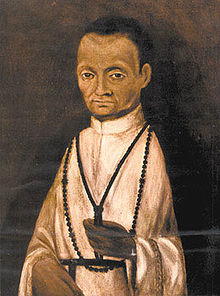
I never realized that St Martin was not canonized until 1962. When I was young in the sixties my church had candles for the statues of individual saints. St Martin was added to the usual ones, St Francis, St Patrick, St Anthony. I remember my dad giving me money on Sundays and telling me to light one at St Martin he could use the business because there weren’t a lot of candles lit at his statue. Thanks for the post and the memory.
Disclaimer: Opinions posted on Free Republic are those of the individual posters and do not necessarily represent the opinion of Free Republic or its management. All materials posted herein are protected by copyright law and the exemption for fair use of copyrighted works.