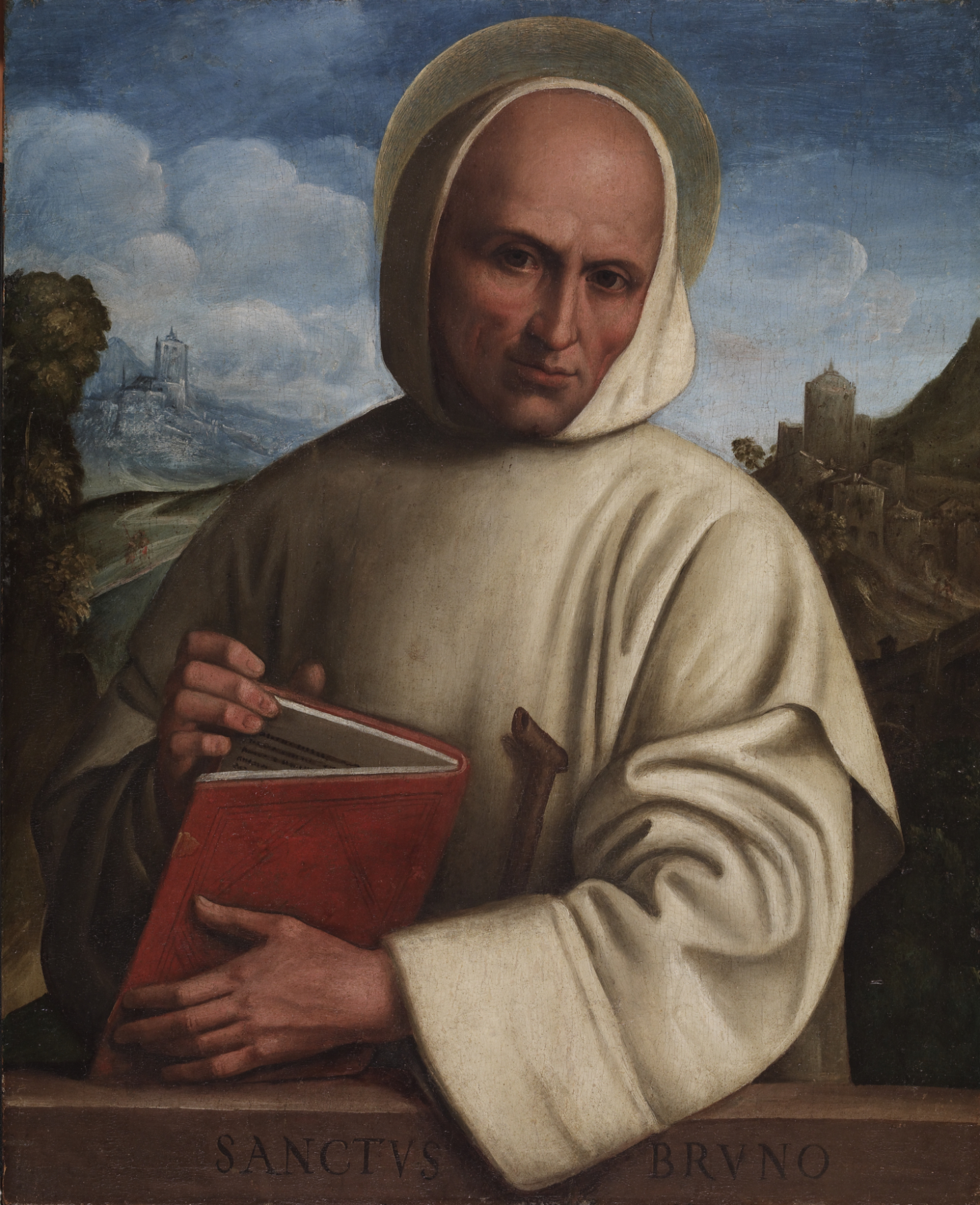
Catena Aurea by St. Thomas Aguinas
10:13–16
13. Woe unto thee, Chorazin! woe unto thee, Bethsaida! for if the mighty works had been done in Tyre and Sidon, which have been done in you, they had a great while ago repented, sitting in sackcloth and ashes.
14. But it shall be more tolerable for Tyre and Sidon at the judgment, than for you.
15. And thou, Capernaum, which art exalted to heaven, shalt be thrust down to hell.
16. He that heareth you heareth me; and he that despiseth you despiseth me; and he that despiseth me despiseth him that sent me.
AMBROSE. Our Lord warns us that they will meet with a heavier punishment who have refused to follow the Gospel than those who have chosen to break the law; saying, Woe unto thee, Chorazin! woe unto thee, Bethsaida!
BEDE. Chorazin, Bethsaida, and Capernaum, Tiberias also which John mentions, are cities of Galilee situated on the shore of the lake of Gennesaret, which is called by the Evangelists the sea of Galilee or Tiberias. Our Lord thus mourns over these cities which after such great miracles and wonders repented not, and are worse than the Gentiles who break through the law of nature only, seeing that after despising the written law, they feared not to despise also the Son of God and His glory. Hence it follows, For if the mighty works had been done in Tyre and Sidon which have been done in you, they had a great while ago repented sitting in sackcloth and ashes, &c. By sackcloth, which is woven together from the hairs of goats, he signifies a sharp remembrance of previous sin. But by ashes, he hints at the consideration of death, by which we are reduced to dust. Again, by the sitting down, he implies the lowliness of our conscience. Now we have seen in this day the word of the Saviour fulfilled, since Chorazin and Bethsaida, though our Lord was present among them, believed not, and Tyre and Sidon were friendly both to David and Solomon, (1 Kings 5.) and afterwards believed in the disciples of Christ who preached the Gospel there.
CHRYSOSTOM. (Hom. 38. in Matt.) Our Lord mourns over these cities for our example, because shedding tears and bitter lamentations over those who are insensible to grief, is no slight antidote, tending both to the correction of the insensible, and to the remedy and consolation of those who mourn over them. Again, He draws them over to what is good, not only by lamenting over them, but also by alarming them. Hence it follows, But it shall be more tolerable for Tyre and Sidon, &c. This we ought also to listen to. For not upon them alone, but upon us also, He hath passed sentence, if we receive not the guests who come to us, since He commanded them to shake off the very dust from their feet. And in another place: Now when our Lord had done many mighty works in Capernaum, and had Himself dwelt there, it seemed to be exalted above the other cities, but through unbelief fell to destruction. Hence it follows, And thou, Capernaum, which art exalted to heaven, shall be thrust down to hell; that, in fact, the judgment might be in proportion to the honour.
BEDE. This sentence admits of two meanings: Either for this reason shalt thou be thrust down into hell, because thou proudly resisted My preaching; that in truth she might be understood to have raised herself up to heaven by her pride. Or, because thou art exalted to heaven by My dwelling in thee, and by My miracles, shalt thou be beaten with more stripes, since even these thou refusedst to believe. And that no one should suppose that this interpretation applied only either to the cities or the persons who, seeing our Lord in the flesh despised Him, and not to all also who now despise the words of the Gospel, He proceeds to add these words, He that heareth you, heareth me.
CYRIL OF ALEXANDRIA. Whereby He teaches, that whatever is said by the holy Apostles must be received, since he who heareth them heareth Christ, and an inevitable punishment therefore hangs over heretics who neglect the words of the Apostles; for it follows, and he who despises you despises me.
BEDE. That is, that every one indeed on hearing or despising the preaching of the Gospel might learn that he is not despising or hearing the mere individual preacher, but our Lord and Saviour, nay the Father Himself; for it follows, And he that despiseth me, despiseth him that sent me. For the Master is heard in His disciple, the Father honoured in His Son.
AUGUSTINE. (Serm. 102.) But if the word of God reaches to us also, and appoints us in the Apostles place, beware of despising us, lest that reach unto Him which you have done unto us.
BEDE. It may also be understood as follows, He who despiseth you, despiseth me, that is, he who shews not mercy to one of the least of My brethren, neither shews it to Me. But he who despiseth me, (refusing to believe on the Son of God,) despiseth him that sent me. (Matt. 25:40.) For I and my Father are one. (John 10:30.)
TITUS BOSTRENSIS. But at the same time He herein consoles His disciples, as if He said, Say not why are we about to suffer reproach. Let your speech be with moderation. I give you grace, upon Me your reproaches fall.
Catena Aurea Luke 10
St. Bruno, founder
Feast day: Oct 06
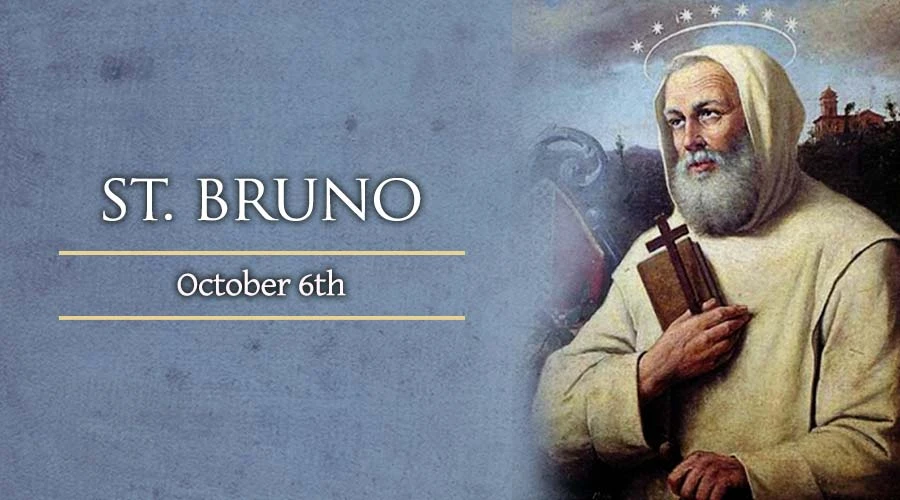
On Oct. 6, the Catholic Church commemorates Saint Bruno of Cologne, founder of the Carthusian order of monks who remain notable for their strictly traditional and austere rule of contemplative life.
Born in 1030, Bruno is said to have belonged to a prominent family in the city of Cologne. Little is known of his early years, except that he studied theology in the present-day French city of Reims before returning to his native land, where he was most likely ordained a priest in approximately 1055.
Returning to Reims the following year, he soon became head of the school he had attended there, after its director Heriman left to enter consecrated religious life in 1057. Bruno led and taught at the school for nearly two decades, acquiring an excellent reputation as a philosopher and theologian, until he was named chancellor of the local diocese in 1075.
Bruno's time as chancellor coincided with an uproar in Reims over the behavior of its new bishop Manasses de Gournai. Suspended by the decision of a local council, the bishop appealed to Rome while attacking and robbing the houses of his opponents. Bruno left the diocese during this period, though he was considered as a possible successor to Manasses after the bishop's final deposition in 1080.
The chancellor, however, was not interested in leading the Church of Reims. Bruno and two of his friends had resolved to renounce their worldly goods and positions and enter religious life. Inspired by a dream to seek guidance from the bishop later canonized as Saint Hugh of Grenoble, Bruno settled in the Chartreuse Mountains in 1084, joined by a small group of scholars looking to become monks.
In 1088, one of Bruno's former students was elected as Pope Urban II. Six years into his life as an alpine monk, Bruno was called to leave his remote monastery to assist the Pope in his struggle against a rival papal claimant as well as the hostile Holy Roman Emperor Henry IV.
Bruno served as a close adviser to the Pope during a critical period of reform. Around this time, he also rejected another chance to become a bishop, this time in the Italian region of Calabria. While he obtained the Pope's permission to return to monastic life, Bruno was required to remain in Italy to help the Pope periodically, rather than returning to his monastery in France.
During the 1090s Bruno befriended Count Roger of Sicily and Calabria, who granted land to his group of monks and enabled the founding of a major monastery in 1095. The monks were known, then as now, for their strict practice of asceticism, poverty, and prayer; and for their unique organizational form, combining the solitary life of hermits with the collective life of more conventional monks.
St. Bruno died on October 6, 1101, after making a notable profession of faith which was preserved for posterity. In this final testimony, he gave particular emphasis to the doctrine of Christ's Eucharistic presence, which had already begun to be questioned in parts of the Western Church.
“I believe,” he attested, “in the sacraments that the Church believes and holds in reverence, and especially that what has been consecrated on the altar is the true Flesh and the true Blood of our Lord Jesus Christ, which we receive for the forgiveness of our sins and in the hope of eternal salvation.”
Veneration of St. Bruno was given formal approval in 1514, and extended throughout the Latin Rite in 1623. More recently, his Carthusian Order was the subject of the 2006 documentary film “Into Great Silence,” chronicling the life of monks in the Grand Chartreuse monastery.
catholicnewsagency.com