
Free Republic
Browse · Search
Religion
Topics · Post Article

Skip to comments.

Catholic Caucus: Daily Mass Readings 9-August-2023
Universalis/Jerusalem Bible ^

Posted on 08/09/2023 5:44:41 AM PDT by annalex

9 August 2023

Wednesday of week 18 in Ordinary Time


St Edith Stein Catholic Church, Katy, TX

Readings at Mass

Liturgical Colour: Green. Year: A(I).


First reading
Numbers 13:1-2,25-14:1,26-29,34-35 ©

The spies return from Canaan

The Lord spoke to Moses in the wilderness of Paran and said, ‘Send out men, one from each tribe, to make a reconnaissance of this land of Canaan which I am giving to the sons of Israel. Send the leader of each tribe.’
  At the end of forty days, they came back from their reconnaissance of the land. They sought out Moses, Aaron and the whole community of Israel, in the wilderness of Paran, at Kadesh. They made their report to them, and to the whole community, and showed them the produce of the country.
  They told them this story, ‘We went into the land to which you sent us. It does indeed flow with milk and honey; this is its produce. At the same time, its inhabitants are a powerful people; the towns are fortified and very big; yes, and we saw the descendants of Anak there. The Amalekite holds the Negeb area, the Hittite, Amorite and Jebusite the highlands, and the Canaanite the sea coast and the banks of the Jordan.’
  Caleb harangued the people gathered about Moses: ‘We must march in,’ he said ‘and conquer this land: we are well able to do it.’ But the men who had gone up with him answered, ‘We are not able to march against this people; they are stronger than we are.’ And they began to disparage the country they had reconnoitred to the sons of Israel, ‘The country we went to reconnoitre is a country that devours its inhabitants. Every man we saw there was of enormous size. Yes, and we saw giants there (the sons of Anak, descendants of the Giants). We felt like grasshoppers, and so we seemed to them.’
  At this, the whole community raised their voices and cried aloud, and the people wailed all that night.
  The Lord spoke to Moses and Aaron. He said:
  ‘I have heard the complaints which the sons of Israel make against me. Say to them, “As I live – it is the Lord who speaks – I will deal with you according to the very words you have used in my hearing. In this wilderness your dead bodies will fall, all you men of the census, all you who were numbered from the age of twenty years and over, you who have complained against me. For forty days you reconnoitred the land. Each day shall count for a year: for forty years you shall bear the burden of your sins, and you shall learn what it means to reject me.” I, the Lord, have spoken: this is how I will deal with this perverse community that has conspired against me. Here in this wilderness, to the last man, they shall die.’

Responsorial Psalm
Psalm 105(106):6-7,13-14,21-23 ©
O Lord, remember me out of the love you have for your people.
or
Alleluia!
Our sin is the sin of our fathers;
  we have done wrong, our deeds have been evil.
Our fathers when they were in Egypt
  paid no heed to your wonderful deeds.
O Lord, remember me out of the love you have for your people.
or
Alleluia!
They soon forgot his deeds
  and would not wait upon his will.
They yielded to their cravings in the desert
  and put God to the test in the wilderness.
O Lord, remember me out of the love you have for your people.
or
Alleluia!
They forgot the God who was their saviour,
  who had done such great things in Egypt,
such portents in the land of Ham,
  such marvels at the Red Sea.
O Lord, remember me out of the love you have for your people.
or
Alleluia!
For this he said he would destroy them,
  but Moses, the man he had chosen,
stood in the breach before him,
  to turn back his anger from destruction.
O Lord, remember me out of the love you have for your people.
or
Alleluia!

Gospel AcclamationJames1:18
Alleluia, alleluia!
By his own choice the Father made us his children
by the message of the truth,
so that we should be a sort of first-fruits
of all that he created.
Alleluia!
Or:Lk7:16
Alleluia, alleluia!
A great prophet has appeared among us;
God has visited his people.
Alleluia!

Gospel
Matthew 15:21-28 ©

The Canaanite woman debates with Jesus and saves her daughter

Jesus left Gennesaret and withdrew to the region of Tyre and Sidon. Then out came a Canaanite woman from that district and started shouting, ‘Sir, Son of David, take pity on me. My daughter is tormented by a devil.’ But he answered her not a word. And his disciples went and pleaded with him. ‘Give her what she wants,’ they said ‘because she is shouting after us.’ He said in reply, ‘I was sent only to the lost sheep of the House of Israel.’ But the woman had come up and was kneeling at his feet. ‘Lord,’ she said ‘help me.’ He replied, ‘It is not fair to take the children’s food and throw it to the house-dogs.’ She retorted, ‘Ah yes, sir; but even house-dogs can eat the scraps that fall from their master’s table.’ Then Jesus answered her, ‘Woman, you have great faith. Let your wish be granted.’ And from that moment her daughter was well again.

Christian Art

Illustration

Each day, The Christian Art website gives a picture and reflection on the Gospel of the day.

The readings on this page are from the Jerusalem Bible, which is used at Mass in most of the English-speaking world. The New American Bible readings, which are used at Mass in the United States, are available in the Universalis apps, programs and downloads.

You can also view this page with the Gospel in Greek and English.


TOPICS: Catholic; General Discusssion; Prayer; Worship
KEYWORDS: catholic; mt15; ordinarytime; prayer
For your reading, reflection, faith-sharing, comments, questions, discussion.

1 posted on 08/09/2023 5:44:41 AM PDT by annalex
[ Post Reply | Private Reply | View Replies]

To: All

KEYWORDS: catholic; mt15; ordinarytime; prayer


2 posted on 08/09/2023 5:45:06 AM PDT by annalex (fear them not)
[ Post Reply | Private Reply | To 1 | View Replies]

To: nickcarraway; NYer; ELS; Pyro7480; livius; ArrogantBustard; Catholicguy; RobbyS; marshmallow; ...

Alleluia Ping

Please FReepmail me to get on/off the Alleluia Ping List.


3 posted on 08/09/2023 5:46:05 AM PDT by annalex (fear them not)
[ Post Reply | Private Reply | To 2 | View Replies]

To: annalex
My dad is back in the hospital. [JimRob update at 242]
Jim still needs our prayers. Thread 2
Prayer thread for Salvation's recovery
Pray for Ukraine
4 posted on 08/09/2023 5:46:24 AM PDT by annalex (fear them not)
[ Post Reply | Private Reply | To 3 | View Replies]

To: annalex
Matthew
 English: Douay-RheimsLatin: Vulgata ClementinaGreek NT: Byzantine/Majority Text (2000)
 Matthew 15
21And Jesus went from thence, and retired into the coasts of Tyre and Sidon. Et egressus inde Jesus secessit in partes Tyri et Sidonis.και εξελθων εκειθεν ο ιησους ανεχωρησεν εις τα μερη τυρου και σιδωνος
22And behold a woman of Canaan who came out of those coasts, crying out, said to him: Have mercy on me, O Lord, thou son of David: my daughter is grieviously troubled by the devil. Et ecce mulier chananæa a finibus illis egressa clamavit, dicens ei : Miserere mei, Domine fili David : filia mea male a dæmonio vexatur.και ιδου γυνη χαναναια απο των οριων εκεινων εξελθουσα εκραυγασεν αυτω λεγουσα ελεησον με κυριε υιε δαυιδ η θυγατηρ μου κακως δαιμονιζεται
23Who answered her not a word. And his disciples came and besought him, saying: Send her away, for she crieth after us: Qui non respondit ei verbum. Et accedentes discipuli ejus rogabant eum dicentes : Dimitte eam : quia clamat post nos.ο δε ουκ απεκριθη αυτη λογον και προσελθοντες οι μαθηται αυτου ηρωτων αυτον λεγοντες απολυσον αυτην οτι κραζει οπισθεν ημων
24And he answering, said: I was not sent but to the sheep that are lost of the house of Israel. Ipse autem respondens ait : Non sum missus nisi ad oves, quæ perierunt domus Israël.ο δε αποκριθεις ειπεν ουκ απεσταλην ει μη εις τα προβατα τα απολωλοτα οικου ισραηλ
25But she came and adored him, saying: Lord, help me. At illa venit, et adoravit eum, dicens : Domine, adjuva me.η δε ελθουσα προσεκυνησεν αυτω λεγουσα κυριε βοηθει μοι
26Who answering, said: It is not good to take the bread of the children, and to cast it to the dogs. Qui respondens ait : Non est bonum sumere panem filiorum, et mittere canibus.ο δε αποκριθεις ειπεν ουκ εστιν καλον λαβειν τον αρτον των τεκνων και βαλειν τοις κυναριοις
27But she said: Yea, Lord; for the whelps also eat of the crumbs that fall from the table of their masters. At illa dixit : Etiam Domine : nam et catelli edunt de micis quæ cadunt de mensa dominorum suorum.η δε ειπεν ναι κυριε και γαρ τα κυναρια εσθιει απο των ψιχιων των πιπτοντων απο της τραπεζης των κυριων αυτων
28Then Jesus answering, said to her: O woman, great is thy faith: be it done to thee as thou wilt: and her daughter was cured from that hour. Tunc respondens Jesus, ait illi : O mulier, magna est fides tua : fiat tibi sicut vis. Et sanata est filia ejus ex illa hora.τοτε αποκριθεις ο ιησους ειπεν αυτη ω γυναι μεγαλη σου η πιστις γενηθητω σοι ως θελεις και ιαθη η θυγατηρ αυτης απο της ωρας εκεινης

(*) τοις κυναριοις -- "to the dogs". It is sometime remarked that κυναριοι is really more like "puppies". However, I have it on the authority of my former priest, a biblical scholar, that the diminutive was not contemplated in this passage.

5 posted on 08/09/2023 5:48:34 AM PDT by annalex (fear them not)
[ Post Reply | Private Reply | To 4 | View Replies]

To: annalex

Catena Aurea by St. Thomas Aguinas

15:21–28

21. Then Jesus went thence, and departed into the coasts of Tyre and Sidon.

22. And, behold, a woman of Canaan came out of the same coasts, and cried unto him, saying, Have mercy on me, O Lord, thou Son of David; my daughter is grievously vexed with a devil.

23. But he answered her not a word. And his disciples came and besought him, saying, Send her away; for she crieth after us.

24. But he answered and said, I am not sent but unto the lost sheep of the house of Israel.

25. Then came she and worshipped him, saying, Lord, help me.

26. But he answered and said, It is not meet to take the children’s bread, and to cast it to dogs.

27. And she said, Truth, Lord: yet the dogs eat of the crumbs which fall from their masters’ table.

28. Then Jesus answered and said unto her, O woman, great is thy faith: be it unto thee even as thou wilt. And her daughter was made whole from that very hour.

JEROME. Leaving the Scribes and Pharisees and those cavillers, He passes into the parts of Tyre and Sidon; that He may heal the Tyrians and Sidonians; And Jesus went thence, and departed into the coasts of Tyre and Sidon.

REMIGIUS. Tyre and Sidon were Gentile towns, for Tyre was the metropolis of the Chananæans, and Sidon the boundary of the Chananæans, towards the north.

CHRYSOSTOM. (Hom. lii.) It should be observed, that when He delivered the Jews from the observance of meats, He then also opened the door to the Gentiles, as Peter was first bidden in the vision to break this law, and was afterwards sent to Cornelius. But if any should ask, how it is that He bade His disciples go not into the way of the Gentiles, and yet now Himself walks this way; we will answer, first, that that precept which He had given His disciples was not obligatory on Him; secondly, that He went not to preach, whence Mark even says, that He purposely concealed Himself.

REMIGIUS. He went that He might heal them of Tyre and Sidon; or that He might deliver this woman’s daughter from the dæmon, and so through her faith might condemn the wickedness of the Scribes and Pharisees. Of this woman it proceeds; And, behold, a woman, a Chananite, came out from those parts.

CHRYSOSTOM. The Evangelist says that she was a Chananæan, to shew the power of Christ’s presence. For this nation, which had been driven out that they might not corrupt the Jews, now shewed themselves wiser than the Jews, leaving their own borders that they might go to Christ. And when she came to Him, she asked only for mercy, as it follows, She cried unto Him, saying, Have mercy on me, Lord, thou Son of David.

GLOSS. (ap. Anselm.) The great faith of this Chananæan woman is herein shewed. She believes Him to be God, in that she calls Him Lord; and man, in that she calls Him Son of David. She claims nothing of her own desert, but craves only God’s mercy. And she says not, Have mercy on my daughter, but Have mercy on me; because the affliction of the daughter is the affliction of the mother. And the more to excite His compassion, she declares to Him the whole of her grief, My daughter is sore vexed by a dœmon; thus unfolding to the Physician the wound, and the extent and nature of the disease; its extent, when she says is sore vexed; its nature, by a dæmon.

CHRYSOSTOM. (Hom. in quædam loca, xlvii.) Note the wisdom (ΦιλθσόΦιαν) of this woman, she went not to men who promised fair, she sought not useless bandages, but leaving all devilish charms, she came to the Lord. She asked not James, she did not pray John, or apply to Peter, but putting herself under the protection of penitence, she ran alone to the Lord. But, behold, a new trouble. She makes her petition, raising her voice into a shout, and God, the lover of mankind, answers not a word.

JEROME. Not from pharisaical pride, or the superciliousness of the Scribes, but that He might not seem to contravene His own decision, Go not into the way of the Gentiles. For He was unwilling to give occasion to their cavils, and reserved the complete salvation of the Gentiles for the season of His passion and resurrection.

GLOSS. (ap. Anselm.) And by this delay in answering, He shews us the patience and perseverance of this woman. And He answered not for this reason also, that the disciples might petition for her; shewing herein that the prayers of the Saints are necessary in order to obtain any thing, as it follows, And his disciples came unto him, saying, Send her away, for she crieth after us.

JEROME. The disciples, as yet ignorant of the mysteries of God or moved by compassion, beg for this Chananæan woman; or perhaps seeking to be rid of her importunity.

AUGUSTINE. (de Cons. Ev. ii. 49.) A question of discrepancy is raised upon this, that Mark says the Lord was in the house when the woman came praying for her daughter. Indeed Matthew might have been understood to have omitted mention of the house, and yet to have been relating the same event; but when he says, that the disciples suggested to the Lord, Send her away, for she crieth after us, he seems to indicate clearly that the woman raised her voice in supplication, in following the Lord who was walking. We must understand then, that, as Mark writes, she entered in where Jesus was, that is, as he had noticed above, in the house; then, that as Matthew writes. He answered her not a word, and during this silence of both sides, Jesus left the house; and then the rest follows without any discordance.

CHRYSOSTOM. I judge that the disciples were sorry for the woman’s affliction, yet dared not say ‘Grant her this mercy,’ but only Send her away, as we, when we would persuade any one, oftentimes say the very contrary to what we wish. He answered and said, I am not sent but to the lost sheep of the house of Israel.

JEROME. He says that He is not sent to the Gentiles, but that He is sent first to Israel, so that when they would not receive the Gospel, the passing over to the Gentiles might have just cause.

REMIGIUS. In this way also He was sent specially to the Jews, because He taught them by His bodily presence.

JEROME. And He adds of the house of Israel, with this design, that we might rightly interpret by this place that other parable concerning the stray sheep.

CHRYSOSTOM. But when the woman saw that the Apostles had no power, she became bold with commendable boldness; for before she had not dared to come before His sight; but, as it is said, She crieth after us. But when it seemed that she must now retire without being relieved, she came nearer, But she came and worshipped him.

JEROME. Note how perseveringly this Chananæan woman calls Him first Son of David, then Lord, and lastly came and worshipped him, as God.

CHRYSOSTOM. And therefore she said not Ask, or Pray God for me, but Lord, help me. But the more the woman urged her petition, the more He strengthened His denial; for He calls the Jews now not sheep but sons, and the Gentiles dogs; He answered and said unto her, It is not meet to take the children’s bread, and give it to dogs.

GLOSS. (ap. Anselm.) The Jews were born sons, and brought up by the Law in the worship of one God. The bread is the Gospel, its miracles and other things which pertain to our salvation. It is not then meet that these should be taken from the children and given to the Gentiles, who are dogs, till the Jews refuse them.

JEROME. The Gentiles are called dogs because of their idolatry; who, given to the eating of blood, and dead bodies, turn to madness.

CHRYSOSTOM. Observe this woman’s prudence; she does not dare to contradict Him, nor is she vexed with the commendation of the Jews, and the evil word applied to herself; But she said, Yea, Lord, yet the dogs eat of the crumbs which fall from their masters’ table. He said, It is not good; she answers, ‘Yet even so, Lord;’ He calls the Jews children, she calls them masters; He called her a dog, she accepts the office of a dog; as if she had said, I cannot leave the table of my Lord.

JEROME. Wonderful are shewn the faith, patience, and humility of this woman; faith, that she believed that her daughter could be healed; patience, that so many times overlooked, she yet perseveres in her prayers; humility, that she compares herself not to the dogs, but to the whelps. I know, she says, that I do not deserve the children’s bread, and that I cannot have whole meat, nor sit at the table with the master of the house, but I am content with that which is left for the whelps, that through humble fragments I may come to the amplitude of the perfect bread.

CHRYSOSTOM. This was the cause why Christ was so backward, that He knew what she would say, and would not have her so great excellence hid; whence it follows, Then Jesus answered and said unto her, O woman, great is thy faith, be it unto thee according to thy will. Observe how the woman herself had contributed not a little to her daughter’s healing and therefore Christ said not unto her, ‘Let thy daughter be healed,’ but, Be it unto thee according to thy will; that you may perceive that she had spoken in sincerity, and that her words were not words of flattery, but of abundant faith. And this word of Christ is like that word which said, Let there be a firmament (Gen. 1:6.) and it was made; so here, And her daughter was made whole from that hour. Observe how she obtains what the Apostles could not obtain for her; so great a thing is the earnestness of prayer. He would rather that we should pray for our own offences ourselves, than that others should pray for us.

REMIGIUS. In these words is given us a pattern of catechizing and baptizing children; for the woman says not ‘Heal my daughter,’ or ‘Help her,’ but, Have mercy upon me, and help me. Thus there has come down in the Church the practice that the faithful are sponsors to God for their young children, before they have attained such age and reason that they can themselves make any pledge to God. So that as by this woman’s faith her daughter was healed, so by the faith of Catholics of mature age their sins might be forgiven to infants. Allegorically; This woman figures the Holy Church gathered out of the Gentiles. The Lord leaves the Scribes and Pharisees, and comes into the parts of Tyre and Sidon, this figures His leaving the Jews and going over to the Gentiles. This woman came out of her own country, because the Holy Church departed from former errors and sins.

JEROME. And the daughter of this Chananæan I suppose to be the souls of believers, who were sorely vexed by a dæmon, not knowing their Creator, and bowing down to stones.

REMIGIUS. Those of whom the Lord speaks as children are the Patriarchs and Prophets of that time. By the table is signified the Holy Scripture, by the fragments the best precepts, or inward mysteries on which Holy Church feeds; by the crumbs the carnal precepts which the Jews keep. The fragments are said to be eaten under the table, because the Church submits itself humbly to fulfilling the Divine commands.

RABANUS. But the whelps eat not the crust only, but the crumbs of the children’s bread, because the despised among the Gentiles on turning to the faith, seek out in Scripture not the outside of the letter, but the spiritual sense, by which they may be able to profit in good acts.

JEROME. Wonderful change of things! Once Israel the son, and we the dogs; the change in faith has led to a change in the order of our names. Concerning them is that said, Many dogs hare come about me; while to us is said, as to this woman, Thy faith hath made thee whole. (Ps. 22:16.)

RABANUS. Great indeed was her faith; for the Gentiles, neither trained in the Law, nor educated by the words of the Prophets, straightway on the preaching of the Apostles obeyed with the hearing of the ear, and therefore deserved to obtain salvation.

GLOSS. (non occ.) And if the Lord delays the salvation of a soul at the first tears of the supplicating Church, we ought not to despair, or to cease from our prayers, but rather continue them earnestly.

AUGUSTINE. (Quæst. Ev. i. 18.) And that to heal the Centurion’s servant, and the daughter of this Chananæan woman, He does not go to their houses, signifies that the Gentiles, among whom He Himself went not, should be saved by His word. That these are healed on the prayer of their parents, we must understand of the Church, which is at once mother and children; the whole body of those who make up the Church is the mother, and each individual of that body is a son of that mother.

HILARY. Or, This mother represents the proselytes, in that she leaves her own country, and forsakes the Gentiles for the name of another nation; she prays for her daughter, that is, the body of the Gentiles possessed with unclean spirits; and having learned the Lord by the Law, calls Him the Son of David.

RABANUS. Also whosoever has his conscience polluted with the defilement of any sin, has a daughter sorely vexed by a dæmon. Also whosoever has defiled any good that he has done by the plague of sin, has a daughter tossed by the furies of an unclean spirit, and has need to fly to prayers and tears, and to seek the intercessions and aids of the saints.

Catena Aurea Matthew 15

6 posted on 08/09/2023 5:49:30 AM PDT by annalex (fear them not)
[ Post Reply | Private Reply | To 5 | View Replies]

To: annalex


The Woman of Canaan at the Feet of Christ

Jean-Germain Drouais

1784
Oil on canvas, 114 x 146 cm
Musée du Louvre, Paris

7 posted on 08/09/2023 5:50:36 AM PDT by annalex (fear them not)
[ Post Reply | Private Reply | To 6 | View Replies]

To: annalex

The Life and Legacy of Edith Stein

Edith Stein hardly seemed Catholic-saint material. She, a precocious Jewish child, rejected God as a teen at the turn of this century in Breslau, Germany (now Wroclaw, Poland). But even as a child Edith was, at heart, a radical, one who goes to the radix, the roots. When she became convinced of the truth of an idea, her life fell into place around it.

Her youthful unruliness ended, for example, when she became intellectually convinced that her mother’s and sister’s guidance would be good for herÑthat at age seven. But she rejected her mother’s Jewish piety. She later rejected God because she saw little evidence that most believers, whether Jew or Christian, really believed. If there was nothing there, she wasn’t going to play the game.

But there was something there for Edith, even as World War I unfolded and then the Nazi movement. That something led to a remarkable life of faith, cut short at age 51 by her gas-chamber murder at Auschwitz.

Pope John Paul II canonized her as Saint Teresa Benedicta of the Cross, confessor and martyr, on October 11, 1998.

Is canonizing a Jew-turned-Catholic an insult to Judaism? Some Jewish people think so. The tragedy of the Holocaust is so great that efforts to memorialize Edith Stein’s death at Auschwitz have been controversial. What did her life and death mean?

St. Anthony Messenger interviewed three people who have been deeply involved in the life of Saint Teresa Benedicta. One is the father of Teresia Benedicta McCarthy, a Boston-area child who was miraculously cured in 1987 through Saint Teresa Benedicta’s intervention. That miracle, verified by the Sacred Congregation for the Causes of Saints, allowed this month’s canonization.

The second interview is with Carmelite Sister Josephine Koeppel, whose life work has been translating the writings of Edith Stein into English.

Finally, philosopher and scholar Dr. Marianne Sawicki explains that Edith Stein’s philosophical insights offer an ongoing contribution to Western thinking. That intellectual gift might have been on Pope John Paul’s mind over the years as he has encouraged her cause.

A Promising Student

Edith Stein was a brilliant woman who, in her 20’s, joined Europe’s leading philosophers. She was attracted to the philosophy of Edmund Husserl, father of a philosophical school that sought to explain the connection between the visible world and the world of ideas and values. Husserl’s student Martin Heidegger became a giant in Western thinking. Another student, Max Scheler, was the doctoral-thesis subject of Karol Wojtyla (later Pope John Paul II).

Existentialism, an influential school of thought, has its roots in Husserl’s thinking. Stein studied under Husserl and, as his assistant, prepared his papers for publication.

Along the way she studied with Christian intellectuals. She was particularly influenced by the faith of the widow of a friend and professor, Adolf Reinach, who was killed in World War I. At age 30, in 1921, she picked up the autobiography of Saint Teresa of Avila in a friend’s library and couldn’t put it down. “This is the truth! ” she told herself upon completing the book. For Edith Stein, that meant irreversible change.

She was baptized in 1922 and subsequently left her university appointment as Husserl’s assistant. In her day, a woman could not expect a full academic career at a top university. She took a position teaching at a Dominican college for women teachers in Speyer, Germany. Although she desired to become a Carmelite, she was advised to wait because her conversion had been so hard on her mother. She took private religious vows.

At Speyer she studied the philosophy of Thomas Aquinas and translated his treatiseThe Truth into German for the first time. Soon she began lecturing widely in Europe, to women’s groups, on the education and role of Catholic women.

When the Nazis blocked her, as a Jew, from teaching, she was forced to make a life-changing decision. To her mother’s dismay, she entered the Carmelites as Sister Teresa Benedicta of the Cross. As a Carmelite she wrote, among other works, Life in a Jewish Family and The Science of the Cross, a study of Saint John of the Cross. She led a deliberate life of holiness and self-offering. The Nazis forced her to wear a Star of David.

As the safety of anyone with Jewish heritage evaporated, she fled from her Carmelite monastery in Cologne to Carmel in Echt, Holland. But there was no escape. When the Dutch bishops spoke out against the Nazis, the Third Reich retaliated by rounding up all Jewish converts to Catholicism in Holland. In a filthy, crowded boxcar they were transported to Poland.

Edith was murdered in the gas chambers of Auschwitz on August 9, 1942. Her sister Rosa, who had also converted and who stayed close to Edith, was killed with her.

A Child Is Saved

Forty-three years later, to the day, a girl was born across the Atlantic. In honor of Edith Stein, her parents named her Teresia Benedicta (the Latin spelling that Edith used). “God communicates not just through words but through symbols and actions,” says Melkite Father Emmanuel Charles McCarthy, the girl’s father. The day I interviewed him he was fasting and praying in the presence of Trinity Test Site, New Mexico, on the anniversary of the first atomic blast, July 16, the feast of Our Lady of Mt. Carmel. “Everything in life is context,” he says. He’s speaking to St. Anthony Messenger about the miraculous cure in 1987 of his daughter Benedicta after doctors at one of the nation’s finest hospitals, Massachusetts General, pronounced her case hopeless.

The events were simple enough on the surface. While Father Charles and his wife, Mary, were away from their Brockton, Massachusetts, home for a few days on a religious retreat, the college-aged oldest of the 12 McCarthy children was in charge. The flu was going through the family and the teenagers were taking Tylenol. Two-year-old Benedicta watched and imitated. Over two days a deadly overdose of the drug built up in her system.

Upon their return, Father Charles and Mary learned that Benedicta was in the hospital. She was moved from Brockton to Massachusetts General in Boston. There doctors found her liver to be hopelessly damaged. Without a transplant, she would die.

In the face of this grief, Mary’s sister Teresa made a suggestion: “You named Benedicta after Edith Stein, so why not pray to her?” The rosaries and prayer chains started among the McCarthys’ family and friends on a Saturday.

The next day Father Charles was scheduled to fly to North Dakota to give a retreat on the nonviolence of Jesus. You would have to know Father Charles to understand the dilemma he felt. He is a theologian who takes mysticism seriously. A cofounder of Pax Christi U.S.A., he has devoted his entire adult life to a ministry of preaching absolute trust in Jesus and the message of the gospel. “No one would want to be in the state of mind I was in when I made that decision, ” he recalls. “But all the years of nonviolence, of preaching trust in Jesus, how can you not trust God?” he asks.

Late Saturday night he and Mary returned home to check in on the other children. “I walk into the room and I see a book on the floor. I pick it up to put it on the shelf and look at it, 12:00 at night, Saturday. It’s Saint Teresa of Avila’ Way of Perfection. A sentence jumps off the page, Jesus talking to Teresa, and he says, ‘You take care of my business and I’ll take care of your business.’ That answered the question for me of whether or not to go.”

Two days later, at exactly the hour his retreat concluded, on March 24, 1987, says Father Charles, doctors in Boston recorded on Benedicta’s medical chart, “‘This child has made a remarkable recovery.'” ABC’s 20/20 Thursday aired the McCarthys’ story in June of this year in a show about canonization. The head of pediatrics at Massachusetts General Hospital, a Jewish man who ultimately testified to the Congregation for the Causes of Saints, was one of several medical staff who agreed that they could in no way explain Benedicta’s recovery. It was indeed a miracle.

Soon after the miracle, the editor of The Church World, the Catholic diocesan newspaper in Maine, heard the story while attending a talk by Father Charles and made a front-page story of it: “A Miracle for Edith Stein?” She was already to be beatified May 1, 1987, as a martyr, thus without need of a proven miracle. But a miracle would be needed for canonization. When Rome officials heard of the alleged miracle, they began an investigation that ultimately confirmed the miracle’s authenticity in 1997.


A Miracle for Nonviolence?

Father Charles, acting rector of Saint Gregory the Theologian Seminary in Boston, is fond of quoting the famous teacher Rabbi Abraham Heschel: “‘The most important things happen on the invisible side.'” It is in this mystical dimension that he finds the meaning of the miracle of his daughter’s cure. A lot of it has to do with the date of August 9.

By the time of his 1981 ordination in Damascus, Syria, he had already devoted years to his ministry of teaching about gospel nonviolence. He had waited all summer in Damascus for the Melkite patriarch to ordain him and the calendar finally yielded August 6 for his ordination to the diaconate and August 9 for his ordination to the priesthood. Those dates already stood out for him as the anniversaries of the nuclear destruction of Hiroshima and Nagasaki in 1945, which he considers dark days for Christianity.

Over the years he took an interest in things that happened on August 9, like the execution of the Catholic German war resister Blessed Franz Jagerstatter. In the early 1980’s, when Father Charles noticed that Edith Stein died on August 9, he began reading about her. “For the next two months, I read pretty much all day, every day, on Edith Stein. I came to the conclusion that Edith Stein was in microcosm what Nagasaki, the cradle of Christianity in Japan, was in macrocosm. In other words, here was a Christian woman who was destroyed by Christians. Auschwitz was an operation run entirely by baptized Christians,” explains McCarthy. “So was the bomb crew that destroyed Nagasaki.”

When he read of Edith’s own awareness that she was born on Yom Kippur, the Day of Atonement, “I said, ‘This person is like the incarnation of nonviolence!'”

It is key to McCarthy that Stein had formally consecrated her life, before her Carmelite superiors, to atonement and to world peace. Edith herself wrote, “I talked with the Savior and told Him that I knew that it was His cross that was now being placed on the Jewish people; that most of them did not understand this, but that those who did would have to take it up willingly in the name of all. I would do that. He should only show me how. ”

When the McCarthys’ 12th child was born on August 8, 1984 ( “sunrise, August 9, at Auschwitz,” recalls Father Charles), they decided to name her Teresia Benedicta. “Teresia is the Latin form that Edith Stein always used, ” explains Father Charles. “Teresia Benedicta a Cruce literally means, ‘Teresa Good Word of the Cross.'” (Another translation is “blessed by the cross.”)

There are no coincidences in life, believes Father Charles. “God presents us with situations in which we freely choose.” That’s why the context of events is critical to him. “The context of the miracle is a context of a whole life committed to nonviolence, the context of a child being named after someone because that someone is a microcosm of the problem and the solution to Christian violence. That’s the context, whether anyone wants to accept it or not.

“I realize that 95 percent of the Catholic Church at every level does not accept Jesus’ teachings of nonviolence,” he laments. “But Edith Stein wouldn’t be Edith Stein if, when they came to arrest her, or when she was in Auschwitz, she was killing people to save her life. She’s a martyr because she made a choice to put down the gun and pick up the gospel, because she chose the power of love over the power of violence and accepted the consequences of it.”

A Life of Virtue

But Edith Stein was not only a martyr. Carmelite Sister Josephine Koeppel has a different vision of Edith Stein’s significance. “The characteristics that I notice have to do with her womanhood, and particularly European womanhood,” says the 77-year-old Swiss immigrant to the United States.

When Carmel of Cologne wanted to thank their sister Carmel community in Elysburg, Pennsylvania, for sending assistance after World War II, they had sent along a copy of The Life of Edith Stein, written by Edith’s prioress.

Sister Josephine was the only one in her Carmelite community who could read German in 1950, when the book arrived in Pennsylvania. “I read the book and related it to the sisters during their recreation time,” she recalls in a telephone interview from her cloister. Sister Josephine became interested in Edith Stein and asked relatives in Switzerland to send one of Stein’s books.

She soon received Stein’s Life in a Jewish Family. In addition to translating works of Thomas Aquinas and John Cardinal Newman into German, Stein had, in the 1930’s, been asked by her superiors to write about her family. The hope, as Edith explains clearly in her Foreword, was that German readers, who were being deprived of accurate information, would see that Jewish families were not that much different from other German families. Sister Josephine became convinced that others should read the book, so she set out to publish a translation.

Nearly 50 years later, she has translated that book, plus a book containing most of Edith Stein’s letters, and built a library of information on Stein that she intends to donate to a center for the study of Edith Stein at Spalding University in Louisville, Kentucky. Stein herself wrote enough to fill 17 volumes. Sister Josephine’s translations are two of the five that are in English. More translations are in the works. “I translated because I thought this was somebody people had to know,” she says.

Edith Stein looked back on herself as a youth and called herself “‘charmingly malicious,'” says Sister Josephine. “She would notice people’s faults and think it was her privilege to point them out.” Yet Stein left that behind as she grew older. It is her growth in virtue that Sister Josephine homes in on.

“She was not a retiring person; she just never put herself forward,” recounts the translator of Stein’s letters. “She was always there for anyone who came to her. Whenever she heard of something that could be done for somebody, she did it or saw that it was done.”

Edith Stein kept a broad correspondence from her cloister in Cologne, documented in the book Self-Portrait in Letters, which Sister Josephine translated. “These people treasured her letters when they received them. It’s remarkable that so many are available after all this time, in so many different life situations,” says Koeppel.

Although Stein is only beginning to be known in the United States, she has a vast following in Europe. “That’s because of her personality in the first place,” says Sister Josephine. “People who read about her think of her as a B-R-A-I-N, but in Europe she was remembered most of all by the students who had her as a teacher.”

Stein had a special place in her heart for young children, says Sister Josephine, which she thinks is related to the 1987 miracle of young Benedicta McCarthy. “I believe that Edith would have a great interest in all the prayers offered for children, because she had a tremendous love and an absolutely charismatic rapport with children, including her nieces and nephews.” On a trip to Europe a few years ago, Sister Josephine learned of another miracle from the Dominican sisters at Speyer, Germany, where Stein taught.

This, too, concerned a little girl, some years back, who was deathly ill and was suddenly cured. “The little girl told her mother, ‘Sister came to see me and she made me well,'” tells Sister Josephine. “So her mother, thinking this was delirium or something, asked what the sister looked like. The girl said she was dressed in brown. She asked whether she said who she was. The girl said, ‘She was Sister Teresia Benedicta something. I can’t remember what the last part was.’

“The mother had gone to school at Speyer and knew about Edith Stein, so she told the sisters. They sent the mother back with more questions about the last part of the name. She asked was it ‘of the cross’ (in German)? ‘No,’ answered the girl. ‘A cruce?’ ‘Yes, that’s it!’ said the little child.” Sister Josephine recounts that the girl was too young to know Latin, but that Edith Stein never used her title except in Latin. This German miracle was not documented by Church officials.

Sister Josephine recommends, “You really can get to know her as a person with a heart that really can be touched. First, get to know her as that. Then really respect her brilliance.”

Intellectual Giant

It is that sense of empathy that defines Edith Stein most clearly for Dr. Marianne Sawicki, who, as Dr. Stein did, teaches philosophy. Dr. Sawicki is currently a research fellow at the Erasmus Institute at the University of Notre Dame and has written a scholarly book on Stein. In Edith Stein, Dr. Sawicki sees a woman whose ideas have much to offer our world.

Stein’s fundamental insights in academic philosophy were in a field of study called empathy theory. This was during an explosion of new knowledge when philosophers were trying to combine knowledge about the physical world with knowledge about the mind, explains Dr. Sawicki. Philosophers who followed Edmund Husserl, called “phenomenologists,” saw empathy as an awareness of basic, human interconnection as the breakthrough for human communication. The Nazis set out to replace this philosophy with their own philosophy of racial superiority.

“There are answers in empathy theory about the basis of human communication that were put on the shelf, tragically, in the 1930’s,” Dr. Sawicki observes. “The questions today are, how can people of different cultures, different classes, different genders, ever find some point of agreement that we can go forward on to build a just society?” Edith Stein discovered answers both in secular philosophy and, later, in Christianity. Those insights could serve to build greater understanding in the world today, says Sawicki.

In God’s Hands

Though many felt that Edith had abandoned Judaism, Edith Stein, in her own opinion, remained loyal to her Jewish family and heritage to her death. She predicted the Holocaust and wrote an appeal to Pope Pius XI, pleading for an encyclical to oppose the Nazi program.

Her niece, Susanne M. Batzdorf, has written of Edith, “In following her conscience on the road to Christianity she felt that she was pursuing her Jewish path to its ultimate goal. But it is impossible, from the Jewish perspective, to see it that way.” That is understandable. Far from elevating Edith Stein as a put-down to Jews, the Church seeks to honor and imitate a woman who heard an intimate call from Jesus and followed it. Her letters show that she continued to honor her mother’s Jewish faith.

It should be obvious by now that Edith Stein, Teresa Benedicta of the Cross, is a saint whom we’ve only begun to understand. Both Sister Josephine and Dr. Sawicki mentioned that Stein’s appeal in so many areas is a sign of her sanctity.

The theme that seems to be universally appreciated throughout Edith Stein’s life is her integrity, her appreciation for truth. That’s what really makes her saintly, says Sister Josephine. “If you want somebody who embodied ‘reality check,’ that’s Edith, ” says Sister Josephine. “Any time in her life that she saw a truth that she hadn’t realized before, her life changed.”

The other big theme is trust. Stein wrote in a letter that she often was asked to lecture on complicated topics, “but I always come down to my one topic: how important it is to learn to live at God’s hands.'” Sister Josephine says that is Edith Stein’s signature phrase: Learn to live at God’s hands.


franciscanmedia.org

8 posted on 08/09/2023 5:56:19 AM PDT by annalex (fear them not)
[ Post Reply | Private Reply | To 7 | View Replies]

To: annalex

9 posted on 08/09/2023 5:58:45 AM PDT by annalex (fear them not)
[ Post Reply | Private Reply | To 8 | View Replies]

To: annalex
NAVARRE BIBLE COMMENTARY (RSV)

Ad Majorem Dei Gloriam (To the Greater Glory of God)

From: Numbers 13:1-2, 25-14:1, 26a-29a, 34-35

Reconnoitering the promised land
-----------------------------------------------
[1] The Lord said to Moses [in the desert of Paran,] [2] “Send men to spy out the land of Canaan, which I give to the people of Israel; from each tribe of their fathers shall you send a man, everyone a leader among them.”

The spies return
-----------------------
[25] At the end of forty days they returned from spying out the land. [26] And they came to Moses and Aaron and to all the congregation of the people of Israel in the wilderness of Paran, at Kadesh; they brought back word to them and to all the congregation, and showed them the fruit of the land. [27] And they told him, “We came to the land to which you sent us; it flows with milk and honey, and this is the fruit. [28] Yet the people who dwell in the land are strong, and the cities are fortified and very large; and besides, we saw the descendants of Anak there; [29] The Amalekites dwell in the land of Negeb; the Hittites, the Jebusites, and the Amorites dwell in the hill country; and the Canaanites dwell by the sea, and along the Jordan.”

[30] But Caleb quieted the people before Moses, and said, “Let us go up at once, and occupy it; for we are well able to overcome it.” [31] Then the men who had gone up with him said, “We are not able to go up against the people; for they are stronger than we.” [32] So they brought to the people of Israel an evil report of the land which they had spied out, saying, “The land, through which we have gone, to spy it out, is a land that devours its inhabitants; and all the people that we saw in it are men of great stature. [33] And there we saw the Nephilim (the sons of Anak, who came from the Nephilim); and we seemed to ourselves like grasshoppers, and so we seemed to them.”

The rebellion of Israel
-------------------------------
[1] Then all the congregation raised a loud cry; and the people wept that night.

God’s new reply
-----------------------
[26] And the Lord said to Moses and to Aaron, [27] “How long shall this wicked congregation murmur against me? I have heard the murmurings of the people of Israel, which they murmur against me. [28] Say to them, ‘As I live,’ says the Lord, ‘what you have said in my hearing I will do to you: [29] your dead bodies shall fall in this wilderness; [34] According to the number of the days in which you spied out the land, forty days, for every day a year, you shall bear your iniquity, forty years, and you shall know my displeasure.’ [35] I, the Lord, have spoken; surely this will I do to all this wicked congregation that are gathered together against me: in this wilderness they shall come to a full end, and there they shall die.”

*********************************************************************
Commentary:

13:1-14:45. The general background of the people’s rebelliousness, and God’s forgiveness (chapters 13 and 14) helps to explain why the Israelites did not enter the promised land immediately from Kadesh, but had to make a detour and enter via Transjordan. The cause for this detour was, basically, their faltering obedience to the Lord, their disdain for the promised land and their nostalgia for Egypt. In the account given here we find memories that go back to the earliest times, such as, for example, the leadership shown by Caleb (from the tribe of Judah), a reconnoitering of the Land which does not extend beyond the zone of Hebron, and a failed attempt to enter it via the Negeb (cf. 14:39-45).

13:27-29. The spies’ report confirms all God promised about the Land (cf. Ex 3:9). In stressing the strength of the peoples who live there, God’s own strength is being highlighted, as also his love for his people, because he will be the one who uproots the present occupiers (cf. Deut 7;1); and, besides, it gives the back-ground to the protests the text goes on to describe.

The descendents of Anak (v. 28) are the giants who, according to the Israelite tradition, occupy the southern part of Canaan; an explanation of their origin is given in Genesis 6:1-4.

The Amalekites were a semi-nomadic people who moved to the south of the Negeb; the Israelites fought with them more than once (cf. Ex 17:8-6). The Hittites had ruled a huge empire in the 14th century BC, and the Amorites occupied the Tigris and Euphrates valleys. The Jebusites were earlier occupiers of Jerusalem. The description given of where each of these people lived in the Land is a very sketchy one.

13:30-33. There are two opposed attitudes here – that of Caleb, who is influenced by faith, and that of the other scouts who, when they came up against obstacles fail to count on God and in fact question the value of the gift God has promised, the gift of the Land. This last point is what provokes their open rebellion against God and Moses.

It is often easy to see the obstacles to any human or supernatural project. The way to deal with these difficulties is not to close one’s eyes but to fight bravely and faithfully to overcome them. The Israelites were filled with fear at the prospect of having to conquer the Land (because their enemies were so powerful); so frightened were they that some came to reject and disparage the Land itself. Something similar happens to a Christian when fearfulness makes him go into reverse in his efforts to attain perfection. “I know that the moment we talk about fighting we recall our weakness and we foresee falls and mistakes. God takes this into account. As we walk along, it is inevitable that we will raise dust; we are creatures and full of defects. I would almost say that we will always NEED defects. They are the shadow which shows up the light of God’s grace and our resolve to respond to God’s kindness. And this chiaroscuro will make us human, humble, understanding and generous” (St. Josemaria Escriva, Christ is Passing By, 76).

14:1-25. The rebellion reaches its climax; the people want to replace Moses with someone else, return to Egypt and stone those who encourage trust in God. We see Aaron backing up Moses, and Joshua sharing Caleb’s enthusiasm (vv. 5-6). However, it will be the glory and might of God that sorts things out: he threatens punishment and (the most terrible thing of all) to disinherit the people: he is ready to create a new people, starting with Moses (vv. 11-12). But once more Moses pleads on the people’s behalf; this time he uses the strongest argument he can find – the very reputation of Yahweh among the nations, and his gracious and merciful nature (according to his own description: (cf. Ex 34:6-7). And God in fact does forgive his people yet another time; he does not destroy them; but he has to act in a just way, distinguishing between those who put their trust in him (like Caleb) and those who rebelled against him as many as “ten times” (v. 22), that is, totally and deliberately.

14:26-38. Once again the text mentions God’s reaction to the people’s complaints and low spirits, and we are told about the punishment, which takes into account the census held previously: except for Caleb and Joshua, no one over twenty will escape the wrath of God. The forty years’ pilgrimage in the desert is going to start now, and it corresponds to the forty days it took them to spy out the Land: so it is a severe punishment and it is at the same time proportionate to the crime. The first to receive this punishment were those who, although they had the good fortune to actually see the Land, undermined the morale of the others and instigated their protest – that is, those who, although they in some way experienced the gift of God, failed to appreciate it out of cowardice and even discredited it to the others.

10 posted on 08/09/2023 9:35:05 AM PDT by fidelis (👈 Under no obligation to respond to rude, ignorant, abusive, bellicose, and obnoxious posts.)
[ Post Reply | Private Reply | To 9 | View Replies]

To: fidelis
From: Matthew 15:21-28

The Canaanite Woman
-------------------
[21] And Jesus went away from there and withdrew to the district of Tyre and Sidon. [22] And behold, a Canaanite woman from that region came out and cried, "Have mercy on me, O Lord, Son of David; my daughter is severely possessed by a demon." [23] But He did not answer her a word. And His disciples came and begged Him, saying, "Send her away, for she is crying after us." [24] He answered, "I was sent only to the lost sheep of the house of Israel." [25] But she came and knelt before Him, saying, "Lord, help me." [26] And He answered, "It is not fair to take the children's bread and throw it to the dogs." [27] She said, "Yes, Lord, yet even the dogs eat the crumbs that fall from their master's table." [28] Then Jesus answered her, "O woman, great is your faith! Be it done for you as you desire." And her daughter was healed instantly.

***********************************************************************
Commentary:

21-22. Tyre and Sidon were Phoenician cities on the Mediterranean coast, in present-day Lebanon. They were never part of Galilee but they were near its northeastern border. In Jesus' time they were outside the territory of Herod Antipas. Jesus withdrew to this area to escape persecution from Herod and from the Jewish authorities and to concentrate on training His Apostles.

Most of the inhabitants of the district of Tyre and Sidon were pagans. St. Matthew calls this woman a "Canaanite"; according to Genesis (10:15), this district was one of the first to be settled by the Canaanites; St. Mark describes the woman as a "Syrophoenician" (Mark 7:26). Both Gospels point out that she is a pagan, which means that her faith in our Lord is more remarkable; the same applies in the case of the centurion (Matthew 8:5-13).

The Canaanite woman's prayer is quite perfect: she recognizes Jesus as the Messiah (the Son of David)--which contrasts with the unbelief of the Jews; she expresses her need in clear, simple words; she persists, undismayed by obstacles; and she expresses her request in all humility: "Have mercy on me." Our prayer should have the same qualities of faith, trust, perseverance and humility.

24. What Jesus says here does not take from the universal reference of His teaching (cf. Matthew 28:19-20; Mark 16:15-16). Our Lord came to bring His Gospel to the whole world, but He Himself addressed only the Jews; later on He will charge His Apostles to preach the Gospel to pagans. St. Paul, in his missionary journeys, also adopted the policy of preaching in the first instance to the Jews (Acts 13:46).

25-28. This dialogue between Jesus and the woman is especially beautiful. By appearing to be harsh He so strengthens the woman's faith that she deserves exceptional praise: "Great is your faith!" Our own conversation with Christ should be like that: "Persevere in prayer. Persevere, even when your efforts seem barren. Prayer is always fruitful" (St J. Escriva, "The Way", 101).

11 posted on 08/09/2023 9:36:13 AM PDT by fidelis (👈 Under no obligation to respond to rude, ignorant, abusive, bellicose, and obnoxious posts.)
[ Post Reply | Private Reply | To 10 | View Replies]

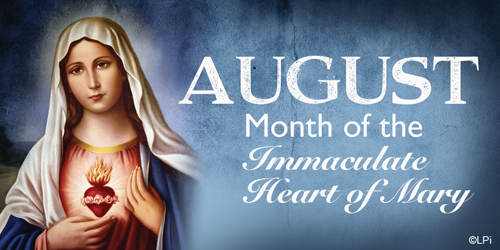
The month of August belongs to The Immaculate Heart of Mary.


12 posted on 08/09/2023 9:36:49 AM PDT by fidelis (👈 Under no obligation to respond to rude, ignorant, abusive, bellicose, and obnoxious posts.)
[ Post Reply | Private Reply | To 11 | View Replies]

Disclaimer: Opinions posted on Free Republic are those of the individual posters and do not necessarily represent the opinion of Free Republic or its management. All materials posted herein are protected by copyright law and the exemption for fair use of copyrighted works.

Free Republic
Browse · Search
Religion
Topics · Post Article

FreeRepublic, LLC, PO BOX 9771, FRESNO, CA 93794
FreeRepublic.com is powered by software copyright 2000-2008 John Robinson