Skip to comments.
Catholic Caucus: Daily Mass Readings 5-June-2023
Universalis/Jerusalem Bible ^
Posted on 06/05/2023 4:13:58 AM PDT by annalex
5 June 2023
Saint Boniface, Bishop, Martyr
on Monday of week 9 in Ordinary Time
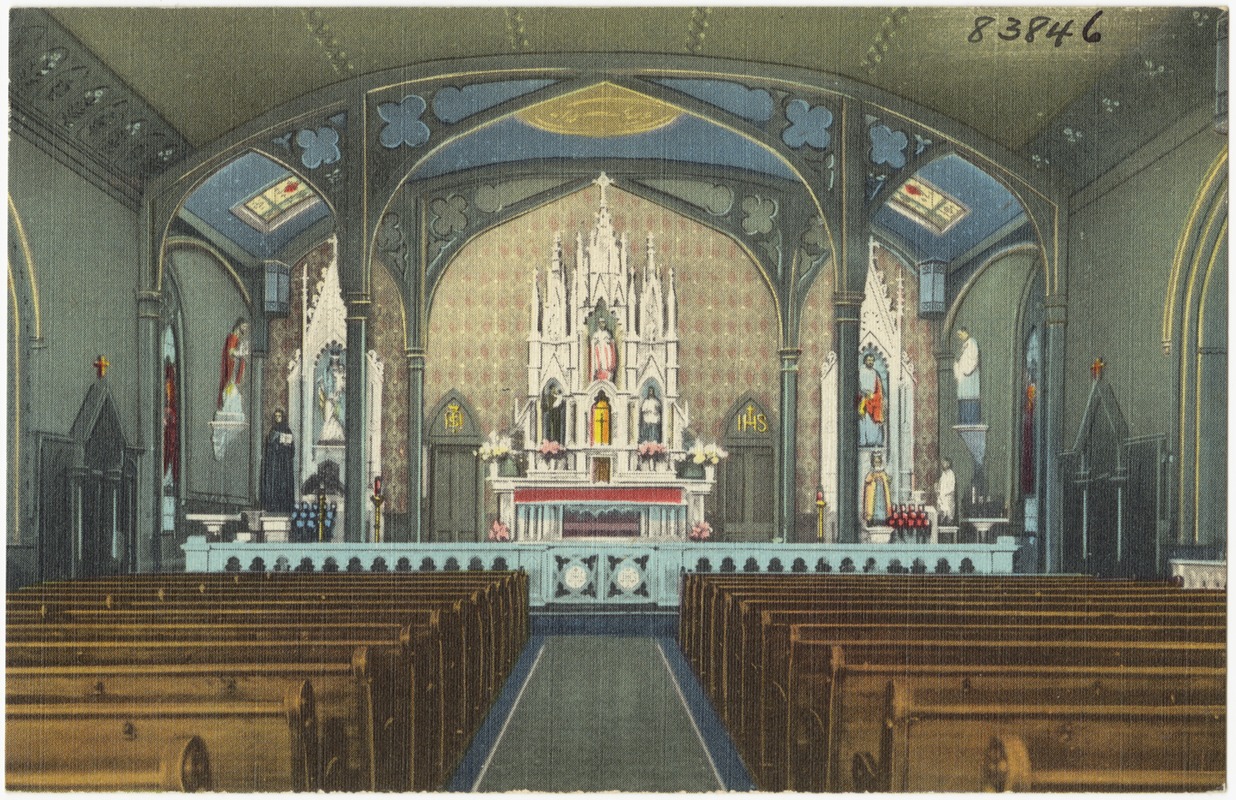
St. Boniface Church, High altar, Elmont, L. I., N. YReadings at MassLiturgical Colour: Red. Year: A(I). Readings for the feria Readings for the memorial These are the readings for the feria
| First reading | Tobit 1:3,2:1-8 © |
|---|
Tobit defies the law by burying the deadI, Tobit, have walked in paths of truth and in good works all the days of my life. I have given much in alms to my brothers and fellow countrymen, exiled like me to Nineveh in the country of Assyria. At our feast of Pentecost (the feast of Weeks) there was a good dinner. I took my place for the meal; the table was brought to me and various dishes were brought. Then I said to my son Tobias, ‘Go, my child, and seek out some poor, loyal-hearted man among our brothers exiled in Nineveh, and bring him to share my meal. I will wait until you come back, my child.’ So Tobias went out to look for some poor man among our brothers, but he came back again and said, ‘Father!’ I answered, ‘What is it, my child?’ He went on, ‘Father, one of our nation has just been murdered; he has been strangled and then thrown down in the market place; he is there still.’ I sprang up at once, left my meal untouched, took the man from the market place and laid him in one of my rooms, waiting until sunset to bury him. I came in again and washed myself and ate my bread in sorrow, remembering the words of the prophet Amos concerning Bethel: Your feasts will be turned to mourning, and all your songs to lamentation. And I wept. When the sun was down, I went and dug a grave and buried him. My neighbours laughed and said, ‘See! He is not afraid any more.’ (You must remember that a price had been set on my head earlier for this very thing.) ‘The time before this he had to flee, yet here he is, beginning to bury the dead again.’
| Responsorial Psalm |
|---|
| Psalm 111(112):1-2,3b-6 © |
|---|
Happy the man who fears the Lord. or Alleluia! Happy the man who fears the Lord, who takes delight in all his commands. His sons will be powerful on earth; the children of the upright are blessed. Happy the man who fears the Lord. or Alleluia! Riches and wealth are in his house; his justice stands firm for ever. He is a light in the darkness for the upright: he is generous, merciful and just. Happy the man who fears the Lord. or Alleluia! The good man takes pity and lends, he conducts his affairs with honour. The just man will never waver: he will be remembered for ever. Happy the man who fears the Lord. or Alleluia!
| Gospel Acclamation | cf.Col3:16a,17 |
|---|
Alleluia, alleluia! Let the message of Christ, in all its richness, find a home with you; through him give thanks to God the Father. Alleluia! Alleluia, alleluia! You, O Christ, are the faithful witness, the First-born from the dead; you have loved us and have washed away our sins with your blood. Alleluia!
They seized the beloved son, killed him and threw him out of the vineyardJesus began to speak to the chief priests, the scribes and the elders in parables: ‘A man planted a vineyard; he fenced it round, dug out a trough for the winepress and built a tower; then he leased it to tenants and went abroad. When the time came, he sent a servant to the tenants to collect from them his share of the produce from the vineyard. But they seized the man, thrashed him and sent him away empty-handed. Next he sent another servant to them; him they beat about the head and treated shamefully. And he sent another and him they killed; then a number of others, and they thrashed some and killed the rest. He had still someone left: his beloved son. He sent him to them last of all. “They will respect my son” he said. But those tenants said to each other, “This is the heir. Come on, let us kill him, and the inheritance will be ours.” So they seized him and killed him and threw him out of the vineyard. Now what will the owner of the vineyard do? He will come and make an end of the tenants and give the vineyard to others. Have you not read this text of scripture: It was the stone rejected by the builders that became the keystone. This was the Lord’s doing and it is wonderful to see? And they would have liked to arrest him, because they realised that the parable was aimed at them, but they were afraid of the crowds. So they left him alone and went away. Continue These are the readings for the memorial
| First reading | Acts 26:19-23 © |
|---|
I have stood firm to this day, testifying to great and small alikePaul said: ‘King Agrippa, I could not disobey the heavenly vision. On the contrary I started preaching, first to the people of Damascus, then to those of Jerusalem and all the countryside of Judaea, and also to the pagans, urging them to repent and turn to God, proving their change of heart by their deeds. This was why the Jews laid hands on me in the Temple and tried to do away with me. But I was blessed with God’s help, and so I have stood firm to this day, testifying to great and small alike, saying nothing more than what the prophets and Moses himself said would happen: that the Christ was to suffer and that, as the first to rise from the dead, he was to proclaim that light now shone for our people and for the pagans too.’
| Responsorial Psalm |
|---|
| Psalm 116(117):1-2 © |
|---|
Go out to the whole world; proclaim the Good News. or Alleluia! O praise the Lord, all you nations, acclaim him all you peoples! Go out to the whole world; proclaim the Good News. or Alleluia! Strong is his love for us; he is faithful for ever. Go out to the whole world; proclaim the Good News. or Alleluia!
| Gospel Acclamation | Jn10:14 |
|---|
Alleluia, alleluia! I am the good shepherd, says the Lord, I know my own sheep and my own know me. Alleluia!
The good shepherd is one who lays down his life for his sheepJesus said: ‘I am the good shepherd: the good shepherd is one who lays down his life for his sheep. The hired man, since he is not the shepherd and the sheep do not belong to him, abandons the sheep and runs away as soon as he sees a wolf coming, and then the wolf attacks and scatters the sheep; this is because he is only a hired man and has no concern for the sheep. ‘I am the good shepherd; I know my own and my own know me, just as the Father knows me and I know the Father; and I lay down my life for my sheep. And there are other sheep I have that are not of this fold, and these I have to lead as well. They too will listen to my voice, and there will be only one flock, and one shepherd.’ Continue Christian Art Each day, The Christian Art website gives a picture and reflection on the Gospel of the day. The readings on this page are from the Jerusalem Bible, which is used at Mass in most of the English-speaking world. The New American Bible readings, which are used at Mass in the United States, are available in the Universalis apps, programs and downloads.
You can also view this page with the Gospel in Greek and English. |
TOPICS: Catholic; General Discusssion; Prayer; Worship
KEYWORDS: catholic; jn10; mk12; ordinarytime; prayer
For your reading, reflection, faith-sharing, comments, questions, discussion.
1
posted on
06/05/2023 4:13:58 AM PDT
by
annalex
To: All
KEYWORDS: catholic; jn10; mk12; ordinarytime; prayer
2
posted on
06/05/2023 4:15:14 AM PDT
by
annalex
(fear them not)
To: nickcarraway; NYer; ELS; Pyro7480; livius; ArrogantBustard; Catholicguy; RobbyS; marshmallow; ...

Alleluia Ping Please FReepmail me to get on/off the Alleluia Ping List.
3
posted on
06/05/2023 4:16:15 AM PDT
by
annalex
(fear them not)
To: annalex
4
posted on
06/05/2023 4:16:54 AM PDT
by
annalex
(fear them not)
To: annalex
| Mark |
| | English: Douay-Rheims | Latin: Vulgata Clementina | Greek NT: Byzantine/Majority Text (2000) |
| | Mark 12
|
| 1. | AND he began to speak to them in parables: A certain man planted a vineyard and made a hedge about it, and dug a place for the winefat, and built a tower, and let it to husbandmen; and went into a far country. | Et cœpit illis in parabolis loqui : Vineam pastinavit homo, et circumdedit sepem, et fodit lacum, et ædificavit turrim, et locavit eam agricolis, et peregre profectus est. | και ηρξατο αυτοις εν παραβολαις λεγειν αμπελωνα εφυτευσεν ανθρωπος και περιεθηκεν φραγμον και ωρυξεν υποληνιον και ωκοδομησεν πυργον και εξεδοτο αυτον γεωργοις και απεδημησεν |
| 2. | And at the season he sent to the husbandmen a servant to receive of the husbandmen of the fruit of the vineyard. | Et misit ad agricolas in tempore servum ut ab agricolis acciperet de fructu vineæ. | και απεστειλεν προς τους γεωργους τω καιρω δουλον ινα παρα των γεωργων λαβη απο του καρπου του αμπελωνος |
| 3. | Who having laid hands on him, beat him, and sent him away empty. | Qui apprehensum eum ceciderunt, et dimiserunt vacuum. | οι δε λαβοντες αυτον εδειραν και απεστειλαν κενον |
| 4. | And again he sent to them another servant; and him they wounded in the head, and used him reproachfully. | Et iterum misit ad illos alium servum : et illum in capite vulneraverunt, et contumeliis affecerunt. | και παλιν απεστειλεν προς αυτους αλλον δουλον κακεινον λιθοβολησαντες εκεφαλαιωσαν και απεστειλαν ητιμωμενον |
| 5. | And again he sent another, and him they killed: and many others, of whom some they beat, and others they killed. | Et rursum alium misit, et illum occiderunt : et plures alios : quosdam cædentes, alios vero occidentes. | και παλιν αλλον απεστειλεν κακεινον απεκτειναν και πολλους αλλους τους μεν δεροντες τους δε αποκτενοντες |
| 6. | Therefore having yet one son, most dear to him; he also sent him unto them last of all, saying: They will reverence my son. | Adhuc ergo unum habens filium carissimum, et illum misit ad eos novissimum, dicens : Quia reverebuntur filium meum. | ετι ουν ενα υιον εχων αγαπητον αυτου απεστειλεν και αυτον προς αυτους εσχατον λεγων οτι εντραπησονται τον υιον μου |
| 7. | But the husbandmen said one to another: This is the heir; come let us kill him; and the inheritance shall be ours. | Coloni autem dixerunt ad invicem : Hic est hæres : venite, occidamus eum : et nostra erit hæreditas. | εκεινοι δε οι γεωργοι ειπον προς εαυτους οτι ουτος εστιν ο κληρονομος δευτε αποκτεινωμεν αυτον και ημων εσται η κληρονομια |
| 8. | And laying hold on him, they killed him, and cast him out of the vineyard. | Et apprehendentes eum, occiderunt : et ejecerunt extra vineam. | και λαβοντες αυτον απεκτειναν και εξεβαλον εξω του αμπελωνος |
| 9. | What therefore will the lord of the vineyard do? He will come and destroy those husbandmen; and will give the vineyard to others. | Quid ergo faciet dominus vineæ ? Veniet, et perdet colonos, et dabit vineam aliis. | τι ουν ποιησει ο κυριος του αμπελωνος ελευσεται και απολεσει τους γεωργους και δωσει τον αμπελωνα αλλοις |
| 10. | And have you not read this scripture, The stone which the builders rejected, the same is made the head of the corner: | Nec scripturam hanc legistis : Lapidem quem reprobaverunt ædificantes, hic factus est in caput anguli : | ουδε την γραφην ταυτην ανεγνωτε λιθον ον απεδοκιμασαν οι οικοδομουντες ουτος εγενηθη εις κεφαλην γωνιας |
| 11. | By the Lord has this been done, and it is wonderful in our eyes. | a Domino factum est istud, et est mirabile in oculis nostris ? | παρα κυριου εγενετο αυτη και εστιν θαυμαστη εν οφθαλμοις ημων |
| 12. | And they sought to lay hands on him, but they feared the people. For they knew that he spoke this parable to them. And leaving him, they went their way. | Et quærebant eum tenere : et timuerunt turbam : cognoverunt enim quoniam ad eos parabolam hanc dixerit. Et relicto eo abierunt. | και εζητουν αυτον κρατησαι και εφοβηθησαν τον οχλον εγνωσαν γαρ οτι προς αυτους την παραβολην ειπεν και αφεντες αυτον απηλθον |
5
posted on
06/05/2023 4:19:21 AM PDT
by
annalex
(fear them not)
To: annalex
1. And he began to speak to them by parables. A certain man planted a vineyard, and set a hedge about it, and dug a place for the winefat, and built a tower, and let it out to husbandmen, and went into a far country.
2. And at the season he sent to the husbandmen a servant, that he might receive from the husbandmen of the fruit of the vineyard.
3. And they caught him, and beat him, and sent him away empty.
4. And again he sent to them another servant; and at him they cast stones, and wounded him in the head, and sent him away shamefully handled.
5. And again he sent another; and him they killed, and many others; beating some, and killing some.
6. Having yet therefore one son, his well-beloved, he sent him also last to them, saying, They will reverence my son.
7. But those husbandmen said among themselves, This is the heir; come, let us kill him, and the inheritance shall be ours.
8. And they took him, and killed him, and cast him out of the vineyard.
9. What shall therefore the lord of the vineyard do? he will come and destroy the husbandmen, and will give the vineyard to others.
10. And have you not read this Scripture; The stone which the builders rejected is become the head of the corner:
11. This was the Lord's doing, and it is marvelous in our eyes?
12. And they sought to lay hold on him, but feared the people: for they knew that he had spoken the parable against them: and they left him, and went their way.
GLOSS. After the Lord had closed the mouths of His tempters by a wise question, He next shows their wickedness in a parable; wherefore it is said: And he began to speak to them by parables. A certain man planted a vineyard.
PSEUDO-JEROME; God the Father is called a man by a human conception. The vineyard is the house of Israel; the hedge is the guardianship of Angels; the winefat is the law, the tower is the temple, and the husbandmen, the priests.
BEDE; Or else, the hedge is the wall of the city, the winefat is the altar, or those winefats, by which the psalms receive their name.
THEOPHYL. Or, the hedge is the law, which prohibited their mingling with strangers. There follows, And went into afar country.
BEDE; Not by any change of place, but He seemed to go away from the vineyard, that He might leave the husbandmen to act on their own freewill. It goes on: And at the season he sent to the husbandmen a servant, that he might receive from the husbandmen of the fruit of the vineyard.
PSEUDO-JEROME; The servants who were sent were the prophets, the fruit of the vineyard is obedience; some of the prophets were beaten, others wounded, others slain. Wherefore it goes on, And they caught him, and beat him, and sent him away empty.
BEDE; By the servant who was first sent, we must understand Moses, but they beat him, and sent him away empty, because they angered Moses in the tents.
There follows, And again he sent to them another servant, and they wounded him in the head, and sent him away shamefully handled. This other servant means David and the other Psalmists, but they wounded Him in time head and shamefully handled him, because they despised the songs of the Psalmists, and rejected David himself, saying, What portion have we in David?
It goes on, And he sent another; and him they killed, and many others; beating some, and killing some. By the third servant and his companions, understand the band of the prophets. But which of the prophets did they not persecute? In these three kinds of servants, as the Lord Himself elsewhere pronounces, may be included in a figure all the doctors under the law, when He says, that all things must be fulfilled which were written in the Law of Moses, and in the Prophets, and in the Psalms, concerning Me.
THEOPHYL. Or else, By the first servant, understand the prophets who lived about the time of Elias, for Zedekiah the false prophet beat Micaiah; and by the second servant whom they wounded in the head, that is, evil entreated, We may understand the prophets who lived about the time of Hosea and Isaiah; but by the third servant understand the prophets who flourished about the time of Daniel and Ezekiel. It goes on, Having yet therefore one son, his well-beloved, he sent him also last to them, saying, Perchance they will reverence my son.
PSEUDO-JEROME; The well-beloved son and the last is the Only-begotten; and in that He Says, They will reverence my son, He speaks in irony.
BEDE; Or else, this is not said in ignorance, but God is said to doubt, that freedom of will may be left to man.
THEOPHYL. Or else, He said this not as though He were ignorant of what was to happen, but to show what it was right and fitting that they should do. But those husbandmen said amongst themselves, This is the heir, come, let us kill him, and the inheritance will be ours.
BEDE; The Lord proves most clearly that the chiefs of the Jews did not crucify the Son of God through ignorance, but through envy; for they understood that this was He to whom it was said, I will give you the heathen for your inheritance. But these evil husbandmen strove to seize upon it by slaying Him, when the Jews crucifying Him tried to extinguish the faith which is by Him, and rather to bring forward their own righteousness which is by the Law, and to thrust it on the nations, and to imbue them with it.
There follows: And they took him, and killed him, and cast him out of the vineyard.
THEOPHYL. That is, without Jerusalem, for the Lord was crucified out of the city.
PSEUDO-JEROME; Or else, they cast Him out of the vineyard, that is, out of the people, saying, You are a Samaritan, and have a devil. Or, as far as in them lay, they cast Him out of their own borders, and gave Him up to the Gentiles that they might receive Him.
There follows, What then will the Lord of the vineyard do? He will come and destroy those husbandmen, and give the vineyard to other.
AUG. Matthew indeed subjoins that they answered and said, He will miserably destroy those wicked men , which Mark here says was not their answer, but that the Lord after putting the question, as it were answered Himself. But we may easily understand either that their answer was, subjoined without the insertion of, they answered, or they said, which at the same time was implied; or else, that their answer, being the truth, was attributed to the Lord, since He also Himself gave this answer concerning them, being the Truth.
THEOPHYL. The Lord of the vineyard then is the Father of the Son who was slain, and the Son Himself is He who was slain, who will destroy those husbandmen, by giving them up to the Romans, and who will give the people to other husbandmen, that is, to the Apostles. Read the Acts of the Apostles, and you will find three thousand, and five thousand on a sudden believing and bearing fruit to God.
PSEUDO-JEROME; Or else, the vineyard is given to others, that is, to those who come from the east, and from the west, and from the south, and from the north, and who sit down with Abraham, Isaac, and Jacob in the kingdom of heaven.
BEDE; But that this was done by Divine interposition he affirms, by immediately afterwards adding, And have you not read this Scripture, The stone which the builders refused is become the head-stone in the corner? As if he had said, how is this prophecy to be fulfilled, save in that Christ, being rejected and slain by you, is to be preached to the Gentiles, who will believe on Him? Thus then as a corner stone, He will found the two people on Him self, and of the two people will build for Himself a city of the faithful, one temple. For the masters of the synagogue, whom He had just called husbandmen, He now calls builders, because the same persons, who seemed to cultivate His people, that they might bear the fruits of life, like a vineyard, were also commanded to construct and adorn this people, to be, as it were, a house worthy to have God for its inhabitant.
THEOPHYL. The stone then which the builders refused, the same has become the head-stone of the corner, that is, of the Church. For the Church is, as it were, the corner, joining together Jews and Gentiles; and this corner has been made by the Lord, and is wonderful in our eyes, that is, in the eyes of the faithful; for miracles meet with detraction from the faithless. The Church indeed is wonderful, as it were resting on wonders, for the Lord worked with the Apostles, and confirmed the word with signs. And this is what is meant, when it is said, This was the Lord's doing, and it is marvelous in our eyes.
PSEUDO-JEROME; This rejected stone, which is borne by that corner where the lamb and the bread met in the supper, ending the Old and beginning the New Testament, does things marvelous in our eyes as the topaz.
BEDE; But the Chief Priests showed that those things which the Lord had spoken were true; which is proved from what follows: And they sought to lay hold on him; for He Himself is the heir, whose unjust death He said was to be revenged by the Father. Again, in a moral sense, each of the faithful, when the Sacrament of Baptism is entrusted to him, receives on hire a vineyard, which he is to cultivate. But the servant sent to him is evil entreated, beaten, and cast out, when the word is heard by him and despised, or, what is worse, even blasphemed; further, he kills, as far as in him lies, the heir, who has trampled under foot time Son of God.
The evil husbandman is destroyed, and the vineyard given to another, when the humble shall be enriched with that gift of grace, which the proud man has scorned. And it happens daily in the Church, that the Chief Priests wishing to lay hands on Jesus, are held back by the multitude, when some one, who is a brother only in name, either blushes or fears to attack the unity of the faith of the Church, and of its peace, though he loves it not, on account of the number of good brethren who dwell together within it.
[private copy of a defunct page]
6
posted on
06/05/2023 4:21:32 AM PDT
by
annalex
(fear them not)
To: annalex
7
posted on
06/05/2023 4:22:17 AM PDT
by
annalex
(fear them not)
To: annalex
| John |
| | English: Douay-Rheims | Latin: Vulgata Clementina | Greek NT: Byzantine/Majority Text (2000) |
| | John 10
|
| 11. | I am the good shepherd. The good shepherd giveth his life for his sheep. | Ego sum pastor bonus. Bonus pastor animam suam dat pro ovibus suis. | εγω ειμι ο ποιμην ο καλος ο ποιμην ο καλος την ψυχην αυτου τιθησιν υπερ των προβατων |
| 12. | But the hireling, and he that is not the shepherd, whose own the sheep are not, seeth the wolf coming, and leaveth the sheep, and flieth: and the wolf catcheth, and scattereth the sheep: | Mercenarius autem, et qui non est pastor, cujus non sunt oves propriæ, videt lupum venientem, et dimittit oves, et fugit : et lupus rapit, et dispergit oves ; | ο μισθωτος δε και ουκ ων ποιμην ου ουκ εισιν τα προβατα ιδια θεωρει τον λυκον ερχομενον και αφιησιν τα προβατα και φευγει και ο λυκος αρπαζει αυτα και σκορπιζει τα προβατα |
| 13. | And the hireling flieth, because he is a hireling: and he hath no care for the sheep. | mercenarius autem fugit, quia mercenarius est, et non pertinet ad eum de ovibus. | ο δε μισθωτος φευγει οτι μισθωτος εστιν και ου μελει αυτω περι των προβατων |
| 14. | I am the good shepherd; and I know mine, and mine know me. | Ego sum pastor bonus : et cognosco meas, et cognoscunt me meæ. | εγω ειμι ο ποιμην ο καλος και γινωσκω τα εμα και γινωσκομαι υπο των εμων |
| 15. | As the Father knoweth me, and I know the Father: and I lay down my life for my sheep. | Sicut novit me Pater, et ego agnosco Patrem : et animam meam pono pro ovibus meis. | καθως γινωσκει με ο πατηρ καγω γινωσκω τον πατερα και την ψυχην μου τιθημι υπερ των προβατων |
| 16. | And other sheep I have, that are not of this fold: them also I must bring, and they shall hear my voice, and there shall be one fold and one shepherd. | Et alias oves habeo, quæ non sunt ex hoc ovili : et illas oportet me adducere, et vocem meam audient, et fiet unum ovile et unus pastor. | και αλλα προβατα εχω α ουκ εστιν εκ της αυλης ταυτης κακεινα με δει αγαγειν και της φωνης μου ακουσουσιν και γενησεται μια ποιμνη εις ποιμην |
8
posted on
06/05/2023 4:24:39 AM PDT
by
annalex
(fear them not)
To: annalex

Catena Aurea by St. Thomas Aguinas
10:11–13
11. I am the good shepherd: the good shepherd giveth his life for the sheep.
12. But he that is an hireling, and not the shepherd, whose own the sheep are not, seeth the wolf coming, and leaveth the sheep, and fleeth: and the wolf catcheth them, and scattereth the sheep.
13. The hireling fleeth, because he is an hireling, and careth not for the sheep.
AUGUSTINE. (Tr. xlvi. 1) Our Lord has acquainted us with two things which were obscure before; first, that He is the Door; and now again, that He is the Shepherd: I am the good Shepherd. (c. xlvii. 1, 3). Above He said that the shepherd entered by the door. If He is the Door, how doth He enter by Himself? Just as He knows the Father by Himself, and we by Him; so He enters into the fold by Himself, and we by Him. We enter by the door, because we preach Christ; Christ preaches Himself. A light shews both other things, and itself too. (Tr. xlvi. 5). There is but one Shepherd. For though the rulers of the Church, those who are her sons, and not hirelings, are shepherds, they are all members of that one Shepherd. (Tr. xlvii. 3). His office of Shepherd He hath permitted His members to bear. Peter is a shepherd, and all the other Apostles: all good Bishops are shepherds. But none of us calleth himself the door. He could not have added good, if there were not bad shepherds as well. They are thieves and robbers; or at least mercenaries.
GREGORY. (Hom. xiv. in Evang.) And He adds what that goodness (forma bonitatis) is, for our imitation: The good Shepherd giveth His life for the sheep. He did what He bade, He set the example of what He commanded: He laid down His life for the sheep, that He might convert His body and blood in our Sacrament, and feed with His flesh the sheep He had redeemed. A path is shewn us wherein to walk, despising death; a stamp is applied to us, and we must submit to the impression. Our first duty is to spend our outward possessions upon the sheep; our last, if it be necessary, is to sacrifice our life for the same sheep. Whoso doth not give his substance to the sheep, how can he lay down his life for them?
AUGUSTINE. (Tr. xlvii) Christ was not the only one who did this. And yet if they who did it are members of Him, one and the same Christ did it always. He was able to do it without them; they were not without Him.
AUGUSTINE. (de Verb. Dom. Serm. 1) All these however were good shepherds, not because they shed their blood, but because they did it for the sheep. For they shed it not in pride, but in love. Should any among the heretics suffer trouble in consequence of their errors and iniquities, they forthwith boast of their martyrdom; that they may be the better able to steal under so fair a cloak: for they are in reality wolves. But not all who give their bodies to be burned, are to be thought to shed their blood for the sheep; rather against the sheep; for the Apostle saith, Though I give my body to be burned, and have not charity, it profiteth me nothing. (1 Cor. 13:3) And how hath he even the smallest charity, who does not love connexion (convictus) with Christians? to command which, our Lord did not mention many shepherds, but one, I am the good Shepherd.
CHRYSOSTOM. (Hom. lx. 5) Our Lord shews here that He did not undergo His passion unwillingly; but for the salvation of the world. He then gives the difference between the shepherd and the hireling: But he that is an hireling, and not the shepherd, whose own the sheep are not, seeth the wolf coming, and leaveth the sheep, and fleeth.
GREGORY. (Hom. in Evang. xiv.) Some there are who love earthly possessions more than the sheep, and do not deserve the name of a shepherd. He who feeds the Lord’s flock for the sake of temporal hire, and not for love, is an hireling, not a shepherd. An hireling is he who holds the place of shepherd, but seeketh not the gain of souls, who panteth after the good things of earth, and rejoices in the pride of station.
AUGUSTINE. (de Verb. Dom. Serm. xlix) He seeketh therefore in the Church, not God, but something else. If he sought God he would be chaste; for the soul hath but one lawful husband, God. Whoever seeketh from God any thing beside God, seeketh unchastely.
GREGORY. (Hom. in Evang. xiv.) But whether a man be a shepherd or an hireling, cannot be told for certain, except in a time of trial. In tranquil times, the hireling generally stands watch like the shepherd. But when the wolf comes, then every one shews with what spirit he stood watch over the flock.
AUGUSTINE. (de Verb. Dom. Serm. xlix.) The wolf is the devil, and they that follow him; according to’ Matthew, Which come to you in sheeps’ clothing, but inwardly they are ravening wolves. (Matt. 7:15)
AUGUSTINE. (Tr. xlvi. 8) Lo, the wolf hath seized a sheep by the throat, the devil hath enticed a man into adultery. The sinner must be excommunicated. But if he is excommunicated, he will be an enemy, he will plot, he will do as much harm as he can. Wherefore thou art silent, thou dost not censure, thou hast seen the wolf coming, and fled. Thy body has stood, thy mind has fled. For as joy is relaxation, sorrow contraction, desire a reaching forward of the mind; so fear is the flight of the mind.
GREGORY. (Hom. in Evang. xiv.) The wolf too cometh upon the sheep, whenever any spoiler and unjust person oppresses the humble believers. And he who seems to be shepherd, but leaves the sheep and flees, is he who dares not to resist his violence, from fear of danger to himself. He flees not by changing place, but by withholding consolation from his flock. The hireling is inflamed with no zeal against this injustice. He only looks to outward comforts, and overlooks the internal suffering of his flock. The hireling fleeth, because he is an hireling, and careth not for the sheep. The only reason that the hireling fleeth, is because he is an hireling; as if to say, He cannot stand at the approach of danger, who doth not love the sheep that he is set over, but seeketh earthly gain. Such an one dares not face danger, for fear he should lose what he so much loves.
AUGUSTINE. (Tr. xlvi. 7) But if the Apostles were shepherds, not hirelings, why did they flee in persecution? And why did our Lord say, When they persecute you in this city, flee ye into another? (Mat. 10:23) Let us knock, then will come one, who will explain.
AUGUSTINE. (ad Honor. Ep. clxxx.) A servant of Christ, and minister of His Word and Sacraments, may flee from city to city, when he is specially aimed at by the persecutors, apart from his brethren; so that his flight does not leave the Church destitute. But when all, i. e. Bishops, Clerics, and Laics, are in danger in common, let not those who need assistance be deserted by those who should give it. Let all flee together if they can, to some place of security; but, if any are obliged to stay, let them not be forsaken by those who are bound to minister to their spiritual wants. Then, under pressing persecution, may Christ’s ministers flee from the place where they are, when none of Christ’s people remain to be ministered to, or when that ministry may be fulfilled by others who have not the same cause for flight. But when the people stay, and the ministers flee, and the ministry ceases, what is this but a damnable flight of hirelings, who care not for the sheep?
AUGUSTINE. (Tr. xlvi. 1) On the good side are the door, the porter, the shepherd, and the sheep; on the bad, the thieves, the robbers, the hirelings, the wolf.
AUGUSTINE. (de Verb. Dom. s. xlix) We must love the shepherd, beware of the wolf, tolerate the hireling. For the hireling is useful so long as he sees not the wolf, the thief, and the robber. When he sees them, he flees.
AUGUSTINE. (Tr. xlvi. 5) Indeed he would not be an hireling, did he not receive wages from the hirer. (c. 6). Sons wait patiently for the eternal inheritance of their father; the hireling looks eagerly for the temporal wages from his hirer; and yet the tongues of both speak abroad the glory of Christ. The hireling hurteth, in that he doeth wrong, not in that he speaketh right: the grape bunch hangeth amid thorns; pluck the grape, avoid the thorn. Many that seek temporal advantages in the Church, preach Christ, and through them Christ’s voice is heard; and the sheep follow not the hireling, but the voice of the Shepherd heard through the hireling.
10:14–21
14. I am the good shepherd, and know my sheep, and am known of mine.
15. As the Father knoweth me, even so know I the Father: and I lay down my life for the sheep.
16. And other sheep I have, which are not of this fold: them also I must bring, and they shall hear my voice; and there shall be one fold, and one shepherd.
17. Therefore doth my Father love me, because I lay down my life, that I might take it again.
18. No man taketh it from me, but I lay it down of myself. I have power to lay it down, and I have power to take it again. This commandment have I received of my Father.
CHRYSOSTOM. (Hom. lx. 1) Two evil persons have been mentioned, one that kills, and robs the sheep, another that doth not hinder: the one standing for those movers of seditions; the other for the rulers of the Jews, who did not take care of the sheep committed to them. Christ distinguishes Himself from both; from the one who came to do hurt by saying, I am come that they might have life; from those who overlook the rapine of the wolves, by saying that He giveth His life for the sheep. Wherefore He saith again, as He said before, I am the good Shepherd. And as He had said above that the sheep heard the voice of the Shepherd and followed Him, that no one might have occasion to ask, What sayest Thou then of those that believe not? He adds, And I know My sheep, and am known of Mine. (Rom. 11:12) As Paul too saith, God hath not cast away His people, whom He foreknew.
GREGORY. (Hom. in Evang. xiv.) As if He said, I love My sheep, and they love and follow Me. For he who loves not the truth, is as yet very far from knowing it.
THEOPHYLACT. Hence the difference of the hireling and the Shepherd. The hireling does not know his sheep, because he sees them so little. The Shepherd knows His sheep, because He is so attractive to them.
CHRYSOSTOM. (Hom. lx. 1) Then that thou mayest not attribute to the Shepherd and the sheep the same measure of knowledge, He adds, As the Father knoweth Me, even so know I the Father: i. e. I know Him as certainly as He knoweth Me. This then is a case of like knowledge, the other is not; as He saith, No man knoweth who the Son is, but the Father. (Luke 10:23)
GREGORY. (Hom. in Evang. xiv.) And I lay down My life for My sheep. As if to say, This is why I know My Father, and am known by the Father, because I lay down My life for My sheep; i. e. by My love for My sheep, I shew how much I love My Father.
CHRYSOSTOM. (Hom. lx. 1) He gives it too as a proof of His authority. In the same way the Apostle maintains his own commission in opposition to the false Apostles, by enumerating his dangers and sufferings.
THEOPHYLACT. For the deceivers did not expose their lives for the sheep, but, like hirelings, deserted their followers. Our Lord, on the other hand, protected His disciples: Let these go their way. (infr. 18:8)
GREGORY. (Hom. xiv.) But as He came to redeem not only the Jews, but the Gentiles, He adds, And other sheep I have, which are not of this fold.
AUGUSTINE. (de Verb. Dom. s. 1) The sheep hitherto spoken of are those of the stock of Israel according to the flesh. But there were others of the stock of Israel, according to faith, Gentiles, who were as yet out of the fold; predestinated, but not yet gathered together. They are not of this fold, because they are not of the race of Israel, but they will be of this fold: Them also I must bring.
CHRYSOSTOM. (Hom. lx. 2) What wonder that these should hear My voice, and follow Me, when others are waiting to do the same. Both these flocks are dispersed, and without shepherds; for it follows, And they shall hear My voice. And then He foretells their future union: And there shall be one fold and one Shepherd.
GREGORY. (Hom. Evang. xiv.) Of two flocks He maketh one fold, uniting the Jews and Gentiles in His faith.
THEOPHYLACT. For there is one sign of baptism for all, and one Shepherd, even the Word of God. Let the Manichean mark; there is but one fold and one Shepherd set forth both in the Old and New Testaments.
AUGUSTINE. (Tr. xlvii. 4) What does He mean then when He says, I am not sent but unto the lost sheep of the house of Israel? Only, that whereas He manifested Himself personally to the Jews, He did not go Himself to the Gentiles, but sent others.
CHRYSOSTOM. (Hom. lx) The word must here (I must bring) does not signify necessity, but only that the thing would take place. Therefore doth My Father love Me, because I lay down My life, that I might take it again. They had called Him an alien from His Father.
AUGUSTINE. (Tr. xlvii. 7) i. e. Because I die, to rise again. There is great force in, I lay down. Let not the Jews, He says, boast; rage they may, but if I should not choose to lay down My life, what will they do by raging?
THEOPHYLACT. The Father does not bestow His love on the Son as a reward for the death He suffered in our behalf; but He loves Him, as beholding in the Begotten His own essence, whence proceeded such love for mankind.
CHRYSOSTOM. (Hom. lx. 2) Or He says, in condescension to our weakness, Though there were nothing else which made Me love you, this would, that ye are so loved by My Father, that, by dying for you, I shall win His love. Not that He was not loved by the Father before, or that we are the cause of such love. For the same purpose He shews that He does not come to His Passion unwillingly: No man taketh it from Me, but I lay it down of Myself.
AUGUSTINE. (iv. de Trin. c. xiii.) Wherein He shewed that His natural death was not the consequence of sin in Him, but of His own simple will, which was the why, the when, and the how: I have power to lay it down.
CHRYSOSTOM. (Hom. lx. 2) As they had often plotted to kill Him, He tells them their efforts will be useless, unless He is willing. I have such power over My own life, that no one can take it from Me, against My will. This is not true of men. We have not the power of laying down our own lives, except we put ourselves to death. Our Lord alone has this power. And this being true, it is true also that He can take it again when He pleases: And I have power to take it again: which words declare beyond a doubt a resurrection. That they might not think His death a sign that God had forsaken Him, He adds, This commandment have I received from My Father; i. e. to lay down My life, and take it again. By which we must not understand that He first waited to hear this commandment, and had to learn His work; He only shows that that work which He voluntarily undertook, was not against the Father’s will.
THEOPHYLACT. He only means His perfect agreement with His Father.
ALCUIN. For the Word doth not receive a command by word, but containeth in Himself all the Father’s commandments. When the Son is said to receive what He possesseth of Himself, His power is not lessened, but only His generation declared. The Father gave the Son every thing in begetting Him. He begat Him perfect.
THEOPHYLACT. After declaring Himself the Master of His own life and death, which was a lofty assumption, He makes a more humble confession; thus wonderfully uniting both characters; shewing that He was neither inferior to or a slave of the Father on the one hand, nor an antagonist on the other; but of the same power and will.
AUGUSTINE. (Tr. xlvii) How doth our Lord lay down His own life? Christ is the Word, and man, i. e. in soul and body. Doth the Word lay down His life, and take it again; or doth the human soul, or doth the flesh? If it was the Word of God that laid down His soul1 and took it again, that soul was at one time separated from the Word. But, though death separated the soul and body, death could not separate the Word and the soul. It is still more absurd to say that the soul laid down itself; if it could not be separated from the Word, how could it be from itself? The flesh therefore layeth down its life and taketh it again, not by its own power, but by the power of the Word which dwelleth in it. This refutes the Apollinarians, who say that Christ had not a human, rational soul.
Catena Aurea John 10
9
posted on
06/05/2023 4:25:24 AM PDT
by
annalex
(fear them not)
To: annalex
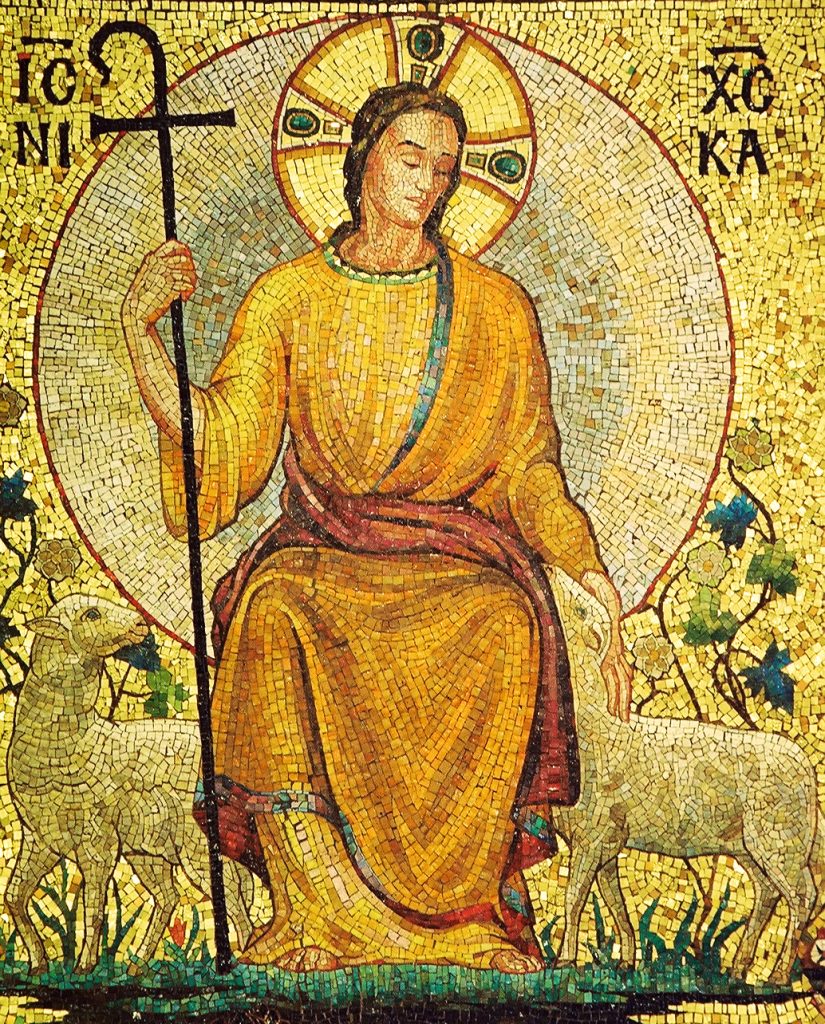
Jesus Christ Victor
10
posted on
06/05/2023 4:25:52 AM PDT
by
annalex
(fear them not)
To: annalex
SAINT BONIFACE MARTYR, APOSTLE OF GERMANY680-754 A.D.Feast: June 5
Isolated missionary groups had penetrated central Germany in earlier times, but not until the eighth century was there a systematic effort to Christianize the vast pagan wilderness. To the English monk Boniface belongs the honor of opening up this region and creating a hierarchy under direct commission from the Holy See. Thirty-six years of missionary labor under difficult and dangerous conditions, ending at last in martyrdom, entitle this good and courageous man to the designation, "Apostle of Germany."
Boniface, or Winfrid, to give him his baptismal name, was born into a Christian family of noble rank, probably at Crediton in Devonshire, about the year 680. The reorganized English Church, still under the inspiration brought to it from Rome two generations earlier by Augustine of Canterbury, was full of fervor and vitality. Winfrid was a very small boy when he found himself listening to the conversation of some monks who were visiting his home. He resolved then to enter the Church, and this resolution never weakened. Winfrid's father had other plans for his clever son, but a serious illness altered his attitude, and he sent the boy to the neighboring abbey of Exeter to be educated. Some years later, Winfrid went to the abbey of Bursling, in the diocese of Winchester. After completing his studies there, he was appointed head of the school.
His teaching skill attracted many students, and for their use he wrote a grammar which is still extant. The pupils diligently took notes at his classes, and these were copied and circulated in other monasteries, where they were eagerly studied. At the age of thirty he was ordained priest, and now added preaching to teaching and administrative work.
Winfrid was assured of rapid advancement in the English Church, but God revealed to him that his work was to be in foreign lands, where need was greater. Northern Europe and most of Central Europe were still in pagan darkness. In Friesland, which then included modern Netherlands and lands to the east, the Northumbrian missionary Willibrord had long been striving to bring the Gospel to the people. It was to this region that Winfrid felt himself called. Having obtained the consent of his abbot, he and two companions set out in the spring of 716. Soon after landing at Doerstadt they learned that Duke Radbold of Friesland, an enemy of Christianity, was warring with Charles Martel, the Frankish duke, and that Willibrord had been obliged to retire to his monastery at Echternacht. Realizing that the time was inauspicious, the missionaries prudently returned to England in the autumn. Winfrid's monks at Bursling tried to keep him there, and wished to elect him abbot, but he was not to be turned from his purpose.
This first attempt had shown him that to be effective as a missionary he must have a direct commission from the Pope, so in 718, with commendatory letters from the bishop of Winchester, he presented himself in Rome before Gregory II. The Pope welcomed him warmly, kept him in Rome until spring of the following year, when traveling conditions were favorable, and then sent him forth with a general commission to preach the word of God to the heathen. At this time Winfrid's name was changed to Boniface (from the Latin, <bonifatus>, fortunate). Crossing the lower Alps, the missionary traveled through Bavaria into Hesse. Duke Radbold had died and his successor was more friendly. Going into Friesland, Boniface labored for three years under Willibrord, who was now very old. Boniface declined to become Willibrord's coadjutor and successor as bishop of Utrecht, saying that his commission had been general, "to the heathen," and he could not be limited to any one diocese. He now returned to work in Hesse.
Boniface had little difficulty in making himself understood as a preacher, since the dialects of the various Teutonic tribes closely resembled his native Anglo-Saxon. He won the interest of two powerful local chieftains, Dettic and Deorulf, who at some previous time had been baptized. For lack of instruction they had remained little better than pagans; now they became zealous Christians and influenced many others to be baptized. They also gave Boniface a grant of land on which he later founded the monastery of Amoeneburg. Boniface was able to report such remarkable gains that the Pope summoned him back to Rome to be ordained bishop.
In Rome on St. Andrew's Day, November 30, 722, Pope Gregory II consecrated him as regionary bishop with a general jurisdiction over "the races in the parts of Germany and east of the Rhine who live in error, in the shadow of death." The Pope also gave him a letter to the powerful Charles Martel, "The Hammer." When Boniface delivered it to the Frankish duke on his way back to Germany, he received the valuable gift of a sealed pledge of Frankish protection. Armed thus with authority from both the Church and the civil power, the prestige of Boniface was vastly enhanced. On his return to Hesse, he decided to try to root out the pagan superstitions which seriously affected the stability of his converts. On a day publicly announced, and in the midst of an awe-struck crowd, Boniface and one or two of his followers attacked with axes Thor's sacred oak. These German tribes, along with many other primitive peoples, were tree-worshipers. Thor, god of thunder, was one of the principal Teutonic deities, and this ancient oak, which stood on the summit of Mt. Gudenberg, was sacred to him. After a few blows, the huge tree crashed to earth, splitting into four parts. The terrified tribesmen, who had expected a punishment to fall instantly on the perpetrators of such an outrage, now saw that their god was powerless to protect even his own sanctuary.
To signalize the victory, Boniface built a chapel on the spot. From that time the work of evangelization in Hesse proceeded steadily.
Moving east into Thuringia, Boniface continued his crusade. He found a few undisciplined Celtic and Irish priests, who tended to be a hindrance; many of them held heretical beliefs and others lived immoral lives. Boniface restored order among them, although his chief aim was to win over the pagan tribes. At Ohrdruff, near Gotha, he established a second monastery, dedicated to St. Michael, as a missionary center. Everywhere the people were ready to listen, but there was a critical lack of teachers. Boniface appealed to the English monasteries and convents, and their response was so wholehearted that for several years bands of monks, schoolmasters, and nuns came over to place themselves under his direction. The two monasteries already built were enlarged and new ones founded. Among the new English missionaries were Lullus, who was to succeed Boniface at Mainz, Eoban, who was to share his martyrdom, Burchard, and Wigbert; the nuns included Thecla, Chunitrude, and Boniface's beautiful and learned young cousin, Lioba, later to become abbess of Bischofsheim and friend of Hildegarde, Charlemagne's wife.
Pope Gregory III sent Boniface the pallium in 731, appointing him archbishop and metropolitan of all Germany beyond the Rhine, with authority to found new bishoprics. A few years later Boniface made his third trip to Rome to confer about the churches he had founded, and at this time he was appointed apostolic legate. Stopping at Monte Cassino, he enlisted more missionaries. In his capacity as legate he traveled into Bavaria to organize the Church there into the four bishoprics of Regensburg, Freising, Salzburg, and Passau. From Bavaria he returned to his own field and founded new bishoprics at Erfurt for Thuringia, Buraburg for Hesse, Wurzburg for Franconia, and Eichstadt for the Nordgau. An English monk was placed at the head of each new diocese. In 741 the great Benedictine abbey at Fulda was founded in Prussia to serve as the fountainhead of German monastic culture. Its first abbot was Boniface's young Bavarian disciple, Sturm or Sturmio. In the early Middle Ages Fulda produced a host of scholars and teachers, and became known as the Monte Cassino of Germany.
While the evangelization of Germany was proceeding steadily, the Church in Gaul, under the Merovingian kings, was disintegrating. High ecclesiastical offices were either kept vacant, sold to the highest bidder, or bestowed on unworthy favorites. Pluralism, the holding by one man of many offices, each of which should demand his full time, was common. The great mass of the clergy was ignorant and undisciplined. No synod or church council had been held for eighty-four years. Charles Martel had been conquering and consolidating the regions of western Europe, and now regarded himself as an ally of the papacy and the chief champion of the Church, yet he had persistently plundered it to obtain funds for his wars and did nothing to help the work of reform. His death, however, in 74I, and the accession of his sons, Carloman and Pepin the Short, provided an opportunity which Boniface quickly seized. Carloman, the elder, was very devout and held Boniface in great veneration; Boniface had no trouble in persuading him to call a synod to deal with errors and abuses in the Church in Austrasia, Alemannia, and Thuringia.
The first assembly was followed by several others. Boniface presided over them all, and was able to carry through many important reforms. The vacant bishoprics and parishes were filled, discipline reestablished, and fresh vigor infused into the Frankish Church.
A heretic who had been creating much disturbance, one Adalbert of Neustria, was condemned by the synod of Soissons in 744. In 747 another general council of the Frankish clergy drew up a profession of faith and fidelity which was sent to Rome and laid upon the altar in the crypt of St. Peter's. After five years' labor Boniface had succeeded in restoring the Church of Gaul to its former greatness.
Now Boniface desired that Britain too should share in this reform movement. At his request and that of Pope Zacharias, the archbishop of Canterbury held a council at Clovesho, in 747, which adopted many of the resolutions passed in Gaul. This was also the year when Boniface was given a metropolitan see. Cologne was at first proposed as his cathedral city, but Mainz was finally chosen. Even when Cologne and other cities became archiepiscopal sees, Mainz retained the primacy. The Pope also made Boniface primate of Germany as well as apostolic legate for both Germany and Gaul.
Carloman now retired to a monastery, but his successor, Pepin, who brought all Gaul under his control, gave Boniface his support. "Without the patronage of the Frankish chiefs," Boniface wrote in a letter to England, "I cannot govern the people or exercise discipline over the clergy and monks, or check the practice of paganism." As apostolic legate, Boniface crowned Pepin at Soissons in 75I, thus giving papal sanction to the assumption of royal power by the father of Charlemagne. Boniface, beginning to feel the weight of his years, made Lullus his coadjutor. Yet even now, when he was past seventy, his missionary zeal burned ardently. He wished to spend his last years laboring among those first converts in Friesland, who, since Willibrord's death, were relapsing once more into paganism. Leaving all things in order for Lullus, who was to become his successor, he embarked with some fifty companions and sailed down the Rhine. At Utrecht the party was joined by Eoban, bishop of that diocese. They set to work reclaiming the relapsed Christians, and during the following months made fruitful contact with the hitherto untouched tribes to the northeast. Boniface arranged to hold a great confirmation service on Whitsun Eve on the plain of Dokkum, near the banks of the little river Borne.
While awaiting the arrival of the converts, Boniface was quietly reading in his tent.
Suddenly a band of armed pagans appeared in the center of the encampment. His companions would have tried to defend their leader, but Boniface would not allow them to do so. Even as he was telling them to trust in God and welcome the prospect of dying for Him, the Germans attacked. Boniface was one of the first to fall; his companions shared his fate. The pagans, expecting to carry away rich booty, were disgusted when they found, besides provisions, only a box of holy relics and a few books They did not bother to carry away these objects, which were later collected by the Christians who came to avenge the martyrs and rescue their remains. The body of Boniface was carried to Fulda for burial, and there it still rests. The book the bishop was reading and which he is said to have lifted above his head to save it when the blow fell is also one of Fulda's treasures.
Boniface has been called the pro-consul of the papacy. His administrative and organizing genius left its mark on the German Church throughout the Middle Ages.
Though Boniface was primarily a man of action, his literary remains are extensive.
Especially interesting and important from the point of view of Church dogma and history are his letters. Among the emblems of Boniface are an oak, an axe, a sword, a book.
<Letter XXVI>
<To his most reverend and beloved sister, the abbess Eadburga,[1]> Boniface, humble servant of the servants of God, sends heartfelt greetings of love in Christ.
I pray Almighty God, the rewarder of all good works, that he repay you in the heavenly mansions and eternal tabernacles and choir of the blessed angels for all the kindnesses you have shown me, the solace of the books and the comfort of the garments with which you have relieved my distress. And now I ask you to do still more for me and write out in gold the Epistles of my lord, St. Peter the Apostle, that I may visibly impress honor and reverence for the sacred Scriptures on the carnal minds to whom I preach. I should like to have with me always the words of him who is my guide on this road. I am sending materials for your writing by the priest Eoban.
Do then, dearest sister, with this petition of mine as you have always done with all my requests, that here also your works may shine in letters of gold to the glory of our heavenly Father. I pray for your well-being in Christ, and may you go on to still greater heights of holy virtue.
<Letter LXXV>
To his friend in the embrace of loving arms, his brother in the bonds of spiritual brotherhood, Archbishop Egbert[2] clothed with the garment of supreme prelacy, abundant greeting of unfailing love in Christ from Boniface, humble bishop, legate in Germany of the Roman Catholic and Apostolic Church.
We have received with joyful and grateful heart the gifts and books you sent us....
Meantime we greatly need your advice and counsel. When I find a priest who long since fell into carnal sin and after doing penance was restored to his office by the Franks, and now dwells in a large district with no other priests and is administering baptism and celebrating Mass for a population who are believers but are prone to error- if now I withdraw him, according to the most approved canons, then, because of the scarcity of priests, infants will die without the sacred water of birth, unless I have some better man to replace him. Judge therefore between me and the erring people, whether it is better, or at least the lesser evil, that such a man should perform the service of the sacred altar or that the mass of the people should die as pagans because they have no way of securing a better minister.
Or when in the multitude of priests, I find one who has fallen into that same sin and with penitence has been reinstated in his former rank, so that the whole body of priests and people have confidence in his good character, if I should now degrade him, his secret sin would be revealed, the mass of the people would be shocked, many souls would be lost through the scandal and there would be great hatred of priests and distrust of the ministers of the Church, so that all would be despised as faithless and unbelieving. Therefore we have boldly ventured to bear with this man and allow him to remain in the sacred ministry, thinking the danger from one man's offense would be less evil than the perdition of the souls of almost the entire people. On this whole subject I earnestly desire your holy advice in writing.
(Emerton, <Letters of St. Boniface>, Records of Civilization, 1940.)
Endnotes:
1 Eadburga was abbess of a convent on the island of Thanet.
2 Egbert was archbishop of York.
Saint Boniface, Martyr, Apostle of Germany. Celebration of Feast Day is June 5.
Taken from "Lives of Saints", Published by John J. Crawley & Co., Inc.
ewtn.com
11
posted on
06/05/2023 4:31:05 AM PDT
by
annalex
(fear them not)
To: annalex

St. Boniface Baptising and Martyrdom in 754
Illustration from the Sacramentary of Fulda
12
posted on
06/05/2023 4:33:53 AM PDT
by
annalex
(fear them not)
To: annalex; All
NAVARRE BIBLE COMMENTARY (RSV)
Ad Majorem Dei Gloriam (To the Greater Glory of God)
From: Tobit 1:1ad, 2a, 3, 17, 2:1-8
[1] The book of the acts of Tobit the son of Tobiel, son of Ananiel, son of Aduel, son of Gabael, of the descendants of Asiel and the tribe of Naphtali, [2] who in the days of Shalmaneser [3] walked in the ways of truth and righteousness all the days of my life, and I performed many acts of charity to my brethren and country-men who went with me into the land of the Assyrians, to Nineveh.
[17] I would give my bread to the hungry and my clothing to the naked; and if I saw any one of my people dead and thrown out behind the wall of Nineveh, I could bury him.
Tobit’s misfortune
----------------------
[2:1] When I arrived home and my wife Anna and my son Tobias were restored to me, at the feast of Pentecost, which is the sacred festival of the seven weeks, a good dinner was prepared for me and I sat down to eat. [2] Upon seeing the abundance of food I said to my son, “Go and bring whatever poor man of our brethren you may find who is mindful of the Lord, and I will wait for you.” [3] But he came back and said, “Father, one of our people has been strangled and thrown into the market place.” [4] So before I tasted anything I sprang up and removed the body to a place of shelter until sunset. [5] And when I returned I washed myself and ate my food in sorrow. [6] Then I remembered the prophecy of Amos, how he said,
“Your feasts shall be turned into mourning,
and all your festivities into lamentation.”
And I wept.
[7] When the sun had set I went and dug a grave and buried the body. [8] And my neighbors laughed at me and said, “He is no longer afraid that he will be put to death for doing this; he once ran away, and here he is burying the dead again!”
*********************************************************
Commentary:
1:1-3:17. The first part of the book of Tobit introduces the main characters in the story – Tobit, his wife, his son Tobias, Sarah, her parents, and the angel Raphael – and describes the dire situation of Tobit in Nineveh (Assyria) and Sarah in Ecbatana (Media). Although they are living about a thousand kilometers (625 miles) apart, and their circumstances are different, they have a lot in common: they are both members of the Jewish people in the diaspora, and members of the same tribe; both are righteous and pure in the eyes of God –Tobit because he keeps to the letter of the Law, and Sarah because she faithfully obeys her parents; both of them seem to be in a hopeless position; and at the very same moment they have recourse to God in prayer, placing themselves in his hands; and both of them are going to be rescued from their plight through the help of God’s messenger, the angel Raphael. The plot of the story is well organized, even though the outcome is known from the start. Already, the central message of the book is easy to see: God helps those who trust in him and try to do what is good for the right reasons.
1:1-2 The main character begins by introducing himself – Tobit, the father of Tobias. He tells us the tribe he comes from, his place of origin, and the time in which he lives (the last years of the eighth century BC). The name Tobias (cf. 1:9) means “my God is the Lord”, and that is what the story bears out: God and the observance of his Law are what matters to Tobit, when things go well and also when misfortune strikes; that is why God’s goodness and mercy will come to his aid to rescue him when all seems lost.
1:3-22 At the point Tobit himself begins to recount his life, emphasizing that he has always dutifully kept the law of God, despite the fact that his compatriots, the Israelites of the Northern kingdom, kept it neither at home nor in exile. Prior to the exile, Tobit had continued to go up to Jerusalem to worship God, as the Law commanded (cf. Deut 12:1-18), and he never offered sacrifice to the golden calves et up by Jeroboam (cf. 1 Kings 12:26-32); he was also meticulous about the three tithes (cf. Num 18:12ff; Deut 14:22-23, 28-29); and, in keeping with the Law, he married a wife of his own nation (cf. Deut 7:3). Later, exiled far from his country, he never ate the unclean food of the Gentiles (cf. Lev 11:1-49; Deut 14:3-21); and now that he cannot bring tithes to the temple, he gives alms to the poor and heroically performs the works of mercy, especially as regards burying the dead. The type of piety described here is not in fact in keeping with the period in which the writer implies Tobit to have lived; the rules referred to stem from the reform instituted by Josiah in 622 BC and from the time of the return from the Babylonian exile. But the sacred writer uses them to depict Tobit as an example of a pious Jew, be he in the land of Israel or in the diaspora. In this respect, the teaching in the book of Tobit contrasts with that of the Gospel, which extends the concept of neighbour to include anyone, of whatever nation, race or religion (cf. Lk 10:29-37).
2:1-14 The festival of the Seven Weeks or Pentecost, so-called because it was held fifty days after Passover (cf. Deut 16:9-12; Lev 23:16), was one of the festivals involving pilgrimage to Jerusalem: during the exile it seems to have been commemorated by a special meal held as a remembrance rite for the feast. By looking after the needy, Tobit is fulfilling what the Law laid down should be done during this festival – taking an interest in strangers, orphans and widows (cf. Deut 16:14), although he is applying it to “brethren . . . mindful of the Lord” (v. 2). Despite his devoutness and ritual purity (v. 5; cf. Neh 19:11-12), Tobit has to share in the suffering inflicted on the people on account of their sins (v. 6; cf. Amos 8:10). But it gets worse than that: his works of mercy bring him misfortune (first blindness and then penury), to the point that his wife has to take paid work to make ends meet. Later, she queries whether he deserves to be suffering in the way that he is. He can put up with physical blindness because his family comes to his aid; but his wife’s criticism casts a shadow on his soul.
Tobit’s situation parallels that of everyone who strives to be faithful. As St Paul says in 2 Corinthians 4:8-10, “We are afflicted in every way, but not crushed; perplexed, but not driven to despair; persecuted, but not forsaken; struck down, but not destroyed; always carrying in the body the death of Jesus, so that the life of Jesus may also be manifested in our bodies.” The Vulgate version of the Bible includes after v. 10 some reflections on why Tobit should have had to suffer in this way: see the RSVCE note on p. 615.
13
posted on
06/05/2023 6:27:13 AM PDT
by
fidelis
(👈 Under no obligation to respond to rude, ignorant, abusive, bellicose, and obnoxious posts.)
To: fidelis
From: Mark 12:1-12The Parable of the Wicked Tenants
---------------------------------
[1] And he began to speak to them in parables. "A man planted a vineyard, and set a hedge around it, and dug a pit for the wine press, and built a tower, and let it out to tenants, and went into another country. [2] When the time came, he sent a servant to the tenants, to get from them some of the fruit of the vineyard. [3] And they took him and beat him, and sent him away empty-handed. [4] Again he sent to them another servant, and they wounded him in the head, and treated him shamefully. [5] And he sent another, and him they killed; and so with many others, some they beat and some they killed. [6] He had still one other, a beloved son; finally he sent him to them, saying, 'They will respect my son.' [7] But those tenants said to one another, 'This is the heir; come, let us kill him, and the inheritance will be ours.' [8] And they took him and killed him, and cast him out of the vineyard. [9] What will the owner of the vineyard do? He will come and destroy the tenants, and give the vineyard to others. [10] Have you not read the scripture: 'The very stone which the builders rejected has become the head of the corner; [11] this was the Lord's doing, and it is marvelous in our eyes'?" [12] And they tried to arrest him but feared the multitude, for they perceived that he had told the parable against them; so they left him and went away.
***********************************************************************
Commentary:
1-12. This parable is a masterly summary of history of salvation. To explain the mystery of his redemptive death, Jesus makes use of one of the most beautiful allegories of the Old Testament the so-called "song of the vineyard," in which Isaiah (5:1-7) prophesied Israel's ingratitude for God's favors. On the basis of this Isaiah text, Jesus reveals the patience of God, who sends one messenger after another—the prophets of the Old Testament--until at last, as the text says, he sends "his beloved son", Jesus, whom the tenants will kill. This expression, as also that which God himself uses to describe Christ at Baptism (1:11) and the Transfiguration (9:7), points to the divinity of Jesus, who is the cornerstone of salvation, rejected by the builders in their selfishness and pride. To the Jews listening to Jesus telling this parable, his meaning must have been crystal clear. The rulers "perceived that he had told the parable against them" (v. 12) and that it was about the fulfillment of the Isaiah prophecy (cf. note on Mt 21:33-46).
14
posted on
06/05/2023 6:27:26 AM PDT
by
fidelis
(👈 Under no obligation to respond to rude, ignorant, abusive, bellicose, and obnoxious posts.)
To: fidelis
15
posted on
06/05/2023 6:29:42 AM PDT
by
fidelis
(👈 Under no obligation to respond to rude, ignorant, abusive, bellicose, and obnoxious posts.)
Disclaimer:
Opinions posted on Free Republic are those of the individual
posters and do not necessarily represent the opinion of Free Republic or its
management. All materials posted herein are protected by copyright law and the
exemption for fair use of copyrighted works.
FreeRepublic.com is powered by software copyright 2000-2008 John Robinson
