Posted on 03/26/2023 3:37:19 AM PDT by annalex
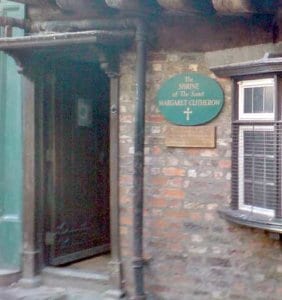
5th Sunday of Lent ![]() Shrine of St. Margaret Clitherow, York, UK Readings at MassLiturgical Colour: Violet. Year: A(I).
I shall put my spirit in you, and you will liveThe Lord says this: I am now going to open your graves; I mean to raise you from your graves, my people, and lead you back to the soil of Israel. And you will know that I am the Lord, when I open your graves and raise you from your graves, my people. And I shall put my spirit in you, and you will live, and I shall resettle you on your own soil; and you will know that I, the Lord, have said and done this – it is the Lord who speaks.
With the Lord there is mercy and fullness of redemption. Out of the depths I cry to you, O Lord, Lord, hear my voice! O let your ears be attentive to the voice of my pleading. With the Lord there is mercy and fullness of redemption. If you, O Lord, should mark our guilt, Lord, who would survive? But with you is found forgiveness: for this we revere you. With the Lord there is mercy and fullness of redemption. My soul is waiting for the Lord. I count on his word. My soul is longing for the Lord more than watchman for daybreak. (Let the watchman count on daybreak and Israel on the Lord.) With the Lord there is mercy and fullness of redemption. Because with the Lord there is mercy and fullness of redemption, Israel indeed he will redeem from all its iniquity. With the Lord there is mercy and fullness of redemption.
The Spirit of him who raised Jesus from the dead is living in youPeople who are interested only in unspiritual things can never be pleasing to God. Your interests, however, are not in the unspiritual, but in the spiritual, since the Spirit of God has made his home in you. In fact, unless you possessed the Spirit of Christ you would not belong to him. Though your body may be dead it is because of sin, but if Christ is in you then your spirit is life itself because you have been justified; and if the Spirit of him who raised Jesus from the dead is living in you, then he who raised Jesus from the dead will give life to your own mortal bodies through his Spirit living in you.
Glory and praise to you, O Christ! I am the resurrection and the life, says the Lord; whoever believes in me will never die. Glory and praise to you, O Christ!
I am the resurrection and the lifeThere was a man named Lazarus who lived in the village of Bethany with the two sisters, Mary and Martha, and he was ill. It was the same Mary, the sister of the sick man Lazarus, who anointed the Lord with ointment and wiped his feet with her hair. The sisters sent this message to Jesus, ‘Lord, the man you love is ill.’ On receiving the message, Jesus said, ‘This sickness will end not in death but in God’s glory, and through it the Son of God will be glorified.’ Jesus loved Martha and her sister and Lazarus, yet when he heard that Lazarus was ill he stayed where he was for two more days before saying to the disciples, ‘Let us go to Judaea.’ The disciples said, ‘Rabbi, it is not long since the Jews wanted to stone you; are you going back again?’ Jesus replied: ‘Are there not twelve hours in the day? A man can walk in the daytime without stumbling because he has the light of this world to see by; but if he walks at night he stumbles, because there is no light to guide him.’ He said that and then added, ‘Our friend Lazarus is resting, I am going to wake him.’ The disciples said to him, ‘Lord, if he is able to rest he is sure to get better.’ The phrase Jesus used referred to the death of Lazarus, but they thought that by ‘rest’ he meant ‘sleep’, so Jesus put it plainly, ‘Lazarus is dead; and for your sake I am glad I was not there because now you will believe. But let us go to him.’ Then Thomas – known as the Twin – said to the other disciples, ‘Let us go too, and die with him.’ On arriving, Jesus found that Lazarus had been in the tomb for four days already. Bethany is only about two miles from Jerusalem, and many Jews had come to Martha and Mary to sympathise with them over their brother. When Martha heard that Jesus had come she went to meet him. Mary remained sitting in the house. Martha said to Jesus, ‘If you had been here, my brother would not have died, but I know that, even now, whatever you ask of God, he will grant you.’ ‘Your brother’ said Jesus to her ‘will rise again.’ Martha said, ‘I know he will rise again at the resurrection on the last day.’ Jesus said: ‘I am the resurrection and the life. If anyone believes in me, even though he dies he will live, and whoever lives and believes in me will never die. Do you believe this?’ ‘Yes, Lord,’ she said ‘I believe that you are the Christ, the Son of God, the one who was to come into this world.’ When she had said this, she went and called her sister Mary, saying in a low voice, ‘The Master is here and wants to see you.’ Hearing this, Mary got up quickly and went to him. Jesus had not yet come into the village; he was still at the place where Martha had met him. When the Jews who were in the house sympathising with Mary saw her get up so quickly and go out, they followed her, thinking that she was going to the tomb to weep there. Mary went to Jesus, and as soon as she saw him she threw herself at his feet, saying, ‘Lord, if you had been here, my brother would not have died.’ At the sight of her tears, and those of the Jews who followed her, Jesus said in great distress, with a sigh that came straight from the heart, ‘Where have you put him?’ They said, ‘Lord, come and see.’ Jesus wept; and the Jews said, ‘See how much he loved him!’ But there were some who remarked, ‘He opened the eyes of the blind man, could he not have prevented this man’s death?’ Still sighing, Jesus reached the tomb: it was a cave with a stone to close the opening. Jesus said, ‘Take the stone away.’ Martha said to him, ‘Lord, by now he will smell; this is the fourth day.’ Jesus replied, ‘Have I not told you that if you believe you will see the glory of God?’ So they took away the stone. Then Jesus lifted up his eyes and said: ‘Father, I thank you for hearing my prayer. I knew indeed that you always hear me, but I speak for the sake of all these who stand round me, so that they may believe it was you who sent me.’ When he had said this, he cried in a loud voice, ‘Lazarus, here! Come out!’ The dead man came out, his feet and hands bound with bands of stuff and a cloth round his face. Jesus said to them, ‘Unbind him, let him go free.’ Many of the Jews who had come to visit Mary and had seen what he did believed in him. Christian Art![]() Each day, The Christian Art website gives a picture and reflection on the Gospel of the day. The readings on this page are from the Jerusalem Bible, which is used at Mass in most of the English-speaking world. The New American Bible readings, which are used at Mass in the United States, are available in the Universalis apps, programs and downloads. |
KEYWORDS: catholic; jn11; lent; prayer

Please FReepmail me to get on/off the Alleluia Ping List.
| John | |||
| English: Douay-Rheims | Latin: Vulgata Clementina | Greek NT: Byzantine/Majority Text (2000) | |
| John 11 | |||
| 1. | NOW there was a certain man sick, named Lazarus, of Bethania, of the town of Mary and Martha her sister. | Erat autem quidem languens Lazarus a Bethania, de castello Mariæ et Marthæ sororis ejus. | ην δε τις ασθενων λαζαρος απο βηθανιας εκ της κωμης μαριας και μαρθας της αδελφης αυτης |
| 2. | (And Mary was she that anointed the Lord with ointment, and wiped his feet with her hair: whose brother Lazarus was sick.) | (Maria autem erat quæ unxit Dominum unguento, et extersit pedes ejus capillis suis : cujus frater Lazarus infirmabatur.) | ην δε μαρια η αλειψασα τον κυριον μυρω και εκμαξασα τους ποδας αυτου ταις θριξιν αυτης ης ο αδελφος λαζαρος ησθενει |
| 3. | His sisters therefore sent to him, saying: Lord, behold, he whom thou lovest is sick. | Miserunt ergo sorores ejus ad eum dicentes : Domine, ecce quem amas infirmatur. | απεστειλαν ουν αι αδελφαι προς αυτον λεγουσαι κυριε ιδε ον φιλεις ασθενει |
| 4. | And Jesus hearing it, said to them: This sickness is not unto death, but for the glory of God: that the Son of God may be glorified by it. | Audiens autem Jesus dixit eis : Infirmitas hæc non est ad mortem, sed pro gloria Dei, ut glorificetur Filius Dei per eam. | ακουσας δε ο ιησους ειπεν αυτη η ασθενεια ουκ εστιν προς θανατον αλλ υπερ της δοξης του θεου ινα δοξασθη ο υιος του θεου δι αυτης |
| 5. | Now Jesus loved Martha, and her sister Mary, and Lazarus. | Diligebat autem Jesus Martham, et sororem ejus Mariam, et Lazarum. | ηγαπα δε ο ιησους την μαρθαν και την αδελφην αυτης και τον λαζαρον |
| 6. | When he had heard therefore that he was sick, he still remained in the same place two days. | Ut ergo audivit quia infirmabatur, tunc quidem mansit in eodem loco duobus diebus ; | ως ουν ηκουσεν οτι ασθενει τοτε μεν εμεινεν εν ω ην τοπω δυο ημερας |
| 7. | Then after that, he said to his disciples: Let us go into Judea again. | deinde post hæc dixit discipulis suis : Eamus in Judæam iterum. | επειτα μετα τουτο λεγει τοις μαθηταις αγωμεν εις την ιουδαιαν παλιν |
| 8. | The disciples say to him: Rabbi, the Jews but now sought to stone thee: and goest thou thither again? | Dicunt ei discipuli : Rabbi, nunc quærebant te Judæi lapidare, et iterum vadis illuc ? | λεγουσιν αυτω οι μαθηται ραββι νυν εζητουν σε λιθασαι οι ιουδαιοι και παλιν υπαγεις εκει |
| 9. | Jesus answered: Are there not twelve hours of the day? If a man walk in the day, he stumbleth not, because he seeth the light of this world: | Respondit Jesus : Nonne duodecim sunt horæ diei ? Si quis ambulaverit in die, non offendit, quia lucem hujus mundi videt : | απεκριθη ιησους ουχι δωδεκα εισιν ωραι της ημερας εαν τις περιπατη εν τη ημερα ου προσκοπτει οτι το φως του κοσμου τουτου βλεπει |
| 10. | But if he walk in the night, he stumbleth, because the light is not in him. | si autem ambulaverit in nocte, offendit, quia lux non est in eo. | εαν δε τις περιπατη εν τη νυκτι προσκοπτει οτι το φως ουκ εστιν εν αυτω |
| 11. | These things he said; and after that he said to them: Lazarus our friend sleepeth; but I go that I may awake him out of sleep. | Hæc ait, et post hæc dixit eis : Lazarus amicus noster dormit : sed vado ut a somno excitem eum. | ταυτα ειπεν και μετα τουτο λεγει αυτοις λαζαρος ο φιλος ημων κεκοιμηται αλλα πορευομαι ινα εξυπνισω αυτον |
| 12. | His disciples therefore said: Lord, if he sleep, he shall do well. | Dixerunt ergo discipuli ejus : Domine, si dormit, salvus erit. | ειπον ουν οι μαθηται αυτου κυριε ει κεκοιμηται σωθησεται |
| 13. | But Jesus spoke of his death; and they thought that he spoke of the repose of sleep. | Dixerat autem Jesus de morte ejus : illi autem putaverunt quia de dormitione somni diceret. | ειρηκει δε ο ιησους περι του θανατου αυτου εκεινοι δε εδοξαν οτι περι της κοιμησεως του υπνου λεγει |
| 14. | Then therefore Jesus said to them plainly: Lazarus is dead. | Tunc ergo Jesus dixit eis manifeste : Lazarus mortuus est : | τοτε ουν ειπεν αυτοις ο ιησους παρρησια λαζαρος απεθανεν |
| 15. | And I am glad, for your sakes, that I was not there, that you may believe: but let us go to him. | et gaudeo propter vos, ut credatis, quoniam non eram ibi, sed eamus ad eum. | και χαιρω δι υμας ινα πιστευσητε οτι ουκ ημην εκει αλλα αγωμεν προς αυτον |
| 16. | Thomas therefore, who is called Didymus, said to his fellow disciples: Let us also go, that we may die with him. | Dixit ergo Thomas, qui dicitur Didymus, ad condiscipulos : Eamus et nos, ut moriamur cum eo. | ειπεν ουν θωμας ο λεγομενος διδυμος τοις συμμαθηταις αγωμεν και ημεις ινα αποθανωμεν μετ αυτου |
| 17. | Jesus therefore came, and found that he had been four days already in the grave. | Venit itaque Jesus : et invenit eum quatuor dies jam in monumento habentem. | ελθων ουν ο ιησους ευρεν αυτον τεσσαρας ημερας ηδη εχοντα εν τω μνημειω |
| 18. | (Now Bethania was near Jerusalem, about fifteen furlongs off.) | (Erat autem Bethania juxta Jerosolymam quasi stadiis quindecim.) | ην δε η βηθανια εγγυς των ιεροσολυμων ως απο σταδιων δεκαπεντε |
| 19. | And many of the Jews were come to Martha and Mary, to comfort them concerning their brother. | Multi autem ex Judæis venerant ad Martham et Mariam, ut consolarentur eas de fratre suo. | και πολλοι εκ των ιουδαιων εληλυθεισαν προς τας περι μαρθαν και μαριαν ινα παραμυθησωνται αυτας περι του αδελφου αυτων |
| 20. | Martha therefore, as soon as she heard that Jesus had come, went to meet him: but Mary sat at home. | Martha ergo ut audivit quia Jesus venit, occurrit illi : Maria autem domi sedebat. | η ουν μαρθα ως ηκουσεν οτι ιησους ερχεται υπηντησεν αυτω μαρια δε εν τω οικω εκαθεζετο |
| 21. | Martha therefore said to Jesus: Lord, if thou hadst been here, my brother had not died. | Dixit ergo Martha ad Jesum : Domine, si fuisses hic, frater meus non fuisset mortuus : | ειπεν ουν μαρθα προς τον ιησουν κυριε ει ης ωδε ο αδελφος μου ουκ αν ετεθνηκει |
| 22. | But now also I know that whatsoever thou wilt ask of God, God will give it thee. | sed et nunc scio quia quæcumque poposceris a Deo, dabit tibi Deus. | αλλα και νυν οιδα οτι οσα αν αιτηση τον θεον δωσει σοι ο θεος |
| 23. | Jesus saith to her: Thy brother shall rise again. | Dicit illi Jesus : Resurget frater tuus. | λεγει αυτη ο ιησους αναστησεται ο αδελφος σου |
| 24. | Martha saith to him: I know that he shall rise again, in the resurrection at the last day. | Dicit ei Martha : Scio quia resurget in resurrectione in novissimo die. | λεγει αυτω μαρθα οιδα οτι αναστησεται εν τη αναστασει εν τη εσχατη ημερα |
| 25. | Jesus said to her: I am the resurrection and the life: he that believeth in me, although he be dead, shall live: | Dixit ei Jesus : Ego sum resurrectio et vita : qui credit in me, etiam si mortuus fuerit, vivet : | ειπεν αυτη ο ιησους εγω ειμι η αναστασις και η ζωη ο πιστευων εις εμε καν αποθανη ζησεται |
| 26. | And every one that liveth, and believeth in me, shall not die for ever. Believest thou this? | et omnis qui vivit et credit in me, non morietur in æternum. Credis hoc ? | και πας ο ζων και πιστευων εις εμε ου μη αποθανη εις τον αιωνα πιστευεις τουτο |
| 27. | She saith to him: Yea, Lord, I have believed that thou art Christ the Son of the living God, who art come into this world. | Ait illi : Utique Domine, ego credidi quia tu es Christus, Filius Dei vivi, qui in hunc mundum venisti. | λεγει αυτω ναι κυριε εγω πεπιστευκα οτι συ ει ο χριστος ο υιος του θεου ο εις τον κοσμον ερχομενος |
| 28. | And when she had said these things, she went, and called her sister Mary secretly, saying: The master is come, and calleth for thee. | Et cum hæc dixisset, abiit, et vocavit Mariam sororem suam silentio, dicens : Magister adest, et vocat te. | και ταυτα ειπουσα απηλθεν και εφωνησεν μαριαν την αδελφην αυτης λαθρα ειπουσα ο διδασκαλος παρεστιν και φωνει σε |
| 29. | She, as soon as she heard this, riseth quickly, and cometh to him. | Illa ut audivit, surgit cito, et venit ad eum ; | εκεινη ως ηκουσεν εγειρεται ταχυ και ερχεται προς αυτον |
| 30. | For Jesus was not yet come into the town: but he was still in that place where Martha had met him. | nondum enim venerat Jesus in castellum : sed erat adhuc in illo loco, ubi occurrerat ei Martha. | ουπω δε εληλυθει ο ιησους εις την κωμην αλλ ην εν τω τοπω οπου υπηντησεν αυτω η μαρθα |
| 31. | The Jews therefore, who were with her in the house, and comforted her, when they saw Mary that she rose up speedily and went out, followed her, saying: She goeth to the grave to weep there. | Judæi ergo, qui erant cum ea in domo, et consolabantur eam, cum vidissent Mariam quia cito surrexit, et exiit, secuti sunt eam dicentes : Quia vadit ad monumentum, ut ploret ibi. | οι ουν ιουδαιοι οι οντες μετ αυτης εν τη οικια και παραμυθουμενοι αυτην ιδοντες την μαριαν οτι ταχεως ανεστη και εξηλθεν ηκολουθησαν αυτη λεγοντες οτι υπαγει εις το μνημειον ινα κλαυση εκει |
| 32. | When Mary therefore was come where Jesus was, seeing him, she fell down at his feet, and saith to him: Lord, if thou hadst been here, my brother had not died. | Maria ergo, cum venisset ubi erat Jesus, videns eum, cecidit ad pedes ejus, et dicit ei : Domine, si fuisses hic, non esset mortuus frater meus. | η ουν μαρια ως ηλθεν οπου ην ο ιησους ιδουσα αυτον επεσεν αυτου εις τους ποδας λεγουσα αυτω κυριε ει ης ωδε ουκ αν απεθανεν μου ο αδελφος |
| 33. | Jesus, therefore, when he saw her weeping, and the Jews that were come with her, weeping, groaned in the spirit, and troubled himself, | Jesus ergo, ut vidit eam plorantem, et Judæos, qui venerant cum ea, plorantes, infremuit spiritu, et turbavit seipsum, | ιησους ουν ως ειδεν αυτην κλαιουσαν και τους συνελθοντας αυτη ιουδαιους κλαιοντας ενεβριμησατο τω πνευματι και εταραξεν εαυτον |
| 34. | And said: Where have you laid him? They say to him: Lord, come and see. | et dixit : Ubi posuistis eum ? Dicunt ei : Domine, veni, et vide. | και ειπεν που τεθεικατε αυτον λεγουσιν αυτω κυριε ερχου και ιδε |
| 35. | And Jesus wept. | Et lacrimatus est Jesus. | εδακρυσεν ο ιησους |
| 36. | The Jews therefore said: Behold how he loved him. | Dixerunt ergo Judæi : Ecce quomodo amabat eum. | ελεγον ουν οι ιουδαιοι ιδε πως εφιλει αυτον |
| 37. | But some of them said: Could not he that opened the eyes of the man born blind, have caused that this man should not die? | Quidam autem ex ipsis dixerunt : Non poterat hic, qui aperuit oculos cæci nati, facere ut hic non moreretur ? | τινες δε εξ αυτων ειπον ουκ ηδυνατο ουτος ο ανοιξας τους οφθαλμους του τυφλου ποιησαι ινα και ουτος μη αποθανη |
| 38. | Jesus therefore again groaning in himself, cometh to the sepulchre. Now it was a cave; and a stone was laid over it. | Jesus ergo rursum fremens in semetipso, venit ad monumentum. Erat autem spelunca, et lapis superpositus erat ei. | ιησους ουν παλιν εμβριμωμενος εν εαυτω ερχεται εις το μνημειον ην δε σπηλαιον και λιθος επεκειτο επ αυτω |
| 39. | Jesus saith: Take away the stone. Martha, the sister of him that was dead, saith to him: Lord, by this time he stinketh, for he is now of four days. | Ait Jesus : Tollite lapidem. Dicit ei Martha, soror ejus qui mortuus fuerat : Domine, jam fœtet, quatriduanus est enim. | λεγει ο ιησους αρατε τον λιθον λεγει αυτω η αδελφη του τεθνηκοτος μαρθα κυριε ηδη οζει τεταρταιος γαρ εστιν |
| 40. | Jesus saith to her: Did not I say to thee, that if thou believe, thou shalt see the glory of God? | Dicit ei Jesus : Nonne dixi tibi quoniam si credideris, videbis gloriam Dei ? | λεγει αυτη ο ιησους ουκ ειπον σοι οτι εαν πιστευσης οψει την δοξαν του θεου |
| 41. | They took therefore the stone away. And Jesus lifting up his eyes said: Father, I give thee thanks that thou hast heard me. | Tulerunt ergo lapidem : Jesus autem, elevatis sursum oculis, dixit : Pater, gratias ago tibi quoniam audisti me. | ηραν ουν τον λιθον ου ην ο τεθνηκως κειμενος ο δε ιησους ηρεν τους οφθαλμους ανω και ειπεν πατερ ευχαριστω σοι οτι ηκουσας μου |
| 42. | And I knew that thou hearest me always; but because of the people who stand about have I said it, that they may believe that thou hast sent me. | Ego autem sciebam quia semper me audis, sed propter populum qui circumstat, dixi : ut credant quia tu me misisti. | εγω δε ηδειν οτι παντοτε μου ακουεις αλλα δια τον οχλον τον περιεστωτα ειπον ινα πιστευσωσιν οτι συ με απεστειλας |
| 43. | When he had said these things, he cried with a loud voice: Lazarus, come forth. | Hæc cum dixisset, voce magna clamavit : Lazare, veni foras. | και ταυτα ειπων φωνη μεγαλη εκραυγασεν λαζαρε δευρο εξω |
| 44. | And presently he that had been dead came forth, bound feet and hands with winding bands; and his face was bound about with a napkin. Jesus said to them: Loose him, and let him go. | Et statim prodiit qui fuerat mortuus, ligatus pedes, et manus institis, et facies illius sudario erat ligata. Dixit eis Jesus : Solvite eum et sinite abire. | και εξηλθεν ο τεθνηκως δεδεμενος τους ποδας και τας χειρας κειριαις και η οψις αυτου σουδαριω περιεδεδετο λεγει αυτοις ο ιησους λυσατε αυτον και αφετε υπαγειν |
| 45. | Many therefore of the Jews, who were come to Mary and Martha, and had seen the things that Jesus did, believed in him. | Multi ergo ex Judæis, qui venerant ad Mariam, et Martham, et viderant quæ fecit Jesus, crediderunt in eum. | πολλοι ουν εκ των ιουδαιων οι ελθοντες προς την μαριαν και θεασαμενοι α εποιησεν ο ιησους επιστευσαν εις αυτον |

11:1–5
1. Now a certain man was sick, named Lazarus, of Bethany, the town of Mary and her sister Martha.
2. (It was that Mary which anointed the Lord with ointment, and wiped his feet with her hair, whose brother Lazarus was sick.)
3. Therefore his sisters sent unto him, saying, Lord, behold, he whom thou lovest is sick.
4. When Jesus heard that, he said, This sickness is not unto death, but for the glory of God, that the Son of God might be glorified thereby.
5. Now Jesus loved Martha, and her sister, and Lazarus.
BEDE. (non occ.) After our Lord had departed to the other side of Jordan, it happened that Lazarus fell sick: A certain man was sick, named Lazarus, of Bethany.In some copies the copulative conjunction precedes, to mark the connection with the words preceding. (ἢν δέ τις, now a certain man.) Lazarus signifies helped. Of all the dead which our Lord raised, he was most helped, for he had lain dead four days, when our Lord raised him to life.
AUGUSTINE. (Tr. xlix. 1) The resurrection of Lazarus is more spoken of than any of our Lord’s miracles. But if we bear in mind who He was who wrought this miracle, we shall feel not so much of wonder, as of delight. He who made the man, raised the man; and it is a greater thing to create a man, than to revive him. Lazarus was sick at Bethany, the town of Mary and her sister Martha. The place was near Jerusalem.
ALCUIN. And as there were many women of this name, He distinguishes her by her well-known act: It was that Mary which anointed the Lord with ointment, and wiped His feet with her hair, whose brother Lazarus was sick.
CHRYSOSTOM. (Greg. Hom. lxii. 1) First we are to observe that this was not the harlot mentioned in Luke, but an honest woman, who treated our Lord with marked reverence.
AUGUSTINE. (de Con. Ev. ii. lxxix.) John here confirms the passage in Luke (Luke 7:38), where this is said to have taken place in the house of one Simon a Pharisee: Mary had done this act therefore on a former occasion. That she did it again at Bethany is not mentioned in the narrative of Luke, but is in the other three Gospels.
AUGUSTINE. (de Verb. Dom. s. lii) A cruel sickness had seized Lazarus; a wasting fever was eating away the body of the wretched man day by day: his two sisters sat sorrowful at his bedside, grieving for the sick youth continually. They sent to Jesus: Therefore his sisters sent unto Him, saying, Lord, behold he whom Thou lovest is sick.
AUGUSTINE. (Tr. xlix. 5) They did not say, Come and heal; they dared not say, Speak the word there, and it shall be done here; but only, Behold, he whom Thou lovest is sick. As if to say, It is enough that Thou know it, Thou art not one to love and then to desert whom Thou lovest.
CHRYSOSTOM. (Hom. lxii. 1) They hope to excite Christ’s pity by these words, Whom as yet they thought to be a man only. Like the centurion and nobleman, they sent, not went, to Christ; partly from their great faith in Him, for they knew Him intimately, partly because their sorrow kept them at home.
THEOPHYLACT. And because they were women, and it did not become them to leave their home if they could help it. Great devotion and faith is expressed in these words, Behold, he whom Thou lovest is sick. Such was their idea of our Lord’s power, that they were surprised, that one, whom He loved, could be seized with sickness.
AUGUSTINE. (Tr. xlix. 6) When Jesus heard that, He said, This sickness is not unto death. For this death itself was not unto death, but to give occasion for a miracle; whereby men might be brought to believe in Christ, and so escape real death. It was for the glory of God, wherein observe that our Lord calls Himself God by implication, thus confounding those heretics who say that the Son of God is not God. For the glory of what God? Hear what follows, That the Son of God might be glorified thereby, i. e. by that sickness.
CHRYSOSTOM. (Hom. lxii. 1) That here signifies not the cause, but the event. The sickness sprang from natural causes, but He turned it to the glory of God.
Now Jesus loved Martha, and her sister, and Lazarus.
AUGUSTINE. (Tr. xlix. 7) He is sick, they sorrowful, all beloved. Wherefore they had hope, for they were beloved by Him Who is the Comforter of the sorrowful, and the Healer of the sick.
CHRYSOSTOM. (Hom. lxii non occ. v. lxii. 3.) Wherein the Evangelist instructs us not to be sad, if sickness ever falls upon good men, and friends of God.
11:6–10
6. When he had heard therefore that he was sick, he abode two days still in the same place where he was.
7. Then after that saith he to his disciples, Let us go into Judæa again.
8. His disciples say unto him, Master, the Jews of late sought to stone thee; and goest thou thither again?
9. Jesus answered, Are there not twelve hours in the day? If any man walk in the day, he stumbleth not, because he seeth the light of this world.
10. But if a man walk in the night, he stumbleth, because there is no light in him.
ALCUIN. Our Lord heard of the sickness of Lazarus, but suffered four days to pass before He cured it; that the recovery might be a more wonderful one. When He had heard therefore that he was sick, He abode two days still in the place where He was.
CHRYSOSTOM. (Hom. lxii. 1) To give time for his death and burial, that they might say, he stinketh, and none doubt that it was death, and not a trance, from which he was raised.
Then after that saith He to His disciples, Let us go into Judæa again.
AUGUSTINE. (Tr. xlix. 7) Where He had just escaped being stoned; for this was the cause of His leaving. He left indeed as man: He left in weakness, but He returns in power.
CHRYSOSTOM. (Hom. lxii. 1) He had not as yet told His disciples where He was going; but now He tells them, in order to prepare them beforehand, for they are in great alarm, when they hear of it: His disciples say unto Him, Master, the Jews sought to stone Thee, and goest Thou thither again? They feared both for Him, and for themselves; for they were not yet confirmed in faith.
AUGUSTINE. (Tr. xlix. 8) When men presumed to give advice to God, disciples to their Master, our Lord rebuked them: Jesus answered, Are there not twelve hours in the day? He shewed Himself to be the day, by appointing twelve disciples: i. e. reckoning Matthias in the place of Judas, and passing over the latter altogether. The hours are lightened by the day; that by the preaching of the hours, the world may believe on the day. Follow Me then, saith our Lord, if ye wish not to stumble: If any man walk in the day, he stumbleth not, because he seeth the light of this world: But if a man walk in the night he stumbleth, because there is no light in him.
CHRYSOSTOM. (Hom. lxii. 1) As if to say, The upright need fear no evil: the wicked only have cause to fear. We have done nothing worthy of death, and therefore are in no danger. Or, If any one seeth this world’s light, he is safe; much more he who is with Me.
THEOPHYLACT. Some understand the day to be the time preceding the Passion, the night to be the Passion. In this sense, while it is day, would mean, before My Passion; Ye will not stumble before My Passion, because the Jews will not persecute you; but when the night, i. e. My Passion, cometh, then shall ye be beset with darkness and difficulties.
11:11–16
11. These things said he: and after that he saith unto them, Our friend Lazarus sleepeth; but I go that I may awake him out of sleep.
12. Then said his disciples, Lord, if he sleep, he shall do well.
13. Howbeit Jesus spake of his death: but they thought that he had spoken of taking of rest in sleep.
14. Then said Jesus unto them plainly, Lazarus is dead.
15. And I am glad for your sakes I was not there, to the intent ye may believe; nevertheless let us go unto him.
16. Then said Thomas, which is called Didymus, unto his fellowdisciples, Let us also go, that we may die with him.
CHRYSOSTOM. (Hom. lxii. 1) After He has comforted His disciples in one way, He comforts them in another, by telling them that they were not going to Jerusalem, but to Bethany: These things saith He: and after that He saith unto them, Our friend Lazarus sleepeth; but I go that I may awake him out of sleep: as if to say, I am not going to dispute again with the Jews, but to awaken our friend. Our friend, He says, to shew how strongly they were bound to go.
AUGUSTINE. (Tr. xlix. c. 9) It was really true that He was sleeping. To our Lord, he was sleeping; to men who could not raise him again, he was dead. Our Lord awoke him with as much ease from his grave, as thou awakest a sleeper from his bed. He calls him then asleep, with reference to His own power, as the Apostle saith, But I would not have you to be ignorant, concerning them which are asleep. (1 Thess. 4:13) Asleep, He says, because He is speaking of their resurrection which was to be. But as it matters to those who sleep and wake again daily, what they see in their sleep, some having pleasant dreams, others painful ones, so it is in death; every one sleeps and rises again with his own account.a
CHRYSOSTOM. (Hom. lxii. 1) The disciples however wished to prevent Him going to Judæa: Then said His disciples, Lord, if he sleep, he shall do well. Sleep is a good sign in sickness. And therefore if he sleep, say they, what need to go and awake him.
AUGUSTINE. (Tr. xlix. 11) The disciples replied, as they understood Him: Howbeit Jesus spake of his death; but they thought that He had spoken of taking rest in sleep.
CHRYSOSTOM. (Hom. lxii. 2.) But if any one say, that the disciples could not but have known that our Lord meant Lazarus’s death, when He said, that I may awake him; because it would have been absurd to have gone such a distance merely to awake Lazarus out of sleep; we answer, that our Lord’s words were a kind of enigma to the disciples, here as elsewhere often.
AUGUSTINE. (Tr. xlix. 11) He then declares His meaning openly: Then said Jesus unto them plainly, Lazarus is dead.
CHRYSOSTOM. (Hom. lxii. 2) But He does not add here, I go that I may awake him. He did not wish to anticipate the miracle by talking of it; a hint to us to shun vain glory, and abstain from empty promises.
AUGUSTINE. (Tr. xlix. 11) He had been sent for to restore Lazarus from sickness, not from death. But how could the death be hid from Him, into whose hands the soul of the dead had flown?
And I am glad for your sakes that I was not there, that ye might believe; i. e. seeing My marvellous power of knowing a thing I have neither seen nor heard. The disciples already believed in Him in consequence of His miracles; so that their faith had not now to begin, but only to increase. That ye might believe, means, believe more deeply, more firmly.
THEOPHYLACT. Some have understood this place thus. I rejoice, He says, for your sakes; for if I had been there, I should have only cured a sick man; which is but an inferior sign of power. But since in My absence he has died, ye will now see that I can raise even the dead putrefying body; and your faith will be strengthened.
CHRYSOSTOM. (Hom. lxii. 2) The disciples all dreaded the Jews; and especially Thomas; Then said Thomas, which is called Didymus, unto his fellow-disciples, Let us also go, that we may die with him. But he who was now the most weak and unbelieving of all the disciples, afterwards became stronger than any. And he who dared not go to Bethany, afterwards went over the whole earth, in the midst of those who wished his death, with a spirit indomitable.
BEDE. The disciples, checked by our Lord’s answer to them, dared no longer oppose; and Thomas, more forward than the rest, says, Let us also go that we may die with him. What an appearance of firmness! He speaks as if he could really do what he said; unmindful, like Peter, of his frailty.
11:17–27
17. Then when Jesus came, he found that he had lain in the grave four days already.
18. Now Bethany was nigh unto Jerusalem, about fifteen furlongs off:
19. And many of the Jews came to Martha and Mary, to comfort them concerning their brother.
20. Then Martha, as soon as she heard that Jesus was coming, went and met him: but Mary sat still in the house.
21. Then said Martha unto Jesus, Lord, if thou hadst been here, my brother had not died.
22. But I know, that even now, whatsoever thou wilt ask of God, God will give it thee.
23. Jesus saith unto her, Thy brother shall rise again.
24. Martha saith unto him, I know that he shall rise again in the resurrection at the last day.
25. Jesus said unto her, I am the resurrection, and the life: he that believeth in me, though he were dead, yet shall he live:
26. And whosoever liveth and believeth in me shall never die. Believest thou this?
27. She saith unto him, Yea, Lord: I believe that thou art the Christ, the Son of God, which should come into the world.
ALCUIN. Our Lord delayed His coming for four days, that the resurrection of Lazarus might be the more glorious: Then when Jesus came, He found that He had lain in the grave four days already.
CHRYSOSTOM. (Hom. lxii. 2) Our Lord had stayed two days, and the messenger had come the day before; the very day on which Lazarus died. This brings us to the fourth day.
AUGUSTINE. (Tract. xlix. 12) Of the four days many things may be said. They refer to one thing, but one thing viewed in different ways. There is one day of death which the law of our birth brings upon us. Men transgress the natural law, and this is another day of death. The written law is given to men by the hands of Moses, and that is despised—a third day of death. The Gospel comes, and men transgress it—a fourth day of death. But Christ doth not disdain to awaken even these.
ALCUIN. The first sin was elation of heart, the second assent, the third act, the fourth habit.
Now Bethany was nigh unto Jerusalem, about fifteen furlongs off.
CHRYSOSTOM. (Hom. lxii. 2) Two miles. This is mentioned to account for so many coming from Jerusalem: And many of the Jews came to Martha and Mary, to comfort them concerning their brother. But how could the Jews be consoling the beloved of Christ, when they had resolved that whoever confessed Christ should be put out of the synagogue? Perhaps the extreme affliction of the sisters excited their sympathy; or they wished to shew respect for their rank. Or perhaps they who came were of the better sort; as we find many of them believed. Their presence is mentioned to do away with all doubt of the real death of Lazarus.
BEDE. Our Lord had not yet entered the town, when Martha met Him: Then Martha, as soon as she heard that Jesus was coming, went and met Him: but Mary sat still in the house.
CHRYSOSTOM. (Hom. lxii. 2.) Martha does not take her sister with her, because she wants to speak with Christ alone, and tell Him what has happened. When her hopes had been raised by Him, then she went her way, and called Mary.
THEOPHYLACT. At first she does not tell her sister, for fear, if she came, the Jews present might accompany her. And she did not wish them to know of our Lord’s coming.
Then saith Martha unto Jesus, Lord, if Thou hadst been here, my brother had not died.
CHRYSOSTOM. (Hom. lxii. 3) She believed in Christ, but she believed not as she ought. She did not speak as if He were God: If Thou hadst been here, my brother had not died.
THEOPHYLACT. She did not know that He could have restored her brother as well absent as present.
CHRYSOSTOM. (Hom. lxii. 3) Nor did she know that He wrought His miracles by His own independent power: But I know that even now, whatsoever Thou will ask of God, God will give it Thee. She only thinks Him some very gifted man.
AUGUSTINE. (Tr. xlix. 13) She does not say to Him, Bring my brother to life again; for how could she know that it would be good for him to come to life again; she says, I know that Thou canst do so, if Thou wilt; but what Thou wilt do is for Thy judgment, not for my presumption to determine.
CHRYSOSTOM. (Hom. lxii. 3) But our Lord taught her the truths which she did not know: Jesus saith unto her, Thy brother shall rise again. Observe, He does not say, I will ask God, that he may rise again, nor on the other hand does He say, I want no help, I do all things of Myself; a declaration which would have been too much for the woman; but something between the two, He shall rise again.
AUGUSTINE. (Tr. xlix. 14) Shall rise again, is ambiguous: for He does not say, now. And therefore it follows: Martha saith unto Him, I know that he shall rise again in the resurrection at the last day: of that resurrection I am certain; of this I am doubtful.
CHRYSOSTOM. (Hom. lxii) She had often heard Christ speak of the resurrection. Jesus now declares His power more plainly: Jesus said unto her, I am the resurrection and the life. He needed therefore none to help Him; for if He did, how could He be the resurrection. And if He is the life, He is not confined by place, but is every where, and can heal every where.
ALCUIN. I am the resurrection, because I am the life; as through Me he will rise at the general resurrection, through Me he may rise now.
CHRYSOSTOM. (Hom. lxii) To Martha’s, Whatsoever Thou shall ask, He replies, He that believeth in Me, though he were dead, yet shall he live: shewing her that He is the Giver of all good, and that we must ask of Him. Thus He leads her to the knowledge of high truths; and whereas she had been enquiring only about the resurrection of Lazarus, tells her of a resurrection in which both she and all present would share.
AUGUSTINE. (Tr. xlix. 15) He that believeth in Me, though he were dead: i. e. though his flesh die, his soul shall live till the flesh rise again, never to die more. For faith is the life of the soul.
And whosoever liveth, in the flesh, and believeth in Me, though he die for a time in the flesh, shall not die eternally.
ALCUIN. Because He hath attained to the life of the Spirit, and to an immortal resurrection. Our Lord, from Whom nothing was hid, knew that she believed, but sought from her a confession unto salvation: Believest thou this? She saith unto Him, Yea, Lord, I believe that Thou art the Christ the Son of God, which should come into the world.
CHRYSOSTOM. (Hom. lxii. 3) She seems not to have understood His words; i. e. she saw that He meant something great, but did not see what that was. She is asked one thing, and answers another.
AUGUSTINE. (Tr. xlix. 15) When I believed that Thou wert the Son of God, I believed that Thou wert the resurrection, that Thou wert lifeb; and that he that believeth in Thee, though he were dead, shall live.
11:28–32
28. And when she had so said, she went her way, and called Mary her sister secretly, saying, The Master is come, and calleth for thee.
29. And as soon as she heard that, she arose quickly, and came unto him.
30. Now Jesus was not yet come into the town, but was in that place where Martha met him.
31. The Jews then which were with her in the house, and comforted her, when they saw Mary, that she rose up hastily and went out, followed her, saying, She goeth unto the grave to weep there.
32. Then when Mary was come where Jesus was, and saw him, she fell down at his feet, saying unto him, Lord, if thou hadst been here, my brother had not died.
CHRYSOSTOM. (Hom. lxii. 3) Christ’s words had the effect of stopping Martha’s grief. In her devotion to her Master she had no time to think of her afflictions: And when she had so said, she went her way, and called Mary her sister secretly.
AUGUSTINE. (Tr. xlix. 16) Silently1, i. e. speaking in a low voice. For she did speak, saying, The Master is come, and calleth for thee.
CHRYSOSTOM. (Hom. lxii) She calls her sister secretly, in order not to let the Jews know that Christ was coming. (non occ.). For had they known, they would have gone, and not been witnesses of the miracle.
AUGUSTINE. (Tr. xlix. 16) We may observe that the Evangelist has not said, where, or when, or how, the Lord called Mary, but for brevity’s sake has left it to be gathered from Martha’s words.
THEOPHYLACT. Perhaps she thought the presence of Christ in itself a call, as if it were inexcusable, when Christ came, that she should not go out to meet Him.
CHRYSOSTOM. (Hom. lxiii. 1) While the rest sat around her in her sorrow, she did not wait for the Master to come to her, but, not letting her grief detain her, rose immediately to meet Him; As soon as she heard that, she arose quickly, and came unto Him.
AUGUSTINE. (Tr. xlix. non occ.) So we see, if she had known of His arrival before, she would not have let Martha go without her.
Now Jesus was not yet come into the town, but was in that place where Martha met Him.
CHRYSOSTOM. (Hom. lxiii. 1) He went slowly, that He might not seem to catch at an occasion of working a miracle, but to have it forced upon Him by others asking. Mary, it is said, arose quickly, and thus anticipated His coming. The Jews accompanied her: The Jews then which were with her in the house, and comforted her, when they saw Mary that she arose up hastily and went out, followed her, saying, She goeth unto the grave to weep there.
AUGUSTINE. (Tr. xlix. 16) The Evangelist mentions this to shew how it was that so many were present at Lazarus’ resurrection, and witness of that great miracle.
Then when Mary was come where Jesus was, and saw Him, she fell down at His feet.
CHRYSOSTOM. (Hom. lxiii. 1) She is more fervent than her sister. Forgetful of the crowd around her, and of the Jews, some of whom were enemies to Christ, she threw herself at her Master’s feet. In His presence all earthly things were nought to her; she thought of nothing but giving Him honour.
THEOPHYLACT. But her faith seems as yet imperfect: Lord, if Thou hadst been here, my brother had not died.
ALCUIN. As if to say, Lord, while Thou wert with us, no disease, no sickness dared to shew itself, amongst those with whom the Life deigned to take up His abode.
AUGUSTINE. (de Verb. Dom. s. lii) O faithless assembly! Whilst Thou art yet in the world, Lazarus Thy friend dieth! If the friend dies, what will the enemy suppose? Is it a small thing that they will not serve Thee upon earth? lo, hell hath taken Thy beloved.
BEDE. Mary did not say so much as Martha, she could not bring out what she wanted for weeping, as is usual with persons overwhelmed with sorrow.
11:33–41
33. When Jesus therefore saw her weeping, and the Jews also weeping which came with her, he groaned in the spirit, and was troubled,
34. And said, Where have ye laid him? They said unto him, Lord, come and see.
35. Jesus wept.
36. Then said the Jews, Behold how he loved him!
37. And some of them said, Could not this man, which opened the eyes of the blind, have caused that even this man should not have died?
38. Jesus therefore again groaning in himself cometh to the grave. It was a cave, and a stone lay upon it.
39. Jesus said, Take ye away the stone. Martha, the sister of him that was dead, saith unto him, Lord, by this time he stinketh: for he hath been dead four days.
40. Jesus saith unto her, Said I not unto thee, that, if thou wouldest believe, thou shouldest see the glory of God?
41. Then they took away the stone from the place where the dead was laid.
CHRYSOSTOM. (Hom. lxiii. 1) Christ did not answer Mary, as He had her sister, on account of the people present. In condescension to them He humbled Himself, and let His human nature be seen, in order to gain them as witnesses to the miracle: When Jesus therefore saw her weeping, and the Jews also weeping which came with her, He groaned in His spirit, and was troubled.
AUGUSTINE. (Tr. xlix) For who but Himself could trouble Him? Christ was troubled, because it pleased Him to be troubled; He hungered, because it pleased Him to hunger. It was in His own power to be affected in this or that way, or not. The Word took up soul and flesh, and whole man, and fitted it to Himself in unity of person. And thus according to the nod and will of that higher nature in Him, in which the sovereign power resides, He becomes weak and troubled.
THEOPHYLACT. To prove His human nature He sometimes gives it free vent, while at other times He commands, and restrains it by the power of the Holy Ghost. Our Lord allows His nature to be affected in these ways, both to prove that He is very Man, not Man in appearance only; and also to teach us by His own example the due measures of joy and grief. For the absence altogether of sympathy and sorrow is brutal, the excess of them is womanly.
AUGUSTINE. (de Ver. Dom. s. lii) And said, Where have ye laid him? He knew where, but He asked to try the faith of the people.
CHRYSOSTOM. (Hom. lxiii. 1) He did not wish to thrust the miracle upon them, but to make them ask for it, and thus do away with all suspicions.
AUGUSTINE. (lib. 83. Quæst. qu. lxv.) The question has an allusion too to our hidden calling. That predestination by which we are called, is hidden; and the sign of its being so is our Lord asking the question: He being as it were in ignorance, so long as we are ignorant ourselves. Or because our Lord elsewhere shews that He knows not sinners, saying, I know you not, (Matt. 7:23) because in keeping His commandments there is no sin.
They said unto Him, Lord, come and see.
CHRYSOSTOM. (Hom. lxiii. 1) He had not yet raised any one from the dead; and seemed as if He came to weep, not to raise to life. Wherefore they say to Him, Come and see.
AUGUSTINE. (Tr. xlix. 20.) The Lord sees when He pities, as we read, Look upon my adversity and misery, and forgive me all my sin. (Ps. 24:18.)
Jesus wept.
ALCUIN. Because He was the fountain of pity. He wept in His human nature for him whom He was able to raise again by His divine.
AUGUSTINE. (Tr. xlix. non occ.) Wherefore did Christ weep, but to teach men to weep?
BEDE. It is customary to mourn over the death of friends; and thus the Jews explained our Lord’s weeping: Then said the Jews, Behold how He loved him.
AUGUSTINE. (Tr. xlix. 21) Loved him. Our Lord came not to call the righteous but sinners to repentance. And some of them said, Could not this Man which opened the eyes of the blind, have caused that even this man should not have died? He was about to do more than this, to raise him from death.
CHRYSOSTOM. (Hom. lxiii. 1) It was His enemies who said this. The very works, which should have evidenced His power, they turn against Him, as if He had not really done them. This is the way that they speak of the miracle of opening the eyes of the man that was born blind. They even prejudge Christ before He has come to the grave, and have not the patience to wait for the issue of the matter. Jesus therefore again groaning in Himself, cometh to the grave. That He wept, and He groaned, are mentioned to shew us the reality of His human nature. John who enters into higher statements as to His nature than any of the other Evangelists, also descends lower than any in describing His bodily affections.
AUGUSTINE. (Tr. xlix) And do thou too groan in thyself, if thou wouldest rise to new life. To every man is this said, who is weighed down by any vicious habit. It was a cave, and a stone lay upon it. The dead under the stone is the guilty under the Law. For the Law, which was given to the Jews, was graven on stone. And all the guilty are under the Law, for the Law was not made for a righteous man.
BEDE. A cave is a hollow in a rock. It is called a monument, because it reminds us of the dead.
Jesus said, Take ye away the stone.
CHRYSOSTOM. (Hom. lxiii. 2) But why did He not raise him without taking away the stone? Could not He who moved a dead body by His voice, much more have moved a stone? He purposely did not do so, in order that the miracle might take place in the sight of all; to give no room for saying, as they had said in the case of the blind man, This is not he. Now they might go into the grave, and feel and see that this was the man.
AUGUSTINE. (Tr. xlix. c. 22) Take ye away the stone; mystically, Take away the burden of the law, proclaim grace.
AUGUSTINE. (lib. 83. Quæst. qu. 61) Perhaps those are signified who wished to impose the rite of circumcision on the Gentile converts; or men in the Church of corrupt life, who offend believers.
AUGUSTINE. (de Ver. Dom. serm. lii) Mary and Martha, the sisters of Lazarus, though they had often seen Christ raise the dead, did not fully believe that He could raise their brother; Martha, the sister of him that was dead, saith unto Him, Lord, by this time he stinketh, for he hath been dead four days.
THEOPHYLACT. Martha said this from weakness of faith, thinking it impossible that Christ could raise her brother, so long after death.
BEDE. (non occ. [Nic.]) Or, these are not words of despair, but of wonder.
CHRYSOSTOM. (Hom. lxiii. 2) Thus every thing tends to stop the months of the unbelieving. Their hands take away the stone, their ears hear Christ’s voice, their eyes see Lazarus come forth, they perceive the smell of the dead body.
THEOPHYLACT. Christ reminds Martha of what He had told her before, which she had forgotten: Jesus saith unto her, Said I not unto thee, that, if thou wouldest believe, thou shouldest see the glory of God?
CHRYSOSTOM. (Hom. lxiii) She did not remember what He said above, He that believeth in Me, though he were dead, yet shall he live. To the disciples He had said, That the Son of God might be glorified thereby; here it is the glory of the Father He speaks of. The difference is made to suit the different hearers. Our Lord could not rebuke her before such a number, but only says, Thou shalt see the glory of God.
AUGUSTINE. (Tr. xlix) Herein is the glory of God, that he that stinketh and hath been dead four days, is brought to life again.
Then they took away the stone.
ORIGEN. (tom. in Joan. xxviii.) The delay in taking away the stone was caused by the sister of the dead, who said, By this time he stinketh, for he hath been dead four days. If she had not said this, it would not be said, Jesus said, Take away the stone. Some delay had arisen; it is best to let nothing come between the commands of Jesus and doing them.
11:41–46
41. And Jesus lifted up his eyes, and said, Father, I thank thee that thou hast heard me.
42. And I knew that thou hearest me always: but because of the people which stand by I said it, that they may believe that thou hast sent me.
43. And when he thus had spoken, he cried with a loud voice, Lazarus, come forth.
44. And he that was dead came forth, bound hand and foot with graveclothes: and his face was bound about with a napkin. Jesus saith unto them, Loose him, and let him go.
45. Then many of the Jews which came to Mary, and had seen the things which Jesus did, believed on him.
46. But some of them went their ways to the Pharisees, and told them what things Jesus had done.
ALCUIN. Christ, as man, being inferior to the Father, prays to Him for Lazarus’s resurrection; and declares that He is heard: And Jesus lifted up His eyes, and said, Father, I thank Thee that Thou hast heard Me.
ORIGEN. (tom. xxviii.) He lifted up His eyes; mystically, He lifted up the human mind by prayer to the Father above. We should pray after Christ’s pattern, Lift up the eyes of our heart, and raise them above present things in memory, in thought, in intention. If to them who pray worthily after this fashion is given the promise in Isaiah, Thou shalt cry, and He shall say, Here I am; (Isa. 58:9) what answer, think we, our Lord and Saviour would receive? He was about to pray for the resurrection of Lazarus. He was heard by the Father before He prayed; His request was granted before mad. And therefore He begins with giving thanks; I thank Thee, Father, that Thou hast heard Me.
CHRYSOSTOM. (Hom. lxiv. 2) i. e. There is no difference of will between Me and Thee. Thou hast heard Me, does not shew any lack of power in Him, or that He is inferior to the Father. It is a phrase that is used between friends and equals. That the prayer is not really necessary for Him, appears from the words that follow, And I knew that Thou heardest Me always: as if He said, I need not prayer to persuade Thee; for Ours is one will. He hides His meaning on account of the weak faith of His hearers. For God regards not so much His own dignity, as our salvation; and therefore seldom speaks loftily of Himself, and, even when He does, speaks in an obscure way; whereas humble expressions abound in His discourses.
HILARY. (lib. x. de Trin.) He did not therefore need to pray: He prayed for our sakes, that we might know Him to be the Son: But because of the people which stand by I said it, that they may believe that Thou hast sent Me. His prayer did not benefit Himself, but benefited our faith. He did not want help, but we want instruction.
CHRYSOSTOM. (Hom. lxiv. 2) He did not say, That they may believe that I am inferior to Thee, in that I cannot do this without prayer, but, that Thou hast sent Me. He saith not, hast sent Me weak, acknowledging subjection, doing nothing of Myself, but hast sent Me in such sense, as that man may see that I am from God, not contrary to God; and that I do this miracle in accordance with His will.
AUGUSTINE. (de Verb. Dom. Serm. lii) Christ went to the grave in which Lazarus slept, as if He were not dead, but alive and able to hear, for He forthwith called him out of his grave: And when He had thus spoken, He cried with a loud voice, Lazarus, come forth. He calls him by name, that He may not bring out all the dead.
CHRYSOSTOM. (Hom. lxiv. 2) He does not say, Arise, but, Come forth, speaking to the dead as if he were alive. For which reason also He does not say, Come forth in My Father’s name, or, Father, raise him, but throwing off the whole appearance of one praying, proceeds to shew His power by acts. This is His general way. His words shew humility, His acts power.
THEOPHYLACT. The voice which roused Lazarus, is the symbol of that trumpet which will sound at the general resurrection. (He spoke loud, to contradict the Gentile fable, that the soul remained in the tomb. The soul of Lazarus is called to as if it were absent, and a loud voice were necessary to summon it.) And as the general resurrection is to take place in the twinkling of an eye, so did this single one: And he that was dead came forth, bound hand and foot with grave clothes, and his face was bound about with a napkin. Now is accomplished what was said above, The hour is coming, when the dead shall hear the voice of the Son of God, and they that hear shall live. (5:25)
ORIGEN. (t. xxviii.) His cry and loud voice it was which awoke him, as Christ had said, I go to awake him. The resurrection of Lazarus is the work of the Father also, in that He heard the prayer of the Son. It is the joint work of Father and Son, one praying, the other hearing; for as the Father raiseth up the dead and quickeneth them, even so the Son quickeneth whom He will. (5:21)
CHRYSOSTOM. (Hom. lxiv) He came forth bound, that none might suspect that he was a mere phantom. Besides, that this very fact, viz. of coming forth bound, was itself a miracle, as great as the resurrection. Jesus saith unto them, Loose him, that by going near and touching him they might be certain he was the very person. And let him go. His humility is shewn here; He does not take Lazarus about with Him for the sake of display.
ORIGEN. (t. xxviii. 10.) Our Lord had said above, Because of the people that stand by I said it, that they may believe that Thou hast sent Me. It would have been ignorance of the future, if He had said this, and none believed, after all. Therefore it follows: Then many of the Jews which came to Mary, and had seen the things which Jesus did, believed on Him. But some of them went their way to the Pharisees, and told them what things Jesus had done. It is doubtful from these words, whether those who went to the Pharisees, were of those many who believed, and meant to conciliate the opponents of Christ; or whether they were of the unbelieving party, and wished to inflame the envy of the Pharisees against Him. The latter seems to me the true supposition; especially as the Evangelist describes those who believed as the larger party. Many believed; whereas it is only a few who go to the Pharisees: Some of them went to the Pharisees, and told them what things Jesus had done.
AUGUSTINE. (lib. lxxxiii. Quæst. q. 65) Although according to the Gospel history, we hold that Lazarus was really raised to life, yet I doubt not that his resurrection is an allegory as well. We do not, because we allegorize facts, lose our belief in them as facts.
AUGUSTINE. (Tr. super Joan. xlix. 3) Every one that sinneth, dies; but God, of His great mercy, raises the soul to life again, and does not suffer it to die eternally. The three miraculous resurrections in the Gospels, I understand to testify the resurrection of the soul.
GREGORY. (iv. Moral. c. xxix.) The maiden is restored to life in the house, the young man outside the gate, Lazarus in his grave. She that lies dead in the house, is the sinner lying in sin: he that is carried out by the gate is the openly and notoriously wicked.
AUGUSTINE. (Tr. xlix. 3) Or, it is death within; when the evil thought has not come out into action. But if thou actually do the evil thing, thou hast as it were carried the dead outside the gate.
GREGORY. (v. Moral.) And one there is who lies dead in his grave, with a load of earth upon him; i. e. who is weighed down by habits of sin. But the Divine grace has regard even unto such, and enlightens them.
AUGUSTINE. (lib. lxxxii. Quæst. q. lxv.) Or we may take Lazarus in the grave as the soul laden with earthly sins.
AUGUSTINE. (in Joan. Tr. xlix) And yet our Lord loved Lazarus. For had He not loved sinners, He would never have come down from heaven to save them. Well is it said of one of sinful habits, that He stinketh. He hath a bad report1 already, as it were the foulest odour.
AUGUSTINE. (lib. lxxxiii. Quæst. q. 65) Well may she say, He hath been dead four days. For the earth is the last of the elements. It signifies the pit of earthly sins, i. e. carnal lusts.
AUGUSTINE. (Tract. in Joan. xlix. 19) The Lord groaned, wept, cried with a loud voice. It is hard for Him to arise, who is bowed down with the weight of evil habits. Christ troubleth Himself, to signify to thee that thou shouldest be troubled, when thou art pressed and weighed down with such a mass of sin. Faith groaneth, he that is displeased with himself groaneth, and accuseth his own evil deeds; that so the habit of sin may yield to the violence of repentance. When thou sayest, I have done such a thing, and God has spared me; I have heard the Gospel, and despised it; what shall I do? then Christ groaneth, because faith groaneth; and in the voice of thy groaning appeareth the hope of thy rising again.
GREGORY. (xxii. Moral.) Lazarus is bid to come forth, i. e. to come forth and condemn himself with his own mouth, without excuse or reservation: that so he that lies buried in a guilty conscience, may come forth out of himself by confession.
AUGUSTINE. (lib. lxxxiii. Quæst. q. 65) That Lazarus came forth from the grave, signifies the soul’s deliverance from carnal sins. That he came bound up in grave clothes means, that even we who are delivered from carnal things, and serve with the mind the law of God, yet cannot, so long as we are in the body, be free from the besetments of the flesh. That his face was bound about with a napkin means, that we do not attain to full knowledge in this life. And when our Lord says, Loose him, and let him go, we learn that in another world all veils will be removed, and that we shall see face to face.
AUGUSTINE. (Tr. xlix) Or thus: When thou despisest, thou liest dead; when thou confessest, thou comest forth. For what is to come forth, but to go out, as it were, of thy hiding place, and shew thyself? But thou canst not make this confession, except God move thee to it, by crying with a loud voice, i. e. calling thee with great grace. But even after the dead man has come forth, he remains bound for some time, i. e. is as yet only a penitent. Then our Lord says to His ministers, Loose him, and let him go, i. e. remit his sins: Whatsoever ye shall bind on earth shall be bound in heaven, and whatsoever ye shall loose on earth shall be loosed in heaven. (Matt. 18:18)
ALCUIN. Christ awakes, because His power it is which quickens us inwardly: the disciples loose, because by the ministry of the priesthood, they who are quickened are absolved.
BEDE. By those who went and told the Pharisees, are meant those who seeing the good works of God’s servants, hate them on that very account, persecute, and calumniate them.
Catena Aurea John 11
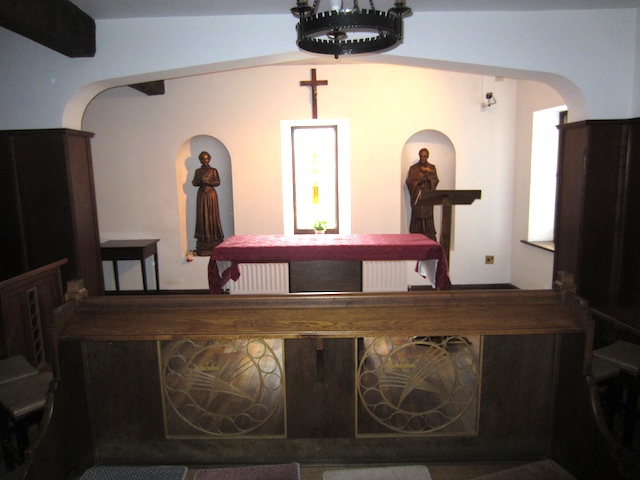
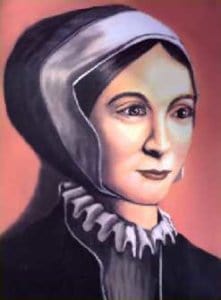
The turmoil which followed the Reformation created an array of martyrs on both sides of the religious divide. One such martyr, nicknamed ‘the pearl of York’, was Margaret Clitherow, a staunch Catholic who lost her life in the name of Catholicism.
Born in 1556 in York, Margaret Middleton was the daughter of the sheriff of York and church warden of St Martin’s church in Coney Street. As a child, Margaret would have observed to state religion, Protestantism, and this religious affiliation seems to have continued until the early 1570s at which point it seems that she was converted to Catholicism by the wife of Dr Thomas Vavasour, a prominent Catholic in York.
By this point, Margaret had married John Clitherow, a prosperous butcher who owned a shop on the Shambles. However, keeping the people of York supplied with fresh meat was not the sole job of John who was also responsible for reporting Catholic worshippers to the authorities who were, in line with the Elizabethan Settlement, Protestant. This would have almost certainly created tension in their marriage as Margaret began to subvert the authorities and the official church, a matter complicated by her decision to be a recusant (a non-church attender) in the years following her conversion.

The 1559 Injunctions which formed part of the Elizabethan Settlement had set the penalty for recusancy at 12d, a fee that John Clitherow had to pay for his wife’s perceived misbehaviour. It was for her recusancy that Margaret was first imprisoned in 1577. She was to be imprisoned twice more at York Castle with her final incarceration lasting for just short of two years. It was whilst imprisoned that Margaret learned to read Latin so that she could read and speak the Latin mass, a key element of the Catholic faith. Margaret found the deaths of her fellow Catholics deeply troubling and so, upon her release, she went on a pilgrimage during the night to the gallows at Tyburn and Knavesmire where, between 1582 and 1583 five priests were hanged.
Though Margaret had now escaped death multiple times, her ultimate downfall would come from her desire to emulate a model established by the ‘upper sort’. It was not uncommon at this time for noble families to harbour priests secretly in their houses, hiding them in priest holes or concealing their identities by claiming that they were schoolmasters or music teachers for their children.
Indeed, this frequently proved to be effective as noble families had the space, finances and means to support and conceal priests, often living in isolated houses which rarely seemed suspicious to locals. However, this model could not be effectively applied to a ‘middling sort’ household on the bustling Shambles in York.
Margaret had succeeded in creating a concealed room in her home on the Shambles along with a secret cupboard in which she hid the priest’s vestments and wine and bread for the mass, but failed to keep it secret, resulting in a frightened young boy revealing its location to the authorities when they raided her home in March 1586. Margaret was subsequently arrested for harbouring priests, something which had been made a criminal offence punishable by death in an Act of Parliament of 1581.

Margaret’s trial took place in the Guildhall but her refusal to be tried by a jury led to her automatically being sentenced to death. In a desperate attempt to persuade her to conform to trial by jury, the judges stressed the horrific barbarity of the assigned means of death for Margaret’s offence – being pressed to death. Yet, Margaret remained firm in her convictions and continued to refuse trial by jury, stating “I know of no offense whereof I should confess myself guilty. Having made no offence, I need no trial”.
Perhaps she was genuinely fervent, unwilling to sacrifice the religion she saw as ‘true’ or perhaps she was determined to become a martyr like those she had so obviously revered. Some have even claimed that her refusal stemmed from her unwillingness to include others in the trial, as her friends and family would need to be questioned alongside her. Whatever the cause of her insistence, she was taken to the toll-booth on Ouse Bridge on 25th March 1586 and was pressed under seven or eight hundredweight (approximately eight hundred to nine hundred pounds) until she died roughly fifteen minutes later. Margaret left behind her husband and three children, whom Margaret had educated in the Catholic faith. Her son, Henry Clitherow, went abroad to train as a priest before returning to England as a missionary.
Opinions on Margaret Clitherow have varied throughout history. Many of her contemporaries deemed her to be mad whilst Henry May, Lord Mayor of York and Margaret’s stepfather claimed that Margaret had committed suicide. Whilst this may show that he believed Margaret to have been rather stupid in her decision, it also shows an attempt on May’s behalf to preserve his position. In condemning his stepdaughter’s behaviour, May showed his personal convictions distinctly differed from Margaret’s, helping to bolster rather than diminish his position. Somewhat unusually, Elizabeth I herself seemed to condemn the killing of Margaret, writing a letter to the people of York which stated that Margaret should have been spared the terrible fate on account of her gender alone. In more recent history, Margaret has been revered rather than condemned, being canonised by Pope Paul VI in October 1970 as one of forty English martyrs. It was also Pope Paul VI who first called Margaret ‘the pearl of York’.

Bar Convent in York is said to posse a relic, supposedly the hand of Margaret Clitherow and there is a shrine to Margaret in St Wilfrid’s church, also located in York. Margaret’s house on the Shambles exists today as a shrine to the stoic woman and a plaque at the Micklegate end of the Ouse Bridge also commemorates the site of her execution. Her feast day is March 26th.
By Zoe Screti. I am a student of history at the University of Birmingham. Having just completed my undergraduate degree, I am progressing on to a master’s degree in Early Modern history. I am a self-confessed history nerd with a particular fascination with all things Tudor.

Ad Majorem Dei Gloriam (To the Greater Glory of God)
From: Ezekiel 37:12-14
The dry bones
---------------------
[12] Therefore prophesy, and say to them, “Thus says the Lord God: Behold, I will open their graves, and raise you from your graves, O my people; and I will bring you home into the land of Israel. [13] And you shall know that I am the Lord, when I open your graves, and raise you from your graves, O my people. [14] And I will put my Spirit within you, and you shall live, and I will place you in your own land; then you shall know that I, the Lord, have spoken, and I have done it, says the Lord."
***********************************************
Commentary:
37:1-14. This remarkable vision of the bones being brought back to life sets the scene for the climax of the resurgence of Israel, the unification of the two kingdoms (cf. 37:15-28). The dramatic contrast drawn here between death and life, bones and spirit, shows that the revitalization that God will bring about goes much further than material reconstruction or simply a return to the promised land; it implies, rather, a new beginning, both personal and social.
The vision itself (vv. 2-10) takes place on an immense plain (cf. 3:22-23) and it addresses the exiles' profound concern about their future: "Our bones are dried up, and our hope is lost" (v. 11). It is one of Ezekiel's most famous and most commented-on visions because it is very vivid and easy to understand. The prophet himself explains it as having to do with the destruction-restoration of Israel (vv. 11-14), though the Fathers of the Church see in it veiled references to the resurrection of the dead: "The Creator will revive our mortal bodies here on earth; he promises resurrection, the opening of sepulchers and tombs, and the gift of immortality […]. And in all this, we see that he alone is God, who can do all things, the good Father who from his endless bounty will give life to the lifeless" (St Irenaeus, Adversus haereses, 5, 15, 1). St Jerome writes in similar terms: "The image of the resurrection would not have been used to describe the restoration of the people of Israel if the future resurrection of the dead had not been foreseen, because no one can be led to draw a conclusion from an idea that has no basis is reality" (Commentarii in Ezechielem, 27, 1ff.
"I will put my Spirit within you" (v. 14). The spirit of the Lord is, at least, the power of God (cf. Gen 2:7) performing an act of creation. It is also the principle of life causing man to "become a living being" (Gen 2:7); and, certainly, it is the principle of supernatural life. The same God that created all things can revitalize his demoralized people in Babylon and can allow humankind to partake of his own life. This promise, like others found in the prophets (cf. 11:19; Jer 31:31-34; Joel 3:1-5) will find its complete fulfillment at Pentecost, when the Spirit descends on the apostles: "According to these promises, at the 'end time' the Lord's Spirit will renew the hearts of men, engraving a new law in them. He will gather and reconcile the scattered and divided peoples; he will transform the first creation, and God will dwell there with men in peace" (Catechism of the Catholic Church, 715).
Life in the Spirit
-----------------------
[8] and those who are in the flesh cannot please God. [9] "But you are not in the flesh, you are in the Spirit, if the Spirit of God really dwells in you. Any one who does not have the Spirit of Christ does not belong to him. [10] But if Christ is in you, although your bodies are dead because of sin, your spirits are alive because of righteousness. "If the Spirit of him who raised Jesus from the dead dwells in you, he who raised Christ Jesus from the dead will give life to your mortal bodies also through his Spirit who dwells in you. [11] If the Spirit of him who raised Jesus from the dead dwells in you, he who raised Christ Jesus from the dead will give life to your mortal bodies also through his Spirit who dwells in you."
***********************************************************************
Commentary:
1-13. After original sin man is pulled in two different directions: either he seeks God above all things and contends, with God's grace, against the inclinations of his own concupiscence; or else he lets himself be overwhelmed by the disordered passions of the flesh. The former lifestyle is "life in the Spirit", the latter, life "according to the flesh". "There are only two possible ways of living on this earth: either we live a supernatural life, or we live an animal life" (St. J. Escriva, "Friends of God", 200).
Sanctifying grace is the source of life "according to the Spirit". It is not a matter of simply being in the state of grace or of performing a number of regular pious practices. Life according to the Spirit--spiritual or supernatural life--means a living-according-to-God which influences everything a Christian does: he is constantly trying to bring his thoughts, yearnings, desires and actions into line with what God is asking of him; in everything he does he tries to follow the inspirations of the Holy Spirit.
Life according to the flesh, on the other hand, has its source in the triple concupiscence which is a consequence of original sin--"all that is in the world the lust of the flesh, and the lust of the eyes and the pride of life" (1 Jn 2:16). In this present life it is not possible to kill concupiscence at its root: it is forever producing new growths. The Christian is freed from original sin through Baptism (chap. 6); the coming of Christ has set aside the ritualistic precepts of the Mosaic Law (chap. 7); but his life in Jesus Christ is threatened by concupiscence even after Baptism, which places him under the Law of the Spirit. "We need to submit to the spirit, to wholeheartedly commit ourselves and strive to keep the flesh in its place. By so doing our flesh will become spiritual again. Otherwise, if we give in to the easy life, this will lower our soul to the level of the flesh and make it carnal again" (St John Chrysostom, "Hom. on Rom", 13).
3. Man was unable to free himself from sin through his own efforts or even with the help of the Old Law. But what is impossible for man is possible for God. God in fact freed man from sin by sending his own Son, who became man and conquered sin through his death. If we unite ourselves to the merits of Christ and obtain a share in his Resurrection, we too can overcome sin.
By assuming human nature the Second Person of the Blessed Trinity chose to take on the likeness of sinful flesh, but not sin itself. He could have assumed a glorious body, but "since man has three states--namely, innocence, sin, and glory--Christ assumed from the state of glory the beatific vision; from the state of innocence, freedom from sin; and from the state of sin, the necessity of being subject to the penalties of this life" (St Thomas Aquinas, "Summa Theologiae", Ill, q. 13, a. 3, ad 2).
These disabilities--hunger, fatigue, suffering and especially death--are what constitutes "sinful flesh". By making himself subject to them Christ became like us, thereby making it easier for us to know him and assuring us that he will not abandon us even when we experience these limitations.
10-11. Once he is justified the Christian lives in the grace of God and confidently hopes in his future resurrection; Christ himself lives in him (cf. Gal 2:20; 1 Cor 15:20-23). However, he is not spared the experience of death, a consequence of original sin (cf. Rom 5:12; 6:23). Along with suffering, concupiscence and other limitations, death is still a fact after baptism; it is something which motivates us to struggle and makes us to be like Christ. Almost all commentators interpret the expression "your bodies are dead because of sin" as referring to the fact that, due to sin, the human body is destined to die. So sure is this prospect of death that the Apostle sees the body as "already dead".
St. John Chrysostom makes an acute observation: if Christ is living in the Christian, then the divine Spirit, the Third Person of the Trinity, is also present in him. If this divine Spirit is absent, then indeed death reigns supreme, and with it the wrath of God, rejection of his laws, separation from Christ, and expulsion of our Guest. And he adds: "But when one has the Spirit within, what can be lacking? With the Spirit one belongs to Christ, one possesses him, one vies for honor with the angels. With the Spirit, the flesh is crucified, one tastes the delight of an immortal life, one has a pledge of future resurrection and advances rapidly on the path of virtue. This is what Paul calls putting the flesh to death" ("Hom. on Rom.", 13).
The Raising of Lazarus
---------------------------------
[1] Now a certain man was ill, Lazarus of Bethany, the village of Mary and her sister Martha. [2] It was Mary who anointed the Lord with ointment and wiped his feet with her hair, whose brother Lazarus was ill. [3] So the sisters sent to him, saying, "Lord, he whom you love is ill." [4] But when Jesus heard it he said, "This illness is not unto death; it is for the glory of God, so that the Son of God may be glorified means of it."
[5] Now Jesus loved Martha and her sister and Lazarus. [6] So when he heard that he was ill, he stayed two days longer in the place where he was. [7] Then after this he said to the disciples, "Let us go into Judea again." [8] The disciples said to him, "Rabbi, the Jews were but now seeking to stone you, and are you going there again?" [9] Jesus answered, "Are there not twelve hours in the day? If any one walks in the day, he does not stumble, because he sees the light of this world. [10] But if any one walks in the night, he stumbles, because the light is not in him." "Thus he spoke, and the he said to them, "Our friend Lazarus has fallen asleep, but I go to awake him out of sleep." [12] The disciples said to him "Lord, if he has fallen asleep, he will recover." [13] Now Jesus had spoken of his death, but they thought that he meant taking rest in sleep. [14] Then Jesus told them plainly, "Lazarus is dead; [15] and for your sake I am glad that I was not there, so that you may believe. But let us go to him." [16] Thomas, called the Twin, said to his fellow disciples, "Let us also go, that we may die with him.
[17] Now when Jesus came, he found that Lazarus had already been in the tomb four days. [18] Bethany was near Jerusalem, about two miles off, [19] And many of the Jews had come to Martha and Mary to console them concerning their brother. [20] When Martha heard that Jesus was coming, she went and met Him, while Mary sat in the house. [21] Martha said to Jesus, "Lord, if You had been here, my brother would not have died. [22] And even now I know that whatever You ask from God, God will give You." [23] Jesus said to her, "Your brother will rise again." [24] Martha said to Him, "I know that he will rise again in the resurrection at the last day." [25] Jesus said to her, "I am the resurrection and the life, he who believes in Me, though he die, yet shall he live, [26] and whoever lives and believes in Me shall never die. Do you believe this?" [27] She said to Him, "Yes, Lord; I believe that You are the Christ, the Son of God, He who is coming into the world." [28] When she had said this, she went and called her sister Mary, saying quietly, "The Teacher is here and is calling for you." [29] And when she heard it, she rose quickly and went to Him. [30] Now Jesus had not yet come to the village, but was still in the place where Martha had met Him. [31] When the Jews who were with her in the house, consoling her, saw Mary rise quickly and go out, they followed her, supposing that she was going to the tomb to weep there. [32] Then Mary, when she came where Jesus was and saw Him, fell at His feet, saying to Him, "Lord, if You had been here, my brother would not have died." [33] When Jesus saw her weeping, and the Jews who came with her also weeping, He was deeply moved in spirit and troubled; [34] and He said, "Where have you laid him?" They said to Him, "Lord, come and see." [35] Jesus wept. [36] So the Jews said, "See how He loved him!" [37] But some of them said, "Could not He who opened the eyes of the blind man have kept this man from dying?"
[38] Then Jesus deeply moved again, came to the tomb; it was a cave, and a stone lay upon it. [39] Jesus said, "Take away the stone." Martha, the sister of the dead man, said to Him, "Lord, by this time there will be an odor, for he has been dead four days." [40] Jesus said to her, "Did I not tell you that if you would believe you would see the glory of God?" [41] So they took away the stone. And Jesus lifted His eyes and said, "Father, I thank Thee that Thou hast heard Me. [42] I knew that Thou hearest Me always, but I have said this on account of the people standing by, that they may believe that Thou didst send Me." [43] When He had said this, He cried with a loud voice, "Lazarus, come out." [44] The dead man came out, his hands and feet bound with bandages, and his face wrapped with a cloth. Jesus said to them, "Unbind him, and let him go.
[45] Many of the Jews therefore, who had come with Mary and had seen what He did, believed in Him.
*****************************************************************************
Commentary:
1-45. This chapter deals with one of Jesus' most outstanding miracles. The Fourth Gospel, by including it, demonstrates Jesus' power over death, which the Synoptic Gospels showed by reporting the raising of the daughter of Jairus (Mt 9:25 and par.) and of the son of the widow of Nain (Lk 7:12).
The evangelist first sets the scene (vv. 1-16); then he gives Jesus conversation with Lazarus' sisters (vv. 17-37); finally, he reports the raising of Lazarus four days after his death (vv. 38-45). Bethany was only about three kilometers (two miles) from Jerusalem (v. 18). On the days prior to his passion, Jesus often visited this family, to which he was very attached. St John records Jesus' affection (vv. 3,5,36) by describing his emotion and sorrow at the death of his friend.
By raising Lazarus our Lord shows his divine power over death and thereby gives proof of his divinity, in order to confirm his disciples' faith and reveal; himself as the Resurrection and the Life. Most Jews, but not the Sadducees, believed in the resurrection of the body. Martha believed in it (cf. v. 24).
Apart from being a real, historical event, Lazarus' return to life is a sign our future resurrection: we too will return to life. Christ, by his glorious resurrection through which he is the "first-born from the dead" (1 Cor 15:2; Col 1:18; Rev 1:5), is also the cause and model of our resurrection. In this his resurrection is different from that of Lazarus, for "Christ being raised from the dead will never die again" (Rom 6:9), whereas Lazarus returned to earthly, later to die again.
2. There are a number of women in the Gospels who are called Mary. The Mary here is Mary of Bethany, the sister of Lazarus (v.2), the woman who later anointed our Lord, again in Bethany, at the house of Simon the leper (cf. In 12:1-8; Mk 14:3): the indefinite or aorist "(she) anointed" expresses an action which occurred prior to the time of writing, but the anointing took place after the resurrection of Lazarus.
Were Mary of Bethany, Mary Magdalene and the "sinful" woman who anointed Jesus' feet in Galilee (cf. Lk 7:36) one, two or three women? Although sometimes it is argued they are one and the same, it seems more likely that they were all different people. Firstly, we must distinguish the Galilee anointing (Lk 7:35) by the "sinner" from the Bethany anointing done by Lazarus' sister (Jn 12:1): because of the time they took place and particular details reported, they are clearly distinct (cf. note on Jn 12:1). Besides, the Gospels give us no positive indication that Mary of Bethany was the same person as the "sinner" of Galilee. Nor are there strong grounds for identifying Mary Magdalene and the "sinner", whose name is not given; Mary Magdalene appears among the women who follow Jesus in Galilee as the woman out of whom seven demons were cast (cf. Lk 8:2), and Luke presents her in his account as someone new: no information is given which could link her with either of the two other women.
Nor can Mary of Bethany and Mary Magdalene be identified, for John differentiates between the two: he never calls Lazarus' sister Mary Magdalene, nor does he in any way link the latter (who stays beside the Cross--Jn 19:25--and who goes to the tomb and sees the risen Lord) with Mary of Bethany.
The reason why Mary of Bethany has sometimes been confused with Mary Magdalene is due (1) to identification of the latter with the "sinner" of Galilee through connecting Magdalene's possession by the devil with the sinfulness of the woman who did the anointing in Galilee; and (2) to confusing the two anointings, which would make Lazarus' sister the "sinner" who does the first anointing. This was how the three women were made out to be one, but there are no grounds for that interpretation. The best-grounded and most common interpretation offered by exegetes is that they are three distinct women.
4. The glory which Christ speaks of here, St Augustine says, "was no gain to Jesus; it was only for our good. Therefore, Jesus says that this illness is not unto death, because the particular death was not for death but rather for a miracle, which being wrought men should believe in Christ and thereby avoid the true death" ("In Ioann. Evang.", 49, 6).
8-10. Stoning was the form of capital punishment applying to blasphemy (cf. Lev 24:16). We have seen that people tried to stone Jesus at least twice: first, when he proclaimed that he was the Son of God and that he existed from eternity (by saying that he "was" before Abraham lived)—John 8:58-59; second, when he revealed that he and the Father were one (cf. Jn 10:30-3 1).
These attempts by the Jewish authorities failed because Jesus' 'hour' had not yet arrived--that is, the time laid down by his Father for his death and resurrection. When the Crucifixion comes, it will be the hour of his enemies and of "the power of darkness" (Lk 22:53). But until that moment it is daytime, and our Lord can walk without his life being in danger.
16. Thomas' words remind us of the Apostles saying at the last Supper that they would be ready to die for their Master (cf. Mt 26:31-35). We have seen how the Apostles stayed loyal when many disciples left our Lord after his discourse on the Bread of Life (Jn 6:67-71), and how they remained faithful to him despite their personal weaknesses. But when, after Judas Iscariot' s betrayal, Jesus lets himself be arrested without offering resistance--in fact, forbidding the use of weapons (cf. Jn 18:11)—they become disconcerted and run away. Only St John will stay faithful in Jesus' hour of greatest need.
18. Fifteen stadia, in Greek measurement: three kilometers (two miles).
21-22. According to St. Augustine, Martha's request is a good example of confident prayer, a prayer of abandonment into the hands of God, who knows better than we what we need. Therefore, "she did not say, But now I ask You to raise my brother to life again. [...] All she said was, I know that You can do it; if you will, do it; it is for you to judge whether to do it, not for me to presume" ("In Ioann. Evang.", 49, 13). The same can be said of Mary's words, which St. John repeats at verse 32.
24-26. Here we have one of those concise definitions Christ gives of Himself, and which St. John faithfully passes on to us (cf. John 10:9; 14:6; 15:1): Jesus is the Resurrection and the Life. He is the Resurrection because by His victory over death He is the cause of the resurrection of all men. The miracle He works in raising Lazarus is a sign of Christ's power to give life to people. And so, by faith in Jesus Christ, who arose first from among the dead, the Christian is sure that he too will rise one day, like Christ (cf. 1 Corinthians 15:23; Colossians 1;18). Therefore, for the believer death is not the end; it is simply the step to eternal life, a change of dwelling-place, as one of the Roman Missal's Prefaces of Christian Death puts it: body of our earthly dwelling lies in death, we gain an everlasting dwelling place in Heaven".
By saying that He is Life, Jesus is referring not only to that life which begins beyond the grave, but also to the supernatural life which grace brings to the soul of man when he is still a wayfarer on this earth.
"This life, which the Father has promised and offered to each man in Jesus Christ, His eternal and only Son, who 'when the time had fully come' (Galatians 4:4), became incarnate and was born of the Virgin Mary, is the final fulfillment of man's vocation. It is in a way the fulfillment of the 'destiny' that God has prepared for him from eternity. This 'divine destiny' is advancing, in spite of all the enigmas, the unsolved riddles, the twists and turns of 'human destiny' in the world of time. Indeed, while all this, in spite of all the riches of life in time, necessarily and inevitably leads to the frontiers of death and the goal of the destruction of the human body, beyond that goal we see Christ. 'I am the resurrection and the life, He who believes in Me shall never die.' In Jesus Christ, who was crucified and laid in the tomb and then rose again, 'our hope of resurrection dawned...the bright promise of immortality' ("Roman Missal", Preface of Christian Death, I), on the way to which man, through the death of the body, shares with the whole of visible creation the necessity to which matter is subject" (Pope John Paul II, "Redemptor Hominis", 18).
33-36. This passage gives an opportunity to reflect on the depth and tenderness of Jesus' feelings. If the physical death of His friend can move Him to tears, what will He not feel over the spiritual death of a sinner who has brought about his eternal condemnation? "Christ wept: let man also weep for himself. For why did Christ weep, but to teach men to weep" (St. Augustine, "In Ioann. Evang.", 49, 19). We also should weep--but for our sins, to help us return to the life of grace through conversion and repentance. We should appreciate our Lord's tears: He is praying for us, who are sinners: "Jesus is your friend. The Friend. With a human heart, like yours. With loving eyes that wept for Lazarus. And He loves you as much as He loved Lazarus" (St J. Escriva, "The Way", 422).
41-42. Through His sacred humanity Jesus is expressing Himself as the natural Son of God, that is, He is the metaphysical Son of God, not adopted like the rest of men. This is the source of Jesus' feelings, which helps us to understand that when He says "Father" He is speaking with a unique and indescribable intensity. When the Gospels let us see Jesus praying, they always show Him beginning with the invocation "Father" (cf. note on Luke 11:1-2), which reflects His singular trust and love (cf. Matthew 11:25 and par.). These sentiments should also in some way find a place in our prayer, for through Baptism we are joined to Christ and in Him we became children of God (cf. John 1:12; Romans 6:1-11; 8:14-17), and so we should always pray in a spirit of sonship and gratitude for the many good things our Father God has given us.
The miracle of the raising of Lazarus, which really is an extraordinary miracle, is a proof that Jesus is the Son of God, sent into the world by His Father. And so it is, that when Lazarus is brought back to life, people's faith in Jesus is increased--the disciples' (verse 15), Martha's and Mary's (verses 26, 40) and that of the people at large (36, 45).
43. Jesus calls Lazarus by name. Although he is really dead, he has not thereby lost his personal identity: dead people continue to exist, but they have a different mode of existence, because they have changed from mortal life to eternal life. This is why Jesus states that God "is not God of the dead, but of the living", for to Him all are alive (cf. Matthew 22:32; Luke 20:38).
This passage can be applied to the spiritual resurrection of the soul who has sinned and recovers grace. God wants us to be saved (cf. 1 Timothy 2:4); therefore we should never lose heart; we should always desire and hope to reach this goal: "Never despair. Lazarus was dead and decaying: ' Iam foetet, quatriduanus enim est". By now he will smell; this is the fourth day", says Martha to Jesus.
"If you hear God's inspiration and follow it--'Lazare, veni foras!: Lazarus, come out!'--and you will return to Life" (St J. Escriva, "The Way", 719).
44. The Jews prepared the body for burial by washing it and anointing it with aromatic ointments to delay decomposition and counteract offensive odors; they then wrapped the body in linen cloths and bandages, covering the head with a napkin—a method very like the Egyptians', but not entirely extending to full embalming, which involved removing certain internal organs.
Lazarus' tomb would have consisted of a subterranean chamber linked to the surface by steps, with the entrance blocked by a slab. Lazarus was moved out to the entrance by a supernatural force. As happened in the case of the raising of Jairus' daughter (Mark 5;42-43), due to their astonishment no one moved until our Lord's words broke the atmosphere of silence and terror which had been created.
St. Augustine sees in the raising of Lazarus a symbol of the Sacrament of Penance: in the same way as Lazarus comes out of the tomb, "when you confess, you come forth. For what does 'come forth' mean if not emerging from what is hidden, to be made manifest. But for you to confess is God's doing; He calls you with an urgent voice, by an extraordinary grace. And just as the dead man came out still bound, so you go to Confession still guilty. In order that his sins be loosed, the Lord said this to His ministers: 'Unbind him and let him go'. What you will lose on earth will be loosed in Heaven" (St. Augustine "In Ioann. Evang.", 49, 24). Christian art has used this comparison from very early on; in the catacombs we find some one hundred and fifty representations of the raising of Lazarus, symbolizing thereby the gift of the life of grace which comes through the priest, who in effect repeats the words to the sinner: "Lazarus, come out."
Disclaimer: Opinions posted on Free Republic are those of the individual posters and do not necessarily represent the opinion of Free Republic or its management. All materials posted herein are protected by copyright law and the exemption for fair use of copyrighted works.