
Free Republic
Browse · Search
Religion
Topics · Post Article

Skip to comments.

Catholic Caucus: Daily Mass Readings 21-February-2023
Universalis/Jerusalem Bible ^

Posted on 02/21/2023 5:16:06 AM PST by annalex

21 February 2023

Tuesday of week 7 in Ordinary Time


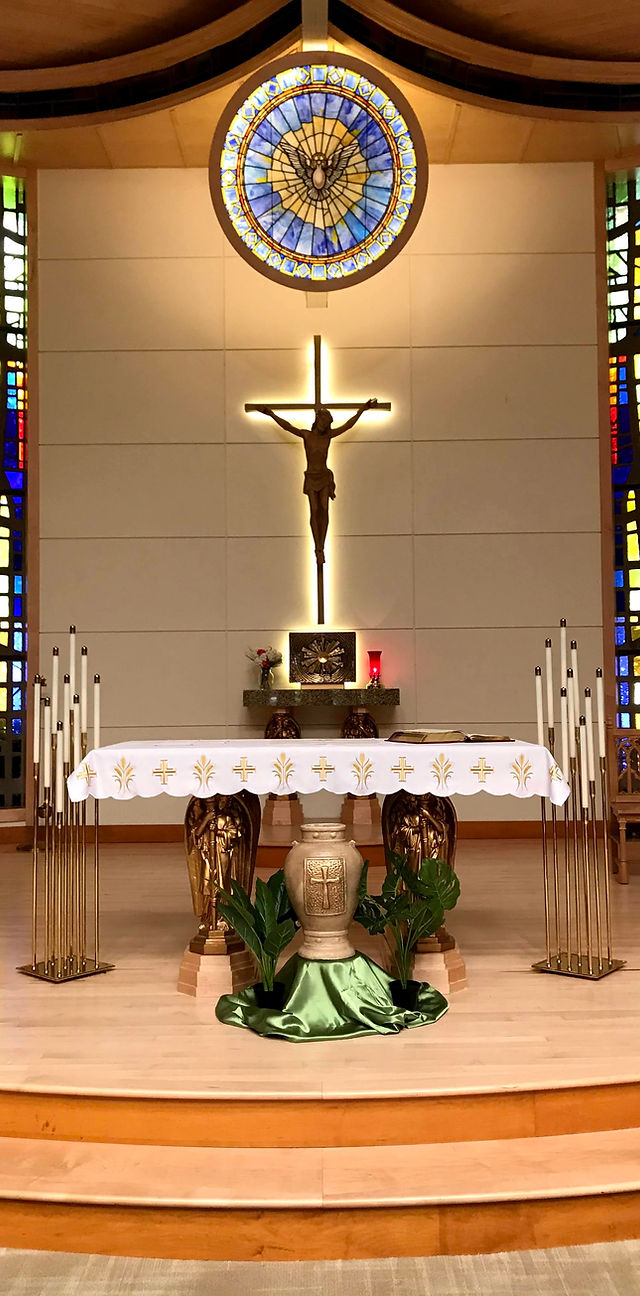
St. Peter Damian Church, Bartlett, IL

Readings at Mass

Liturgical Colour: Green. Year: A(I).


First reading
Ecclesiasticus 2:1-11 ©

The chosen are tested like gold in the fire

My son, if you aspire to serve the Lord,
  prepare yourself for an ordeal.
Be sincere of heart, be steadfast,
  and do not be alarmed when disaster comes.
Cling to him and do not leave him,
  so that you may be honoured at the end of your days.
Whatever happens to you, accept it,
  and in the uncertainties of your humble state, be patient,
since gold is tested in the fire,
  and chosen men in the furnace of humiliation.
Trust him and he will uphold you,
  follow a straight path and hope in him.
You who fear the Lord, wait for his mercy;
  do not turn aside in case you fall.
You who fear the Lord, trust him,
  and you will not be baulked of your reward.
You who fear the Lord hope for good things,
  for everlasting happiness and mercy.
Look at the generations of old and see:
  who ever trusted in the Lord and was put to shame?
Or who ever feared him steadfastly and was left forsaken?
  Or who ever called out to him, and was ignored?
For the Lord is compassionate and merciful,
  he forgives sins, and saves in days of distress.

Responsorial Psalm
Psalm 36(37):3-4,18-19,27-28,39-40 ©
Commit your life to the Lord, trust him and he will act.
If you trust in the Lord and do good,
  then you will live in the land and be secure.
If you find your delight in the Lord,
  he will grant your heart’s desire.
Commit your life to the Lord, trust him and he will act.
He protects the lives of the upright,
  their heritage will last for ever.
They shall not be put to shame in evil days,
  in time of famine their food shall not fail.
Commit your life to the Lord, trust him and he will act.
Then turn away from evil and do good
  and you shall have a home for ever;
for the Lord loves justice
  and will never forsake his friends.
Commit your life to the Lord, trust him and he will act.
The salvation of the just comes from the Lord,
  their stronghold in time of distress.
The Lord helps them and delivers them
  and saves them: for their refuge is in him.
Commit your life to the Lord, trust him and he will act.

Gospel AcclamationJn14:23
Alleluia, alleluia!
If anyone loves me he will keep my word,
and my Father will love him,
and we shall come to him.
Alleluia!
Or:Ga6:14
Alleluia, alleluia!
The only thing I can boast about is the cross of our Lord,
through whom the world is crucified to me, and I to the world.
Alleluia!

GospelMark 9:30-37 ©

Anyone who welcomes one of these little children in my name welcomes me

Jesus and his disciples made their way through Galilee; and he did not want anyone to know, because he was instructing his disciples; he was telling them, ‘The Son of Man will be delivered into the hands of men; they will put him to death; and three days after he has been put to death he will rise again.’ But they did not understand what he said and were afraid to ask him.
  They came to Capernaum, and when he was in the house he asked them, ‘What were you arguing about on the road?’ They said nothing because they had been arguing which of them was the greatest. So he sat down, called the Twelve to him and said, ‘If anyone wants to be first, he must make himself last of all and servant of all.’ He then took a little child, set him in front of them, put his arms round him, and said to them, ‘Anyone who welcomes one of these little children in my name, welcomes me; and anyone who welcomes me welcomes not me but the one who sent me.’

Christian Art

Illustration

Each day, The Christian Art website gives a picture and reflection on the Gospel of the day.

The readings on this page are from the Jerusalem Bible, which is used at Mass in most of the English-speaking world. The New American Bible readings, which are used at Mass in the United States, are available in the Universalis apps, programs and downloads.

You can also view this page with the Gospel in Greek and English.


TOPICS: Catholic; General Discusssion; Prayer; Worship
KEYWORDS: catholic; mk9; ordinarytime; prayer
For your reading, reflection, faith-sharing, comments, questions, discussion.

1 posted on 02/21/2023 5:16:06 AM PST by annalex
[ Post Reply | Private Reply | View Replies]

To: All

KEYWORDS: catholic; mk9; ordinarytime; prayer


2 posted on 02/21/2023 5:16:48 AM PST by annalex (fear them not)
[ Post Reply | Private Reply | To 1 | View Replies]

To: nickcarraway; NYer; ELS; Pyro7480; livius; ArrogantBustard; Catholicguy; RobbyS; marshmallow; ...

Alleluia Ping

Please FReepmail me to get on/off the Alleluia Ping List.


3 posted on 02/21/2023 5:17:36 AM PST by annalex (fear them not)
[ Post Reply | Private Reply | To 2 | View Replies]

To: annalex
Jim still needs our prayers. Thread 2
Prayer thread for Salvation's recovery
Pray for Ukraine
4 posted on 02/21/2023 5:18:14 AM PST by annalex (fear them not)
[ Post Reply | Private Reply | To 3 | View Replies]

To: annalex
Mark
 English: Douay-RheimsLatin: Vulgata ClementinaGreek NT: Byzantine/Majority Text (2000)
 Mark 9
309:29 And departing from thence, they passed through Galilee, and he would not that any man should know it. 9:29 Et inde profecti prætergrediebantur Galilæam : nec volebat quemquam scire.και εκειθεν εξελθοντες παρεπορευοντο δια της γαλιλαιας και ουκ ηθελεν ινα τις γνω
319:30 And he taught his disciple, and said to them: The Son of man shall be betrayed into the hands of men, and they shall kill him; and after that he is killed, he shall rise again the third day. 9:30 Docebat autem discipulos suos, et dicebat illis : Quoniam Filius hominis tradetur in manus hominum, et occident eum, et occisus tertia die resurget.εδιδασκεν γαρ τους μαθητας αυτου και ελεγεν αυτοις οτι ο υιος του ανθρωπου παραδιδοται εις χειρας ανθρωπων και αποκτενουσιν αυτον και αποκτανθεις τη τριτη ημερα αναστησεται
329:31 But they understood not the word, and they were afraid to ask him. 9:31 At illi ignorabant verbum : et timebant interrogare eum.οι δε ηγνοουν το ρημα και εφοβουντο αυτον επερωτησαι
339:32 And they came to Capharnaum. And when they were in the house, he asked them: What did you treat of in the way? 9:32 Et venerunt Capharnaum. Qui cum domi essent, interrogabat eos : Quid in via tractabatis ?και ηλθεν εις καπερναουμ και εν τη οικια γενομενος επηρωτα αυτους τι εν τη οδω προς εαυτους διελογιζεσθε
349:33 But they held their peace, for in the way they had disputed among themselves, which of them should be the greatest. 9:33 At illi tacebant : siquidem in via inter se disputaverunt : quis eorum major esset.οι δε εσιωπων προς αλληλους γαρ διελεχθησαν εν τη οδω τις μειζων
359:34 And sitting down, he called the twelve, and saith to them: If any man desire to be first, he shall be the last of all, and the minister of all. 9:34 Et residens vocavit duodecim, et ait illis : Si quis vult primus esse, erit omnium novissimus, et omnium minister.και καθισας εφωνησεν τους δωδεκα και λεγει αυτοις ει τις θελει πρωτος ειναι εσται παντων εσχατος και παντων διακονος
369:35 And taking a child, he set him in the midst of them. Whom when he had embraced, he saith to them: 9:35 Et accipiens puerum, statuit eum in medio eorum : quem cum complexus esset, ait illis :και λαβων παιδιον εστησεν αυτο εν μεσω αυτων και εναγκαλισαμενος αυτο ειπεν αυτοις
379:36 Whosoever shall receive one such child as this in my name, receiveth me. And whosoever shall receive me, receiveth not me, but him that sent me. 9:36 Quisquis unum ex hujusmodi pueris receperit in nomine meo, me recipit : et quicumque me susceperit, non me suscipit, sed eum qui misit me.ος εαν εν των τοιουτων παιδιων δεξηται επι τω ονοματι μου εμε δεχεται και ος εαν εμε δεξηται ουκ εμε δεχεται αλλα τον αποστειλαντα με

5 posted on 02/21/2023 5:20:46 AM PST by annalex (fear them not)
[ Post Reply | Private Reply | To 4 | View Replies]

To: annalex

Catena Aurea by St. Thomas Aguinas

9:30–37

30. And they departed thence, and passed through Galilee; and he would not that any man should know it.

31. For he taught his disciples, and said unto them, The Son of man is delivered into the hands of men, and they shall kill him; and after that he is killed, he shall rise the third day.

32. But they understood not that saying, and were afraid to ask him.

33. And he came to Capernaum: and being in the house he asked them, What was it that ye disputed among yourselves by the way?

34. But they held their peace: for by the way they had disputed among themselves, who should be the greatest.

35. And he sat down, and called the twelve, and saith unto them, If any man desire to be first, the same shall be last of all, and servant of all.

36. And he took a child, and set him in the midst of them: and when he had taken him in his arms, he said unto them,

37. Whosoever shall receive one of such children in my name, receiveth me: and whosoever shall receive me, receiveth not me, but him that sent me.

THEOPHYLACT. It is after miracles that the Lord inserts a discourse concerning His Passion, lest it should be thought that He suffered because He could not help it; wherefore it is said, And they departed thence, and passed through Galilee: and he would not that any man should know it. For he taught his disciples, and said unto them, The Son of man is delivered into the hands of men, and they shall kill him.

BEDE. (in Marc. 3, 39) He always mingles together sorrowful and joyful things, that sorrow should not by its suddenness frighten the Apostles, but be borne by them with prepared minds.

THEOPHYLACT. After, however, saying what was sorrowful, He adds what ought to rejoice them; wherefore it goes on: And after that he is killed, he shall rise the third day; in order that we may learn that joys come on after struggles. There follows: But they understood not that saying, and were afraid to ask him.

BEDE. (ubi sup.) This ignorance of the disciples proceeds not so much from slowness of intellect, as from love for the Saviour, for they were as yet carnal, and ignorant of the mystery of the cross, they could not therefore believe that He whom they had recognised as the true God, was about to die; being accustomed then to hear Him often talk in figures, and shrinking from the event of His death, they would have it, that something was conveyed figuratively in those things, which he spoke openly concerning His betrayal and passion. It goes on: And they came to Capernaum.

PSEUDO-JEROME. Capernaum means the city of consolation, and agrees with the former sentence, which He had spoken: And after that he is killed, he shall arise the third day. There follows: And being in the house he asked them, What was it that ye disputed among yourselves by the way? But they held their peace.

PSEUDO-CHRYSOSTOM. (Vict. Ant. e Cat. in Marc.) Matthew however says, that the disciples came to Jesus, saying, Who is the greatest in the kingdom of heaven? (Matt. 18:1) The reason is, that he did not begin the narrative from its commencement, but omitted our Saviour’s knowledge of the thoughts and words of His disciples; unless we understand Him to mean, that even what they thought and said, when away from Christ, was said unto Him, since it was as well known to Him as if it had been said to Him. It goes on: For by the way they had disputed among themselves, who should be the greatest. (Luke 9:46. Vulg.) But Luke says, that “the thought entered into the disciples which of them should be the greatest;” for the Lord laid open their thought and intention from their private discourse1 according to the Gospel narrative.

PSEUDO-JEROME. It was fit also that they should dispute concerning the chief place by the way; the dispute is like the place where it is held; for lofty station is only entered upon to be quitted: as long as a man keeps it, it is slippery, and it is uncertain at what stage, that is, on what day, it will end.

BEDE. (ubi sup.) The reason why the dispute concerning the chief place arose amongst the disciples seems to have been, that Peter, James, and John, were led apart from the rest into the mountain, and that something secret was there entrusted to them, also that the keys of the kingdom of heaven were promised to Peter, according to Matthew. Seeing however the thoughts of the disciples, the Lord takes care to heal the desire of glory by humility; for He first, by simply commanding humility, admonishes them that a high station was not to be aimed at. Wherefore it goes on: And he sat down, and called the twelve, and saith unto them, If any man desire to be first, the same shall be last of all, and servant of all.

JEROME. Where it is to be observed, that the disciples disputed by the way concerning the chief place, but Christ Himself sat down to teach humility; for princes toil while the humble repose.

PSEUDO-CHRYSOSTOM. (Vict. Ant. e Cat. in Marc.) The disciples indeed wished to receive honour at the hands of the Lord; they also had a desire to be made great by Christ, for the greater a man is, the more worthy of honour he becomes, for which reason He did not throw an obstacle in the way of that desire, but brought in humility.

THEOPHYLACT. For His wish is not that we should usurp for ourselves chief places, but that we should attain to lofty heights by lowliness. He next admonishes them by the example of a child’s innocence; wherefore there follows: And he took a child, and set him in the midst of them.

CHRYSOSTOM. (Vict. Ant. e Cat. in Marc. Sed v. Chrys. Hom. in Matt. 58) By the very sight, persuading them to humility and simplicity; for this little one was pure from envy and vain glory, and from a desire of superiority. But He does not only say, If ye become such, ye shall receive a great reward, but also, if ye will honour others, who are such for my sake. Wherefore there follows: And when he had taken him in his arms, he said unto them, Whosoever shall receive one of such children in my name, receiveth me.

BEDE. (ubi sup.) By which, He either simply shews, that those who would become greater must receive the poor of Christ in honour of Him, or He would persuade them to be in malice children, to keep simplicity without arrogance, charity without envy, devotedness without anger. Again, by taking the child into His arms, He implies that the lowly are worthy of His embrace and love. He adds also, In my name, that they might, with the fixed purpose of reason, follow for His name’s sake that mould of virtue to which the child keeps, with nature for his guide. And because He taught that He Himself was received in children, lest it should be thought that there was nothing in Him but what was seen, he added, And whosoever shall receive me, receiveth not me, but Him that sent me; thus wishing, that we should believe Him to be of the same nature and of equal greatness with His Father.

THEOPHYLACT. See, how great is humility, for it wins for itself the indwelling of the Father, and of the Son, and also of the Holy Ghost.

Catena Aurea Mark 9


6 posted on 02/21/2023 5:22:18 AM PST by annalex (fear them not)
[ Post Reply | Private Reply | To 5 | View Replies]

To: annalex


Christ in Majesty with the Twelve Apostles
Laudario of the Compagnia di Sant'Agnese

Pacino di Bonaguida

1320s
Tempera and gold on parchment, 277 x 206 mm
National Gallery of Art, Washington

7 posted on 02/21/2023 5:23:08 AM PST by annalex (fear them not)
[ Post Reply | Private Reply | To 6 | View Replies]

To: annalex
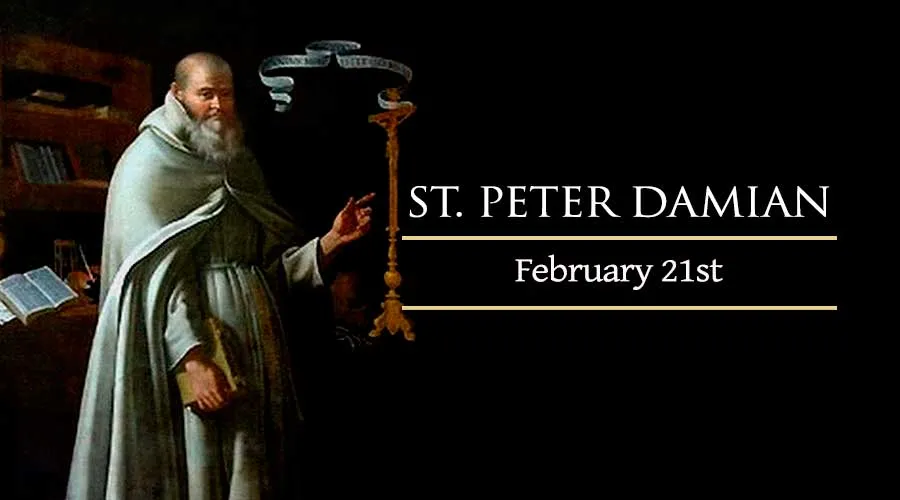
St. Peter Damian

On Feb. 21, Catholics honor Saint Peter Damian, a Benedictine monk who strove to purify the Church during the early years of its second millennium.

In his Sept. 9, 2009 general audience on the saint, Pope Benedict XVI described him as "one of the most significant figures of the 11th century ... a lover of solitude and at the same time a fearless man of the Church, committed personally to the task of reform."

Born during 1007 in the Italian city of Ravenna, Peter belonged to a large family but lost both his father and mother early in life. An older brother took the boy into his household, yet treated him poorly. But another of Peter’s brothers, a priest, took steps to provide for his education; and the priest's own name, Damian, became his younger brother’s surname.

Peter excelled in school while also taking up forms of asceticism, such as fasting, wearing a hair shirt, and spending long hours in prayer with an emphasis on reciting the Psalms. He offered hospitality to the poor as a means of serving Christ, and eventually resolved to embrace voluntary poverty himself through the Order of Saint Benedict.

The monks he chose to join, in the hermitage of Fonte Avellana, lived out their devotion to the Cross of Christ through a rigorous rule of life. They lived mainly on bread and water, prayed all 150 Psalms daily, and practiced many physical mortifications. Peter embraced this way of life somewhat excessively at first, which led to a bout with insomnia.

Deeply versed in the Bible and the writings of earlier theologians, Peter developed his own theological acumen and became a skilled preacher. The leaders of other monasteries sought his help to build up their monks in holiness, and in 1043 he took up a position of leadership as the prior of Fonte Avellana. Five other hermitages were established under his direction.

Serious corruption plagued the Church during Peter's lifetime, including the sale of religious offices and immorality among many of the clergy. Through his writings and involvements in controversies of the day, the prior of Fonte Avellana called on members of the hierarchy and religious orders to live out their commitments and strive for holiness.

In 1057, Pope Stephen IX became determined to make Peter Damian a bishop, a goal he accomplished only by demanding the monk's obedience under threat of excommunication. Consecrated as the Bishop of Ostia in November of that year, he also joined the College of Cardinals and wrote a letter encouraging its members to set an example for the whole Church.

With Pope Stephen's death in 1058, and the election of his successor Nicholas II, Peter's involvement in Church controversies grew. He supported Pope Nicholas against a rival claimant to the papacy, and went to Milan as the Pope's representative when a crisis broke out over canonical and moral issues. There, he was forced to confront rioters who rejected papal authority.

Peter, meanwhile, wished to withdraw from these controversies and return to the contemplative life. But Nicholas' death in 1061 caused another papal succession crisis, which the cardinal-bishop helped to resolve in favor of Alexander II. That Pope kept the Cardinal Bishop of Ostia occupied with a series of journeys and negotiations for the next six years.

In 1067, Peter Damian was allowed to resign his episcopate and return to the monastery at Fonte Avellana. Two years later, however, Pope Alexander needed his help to prevent the German King Henry IV from divorcing his wife. Peter lived another two years in the monastery before making a pilgrimage to Monte Cassino, the birthplace of the Benedictine order.

In 1072, Peter returned to his own birthplace of Ravenna, to reconcile the local church with the Pope. The monk's last illness came upon him during his return from this final task, and he died after a week at a Benedictine monastery in Faenza during February of that year.

Never formally canonized, St. Peter Damian was celebrated as a saint after his death in many of the places associated with his life. In 1823, Pope Leo XII named him a Doctor of the Church and extended the observance of his feast day throughout the Western Church.


catholicnewsagency.com
8 posted on 02/21/2023 5:27:26 AM PST by annalex (fear them not)
[ Post Reply | Private Reply | To 7 | View Replies]

To: annalex


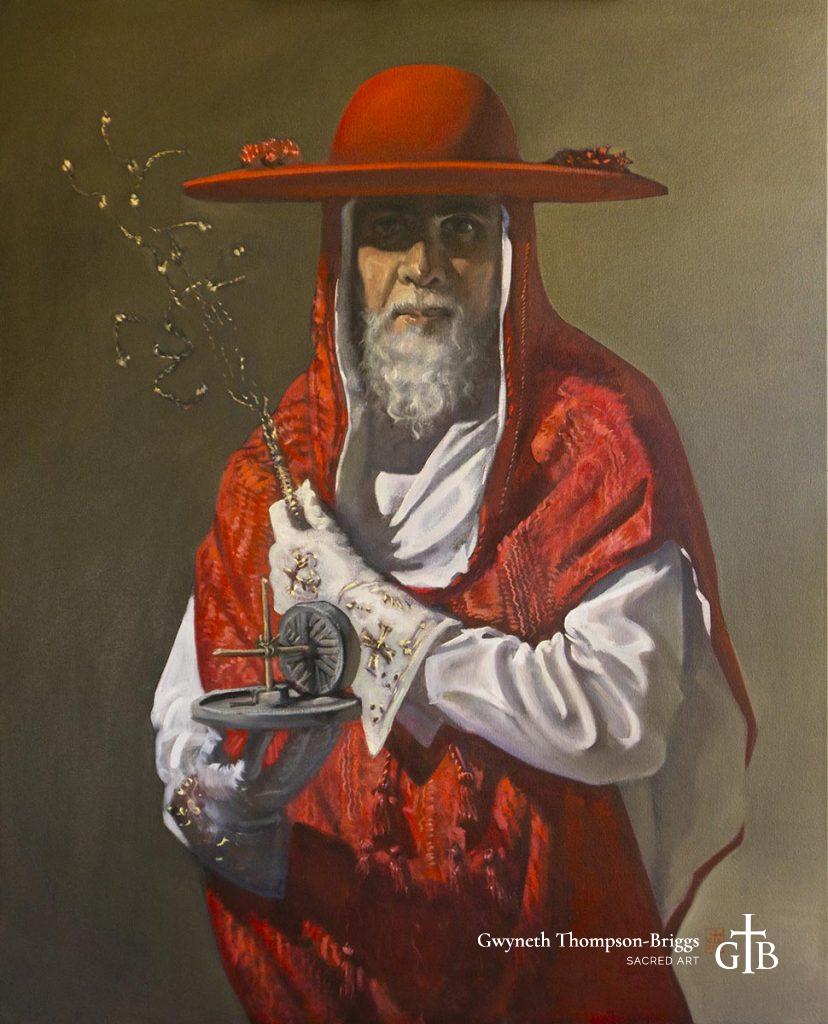
St. Peter Damian

Gwyneth Thompson-Briggs

oil on canvas, 40 in x 32 in, 2021
[St. Damian] holds two opposing objects: a millstone and a disciplina.

The millstone alludes to Our Lord’s warning about those who scandalize the innocent: “But he that shall scandalize one of these little ones that believe in me, it were better for him that a millstone should be hanged about his neck, and that he should be drowned in the depth of the sea” (Matthew 18:6; see also Mark 9:41 and Luke 17:2). For this reason it serves as the symbol of the Society of St. Peter Damian.

In his other hand the saint holds a disciplina, a knotted cord used to inflict corporal mortification in imitation of Christ’s scourging. St. Peter Damian himself popularized the use of the disciplina among his and other monks. The name derives from the virtue of discipline of which the Wisdom Books speak: “The very first step towards wisdom is the desire for discipline” (Wisdom 6:18, Knox trans.; see also Ecclesiasticus/Sirach 1:34; Psalm 17:36). As the penitential tradition teaches, the humbling of the flesh is a necessary pre-condition for self-mastery and a lifelong remedy for pride. The disciplina is also an implement of divine mercy, whereby God grants those He has already forgiven the means to unite their own meager mortifications to the unspeakable agony of His Son’s saving Passion.

The disciplina and the millstone thus represent the choice between “the way of life” and “the way of death” (Deuteronomy 30:20; Psalm 1) which St. Peter, in conformity with Revelation, recalls to the viewer’s attention. St. Peter raises the discplina, putting it into use, thereby urging the viewer to join him in choosing life.

gwyneththompsonbriggs.com
9 posted on 02/21/2023 5:39:08 AM PST by annalex (fear them not)
[ Post Reply | Private Reply | To 8 | View Replies]

To: annalex
NAVARRE BIBLE COMMENTARY (RSV)

Ad Majorem Dei Gloriam (To the Greater Glory of God)

From: Sirach 2:1-11

The Example of Past Generations
-------------------------------
[1] My son, if you come forward to serve the Lord, prepare yourself for temptation. [2] Set your heart right and be steadfast, and do not be hasty in time of calamity. [3] Cleave to him and do not depart, that you may be honored at the end of your life. [4] Accept whatever is brought upon you, and in changes that humble you be patient. [5] For gold is tested in fire, and acceptable men in the furnace of humiliation. [6] Trust in him and he will help you; make your ways straight, and hope in him.

[7] You who fear the Lord, wait for his mercy; and turn not aside, lest you fall. [8] You who fear the Lord, trust in him, and your reward will not fail; [9] you who fear the Lord, hope for good things, for everlasting joy and mercy. [10] Consider the ancient generations and see: who ever trusted in the Lord and was put to shame? Or who ever persevered in the fear of the Lord and was forsaken? Or who ever called upon him and was overlooked? [11] For the Lord is compassionate and merciful; he forgives sins and saves in time of affliction.

***********************************************************************
Commentary (from the NCB and the NABRE):

2:1 For believers, nothing, including suffering, is futile about God’s plan, which guides all things with wisdom. Humans need courage to entrust themselves to him, for he never abandons those who remain faithful, as the past bears witness: “Though he hoped against hope, [Abraham] believed,” according to Paul (Rom 4:18).

1–11 Serving the Lord is not without its trials (v. 1); but no matter what happens, the genuine believer will remain sincere, steadfast, and faithful (vv. 2–3). Misfortune and humiliation are means of purification to prove one’s worth (vv. 4–5). Ben Sira believed that patience and unwavering trust in God are ultimately rewarded with the benefits of God’s mercy and of lasting joy (vv. 6–11).

10 posted on 02/21/2023 7:14:29 AM PST by fidelis (👈 Under no obligation to respond to rude, ignorant, abusive, bellicose, and obnoxious posts.)
[ Post Reply | Private Reply | To 9 | View Replies]

To: fidelis
From: Mark 9:30-37

Second Prophecy of the Passion
------------------------------
[30] They went on from there and passed through Galilee. And He (Jesus) would not have any one know it; [31] for He was teaching His disciples, saying to them, "The Son of Man will be delivered into the hands of men, and they will kill Him; and when He is killed, after three days He will rise." [32] But they did not understand the saying, and they were afraid to ask Him.

Being the Servant of All
------------------------
[33] And they came to Capernaum; and when He was in the house He asked them, "What were you discussing on the way?" [34] But they were silent; for on the way they had discussed with one another who was the greatest. [35] And He sat down and called the Twelve; and He said to them, "If any one would be first, he must be last of all and servant of all." [36] And He took a child, and put him in the midst of them; and taking him in His arms, He said to them, [37] "Whoever receives one such child in My name receives Me; and whoever receives Me, receives not Me but Him who sent Me".

***********************************************************************
Commentary:

30-32. Although moved when He sees the crowds like sheep without a shepherd (Matthew 9:36), Jesus leaves them, to devote time to careful instruction of the Apostles. He retires with them to out-of-the-way places, and there He explains points of His public preaching which they had not understood (Matthew 13:36). Here, specifically, for a second time, He announces His death and resurrection.

In His relationships with souls Jesus acts in the same way: He calls man to be with him in the quiet of prayer and there He teaches him about His more intimate plans and about the more demanding side of the Christian life. Later, like the Apostles, Christians were to spread this teaching to the ends of the earth.

34-35. Jesus uses this argument going on behind his back to teach His disciples about how authority should be exercised in His Church--not by lording it over other, but by serving them. In fulfilling His own mission to found the Church whose head and supreme lawgiver He is, He came to serve and not to be served (Matthew 20:28).

Anyone who does not strive to have this attitude of self-forgetful service, not only lacks one of the main pre-requisites for proper exercise of authority but also runs the risk of being motivated by ambition or pride. "To be in charge of an apostolic undertaking demands readiness to suffer everything, from everybody, with infinite charity" (St J. Escriva, "The Way", 951).

36-37. To demonstrate to His Apostles the abnegation and humility needed in their ministry, He takes a child into His arms and explains the meaning of this gesture: if we receive for Christ's sake those who have little importance in the world's eyes, it is as if we are embracing Christ Himself and the Father who sent Him. This little child whom Jesus embraces represents every child in the world, and everyone who is needy, helpless, poor or sick--people who are not naturally attractive.

Source: Daily Word for Reflection—Navarre Bible

11 posted on 02/21/2023 7:14:45 AM PST by fidelis (👈 Under no obligation to respond to rude, ignorant, abusive, bellicose, and obnoxious posts.)
[ Post Reply | Private Reply | To 10 | View Replies]

To: fidelis
Click here to go to the My Catholic Life! Devotional thread for today’s Gospel Reading
12 posted on 02/21/2023 7:18:56 AM PST by fidelis (👈 Under no obligation to respond to rude, ignorant, abusive, bellicose, and obnoxious posts.)
[ Post Reply | Private Reply | To 11 | View Replies]

Disclaimer: Opinions posted on Free Republic are those of the individual posters and do not necessarily represent the opinion of Free Republic or its management. All materials posted herein are protected by copyright law and the exemption for fair use of copyrighted works.

Free Republic
Browse · Search
Religion
Topics · Post Article

FreeRepublic, LLC, PO BOX 9771, FRESNO, CA 93794
FreeRepublic.com is powered by software copyright 2000-2008 John Robinson