Pinging the weekly Sacred Page list!
Posted on 01/07/2023 10:24:26 AM PST by fidelis
The Christmas season can sometimes seem to be just one joyful feast after another. We are scarcely past the glow from the Holy Family and Mary, Mother of God, when Epiphany is already upon us.
The word “Epiphany” comes from two Greek words: epi, “on, upon”; and phaino, “to appear, to shine.” Therefore, the “Epiphany” refers to the divinity of Jesus “shining upon” the earth, in other words, the manifestation of his divine nature.
The use of the word “epiphany” for the revelation of divinity predates Christianity. The Syrian (Seleucid) emperor Antiochus IV (175-164 BC), the villainous tyrant of 1-2 Maccabees, named himself “Epiphanes,” because he considered himself the manifestation of divinity on earth. His people called him “Epimanes,” which means roughly “something is pressing on the brain,” in other words, “insane.” Antiochus tried to stamp out the practice of Judaism, but he eventually died in defeat; apparently mankind would need to wait for a different king to be the “Epiphany” of divinity.
1. Our First Reading is taken from Isaiah 60:1-6:
Rise up in splendor, Jerusalem! Your light has come, the glory of the Lord shines upon you. See, darkness covers the earth, and thick clouds cover the peoples; but upon you the LORD shines, and over you appears his glory. Nations shall walk by your light, and kings by your shining radiance. Raise your eyes and look about; they all gather and come to you: your sons come from afar, and your daughters in the arms of their nurses.
Then you shall be radiant at what you see, your heart shall throb and overflow, for the riches of the sea shall be emptied out before you, the wealth of nations shall be brought to you. Caravans of camels shall fill you, dromedaries from Midian and Ephah; all from Sheba shall come bearing gold and frankincense, and proclaiming the praises of the LORD.
In this passage from Isaiah, God addresses the city of Jerusalem as a woman—the “you” throughout the passage is a feminine singular pronoun. This is typical of Isaiah, who elsewhere speaks of Jerusalem as “the daughter of Zion” (Isa 62:11) or even “the virgin daughter of Zion” (Isa 37:22). Zion, of course, was the ridge on which David built the royal palace, and was thus the heart of the city, which in turn was the heart of Judah, which was the heart of Israel. Thus “Zion” or “Jerusalem” often represent the entire chosen people of God.
As Christians, we understand “Jerusalem” and “Zion” to refer now to the Church, which is the “heavenly Jerusalem” (see Heb 12:22). In a particular way, the Church is embodied in Mary, the mother of the Church. Mary is “the virgin daughter of Zion” in a unique way. After all, since Zion was the royal district of Jerusalem, the “virgin daughter of Zion” referred particularly to the virgin daughters of the king, the royal princesses who were the most beautiful, accomplished, and celebrated young women in the city. Mary was this virgin daughter of the royal line, a descendant of David. As Mary saw the camel caravans of the Magi arriving at her humble home, laden with gifts fit for a king, brought from distant Gentile lands, the words of Isaiah 60:1-6 found a special fulfillment: “You shall be radiant at what you see … the wealth of nations shall be brought to you.” As Pope Benedict XVI remarks in his recent book on the infancy narratives, “Mary appears as the daughter of Zion in person. The Zion prophecies are fulfilled in her in an unexpected way” (p. 28)
To summarize, in this First Reading, (Isa 60), the prophet foresees a day when divine light shall shine all over God’s people, attracting the nations who will be grateful for this light. The presence of God within his people will draw not only the traditional people of God (Israel), but even distant nations with very different cultures, like Sheba (either southern Arabia or Ethiopia). As we will see, this prophecy has important connections with the Gospel Reading.
2. The Responsorial Psalm (Psalm 72) is one of the most important in the collection of 150 Psalms. It comes at the end of Book II of the Psalter (i.e. Psalms 42-72), one of the most optimistic of the five Books of Psalms, surpassed for joyfulness only by Book V (Psalms 107-150). Psalm 72 is labeled “of Solomon,” but was traditionally understood as a psalm written by David about Solomon rather than one authored by Solomon himself. It describes the utopian peace and posterity that prevailed during the early part of Solomon’s reign, when he followed God’s law and enjoyed all the blessings of the Davidic covenant. Indeed, Psalm 72 is an emotional and spiritual high point of the Psalter, just as Solomon’s reign was a high point of the history of the people of Israel:
R. (cf. 11) Lord, every nation on earth will adore you.
O God, with your judgment endow the king,
and with your justice, the king's son [i.e. Solomon];
He shall govern your people with justice
and your afflicted ones with judgment.
R. (cf. 11) Lord, every nation on earth will adore you.
Justice shall flower in his days,
and profound peace, till the moon be no more.
May he rule from sea to sea,
and from the River to the ends of the earth.
R. (cf. 11) Lord, every nation on earth will adore you.
The kings of Tarshish and the Isles shall offer gifts;
the kings of Arabia and Seba shall bring tribute.
All kings shall pay him homage,
all nations shall serve him.
R. (cf. 11) Lord, every nation on earth will adore you.
For he shall rescue the poor when he cries out,
and the afflicted when he has no one to help him.
He shall have pity for the lowly and the poor;
the lives of the poor he shall save.
R. (cf. 11) Lord, every nation on earth will adore you.
The reign of Solomon is an important anticipation or type of the reign of Christ and the establishment of the Church. Solomon ruled over a multi-national empire (1 Kings 4:21), an empire that foreshadowed the multi-national spiritual empire that is the Catholic Church. Solomon’s wisdom was so renowned that wise men came to hear him from all nations, even from the East (1 Kings 4:29-34). Likewise, the last time that caravans arrived in Jerusalem bearing gold and frankincense from Sheba (mentioned in the First Reading) was during Solomon’s reign (1 Kings 10:10). Of course, this only happened when Solomon was at the height of his power. Jesus outdoes Solomon, because even as a toddler, the wise men of the East are already coming to him to acknowledge his greatness and show him honor. Jesus is a better, wiser Son of David than even Solomon himself.
3. The Second Reading is taken from St. Paul’s Epistle to the Ephesians.
In it, St. Paul speaks of a “mystery” of God that has only now been revealed to the world, namely, that the Gentiles (non-Israelite nations) are “coheirs, members of the same body, and copartners in the promise in Christ Jesus through the Gospel.”
Brothers and sisters: You have heard of the stewardship of God's grace that was given to me for your benefit, namely, that the mystery was made known to me by revelation. It was not made known to people in other generations as it has now been revealed to his holy apostles and prophets by the Spirit: that the Gentiles are coheirs, members of the same body, and copartners in the promise in Christ Jesus through the gospel.
We so take it for granted that “all people are God’s children” that it’s hard to re-create the sensation of novelty that St. Paul and other early Jewish Christians felt at the concept that the pagan nations were being invited by God into his covenant people. Certainly most Jews in antiquity did not foresee this: the Essenes at Qumran, who gave us the Dead Sea Scrolls, thought the future of the Gentiles was only destruction or servile subjugation under a world-wide Israelite empire.
This is one subject on which the Essenes did not reason correctly from the Scriptures, because there are a wealth of direct and indirect Old Testament prophecies of the Gentiles sharing the glory of God with Israel in the end times, including Isaiah 60 read above. The connection of St. Paul’s words with Epiphany is clear: the Gentile Magi from the East, coming to worship Jesus, are a foretaste and anticipation of age of the Church, when the doors to salvation will be thrown wide open to all the nations of the earth. Many of us watched the Pope’s tradition Urbi et Orbi address on Christmas day. This annual “state of the world” address given by the Pope traditionally concludes with the Holy Father offering greetings and blessing to the gathered pilgrims in sixty some world languages. It is a moving sight to witness this, and here the cheers of each language group gathered in the plaza at the feet of the successor of Peter as he speaks to them in their own tongue. It is a visible sign of the fulfillment of the word of the ancient prophets of Israel, that one day the LORD God of Abraham, Isaac, and Jacob would be worshiped in all the nations of the earth. Who would have thought this possible in Isaiah’s day, when the nation of Israel was being reduced to a tiny vassal kingdom in southern Palestine, and would soon cease to exist as an independent state?
4. The Gospel Reading is the account of the arrival of the Magi (Wise Men) to worship the child Jesus (Matt 2:1-12):
When Jesus was born in Bethlehem of Judea, in the days of King Herod, behold, magi from the east arrived in Jerusalem, saying, "Where is the newborn king of the Jews? We saw his star at its rising and have come to do him homage." When King Herod heard this, he was greatly troubled, and all Jerusalem with him. Assembling all the chief priests and the scribes of the people, he inquired of them where the Christ was to be born. They said to him, "In Bethlehem of Judea, for thus it has been written through the prophet:
And you, Bethlehem, land of Judah,
are by no means least among the rulers of Judah;
since from you shall come a ruler,
who is to shepherd my people Israel."
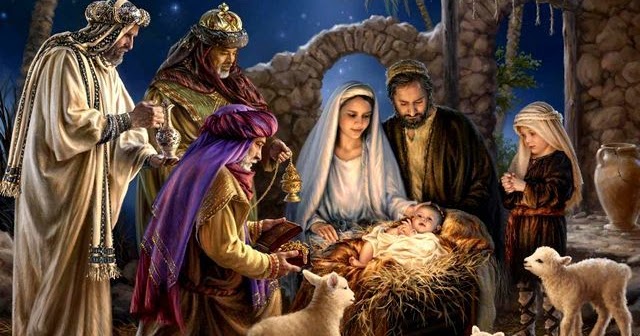
Then Herod called the magi secretly and ascertained from them the time of the star's appearance. He sent them to Bethlehem and said, "Go and search diligently for the child. When you have found him, bring me word, that I too may go and do him homage." After their audience with the king they set out. And behold, the star that they had seen at its rising preceded them, until it came and stopped over the place where the child was. They were overjoyed at seeing the star, and on entering the house they saw the child with Mary his mother. They prostrated themselves and did him homage. Then they opened their treasures and offered him gifts of gold, frankincense, and myrrh. And having been warned in a dream not to return to Herod, they departed for their country by another way.
The Magi were learned men, the academics or scientists of their day. Their knowledge base would have included the fundamentals of astronomy, which was not distinct from astrology in antiquity.
The character of Herod in our Gospel reading fits the personality of Herod as recorded by ancient historians. According to the Jewish historian Josephus, Herod was a brutal tyrant, perhaps partly insane, who executed large numbers of political opponents as well as members of his own family, including several of his wives and sons. A Machiavellian before Machiavelli, Herod’s primary goal in life was to maintain his own power, and he was constantly vigilant against possible threats to it, especially those who claimed to fulfill the royal prophecies of the Jewish Scriptures. He was supremely paranoid, and no doubt much of the city and his court were not pleased at the arrival of the Magi with their “politically incorrect” inquiries about a newborn king. If Herod became disturbed, people would die.
The gifts that the Magi bring are rich in biblical symbolism. “Frankincense and myrrh” are only mentioned together in the Old Testament in the Song of Solomon, where they are nuptial perfumes employed by Solomon and his bride to prepare for their marriage. Here in Matthew, Jesus is being marked out as Bridegroom King from his birth. At the same time, “gold and frankincense” are only mentioned together in the Scriptures in the prophecy of Isaiah 60:6, part of our First Reading. So, there is an obvious association of Jesus with the “light” predicted by Isaiah, which is associated with the miraculous star that brings the Magi to the Christ Child. Speaking of this star, numerous suggestions—some quite intriguing—have been made over the years for the identification of this celestial object. However, some of the church fathers (e.g. Origen) already pointed out that the star in question had to be a supernatural object, since natural stars do not move or stand still, nor are they able to mark a terrestrial location as small as Bethlehem, much less an individual house. Without being dogmatic on the issue, I believe the star was a supernatural appearance to these Magi. God communicated to them using a language they understood: the language of the stars.
As we ponder the meaning of these sacred Readings for ourselves this weekend, we are struck first by the fulfillment of the prophecies of the gathering of the nations to Christ. Now at the beginning of the third millennium, one in three inhabitants of the globe identifies him- or her-self as a follower of Christ, a total of 2.2 billion, of whom half are Catholics. Even when the last New Testament writer wrote, the population of Christians was at best in the tens of thousands, mostly Greek-speaking and concentrated in the eastern part of the Roman Empire. The incredible expansion of this “Jewish cult” to lands unknown would have seen absurd in those ancient days. In modern times, the faith has exploded in areas that were once closed to the Church. Sub-saharan Africa, in which the numbers of Christians were negligible even a hundred years ago, is now around 60% Christian. Though there is always and at all times an ongoing spiritual battle, it is true that a multitude from all nations has gathered to the Light.
On another level, we see in the Magi representatives of the scholars and academics, those who give their lives to learning, to the acquisition of wisdom. These Magi, however, are not wise guys but Wise Men, who demonstrate a true wisdom. In some way, we do not know how clearly, they saw in this child a gift of God to mankind, a sign of the love of God for humanity. True wisdom recognizes wisdom’s limits. There is something higher than wisdom, and that is love (1 Corinthians 13:1-13). Love is the ultimate wisdom. These intellectuals get down on their knees and bow before something greater than themselves: the Love of God, a Love which is a humble and unthreatening as a baby in his mother’s lap. Far from detracting from their wisdom, their humility in the face of Love enhances it. We should follow their example.
Pinging the weekly Sacred Page list!
Ad Majorem Dei Gloriam (To the Greater Glory of God)
From: Isaiah 60:1-6
A Radiant New Jerusalem
-----------------------
[1] Arise, shine; for your light has come, and the glory of the Lord has risen upon you. [2] For behold, darkness shall cover the earth, and thick darkness the peoples; but the Lord will arise upon you, and his glory will be seen upon you. [3] And nations shall come to your light, and kings to the brightness of your rising.
[4] Lift up your eyes round about, and see; they all gather together, they come to you; your sons shall come from far, and your daughters shall be carried in the arms. [5] Then you shall see and be radiant, your heart shall thrill and rejoice; because the abundance of the sea shall be turned to you, the wealth of the nations shall come to you. [6] A multitude of camels shall cover you, the young camels of Midian and Ephah; all those from Sheba shall come.
**************************************************
Commentary:
60:1-64:11 In the central section of Third Isaiah, the restored Jerusalem has a wonderful radiance; it is the dwelling place of the glory of the Lord, and from it all the nations will hear about God’s salvation. These are chapters that shine with hope and joy. In the opening verses, Jerusalem, the Lord’s spouse, is invited to leap with joy, for the glory of the Lord will light up the holy city, which will become a beacon for the nations (60:1-22). From there, too, the Lord’s herald proclaims the good news of salvation to the poor, the oppressed and all who labor under some burden (61:1-11). The holy city will radiate righteousness for all the nations to see (62:1-12). Finally, the Lord, depicted as a conqueror, enthroned in a glorious Jerusalem, is proclaimed as the sovereign lord who will judge and reward and punish (63:1-64:11).
60:1-22. These verses are a magnificent hymn to Jerusalem, completely restored, idealized; the prophet does not need to identify it by name. The most remarkable feature of the city is its radiance, mentioned at the start and end of the poem (vv. 1-3 and 19-22): it stems from the glory of the Lord, who has made the city’s temple his dwelling-place. The city acts as a magnet for all the nations, not only because it instructs them by means of the Law and by the word of God, as we heard at the start of the book (2:2-4; cf. Mic 4:1-3) but also because they are in awe of its splendor. The central verses of the poem rejoice in the pilgrimages that make their way to the holy city: first, those of Israelites, who had been scattered across the world: the pilgrims are most happy and they bear rich gifts for the Lord (vv. 4-9). Foreigners will come, too, and they will bring precious materials to reconstruct and embellish the city they previously destroyed. The obeisance they must do corresponds to the harm they did earlier (vv. 10-14). But the most important event is the arrival of the Lord who will bring gifts in abundance, the most precious being peace (vv. 15-10) and light (vv. 19-22). This picture of the new Jerusalem (one would expect) must have raised the spirits of those engaged in the final stages of the rebuilding of the temple.
This poem clearly has resonances with the eschatological description of the heavenly Jerusalem in the Revelation to John (cf. Rev 21:9-27). Some of the wording is virtually the same: cf. v. 3 with Rev 21:24 (“By its light shall the nations work; and the kings of the earth shall bring their glory into it”); v. 11 with Rev 21:25-26 (“its gates shall never be shut by day--and there will be no night there”); v. 14 with Rev 3:9 (“I will make them come and bow down before your feet”); v. 19 with Rev 21:23 (“the city has no need of sun or moon to shine upon it, for the glory of God is its light, and its lamp is the Lamb”) and 22:5 (“night shall be no more; they need no light of lamp or sun, for the Lord God will be their light, and they shall reign for ever and ever”). The hopes harbored by the early Christians (and the consolation to which the new people of God look forward) are in continuity with the hope felt by the ancient people of Israel. The message of Isaiah and that of the book of Revelation were each (in different historical contexts) calling for firm faith in the Savior of all. The New Testament fills out the Old by openly declaring that God saves us through his Son, Jesus Christ.
60:4-9. The pilgrimage described here comes from all corners of the earth, and yet it is a familial one. It is made up of people who were scattered throughout the known world, and not just those exiled in Babylon. Those from the west come by sea (v. 5), bearing the sort of goods normally transported by sea, particularly by Greek and Phoenician merchants. Those from the east, from the Arabian peninsula (Kedar and Nebaioth) and further afield will travel in caravans bringing precious commodities typical of the area--silver, gold etc. (v. 6). The visit of the Magi, who came bearing presents to adore Jesus, is in line with the sort of commerce that was current at the time, and it is probably connected with this text of Isaiah. Certainly, when this passage is read in the liturgy on the Solemnity of the Epiphany, the implication is that those rich gifts brought to the temple in honor of the Lord prefigure those that the Magi offered to him who is truly the “Lord your God”, “the Holy One of Israel” (v. 9). “Today, the wise man finds lying in a manger the One he had searched for as a brilliant light shining among the stars. Today, the wise man sees wrapped in swaddling clothes the One he long sought to find, unveiled, in the heavens. Today, to his great surprise, the wise man discerns in what he studies: heaven on earth, earth in the heavens, man in God, and God in man; what the whole universe could not contain inhabits the body of a child. And seeing all this, he believes and doubts no more; and he announces it to all, using his mystical powers: incense for God, gold for the King, and myrrh for the One who will die. Today, the Gentile who was once last is first, because the faith of the wise man sanctifies the belief of all the peoples” (St Peter Chrysologus, "Semones", 160). And Eusebius of Caesarea comments: “The conversion of the Gentiles glorifies the Church of God in a special way. The prophecy, "I will glorify my glorious house" [60:7], is fulfilled. This promise was made to the old Jerusalem, the mother of the new city, who, as has already been said, was the community of all among the ancient people who lived righteous lives--the prophets and patriarchs, all just men, those to whom the coming of Christ was first proclaimed” ("Commentaria in Isaiam", 60, 6-7).
St Paul's Mission
-----------------
[1] For this reason I, Paul, a prisoner for Christ Jesus on behalf of you Gentiles—[2] assuming that you have heard of the stewardship of God's grace that was given to me for you, [3] how the mystery was made known to me by revelation, as I have written briefly. [4] When you read this you can perceive my insight into the mystery of Christ, [5] which was not made known to the sons of men in other generations as it has now been revealed to his holy apostles and prophets by the Spirit; [6] that is, how the Gentiles are fellow heirs, members of the same body, and partakers of the promise in Christ Jesus through the gospel.
[7] 0f this gospel I was made a minister according to the gift of God's grace which was given me by the working of his power. [8] To me, though I am the very least of all the saints, this grace was given, to preach to the Gentiles the unsearchable riches of Christ, [9] and to make all men see what is the plan of the mystery hidden for ages in God who created all things; that through the church the manifold wisdom of God might now be made known to the principalities and powers in the heavenly places. [11] This was according to the eternal purpose which he has realized in Christ Jesus our Lord, [12] in whom we have boldness and confidence of access through our faith in him.
**********************
Commentary:
1-21. Christ's saving work on behalf of the Gentiles, calling them to be with the Jews, living stones in the edifice of the Church, leads the Apostle once again to overflow in prayer (vv. 14-21). But first he considers his own position and what Christ has done in him by making him a minister or servant of the Mystery of Christ (vv. 2-13). He witnesses to the revelation he himself has received, which made this Mystery known to him (vv. 2-5); and he goes on to give a summary of the Mystery, emphasizing the call of the Gentiles to the Church through the preaching of the Gospel (v. 6); he then explains that his mission is precisely to preach the Mystery of Christ to the Gentiles (vv. 7-13).
1-4. What led to St Paul's imprisonment was Jewish charges that he had preached against the Law and had brought Gentiles into the temple (they thought Trophimus, a citizen of Ephesus, was a Gentile: cf. Acts 21:28f). He did not mind so much the chains or the imprisonment or the Romans being his judges and jailers: what he wanted to make clear was that he was imprisoned for preaching to the Gentiles the salvation won by Jesus Christ.
He is very conscious of being an instrument specially chosen by God: he has been given the grace to reveal the "Mystery" (cf. Rom 1:15; 2 Cor12:2f). He is clearly referring to the vision he had on the road to Damascus (cf. Acts 9:2) and possibly to later revelations as well. His encounter with the risen Christ, who identifies himself with his Church (cf. Acts 9:5), is the origin and basis of his grasp of God's eternal plan, the "Mystery", which is one of the central teachings in this letter. The fact that Christ revealed himself to Paul and chose him to be the preacher of the Gospel to the Gentiles is something which Paul sees as part of the systematic implementation--the "oikonomia"—of God's plan.
5. In the Old Testament the promise made to Abraham revealed that in his offspring all the nations of the earth would be blessed (cf. Gen12:3; Sir 44:21); but how this would happen was not revealed. The Jews always thought that it would come about through their exaltation over other nations. Through the revelation Jesus made to him, St Paul has discovered that God has chosen another way--that of bringing the Gentiles into the Church, the body of Christ, on equal terms with the Jews. This is the "Mystery", the plan of God as revealed by the mission Christ gave his apostles or envoys (cf. Mt 28:19), of whom St Paul is one (cf. 3:8). Once again, as in 2:20, prophets are mentioned together with apostles; this may mean either the Old Testament prophets who announced the coming Messiah, or the New Testament prophets, that is, the Apostles themselves and other Christians who had insight, through revelation, into God's saving plans for the Gentiles and who proclaimed them under the inspiration of the Spirit. The context and other passages in Ephesians and elsewhere in the New Testament (cf. Eph 4:11; 1 Cor 12:28f; Acts 11:27; etc.) would suggest that he is referring to New Testament prophets. The Holy Spirit has revealed the Mystery to them "that they might preach the Gospel, stir up faith in Jesus the Messiah and Lord, and bring together the Church" (Vatican II, "Dei Verbum", 17). St Paul does not see himself as the only person to whom it has been given to know the Mystery revealed in Jesus Christ. All that he is saying is that, by the grace of God, it has been made known to him and that its preaching has been entrusted to him in a special way, just as it was given to St Peter to preach it to the Jews (cf. Gal 2:7).
St Paul attributes to the Holy Spirit the revelation of the Mystery, recalling, no doubt, how he himself came to know it after his meeting with Jesus on the road to Damascus (cf. Acts 9:17). It is the Spirit also who acts in the apostles and prophets (cf. Acts 2:17), and it is he who on an on-going basis vivifies the Church, enabling it to proclaim the Gospel. "The Holy Spirit is the soul of the Church. It is he who explains to the faithful the deep meaning of the teaching of Jesus and of his mystery. It is the Holy Spirit who, today just as at the beginning of the Church, acts in every evangelizer who allows himself to be possessed and led by him. The Holy Spirit places on his lips the words which he could not find himself, and at the same time the Holy Spirit predisposes the soul of the hearer to be open and receptive to the Good News and to the Kingdom being proclaimed" (Paul VI, "Evangelii Nuntiandi", 75).
The Adoration of the Magi
-------------------------
[1] Now when Jesus was born in Bethlehem of Judea in the days of Herod the king, behold, wise men from the East came to Jerusalem, saying, [2] "Where is He who has been born King of the Jews? For we have seen His star in the East, and have come to worship Him." [3] When Herod the king heard this, he was troubled, and all Jerusalem with him; [4] and assembling all the chief priests and scribes of the people, he inquired of them where the Christ was to be born. [5] They told him, "In Bethlehem of Judea; for so it is written by the prophet: [6] `And you, O Bethlehem, in the land of Judah, are by no means least among the rulers of Judah; for from you shall come a ruler who will govern my people Israel.'"
[7] Then Herod summoned the wise men secretly and ascertained from them what time the star appeared; [8] and he sent them to Bethlehem, saying, “bring me word, that I too may come and worship Him." [9] When they had heard the king they went their way; and lo, the star which they had seen in the East went before them, till it came to rest over the place where the child was. [10] When they saw the star, they rejoiced exceedingly with great joy; [11] and going into the house they saw the Child with Mary His mother, and they fell down and worshipped Him. Then, opening their treasures, they offered Him gifts, gold and frankincense and myrrh. [12] And being warned in a dream not to return to Herod, they departed to their own country by another way.
***********************************************************************
Commentary:
1. "King Herod": four different Herods are mentioned in the New Testament. The first is Herod the Great, referred to in this passage and in the next; the second, his son, Herod Antipas, who had St. John the Baptist beheaded (Matthew 14:1-12) and who abused our Lord during His passion (Luke 23:7-11); the third, Herod Agrippa I, a nephew of Herod the Great, who executed the Apostle St. James the Greater (Acts 12:1-3), imprisoned St. Peter (Acts 12:4-7), and died suddenly and mysteriously (Acts 12:20-23). The fourth, Herod Agrippa II, was Herod Agrippa's son. It was before him that St. Paul answered Jewish accusations when he was a prisoner in Caesarea (Acts 25:23).
Herod the Great, who appears here, was the son of non-Jewish parents. He came to power with the aid and as a vassal of the Romans. He was a consummate politician and among other things he rebuilt the temple in Jerusalem on a lavish scale. Herod the Great had a persecution complex; everywhere he saw rivals to his throne. He was notorious for his cruelty: he killed over half of his ten wives, some of his children and many people of standing. This information derives largely from the Jewish historian Flavius Josephus, who wrote towards the end of the first century, and it confirms the cruel picture drawn in the Gospels.
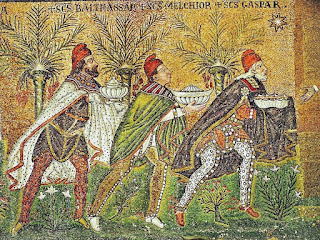
"Wise men": these were learned men, probably from Persia, who devoted themselves to the study of the stars. Since they were not Jews, they can be considered to be the very first Gentiles to receive the call to salvation in Christ. The adoration of the wise men forms part of the very earliest documented tradition: the scene is already depicted at the beginning of the second century in the paintings in the catacombs of St. Priscilla in Rome.
2. The Jews had made known throughout the East their hope of a Messiah. The wise men knew about this expected Messiah, king of the Jews. According to ideas widely accepted at the time, this sort of person, because of his significance in world history, would have a star connected with his birth. God made use of these ideas to draw to Christ these representatives of the Gentiles who would later be converted.
"The star had been hidden from them so that, on finding themselves without their guide, they would have no alternative but to consult the Jews. In this way the birth of Jesus would be known to all" (St. John Chrysostom, "Hom. on St. Matthew", 7).
St. John Chrysostom also points out that "God calls them by means of the things they are most familiar with; and He shows them a large and extraordinary star so that they would be impressed by its size and beauty" ("Hom. on St. Matthew", 6). God called the wise men in the midst of their ordinary occupations, and He still calls people in that way. He called Moses when he was shepherding his flock (Exodus 3:1-3), Elisha the prophet ploughing his land with oxen (1 Kings 19:19-20), Amos looking after his herd (Amos 7:15).... "What amazes you seems natural to me: that God has sought you out in the practice of your profession! That is how He sought the first, Peter and Andrew, James and John, beside their nets, and Matthew, sitting in the custom-house. And--wonder of wonders!--Paul, in his eagerness to destroy the seed of the Christians" (St J. Escriva, "The Way", 799).
"Like the Magi we have discovered a star--a light and a guide in the sky of our soul. `We have seen His star in the East and have come to worship Him.' We have had the same experience. We too noticed a new light shining in our soul and growing increasingly brighter. It was a desire to live a fully Christian life, a keenness to take God seriously" (St J. Escriva, "Christ Is Passing By", 32).
4. In all Jewish circles at the time of Jesus, the hope was widespread that the Messiah would come soon. The general idea was that he would be a king, like a new and even greater David. Herod's worry is therefore all the more understandable: he governed the Jews with the aid of the Romans and cruelly and jealously guarded his crown. Due to his political ambition and his lack of a religious sense, Herod saw a potential King-Messiah as a dangerous rival to his own worldly power.
In the time of our Lord, both Herod's monarchy and the occupying Romans (through their procurators) recognized the Sanhedrin as the representative body of the Jewish people. The Sanhedrin was, therefore, the nation's supreme council which ruled on day-to-day affairs, both religious and civil. The handling of the more important questions needed the approval of either the king (under Herod's monarchy) or the Roman procurator (at the time of the direct Roman occupation of Palestine). Following Exodus 24:1-9 and Numbers 11:16, the Sanhedrin was composed of 71 members presided over by the high priest. The members were elected from three groupings: 1) the chief priests, that is, the leaders of the principal priestly families; it was these families who appointed the high priest (the chief priests also included anybody who had formerly held the high priesthood); 2) the elders, or the leaders of the most important families; 3) the scribes, who were teachers of the Law or experts on legal and religious matters; the majority of these scribes belonged to the party or school of the Pharisees.
In this passage of St. Matthew only the first and third of the above groups are mentioned. This is understandable since the elders would have no authority in the matter of the birth of the Messiah--a purely religious question.
5-6. The prophecy referred to in this passage is Micah 5:1. It is worth noting that Jewish tradition interpreted this prophecy as predicting the Messiah's exact place of birth and as referring to a particular person. The second text thus teaches us once more that the prophecies of the Old Testament are fulfilled in Jesus Christ.
8. Herod tried to find out exactly where the Child was--not, of course, to adore Him, as he said, but to dispose of Him. Such was Herod's exclusively political view of things. Yet neither his shrewdness nor his wickedness could prevent God's plans from being fulfilled. Despite Herod's ambition and his scheming, God's wisdom and power were going to bring salvation about.
9. "It might happen at certain moments of our interior life--and we are nearly always to blame--that the star disappears, just as it did to the wise kings on their journey.... What should we do if this happens? Follow the example of those wise men and ask. Herod used knowledge to act unjustly. The Magi used it to do good. But we Christians have no need to go to Herod nor to the wise men of this world. Christ has given His Church sureness of doctrine and a flow of grace in the Sacraments. He has arranged things so that there will always be people to guide and lead us, to remind us constantly of our way" ([St] J. Escriva, "Christ Is Passing By", 34). 11. The gifts they offered--gold, frankincense and myrrh--were those most valued in the East. People feel the need to give gifts to God to show their respect and faith. Since they cannot give themselves as a gift, which is what they would wish, they give instead what is most valuable and dear to them.
The prophets and the psalmists foretold that the kings of the earth would pay homage to God at the time of the Messiah (Isaiah 49:23). They would offer Him their treasures (Isaiah 60:5) and adore Him (Psalm 72:10-15). Through this action of the wise men and the offering of their gifts to Jesus, these prophecies begin to be fulfilled.
The Council of Trent expressly quotes this passage when it underlines the veneration that ought to be given to Christ in the Eucharist: "The faithful of Christ venerate this most holy Sacrament with the worship of latria which is due to the true God.... For in this Sacrament we believe that the same God is present whom the eternal Father brought into the world, saying of Him, `Let all God's angel worship Him' (Hebrews 1:6; cf. Psalm 97:7). It is the same God whom the Magi fell down and worshipped (cf. Matthew 2:11) and, finally, the same God whom the Apostles adored in Galilee as Scriptures says (Matthew 28:17)" (Decree, "De SS. Eucharista", Chapter 5).
St. Gregory of Nazianzen has also commented on this verse, as follows: "Let us remain in adoration; and to Him, who, in order to save us, humbled Himself to such a degree of poverty as to receive our body, let us offer not only incense, gold and myrrh (the first as God, the second as king, and the third as one who sought death for our sake), but also spiritual gifts, more sublime than those which can be seen with the eyes" ("Oratio", 19).
12. The involvement of the wise men in the events at Bethlehem ends with yet another act of respectful obedience and cooperation with God's plans. Christians also should be receptive to the specific grace and mission God has given them. They should persevere in this even if it means having to change any personal plans they may have made.
Disclaimer: Opinions posted on Free Republic are those of the individual posters and do not necessarily represent the opinion of Free Republic or its management. All materials posted herein are protected by copyright law and the exemption for fair use of copyrighted works.