Free Republic
Browse · Search
Religion
Topics · Post Article

Skip to comments.

Catholic Caucus: Daily Mass Readings 14xx-December-2022
Universalis/Jerusalem Bible ^

Posted on 12/14/2022 5:55:15 AM PST by annalex

14 December 2022

Saint John of the Cross, Priest, Doctor
on Wednesday of the 3rd week of Advent


St John Of The Cross Parish, Western Springs IL

Readings at Mass

Liturgical Colour: White. Year: A(I).

Readings for the feria

Readings for the memorial

These are the readings for the feria


First reading
Isaiah 45:6-8,18,21-25 ©

I, the Lord, shall create deliverance

Apart from me, all is nothing.
I am the Lord, unrivalled,
I form the light and create the dark.
I make good fortune and create calamity,
it is I, the Lord, who do all this.
Send victory like a dew, you heavens,
and let the clouds rain it down.
Let the earth open
for salvation to spring up.
Let deliverance, too, bud forth
which I, the Lord, shall create.
Yes, thus says the Lord,
creator of the heavens,
who is God,
who formed the earth and made it,
who set it firm,
created it no chaos,
but a place to be lived in:
  ‘I am the Lord, unrivalled:
  there is no other god besides me.
  A God of integrity and a saviour:
  there is none apart from me.
  Turn to me and be saved,
  all the ends of the earth,
  for I am God unrivalled.
  ‘By my own self I swear it;
  what comes from my mouth is truth,
  a word irrevocable:
  before me every knee shall bend,
  by me every tongue shall swear,
  saying, “From the Lord alone
  come victory and strength.”
  To him shall come, ashamed,
  all who raged against him.
  Victorious and glorious through the Lord shall be
  all the descendants of Israel.’

Responsorial Psalm
Psalm 84(85):9-14 ©
Send victory like a dew, you heavens, and let the clouds rain it down.
I will hear what the Lord God has to say,
  a voice that speaks of peace,
  peace for his people.
His help is near for those who fear him
  and his glory will dwell in our land.
Send victory like a dew, you heavens, and let the clouds rain it down.
Mercy and faithfulness have met;
  justice and peace have embraced.
Faithfulness shall spring from the earth
  and justice look down from heaven.
Send victory like a dew, you heavens, and let the clouds rain it down.
The Lord will make us prosper
  and our earth shall yield its fruit.
Justice shall march before him
  and peace shall follow his steps.
Send victory like a dew, you heavens, and let the clouds rain it down.

Gospel AcclamationIs55:6
Alleluia, alleluia!
Seek the Lord while he is still to be found,
call to him while he is still near.
Alleluia!
Or:Is40:9-10
Alleluia, alleluia!
Shout with a loud voice, joyful messenger to Jerusalem.
Here is the Lord God coming with power.
Alleluia!

GospelLuke 7:19-23 ©

'Are you the one who is to come?'

John, summoning two of his disciples, sent them to the Lord to ask, ‘Are you the one who is to come, or must we wait for someone else?’ When the men reached Jesus they said, ‘John the Baptist has sent us to you, to ask, “Are you the one who is to come or have we to wait for someone else?”’ It was just then that he cured many people of diseases and afflictions and of evil spirits, and gave the gift of sight to many who were blind. Then he gave the messengers their answer, ‘Go back and tell John what you have seen and heard: the blind see again, the lame walk, lepers are cleansed, and the deaf hear, the dead are raised to life, the Good News is proclaimed to the poor and happy is the man who does not lose faith in me.’

Continue

These are the readings for the memorial


First reading
1 Corinthians 2:1-10 ©

The wisdom that God predestined to be for our glory

Brothers, when I came to you, it was not with any show of oratory or philosophy, but simply to tell you what God had guaranteed. During my stay with you, the only knowledge I claimed to have was about Jesus, and only about him as the crucified Christ. Far from relying on any power of my own, I came among you in great ‘fear and trembling’ and in my speeches and the sermons that I gave, there were none of the arguments that belong to philosophy; only a demonstration of the power of the Spirit. And I did this so that your faith should not depend on human philosophy but on the power of God.
  But still we have a wisdom to offer those who have reached maturity: not a philosophy of our age, it is true, still less of the masters of our age, which are coming to their end. The hidden wisdom of God which we teach in our mysteries is the wisdom that God predestined to be for our glory before the ages began. It is a wisdom that none of the masters of this age have ever known, or they would not have crucified the Lord of Glory; we teach what scripture calls: the things that no eye has seen and no ear has heard, things beyond the mind of man, all that God has prepared for those who love him.
  These are the very things that God has revealed to us through the Spirit.

Responsorial Psalm
Psalm 36(37):3-6,30-31 ©
The just man’s mouth utters wisdom.
If you trust in the Lord and do good,
  then you will live in the land and be secure.
If you find your delight in the Lord,
  he will grant your heart’s desire.
The just man’s mouth utters wisdom.
Commit your life to the Lord,
  trust in him and he will act,
so that your justice breaks forth like the light,
  your cause like the noon-day sun.
The just man’s mouth utters wisdom.
The just man’s mouth utters wisdom
  and his lips speak what is right;
the law of his God is in his heart,
  his steps shall be saved from stumbling.
The just man’s mouth utters wisdom.

Gospel AcclamationMt5:3
Alleluia, alleluia!
How happy are the poor in spirit:
theirs is the kingdom of heaven.
Alleluia!

GospelLuke 14:25-33 ©

Anyone who does not carry his cross and follow me cannot be my disciple

Great crowds accompanied Jesus on his way and he turned and spoke to them. ‘If any man comes to me without hating his father, mother, wife, children, brothers, sisters, yes and his own life too, he cannot be my disciple. Anyone who does not carry his cross and come after me cannot be my disciple.
  ‘And indeed, which of you here, intending to build a tower, would not first sit down and work out the cost to see if he had enough to complete it? Otherwise, if he laid the foundation and then found himself unable to finish the work, the onlookers would all start making fun of him and saying, “Here is a man who started to build and was unable to finish.” Or again, what king marching to war against another king would not first sit down and consider whether with ten thousand men he could stand up to the other who advanced against him with twenty thousand? If not, then while the other king was still a long way off, he would send envoys to sue for peace. So in the same way, none of you can be my disciple unless he gives up all his possessions.’

Continue


Christian Art

Illustration

Each day, The Christian Art website gives a picture and reflection on the Gospel of the day.

The readings on this page are from the Jerusalem Bible, which is used at Mass in most of the English-speaking world. The New American Bible readings, which are used at Mass in the United States, are available in the Universalis apps, programs and downloads.

You can also view this page with the Gospel in Greek and English.


TOPICS: Catholic; General Discusssion; Prayer; Worship
KEYWORDS: advent; catholic; lk14; lk7; prayer
For your reading, reflection, faith-sharing, comments, questions, discussion.

1 posted on 12/14/2022 5:55:15 AM PST by annalex
[ Post Reply | Private Reply | View Replies]

To: All

KEYWORDS: advent; catholic; lk14; lk7; prayer;


2 posted on 12/14/2022 5:56:05 AM PST by annalex (fear them not)
[ Post Reply | Private Reply | To 1 | View Replies]

To: nickcarraway; NYer; ELS; Pyro7480; livius; ArrogantBustard; Catholicguy; RobbyS; marshmallow; ...

Alleluia Ping

Please FReepmail me to get on/off the Alleluia Ping List.


3 posted on 12/14/2022 5:56:49 AM PST by annalex (fear them not)
[ Post Reply | Private Reply | To 2 | View Replies]

To: annalex
Jim still needs our prayers. Thread 2
Prayer thread for Salvation's recovery
Pray for Ukraine
4 posted on 12/14/2022 5:57:07 AM PST by annalex (fear them not)
[ Post Reply | Private Reply | To 3 | View Replies]

To: annalex
Luke
 English: Douay-RheimsLatin: Vulgata ClementinaGreek NT: Byzantine/Majority Text (2000)
 Luke 17
19And he said to him: Arise, go thy way; for thy faith hath made thee whole. Et ait illi : Surge, vade : quia fides tua te salvum fecit.και ειπεν αυτω αναστας πορευου η πιστις σου σεσωκεν σε
20And being asked by the Pharisees, when the kingdom of God should come? he answered them, and said: The kingdom of God cometh not with observation: Interrogatus autem a pharisæis : Quando venit regnum Dei ? respondens eis, dixit : Non venit regnum Dei cum observatione :επερωτηθεις δε υπο των φαρισαιων ποτε ερχεται η βασιλεια του θεου απεκριθη αυτοις και ειπεν ουκ ερχεται η βασιλεια του θεου μετα παρατηρησεως
21Neither shall they say: Behold here, or behold there. For lo, the kingdom of God is within you. neque dicent : Ecce hic, aut ecce illic. Ecce enim regnum Dei intra vos est.ουδε ερουσιν ιδου ωδε η ιδου εκει ιδου γαρ η βασιλεια του θεου εντος υμων εστιν
22And he said to his disciples: The days will come, when you shall desire to see one day of the Son of man; and you shall not see it. Et ait ad discipulos suos : Venient dies quando desideretis videre unum diem Filii hominis, et non videbitis.ειπεν δε προς τους μαθητας ελευσονται ημεραι οτε επιθυμησετε μιαν των ημερων του υιου του ανθρωπου ιδειν και ουκ οψεσθε
23And they will say to you: See here, and see there. Go ye not after, nor follow them: Et dicent vobis : Ecce hic, et ecce illic. Nolite ire, neque sectemini :και ερουσιν υμιν ιδου ωδε η ιδου εκει μη απελθητε μηδε διωξητε

5 posted on 12/14/2022 6:04:53 AM PST by annalex (fear them not)
[ Post Reply | Private Reply | To 4 | View Replies]

To: annalex

Catena Aurea by St. Thomas Aguinas

17:11–19

11. And it came to pass, as he went to Jerusalem, that he passed through the midst of Samaria and Galilee.

12. And as he entered into a certain village, there met him ten men that were lepers, which stood afar off:

13. And they lifted up their voices, and said, Jesus, Master, have mercy on us.

14. And when he saw them, he said unto them, Go shew yourselves unto the priests. And it came to pass, that, as they went, they were cleansed.

15. And one of them, when he saw that he was healed, turned back, and with a loud voice glorified God,

16. And fell down on his face at his feet, giving him thanks: and he was a Samaritan.

17. And Jesus answering said, Were there not ten cleansed? but where are the nine?

18. There are not found that returned to give glory to God, save this stranger.

19. And he said unto him, Arise, go thy way: thy faith hath made thee whole.

AMBROSE. After speaking the foregoing parable, our Lord censures the ungrateful;

TITUS BOSTRENSIS. saying, And it came to pass, shewing that the Samaritans were indeed well disposed towards the mercies above mentioned, but the Jews not so. For there was enmity between the Jews and the Samaritans, and He to allay this, passed into the midst of both nations, that he might cement both into one new man.

CYRIL OF ALEXANDRIA. The Saviour next manifests His glory by drawing over Israel to the faith. As it follows, And as he entered into a certain village, there met him ten men that were lepers, men who were banished from the towns and cities, and counted unclean, according to the rites of the Mosaic law.

TITUS BOSTRENSIS. They associated together from the sympathy they felt as partakers of the same calamity, and were waiting till Jesus passed, anxiously looking out to see Him approach. As it is said, Which stood afar off, for the Jewish law esteems leprosy unclean, whereas the law of the Gospel calls unclean not the outward, but the inward leprosy.

THEOPHYLACT. They therefore stand afar off as if ashamed of the uncleanness which was imputed to them, thinking that Christ would loathe them as others did. Thus they stood afar off, but were made nigh unto Him by their prayers. For the Lord is nigh unto all them that call upon him in truth. (Ps. 145:18.) Therefore it follows, And they lifted up their voices, and said, Jesus, Master, have mercy upon us.

TITUS BOSTRENSIS. They pronounce the name of Jesus, and gain to themselves the reality. For Jesus is by interpretation Saviour. They say, Have mercy upon us, because they were sensible of His power, and sought neither for gold and silver, but that their bodies might put on again a healthful appearance.

THEOPHYLACT. They do not merely supplicate or entreat Him as if He were a man, but they call Him Master or Lord, as if almost they looked upon Him as God. But He bids them shew themselves to the priests, as it follows, And when he saw them, he said, Go, shew yourselves unto the priests. For they were examined whether they were cleansed from their leprosy or not.

CYRIL OF ALEXANDRIA. The law also ordered, that those who were cleansed from leprosy should offer sacrifice for the sake of their purification.

THEOPHYLACT. Therefore in bidding them go to the priests, he meant nothing more than that they were just about to be healed; and so it follows, And it came to pass that as they went they were healed.

CYRIL OF ALEXANDRIA. Whereby the Jewish priests who were jealous of His glory might know that it was by Christ granting them health that they were suddenly and miraculously healed.

THEOPHYLACT. But out of the ten, the nine Israelites were ungrateful, whereas the Samaritan stranger returned and lifted up his voice in thanksgiving, as it follows, And one of them turned back, and with a loud voice glorified God.

TITUS BOSTRENSIS. When he found that he was cleansed, he had boldness to draw near, as it follows, And fell down on his face at his feet giving him thanks. Thus by his prostration and prayers shewing at once both his faith and his gratitude.

It follows, And he was a Samaritan.

THEOPHYLACT. We may gather from this that a man is not one whit hindered from pleasing God because he comes from a cursed race, only let him bear in his heart an honest purpose. Further, let not him that is born of saints boast himself, for the nine who were Israelites were ungrateful; and hence it follows, And Jesus answering him said, Were there not ten cleansed?

TITUS BOSTRENSIS. Wherein it is shewn, that strangers were more ready to receive the faith, but Israel was slow to believe; and so it follows, And he said unto him, Arise, go thy way, thy faith has made thee whole.

AUGUSTINE. (de Quæst. Ev. l. ii. qu. 40.) The lepers may be taken mystically for those who, having no knowledge of the true faith, profess various erroneous doctrines. For they do not conceal their ignorance, but blazen it forth as the highest wisdom, making a vain show of it with boasting words. But since leprosy is a blemish in colour, when true things appear clumsily mixed up with false in a single discourse or narration, as in the colour of a single body, they represent a leprosy streaking and disfiguring as it were with true and false dyes the colour of the human form. Now these lepers must be so put away from the Church, that being as far removed as possible, they may with loud shouts call upon Christ. But by their calling Him Teacher, I think it is plainly implied that leprosy is truly the false doctrine which the good teacher may wash away. Now we find that of those upon whom our Lord bestowed bodily mercies, not one did He send to the priests, save the lepers, for the Jewish priesthood was a figure of that priesthood which is in the Church. All vices our Lord corrects and heals by His own power working inwardly in the conscience, but the teaching of infusion by means of the Sacrament, or of catechizing by word of mouth, was assigned to the Church. And as they went, they were cleansed; just as the Gentiles to whom Peter came, having not yet received the sacrament of Baptism, whereby we come spiritually to the priests, are declared cleansed by the infusion of the Holy Spirit. Whoever then follows true and sound doctrine in the fellowship of the Church, proclaiming himself to be free from the confusion of lies, as it were a leprosy, yet still ungrateful to his Cleanser does not prostrate himself with pious humility of thanksgiving, is like to those of whom the Apostle says, that when they knew God, they glorified him not as God, nor were thankful. (Rom. 1:21.) Such then will remain in the ninth number as imperfect. For the nine need one, that by a certain form of unity they may be cemented together, in order to become ten. But he who gave thanks was approved of as a type of the one only Church. And since these were Jews, they are declared to have lost through pride the kingdom of heaven, wherein most of all unity is preserved. But the man who was a Samaritan, which is by interpretation “guardian,” giving back to Him who gave it that which he had received, according to the Psalm, My strength will I preserve for thee, (Ps. 59:9.) has kept the unity of the kingdom with humble devotion.

BEDE. He fell upon his face, because he blushes with shame when he remembers the evils he had committed. And he is commanded to rise and walk, because he who, knowing his own weakness, lies lowly on the ground, is led to advance by the consolation of the divine word to mighty deeds. But if faith made him whole, who hurried himself back to give thanks, therefore does unbelief destroy those who have neglected to give glory to God for mercies received. Wherefore that we ought to increase our faith by humility, as it is declared in the former parable, so in this is it exemplified in the actions themselves.

17:20–21

20. And when he was demanded of the Pharisees, when the kingdom of God should come, he answered them and said, The kingdom of God cometh not with observation:

21. Neither shall they say, Lo here! or, lo there! for, behold, the kingdom of God is within you.

CYRIL OF ALEXANDRIA. Because our Saviour, in His discourses which He addressed to others, spake often of the kingdom of God, the Pharisees derided Him; hence it is said, And when he was asked by the Pharisees when the kingdom of God should come. As though they said tauntingly, “Before the kingdom of God come, which Thou speakest of, the death of the cross will be Thy lot.” But our Lord testifying His patience, when reviled reviles not again, but the rather because they were evil, returns not a scornful answer; for it follows, He answered and said, The kingdom cometh not with observation; as if he says, “Seek not to know the time when the kingdom of heaven shall again be at hand. For that time can be observed neither by men nor angels, not as the time of the Incarnation which was proclaimed by the foretelling of Prophets and the heraldings of Angels.” Wherefore He adds, Neither shall they say, Lo here! or, Lo there! Or else, They ask about the kingdom of God, because, as is said below, they thought that on our Lord’s coming into Jerusalem, the kingdom of God would be immediately manifested. Therefore our Lord answers, that the kingdom of God will not come with observation.

CYRIL OF ALEXANDRIA. Now it is only for the benefit of each individual that He says that which follows, For behold the kingdom of God is within you; that is, it rests with you and your own hearts to receive it. For every man who is justified by faith and the grace of God, and adorned with virtues, may obtain the kingdom of heaven.

GREGORY OF NYSSA. (lib. de prop. sec. Deum.) Or, perhaps, the kingdom of God being within us, means that joy that is implanted in our hearts by the Holy Spirit. For that is, as it were, the image and pledge of the everlasting joy with which in the world to come the souls of the Saints rejoice.

BEDE. Or the kingdom of God means that He Himself is placed in the midst of them, that is, reigning in their hearts by faith.

17:22–25

22. And he said unto the disciples, The days will come, when ye shall desire to see one of the days of the Son of man, and ye shall not see it.

23. And they shall say to you, See here; or, see there: go not after them, nor follow them.

24. For as the lightning, that lighteneth out of the one part under heaven, shineth unto the other part under heaven; so shall also the Son of man be in his day.

25. But first must he suffer many things, and be rejected of this generation.

CYRIL OF ALEXANDRIA. When our Lord said, The kingdom of God is within you, He would fain prepare His disciples for suffering, that being made strong they might be able to enter the kingdom of God; He therefore foretells to them, that before His coming from heaven at the end of the world, persecution will break out upon them. Hence it follows, And he said unto the disciples, The days will come, &c. meaning that so terrible will be the persecution, that they would desire to see one of His days, that is, of that time when they yet walked with Christ. Truly the Jews ofttimes beset Christ with reproaches and insults, and sought to stone Him, and ofttimes would have hurled Him down from the mountain; but even these seem to be looked upon as slight in comparison of greater evils that are to come.

THEOPHYLACT. For their life was then without trouble, for Christ took care of them and protected them. But the time was coming when Christ should be taken away, and they should be exposed to perils, being brought before kings and princes, and then they should long for the first time and its tranquillity.

BEDE. Or, by the day of Christ He signifies His kingdom, which we hope will come, and He rightly says, one day, because there shall no darkness disturb the glory of that blessed time. It is right then to long for the day of Christ, yet from the earnestness of our longing, let us not vision to ourselves as though the day were at hand. Hence it follows, And they shall say to you, Lo here! and, Lo there!

EUSEBIUS. As if he said, If at the coming of Antichrist, his fame shall be spread abroad, as though Christ had appeared, go not out, nor follow him. For it cannot be that He who was once seen on earth, shall any more dwell in the corners of the earth. It will therefore be he of whom we speak, not the true Christ. For this is the clear sign of the second coming of our Saviour, that suddenly the lustre of His coming shall fill the whole world; and so it follows, For as the lightning that lighteneth, &c. For He will not appear walking upon the earth, as any common man, but will illuminate our whole universe, manifesting to all men the radiance of His divinity.

BEDE. And he well says, that lighteneth out of the one part under heaven, because the judgment will be given under the heaven, that is, in the midst of the air, as the Apostle says, We shall be caught up together with them in the clouds. (1 Thess. 4:17.) But if the Lord shall appear at the Judgment like lightning, then shall no one remain hidden in the deep of his heart, for the very brightness of the Judge pierces through him; we may also take this answer of our Lord to refer to His coming, whereby He comes daily into His Church. For ofttimes have heretics so vexed the Church, by saying that the faith of Christ stands in their own dogma, that the faithful in those times longed that the Lord would if it were possible even for one day return to the earth, and Himself make known what was the true faith. And you shall not see it, because it need not that the Lord should again testify by a bodily presence that which has been spiritually declared by the light of the Gospel, once scattered and diffused throughout the whole world.

CYRIL OF ALEXANDRIA. Now His disciples supposed that He would go to Jerusalem, and would at once make a manifestation of the kingdom of God. To rid them therefore of this belief, He informs them that it became Him first to suffer the Life-giving Passion, then to ascend to the Father and shine forth from above, that He might judge the world in righteousness. Hence He adds, But first must he suffer many things, and be rejected of this generation.

BEDE. He means the generation not only of the Jews, but also of all wicked men, by whom even now in His own body, that is, His Church, the Son of man suffers many things, and is rejected. But while He spake many things of His coming in glory, He inserts something also concerning His Passion, that when men saw Him dying, whom they had heard would be glorified, they might both soothe their sorrow for His sufferings by the hope of the promised glory, and at the same time prepare themselves, if they love the glories of His kingdom, to look without alarm upon the horrors of death.

Catena Aurea Luke 17

6 posted on 12/14/2022 6:10:00 AM PST by annalex (fear them not)
[ Post Reply | Private Reply | To 5 | View Replies]

To: annalex


The Garden of Eden with the Fall of Man

Jan Brueghel the Elder
1616

7 posted on 12/14/2022 6:10:29 AM PST by annalex (fear them not)
[ Post Reply | Private Reply | To 6 | View Replies]

To: annalex
Luke
 English: Douay-RheimsLatin: Vulgata ClementinaGreek NT: Byzantine/Majority Text (2000)
 Luke 14
25And there went great multitudes with him. And turning, he said to them: Ibant autem turbæ multæ cum eo : et conversus dixit ad illos :συνεπορευοντο δε αυτω οχλοι πολλοι και στραφεις ειπεν προς αυτους
26If any man come to me, and hate not his father, and mother, and wife, and children, and brethren, and sisters, yea and his own life also, he cannot be my disciple. Si quis venit ad me, et non odit patrem suum, et matrem, et uxorem, et filios, et fratres, et sorores, adhuc autem et animam suam, non potest meus esse discipulus.ει τις ερχεται προς με και ου μισει τον πατερα αυτου και την μητερα και την γυναικα και τα τεκνα και τους αδελφους και τας αδελφας ετι δε και την εαυτου ψυχην ου δυναται μου μαθητης ειναι
27And whosoever doth not carry his cross and come after me, cannot be my disciple. Et qui non bajulat crucem suam, et venit post me, non potest meus esse discipulus.και οστις ου βασταζει τον σταυρον αυτου και ερχεται οπισω μου ου δυναται ειναι μου μαθητης
28For which of you having a mind to build a tower, doth not first sit down, and reckon the charges that are necessary, whether he have wherewithal to finish it: Quis enim ex vobis volens turrim ædificare, non prius sedens computat sumptus, qui necessarii sunt, si habeat ad perficiendum,τις γαρ εξ υμων ο θελων πυργον οικοδομησαι ουχι πρωτον καθισας ψηφιζει την δαπανην ει εχει τα εις απαρτισμον
29Lest, after he hath laid the foundation, and is not able ti finish it, all that see it begin to mock him, ne, posteaquam posuerit fundamentum, et non potuerit perficere, omnes qui vident, incipiant illudere ei,ινα μηποτε θεντος αυτου θεμελιον και μη ισχυοντος εκτελεσαι παντες οι θεωρουντες αρξωνται εμπαιζειν αυτω
30Saying: This man began to build, and was not able to finish. dicentes : Quia hic homo cœpit ædificare, et non potuit consummare ?λεγοντες οτι ουτος ο ανθρωπος ηρξατο οικοδομειν και ουκ ισχυσεν εκτελεσαι
31Or what king, about to go to make war against another king, doth not first sit down, and think whether he be able, with ten thousand, to meet him that, with twenty thousand, cometh against him? Aut quis rex iturus committere bellum adversus alium regem, non sedens prius cogitat, si possit cum decem millibus occurrere ei, qui cum viginti millibus venit ad se ?η τις βασιλευς πορευομενος συμβαλειν ετερω βασιλει εις πολεμον ουχι καθισας πρωτον βουλευεται ει δυνατος εστιν εν δεκα χιλιασιν απαντησαι τω μετα εικοσι χιλιαδων ερχομενω επ αυτον
32Or else, whilst the other is yet afar off, sending an embassy, he desireth conditions of peace. Alioquin adhuc illo longe agente, legationem mittens rogat ea quæ pacis sunt.ει δε μηγε ετι πορρω αυτου οντος πρεσβειαν αποστειλας ερωτα τα προς ειρηνην
33So likewise every one of you that doth not renounce all that he possesseth, cannot be my disciple. Sic ergo omnis ex vobis, qui non renuntiat omnibus quæ possidet, non potest meus esse discipulus.ουτως ουν πας εξ υμων ος ουκ αποτασσεται πασιν τοις εαυτου υπαρχουσιν ου δυναται μου ειναι μαθητης

8 posted on 12/14/2022 6:12:59 AM PST by annalex (fear them not)
[ Post Reply | Private Reply | To 7 | View Replies]

To: annalex

Catena Aurea by St. Thomas Aguinas

14:25–27

25. And there went great multitudes with him: and he turned, and said unto them,

26. If any man come to me, and hate not his father, and mother, and wife, and children, and brethren, and sisters, yea, and his own life also, he cannot be my disciple.

27. And whosoever doth not bear his cross, and come after me, cannot be my disciple.

GREGORY. (in Hom. 37. in Ev.) The mind is kindled, when it hears of heavenly rewards, and already desires to be there, where it hopes to enjoy them without ceasing; but great rewards cannot be reached except by great labours. Therefore it is said, And there went great multitudes with him: and he turned to them, and said, &c.

THEOPHYLACT. For because many of those that accompanied Him followed not with their whole heart, but lukewarmly, He shews what kind of a man his disciple ought to be.

GREGORY. (in Hom. ut sup.) But it may be asked, how are we bid to hate our parents and our relations in the flesh, who are commanded to love even our enemies? But if we weigh the force of the command we are able to do both, by rightly distinguishing them so as both to love those who are united to us by the bond of the flesh, and whom we acknowledge our relations, and by hating and avoiding not to know those whom we find our enemies in the way of God. For he is as it were loved by hatred, who in his carnal wisdom, pouring into our ears his evil sayings, is not heard.

AMBROSE. For if for thy sake the Lord renounces His own mother, saying, Who is my mother? and who are my brethren? (Matt. 12:48, Mark 3:33.) why dost thou deserve to be preferred to thy Lord? But the Lord will have us neither be ignorant of nature, nor be her slaves, but so to submit to nature, that we reverence the Author of nature, and depart not from God out of love to our parents.

GREGORY. (in Hom. ut sup.) Now to shew that this hatred towards relations proceeds not from inclination or passion, but from love, our Lord adds, yea, and his own life also. It is plain therefore that a man ought to hate his neighbour, by loving as himself him who hated him. For then we rightly hate our own soul when we indulge not its carnal desires, when we subdue its appetites, and wrestle against its pleasures. That which by being despised is brought to a better condition, is as it were loved by hatred.

CYRIL OF ALEXANDRIA. But life must not be renounced, which both in the body and the soul the blessed Paul also preserved, that yet living in the body he might preach Christ. But when it was necessary to despise life so that he might finish his course, he counts not his life dear unto him. (Acts 20:24.)

GREGORY. (in Hom. ut sup.) How the hatred of life ought to be shewn He declares as follows; Whosoever bears not his cross, &c.

CHRYSOSTOM. He means not that we should place a beam of wood on our shoulders, but that we should ever have death before our eyes. As also Paul died daily and despised death. (1 Cor. 15:31.)

BASIL. By bearing the cross also he announced the death of his Lord, saying, The world is crucified to me, and I to the world, (Gal. 6:14.) which we also anticipate at our very baptism, in which our old man is crucified, that the body of sin may be destroyed.

GREGORY. (in Hom. 37. in Ev.) Or because the cross is so called from torturing. In two ways we bear our Lord’s cross, either when by abstinence we afflict our bodies, or when through compassion of our neighbour we think all his necessities our own. But because some exercise abstinence of the flesh not for God’s sake but for vain-glory, and shew compassion, not spiritually but carnally, it is rightly added, And, cometh after me. For to bear His cross and come after the Lord, is to use abstinence of the flesh, or compassion to our neighbour, from the desire of an eternal gain.

14:28–33

28. For which of you, intending to build a tower, sitteth not down first, and counteth the cost, whether he have sufficient to finish it?

29. Lest haply, after he hath laid the foundation, and is not able to finish it, all that behold it begin to mock him,

30. Saying, This man began to build, and was not able to finish.

31. Or what king, going to make war against another king, sitteth not down first, and consulteth whether he be able with ten thousand to meet him that cometh against him with twenty thousand?

32. Or else, while the other is yet a great way off, he sendeth an ambassage, and desireth conditions of peace.

33. So likewise, whosoever he be of you that for-saketh not all that he hath, he cannot be my disciple.

GREGORY. (37. in Ev.) Because He had been giving high and lofty precepts, immediately follows the comparison of building a tower, when it is said, For which of you intending to build a tower does not first count &c. For every thing that we do should be preceded by anxious consideration. If then we desire to build a tower of humility, we ought first to brace ourselves against the ills of this world.

BASIL. (in Esai. 2.) Or the tower is a lofty watch-tower fitted for the guardianship of the city and the discovery of the enemy’s approach. In like manner was our understanding given us to preserve the good, to guard against the evil. For the building up whereof the Lord bids us sit down and count our means if we have sufficient to finish.

GREGORY OF NYSSA. (lib. de Virg. 17.) For we must be ever pressing onward that we may reach the end of each difficult undertaking by successive increases of the commandments of God, and so to the completion of the divine work. For neither is one stone the whole fabric of the tower, nor does a single command lead to the perfection of the soul. But we must lay the foundation, and according to the Apostle, thereupon must be placed store of gold, silver, and precious stones. (1 Cor. 3:12.) Whence it is added, Lest haply after he hath laid the foundation, &c.

THEOPHYLACT. For we ought not to lay a foundation, i. e. begin to follow Christ, and not bring the work to an end, as those of whom St. John writes, That many of his disciples went backward. (John 6:66.) Or by the foundation understand the word of teaching, as for instance concerning abstinence. There is need therefore of the above-mentioned foundation, that the building up of our works be established, a tower of strength from the face of the enemy. (Ps. 61:3.) Otherwise, man is laughed at by those who see him, men as well as devils.

GREGORY. (ubi sup.) For when occupied in good works, unless we watch carefully against the evil spirits, we find those our mockers who are persuading us to evil. But another comparison is added proceeding from the less to the greater, in order that from the least things the greatest may be estimated. For it follows, Or what king, going to make war against another king, sitteth not down first, and consultelh whether he be able with ten thousand to meet him that cometh against him with twenty thousand?

CYRIL OF ALEXANDRIA. For we fight against spiritual wickedness in high places; (Eph. 6:12.) but there presses upon us a multitude also of other enemies, fleshly lust, the law of sin raging in our members, and various passions, that is, a dreadful multitude of enemies.

AUGUSTINE. Or the ten thousand of him who is going to fight with the king who has twenty, signify the simplicity of the Christian about to contend with the subtlety of the devil.

THEOPHYLACT. The king is sin reigning in our mortal body; (Rom. 6:12.) but our understanding also was created king. If then he wishes to fight against sin, let him consider with his whole mind. For the devils are the satellites of sin, which being twenty thousand, seem to surpass in number our ten thousand, because that being spiritual compared to us who are corporeal, they are come to have much greater strength.

AUGUSTINE. (ut sup.) But as with respect to the unfinished tower, he alarms us by the reproaches of those who say, The man began to build, and was not able to finish, so with regard to the king with whom the battle was to be, he reproved even peace, adding, Or else, while the other is yet a great way off, he sendeth an ambassage, and desireth conditions of peace; signifying that those also who forsake all they possess cannot endure from the devil the threats of even coming temptations, and make peace with him by consenting unto him to commit sin.

GREGORY. (in Hom. ut sup.) Or else, in that awful trial we come not to the judgment a match for our king, for ten thousand are against twenty thousand, two against one. He comes with a double army against a single. For while we are scarcely prepared in deeds only, he sifts us at once both in thought and deed. While then he is yet afar off, who though still present in judgment, is not seen, let us send him an embassy, our tears, our works of mercy, the propitiatory victim. This is our message which appeases the coming king.

AUGUSTINE. Now to what these comparisons refer, He on the same occasion sufficiently explained, when he said, So likewise whosoever he be of you that forsaketh not all that he hath, he cannot be my disciple. The cost therefore of building the tower, and the strength of the ten thousand against the king who has twenty thousand, mean nothing else than that each one should forsake all that he hath. The foregoing introduction tallies then with the final conclusion. For in the saying that a man forsakes all that he hath, is contained also that he hates his father and mother, his wife and children, brothers and sisters, yea and his own wife also. For all these things are a man’s own, which entangle him, and hinder him from obtaining not those particular possessions which will pass away with time, but those common blessings which will abide for ever.

BASIL. But our Lord’s intention in the above-mentioned example is not indeed to afford occasion or give liberty to any one to become His disciple or not, as indeed it is lawful not to begin a foundation, or not to treat of peace, but to shew the impossibility of pleasing God, amidst those things which distract the soul, and in which it is in danger of becoming an easy prey to the snares and wiles of the devil.

BEDE. But there is a difference between renouncing all things and leaving all things. For it is the way of few perfect men to leave all things, that is, to cast behind them the cares of the world, but it is the part of all the faithful to renounce all things, that is, so to hold the things of the world as by them not to be held in the world.

Catena Aurea Luke 14

9 posted on 12/14/2022 6:14:00 AM PST by annalex (fear them not)
[ Post Reply | Private Reply | To 8 | View Replies]

To: annalex


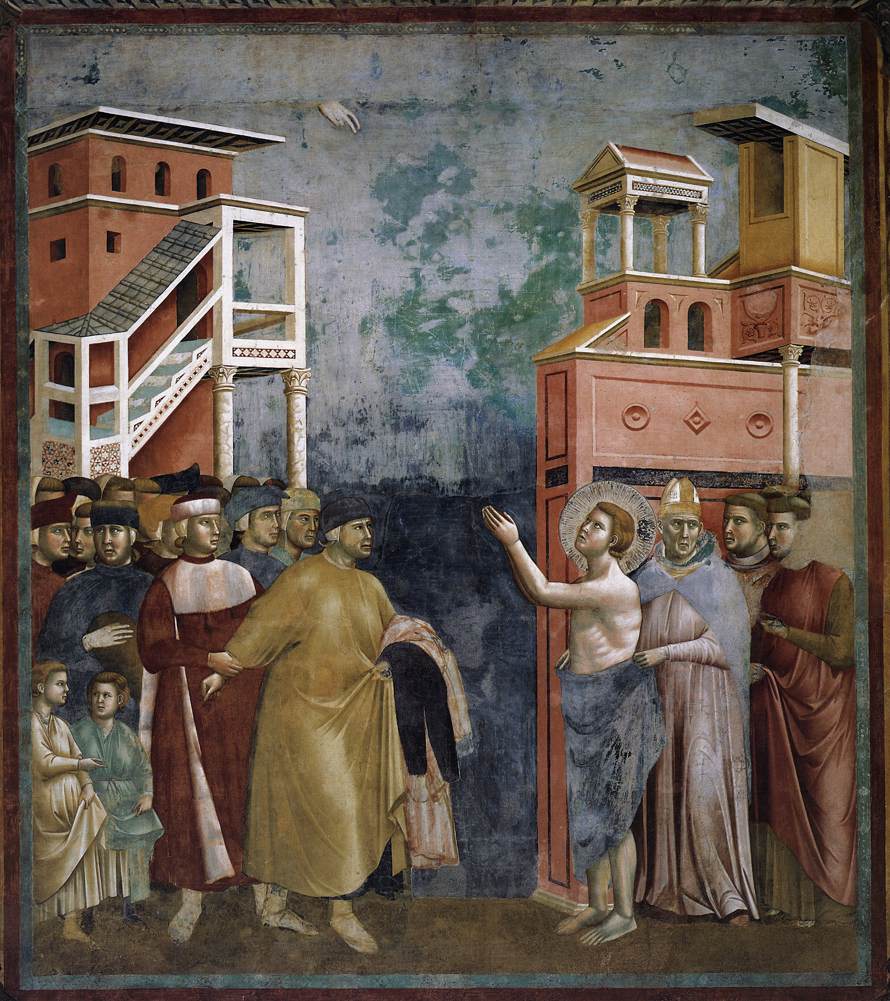
Legend of St Francis: Renunciation of Wordly Goods

Giotto di Bondone

1297-99
Fresco, 270 x 230 cm
Upper Church, San Francesco, Assisi

10 posted on 12/14/2022 6:14:34 AM PST by annalex (fear them not)
[ Post Reply | Private Reply | To 9 | View Replies]

To: annalex

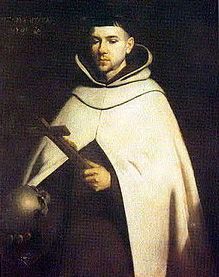
St. John of the Cross

Feast day: Dec 14

Dec. 14 is the liturgical memorial of Saint John of the Cross, a 16th century Carmelite priest best known for reforming his order together with Saint Teresa of Avila, and for writing the classic spiritual treatise “The Dark Night of the Soul.”

Honored as a Doctor of the Church since 1926, he is sometimes called the “Mystical Doctor,” as a tribute to the depth of his teaching on the soul's union with God.

The youngest child of parents in the silk-weaving trade, John de Yepes was born during 1542 in Fontiveros near the Spanish city of Avila. His father Gonzalo died at a relatively young age, and his mother Catalina struggled to provide for the family. John found academic success from his early years, but failed in his effort to learn a trade as an apprentice. Instead he spent several years working in a hospital for the poor, and continuing his studies at a Jesuit college in the town of Medina del Campo.

After discerning a calling to monastic life, John entered the Carmlite Order in 1563. He had been practicing severe physical asceticism even before joining the Carmelites, and got permission to live according to their original rule of life – which stressed solitude, silence, poverty, work, and contemplative prayer. John received ordination as a priest in 1567 after studying in Salamanca, but considered transferring to the more austere Carthusian order rather than remaining with the Carmelites.

Before he could take such a step, however, he met the Carmelite nun later canonized as Saint Teresa of Avila. Born in 1515, Teresa had joined the order in 1535, regarding consecrated religious life as the most secure road to salvation. Since that time she had made remarkable spiritual progress, and during the 1560s she began a movement to return the Carmelites to the strict observance of their original way of life. She convinced John not to leave the order, but to work for its reform.

Changing his religious name from “John of St. Matthias” to “John of the Cross,” the priest began this work in November of 1568, accompanied by two other men of the order with whom he shared a small and austere house. For a time, John was in charge of the new recruits to the “Discalced Carmelites” – the name adopted by the reformed group, since they wore sandals rather than ordinary shoes as sign of poverty. He also spent five years as the confessor at a monastery in Avila led by St. Teresa.

Their reforming movement grew quickly, but also met with severe opposition that jeopardized its future during the 1570s. Early in December of 1577, during a dispute over John's assignment within the order, opponents of the strict observance seized and imprisoned him in a tiny cell. His ordeal lasted nine months and included regular public floggings along with other harsh punishments. Yet it was during this very period that he composed the poetry that would serve as the basis for his spiritual writings.

John managed to escape from prison in August of 1578, after which he resumed the work of founding and directing Discalced Carmelite communities. Over the course of a decade he set out his spiritual teachings in works such as “The Ascent of Mount Carmel,” “The Spiritual Canticle” and “The Living Flame of Love” as well as “The Dark Night of the Soul.” But intrigue within the order eventually cost him his leadership position, and his last years were marked by illness along with further mistreatment.

St. John of the Cross died in the early hours of Dec. 14, 1591, nine years after St. Teresa of Avila's death in October 1582. Suspicion, mistreatment, and humiliation had characterized much of his time in religious life, but these trials are understood as having brought him closer to God by breaking his dependence on the things of this world. Accordingly, his writings stress the need to love God above all things – being held back by nothing, and likewise holding nothing back.

Only near the end of his life had St. John's monastic superior recognized his wisdom and holiness. Though his reputation had suffered unjustly for years, this situation reversed soon after his death. He was beatified in 1675, canonized in 1726, and named a Doctor of the Church in the 20th century by Pope Pius XI. In a letter marking the 400th anniversary of St. John's death, Pope John Paul II – who had written a doctoral thesis on the saint's writings – recommended the study of the Spanish mystic, whom he called a “master in the faith and witness to the living God.”


catholicnewsagency.com
11 posted on 12/14/2022 6:18:11 AM PST by annalex (fear them not)
[ Post Reply | Private Reply | To 10 | View Replies]

To: annalex

12 posted on 12/14/2022 6:19:43 AM PST by annalex (fear them not)
[ Post Reply | Private Reply | To 11 | View Replies]

Help Needed
13 posted on 12/14/2022 6:26:45 AM PST by deport
[ Post Reply | Private Reply | To 1 | View Replies]

To: annalex
NAVARRE BIBLE COMMENTARY (RSV)

Ad Majorem Dei Gloriam (To the Greater Glory of God)

From: Isaiah 45:6c-8, 18, 21c-25

Cyrus' Mission
-----------------
[6c] I am the Lord, and there is no other. [7] I form light and create darkness, I make weal and create woe, I am the Lord, who do all these things. [8] “Shower, O heavens, from above, and let the skies rain down righteousness; let the earth open, that salvation may sprout forth, and let it cause righteousness to spring up also; I the Lord have created it.

The Lord Rules Over All (Continuation)
-------------------------------------
[18] For thus says the Lord, who created the heavens (he is God!), who formed the earth and made it (he established it; he did not create it a chaos, he formed it to be inhabited!): “I am the LORD, and there is no other.

[21c] "Who told this long ago? Who declared it of old? Was it not I, the Lord? And there is no other god besides me, a righteous God and a Savior there is none besides me. [22] “Turn to me and be saved, all the ends of the earth! For I am God, and there is no other. [23] "By myself I have sworn, from my mouth has gone forth in righteousness a word that shall not return: ‘To me every knee shall bow, every tongue shall swear.’ [24] “Only in the Lord, it shall be said of me, are righteousness and strength; to him shall come and be ashamed, all who were incensed against him. [25] In the Lord all the offspring of Israel shall triumph and glory.”

***********************************************************************
Commentary:

45:1-13. This poetic statement is a message designed to raise the spirits of the exiles by announcing the sending of a liberator. Cyrus of Persia, whom God will use to implement his plans of salvation for Israel. The formal, very considered, mention of Cyrus, a foreign king, reveals the universal scope of God's salvific plans—which did not at all fit in with the people's own exclusive, nationalistic mentality. The prophecy can be read as an investiture oracle that maybe never reached the ears of Cyrus yet filled the exiles with hope. St Thomas comments: "Having raised the hope of the people in the divine promises (chaps. 40-44), he lists and details the promises in order to console them: first he promises freedom from all ills (chaps. 45-55), and then the restoration of all goods (chaps. 56-66)" (Expositio super Isaiam, 59).

Cyrus was a foreign king who did not know the God of the chosen people, and yet, surprisingly, has been given the title of "anointed", a title reserved to the kings of Israel. Moreover, the oracle says that the mission and conquest of this Persian king are attributable to special divine providence: God has chosen this man to deliver Israel from oppression by other nations (vv. 1-5). This message must have truly amazed those who heard the oracle. Even many centuries later it makes us realize that Gods plans can involve historical events that at first sight can seem disconcerting or at odds with those plans.

45:6-7. When these verses were written they may have been designed to counter dualism (very prevalent among the Persians and their neighbors), which held that two counterposed principles existed--good and evil; hence the emphasis on the fact that the Lord is the only God, the creator of all things of light and of darkness. That would explain why God is described as the maker of “weal” and “woe”, whereas because God is infinite goodness he cannot properly be called the author of evil. However, because Christian readers could find the statement (in v. 2) disconcerting, exegetes have commented on it. Origen, quite early on, gave this explanation: “Evil, in the absolute sense of the word, was not created by God [...]. If we speak of evil in a loose sense, meaning physical and natural evils, then we can say that God created it in order to convert men by their suffering. What is strange about this teaching? We refer to the punishments meted out by parents and teachers, and even the prescriptions and operations carried out by doctors and surgeons, as evils and sufferings, without blaming or condemning them. And that is how we should read the verse: 'I form light and create darkness, I make weal and woe' (Is 45:7)” ("Contra Celsum", 6, 55-56). And St Gregory the Great comments: “I make weal and woe: the peace of God is offered to us precisely in the moment when created things, which are good in themselves, though not always desired or sought with rectitude of heart, become the source of suffering and disgrace. Our union with God is broken by sin; it is fitting, therefore, that we return to him along the path of suffering. When any created thing, which is good in itself, causes us to suffer, it is an instrument for our conversion, so that we will return humbly to the source of peace” ("Moralia In Job", 3, 9, 15).

45:8. The terms translated as “righteousness” and “salvation” correspond to three Hebrew abstract nouns. The first and third (“righteousness”) mean the same thing. The New Vulgate translates them as “iustitia” and “salvatio”. But the Vulgate of St Jerome interpreted the first two as adjectives--”righteous” and “saving”, reading them as having more direct reference to the Messiah, the “Just (One)”, the “Savior” and giving rise to a text that is used in the Advent liturgy: “Rorate coeli desuper, et nubes pluant iustum; aperiatur terra et germinet Salvatorem, et iustitia oriantur simul” (“Let the clouds rain down the Just One, and the earth bring forth a Savior...“). A sermon attributed to St Augustine sees these words as finding fulfillment in the birth of Christ: “Today this prophecy is fulfilled: 'Shower, 0 heavens, from above, and let the skies rain down righteousness; let the earth open, that salvation may sprout forth.' The Creator became a creature, so that the one who was lost would be found. This is what we read in the psalms: 'Before I was brought low, I sinned. Man sinned and became a criminal; God was made man so that the criminal could be set free. Man fell, but God descended [from heaven]; man fell into misery, but God came down in his mercy; man fell through his pride, God came with his grace” ("Sermones", 128). And St Proclus of Constantinople, reading these words as a figure of the virginal birth of Jesus, says: “The skies rain down righteousness: the sin of Eve has been undone and destroyed by the purity of the Virgin and by the One who was born of her, God and man. On this day, man is set free from the prison of sin and the burden of darkness that weighed him down is lifted from him” ("De Navitate Domini", 1).

45:14-25. Repeatedly the point is made that the Lord is the only God, there is no other (cf. vv. 14-15, 18, 21, 22). Only God can save. And so, all the nations are invited to acknowledge his sovereignty and worship him on Zion (vv. 22-24). Although at the start of the passage the language has resonances of war (implications of plunder and taking strong men prisoner: vv. 14-17), this is only a graphic way of speaking, In fact, the passage has to do with liberation from idolatry and with allowing oneself be captivated by the truth of that God who is hidden but who is the only God and true Savior

The words “Truly, though art a God who hidest thyself’ (v. 15) is a prophetic reflection on the nature of God, a being who is unfathomable, a mystery to the mind of man, who ordinarily acts through persons and events in history, without letting himself be seen. This idea, which has profound and universal philosophical and theological implications, is very much in line with the historical circumstances--the election of Cyrus as the person God uses to advance his plans. This whole chapter is imbued with a universalist outlook, very different from the attitudes of the people before.

The Fathers saw in Cyrus a figure of Christ. God acted in a hidden way through Cyrus to bring about the the Godhead hidden in Jesus. The Septuagint translates “Truly, thou art a God who hidest thyself’ as “Thou art God and we did not know it” which some Fathers read as a reference to the divinity of Christ: “The Son of God has always been present, though he hid who he was. When he was revealed in his glory after the resurrection, the people confessed: 'You are God, and we did not know it'. And when the one who is seen according to the Law as a mere Angel and the captain of the Lord’s host is recognized finally as the Son of God, the people give thanks, saying: 'You are God, and we did not know it'. What is meant by this is that He is the one who appeared to the patriarchs, the one who was made man and was not recognized by men” (Ambrosiaster, "Ad Romanos", 2, 22).

Verse 23b is reminiscent of Philippians 2:10-11, which attributes to Jesus Christ qualities that the Old Testament applied only to God.

14 posted on 12/14/2022 8:14:31 AM PST by fidelis (👈 Under no obligation to respond to rude, ignorant, abusive, bellicose, and obnoxious posts.)
[ Post Reply | Private Reply | To 12 | View Replies]

To: fidelis
From: Luke 7:18b-23

The Mission of John the Baptist
-------------------------------
[18] The disciples of John (the Baptist) told him of all these things. [19] And John, calling to him two of his disciples, sent them to the Lord, saying, "Are You He who is to come, or shall we look for another?" [20] And when the men had come to Him, they said, "John the Baptist has sent us to You, saying, `Are You He who is to come, or shall we look for another?'" [21] In that hour He cured many of diseases and plagues and evil spirits, and on many that were blind He bestowed sight. [22] And He answered them, "Go and tell John what you have seen and heard: the blind receive their sight, the lame walk, lepers are cleansed, and the deaf hear, the dead are raised up, the poor have good news preached to them. [23] And blessed is he who takes no offense at Me."

***********************************************************************
Commentary:

18-23. "It was not out of ignorance that John enquired about Christ's coming in the flesh, for he had already clearly professed his belief, saying, `I have seen and have borne witness that this is the Son of God' (John 1:34). That is why he does not ask, `Are You He who has come?' but rather, `Are You He who is to come?' thus asking about the future, not about the past. Nor should we think that the Baptist did not know about Christ's future passion, for it was John who said, `Behold the Lamb of God, who takes away the sins of the world' (John 1:29), thus foretelling His future immolation, which other prophets had already foretold, particularly Isaiah (chapter 53) [...]. It can also be replied, with St. John Chrysostom, that John made this enquiry not from doubt or ignorance, but because he wished his disciples to be satisfied on this point by Christ. Therefore, Christ gave His reply to instruct these disciples, by pointing to the evidence of His miracles (verse 22)" (St. Thomas Aquinas, "Summa Theologiae", II-II, q. 2, a. 7 ad 2).

22. In His reply to these disciples of John the Baptist, Jesus points to the miracles He has worked, which show that he has investigated the Kingdom of God; He is, therefore, the promised Messiah. Along with miracles, one of the signs of the coming of the Kingdom is the preaching of salvation to the poor. On the meaning of "the poor", see the notes on Matthew 5:3; Luke 6:20 and 6:24.

Following the Lord's example, the Church has always taken special care of those in need. In our own time the Popes have stressed time and again the duties of Christians in regard to poverty caused by man's injustice to man: "Selfishness and domination are permanent temptations for men. Likewise an ever finer discernment is needed, in order to strike at the roots of newly arising situations of injustice and to establish progressively a justice which will be less and less imperfect [...]. The Church directs her attention to these new `poor'—the handicapped, the maladjusted, the old, various groups on the fringe of society--in order to recognize them, help them, defend their place and dignity in a society hardened by competition and the attraction of success" (Paul VI, "Octogesima Adveniens", 15).

23. These words refer to the same thing Simeon prophesied about when he referred to Christ as a sign that is spoken against, a sign of contradiction (cf. Luke 2:34). People who reject our Lord, who are scandalized by Him, will not reach Heaven.

Source: Daily Word for Reflection—Navarre Bible

15 posted on 12/14/2022 8:14:56 AM PST by fidelis (👈 Under no obligation to respond to rude, ignorant, abusive, bellicose, and obnoxious posts.)
[ Post Reply | Private Reply | To 14 | View Replies]

To: fidelis
Click here to go to the My Catholic Life! Devotional thread for today’s Gospel Reading
16 posted on 12/14/2022 8:17:48 AM PST by fidelis (👈 Under no obligation to respond to rude, ignorant, abusive, bellicose, and obnoxious posts.)
[ Post Reply | Private Reply | To 15 | View Replies]

Disclaimer: Opinions posted on Free Republic are those of the individual posters and do not necessarily represent the opinion of Free Republic or its management. All materials posted herein are protected by copyright law and the exemption for fair use of copyrighted works.

Free Republic
Browse · Search
Religion
Topics · Post Article

FreeRepublic, LLC, PO BOX 9771, FRESNO, CA 93794
FreeRepublic.com is powered by software copyright 2000-2008 John Robinson