Free Republic
Browse · Search
Religion
Topics · Post Article

Skip to comments.

Catholic Caucus: Daily Mass Readings 10-September-2022
Universalis/Jerusalem Bible ^

Posted on 09/10/2022 9:53:15 AM PDT by annalex

10 September 2022

Saturday of week 23 in Ordinary Time


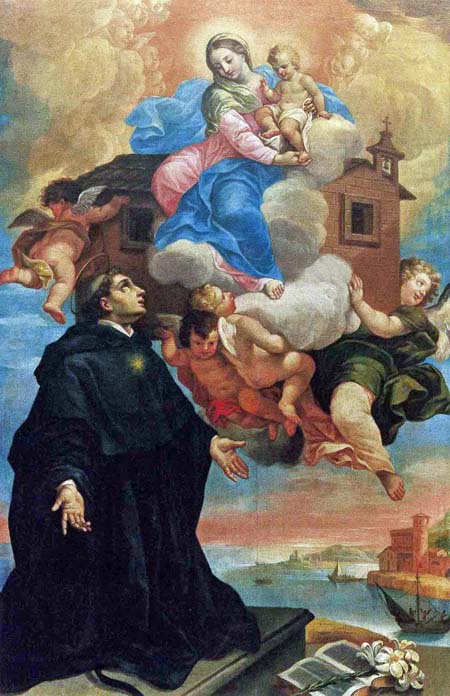
The altar of St Nicholas de Tolentino, Tolentino (?), Italy

Readings at Mass

Liturgical Colour: Green. Year: C(II).


First reading
1 Corinthians 10:14-22 ©

We are a single body because we all share the one bread

My dear brothers, you must keep clear of idolatry. I say to you as sensible people: judge for yourselves what I am saying. The blessing-cup that we bless is a communion with the blood of Christ, and the bread that we break is a communion with the body of Christ. The fact that there is only one loaf means that, though there are many of us, we form a single body because we all have a share in this one loaf. Look at the other Israel, the race, where those who eat the sacrifices are in communion with the altar.
  Does this mean that the food sacrificed to idols has a real value, or that the idol itself is real? Not at all. It simply means that the sacrifices that they offer they sacrifice to demons who are not God. I have no desire to see you in communion with demons. You cannot drink the cup of the Lord and the cup of demons. You cannot take your share at the table of the Lord and at the table of demons. Do we want to make the Lord angry; are we stronger than he is?

Responsorial Psalm
Psalm 115(116):12-13,17-18 ©
A thanksgiving sacrifice I make to you, O Lord.
How can I repay the Lord
  for his goodness to me?
The cup of salvation I will raise;
  I will call on the Lord’s name.
A thanksgiving sacrifice I make to you, O Lord.
A thanksgiving sacrifice I make;
  I will call on the Lord’s name.
My vows to the Lord I will fulfil
  before all his people.
A thanksgiving sacrifice I make to you, O Lord.

Gospel AcclamationJn14:6
Alleluia, alleluia!
I am the Way, the Truth and the Life, says the Lord;
No one can come to the Father except through me.
Alleluia!
Or:Jn14:23
Alleluia, alleluia!
If anyone loves me he will keep my word,
and my Father will love him,
and we shall come to him.
Alleluia!

GospelLuke 6:43-49 ©

Whoever hears me builds his house on a rock

Jesus said to his disciples:
  ‘There is no sound tree that produces rotten fruit, nor again a rotten tree that produces sound fruit. For every tree can be told by its own fruit: people do not pick figs from thorns, nor gather grapes from brambles. A good man draws what is good from the store of goodness in his heart; a bad man draws what is bad from the store of badness. For a man’s words flow out of what fills his heart.
  ‘Why do you call me, “Lord, Lord” and not do what I say?
  ‘Everyone who comes to me and listens to my words and acts on them – I will show you what he is like. He is like the man who when he built his house dug, and dug deep, and laid the foundations on rock; when the river was in flood it bore down on that house but could not shake it, it was so well built. But the one who listens and does nothing is like the man who built his house on soil, with no foundations: as soon as the river bore down on it, it collapsed; and what a ruin that house became!’

The readings on this page are from the Jerusalem Bible, which is used at Mass in most of the English-speaking world. The New American Bible readings, which are used at Mass in the United States, are available in the Universalis apps, programs and downloads.

You can also view this page with the Gospel in Greek and English.


TOPICS: Catholic; General Discusssion; Prayer; Worship
KEYWORDS: catholic; lk6; ordinarytime; prayer
For your reading, reflection, faith-sharing, comments, questions, discussion.

1 posted on 09/10/2022 9:53:15 AM PDT by annalex
[ Post Reply | Private Reply | View Replies]

To: All

KEYWORDS: catholic; lk6; ordinarytime; prayer


2 posted on 09/10/2022 9:53:46 AM PDT by annalex (fear them not)
[ Post Reply | Private Reply | To 1 | View Replies]

To: nickcarraway; NYer; ELS; Pyro7480; livius; ArrogantBustard; Catholicguy; RobbyS; marshmallow; ...
Alleluia Ping

Please FReepmail me to get on/off the Alleluia Ping List.


3 posted on 09/10/2022 9:54:30 AM PDT by annalex (fear them not)
[ Post Reply | Private Reply | To 2 | View Replies]

To: annalex
Jim still needs our prayers. Thread 2
Prayer thread for Salvation's recovery
Pray for Ukraine
4 posted on 09/10/2022 9:54:55 AM PDT by annalex (fear them not)
[ Post Reply | Private Reply | To 3 | View Replies]

To: annalex
Luke
 English: Douay-RheimsLatin: Vulgata ClementinaGreek NT: Byzantine/Majority Text (2000)
 Luke 6
43For there is no good tree that bringeth forth evil fruit; nor an evil tree that bringeth forth good fruit. Non est enim arbor bona, quæ facit fructus malos : neque arbor mala, faciens fructum bonum.ου γαρ εστιν δενδρον καλον ποιουν καρπον σαπρον ουδε δενδρον σαπρον ποιουν καρπον καλον
44For every tree is known by its fruit. For men do not gather figs from thorns; nor from a bramble bush do they gather the grape. Unaquæque enim arbor de fructu suo cognoscitur. Neque enim de spinis colligunt ficus : neque de rubo vindemiant uvam.εκαστον γαρ δενδρον εκ του ιδιου καρπου γινωσκεται ου γαρ εξ ακανθων συλλεγουσιν συκα ουδε εκ βατου τρυγωσιν σταφυλην
45A good man out of the good treasure of his heart bringeth forth that which is good: and an evil man out of the evil treasure bringeth forth that which is evil. For out of the abundance of the heart the mouth speaketh. Bonus homo de bono thesauro cordis sui profert bonum : et malus homo de malo thesauro profert malum. Ex abundantia enim cordis os loquitur.ο αγαθος ανθρωπος εκ του αγαθου θησαυρου της καρδιας αυτου προφερει το αγαθον και ο πονηρος ανθρωπος εκ του πονηρου θησαυρου της καρδιας αυτου προφερει το πονηρον εκ γαρ του περισσευματος της καρδιας λαλει το στομα αυτου
46And why call you me, Lord, Lord; and do not the things which I say? Quid autem vocatis me Domine, Domine : et non facitis quæ dico ?τι δε με καλειτε κυριε κυριε και ου ποιειτε α λεγω
47Every one that cometh to me, and heareth my words, and doth them, I will shew you to whom he is like. Omnis qui venit ad me, et audit sermones meos, et facit eos, ostendam vobis cui similis sit :πας ο ερχομενος προς με και ακουων μου των λογων και ποιων αυτους υποδειξω υμιν τινι εστιν ομοιος
48He is like to a man building a house, who digged deep, and laid the foundation upon a rock. And when a flood came, the stream beat vehemently upon that house, and it could not shake it; for it was founded on a rock. similis est homini ædificanti domum, qui fodit in altum, et posuit fundamentum super petram : inundatione autem facta, illisum est flumen domui illi, et non potuit eam movere : fundata enim erat super petram.ομοιος εστιν ανθρωπω οικοδομουντι οικιαν ος εσκαψεν και εβαθυνεν και εθηκεν θεμελιον επι την πετραν πλημμυρας δε γενομενης προσερρηξεν ο ποταμος τη οικια εκεινη και ουκ ισχυσεν σαλευσαι αυτην τεθεμελιωτο γαρ επι την πετραν
49But he that heareth, and doth not, is like to a man building his house upon the earth without a foundation: against which the stream beat vehemently, and immediately it fell, and the ruin of that house was great. Qui autem audit, et non facit, similis est homini ædificanti domum suam super terram sine fundamento : in quam illisus est fluvius, et continuo cecidit : et facta est ruina domus illius magna.ο δε ακουσας και μη ποιησας ομοιος εστιν ανθρωπω οικοδομησαντι οικιαν επι την γην χωρις θεμελιου η προσερρηξεν ο ποταμος και ευθεως επεσεν και εγενετο το ρηγμα της οικιας εκεινης μεγα

5 posted on 09/10/2022 9:57:28 AM PDT by annalex (fear them not)
[ Post Reply | Private Reply | To 4 | View Replies]

To: annalex

Catena Aurea by St. Thomas Aguinas

6:43–45

43. For a good tree bringeth not forth corrupt fruit; neither doth a corrupt tree bring forth good fruit.

44. For every tree is known by his own fruit. For of thorns men do not gather figs, nor of a bramble bush gather they grapes.

45. A good man out of the good treasure of his heart bringeth forth that which is good; and an evil man out of the evil treasure of his heart bringeth forth that which is evil: for of the abundance of the heart his mouth speaketh.

BEDE. Our Lord continues the words which He had begun against the hypocrites, saying, For a good tree bringeth not forth corrupt fruit; i. e. as if He says, If thou wouldest have a true and unfeigned righteousness, what thou settest forth in words make up also in works, for the hypocrite though he pretends to be good is not good, who doeth evil works; and the innocent though he be blamed, is not therefore evil, who doeth good works.

TITUS BOSTRENSIS. But take not these words to thyself as an encouragement to idleness, for the tree is moved conformably to its nature, but thou hast the exercise of free will; and every barren tree has been ordained for some good, but thou wert created unto the good work of virtue.

ISIDORE OF PELEUSIUM. (lib. iv. ep. 81.) He does not then exclude repentance, but a continuance in evil, which as long as it is evil cannot bring forth good fruit, but being converted to virtue, will yield abundance. But what nature is to the tree, our affections are to us. If then a corrupt tree cannot bring forth good fruit, how shall a corrupt heart?

CHRYSOSTOM. (Hom. 42. in Matt.) But although the fruit is caused by the tree, yet it brings to us the knowledge of the tree, because the distinctive nature of the tree is made evident by the fruit, as it follows, For every tree is known by its fruit.

CYRIL OF ALEXANDRIA. Each man’s life also will be a criterion of his character. For not by extrinsic ornaments and pretended humility is the beauty of true happiness discovered, but by those things which a man does; of which he gives an illustration, adding, For of thorns men do not gather figs.

AMBROSE. On the thorns of this world the fig cannot be found, which as being better in its second fruit, is well fitted to be a similitude of the resurrection. Either because, as you read, The fig trees have put forth their green figs, (Cant. 2:13.) that is, the unripe and worthless fruit came first in the Synagogue. Or because our life is imperfect in the flesh, perfect in the resurrection, and therefore we ought to cast far from us worldly cares, which eat into the mind and scorch up the soul, that by diligent culture we may obtain the perfect fruits. This therefore has reference to the world and the resurrection, the next to the soul and the body, as it follows, Nor of a bramble bush gather they grapes. Either because no one living in sin obtains fruit to his soul, which like the grape nearest the ground is rotten, on the higher branches becomes ripe. Or because no one can escape the condemnations of the flesh, but he whom Christ has redeemed, Who as a grape hung on the tree.

BEDE. Or, I think the thorns and bramble are the cares of the world and the prickings of sin, but the figs and the grapes are the sweetness of a new life and the warmth of love, but the fig is not gathered from the thorns nor the grape from the bramble, because the mind still debased by the habits of the old man may pretend to, but cannot bring forth the fruits of the new man. But we must know, that as the fruitful palm tree is inclosed and supported by a hedge, and the thorn bearing fruit not its own, preserves it for the use of man, so the words and acts of the wicked wherein they serve the good are not done by the wicked themselves, but by the wisdom of God working upon them.

CYRIL OF ALEXANDRIA. But having shewn that the good and the bad man may be discerned by their works as a tree by its fruits, he now sets forth the same thing by another figure, saying, A good man out of the good treasure of his heart bringeth forth that which is good, and the evil man out of the evil treasure bringeth forth that which is evil.

BEDE. The treasure of the heart is the same as the root of the tree. He therefore who has in his heart the treasure of patience and perfect love, brings forth the best fruits, loving his enemy, and doing the other things which have been taught above. But he who keeps a bad treasure in his heart does the contrary to this.

BASIL. The quality of the words shews the heart from which they proceed, plainly manifesting the inclination of our thoughts. Hence it follows, For out of the abundance of the heart the mouth speaketh.

CHRYSOSTOM. (Hom. 42. in Matt.) For it is a natural consequence when wickedness abounds within, that wicked words are breathed as far as the mouth; and therefore when you hear of a man uttering abominable things, do not suppose that there lies only so much wickedness in him as is expressed in his words, but believe the fountain to be more copious than the stream.

BEDE. By the speaking of the mouth the Lord signifies all things, which by word, or deed, or thought, we bring forth from the heart. For it is the manner of the Scripture to put words for deeds.

6:46–49

46. And why call ye me, Lord, Lord, and do not the things which I say?

47. Whosoever cometh to me, and heareth my sayings, and doeth them, I will shew you to whom he is like:

48. He is like a man which built an house, and digged deep, and laid the foundation on a rock: and when the flood arose, the stream beat vehemently upon that house, and could not shake it: for it was founded upon a rock.

49. But he that heareth, and doeth not, is like a man that without a foundation built an house upon the earth: against which the stream did beat vehemently, and immediately it fell; and the ruin of that house was great.

BEDE. Lest any one should vainly flatter himself with the words, Out of the abundance of the heart the mouth speaketh, as if words only and not rather works were required of a Christian, our Lord adds the following, But why call ye me Lord, Lord, and do not the things which I say? As if He said, Why do ye boast of sending forth the leaves of a right confession, and shew forth no fruit of good works.

CYRIL OF ALEXANDRIA. But Lordship both in name and reality belongs only to the Highest Nature.

ATHANASIUS. (in Orat. cont. Sabell.) This is not then the word of man, but the Word of God, manifesting His own birth from the Father, for He is the Lord Who is born of the Lord alone. But fear not the duality of Persons, for they are not separate in nature.

CYRIL OF ALEXANDRIA. But the advantage which arises from the keeping of the commandments, or the loss from disobedience, he shews as follows; Whosoever cometh to me, and heareth my sayings, he is like to a man who built his house upon a rock, &c.

BEDE. The rock is Christ. He digs deep; by the precepts of humility He plucks out all earthly things from the hearts of the faithful, lest they should serve God from regard to their temporal good.

BASIL. (in Princ. Prov.) But lay your foundations upon a rock, that is, lean upon the faith of Christ, so as to persevere immoveable in adversity, whether it come from man or God.

BEDE. Or the foundation of the house is the resolution to live a good life, which the perfect hearer firmly lays in fulfilling the commandments of God.

AMBROSE. Or, He teaches that the obedience to heavenly precepts is the foundation of all virtue, by means of which this our house can be moved neither by the torrent of pleasures, nor by the violence of spiritual wickedness, neither by the storms of this world, nor by the cloudy disputations of heretics; hence it follows, But the flood came, &c.

BEDE. A flood comes in three ways, either by unclean spirits, or wicked men, or the very restlessness of mind or body; and as far as men trust in their own strength they fall away, but as long as they cling to the immoveable rock they cannot even be shaken.

CHRYSOSTOM. (Hom. 24. in Matt.) The Lord also shews us that faith profiteth a man nothing, if his manner of life be corrupt. Hence it follows, But he that heareth and doeth not, is like a man, that without a foundation, built an house upon the earth, &c.

BEDE. The house of the devil is the world which lieth in wickedness, (1 John 5:19.) which he builds upon the earth, because those who obey him he drags down from heaven to earth; he builds without foundation, for sin has no foundation, standing not by its own nature, for evil is without substance, which yet whatever it is, grows up in the nature of good. But because the foundation is called so from fundus, we may not unfitly understand that fundamentum is placed here for fundus. As then he who is fallen into a well is kept at the bottom of the well, so the soul falling away remains stationary, as it were, at the very bottom, as long as it continues in any measure of sin. But not content with the sin into which it is fallen, while daily sinking into worse, it can find no bottom, as it were, in the well to which it may fix itself. But every kind of temptation increasing, both the really bad and the feignedly good become worse, until at last they come to everlasting punishment. Hence it follows, Against which the stream did beat vehemently. By the force of the stream may be understood the trial of the last judgment, when both houses being finished, the wicked shall go into everlasting punishment, but the righteous into life eternal. (Mat. 25:46.)

CYRIL OF ALEXANDRIA. Or they build upon the earth without foundation, who upon the quicksand of doubt, which relates to opinion, lay the foundation of their spiritual building, which a few drops of temptation wash away.

AUGUSTINE. (de Con. Ev. ii. 19.) Now this long discourse of our Lord, Luke begins in the same way as Matthew; for each says, Blessed are the poor. Then many things which follow in the narration of each are like, and finally the conclusion of the discourse is found to be altogether the same, I mean with respect to the men who build upon the rock and the sand. It might then easily be supposed that Luke has inserted the same discourse of our Lord, and yet has left out some sentences which Matthew has kept, and likewise put in others which Matthew has not; were it not that Matthew says the discourse was spoken by our Lord on the mountain, but Luke on the plain by our Lord standing. It is not however thought likely from this that these two discourses are separated by a long course of time, because both before and after both have related some things like, or the same. It may however have happened that our Lord was at first on a higher part of the mountain with His disciples alone, and that then he descended with them from the mount, that is, from the summit of the mountain to the flat place, that is, to some level ground, which was on the side of the mountain, and was able to hold large multitudes, and that there He stood until the crowds were gathered together to Him, and afterwards when He sat down His disciples came nearer, and to them, and the rest of the multitude who were present, He held the same discourse.



Catena Aurea Luke 6
6 posted on 09/10/2022 9:58:17 AM PDT by annalex (fear them not)
[ Post Reply | Private Reply | To 5 | View Replies]

To: annalex


San Antimo
Cistercian Abbey Church

Tuscany, Italy

7 posted on 09/10/2022 9:58:56 AM PDT by annalex (fear them not)
[ Post Reply | Private Reply | To 6 | View Replies]

To: annalex
NAVARRE BIBLE COMMENTARY (RSV)

Ad Majorem Dei Gloriam (To the Greater Glory of God)

From: 1 Corinthians 10:14-22

Idolatry and the Eucharist, Incompatible
----------------------------------------
[14] Therefore, my beloved, shun the worship of idols. [15] I speak as to sensible men; judge for yourselves what I say. [16] The cup of blessing which we bless, is it not a participation in the blood of Christ? The bread which we break, is it not a participation in the body of Christ? [17] Because there is one bread, we who are many are one body, for we all partake of the one bread. [18] Consider the practice of Israel; are not those who eat the sacrifices partners in the altar? [19] What do I imply then? That food offered to idols is anything, or that an idol is anything? [20] No, I imply that what pagans sacrifice they offer to demons and not to God. I do not want you to be partners with demons. [21] You cannot drink the cup of the Lord and the cup of demons. You cannot partake of the table of the Lord and the table of demons. [22] Shall we provoke the Lord to jealousy? Are we stronger than he?

***********************************************************************
Commentary:

14-22. After illustrating the general principles by reference to what himself does and the lessons of the history of Israel (cf. note on chaps. 8-10), St Paul returns to the subject of food sacrificed to idols. Christians may not attend the banquets which take place at pagan shrines, for that would amount to idolatry. By eating the meat of animals offered to Yahweh, Jews participated in the sacrifice and worship in his honor; and, by receiving the body and blood of the Lord, Christians unite themselves to Christ; similarly, those who take part in idolatrous banquets are associating themselves not with false gods--which have no existence--but with demons. In the Old Testament it is pointed out that things sacrificed to idols are in fact being offered to demons, who enemies of the worship of God (cf. Deut 32:17; Ps 106:36-38; Bar 4:7).

St Paul's words confirm basic truths of faith connected with the sublime mystery of the Eucharist--its sacrificial character, adverted to here by drawing a parallel between it and pagan sacrifices (cf. v. 21; Council of Trent, "De SS. Missae Sacrificio", chap. 1), and the real presence of Christ, as can be seen by the reference to the body and blood of Christ (v. 16). The Church's faith has always maintained that the holy sacrifice of the Mass is the renewal of the divine sacrifice of Calvary; in every Mass Christ once again offers God the Father His body and blood, as a sacrifice for all men, with the difference that what was offered on the cross in a bloody manner is offered on the altar in an unbloody manner. "In the divine sacrifice that is offered in the Mass, the same Christ who offered himself once in a bloody manner on the altar of the cross is present and is offered in an unbloody manner (cf. Heb 9:27). [...] For it is one and the same victim--He who now makes the offering through the ministry of priests and He who then offered Himself on the cross; the only difference is in the manner of the offering" ("De SS. Missae Sacrificio", chap. 2). "The Eucharist is above all a sacrifice--the sacrifice of Redemption and at the same time the sacrifice of the New Covenant" (John Paul II, "Letter To All Bishops", 24 February 1980). See also the notes on Mt 26:26-29 and par.

On the real presence of Jesus in the Eucharist, see the note on 1 Cor 11:27-32.

16-17. The principal effect of the Blessed Eucharist is intimate union with Jesus. The very name "communion"--taken from this passage of St Paul (cf. "St Pius V Catechism", II, 4, 4)--points to becoming one with our Lord by receiving his body and blood. "What in fact is the bread? The body of Christ. What do they become who receive Communion? The body of Christ" (Chrysostom, "Hom. on 1 Cor, 24, ad loc.").

St Augustine places these words on Jesus' lips to describe what happens at Holy Communion: "You will not change me into you as happens with bodily food; rather, you will be changed into me" ("Confessions", VII, 10, 16).

Due to this intimate union with Christ, the Eucharist is at one and the same time the sacrament where the entire Church demonstrates and achieves its unity, and where a very special kind of solidarity is developed among Christians. That is why it is called a "symbol of unity" and a "bond of love;" (Council of Trent, "De SS. Eucharistia", chap . 8; cf. "Lumen Gentium", 7; "Unitatis Redintegratio", 2). The Fathers of the Church have seen a symbol of this union in the very materials--bread and wine--used to make the Eucharist. The "St Pius V Catechism" sums up this as follows: "the body of Christ, which is one, consists of many members (cf. Rom 12:4-5; 1 Cor 10:17; 12:12), and of this union nothing is more strikingly illustrative than the elements of bread and wine; for bread is made from many grains and wine is pressed from many clusters of grapes. Thus they signify that we, though many, are most closely bound together by the bond of the divine mystery and made, as it were, one body" (II, 4,18).

"We who are many ...": the literal translation would be "We the many ...". The text derives from a Hebrew expression indicating plurality or even totality as distinct from a single entity or a minority; the RSV catches this idea. The same turn of phrase is foun d, for example, in Mt 20:28; Mk 10:45; Is 53:11.

8 posted on 09/10/2022 10:01:51 AM PDT by fidelis (👈 Under no obligation to respond to rude, ignorant, abusive, bellicose, and obnoxious posts.)
[ Post Reply | Private Reply | To 7 | View Replies]

To: fidelis
From: Luke 6:43-49

Integrity (Continuation)
-----------------------------
(Jesus said to his disciples,) [43] "For no good tree bears bad fruit, nor again does a bad tree bear good fruit; [44] for each tree is known by its own fruit. For figs are not gathered from thorns, nor are grapes picked from a bramble bush. [45] The good man out of the good treasure of his heart produces good, and the evil man out of his evil treasure produces evil; for out of the abundance of the heart his mouth speaks.

[46] "Why do you call me 'Lord, Lord,' and not do what I tell you? [47] Every one who comes to me and hears my words and does them, I will show you what he is like: [48] he is like a man building a house, who dug deep, and laid the foundation upon rock; and when a flood arose, the stream broke against that house, and could not shake it, because it had been well built. [49] But he who hears and does not do them is like a man who built a house on the ground without a foundation; against which the stream broke, and immediately it fell, and the ruin of that house was great."

***********************************************************************
Commentary:

43-44. To distinguish the good tree from the bad tree we need to look at the fruit the tree produces (deeds) and not at its foliage (words). "For there is no lack of people here on earth who, on being approached, turn out to be nothing but large, shiny, glossy leaves. Foliage, just foliage and nothing more. Meanwhile, many souls are looking at us hoping to satisfy their hunger, which is a hunger for God. We must not forget that we have all the resources we need. We have sufficient doctrine and the grace of God, in spite of our wretchedness" (St J. Escriva, "Friends of God", 51).

45. Jesus is giving us two similes--that of the tree which, if it is not good, produces good fruit, and that of the man, who speaks of those things he has in his heart. "The treasure of the heart is the same as the root of the tree," St Bede explains. "A person who has a treasure of patience and of perfect charity in his heart yields excellent fruit; he loves his neighbor and has all the other qualities Jesus teaches; he loves his enemies, does good to him who hates him, blesses him who curses him, prays for him who calumniates him, does not react against him who attacks him or robs him; he gives to those who ask, does not claim what they have stolen from him, wishes not to judge and does not condemn, corrects patiently and affectionately those who err. But the person who has in his heart the treasure of evil does exactly the opposite: he hates his friends, speaks evil of him who loves him and does all the other things condemned by the Lord" ("In Lucae Evangelium Expositio", II, 6).

46. Jesus asks us to act in a way consistent with being Christians and not to make any separation between the faith we profess and the way we live: "What matters is not whether or not we wear a religious habit; it is whether we try to practice the virtues and surrender our will to God and order our lives as His Majesty ordains, and not want to do our will but his" (St Teresa of Avila, "Interior Castle", II, 6).

Source: Daily Word for Reflection—Navarre Bible Commentary

9 posted on 09/10/2022 10:02:06 AM PDT by fidelis (👈 Under no obligation to respond to rude, ignorant, abusive, bellicose, and obnoxious posts.)
[ Post Reply | Private Reply | To 8 | View Replies]

To: annalex

Saint Nicholas of Tolentine

September 10

Nicholas of Tolentine (1245-1305) was a simple priest and Augustinian friar who touched the lives of many.

His sprit of prayer, penance, austerity of life and devotion to the Holy Souls were notable. His preaching brought many to Christ.

Nicholas Gurutti was born in 1245 in Sant'Angelo, Pontano, Macerata, Italy. His family was rather poor.

He joined the Augustinian Order while a young man, after hearing the inspired preaching of Reginaldo da Monterubbiano, Prior (local superior) of the Augustinian monastery in Sant'Angelo.

As a priest and religious, he was full of charity towards his brother Augustinians as well as towards the people to whom he ministered. He visited the sick and cared for the needy. He was a noted preacher of the Gospel. He gave special attention to those who had fallen away from the Church. People considered him a miracle worker.

He often fasted and performed other works of penance. He spent long hours in prayer.

The story is told that, one day, having fasted for a long time, Nicholas was physically weak. While at prayer, Jesus told him to eat some bread marked with a cross and soaked in water in order to regain his strength. Thus arose the Augustinian custom of blessing and distributing Saint Nicholas Bread in his memory.

Another story relates that Nicholas, while asleep in bed, heard the voice of a deceased friar he had known. This friar told Nicholas that he was in Purgatory, and urged him to celebrate the Eucharist for him and other souls there, so that they would be set free by the power of Christ. Nicholas did so for seven days. The friar again spoke to Nicholas, thanking him and assuring him that a large number of souls were now with God. Because of this Nicholas was proclaimed patron of the souls in Purgatory.

He is also considered the patron saint against epidemic disease and against fires.

During most of his adult life, Nicholas lived in Tolentine, Italy. There he died September 10, 1305. Canonized in 1446 by Pope Eugene IV, Nicholas is the first Augustinian friar to be canonized after the Grand Union of the Order of St. Augustine in 1256.

The remains of St. Nicholas are preserved at the Shrine of Saint Nicholas in the city of Tolentine.


midwestaugustinians.org
10 posted on 09/10/2022 10:03:58 AM PDT by annalex (fear them not)
[ Post Reply | Private Reply | To 7 | View Replies]

To: fidelis

The St. Paul Center's daily audio scripture reflections from the Mass for Saturday of the Twenty-Third Week of Ordinary Time by Mr. Clement Harrold.

The Centrality of the Eucharist - Saturday of the Twenty-Third Week of Ordinary Time

11 posted on 09/10/2022 10:04:11 AM PDT by fidelis (👈 Under no obligation to respond to rude, ignorant, abusive, bellicose, and obnoxious posts.)
[ Post Reply | Private Reply | To 9 | View Replies]

To: annalex

12 posted on 09/10/2022 10:06:28 AM PDT by annalex (fear them not)
[ Post Reply | Private Reply | To 10 | View Replies]

A buck or two along the way would help the freepathon.

https://freerepublic.com/focus/f-news/4092307/posts


13 posted on 09/10/2022 10:54:16 AM PDT by deport
[ Post Reply | Private Reply | To 1 | View Replies]

Disclaimer: Opinions posted on Free Republic are those of the individual posters and do not necessarily represent the opinion of Free Republic or its management. All materials posted herein are protected by copyright law and the exemption for fair use of copyrighted works.

Free Republic
Browse · Search
Religion
Topics · Post Article

FreeRepublic, LLC, PO BOX 9771, FRESNO, CA 93794
FreeRepublic.com is powered by software copyright 2000-2008 John Robinson