Free Republic
Browse · Search
Religion
Topics · Post Article

Skip to comments.

Catholic Caucus: Daily Mass Readings 3-June-2022
Universalis/Jerusalem Bible ^

Posted on 06/03/2022 5:35:55 AM PDT by annalex

3 June 2022

Saints Charles Lwanga and his Companions, Martyrs
on Friday of the 7th week of Eastertide


St . Charles Lwanga Ntinda Parish
Catholic church in Kampala, Uganda

Readings at Mass

Liturgical Colour: Red.

Readings for the feria

Readings for the memorial

These are the readings for the feria


First readingActs 25:13-21 ©

'I ordered Paul to be remanded until I could send him to Caesar'

King Agrippa and Bernice arrived in Caesarea and paid their respects to Festus. Their visit lasted several days, and Festus put Paul’s case before the king. ‘There is a man here’ he said ‘whom Felix left behind in custody, and while I was in Jerusalem the chief priests and elders of the Jews laid information against him, demanding his condemnation. But I told them that Romans are not in the habit of surrendering any man, until the accused confronts his accusers and is given an opportunity to defend himself against the charge. So they came here with me, and I wasted no time but took my seat on the tribunal the very next day and had the man brought in. When confronted with him, his accusers did not charge him with any of the crimes I had expected; but they had some argument or other with him about their own religion and about a dead man called Jesus whom Paul alleged to be alive. Not feeling qualified to deal with questions of this sort, I asked him if he would be willing to go to Jerusalem to be tried there on this issue. But Paul put in an appeal for his case to be reserved for the judgement of the august emperor, so I ordered him to be remanded until I could send him to Caesar.’

Responsorial Psalm
Psalm 102(103):1-2,11-12,19-20 ©
The Lord has set his sway in heaven.
or
Alleluia!
My soul, give thanks to the Lord
  all my being, bless his holy name.
My soul, give thanks to the Lord
  and never forget all his blessings.
The Lord has set his sway in heaven.
or
Alleluia!
For as the heavens are high above the earth
  so strong is his love for those who fear him.
As far as the east is from the west
  so far does he remove our sins.
The Lord has set his sway in heaven.
or
Alleluia!
The Lord has set his sway in heaven
  and his kingdom is ruling over all.
Give thanks to the Lord, all his angels,
  mighty in power, fulfilling his word.
The Lord has set his sway in heaven.
or
Alleluia!

Gospel AcclamationJn14:26
Alleluia, alleluia!
The Holy Spirit will teach you everything
and remind you of all I have said to you.
Alleluia!

GospelJohn 21:15-19 ©

Feed my lambs, feed my sheep

Jesus showed himself to his disciples, and after they had eaten he said to Simon Peter, ‘Simon son of John, do you love me more than these others do?’ He answered, ‘Yes Lord, you know I love you.’ Jesus said to him, ‘Feed my lambs.’ A second time he said to him, ‘Simon son of John, do you love me?’ He replied, ‘Yes, Lord, you know I love you.’ Jesus said to him, ‘Look after my sheep.’ Then he said to him a third time, ‘Simon son of John, do you love me?’ Peter was upset that he asked him the third time, ‘Do you love me?’ and said, ‘Lord, you know everything; you know I love you.’ Jesus said to him, ‘Feed my sheep.
‘I tell you most solemnly,
when you were young
you put on your own belt
and walked where you liked;
but when you grow old
you will stretch out your hands,
and somebody else will put a belt round you
and take you where you would rather not go.’
In these words he indicated the kind of death by which Peter would give glory to God. After this he said, ‘Follow me.’

Continue

These are the readings for the memorial


First reading
2 Maccabees 7:1-2,9-14 ©

'The King of the world will raise us up to live for ever'

There were seven brothers who were arrested with their mother. The king tried to force them to taste pig’s flesh, which the Law forbids, by torturing them with whips and scourges. One of them, acting as spokesman for the others, said, ‘What are you trying to find out from us? We are prepared to die rather than break the laws of our ancestors.’
  With his last breath the second brother exclaimed, ‘Inhuman fiend, you may discharge us from this present life, but the King of the world will raise us up, since it is for his laws that we die, to live again for ever.’
  After him, they amused themselves with the third, who on being asked for his tongue promptly thrust it out and boldly held out his hands, with these honourable words, ‘It was heaven that gave me these limbs; for the sake of his laws I disdain them; from him I hope to receive them again.’ The king and his attendants were astounded at the young man’s courage and his utter indifference to suffering.
  When this one was dead they subjected the fourth to the same savage torture. When he neared his end he cried, ‘Ours is the better choice, to meet death at men’s hands, yet relying on God’s promise that we shall be raised up by him; whereas for you there can be no resurrection, no new life.’

Responsorial Psalm
Psalm 123(124):2-5,7-8 ©
Our life, like a bird, has escaped from the snare of the fowler.
If the Lord had not been on our side
  when men rose up against us,
then would they have swallowed us alive
  when their anger was kindled.
Our life, like a bird, has escaped from the snare of the fowler.
Then would the waters have engulfed us,
  the torrent gone over us;
over our head would have swept
  the raging waters.
Our life, like a bird, has escaped from the snare of the fowler.
Indeed the snare has been broken
  and we have escaped.
Our help is in the name of the Lord,
  who made heaven and earth.
Our life, like a bird, has escaped from the snare of the fowler.

Gospel AcclamationMt5:3
Alleluia, alleluia!
How happy are the poor in spirit:
theirs is the kingdom of heaven.
Alleluia!

GospelMatthew 5:1-12 ©

How happy are the poor in spirit

Seeing the crowds, Jesus went up the hill. There he sat down and was joined by his disciples. Then he began to speak. This is what he taught them:
‘How happy are the poor in spirit;
  theirs is the kingdom of heaven.
Happy the gentle:
  they shall have the earth for their heritage.
Happy those who mourn:
  they shall be comforted.
Happy those who hunger and thirst for what is right:
  they shall be satisfied.
Happy the merciful:
  they shall have mercy shown them.
Happy the pure in heart:
  they shall see God.
Happy the peacemakers:
  they shall be called sons of God.
Happy those who are persecuted in the cause of right:
  theirs is the kingdom of heaven.
‘Happy are you when people abuse you and persecute you and speak all kinds of calumny against you on my account. Rejoice and be glad, for your reward will be great in heaven: this is how they persecuted the prophets before you.’

The readings on this page are from the Jerusalem Bible, which is used at Mass in most of the English-speaking world. The New American Bible readings, which are used at Mass in the United States, are available in the Universalis apps, programs and downloads.

You can also view this page with the Gospel in Greek and English.


TOPICS: Catholic; General Discusssion; Prayer; Worship
KEYWORDS: catholic; easter; jn21; mt5; prayer
For your reading, reflection, faith-sharing, comments, questions, discussion.

1 posted on 06/03/2022 5:35:55 AM PDT by annalex
[ Post Reply | Private Reply | View Replies]

To: All

KEYWORDS: catholic; easter; jn21; mt5; prayer;


2 posted on 06/03/2022 5:39:00 AM PDT by annalex (fear them not)
[ Post Reply | Private Reply | To 1 | View Replies]

To: nickcarraway; NYer; ELS; Pyro7480; livius; ArrogantBustard; Catholicguy; RobbyS; marshmallow; ...
Alleluia Ping

Please FReepmail me to get on/off the Alleluia Ping List.


3 posted on 06/03/2022 5:39:39 AM PDT by annalex (fear them not)
[ Post Reply | Private Reply | To 2 | View Replies]

To: annalex
Prayer thread for Salvation's recovery
Pray for Ukraine
4 posted on 06/03/2022 5:40:07 AM PDT by annalex (fear them not)
[ Post Reply | Private Reply | To 3 | View Replies]

To: annalex
John
 English: Douay-RheimsLatin: Vulgata ClementinaGreek NT: Byzantine/Majority Text (2000)
 John 21
15When therefore they had dined, Jesus saith to Simon Peter: Simon son of John, lovest thou me more than these? He saith to him: Yea, Lord, thou knowest that I love thee. He saith to him: Feed my lambs. Cum ergo prandissent, dicit Simoni Petro Jesus : Simon Joannis, diligis me plus his ? Dicit ei : Etiam Domine, tu scis quia amo te. Dicit ei : Pasce agnos meos.οτε ουν ηριστησαν λεγει τω σιμωνι πετρω ο ιησους σιμων ιωνα αγαπας με πλειον τουτων λεγει αυτω ναι κυριε συ οιδας οτι φιλω σε λεγει αυτω βοσκε τα αρνια μου
16He saith to him again: Simon, son of John, lovest thou me? He saith to him: Yea, Lord, thou knowest that I love thee. He saith to him: Feed my lambs. Dicit ei iterum : Simon Joannis, diligis me ? Ait illi : Etiam Domine, tu scis quia amo te. Dicit ei : Pasce agnos meos.λεγει αυτω παλιν δευτερον σιμων ιωνα αγαπας με λεγει αυτω ναι κυριε συ οιδας οτι φιλω σε λεγει αυτω ποιμαινε τα προβατα μου
17He said to him the third time: Simon, son of John, lovest thou me? Peter was grieved, because he had said to him the third time: Lovest thou me? And he said to him: Lord, thou knowest all things: thou knowest that I love thee. He said to him: Feed my sheep. Dicit ei tertio : Simon Joannis, amas me ? Contristatus est Petrus, quia dixit ei tertio : Amas me ? et dixit ei : Domine, tu omnia nosti, tu scis quia amo te. Dixit ei : Pasce oves meas.λεγει αυτω το τριτον σιμων ιωνα φιλεις με ελυπηθη ο πετρος οτι ειπεν αυτω το τριτον φιλεις με και ειπεν αυτω κυριε συ παντα οιδας συ γινωσκεις οτι φιλω σε λεγει αυτω ο ιησους βοσκε τα προβατα μου
18Amen, amen I say to thee, when thou wast younger, thou didst gird thyself, and didst walk where thou wouldst. But when thou shalt be old, thou shalt stretch forth thy hands, and another shall gird thee, and lead thee whither thou wouldst not. Amen, amen dico tibi : cum esses junior, cingebas te, et ambulabas ubi volebas : cum autem senueris, extendes manus tuas, et alius te cinget, et ducet quo tu non vis.αμην αμην λεγω σοι οτε ης νεωτερος εζωννυες σεαυτον και περιεπατεις οπου ηθελες οταν δε γηρασης εκτενεις τας χειρας σου και αλλος σε ζωσει και οισει οπου ου θελεις
19And this he said, signifying by what death he should glorify God. And when he had said this, he saith to him: Follow me. Hoc autem dixit significans qua morte clarificaturus esset Deum. Et cum hoc dixisset, dicit ei : Sequere me.τουτο δε ειπεν σημαινων ποιω θανατω δοξασει τον θεον και τουτο ειπων λεγει αυτω ακολουθει μοι

Two aspects of this passage do not translate well.

The first two times Christ asks "lovest thou me" using the verb "agapo", "αγαπας με", yet St. Peter responds using a different verb, "φιλω σε". The third time both Jesus and St. Peter use the second verb, "φιλεις με" -- "φιλω σε". The former verb indicates a spiritual love, and the second, friendship.

The three charges are all worded differently (the English translation only picks up two variations). "βοσκε τα αρνια μου" is "feed my lambs", "ποιμαινε τα προβατα μου" is "shepherd (guide) my sheep", and finally "βοσκε τα προβατα μου" -- "feed my sheep"

5 posted on 06/03/2022 5:41:55 AM PDT by annalex (fear them not)
[ Post Reply | Private Reply | To 4 | View Replies]

To: annalex

Catena Aurea by St. Thomas Aguinas

21:15–17

15. So when they had dined, Jesus saith to Simon Peter, Simon, son of Jonas, lovest thou me more than these? He saith unto him, Yea, Lord; thou knowest that I love thee. He saith unto him, Feed my lambs.

16. He saith to him again the second time, Simon, son of Jonas, lovest thou me? He saith unto him, Yea, Lord; thou knowest that I love thee. He saith unto him, Feed my sheep.

17. He saith unto him the third time, Simon, son of Jonas, lovest thou me? Peter was grieved because he said unto him the third time, Lovest thou me? And he said unto him, Lord, thou knowest all things; thou knowest that I love thee. Jesus saith unto him, Feed my sheep.

THEOPHYLACT. The dinner being ended, He commits to Peter the superintendence over the sheep of the world, not to the others: So when they had dined, Jesus saith to Simon Peter, Simon, son of Jonas, lovest thou Me more than these?

AUGUSTINE. Our Lord asked this, knowing it: He knew that Peter not only loved Him, but loved Him more than all the rest.

ALCUIN. He is called Simon, son of John, John being his natural father. But mystically, Simon is obedience, John grace, a name well befitting him who was so obedient to God’s grace, that he loved our Lord more ardently than any of the others. Such virtue arising from divine gift, not mere human will.

AUGUSTINE. While our Lord was being condemned to death, he feared, and denied Him. But by His resurrection Christ implanted love in his heart, and drove away fear. Peter denied, because he feared to die: but when our Lord was risen from the dead, and by His death destroyed death, what should he fear? He saith unto Him, Yea, Lord; Thou knowest that I love Thee. On this confession of his love, our Lord commends His sheep to him: He saith unto him, Feed My lambs: as if there were no way of Peter’s shewing his love for Him, but by being a faithful shepherd, under the chief Shepherd.

CHRYSOSTOM. (Hom. lxxxviii. 1) That which most of all attracts the Divine love is care and love for our neighbour. Our Lord passing by the rest, addresses this command to Peter: he being the chief of the Apostles, the mouth of the disciples, and head of the college. Our Lord remembers no more his sin in denying Him, or brings that as a charge against him, but commits to him at once the superintendence over his brethren. If thou lovest Me, have rule over thy brethren, shew forth that love which thou hast evidenced throughout, and that life which thou saidst thou wouldest lay down for Me, lay down for the sheep.

He saith to him again the second time, Simon, son of Jonas, lovest thou Me? He saith unto Him, Yea, Lord; Thou knowest that I love Thee.

AUGUSTINE. (Tract. cxxii) Well doth He say to Peter, Lovest thou Me (ἀγαπᾶς diligis), and Peter answer, Amo Te (φελῶ amo), and our Lord replies again, Feed My lambs. Whereby, it appears that amor and dilectio are the same thing: especially as our Lord the third time He speaks does not say, Diligis Me, but Amas Me. He saith unto him the third time, Simon, son of Jonas, lovest thou Me? A third time our Lord asks Peter whether he loves Him. Three confessions are made to answer to the three denials; that the tongue might shew as much love as it had fear, and life gained draw out the voice as much as death threatened.

CHRYSOSTOM. (Hom. lxxxviii) A third time He asks the same question, and gives the same command; to shew of what importance He esteems the superintendence of His own sheep, and how He regards it as the greatest proof of love to Him.

THEOPHYLACT. Thence is taken the custom of threefold confession in baptism.

CHRYSOSTOM. (Hom. lxxxviii) The question asked for the third time disturbed him: Peter was grieved because He said unto him the third time, Lovest thou Me? He was afraid perhaps of receiving a reproof again for professing to love more than he did. So he appeals to Christ Himself: And he said unto Him, Lord, Thou knowest all things, i. e. the secrets of the heart, present and to come.

AUGUSTINE. (de Verb. Dom. serm. 50) He was grieved because he was asked so often by Him Who knew what He asked, and gave the answer. He replies therefore from his inmost heart; Thou knowest that I love Thee.

AUGUSTINE. (Tract. cxxiv) He says no more, He only replies what he knew himself; he knew he loved Him; whether any else loved Him he could not tell, as he could not see into another’s heart: (non occ.). Jesus saith unto him, Feed My sheep; as if to say, Be it the office of love to feed the Lord’s flock, as it was the resolution of fear to deny the Shepherd.

THEOPHYLACT. There is a difference perhaps between lambs and sheep. The lambs are those just initiated, the sheep are the perfected.

ALCUIN. To feed the sheep is to support the believers in Christ from falling from the faith, to provide earthly sustenance for those under us, to preach and exemplify withal our preaching by our lives, to resist adversaries, to correct wanderers.

AUGUSTINE. (Tract. cxxiii) They who feed Christ’s sheep, as if they were their own, not Christ’s, shew plainly that they love themselves, not Christ; that they are moved by lust of glory, power, gain, not by the love of obeying, ministering, pleasing God. Let us love therefore, not ourselves, but Him, and in feeding His sheep, seek not our own, but the things which are His. For whoso loveth himself, not God, loveth not himself: man that cannot live of himself, must die by loving himself; and he cannot love himself, who loves himself to his own destruction. Whereas when He by Whom we live is loved, we love ourselves the more, because we do not love ourselves; because we do not love ourselves in order that we may love Him by Whom we live.

AUGUSTINE. (Serm. Pass.) But unfaithful servants arose, who divided Christ’s flock, and handed down the division to their successors: and you hear them say, Those sheep are mine, what seekest thou with my sheep, I will not let thee come to my sheep. If we call our sheep ours, as they call them theirs, Christ hath lost His sheep.

21:18–19

18. Verily, verily, I say unto thee, When thou wast young, thou girdedst thyself, and walkedst whither thou wouldest: but when thou shalt be old, thou shalt stretch forth thy hands, and another shall gird thee, and carry thee whither thou wouldest not.

19. This spake he, signifying by what death he should glorify God.

CHRYSOSTOM. (Hom. lxxxvii) Our Lord having made Peter declare his love, informs him of his future martyrdom; an intimation to us how we should love: Verily, verily, I say unto thee, When thou wast young, thou girdedst thyself, and walkedst whither thou wouldest. He reminds him of his former life, because, whereas in worldly matters a young man has powers, an old man none; in spiritual things, on the contrary, virtue is brighter, manliness stronger, in old age; age is no hindrance to grace. Peter had all along desired to share Christ’s dangers; so Christ tells him, Be of good cheer; I will fulfil thy desire in such a way, that what thou hast not suffered when young, thou shalt suffer when old: But when thou art old. Whence it appears, that he was then neither a young nor an old man, but in the prime of life.

ORIGEN. (super. Matt.) It is not easy to find any ready to pass at once from this life; and so he says to Peter, When thou art old, thou shalt stretch forth thy hand.

AUGUSTINE. (Tract. cxxiii. 5) That is, shalt be crucified. And to come to this end, Another shall gird thee, and carry thee whither thou wouldest not. First He said what would come to pass, secondly, how it would come to pass. For it was not when crucified, but when about to be crucified, that he was led whither he would not. He wished to be released from the body, and be with Christ; but, if it were possible, he wished to attain to eternal life without the pains of death: to which he went against his will, but conquered by the force of his will, and triumphing over the human feeling, so natural a one, that even old age could not deprive Peter of it. But whatever be the pain of death, it ought to be conquered by the strength of love for Him, Who being our life, voluntarily also underwent death for us. For if there is no pain in death, or very little, the glory of martyrdom would not be great.

CHRYSOSTOM. (Hom. lxxxviii) He says, Whither thou wouldest not, with reference to the natural reluctance of the soul to be separated from the body; an instinct implanted by God to prevent men putting an end to themselves. Then raising the subject, the Evangelist says, This spake He, signifying by what death he should glorify God: not, should die: he expresses himself so, to intimate that to suffer for Christ was the glory of the sufferer. (non occ.). But unless the mind is persuaded that He is very God, the sight of Him can in no way enable us to endure death. Wherefore the death of the saints is certainty of divine glory.

AUGUSTINE. (Tract. cxxiii) He who denied and loved, died in perfect love for Him, for Whom he had promised to die with wrong haste. It was necessary that Christ should first die for Peter’s salvation, and then Peter die for Christ’s Gospel.

Catena Aurea John 21


6 posted on 06/03/2022 5:42:29 AM PDT by annalex (fear them not)
[ Post Reply | Private Reply | To 5 | View Replies]

To: annalex


Christ's Charge to Peter

Peter Paul Rubens

circa 1616
The Wallace Collection
London

7 posted on 06/03/2022 5:43:30 AM PDT by annalex (fear them not)
[ Post Reply | Private Reply | To 6 | View Replies]

To: annalex

Saint of the Day for June 3

(d. between November 15, 1885 – January 27, 1887)

Saint Charles Lwanga and Companions’ Story

One of 22 Ugandan martyrs, Charles Lwanga is the patron of youth and Catholic action in most of tropical Africa. He protected his fellow pages, aged 13 to 30, from the homosexual demands of the Bagandan ruler, Mwanga, and encouraged and instructed them in the Catholic faith during their imprisonment for refusing the ruler’s demands.

Charles first learned of Christ’s teachings from two retainers in the court of Chief Mawulugungu. While a catechumen, he entered the royal household as assistant to Joseph Mukaso, head of the court pages.

On the night of Mukaso’s martyrdom for encouraging the African youths to resist Mwanga, Charles requested and received baptism. Imprisoned with his friends, Charles’s courage and belief in God inspired them to remain chaste and faithful.

For his own unwillingness to submit to the immoral acts and his efforts to safeguard the faith of his friends, Charles was burned to death at Namugongo on June 3, 1886, by Mwanga’s order.

When Pope Paul VI canonized these 22 martyrs on October 18, 1964, he also made reference to the Anglican pages martyred for the same reason.


Reflection

Like Charles Lwanga, we are all teachers and witnesses to Christian living by the examples of our own lives. We are all called upon to spread the word of God, whether by word or deed. By remaining courageous and unshakable in our faith during times of great moral and physical temptation, we live as Christ lived.


franciscanmedia.org
8 posted on 06/03/2022 5:47:57 AM PDT by annalex (fear them not)
[ Post Reply | Private Reply | To 7 | View Replies]

To: annalex


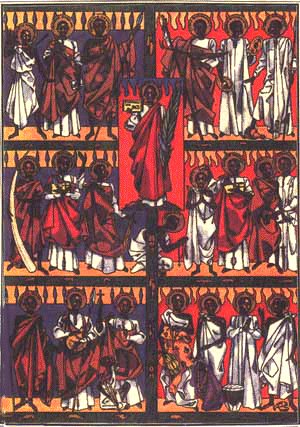
Saint Charles Lwanga (in the center) and his 21 followers.

9 posted on 06/03/2022 5:50:56 AM PDT by annalex (fear them not)
[ Post Reply | Private Reply | To 8 | View Replies]

To: annalex
Matthew
 English: Douay-RheimsLatin: Vulgata ClementinaGreek NT: Byzantine/Majority Text (2000)
 Matthew 5
1AND seeing the multitudes, he went up into a mountain, and when he was set down, his disciples came unto him. Videns autem Jesus turbas, ascendit in montem, et cum sedisset, accesserunt ad eum discipuli ejus,ιδων δε τους οχλους ανεβη εις το ορος και καθισαντος αυτου προσηλθον αυτω οι μαθηται αυτου
2And opening his mouth, he taught them, saying: et aperiens os suum docebat eos dicens :και ανοιξας το στομα αυτου εδιδασκεν αυτους λεγων
3Blessed are the poor in spirit: for theirs is the kingdom of heaven. Beati pauperes spiritu : quoniam ipsorum est regnum cælorum.μακαριοι οι πτωχοι τω πνευματι οτι αυτων εστιν η βασιλεια των ουρανων
4Blessed are the meek: for they shall possess the land. Beati mites : quoniam ipsi possidebunt terram.μακαριοι οι πενθουντες οτι αυτοι παρακληθησονται
5Blessed are they that mourn: for they shall be comforted. Beati qui lugent : quoniam ipsi consolabuntur.μακαριοι οι πραεις οτι αυτοι κληρονομησουσιν την γην
6Blessed are they that hunger and thirst after justice: for they shall have their fill. Beati qui esuriunt et sitiunt justitiam : quoniam ipsi saturabuntur.μακαριοι οι πεινωντες και διψωντες την δικαιοσυνην οτι αυτοι χορτασθησονται
7Blessed are the merciful: for they shall obtain mercy. Beati misericordes : quoniam ipsi misericordiam consequentur.μακαριοι οι ελεημονες οτι αυτοι ελεηθησονται
8Blessed are the clean of heart: for they shall see God. Beati mundo corde : quoniam ipsi Deum videbunt.μακαριοι οι καθαροι τη καρδια οτι αυτοι τον θεον οψονται
9Blesses are the peacemakers: for they shall be called children of God. Beati pacifici : quoniam filii Dei vocabuntur.μακαριοι οι ειρηνοποιοι οτι αυτοι υιοι θεου κληθησονται
10Blessed are they that suffer persecution for justice' sake: for theirs is the kingdom of heaven. Beati qui persecutionem patiuntur propter justitiam : quoniam ipsorum est regnum cælorum.μακαριοι οι δεδιωγμενοι ενεκεν δικαιοσυνης οτι αυτων εστιν η βασιλεια των ουρανων
11Blessed are ye when they shall revile you, and persecute you, and speak all that is evil against you, untruly, for my sake: Beati estis cum maledixerint vobis, et persecuti vos fuerint, et dixerint omne malum adversum vos mentientes, propter me :μακαριοι εστε οταν ονειδισωσιν υμας και διωξωσιν και ειπωσιν παν πονηρον ρημα καθ υμων ψευδομενοι ενεκεν εμου
12Be glad and rejoice, for your reward is very great in heaven. For so they persecuted the prophets that were before you. gaudete, et exsultate, quoniam merces vestra copiosa est in cælis. Sic enim persecuti sunt prophetas, qui fuerunt ante vos.χαιρετε και αγαλλιασθε οτι ο μισθος υμων πολυς εν τοις ουρανοις ουτως γαρ εδιωξαν τους προφητας τους προ υμων

10 posted on 06/03/2022 5:52:34 AM PDT by annalex (fear them not)
[ Post Reply | Private Reply | To 9 | View Replies]

To: annalex

Catena Aurea by St. Thomas Aguinas

5:1–3

1. And seeing the multitudes, He went up into a mountain: and when He was set, His disciples came unto Him.

2. And He opened His mouth, and taught them, saying,

3. Blessed are the poor in spirit: for theirs is the kingdom of heaven.

PSEUDO-CHRYSOSTOM. Every man in his own trade or profession rejoices when he sees an opportunity of exercising it; the carpenter if he sees a goodly tree desires to have it to cut down to employ his skill on, and the Priest when he sees a full Church, his heart rejoices, he is glad of the occasion to teach. So the Lord seeing a great congregation of people was stirred to teach them.

AUGUSTINE. (de Cons. Ev. ii. 19.) Or He may be thought to have sought to shun the thickest crowd, and to have ascended the mountain that He might speak to His disciples alone.

CHRYSOSTOM. (Hom. xv.) By not choosing His seat in the city, and the market place, but on a mountain in a desert, He has taught us to do nothing with ostentation, and to depart from crowds, above all when we are to be employed in philosophy, or in speaking of serious things.

REMIGIUS. This should be known, that the Lord had three places of retirement that we read of, the ship, the mountain, and the desert; to one of these He was wont to withdraw whenever He was pressed by the multitude.

JEROME. Some of the less learned brethren suppose the Lord to have spoken what follows from the Mount of Olives, which is by no means the case; what went before and what follows fixes the place in Galilee. aMount Tabor. we may suppose, or any other high mountain.

CHRYSOSTOM. He ascended a mountain, first, that He might fulfil the prophecy of Esaias, Get thee up into a mountain; (Is. 40:9.) secondly, to shew that as well he who teaches, as he who hears the righteousness of God should stand on an high ground of spiritual virtues; for none can abide in the valley and speak from a mountain. If thou stand on the earth, speak of the earth; if thou speak of heaven, stand in heaven. Or, He ascended into the mountain to shew that all who would learn the mysteries of the truth should go up into the Mount of the Church of which the Prophet speaks, The hill of God is a hill of fatness. (Ps. 68:15.)

HILARY. Or, He ascends the mountain, because it is placed in the loftiness of His Father’s Majesty that He gives the commands of heavenly life.

AUGUSTINE. (de Serm. Dom. in Mont. i. 1.) Or, He ascends the mountain to shew that the precepts of righteousness given by God through the Prophets to the Jews, who were yet under the bondage of fear, were the lesser commandments; but that by His own Son were given the greater commandments to a people which He had determined to deliver by love.

JEROME. He spoke to them sitting and not standing, for they could not have understood Him had He appeared in His own Majesty.

AUGUSTINE. Or, to teach sitting is the prerogative of the Master. His disciples came to him, that they who in spirit approached more nearly to keeping His commandments, should also approach Him nearest with their bodily presence.

RABANUS. Mystically, this sitting down of Christ is His incarnation; had He not taken flesh on Him, mankind could not have come unto Him.

AUGUSTINE. (de Cons. Ev. ii. 19.) It causes a thought how it is that Matthew relates this sermon to have been delivered by the Lord sitting on the mountain; Luke, as He stood in the plain. This diversity in their accounts would lead us to think that the occasions were different. Why should not Christ repeat once more what He said before, or do once more what He had done before? Although another method of reconciling the two may occur to us; namely, that our Lord was first with His disciples alone on some more lofty peak of the mountain when He chose the twelve; that He then descended with them not from the mountain entirely, but from the top to some expanse of level ground in the side, capable of holding a great number of people; that He stood there while the crowd was gathering around Him, and after when He had sate down, then His disciples came near to Him, and so to them and in the presence of the rest of the multitude He spoke the same sermon which Matthew and Luke give, in a different manner, but with equal truth of facts.

GREGORY. (Moral. iv. 1.) When the Lord on the mountain is about to utter His sublime precepts, it is said, Opening his month he taught them, He who had before opened the mouth of the Prophets.

REMIGIUS. Wherever it is said that the Lord opened His mouth, we may know how great things are to follow.

AUGUSTINE. (de Serm. in Mont. i. 1.) Or, the phrase is introductory of an address longer than ordinary.

CHRYSOSTOM. Or, that we may understand that He sometimes teaches by opening His mouth in speech, sometimes by that voice which resounds from His works.

AUGUSTINE. (ubi sup.) Whoever will take the trouble to examine with a pious and sober spirit, will find in this sermon a perfect code of the Christian life as far as relates to the conduct of daily life. Accordingly the Lord concludes it with the words, Every man who heareth these words of mine and doeth them, I will liken him to a wise man, & c.

AUGUSTINE. (De Civ. Dei, xix. 1.) The chief good is the only motive of philosophical enquiry; but whatever confers blessedness, that is the chief good; therefore He begins, Blessed are the poor in spirit.

AUGUSTINE. (Id. de Serm. in Mont. i. 1.) Augmentation of ‘spirit’ generally implies insolence and pride. For in common speech the proud are said to have a great spirit, and rightly—for wind is a spirit, and who does not know that we say of proud men that they are ‘swollen,’ ‘puffed up.’ Here therefore by poor in spirit are rightly understood ‘lowly,’ ‘fearing God,’ not having a puffed up spirit.

CHRYSOSTOM. Or, He here calls all loftiness of soul and temper spirit; for as there are many humble against their will, constrained by their outward condition, they have no praise; the blessing is on those who humble themselves by their own choice. Thus He begins at once at the root, pulling up pride which is the root and source of all evil, setting up as its opposite humility as a firm foundation. If this be well laid, other virtues may be firmly built thereon; if that be sapped, whatever good yon gather upon it perishes.

PSEUDO-CHRYSOSTOM. Blessed are the poor in spirita, or, according to the literal rendering of the Greek, ‘they who beg,’ that the humble may learn that they should be ever begging at God’s almshouse. For there are many naturally humble and not of faith, who do not knock at God’s almshouse; but they alone are humble who are so of faith.

CHRYSOSTOM. Or, the poor in spirit may be those who fear and tremble at God’s commandments, whom the Lord by the Prophet Isaiah commends. Though why more than simply humble? Of the humble there may be in this place but few, in that again an abundance.

AUGUSTINE. (ubi sup.) The proud seek an earthly kingdom, of the humble only is the kingdom of Heaven.

PSEUDO-CHRYSOSTOM. For as all other vices, but chiefly pride, casts down to hell; so all other virtues, but chiefly humility, conduct to Heaven; it is proper that he that humbles himself should be exalted.

JEROME. The poor in spirit are those who embrace a voluntary poverty for the sake of the Holy Spirit.

AMBROSE. (De Officiis i. 16.) In the eye of Heaven blessedness begins there where misery begins in human estimation.

GLOSS. (interlin.) The riches of Heaven are suitably promised to those who at this present are in poverty.

5:5

5. bBlessed are the meek: for they shall inherit the earth.

AMBROSE. (in Luc. c. v. 20.) When I have learned contentment in poverty, the next lesson is to govern my heart and temper. For what good is it to me to be without worldly things, unless I have besides a meek spirit? It suitably follows therefore, Blessed are the meek.

AUGUSTINE. (Serm. in Mont. i. 2.) The meek are they who resist not wrongs, and give way to evil; but overcome evil of good.

AMBROSE. (ubi sup.) Soften therefore your temper that you be not angry, at least that you be angry, and sin not. It is a noble thing to govern passion by reason; nor is it a less virtue to check anger, than to be entirely without anger, since one is esteemed the sign of a weak, the other of a strong, mind.

AUGUSTINE. (ubi sup.) Let the unyielding then wrangle and quarrel about earthly and temporal things, the meek are blessed, for they shall inherit the earth, and not be rooted out of it; that earth of which it is said in the Psalms, Thy lot is in the land of the living, (Ps. 142:5.) meaning the fixedness of a perpetual inheritance, in which the soul that hath good dispositions rests as in its own place, as the body does in an earthly possession, it is fed by its own food, as the body by the earth; such is the rest and the life of the saints.

PSEUDO-CHRYSOSTOM. This earth as some interpret, so long as it is in its present condition is the land of the dead, seeing it is subject to vanity; but when it is freed from corruption it becomes the land of the living, that the mortal may inherit an immortal country. I have read another exposition of it, as if the heaven in which the saints are to dwell is meant by the land of the living, because compared with the regions of death it is heaven, compared with the heaven above it is earth. Others again say, that this body as long as it is subject to death is the land of the dead, when it shall b made like unto Christ’s glorious body, it will be the land of the living.

HILARY. Or, the Lord promises the inheritance of the earth to the meek, meaning of that Body, which Himself took on Him as His tabernacle; and as by the gentleness of our minds Christ dwells in us, we also shall be clothed with the glory of His renewed body.

CHRYSOSTOM. Otherwise; Christ here has mixed things sensible with things spiritual. Because it is commonly supposed that he who is meek loses all that he possesses, Christ here gives a contrary promise, that he who is not forward shall possess his own in security, but that he of a contrary disposition many times loses his soul and his paternal inheritance. But because the Prophet had said, The meek shall inherit the earth, (Ps. 36:11.) He used these well-known words in conveying His meaning.

GLOSS. (ord.) The meek, who have possessed themselves, shall possess hereafter the inheritance of the Father; to possess is more than to have, for we have many things which we lose immediately.

5:4

4. Blessed are they that mourn; for they shall be comforted.

AMBROSE. (ubi sup.) When yon have done thus much, attained both poverty and meekness, remember that you are a sinner, mourn your sins, as He proceeds, Blessed are they that mourn. And it is suitable that the third blessing should be of those that mourn for sin, for it is the Trinity that forgives sin.

HILARY. Those that mourn, that is, not loss of kindred, affronts, or losses, but who weep for past sins.

PSEUDO-CHRYSOSTOM. And they who weep for their own sins are blessed, but much more so who weep for others’ sins; so should all teachers do.

JEROME. For the mourning here meant is not for the dead by common course of nature, but for the dead in sins, and vices. Thus Samuel mourned for Saul, thus the Apostle Paul mourned for those who had not performed penance after uncleanness.

PSEUDO-CHRYSOSTOM. The comfort of mourners is the ceasing of their mourning; they then who mourn their own sins shall be consoled when they have received remittance thereof.

CHRYSOSTOM. And though it were enough for such to receive pardon, yet He rests not His mercy only there, but makes them partakers of many comforts both here and hereafter. God’s mercies are always greater than our troubles.

PSEUDO-CHRYSOSTOM. But they also who mourn for others’ sins shall be comforted, inasmuch as they shall own God’s providence in that worldly generation, understanding that they who had perished were not of God, out of whose hand none can snatch. For these leaving to mourn, they shall be comforted in their own blessedness.

AUGUSTINE. (Serm. in Mont. i. 2.) Otherwise; mourning is sorrow for the loss of what is dear; but those that are turned to God lose the things that they held dear in this world; and as they have now no longer any joy in such things as before they had joy in, their sorrow may not be healed till there is formed within them a love of eternal things. They shall then be comforted by the Holy Spirit, who is therefore chiefly called, The Paraclete, that is, ‘Comforter;’ so that for the loss of their temporal joys, they shall gain eternal joys.

GLOSS. (ap Anselm.) Or, by mourning, two kinds of sorrow are intended; one for the miseries of this world, one for lack of heavenly things; so Caleb’s daughter asked both the upper and the lower springs. This kind of mourning none have but the poor and the meek, who as not loving the world acknowledge themselves miserable, and therefore desire heaven. Suitably, therefore, consolation is promised to them that mourn, that he who has sorrow at this present may have joy hereafter. But the reward of the mourner is greater that that of the poor or the meek, for to rejoice in the kingdom is more than to have it, or to possess it; for many things we possess in sorrow.

CHRYSOSTOM. We may remark that this blessing is given not simply, but with great force and emphasis; it is not simply, ‘who have grief,’ but who mourn. And indeed this command is the sum of all philosophy. For if they who mourn for the death of children or kinsfolk, throughout all that season of their sorrow, are touched with no other desires, as of money, or honour, burn not with envy, feel not wrongs, nor are open to any other vicious passion, but are solely given up to their grief; much more ought they, who mourn their own sins in such manner as they ought to mourn for them, to shew this higher philosophy.

5:6

6. Blessed are they which do hunger and thirst after righteousness: for they shall be filled.

AMBROSE. (ubi sup.) As soon as I have wept for my sins, I begin to hunger and thirst after righteousness. He who is afflicted with any sore disease, hath no hunger.

JEROME. It is not enough that we desire righteousness, unless we also suffer hunger for it, by which expression we may understand that we are never righteous enough, but always hunger after works of righteousness.

PSEUDO-CHRYSOSTOM. All good which men do not from love of the good itself is unpleasing before God. He hungers after righteousness who desires to walk according to the righteousness of God; he thirsts after righteousness who desires to get the knowledge thereof.

CHRYSOSTOM. He may mean either general righteousness, or that particular virtue which is the opposite of covetousness. (ἡ καθόλου ἀρετή.) As He was going on to speak of mercy, He shews beforehand of what kind our mercy should be, that it should not be of the gains of plunder or covetousness, hence He ascribes to righteousness that which is peculiar to avarice, namely, to hunger and thirst.

HILARY. The blessedness which He appropriates to those who hunger and thirst after righteousness shews that the deep longing of the saints for the doctrine of God shall receive perfect replenishment in heaven; then they shall be filled.

PSEUDO-CHRYSOSTOM. Such is the bounty of a rewarding God, that His gifts are greater than the desires of the saints.

AUGUSTINE. (ubi sup.) Or He speaks of food with which they shall be filled at this present; to wit, that food of which the Lord spake, My food is to do the will of my Father, that is, righteousness, and that water of which whoever drinks it shall be in him a well of water springing up to life eternal.

CHRYSOSTOM. Or, this is again a promise of a temporal reward; for as covetousness is thought to make many rich, He affirms on the contrary that righteousness rather makes rich, for He who loves righteousness possesses all things in safety.

5:7

7. Blessed are the merciful: for they shall obtain mercy.

GLOSS. (ord.) Justice and mercy are so united, that the one ought to be mingled with the other; justice without mercy is cruelty; mercy without justice, profusion—hence He goes on to the one from the other.

REMIGIUS. The merciful (misericors) is he who has a sad heart; he counts others’ misery his own, and is sad at their grief as at his own.

JEROME. Mercy here is not said only of alms, but is in every sin of a brother, if we bear one another’s burdens.

AUGUSTINE. (ubi sup.) He pronounces those blessed who succour the wretched, because they are rewarded in being themselves delivered from all misery; as it follows, for they shall obtain mercy.

HILARY. So greatly is God pleased with our feelings of benevolence towards all men, that He will bestow His own mercy only on the merciful.

CHRYSOSTOM. The reward here seems at first to be only an equal return; but indeed it is much more; for human mercy and divine mercy are not to be put on an equality.

GLOSS. (ap. Anselm.) Justly is mercy dealt out to the merciful, that they should receive more than they had deserved; and as he who has more than enough receives more than he who has only enough, so the glory of mercy is greater than of the things hitherto mentioned.

5:8

8. Blessed are the pure in heart: for they shall see God.

AMBROSE. (in Luc. vi. 22.) The merciful loses the benefit of his mercy, unless he shews it from a pure heart; for if he seeks to have whereof to boast, he loses the fruit of his deeds; the next that follows therefore is, Blessed are the pure in heart.

GLOSS. (ap. Anselm.) Purity of heart comes properly in the sixth place, because on the sixth day man was created in the image of God, which image was shronded by sin, but is formed anew in pure hearts by grace. It follows rightly the beforementioned graces, because if they be not there, a clean heart is not created in a man.

CHRYSOSTOM. By the pure are here meant those who possess a perfect goodness, conscious to themselves of no evil thoughts, or again those who live in such temperance as is mostly necessary to seeing God according to that of St. Paul, Follow peace with all men, and holiness, without which no man shall see God. For as there are many merciful, yet unchaste, to shew that mercy alone is not enough, he adds this concerning purity.

JEROME. The pure is known by purity of heart, for the temple of God cannot be impure.

PSEUDO-CHRYSOSTOM. He who in thought and deed fulfils all righteousness, sees God in his heart, for righteousness is an image of God, for God is righteousness. So far as any one has rescued himself from evil, and works things that are good, so far does he see God, either hardly, or fully, or sometimes, or always, according to the capabilities of human nature. But in that world to come the pure in heart shall see God face to face, not in a glass, and in enigma as here.

AUGUSTINE. (Serm. in Mont. i. 2.) They are foolish who seek to see God with the bodily eye, seeing He is seen only by the heart, as it is elsewhere written, In singleness of heart seek ye Him; (Wisd. 1:1.) the single heart is the same as is here called the pure heart.

AUGUSTINE. (Civ. Dei, xxii 29.) But if spiritual eyes in the spiritual body shall be able only to see so much as they we now have can see, undoubtedly God will not be able to be seen of them.

AUGUSTINE. (de Trin. i. 8.) This seeing God is the reward of faith; to which end our hearts are made pure by faith, as it is written, cleansing their hearts by faith; (Acts 15:9.) but the present verse proves this still more strongly.

AUGUSTINE. (de Genesi ad Literam. xii. 26.) No one seeing God can be alive with the life men have on earth, or with these our bodily senses. Unless one die altogether out of this life, either by totally departing from the body, or so alienated from earnal lusts that he may truly say with the Apostle, whether in the body or out of the body, I cannot tell, he is not translated that he should see this vision.

GLOSS. (non occ.) The reward of these is greater than the reward of the first; being not merely to dine in the King’s court, but further to see His face.

5:9

9. Blessed are the peacemakers: for they shall be called the children of God.

AMBROSE. (ubi sup.) When you have made your inward parts clean from every spot of sin, that dissentions and contentious may not proceed from your temper, begin peace within yourself, that so you may extend it to others.

AUGUSTINE. (Civ. Dei, xix. 13.) Peace is the fixedness of order; by order, I mean an arrangement of things like and unlike giving to each its own place. And as there is no man who would not willingly have joy, so is there no man who would not have peace; since even those who go to war desire nothing more than by war to come to a glorious peace.

JEROME. The peacemakers (pacifici) are pronounced blessed, they namely who make peace first within their own hearts, then between brethren at variance. For what avails it to make peace between others, while in your own heart are wars of rebellious vices.

AUGUSTINE. (Serm. in Mont. i. 2.) The peacemakers within themselves are they who having stilled all disturbances of their spirits, having subjected them to reason, have overcome their carnal desires, and become the kingdom of God. There all things are so disposed, that that which is most chief and excellent in man, governs those parts which we have in common with the brutes, though they struggle against it; nay even that in man which is excellent is subjected to a yet greater, namely, the very Truth, the Son of God. For it would not be able to govern what is inferior to it, if it were not subject to what is above it. And this is the peace which is given on earth to men of good will.

AUGUSTINE. (Retract. i. 19.) No man can attain in this life that there be not in his members a law resisting the law of his mind. But the peacemakers attain thus far by overcoming the lusts of the flesh, that in time they come to a most perfect peace.

PSEUDO-CHRYSOSTOM. The peacemakers with others are not only those who reconcile enemies, but those who unmindful of wrongs cultivate peace. That peace only is blessed which is lodged in the heart, and does not consist only in words. And they who love peace, they are the sons of peace.

HILARY. The blessedness of the peacemakers is the reward of adoption, they shall be called the sons of God. For God is our common parent, and no other way can we pass into His family than by living in brotherly love together.

CHRYSOSTOM. Or, if the peacemakers are they who do not contend one with another, but reconcile those that are at strife, they are rightly called the sons of God, seeing this was the chief employment of the Only-begotten Son, to reconcile things separated, to give peace to things at war.

AUGUSTINE. Or, because peace is then perfect when there is no where any opposition, the peacemakers are called the sons of God, because nothing resists God, and the children ought to bear the likeness of their Father.

GLOSS. (ap. Anselm.) The peacemakers have thus the place of highest honour, inasmuch as he who is called the king’s son, is the highest in the king’s house. This beatitude is placed the seventh in order, because in the sabbath shall be given the repose of true peace, the six ages being passed away.

5:10

10. Blessed are they which are persecuted for righteousness’ sake: for theirs is the kingdom of heaven.

CHRYSOSTOM. Blessed are they who suffer persecution for righteousness’ sake, that is for virtue, for defending others, for piety, for all these things are spoken of under the title of righteousness. This follows the beatitude upon the peacemakers, that we may not be led to suppose that it is good to seek peace at all times.

AUGUSTINE. (Serm. in Mont. i. 2.) When peace is once firmly established within, whatever persecutions he who has been cast without raises, or carries on, he increases that glory which is in the sight of God.

JEROME. For righteousness’ sake He adds expressly, for many suffer persecution for their sins, and are not therefore righteous. Likewise consider how the eighth beatitude of the true circumcision is terminated by martyrdom.

PSEUDO-CHRYSOSTOM. (vid. Phil. 3:2:3.) He said not, Blessed are they who suffer persecution of the Gentiles; that we may not suppose the blessing pronounced on those only who are persecuted for refusing to sacrifice to idols; yea, whoever suffers persecution of heretics because he will not forsake the truth is likewise blessed, seeing he suffers for righteousness. Moreover, if any of the great ones, who seem to be Christians, being corrected by you on account of his sins, shall persecute you, you are blessed with John the Baptist. For if the Prophets are truly martyrs when they are killed by their own countrymen, without doubt he who suffers in the cause of God has the reward of martyrdom though he suffers from his own people. Scripture therefore does not mention the persons of the persecutors, but only the cause of persecution, that you may learn to look, not by whom, but why you suffer.

HILARY. Thus, lastly, He includes those in the beatitude whose will is ready to suffer all things for Christ, who is our righteousness. For these then also is the kingdom preserved, for they are in the contempt of this world poor in spirit.

AUGUSTINE. (ubi sup.) Or, the eighth beatitude, as it were, returns to the commencement, because it shews the perfect complete character. In the first then and the eighth, the kingdom of heaven is named, for the seven go to make the perfect man, the eighth manifests and proves his perfectness, that all may be conducted to perfection by these steps.

AMBROSE. (in Luc. vi. 23.) Otherwise; the first kingdom of heaven was promised to the Saints, in deliverance from the body; the second, that after the resurrection they should be with Christ. For after your resurrection you shall begin to possess the earth delivered from death, and in that possession shall find comfort. Pleasure follows comfort, and Divine mercy pleasure. But on whom God has mercy, him He calls, and he whom He calls, beholds Him that called him. He who beholds God is adopted into the rights of divine birth, and then at length as the son of God is delighted with the riches of the heavenly kingdom. The first then begins, the last is perfected.

CHRYSOSTOM. Wonder not if you do not hear ‘the kingdom’ mentioned under each beatitude; for in saying shall be comforted, shall find mercy, and the rest, in all these the kingdom of heaven is tacitly understood, so that you must not look for any of the things of sense. For indeed he would not be blessed who was to be crowned with those things which depart with this life.

AUGUSTINE. (ubi sup.) The number of these sentences should be carefully attended to; to these seven degrees of blessedness agree the operation of that seven-form Holy Spirit which Isaiah described. But as He began from the highest, so here He begins from the lowest; for there we are taught that the Son of God will descend to the lowest; here that man will ascend from the lowest to the likeness of God. Here the first place is given to fear, which is suitable for the humble, of whom it is said, Blessed are the poor in spirit, that is, those who think not high things, but who fear. The second is piety, which belongs to the meek; for he who seeks piously, reverences, does not find fault, does not resist; and this is to become meek. The third is knowledge, which belongs to those that mourn, who have learned to what evils they are enslaved which they once pursued as goods. The fourth, which is fortitude, rightly belongs to those who hunger and thirst, who seeking joy in true goods, labour to turn away from earthly lusts. The fifth, counsel, is appropriate for the merciful, for there is one remedy to deliver from so great evils, viz. to give and to distribute to others. The sixth is understanding, and belongs to the pure in heart, who with purged eye can see what eye seeth not. The seventh is wisdom, and may be assigned to the peacemakers, in whom is no rebellious motion, but they obey the Spirit. Thus the one reward, the kingdom of heaven, is put forth under various names. In the first, as was right, is placed the kingdom of heaven, which is the beginning of perfect wisdom; as if it should be said, The fear of the Lord is the beginning of wisdom. To the meek, an inheritance, as to those who with piety seek the execution of a father’s will. To those that mourn, comfort, as to persons who know what they had lost, and in what they were immersed. To the hungry, plenty, as a refreshment to those who labour for salvation. To the merciful, mercy, that to those who have followed the best counsel, that may be shewed which they have shewed to others. To the pure in heart the faculty of seeing God, as to men bearing a pure eye to understand the things of eternity. To the peacemakers, the likeness of God. And all these things we believe may be attained in this life, as we believe they were fulfilled in the Apostles; for as to the things after this life they cannot be expressed in any words.

5:11–12

11. Blessed are ye, when men shall revile you, and persecute you, and shall say all manner of evil against you falsely, for My sake.

12. Rejoice, and be exceeding glad: for great is your reward in heaven: for so persecuted they the prophets which were before you.

RABANUS. The preceding blessings were general; He now begins to address His discourse to them that were present, foretelling them the persecutions which they should suffer for His name.

AUGUSTINE. (ubi sup.) It may be asked, what difference there is between ‘they shall revile you,’ and ‘shall speak all manner of evil of you;’ to revile, it may be said, being but to speak evil of. But a reproach thrown with insult in the face of one present is a different thing from a slander cast on the character of the absent. To persecute includes both open violence and secret snares.

PSEUDO-CHRYSOSTOM. But if it be true that he who offers a cup of water does not lose his reward, consequently he who has been wronged but by a single word of calumny, shall not be without a reward. But that the reviled may have a claim to this blessing, two things are necessary, it must be false, and it must be for God’s sake; otherwise he has not the reward of this blessing; therefore He adds, falsely for my sake.

AUGUSTINE. (Serm. in Mont i. 5.) This I suppose was added because of those who wish to boast of persecutions and evil reports of their shame, and therefore claim to belong to Christ because many evil things are said of them; but either these are true, or when false yet they are not for Christ’s sake.

GREGORY. (Hom. in Ezech. i. 9. 17.) What hurt can you receive when men detract from you, though you have no defence but only your own conscience? But as we ought not to stir up wilfully the tongues of slanderers, lest they perish for their slander, yet when their own malice has instigated them, we should endure it with equanimity, that our merit may be added to. Rejoice, He says, and exult, for your reward is abundant in heaven.

GLOSS. (ap. Anselm.) Rejoice, that is, in mind, exult with the body, for your reward is not great only but abundant in heaven.

AUGUSTINE. (Serm. in Mont. i. 5.) Do not suppose that by heaven here is meant the upper regions of the sky of this visible world, for your reward is not to be placed in things that are seen, but by in heaven understand the spiritual firmament, where everlasting righteousness dwells. Those then whose joy is in things spiritual will even here have some foretaste of that reward; but it will be made perfect in every part when this mortal shall have put on immortality.

JEROME. This it is in the power of any one of us to attain, that when our good character is injured by calumny, we rejoice in the Lord. He only who seeks after empty glory cannot attain this. Let us then rejoice and exult, that our reward may be prepared for us in heaven.

PSEUDO-CHRYSOSTOM. For by how much any is pleased with the praise of men, by so much is he grieved with their evil speaking. But if you seek your glory in heaven, you will not fear any slanders on earth.

GREGORY. (Hom. in Ezech. i. 9. 17.) Yet ought we sometimes to check our defamers, lest by spreading evil reports of us, they corrupt the innocent hearts of those who might hear good from us.

GLOSS. (non occ.) He invites them to patience not only by the prospect of reward, but by example, when He adds, for so persecuted they the Prophets who were before you.

REMIGIUS. For a man in sorrow receives great comfort from the recollection of the sufferings of others, who are set before him as an example of patience; as if He had said, Remember that ye are His Apostles, of whom also they were Prophets.

CHRYSOSTOM. At the same time He signifies His equality in honour with His Father, as if He had said, As they suffered for my Father, so shall ye suffer for me. And in saying, The Prophets who were before you, He teaches that they themselves are already become Prophets.

AUGUSTINE. (ubi sup.) Persecuted He says generally, comprehending both reproaches and defamation of character.

Catena Aurea Matthew 5

11 posted on 06/03/2022 5:53:26 AM PDT by annalex (fear them not)
[ Post Reply | Private Reply | To 10 | View Replies]

To: annalex


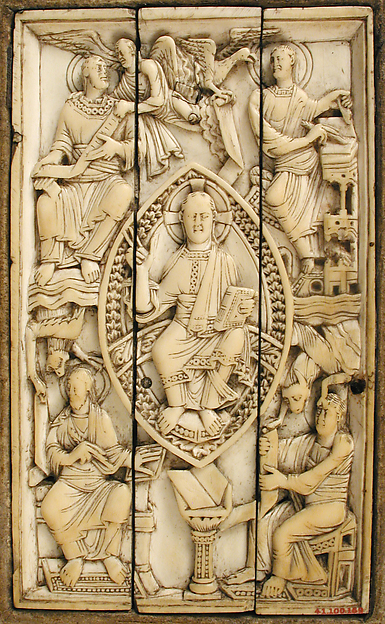
Plaque with Christ in Majesty and the Four Evangelists

11th century, Cologne, Germany
Ivory, 6 1/8 x 3 3/4 in.
Metropolitan Museum of Art, New York

12 posted on 06/03/2022 5:54:05 AM PDT by annalex (fear them not)
[ Post Reply | Private Reply | To 11 | View Replies]

To: annalex
NAVARRE BIBLE COMMENTARY (RSV)

Ad Majorem Dei Gloriam (To the Greater Glory of God)

From: Acts 25:13b-21

Festus Briefs Agrippa
---------------------
[13] Agrippa the king and Bernice arrived at Caesarea to welcome Festus. [14] And as they stayed there many days, Festus laid Paul's case before the king, saying, "There is a man left prisoner by Felix; [15] and when I was at Jerusalem, the chief priests and the elders of the Jews gave information about him, asking for sentence against him. [16] I answered them that it was not the custom of the Romans to give up any one before the accused met the accusers face to face, and had opportunity to make his defense concerning the charge laid against him. [17] When therefore they came together here, I made no delay, but on the next day took my seat on the tribunal and ordered the man to be brought in. [18] When the accusers stood up, they brought no charge in his case of such evils as I supposed; [19] but they had certain points of dispute with him about their own superstition and about one Jesus, who was dead, but whom Paul asserted to be alive. [20] Being at a loss how to investigate these questions, I asked whether he wished to go to Jerusalem and be tried there regarding them. [21] But when Paul had appealed to be kept in custody for the decision of the emperor, I commanded him to be held until I send him to Caesar."

***********************************************************************
Commentary:

13. Herod Agrippa II was a son of Herod Agrippa I. He was born in the year 27. Like his father he had won favor with Rome and had been given various territories in northern Palestine, which he was allowed to rule with the title of king. Bernice was his sister.

19. Festus' words show his indifference towards Paul's beliefs and his religious controversy with the Jews. The conversation between the two politicians reveals a typical attitude of worldly men to matters which they consider far-fetched and irrelevant as far as everyday affairs are concerned. This passage also shows us that in the course of his trial Paul must have had an opportunity to speak about Jesus and confess his faith in the Resurrection.

Jesus Christ is alive; he is the center of history and the center of each and every person's existence. "The Church believes that Christ, who died and was raised for the sake of all (cf. 2 Cor 5:15) can show man the way and strengthen him through the Spirit in order to be worthy of his destiny: nor is there any other name under heaven given among men by which they can be saved (cf. Acts 4:12). The Church likewise maintains that the key, the center and the purpose of the whole of man's history is to be found in its Lord and Master. She also maintains that beneath all that changes there is much that is unchanging, much that has its ultimate foundation in Christ, who is the same yesterday, and today, and forever (cf. Heb 13:8)" (Vatican II, "Gaudium Et Spes", 10).

"Stir up that fire of faith. Christ is not a figure that has passed. He is not a memory that is lost in history.

"He lives! '"Jesus Christus heri et hodie, ipse et in saecula"', says Saint Paul,--'Jesus Christ is the same today as he was yesterday and as he will be for ever"' (St J. Escriva, The Way, 584).

21. "Caesar" and "Augustus" were titles of the Roman emperor. At this time the emperor was Nero (54-68).

13 posted on 06/03/2022 5:54:20 AM PDT by fidelis (Ecce Crucem Domini! Fugite partes adversae! Vicit Leo de tribu Juda, Radix David! Alleluia! )
[ Post Reply | Private Reply | To 9 | View Replies]

To: fidelis
From: John 21:15-19

Peter's Primacy
----------------
[15] When they had finished breakfast, Jesus said to Simon Peter, "Simon, son of John, do you love Me more than these?" He said to Him, "Yes, Lord; you know that I love You." He said to him, "Feed My lambs." [16] A second time He said to him, "Simon, son of John, do you love Me?" He said to Him, "Yes, Lord, you know I love You." He said to him, "Tend My sheep." [17] He said to him the third time, "Simon, son of John, do you love Me?" Peter was grieved because He said to him the third time, "Do you love Me?" And he said to Him, "Lord, You know everything; You know that I love You." Jesus said to him, "Feed My sheep. [18] Truly, truly I say to you, when you were young, you girded yourself and walked where you would; but when you are old, you will stretch out your hands, and another will gird you and carry you where you do not wish to go." [19] (This He said to show by what death he was to glorify God.) And after this He said to him, "Follow Me."

***********************************************************************
Commentary:

15-17. Jesus Christ had promised Peter that he would be the primate of the Church (cf. Matthew 16:16-19 and note on the same). Despite his three denials during our Lord's passion, Christ now confers on him the primacy He promised.

"Jesus questions Peter, three times, as if to give him a triple chance to atone for his triple denial. Peter has learned his lesson from the bitter experience of his wretchedness. Aware of his weakness, he is deeply convinced that rash claims are pointless. Instead he puts everything in Christ's hands. `Lord, You know well that I love You" ([St] J. Escriva, "Friends of God", 267). The primacy was given to Peter directly and immediately. So the Church has always understood--and so Vatican I defined: "We therefore teach and declare that, according to the testimony of the Gospel, the primacy of jurisdiction over the universal Church of God was immediately and directly promised and given to Blessed Peter the Apostle by Christ our Lord. [...] And it was upon Simon Peter alone that Jesus after His resurrection bestowed the jurisdiction of chief pastor and ruler over all His fold in the words: "Feed My lambs; feed My sheep" ("Pastor Aeternus", Chapter 1).

The primacy is a grace conferred on Peter and his successors, the popes; it is one of the basic elements in the Church, designed to guard and protect its unity: "In order that the episcopate also might be one and undivided, and that [...] the multitude of the faithful might be kept secure in the oneness of faith and communion, He set Blessed Peter over the rest of the Apostles, and fixed in him the abiding principle of this twofold unity, and its visible foundation" ("Pastor Aeternus, Dz-Sch 3051"; cf. Vatican II, "Lumen Gentium", 18). Therefore, the primacy of Peter is perpetuated in each of his successors: this is something which Christ disposed; it is not based on human legislation or custom.

By virtue of the primacy, Peter, and each of his successors, is the shepherd of the whole Church and vicar of Christ on earth, because he exercises vicariously Christ's own authority. Love for the Pope, whom St. Catherine of Siena used to call "the sweet Christ on earth", should express itself in prayer, sacrifice and obedience.

18-19. According to Tradition, St. Peter followed his Master to the point of dying by crucifixion, head downwards, "Peter and Paul suffered martyrdom in Rome during Nero's persecution of Christians, which took place between the years 64 and 68. St. Clement, the successor of the same Peter in the See of the Church of Rome, recalls this when, writing to the Corinthians, he puts before them `the generous example of these two athletes': `due to jealousy and envy, those who were the principal and holiest columns suffered persecution and fought the fight unto death'" (Pope Paul VI, "Petrum Et Paulum").

"Follow Me!": these words would have reminded the Apostle of the first call he received (cf. Matthew 4:19) and of the fact that Christ requires of His disciples complete self-surrender: "If any man would come after Me, let him deny himself and take up the Cross daily and follow Me" (Luke 9:23). St. Peter himself, in one of his letters, also testifies to the Cross being something all Christians must carry: "For to this you have been called, because Christ also suffered for you, leaving you an example, that you should follow in His steps" (1 Peter 2:21).

Source: Daily Word for Reflection—Navarre Bible Commentary

14 posted on 06/03/2022 5:54:37 AM PDT by fidelis (Ecce Crucem Domini! Fugite partes adversae! Vicit Leo de tribu Juda, Radix David! Alleluia! )
[ Post Reply | Private Reply | To 13 | View Replies]

To: fidelis

How Jesus Multiplies Our Love - The Memorial of St. Charles Lwanga

The St. Paul Center's daily scripture reflections from the Mass for the Memorial of St. Charles Lwanga by Dr. John Bergsma.

15 posted on 06/03/2022 6:01:06 AM PDT by fidelis (Ecce Crucem Domini! Fugite partes adversae! Vicit Leo de tribu Juda, Radix David! Alleluia! )
[ Post Reply | Private Reply | To 14 | View Replies]

To: fidelis
Taking back the month of June for Jesus, one social media com box at a time.


16 posted on 06/03/2022 6:58:49 AM PDT by fidelis (Ecce Crucem Domini! Fugite partes adversae! Vicit Leo de tribu Juda, Radix David! Alleluia! )
[ Post Reply | Private Reply | To 15 | View Replies]

Disclaimer: Opinions posted on Free Republic are those of the individual posters and do not necessarily represent the opinion of Free Republic or its management. All materials posted herein are protected by copyright law and the exemption for fair use of copyrighted works.

Free Republic
Browse · Search
Religion
Topics · Post Article

FreeRepublic, LLC, PO BOX 9771, FRESNO, CA 93794
FreeRepublic.com is powered by software copyright 2000-2008 John Robinson