Free Republic
Browse · Search
Religion
Topics · Post Article

Skip to comments.

Catholic Caucus: Daily Mass Readings 15-Mmm-2022
Universalis/Jerusalem Bible ^

Posted on 03/15/2022 5:06:51 AM PDT by annalex

15 March 2022

Tuesday of the 2nd week of Lent


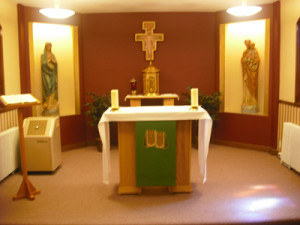
St. Clement Mary Hofbauer Church, Baltimore, Maryland

Readings at Mass

Liturgical Colour: Violet.


First reading
Isaiah 1:10,16-20 ©

Cease to do evil; learn to do good

Hear the word of the Lord,
you rulers of Sodom;
listen to the command of our God,
you people of Gomorrah.
‘Wash, make yourselves clean.
Take your wrong-doing out of my sight.
Cease to do evil.
Learn to do good,
search for justice,
help the oppressed,
be just to the orphan,
plead for the widow.
‘Come now, let us talk this over,
says the Lord.
Though your sins are like scarlet,
they shall be as white as snow;
though they are red as crimson,
they shall be like wool.
‘If you are willing to obey,
you shall eat the good things of the earth.
But if you persist in rebellion,
the sword shall eat you instead.’

Responsorial Psalm
Psalm 49(50):8-9,16-17,21,23 ©
I will show God’s salvation to the upright.
‘I find no fault with your sacrifices,
  your offerings are always before me.
I do not ask more bullocks from your farms,
  nor goats from among your herds.
I will show God’s salvation to the upright.
‘But how can you recite my commandments
  and take my covenant on your lips,
you who despise my law
  and throw my words to the winds,
I will show God’s salvation to the upright.
‘You do this, and should I keep silence?
  Do you think that I am like you?
A sacrifice of thanksgiving honours me
  and I will show God’s salvation to the upright.’
I will show God’s salvation to the upright.

Gospel AcclamationMt4:17
Glory and praise to you, O Christ!
Repent, says the Lord,
for the kingdom of heaven is close at hand.
Glory and praise to you, O Christ!
Or:Ezk18:31
Glory and praise to you, O Christ!
Shake off all your sins – it is the Lord who speaks –
and make yourselves a new heart and a new spirit.
Glory and praise to you, O Christ!

GospelMatthew 23:1-12 ©

They do not practise what they preach

Addressing the people and his disciples Jesus said, ‘The scribes and the Pharisees occupy the chair of Moses. You must therefore do what they tell you and listen to what they say; but do not be guided by what they do: since they do not practise what they preach. They tie up heavy burdens and lay them on men’s shoulders, but will they lift a finger to move them? Not they! Everything they do is done to attract attention, like wearing broader phylacteries and longer tassels, like wanting to take the place of honour at banquets and the front seats in the synagogues, being greeted obsequiously in the market squares and having people call them Rabbi.
  ‘You, however, must not allow yourselves to be called Rabbi, since you have only one master, and you are all brothers. You must call no one on earth your father, since you have only one Father, and he is in heaven. Nor must you allow yourselves to be called teachers, for you have only one Teacher, the Christ. The greatest among you must be your servant. Anyone who exalts himself will be humbled, and anyone who humbles himself will be exalted.’

The readings on this page are from the Jerusalem Bible, which is used at Mass in most of the English-speaking world. The New American Bible readings, which are used at Mass in the United States, are available in the Universalis apps, programs and downloads.

You can also view this page with the Gospel in Greek and English.


TOPICS: Catholic; General Discusssion; Prayer; Worship
KEYWORDS: catholic; lent; mt23; prayer
For your reading, reflection, faith-sharing, comments, questions, discussion.

1 posted on 03/15/2022 5:06:51 AM PDT by annalex
[ Post Reply | Private Reply | View Replies]

To: All

KEYWORDS: catholic; lent; mt23; prayer


2 posted on 03/15/2022 5:07:16 AM PDT by annalex (fear them not)
[ Post Reply | Private Reply | To 1 | View Replies]

To: nickcarraway; NYer; ELS; Pyro7480; livius; ArrogantBustard; Catholicguy; RobbyS; marshmallow; ...
Alleluia Ping

Please FReepmail me to get on/off the Alleluia Ping List.


3 posted on 03/15/2022 5:08:15 AM PDT by annalex (fear them not)
[ Post Reply | Private Reply | To 1 | View Replies]

To: annalex
Prayer thread for Salvation's recovery
Pray for Ukraine
4 posted on 03/15/2022 5:10:23 AM PDT by annalex (fear them not)
[ Post Reply | Private Reply | To 3 | View Replies]

To: annalex
Matthew
 English: Douay-RheimsLatin: Vulgata ClementinaGreek NT: Byzantine/Majority Text (2000)
 Matthew 23
1THEN Jesus spoke to the multitudes and to his disciples, Tunc Jesus locutus est ad turbas, et ad discipulos suos,τοτε ο ιησους ελαλησεν τοις οχλοις και τοις μαθηταις αυτου
2Saying: The scribes and the Pharisees have sitten on the chair of Moses. dicens : Super cathedram Moysi sederunt scribæ et pharisæi.λεγων επι της μωσεως καθεδρας εκαθισαν οι γραμματεις και οι φαρισαιοι
3All things therefore whatsoever they shall say to you, observe and do: but according to their works do ye not; for they say, and do not. Omnia ergo quæcumque dixerint vobis, servate, et facite : secundum opera vero eorum nolite facere : dicunt enim, et non faciunt.παντα ουν οσα εαν ειπωσιν υμιν τηρειν τηρειτε και ποιειτε κατα δε τα εργα αυτων μη ποιειτε λεγουσιν γαρ και ου ποιουσιν
4For they bind heavy and insupportable burdens, and lay them on men's shoulders; but with a finger of their own they will not move them. Alligant enim onera gravia, et importabilia, et imponunt in humeros hominum : digito autem suo nolunt ea movere.δεσμευουσιν γαρ φορτια βαρεα και δυσβαστακτα και επιτιθεασιν επι τους ωμους των ανθρωπων τω δε δακτυλω αυτων ου θελουσιν κινησαι αυτα
5And all their works they do for to be seen of men. For they make their phylacteries broad, and enlarge their fringes. Omnia vero opera sua faciunt ut videantur ab hominibus : dilatant enim phylacteria sua, et magnificant fimbrias.παντα δε τα εργα αυτων ποιουσιν προς το θεαθηναι τοις ανθρωποις πλατυνουσιν δε τα φυλακτηρια αυτων και μεγαλυνουσιν τα κρασπεδα των ιματιων αυτων
6And they love the first places at feasts, and the first chairs in the synagogues, Amant autem primos recubitus in cœnis, et primas cathedras in synagogis,φιλουσιν τε την πρωτοκλισιαν εν τοις δειπνοις και τας πρωτοκαθεδριας εν ταις συναγωγαις
7And salutations in the market place, and to be called by men, Rabbi. et salutationes in foro, et vocari ab hominibus Rabbi.και τους ασπασμους εν ταις αγοραις και καλεισθαι υπο των ανθρωπων ραββι ραββι
8But be not you called Rabbi. For one is your master; and all you are brethren. Vos autem nolite vocari Rabbi : unus est enim magister vester, omnes autem vos fratres estis.υμεις δε μη κληθητε ραββι εις γαρ εστιν υμων ο καθηγητης ο χριστος παντες δε υμεις αδελφοι εστε
9And call none your father upon earth; for one is your father, who is in heaven. Et patrem nolite vocare vobis super terram : unus est enim pater vester qui in cælis est.και πατερα μη καλεσητε υμων επι της γης εις γαρ εστιν ο πατηρ υμων ο εν τοις ουρανοις
10Neither be ye called masters; for one is you master, Christ. Nec vocemini magistri : quia magister vester unus est, Christus.μηδε κληθητε καθηγηται εις γαρ υμων εστιν ο καθηγητης ο χριστος
11He that is the greatest among you shall be your servant. Qui major est vestrum, erit minister vester.ο δε μειζων υμων εσται υμων διακονος
12And whosoever shall exalt himself shall be humbled: and he that shall humble himself shall be exalted. Qui autem se exaltaverit, humiliabitur : et qui se humiliaverit, exaltabitur.οστις δε υψωσει εαυτον ταπεινωθησεται και οστις ταπεινωσει εαυτον υψωθησεται

5 posted on 03/15/2022 5:10:52 AM PDT by annalex (fear them not)
[ Post Reply | Private Reply | To 4 | View Replies]

To: annalex

Catena Aurea by St. Thomas Aguinas

23:1–4

1. Then spake Jesus to the multitude, and to his disciples,

2. Saying, The Scribes and the Pharisees sit in Moses’ seat:

3. All therefore whatsoever they bid you observe, that observe and do; but do not ye after their works: for they say, and do not.

4. For they bind heavy burdens and grievous to be borne, and lay them on men’s shoulders; but they themselves will not move them with one of their fingers.

PSEUDO-CHRYSOSTOM. When the Lord had overthrown the Priests by His answer, and shewn their condition to be irremediable, forasmuch as clergy, when they do wickedly, cannot be amended, but laymen who have gone wrong are easily set right, He turns His discourse to His Apostles and the people. For that is an unprofitable word which silences one, without conveying improvement to another.

ORIGEN. The disciples of Christ are better than the common herd; and you may find in the Church such as with more ardent affection come to the word of God; these are Christ’s disciples, the rest are only His people. And sometimes He speaks to His disciples alone, sometimes to the multitudes and His disciples together, as here. The Scribes and Pharisees sit in Moses’ seat, as professing his Law, and boasting that they can interpret it. Those that do not depart from the letter of the Law are the Scribes; those who make high professions, and separate themselves from the vulgar as better than they, are called Pharisees, which signifies ‘separate.’ Those who understand and expound Moses according to his spiritual meaning, these sit indeed on Moses’ seat, but are neither Scribes nor Pharisees, but better than either, Christ’s beloved disciples. Since His coming these have sat upon the seat of the Church, which is the seat of Christ.

PSEUDO-CHRYSOSTOM. But regard must be had to this, after what sort each man fills his seat; for not the seat makes the Priest, but the Priest the seat; the place does not consecrate the man, but the man the place. A wicked Priest derives guilt and not honour from his Priesthood.

CHRYSOSTOM. (Hom. lxxii.) But that none should say, For this cause am I slack to practise, because my instructor is evil, He removes every such plea, saying, All therefore whatsoever they say unto you, that observe and do, for they speak not their own, but God’s, which things He taught through Moses in the Law. And look with how great honour He speaks of Moses, shewing again what harmony there is with the Old Testament.

ORIGEN. But if the Scribes and Pharisees who sit in Moses’ seat are the teachers of the Jews, teaching the commandments of the Law according to the letter, how is this that the Lord bids us do after all things which they say; but the Apostles in the Acts forbid the believers to do according to the letter of the Law. (Acts 15:19.) These indeed taught after the letter, not understanding the Law spiritually. Whatsoever they say to us out of the Law, with understanding of its sense, that we do and keep, not doing after their works, for they do not what the law enjoins, nor perceive the veil that is upon the letter of the Law. Or by all we are not to understand every thing in the Law, many things for example relating to the sacrifices, and the like, but such as concern our conduct. But why did He command this not of the Law of grace, but of the doctrine of Moses? Because truly it was not the time to publish the commandments of the New Law before the season of His passion. I think also that He had herein something further in view. He was about to bring many things against the Scribes and Pharisees in His discourse following, wherefore that vain men might not think that He coveted their place of authority, or spoke thus out of enmity to them, he first puts away from Himself this suspicion, and then begins to reprove them, that the people might not fall into their faults; and that, because they ought to hear them, they should not think that therefore they ought to imitate them in their works, He adds, But do ye not after their works. What can be more pitiable than such a teacher, whose life to imitate is ruin, to refuse to follow is salvation for his disciples?

PSEUDO-CHRYSOSTOM. But as gold is picked out of the dross, and the dross is left, so hearers may take doctrine and leave practice, for good doctrine oft comes from an evil man. But as Priests judge it better to teach the bad for the sake of the good, rather than to neglect the good for the sake of the bad; so also let those who are set under them pay respect to the bad Priests for the sake of the good, that the good may not be despised because of the bad; for it is better to give the bad what is not their due, rather than to defraud the good of what is justly theirs.

CHRYSOSTOM. Look with what He begins His reproof of them, For they say, and do not. Every one who transgresses the Law is deserving of blame, but especially he who has the post of instruction. And this for a threefold cause; first, because he is a transgressor; secondly, because when he ought to set others right, be himself halts; thirdly, because, being in the rank of a teacher, his influence is more corrupting. Again, He brings a further charge against them, that they oppress those that are put under them; They bind heavy burdens; in this He shews a double evil in them; that they exacted without any allowance the utmost rigour of life from those that were put under them, while they allowed themselves large licence herein. But a good ruler should do the contrary of this, to be to himself a severe judge, to others a merciful one. Observe in what forcible words He utters His reproof; He says not they cannot, but they will not; and not, lift them, but touch them with one of their fingers.

PSEUDO-CHRYSOSTOM. And to the Scribes and Pharisees of whom He is now speaking, heavy burdens not to be borne are the commandments of the Law; as St. Peter speaks in the Acts, Why seek ye to put a yoke upon the neck of the disciples, which neither we nor our fathers were able to bear? (Acts 15:10.) For commending the burdens of the Law by fabulous proofs, they bound as it were the shoulders of the heart of their hearers with bands, that thus tied as though with proof of reason to them, they might not fling them off; but themselves did not in the least measure fulfil them, that is, not only did not wholly, but did not so much as attempt to.

GLOSS. (interlin.) Or, bind burdens, that is, gather traditions from all sides, not to aid, but to burden the conscience.

JEROME. But all these things, the shoulders, the finger, the burdens, and the bands with which they bind the burdens, have a spiritual meaning. Herein also the Lord speaks generally against all masters who enjoin high things, but do not even little things.

PSEUDO-CHRYSOSTOM. Such also are they who lay a heavy burden upon those who come to penitence, so that while men would avoid present punishment, they overlook that which is to come. For if you lay upon a boy’s shoulders a burden more than he can bear, he must needs cither cast it off, or be broken down by it; so the man on whom you lay too grievous a burden of penance must either wholly refuse it, or if he submit himself to it will find himself unable to bear it, and so be offended, and sin worse. Also, if we should be wrong in imposing too light a penance, is it not better to have to answer for mercy than for severity? Where the master of the household is liberal, the steward should not be oppressive. If God be kind, should His Priest be harsh? Do you seek thereby the character of sanctity? Be strict in ordering your own life, in that of others lenient; let men hear of you as enjoining little, and performing much. The Priest who gives licence to himself, and exacts the utmost from others, is like a corrupt tax-gatherer in the state, who to ease himself taxes others heavily.

23:5–12

5. But all their works they do for to be seen of men: they make broad their phylacteries, and enlarge the borders of their garments,

6. And love the uppermost rooms at feasts, and the chief seats in the synagogues,

7. And greetings in the markets, and to be called of men, Rabbi, Rabbi.

8. But be not ye called Rabbi: for one is your Master, even Christ; and all ye are brethren.

9. And call no man your father upon the earth: for one is your Father, which is in heaven.

10. Neither be ye called masters: for one is your Master, even Christ.

11. But he that is greatest among you shall be your servant.

12. And whosoever shall exalt himself shall be abased; and he that shall humble himself shall be exalted.

CHRYSOSTOM. The Lord had charged the Scribes and Pharisees with harshness and neglect; He now brings forward their vain-glory, which made them depart from God.

PSEUDO-CHRYSOSTOM. Every substance breeds in itself that which destroys it, as wood the worm, and garments the moth; so the Devil strives to corrupt the ministry of the Priests, who are ordained for the edification of holiness, endeavouring that this good, while it is done to be seen of men, should be turned into evil. Take away this fault from the clergy, and you will have no further labour in their reform, for of this it comes that a clergyman who has sinned can hardly perform penance. Also the Lord here points out the cause why they could not believe in Christ, because nearly all they did was in order to be seen of men; for he whose desire is for earthly glory from men, cannot believe on Christ who preaches things heavenly. I have read one who interprets this place thus. In Moses’ seat, that is, in the rank and degree instituted by Moses, the Scribes and Pharisees are seated unworthily, forasmuch as they preached to others the Law which foretold Christ’s coming, but themselves did not receive Him when come. For this cause He exhorts the people to hear the Law which they preached, that is, to believe in Christ who was preached by the Law, but not to follow the Scribes and Pharisees in their disbelief of Him. And He shews the reason why they preached the coming of Christ out of the Law, yet did not believe on Him; namely, because they did not preach that Christ should come through any desire of His coming, but that they might be seen by men to be doctors of the Law.

ORIGEN. And their works likewise they do to be seen of men, using outward circumcision, taking away actual leaven out of their houses, and doing such like things. But Christ’s disciples fulfil the Law in things secret, being Jews inwardly, as the Apostle speaks. (Rom. 2:29.)

CHRYSOSTOM. Note the intensive force of the words of His reproofs. He says not merely that they do their works to be seen of men, but added, all their works. And not only in great things but in some things trivial they were vainglorious, They make broad their phylacteries and enlarge the borders of their garments.

JEROME. For the Lord, when He had given the commandments of the Law through Moses, added at the end, And thou shalt bind them for a sign upon thine hand, and they shall be ever before thine eyes; (Deut. 6:8.) the meaning of which is, Let my precepts be in thine hand so as to be fulfilled in thy works; let them be before thine eyes so as that thou shalt meditate upon them day and night. This the Pharisees misinterpreting, wrote on parchments the Decalogue of Moses, that is, the Ten Commandments, and folding them up, tied them on their forehead, so making them a crown for their head, that they should be always before their eyes. Moses had in another place given command that they should make fringes of blue in the borders of their garments, to distinguish the people of Israel (Numb. 15:39.); that as in their bodies circumcision, so in their garments the fringe, might discriminate the Jewish nation. But these superstitious teachers, catching at popular favour, and making gain of silly women, made broad hems, and fastened them with sharp pins, that as they walked or sat they might be pricked, and by such monitors be recalled to the duties of God’s ministry. This embroidery then of the Decalogue they called phylacteries, that is, conservatories, because those who wore them, wore them for their own protection and security. So little did the Pharisees understand that they were to be worn on the heart and not on the body; for in equal degree may cases and chests be said to have books, which assuredly have not the knowledge of God.

PSEUDO-CHRYSOSTOM. But after their example do many invent Hebrew names of Angels, and write them, and bind them on themselves, and they seem dreadful to such as are without understanding. Others again wear round their neck a portion of the Gospel written out. But is not the Gospel read every day in the Church, and heard by all? Those therefore who receive no profit from the Gospel sounded in their ears, how shall the having them hung about their neck save them? Further, wherein is the virtue of the Gospel? in the shape of its letters, or in the understanding its meaning? If in the characters, you do well to hang them round your neck; if in their meaning, they are of more profit when laid up in the heart, than hung round the neck. But others explain this place thus, That they made broad their teachings concerning special observances, as phylacteries, or preservatives of salvation, preaching them continually to the people. And the broad fringes of their garments they explain of the same undue stress upon such commandments.

JEROME. Seeing they thus make broad their phylacteries, and make them broad fringes, desiring to have glory of men, they are convicted also in other things; For they love the uppermost rooms at feasts, and the chief seats in the synagogues.

RABANUS. It should be noted, that He does not forbid those to whom this belongs by right of rank to be saluted in the forum, or to sit or recline in the highest room; but those who unduly desire these things, whether they obtain them or not, these He enjoins the believers to shun as wicked.

PSEUDO-CHRYSOSTOM. For He rebukes not those who recline in the highest place, but those who love such places, blaming the will not the deed. For to no purpose does he humble himself in place who exalts himself in heart. For some vain men hearing that it was a commendable thing to seat himself in the lowest place, chooses so to do; and thus not only does not put away the vanity of his heart, but adds this additional vain ostentation of his humility, as one who would be thought righteous and humble. For many proud men take the lowest place in their bodies, but in haughtiness of heart think themselves to be seated among the highest; and there are many humble men who, placed among the highest, are inwardly in their own esteem among the lowest.

CHRYSOSTOM. Observe where vain glory governed them, to wit, in the synagogues, whither they entered to guide others. It had been tolerable to have felt thus at feasts, notwithstanding that a doctor ought to be had in honour in all places alike, and not in the Churches only. But if it be blameworthy to love such things, how wrong is it to seek to attain them?

PSEUDO-CHRYSOSTOM. They love the first salutations, first, that is, not in time only, before others; but in tone, that we should say with a loud voice, Hail, Rabbi; and in body that we should bow low our head; and in place, that the salutation should be in public.

RABANUS. And herein they are not without fault, that the same men should be concerned in the litigations of the forum, who in the synagogue in Moses’ seat, seek to be called Rabbi by men.

PSEUDO-CHRYSOSTOM. That is, they wish to be called, not to be such; they desire the name, and neglect the duties.

ORIGEN. And in the Church of Christ are found some who take to themselves the uppermost places, that is, become deacons; next they aspire to the chief seats of those that are called presbyters; and some intrigue to be styled among men Bishop, that is, to be called Rabbi. But Christ’s disciple loves the uppermost place indeed, but at the spiritual banquet, where he may feed on the choicer morsels of spiritual food, for, with the Apostles who sit upon twelve thrones, he loves the chief seats, and hastes by his good works to render himself worthy of such seats; and he also loves salutations made in the heavenly market-place, that is, in the heavenly congregations of the primitive. But the righteous man would be called Rabbi, neither by man, nor by any other, because there is One Master of all men.

CHRYSOSTOM. Or otherwise; Of the foregoing things with which He had charged the Pharisees, He now passes over many as of no weight, and such as His disciples needed not to be instructed in; but that which was the cause of all evils, namely, ambition of the master’s seat, that He insists upon to instruct His disciples.

PSEUDO-CHRYSOSTOM. Be not ye called Rabbi, that ye take not to yourselves what belongs to God. And call not others Rabbi, that ye pay not to men a divine honour. For One is the Master of all, who instructs all men by nature. For if man were taught by man, all men would learn that have teachers; but seeing it is not man that teaches, but God, many are taught, but few learn. Man cannot by teaching impart an understanding to man, but that understanding which is given by God man calls forth

HILARY. And that the disciples may ever remember that they are the children of one parent, and that by their new birth they have passed the limits of their earthly origin.

JEROME. (cont. Helvid. 15.) All men may be called brethren in affection, which is of two kinds, general and particular. Particular, by which all Christians are brethren; general, by which all men being born of one Father are bound together by like tie of kindred.

PSEUDO-CHRYSOSTOM. And call no man your Father upon earth; because in this world though man begets man, yet there is one Father who created all men. For we have not beginning of life from our parents, but we have our life transmitted through them.a

ORIGEN. But who calls no man father upon earth? He who in every action done as before God, says, Our Father, which art in Heaven.

GLOSS. (non occ.) Because it was clear who was the Father of all, by this which was said, Which art in Heaven, He would teach them who was the Master of all, and therefore repeats the same command concerning a master, Neither be ye called masters; for one is your Master, even Christ.

CHRYSOSTOM. Not that when Christ is here said to be our Master, the Father is excluded, as neither when God is said to be our Father, is Christ excluded, Who is the Father of men.

JEROME. It is a difficulty that the Apostle against this command calls himself the teacher of the Gentiles; and that in monasteries in their common conversation, they call one another, Father. It is to be cleared thus. It is one thing to be father or master by nature, another by sufferance. Thus when we call any man our father, we do it to shew respect to his age, not as regarding him as the author of our being. We also call men ‘Master,’ from resemblance to a real master; and, not to use tedious repetition, as the One God and One Son, who are by nature, do not preclude us from calling others gods and sons by adoption, so the One Father and One Master, do not preclude us from speaking of other fathers and masters by an abuse of the terms.

CHRYSOSTOM. Not only does the Lord forbid us to seek supremacy, but would lead His hearer to the very opposite; He that is greatest among you shall be your servant.

ORIGEN. Or otherwise; And if one minister the divine word, knowing that it is Christ that makes it to be fruitful, such a one professes himself a minister and not a master; whence it follows, He that is greatest among you, let him be your servant. As Christ Himself, who was in truth our Master, professed Himself a minister, saying, I am in the midst of you as one that ministers. (Luke 22:27.) And well does He conclude this prohibition of all vain-glory with the words, And whosoever shall exalt himself shall be abased; and he that shall humble himself shall be exalted.

REMIGIUS. Which means that every one who thinks highly of his own deserts, shall be humbled before God; and every one who humbles himself concerning his good deeds, shall be exalted with God.

Catena Aurea Matthew 23

6 posted on 03/15/2022 5:11:33 AM PDT by annalex (fear them not)
[ Post Reply | Private Reply | To 5 | View Replies]

To: annalex


Christ at the Column (detail)

15th century

Stone
Church of St Nizier, Troye, France

7 posted on 03/15/2022 5:12:03 AM PDT by annalex (fear them not)
[ Post Reply | Private Reply | To 6 | View Replies]

To: annalex
Saint Clement Mary Hofbauer’s Story

Clement Mary might be called the second founder of the Redemptorists, as it was he who carried the congregation of Saint Alphonsus Liguori to the people north of the Alps.

John, the name given him at Baptism, was born in Moravia into a poor family, the ninth of 12 children. Although he longed to be a priest, there was no money for studies, and he was apprenticed to a baker. But God guided the young man’s fortunes. He found work in the bakery of a monastery where he was allowed to attend classes in its Latin school. After the abbot there died, John tried the life of a hermit, but when Emperor Joseph II abolished hermitages, John again returned to Vienna and to baking.

One day after serving Mass at the Cathedral of St. Stephen, he called a carriage for two ladies waiting there in the rain. In their conversation they learned that he could not pursue his priestly studies because of a lack of funds. They generously offered to support both John and his friend Thaddeus, in their seminary studies. The two went to Rome, where they were drawn to Saint Alphonsus’ vision of religious life and to the Redemptorists. The two young men were ordained together in 1785.

Newly professed at age 34, Clement Mary, as he was now called, and Thaddeus were sent back to Vienna. But the religious difficulties there caused them to leave and continue north to Warsaw, Poland. There they encountered numerous German-speaking Catholics who had been left priestless by the suppression of the Jesuits. At first they had to live in great poverty and preach outdoor sermons. Eventually they were given the church of St. Benno, and for the next nine years they preached five sermons a day, two in German and three in Polish, converting many to the faith. They were active in social work among the poor, founding an orphanage and then a school for boys.

Drawing candidates to the congregation, they were able to send missionaries to Poland, Germany, and Switzerland. All of these foundations eventually had to be abandoned because of the political and religious tensions of the times. After 20 years of difficult work, Clement Mary himself was imprisoned and expelled from the country. Only after another arrest was he able to reach Vienna, where he was to live and work the final 12 years of his life. He quickly became “the apostle of Vienna,” hearing the confessions of the rich and the poor, visiting the sick, acting as a counselor to the powerful, sharing his holiness with all in the city. His crowning work was the establishment of a Catholic college in his beloved city.

Persecution followed Clement Mary, and there were those in authority who were able for a while to stop him from preaching. An attempt was made at the highest levels to have him banished. But his holiness and fame protected him and prompted the growth of the Redemptorists. Due to his efforts, the congregation was firmly established north of the Alps by the time of his death in 1820.

Clement Mary Hofbauer was canonized in 1909. His liturgical feast is celebrated on March 15.


Reflection

Clement Mary saw his life’s work meet with disaster. Religious and political tensions forced him and his brothers to abandon their ministries in Germany, Poland, and Switzerland. Clement Mary himself was exiled from Poland and had to start all over again. Someone once pointed out that the followers of the crucified Jesus should see only new possibilities opening up whenever they meet failure. Clement Mary encourages us to follow his example, trusting in the Lord to guide us.


franciscanmedia.org
8 posted on 03/15/2022 5:16:08 AM PDT by annalex (fear them not)
[ Post Reply | Private Reply | To 7 | View Replies]

To: annalex

9 posted on 03/15/2022 5:16:54 AM PDT by annalex (fear them not)
[ Post Reply | Private Reply | To 8 | View Replies]

To: annalex
NAVARRE BIBLE COMMENTARY (RSV)

Ad Majorem Dei Gloriam (To the Greater Glory of God)

From: Isaiah 1:10, 16-20

Religion Without Soul
---------------------
[10] Hear the word of the LORD, you rulers of Sodom! Give ear to the teaching of our God, you people of Gomorrah!

Call to Conversion
------------------
[16] Wash yourselves; make yourselves clean; remove the evil of your doings from before my eyes; cease to do evil, [17] learn to do good; seek justice, correct oppression; defend the fatherless, plead for the widow.

The People Must Decide--Obedience or Rebellion
----------------------------------------------
[18] ”Come now, let us reason together, says the LORD: though your sins are like scarlet, they shall be as white as snow; though they are red like crimson, they shall become like wool. [19] If you are willing and obedient, you shall eat the good of the land; [20] But if you refuse and rebel, you shall be devoured by the sword; for the mouth of the LORD has spoken?"

***********************************************************************
Commentary:

1:2-39:8. The first part of the book of Isaiah is usually described as “First Isaiah”. It includes prophetic passages that have as their background the threat posed by the Assyrians to Judah and Jerusalem during the second half of the eighth century BC. At the start and conclusion of this part, Jerusalem is referred to as a “besieged city” and as “overthrown by aliens” (l:7-8; 36:1ff).

The sacred text links the people of Judah’s distress and uneasiness with the fact that they have distanced themselves from God; they live without reference to him, forgetful of all he has done for them. The future looks bleak, for there is no sign of their heeding the prophet’s call to conversion. However, there is still some cause for hope, for a remnant of Israel has kept faith with God, and from it a new, reformed people will emerge. In various ways a contrast is drawn between those (like King Ahaz: cf. 7:1-17) who clearly do not put their trust in God, relying only on human prudence to deal with the situation, and others (like King Hezekiah: 36:1-38:22) who have recourse to the Lord and make every effort to remedy things; they are confident that God will come to their aid and deliver them from danger.

The first part of the book contains prophetic passages that differ in style and origin. The oldest of them reflect the fear caused by the sheer might of Assyria, which is depicted as a rod or staff wielded by the Lord in his anger (cf. 10:5). All nations in the region felt threatened by Assyria, whose armies reached the very gates of Jerusalem when Sennacherib besieged the city. (That siege marks the end of this part of the book.)

These words of prophecy fall into six sections. The first deals with the threat hanging over Israel and Judah (1:2-12:6); and the second contains oracles to do with foreign nations (13:1-23:18). The third, which in away contains the theological basis of all the teaching found in First Isaiah, and which is known as the “Apocalypse of Isaiah”, deals with the sentence passed on the nations by the Lord (he is supreme, and nothing escapes his justice); still, the light of salvation is always on the horizon (24:1-27:13). Then we hear more about the misfortunes that threaten Jerusalem on account of its sins -- and further reason to hope that all is not lost (28:1-33:24). After returning to the theme of divine judgment and rallying the people to hope in salvation, in a section known as the “little Apocalypse” (34:1-35:10), First Isaiah ends with a narrative section dealing with the havoc caused in Judah by Sennacherib’s forces, although, for a while at least, a small remnant is spared -- those who take refuge in Jerusalem alongside Hezekiah the king (36:1-39:8).

1:2-12:6. Isaiah’s ministry as a prophet must have begun in the years prior to the war, when the kingdoms of Syria and Ephraim (Israel), with Egypt’s encouragement, joined forces and took to the field in campaigns aimed at stemming the advance of the Assyrians. The kings of Syria and Israel tried to persuade Ahaz of Judah to join their alliance. Ahaz refused to get involved and, instead, sought to ingratiate himself with Assyria in order to save his country. In 734 BC Assyria overran Syria, most of Israel and the Lebanon, the Philistine coast and the Transjordan, and in the years that followed it consolidated its grip on the region. After the fall of Samaria (722 BC), much of the population of Israel was deported and replaced by foreigners.

The kingdom of Judah was not invaded, but it was forced to pay heavy tribute and became a state dependent on Assyria. At the cost of many concessions, an uneasy peace prevailed. Religious life and the rule of law deteriorated. This was the background to the earliest of the oracles contained in these twelve chapters. The section begins with a general denunciation of the forsaking of the Lord; no specific events are mentioned. It is a time of crisis, with Judah laid waste and Jerusalem under siege (1:2-20); clearly there is need for a call to conversion, to atone for sins and infidelities (1:21-31). After a few verses that strike a note of hope (in time, Jerusalem will be raised on high), there follow oracles that describe how the people have been laid low on account of their pride (2:6-22). However, amid all the uncleanness, a seed of beauty remains, offering hopes of rebirth (3:1-4:6). One could say that the core of the whole section is the “Song of the vineyard” (5:1-7), a lovely allegory about the care that the Lord lavishes on his people, and about their failure to appreciate it.

After this we begin to find references to specific times in what is called the “Book of lmmanuel” (7:1-12:6), which begins with an account of the calling of Isaiah, whom the Lord has commissioned to explain the meaning of what is happening and to show that there are grounds for hope (6:1-13). In line with this, the prophet approaches Ahaz to encourage him to trust in the Lord (7:1-17) in the face of threatened invasion (7:18-25). Assyria is about to close in on Israel and Judah (8:1-22), but there is still hope of deliverance (8:23-9:6). Punishment does await Israel and Judah (9:7-10:4), but Assyria will not escape it either (10:5-19). Meanwhile, the “remnant” of Israel will grow in its appreciation of the Lord and will find peace (10:20-11:9). The section ends with a song of joy and praise to the Lord for saving and renewing his people (11:10-12:6).

1:2-31. The first oracles are couched in the language of a lawsuit (rib). This is a style of writing often found in the prophetical literature of Israel. which shares similar modes of expression with other writings of the ancient Middle East (see the note on Is 1:10-20). However, other people resort to that legal style when they seek to justify the punishment inflicted on a vassal by an aggrieved overlord, whereas when prophetical texts denounce a fault it is in order to evince an immediate change of heart. The Lord takes no pleasure in punishing people; he very much wants to forgive transgressors and reestablish friendship with them.

The passage begins by calling on heaven and earth to see how wickedly the people have acted, and by accusing them of forsaking the Lord (vv. 2-3). It then inveighs against those who have turned away from the Lord and show no inclination to react, even though misfortune has overtaken them (vv. 4-9), and it denounces the hypocrisy of a people that goes through the motions of religious worship without having the right dispositions (vv. 10-15). A call to conversion follows (vv. 16-17). The Lord is ready to argue his point against his people, to reward them if they mend their ways or punish them if they persist in their sins (vv. 18-20). They are in a bad way, such is their sinfulness (vv. 21-23). Their punishment will be very harsh; so they should respond now and be faithful, as they were in earlier times (vv. 24-31).

This oracle brings in all the main theological themes found in the history of the chosen people of the Old Testament -- their divine election; God’s offer of a Covenant; the people’s transgression of the Covenant; God’s punishment for their infidelity. Even so, it shows that theirs is a merciful God, ever ready to forgive offences; he never turns his back on those whom he has loved.

1:10-20. These verses, too, in some ways form a literary unit in line with the “lawsuit” ("rib") style often found in prophetical literature: the charge sheet (vv. 10-15) is set against a list of good works, given here in the form of an exhortation (vv. 16-17), and then comes to the sentence at the end, seen here in the attitude of the judge, who is God (vv. 18-20).

Harsh words (v. 10) are used: the people of Judah are identified with those of Sodom and Gomorrah, the epitome of sin and rejection of God. The transgressions of which they are accused are against acts of worship (vv. 11-15), listed one after the other--sacrifices, incense offerings, festivals, entreaties. The accusation is not against acts of worship in themselves, for these are laid down in the book of Leviticus and therefore are right and proper. What the prophet is inveighing against is religious formalism and the dichotomy between performance and intention, as can be seen from the verses that follow. What God desires is sincerity of heart, virtue, protection for the weak--in other words, proper treatment of others. In laying down the law here, the Lord shows his readiness to forgive, while still holding out the threat of punishment (vv. 18-20).

Some passages of the section are read in the Liturgy during Lent (Tuesday of the Second Week) to help people check whether they have given God the worship due to him, and as a call to a sincere change of heart. Christian writers have used this passage from Isaiah (and other texts from the Scriptures) to explain that true religion and compassion begin in a person’s heart and then express themselves in actions. For example, one of the apostolic Fathers writes: “Inspired by the Holy Spirit, the ministers of God’s grace will speak of penance. And the Lord of all things himself spoke of penance, and swore an oath: I do not desire the death of the wicked man, but that he should change his ways; and he adds: "Cease to do evil, learn to do good; [...] though your sins are like scarlet, they shall be as white as snow, though they are red like crimson, they shall become like wool." The Lord desires that all whom he loves would repent, and he affirms it by his all-powerful will. Let us be obedient, then, to his glorious plan, and, by imploring his mercy and kindness, let us return to his goodness and be converted, leaving aside all our vain works, the disputes and jealousies that lead to death” (St Clement of Rome, "Ad Corinthios", 8, 1-9, 1).

1-17. “Learn to do good”: in order to lead the sort of lives that God wants, we need to be properly schooled. St Basil comments: “Since moral understanding is neither self-evident nor clear to all, we must learn to do good deeds through our study of sound doctrine” ("Enarratio in Isaiam", 1, 40). As well as calling for sound doctrine, holiness of life requires the practice of virtue, day after day, consistently, in whatever circumstances we find ourselves. The “human virtues are [...] the foundation for the supernatural ones. These in turn provide us with constant encouragement to behave in a noble way. But it is not sufficient merely to want to have these virtues: we must learn bow to practise them. "Discite benefacere" (Is 1:17), learn to do good. We need to make a habit of exercising each virtue, by actually being sincere, truthful, balanced, calm, and patient--for love is proved by deeds and we cannot love God only by word, but ‘with deeds and in truth’ (1 Jn 3:18)” (St Josemaria Escriva, "Friends of God", 91).

10 posted on 03/15/2022 6:15:16 AM PDT by fidelis (Ecce Crucem Domi/i><p>! Fugite partes adversae! Vicit Leo de tribu Juda, Radix David! Alleluia! )
[ Post Reply | Private Reply | To 9 | View Replies]

To: fidelis
From: Matthew 23:1-12

Vices of the Scribes and Pharisees
----------------------------------
[1] Then said Jesus to the crowds and to His disciples, [2] "The scribes and the Pharisees sit on Moses' seat; [3] so practice and observe whatever they tell you, but not what they do; for they preach, but do not practice. [4] They bind heavy burdens, hard to bear, and lay them on men's shoulders; but they themselves will not move them with their finger. [5] They do all their deeds to be seen by men; for they make their phylacteries broad and their fringes long, [6] and they love the place of honor at feasts and the best seats in the synagogues, [7] and salutations in the market places, and being called rabbi by men. [8] But you are not to be called rabbi, for you have one teacher, and you are all brethren. [9] And call no man your father on earth, for you have one Father, who is in Heaven. [10] Neither be called masters, for you have one master, the Christ. [11] He who is greatest among you shall be your servant; [12] whoever exalts himself will be humbled, and whoever humbles himself will be exalted."

***********************************************************************
Commentary:

1-39. Throughout this chapter Jesus severely criticizes the scribes and Pharisees and demonstrates the sorrow and compassion He feels towards the ordinary mass of the people, who have been ill-used, "harassed and helpless, like sheep without a shepherd" (Matthew 9:36). His address may be divided into three parts: in the first (verses 1-12) He identifies their principal vices and corrupt practices; in the second (verses 13-36) He confronts them and speaks His famous "woes", which in effect are the reverse of the Beatitudes He preached in Chapter 5: no one can enter the Kingdom of Heaven--no one can escape condemnation to the flames--unless he changes his attitude and behavior; in the third part (verses 37-39) He weeps over Jerusalem, so grieved is He by the evils into which the blind pride and hardheartedness of the scribes and Pharisees have misled the people.

2-3. Moses passed on to the people the Law received from God. The scribes, who for the most part sided with the Pharisees, had the function of educating the people in the Law of Moses; that is why they were said to "sit on Moses' seat". Our Lord recognized that the scribes and Pharisees did have authority to teach the Law; but He warns the people and His disciples to be sure to distinguish the Law as read out and taught in the synagogues from the practical interpretations of the Law to be seen in their leaders' lifestyles. Some years later, St. Paul--a Pharisee like his father before him--faced his former colleagues with exactly the same kind of accusations as Jesus makes here: "You then who teach others, will you not teach yourself? While you preach against stealing, do you steal? You who say that one must not commit adultery, do you commit adultery? You who abhor idols, do you rob temples? You who boast in the law, do you dishonor God by breaking the law? For, as it is written, `The name of God is blasphemed among the Gentiles because of you'" (Romans 2:21-24).

5. "Phylacteries": belts or bands carrying quotations from sacred Scripture which the Jews used to wear fastened to their arms or foreheads. To mark themselves out as more religiously observant than others, the Pharisees used to wear broader phylacteries. The fringes were light-blue stripes on the hems of cloaks; the Pharisees ostentatiously wore broader fringes.

8-10. Jesus comes to teach the truth; in fact, He is the Truth (John 14:6). As a teacher, therefore, He is absolutely unique and unparalleled. "The whole of Christ's life was a continual teaching: His silences, His miracles, His gestures, His prayer, His love for people, His special affection for the little and the poor, His acceptance of the total sacrifice on the cross for the redemption of the world, and His resurrection are the actualization of His word and the fulfillment of revelation. Hence for Christians the crucifix is one of the most sublime and popular images of Christ the Teacher.

"These considerations are in line with the great traditions of the Church and they all strengthen our fervor with regard to Christ, the Teacher who reveals God to man and man to himself, the Teacher who saves, sanctifies and guides, who lives, who speaks, rouses, moves, redresses, judges, forgives, and goes with us day by day on the path of history, the Teacher who comes and will come in glory" (John Paul II, "Catechesi Tradendae", 9).

11. The Pharisees were greedy for honor and recognition: our Lord insists that every form of authority, particularly in the context of religion, should be exercised as a form of service to others; it must not be used to indulge personal vanity or greed. "He who is the greatest among you shall be your servant".

12. A spirit of pride and ambition is incompatible with being a disciple of Christ. Here our Lord stresses the need for true humility, for anyone who is to follow Him. The verbs "will be humbled", "will be exalted" have "God" as their active agent. Along the same lines, St. James preaches that "God opposes the proud, but gives grace to the humble" (James 4:6). And in the "Magnificat", the Blessed Virgin explains that the Lord "has put down the mighty from their thrones, and exalted those of low degree [the humble]" (Luke 1:52).

Source: Daily Word for Reflection—Navarre Bible Commentary

11 posted on 03/15/2022 6:15:38 AM PDT by fidelis (Ecce Crucem Domi/i><p>! Fugite partes adversae! Vicit Leo de tribu Juda, Radix David! Alleluia! )
[ Post Reply | Private Reply | To 10 | View Replies]

To: fidelis

Call No Man Father?

Some non-Catholic Christians claim that when Catholics address priests as “father,” they are engaging in an unbiblical practice that Jesus forbade: “Call no man your father on earth, for you have one Father, who is in heaven” (Matt. 23:9).

How should Catholics respond?

The Answer

To understand why the charge does not work, one must first understand the use of the word “father” in reference to our earthly fathers. No one would deny a little girl the opportunity to tell someone that she loves her father. Common sense tells us that Jesus wasn’t forbidding this type of use of the word “father.”

In fact, to forbid it would rob the address “Father” of its meaning when applied to God, for there would no longer be any earthly counterpart for the analogy of divine Fatherhood. The concept of God’s role as Father would be meaningless if we obliterated the concept of earthly fatherhood.

But in the Bible the concept of fatherhood is not restricted to just our earthly fathers and God. It is used to refer to people other than biological or legal fathers, and is used as a sign of respect to those with whom we have a special relationship.

For example, Joseph tells his brothers of a special fatherly relationship God had given him with the king of Egypt: “So it was not you who sent me here, but God; and he has made me a father to Pharaoh, and lord of all his house and ruler over all the land of Egypt” (Gen. 45:8).

Job indicates he played a fatherly role with the less fortunate: “I was a father to the poor, and I searched out the cause of him whom I did not know” (Job 29:16). And God himself declares that he will give a fatherly role to Eliakim, the steward of the house of David: “In that day I will call my servant Eliakim, the son of Hilkiah . . . and I will clothe him with [a] robe, and will bind [a] girdle on him, and will commit . . . authority to his hand; and he shall be a father to the inhabitants of Jerusalem and to the house of Judah” (Isa. 22:20–21).

This type of fatherhood applies not only to those who are wise counselors (like Joseph) or benefactors (like Job) or both (like Eliakim); it also applies to those who have a fatherly spiritual relationship with one. For example, Elisha cries, “My father, my father!” to Elijah as the latter is carried up to heaven in a whirlwind (2 Kgs. 2:12). Later, Elisha himself is called a father by the king of Israel (2 Kgs. 6:21).

A Change with the New Testament?

Some argue that this usage changed with the New Testament—that while it may have been permissible to call certain men “father” in the Old Testament, since the time of Christ, it’s no longer allowed. This argument fails for several reasons.

First, as we’ve seen, the imperative “call no man father” does not apply to one’s biological father. It also doesn’t exclude calling one’s ancestors “father,” as is shown in Acts 7:2, where Stephen refers to “our father Abraham,” or in Romans 9:10, where Paul speaks of “our father Isaac.”

Second, there are numerous examples in the New Testament of the term “father” being used as a form of address and reference, even for men who are not biologically related to the speaker. There are, in fact, so many uses of “father” in the New Testament, that the objection to Catholics calling priests “father” must be wrong, as we shall see.

Third, a careful examination of the context of Matthew 23 shows that Jesus didn’t intend for his words here to be understood literally. The whole passage reads, “But you are not to be called ‘rabbi,’ for you have one teacher, and you are all brethren. And call no man your father on earth, for you have one Father, who is in heaven. Neither be called ‘masters,’ for you have one master, the Christ” (Matt. 23:8–10).

The first problem is that although Jesus seems to prohibit the use of the term “teacher,” in Matthew 28:19–20, Christ himself appointed certain men to be teachers in his Church: “Go therefore and make disciples of all nations . . . teaching them to observe all that I have commanded you.” Paul speaks of his commission as a teacher: “For this I was appointed a preacher and apostle . . . a teacher of the Gentiles in faith and truth” (1 Tim. 2:7); “For this gospel I was appointed a preacher and apostle and teacher” (2 Tim. 1:11). He also reminds us that the Church has an office of teacher: “God has appointed in the church first apostles, second prophets, third teachers” (1 Cor. 12:28); and “his gifts were that some should be apostles, some prophets, some evangelists, some pastors and teachers” (Eph. 4:11). There is no doubt that Paul was not violating Christ’s teaching in Matthew 23 by referring so often to others as “teachers.”

Those who object to the term as used by Catholics themselves slip up on this point by calling all sorts of people “doctor”; for example, professors and scientists who have Ph.D. degrees (i.e., doctorates). What they fail to realize is that “doctor” is simply the Latin word for “teacher.” Even “Mister” and “Mistress” (“Mrs.”) are forms of the word “master,” also mentioned by Jesus. So if his words in Matthew 23 were meant to be taken literally, the objectors would be just as guilty for using the word “teacher” and “doctor” and “mister” as Catholics for saying “father.” But clearly, that would be a misunderstanding of Christ’s words.

So What Did Jesus Mean?

Jesus criticized Jewish leaders who love “the place of honor at feasts and the best seats in the synagogues, and salutations in the market places, and being called ‘rabbi’ by men” (Matt. 23:6–7). He was using hyperbole (exaggeration) to show the scribes and Pharisees how sinful and proud they were for not looking humbly to God as the source of all authority and fatherhood and teaching, and instead setting themselves up as the ultimate authorities, father figures, and teachers.

Christ used hyperbole often, for example when he declared, “If your right eye causes you to sin, pluck it out and throw it away; it is better that you lose one of your members than that your whole body be thrown into hell” (Matt. 5:29, cf. 18:9; Mark 9:47). Christ certainly did not intend this to be applied literally, for otherwise all Christians would be blind amputees! (cf. 1 John 1:8; 1 Tim. 1:15).

Jesus is not forbidding us to call men “fathers” who actually are such—either literally or spiritually. He is warning people against inaccurately attributing fatherhood—or a particular kind or degree of fatherhood—to those who do not have it.

As the apostolic example shows, some individuals genuinely do have a spiritual fatherhood, meaning that they can be referred to as spiritual fathers. What must not be done is to confuse their form of spiritual paternity with that of God. Ultimately, God is our supreme protector, provider, and instructor. Correspondingly, it is wrong to view any individual other than God as having these roles.

Throughout the world, some people have been tempted to look upon religious leaders who are mere mortals as if they were an individual’s supreme source of spiritual instruction, nourishment, and protection. The tendency to turn mere men into “gurus” is worldwide.

This was also a temptation in the Jewish world of Jesus’ day, when famous rabbinical leaders, especially those who founded important schools, such as Hillel and Shammai, were highly exalted by their disciples. It is this elevation of an individual man—the formation of a “cult of personality” around him—of which Jesus is speaking when he warns against attributing to someone an undue role as master, father, or teacher.

He is not forbidding the perfunctory use of honorifics nor forbidding us to recognize that the person does have a role as a spiritual father and teacher. The example of his own apostles shows us that.

The Apostles Show the Way

The New Testament is filled with examples of and references to spiritual father-son and father-child relationships. It is worth quoting some of them here.

Paul regularly referred to Timothy as his child: “Therefore I sent to you Timothy, my beloved and faithful child in the Lord, to remind you of my ways in Christ” (1 Cor. 4:17); “To Timothy, my true child in the faith: grace, mercy, and peace from God the Father and Christ Jesus our Lord” (1 Tim. 1:2); “To Timothy, my beloved child: Grace, mercy, and peace from God the Father and Christ Jesus our Lord” (2 Tim. 1:2).

He also referred to Timothy as his son: “This charge I commit to you, Timothy, my son, in accordance with the prophetic utterances which pointed to you, that inspired by them you may wage the good warfare” (1 Tim 1:18); “You then, my son, be strong in the grace that is in Christ Jesus” (2 Tim. 2:1); “But Timothy’s worth you know, how as a son with a father he has served with me in the gospel” (Phil. 2:22).

Paul also referred to other of his converts in this way: “To Titus, my true child in a common faith: grace and peace from God the Father and Christ Jesus our Savior” (Titus 1:4); “I appeal to you for my child, Onesimus, whose father I have become in my imprisonment” (Philem. 10). None of these men were Paul’s literal sons. Rather, Paul is emphasizing his spiritual fatherhood with them.

Spiritual Fatherhood

Perhaps the most pointed New Testament reference to the theology of the spiritual fatherhood of priests is Paul’s statement, “I do not write this to make you ashamed, but to admonish you as my beloved children. For though you have countless guides in Christ, you do not have many fathers. For I became your father in Christ Jesus through the gospel” (1 Cor. 4:14–15).

Peter followed the same custom, referring to Mark as his son: “She who is at Babylon, who is likewise chosen, sends you greetings; and so does my son Mark” (1 Pet. 5:13). The apostles sometimes referred to entire churches under their care as their children. Paul writes, “Here for the third time I am ready to come to you. And I will not be a burden, for I seek not what is yours but you; for children ought not to lay up for their parents, but parents for their children” (2 Cor. 12:14); and, “My little children, with whom I am again in travail until Christ be formed in you!” (Gal. 4:19).

John said, “My little children, I am writing this to you so that you may not sin; but if any one does sin, we have an advocate with the Father, Jesus Christ the righteous” (1 John 2:1); “No greater joy can I have than this, to hear that my children follow the truth” (3 John 4). In fact, John also addresses men in his congregations as “fathers” (1 John 2:13–14).

By referring to these people as their spiritual sons and spiritual children, Peter, Paul, and John imply their own roles as spiritual fathers. Since the Bible frequently speaks of this spiritual fatherhood, we Catholics acknowledge it and follow the custom of the apostles by calling priests “father.” Failure to acknowledge this is a failure to recognize and honor a great gift God has bestowed on the Church: the spiritual fatherhood of the priesthood.

(From the Catholic Answers tract, "Call No Man Father?")

12 posted on 03/15/2022 6:42:22 AM PDT by fidelis (Ecce Crucem Domi/i><p>! Fugite partes adversae! Vicit Leo de tribu Juda, Radix David! Alleluia! )
[ Post Reply | Private Reply | To 11 | View Replies]

To: fidelis

Act of Good Intention (Nun Komm)

St. Klemens Maria Hofbauer (1751-1820)
clemens_maria_hofbauer5
Click the Button to sing the prayer, or play the song in a New Window
http://www.sing-prayer.org/wp-content/uploads/2021/02/ActOfGoodIntention.mp3

Let my ob-ject e__-ver be,
To give glor-y Lord to Thee.
If I work or if I__ rest,
May God’s Ho-ly Name__ be blest.
Grant me grace my all__ to give,
Un-to Him by Whom I live.
Je-sus for Thy help I__ plead,
Mary for me in__-ter-cede. A__-men.


The Catechism Explained: An Exhaustive Explanation of the Christian Religion, by Fr. Francis Spirago. Page 3, #3.

Spirago-Catechism-front_cover-min-scaled


13 posted on 03/15/2022 9:24:38 AM PDT by CharlesOConnell (CharlesOConnell)
[ Post Reply | Private Reply | To 12 | View Replies]

Disclaimer: Opinions posted on Free Republic are those of the individual posters and do not necessarily represent the opinion of Free Republic or its management. All materials posted herein are protected by copyright law and the exemption for fair use of copyrighted works.

Free Republic
Browse · Search
Religion
Topics · Post Article

FreeRepublic, LLC, PO BOX 9771, FRESNO, CA 93794
FreeRepublic.com is powered by software copyright 2000-2008 John Robinson