Skip to comments.
Catholic Caucus: Daily Mass Readings 29-Oct-2021
Universalis/Jerusalem Bible ^
Posted on 10/29/2021 5:25:26 AM PDT by annalex
October 29, 2021
Friday of week 30 in Ordinary Time

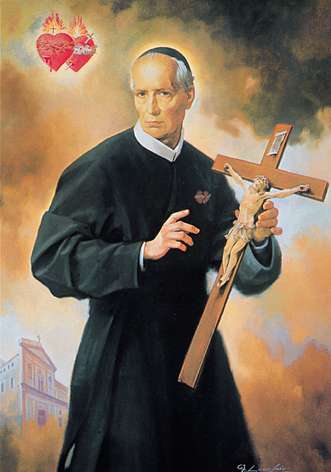
Missionaries of the Sacred Hearts of Jesus and Mary, Secondigliano, Italy Readings at MassLiturgical Colour: Green.
| First reading | Romans 9:1-5 © |
|---|
I would willingly be condemned if it could help my brothersWhat I want to say now is no pretence; I say it in union with Christ – it is the truth – my conscience in union with the Holy Spirit assures me of it too. What I want to say is this: my sorrow is so great, my mental anguish so endless, I would willingly be condemned and be cut off from Christ if it could help my brothers of Israel, my own flesh and blood. They were adopted as sons, they were given the glory and the covenants; the Law and the ritual were drawn up for them, and the promises were made to them. They are descended from the patriarchs and from their flesh and blood came Christ who is above all, God for ever blessed! Amen.
| Responsorial Psalm |
|---|
| Psalm 147:12-15,19-20 © |
|---|
O praise the Lord, Jerusalem! O praise the Lord, Jerusalem! Zion, praise your God! He has strengthened the bars of your gates he has blessed the children within you. O praise the Lord, Jerusalem! He established peace on your borders, he feeds you with finest wheat. He sends out his word to the earth and swiftly runs his command. O praise the Lord, Jerusalem! He makes his word known to Jacob, to Israel his laws and decrees. He has not dealt thus with other nations; he has not taught them his decrees. O praise the Lord, Jerusalem!
| Gospel Acclamation | cf.1Th2:13 |
|---|
Alleluia, alleluia! Accept God’s message for what it really is: God’s message, and not some human thinking. Alleluia! Alleluia, alleluia! The sheep that belong to me listen to my voice, says the Lord, I know them and they follow me. Alleluia!
'Is it against the law to cure a man on the sabbath?'Now on a sabbath day Jesus had gone for a meal to the house of one of the leading Pharisees; and they watched him closely. There in front of him was a man with dropsy, and Jesus addressed the lawyers and Pharisees. ‘Is it against the law’ he asked ‘to cure a man on the sabbath, or not?’ But they remained silent, so he took the man and cured him and sent him away. Then he said to them, ‘Which of you here, if his son falls into a well, or his ox, will not pull him out on a sabbath day without hesitation?’ And to this they could find no answer. The readings on this page are from the Jerusalem Bible, which is used at Mass in most of the English-speaking world. The New American Bible readings, which are used at Mass in the United States, are available in the Universalis apps, programs and downloads.
You can also view this page with the Gospel in Greek and English. |
TOPICS: Catholic; General Discusssion; Prayer; Worship
KEYWORDS: catholic; lk14; ordinarytime; prayer
For your reading, reflection, faith-sharing, comments, questions, discussion.
1
posted on
10/29/2021 5:25:26 AM PDT
by
annalex
To: All
KEYWORDS: catholic; lk14; ordinarytime; prayer;
2
posted on
10/29/2021 5:25:55 AM PDT
by
annalex
(fear them not)
To: nickcarraway; NYer; ELS; Pyro7480; livius; ArrogantBustard; Catholicguy; RobbyS; marshmallow; ...
Alleluia Ping Please FReepmail me to get on/off the Alleluia Ping List.
3
posted on
10/29/2021 5:26:48 AM PDT
by
annalex
(fear them not)
To: annalex
4
posted on
10/29/2021 5:27:11 AM PDT
by
annalex
(fear them not)
To: annalex
| Luke |
| | English: Douay-Rheims | Latin: Vulgata Clementina | Greek NT: Byzantine/Majority Text (2000) |
| | Luke 14
|
| 1. | AND it came to pass, when Jesus went into the house of one of the chief of the Pharisees, on the sabbath day, to eat bread, that they watched him. | Et factum est cum intraret Jesus in domum cujusdam principis pharisæorum sabbato manducare panem, et ipsi observabant eum. | και εγενετο εν τω ελθειν αυτον εις οικον τινος των αρχοντων των φαρισαιων σαββατω φαγειν αρτον και αυτοι ησαν παρατηρουμενοι αυτον |
| 2. | And behold, there was a certain man before him that had the dropsy. | Et ecce homo quidam hydropicus erat ante illum. | και ιδου ανθρωπος τις ην υδρωπικος εμπροσθεν αυτου |
| 3. | And Jesus answering, spoke to the lawyers and Pharisees, saying: Is it lawful to heal on the sabbath day? | Et respondens Jesus dixit ad legisperitos et pharisæos, dicens : Si licet sabbato curare ? | και αποκριθεις ο ιησους ειπεν προς τους νομικους και φαρισαιους λεγων ει εξεστιν τω σαββατω θεραπευειν |
| 4. | But they held their peace. But he taking him, healed him, and sent him away. | At illi tacuerunt. Ipse vero apprehensum sanavit eum, ac dimisit. | οι δε ησυχασαν και επιλαβομενος ιασατο αυτον και απελυσεν |
| 5. | And answering them, he said: Which of you shall have an ass or an ox fall into a pit, and will not immediately draw him out, on the sabbath day? | Et respondens ad illos dixit : Cujus vestrum asinus, aut bos in puteum cadet, et non continuo extrahet illum die sabbati ? | και αποκριθεις προς αυτους ειπεν τινος υμων υιος η βους εις φρεαρ εμπεσειται και ουκ ευθεως ανασπασει αυτον εν τη ημερα του σαββατου |
| 6. | And they could not answer him to these things. | Et non poterant ad hæc respondere illi. | και ουκ ισχυσαν ανταποκριθηναι αυτω προς ταυτα |
5
posted on
10/29/2021 5:28:06 AM PDT
by
annalex
(fear them not)
To: annalex

Catena Aurea by St. Thomas Aguinas
14:16
1. And it came to pass, as he went into the house of one of the chief Pharisees to eat bread on the sabbath day, that they watched him.
2. And, behold, there was a certain man before him which had the dropsy.
3. And Jesus answering spake unto the Lawyers and Pharisees, saying, Is it lawful to heal on the sabbath day?
4. And they held their peace. And he took him, and healed him, and let him go;
5. And answered them, saying, Which of you shall have an ass or an ox fallen into a pit, and will not straightway pull him out on the sabbath day?
6. And they could not answer him again to these things.
CYRIL OF ALEXANDRIA. Although our Lord knew the malice of the Pharisees, yet He became their guest, that He might benefit by His words and miracles those who were present. Whence it follows, And it came to pass, as he went into the house of one of the chief Pharisees to eat bread on the sabbath day, that they watched him; to see whether He would despise the observance of the law, or do any thing that was forbidden on the sabbath day. When then the man with the dropsy came into the midst of them, He rebukes by a question the insolence of the Pharisees, who wished to detect Him; as it is said, And, behold, there was a certain man before him which had the dropsy. And Jesus answering, &c.
BEDE. When it is said that Jesus answered, there is a reference to the words which went before, And they watched him. For the Lord knew the thoughts of men.
THEOPHYLACT. But by His question He exposes their folly. For while God blessed the sabbath, (Gen. 2:1.) they forbade to do good on the sabbath; but the day which does not admit the works of the good is accursed.
BEDE. But they who were asked, are rightly silent, for they perceived that whatever they said, would be against themselves. For if it is lawful to heal on the sabbath day, why did they watch the Saviour whether He would heal? If it is not lawful, why do they take care of their cattle on the sabbath? Hence it follows, But they held their peace.
CYRIL OF ALEXANDRIA. Disregarding then the snares of the Jews, He cures the dropsical, who from fear of the Pharisees did not ask to be healed on account of the sabbath, but only stood up, that when Jesus beheld him, He might have compassion on him and heal him. And the Lord knowing this, asked not whether he wished to be made whole, but forthwith healed him. Whence it follows; And he took him, and healed him, and let him go. Wherein our Lord took no thought not to offend the Pharisees, but only that He might benefit him who needed healing. For it becomes us, when a great good is the result, not to care if fools take offence.
CYRIL OF ALEXANDRIA. But seeing the Pharisees awkwardly silent, Christ baffles their determined impudence by some important considerations. As it follows; And he answered and said unto them, Which of you shall have an ass or an ox fallen into a pit, and will not straightway pull him out on the sabbath day?
THEOPHYLACT. As though He said, If the law forbids to have mercy on the sabbath-day, have no care of thy son when in danger on the sabbath-day. But why speak I of a son, when thou dost not even neglect an ox if thou seest it in danger?
BEDE. By these words He so refutes His watchers, the Pharisees, as to condemn them also of covetousness, who in the deliverance of animals consult their own desire of wealth. How much more then ought Christ to deliver a man, who is much better than cattle!
AUGUSTINE. (de Quæst. Evan. lib. 2. cap. 29.) Now He has aptly compared the dropsical man to an animal which has fallen into a ditch, (for he is troubled by water,) as He compared that woman, whom He spoke of as bound, and whom He Himself loosed, to a beast which is let loose to be led to water.
BEDE. By a suitable example then He settles the question, shewing that they violate the sabbath by a work of covetousness, who contend that he does so by a work of charity. Hence it follows, And they could not answer him again to these things. Mystically, the dropsical man is compared to him who is weighed down by an overflowing stream of carnal pleasures. For the disease of dropsy derives the name from a watery humour.
AUGUSTINE. (ubi sup.) Or we rightly compare the dropsical man to a covetous rich man. For as the former, the more he increases in unnatural moisture the greater his thirst; so also the other, the more abundant his riches, which he does not employ well, the more ardently he desires them.
GREGORY. (14 Mor. c. 6.) Rightly then is the dropsical man healed in the Pharisees presence, for by the bodily infirmity of the one, is expressed the mental disease of the other.
BEDE. In this example also He well refers to the ox and the ass; so as to represent either the wise and the foolish, or both nations; that is, the Jew oppressed by the burden of the law, the Gentile not subject to reason. For the Lord rescues from the pit of concupiscence all who are sunk therein.
Catena Aurea Luke 14
6
posted on
10/29/2021 5:29:15 AM PDT
by
annalex
(fear them not)
To: annalex

The Last Communion of Saint Jerome
Botticelli (Alessandro di Mariano Filipepi)
Tempera and gold on wood, 13 1/2 x 10 in. (34.3 x 25.4 cm)
early 1490s
The Metropolitan Museum of Art, New York The subject of this picture is taken from a text on Jerome's death written by the church historian Eusebius. The saint is shown in his bedroom cell near Bethlehem, supported by his brethren. The picture, which dates from the early 1490s, was painted for the Florentine wool merchant Francesco del Pugliese, who described it in his will of 1502. A supporter of Savonarola, Pugliese may have been attracted to the subject for its deeply devotional content. The exceptionally fine frame on this picture was carved in the workshop of Giuliano da Maiano. Its painted lunette is by Bartolomeo di Giovanni, who not only collaborated with Botticelli on at least one occasion but copied this picture as well.
(Source)
7
posted on
10/29/2021 5:30:14 AM PDT
by
annalex
(fear them not)
To: annalex
Gaetano Errico (1791-1860)
GAETANO ERRICO was born on October 19, 1791 in Secondigliano, a small village on the northern boundary of the City of Naples, Italy. He was the second of nine children born to Pasquale and Marie (Marseglia) Errico. His father managed a small pasta factory and his mother worked at the loom weaving plush.
As a child he was known in the small village as a good and obedient child, who helped his father in the pasta factory and eagerly shared his parent’s deep faith. By age 14 Gaetano felt called to the priesthood and religious life. Many congregations during this time did accept young men at an earlier age than is prevalent today.
However, Gaetano’s first choices, the Capuchins and the Redemptorists rejected his application because of his age.
At the age of 16 he proceeded to apply for the Archdiocesan Seminary of Naples and was accepted. In January 1808, having received the habit of the Diocese, he began his studies. His family’s meagre income did not allow him to reside at the seminary. He therefore registered as a day student which required him to walk the eight kilometers to the seminary and back each day.
During his years of formation in the seminary, he did very well in his studies. He was deeply faithful to his spiritual life never missing daily Mass and reception of the Eucharist. While still living at home with his parents, he managed to help them as well. The villagers noted his diligence in filling his days with the studies for the priesthood, visiting the sick on Thursday and even on Sunday he walked through the town encouraging the children to attend their catechism classes.
On September 23, 1815, in the Chapel of St. Restituta within the confines of the Cathedral of Naples, Gaetano was ordained to the priesthood by Cardinal Ruffo Scilla. Soon after ordination he was appointed to a position as a teacher.
For the next twenty years, he taught his students with exemplary dedication. Entrusted to his care, his students received both the elements of a good education and spiritual formation. With great care and ambitious zeal, he imparted the tenets of Christian doctrine and moral values.
He also served with loving commitment in pastoral service at the Parish Church of Saint Cosmas and Damian. His ministry was characterized by four principle concerns: Proclamation of the Word; Ministry of Reconciliation: material and spiritual assistance to the sick and selfless charity. Each principle held for Gaetano the way to proclaim and make known to all men and women that in God they have a Father who loves them.
Every year, he travelled to Pagani (in Salerno), a Redemptorist house, for his annual retreat. In the year 1818 while praying, an extraordinary event occurred - an event that would change his life forever. St. Alphonsus Liguori appeared to him in a vision and told him that God wanted him to found a new religious congregation.
Further, as a sign of this desire, he was to build a church in Secondigliano in honour of Our Lady of Sorrows. With this vision of Our Lady in his mind, Gaetano was assured that he would succeed.
At first, the people of Secondigliano welcomed with joy the news that God wanted a church in honour of the Sorrowful Mother of Jesus in their little village. However, human weakness being ever apparent, some were opposed. Although their numbers were few, their jealousy and distrust made the task more difficult for Gaetano.
He never lost sight of the goal however and against all odds the Church was built as God wanted. The Church of Our Lady of Sorrows was blessed on December 9, 1830.
When the Church was nearly completed, Fr. Gaetano began the construction of a house to serve as the first home of the future congregation. A small house was built and Fr. Errico resided there with a lay brother who maintained the Church.
From such humble beginnings, he proceeded to reach out, welcoming priests to come for retreat, hoping to inspire within their hearts a desire to commit themselves to the missions and religious life.
Upon completion of the Church and house, Fr. Gaetano commissioned Francesco Verzella, a famous Neapolitan sculptor, to create an image of Our Lady of Sorrows. It has been said that the sculptor had to redo the statue several times. The vision of her facely sorrow was clear in Fr. Errico’s mind. Finally, the sculptor got it right and Fr. Errico exclaimed, "It is so!"
The statue arrived in Secondigliano in May of 1835 and from then on drew an unending number of pilgrims.
The following year, again while Fr. Errico was on retreat in Pagani, God revealed to him that the new congregation to be founded must be in honour of the Sacred Hearts of Jesus and Mary.
Fr. Errico already possessed within himself a most abiding devotion to the Sacred Hearts. Now he became even more ardent in sharing this love through all his apostolic and missionary activity.
The love of the Sacred Hearts urged him to seek sinners and bring them back to God, to give of himself tirelessly and unendingly. With a burning drive within his heart, he especially searched out the most vulnerable, those in danger, the sick, the abandoned and shunned and the spiritually bereft. He wanted everyone to feel the touch of a loving father who was ever ready to forgive and slow to anger.
He gained approval for the new congregation and its statutes on March 14, 1836 and in October of that year opened a novitiate with eight novices.He sought papal approval in May 1838.On June 30, the Congregation of Bishops and Regulars issued the decree.
In order to strengthen his Congregation, he sought royal approval which was granted on May 13, 1840.
In April 1846, he once again went to Rome to ask for final approval. The Congregation by now had grown, the number of its members had increased and new houses had been opened in southern Italy. On August 7, 1846, Blessed Pius IX issued the Apostolic Brief of Approbation. Gaetano was unanimously elected Superior General.
Fr. Gaetano was truly a man of God, a man with a mission, a man on fire with an unquenchable love of Jesus and Mary. The first secret of his holiness was prayer. Ever on his knees, his small room in the house in Secondigliano bears the indentations on the floor where, kneeling, he found refuge and strength.
Penance further sustained his holiness. He fasted continuously, often only taking bread and water in order to give his share of food to the poor. Self-flagellation was part of his penance, offered humbly for the many sins that wounded the Heart of Jesus. He was never too tired to travel on, preaching, hearing confessions, encouraging the reception of the Body and Blood of Christ. His comfort and caring presence reminded all of the love of God the Father... leading many in the small towns and villages to call him a saint.
Fr. Errico died on October 29, 1860 at 10:00 AM at the age of 69.
His last testament to his missionaries was... Love one another and be very observant of our Rules.
A saint is dead., "the townspeople of Secondigliano affirmed upon hearing the news of his death. It still echoes today. Gaetano Errico, affectionately known by all who knew him as O Superiore" (The Superior), continues to be an example, a reference point, an intercessor, showing the way to God as lived out in the example of the Sacred Hearts of Jesus and Mary.
In December 1876, Pope Leo XIII declared him Venerable and Pope Paul VI declared the heroism of his virtues with an apostolic decree on October 4, 1974.
Pope John Paul II on April 24, 2001, signed the Decree of Beatification after approving a miracle attributed to the sole intercession of Ven. Gaetano Errico.
On 14 April 2002 Pope John Paul II proclaimed him Blessed. On 6 July 2007 Pope Benedict XVÏ signed the decree approving the miracle for canonization, and on 1st March 2008, during a Consistory, decreed that on 12 October 2008 the Blessed Gaetano Errico he canonized.
8
posted on
10/29/2021 5:32:34 AM PDT
by
annalex
(fear them not)
To: annalex
9
posted on
10/29/2021 5:33:27 AM PDT
by
annalex
(fear them not)
To: annalex
NAVARRE BIBLE COMMENTARY (RSV)
Ad Majorem Dei Gloriam (To the Greater Glory of God)
From: Romans 9:1-5
The Privileges of Israel and God's Fidelity
-----------------------------------------------------------
[1] I am speaking for the truth in Christ, I am not lying; my conscience bears me witness to the Holy Spirit, [2] that I have great sorrow and unceasing anguish in my heart. [3] For I could wish that I myself were accursed and cut off from Christ for the sake of my brethren, my kinsmen by race. [4] They are Israelites, and to them belong the sonship, the glory, the covenants, the giving of the law, the worship, and the promises; [5] to them belong the patriarchs, and of their race, according to the flesh, is the Christ, who is God over all, blessed for ever. Amen.
************************************************
Commentary:
Chaps. 9-11. In these chapters--as we indicate in the title given to this section of the letter--St Paul deals with "God's plan for the chosen people." The Apostle explains that Israel, as a people, in general has failed to accept the Gospel despite the fact that God's promises of salvation were made to the Jews in the first instance.
3. There is an apparent contradiction between what is said here--"I could wish that I myself was accursed and cut off from Christ'--and what is said earlier (cf. 8:31ff) about nothing being able to separate us from the love of Christ. The two ideas in fact complement one another. God's love moves us to love others so intensely that we are ready to suffer anything if it means the conversion of others to God. Paul is not referring to permanent separation from God, that is, eternal damnation, but to being ready to renounce any material or spiritual favor God might grant us. This means that we should be ready to bear public opprobrium and be taken for evildoers, as Jesus was. Some writers have interpreted the verse as meaning that the Apostle is even ready to renounce eternal happiness, but obviously what we have here is typical oriental exaggeration, rather like what Moses said when he interceded with God on behalf of those Israelites who had fallen into idolatry: "[If thou wilt not forgive their sin] blot me, I pray thee, out of thy book which thou hast written" (Ex 32:32). Both Moses and Paul know that God loves them and protects them and that the vision of God necessarily involves the indescribable happiness of heaven, but they want to make it plain that they put the salvation of the chosen people ahead of their own personal advantage.
4-6. The Israelites are the descendants of Jacob, to whom God gave the name Israel (cf. Gen 32:29). The fact that they are children of Israel is the basis of the privileges which God bestows on them in the course of Salvation History--firstly, their status as the people of God, chosen as the adoptive sons of Yahweh (cf. Ex 4:22; Deut 7:6); also their being given the "glory" of God who dwelt in their midst (cf. Ex 25:8; Deut 4:7; Jn 1:14); their good fortune in being able to offer worship proper to the one true God, and in receiving from him the Law of Moses, which spelt out the principles of the natural moral law and revealed other aspects of God's will; and, finally, their being the recipients of oft-repeated messianic promises.
The remarkable honor bestowed on the chosen people is to be seen most clearly in the fact that God himself chose to assume a human nature which had all the characteristics of the Israelite race. Jesus Christ, as true man, is an Israelite "according to the flesh", and he is true God because he is "God above all, blessed for ever."
Similar statements made in other epistles of St Paul about the mystery of the Incarnation manifest Christ's two natures and one Person (cf. Rom 1:3-4; Phil 2:6-7; Col 2:9; Tit 2:13-14).
In the present passage, this statement appears in the form of a "doxology" or paean of praise to God, one of the most solemn ways in which Yahweh is exalted in the Old Testament (cf. Ps 41:14; 72:19; 106:48; Neh 9:5; Dan 2:20; etc.). By calling Jesus Christ "God, blessed for ever" his divinity is being declared in a most explicit manner.
10
posted on
10/29/2021 6:54:22 AM PDT
by
fidelis
(Ecce Crucem Domini! Fugite partes adversae! Vicit Leo de tribu Juda, Radix David! Alleluia! )
To: fidelis
From: Luke 14:1-6Jesus Cures a Dropsical Man on the Sabbath
------------------------------------------------------------------
[1] One sabbath when he (Jesus) went to dine at the house of a ruler who belonged to the Pharisees, they were watching him. [2] And behold, there was a man before him who had dropsy. [3] And Jesus spoke to the lawyers and Pharisees, saying, "Is it lawful to heal on the sabbath, or not?" [4] But they were silent. Then he took him and healed him, and let him go. [5] And he said to them, "Which of you, having an ass or an ox that has fallen into a well, will not immediately pull him out on a sabbath day?" [6] And they could not reply to this.
*****************************************************************************
Commentary:
1-6. Fanaticism is always evil. It often causes blindness and leads a person, as in this case, to deny the principles of justice and charity and even basic humanitarianism. We should never be fanatical about anything--no matter how sacred it is.
Daily Word for Reflection—Navarre Bible Commentary
11
posted on
10/29/2021 6:54:38 AM PDT
by
fidelis
(Ecce Crucem Domini! Fugite partes adversae! Vicit Leo de tribu Juda, Radix David! Alleluia! )
Disclaimer:
Opinions posted on Free Republic are those of the individual
posters and do not necessarily represent the opinion of Free Republic or its
management. All materials posted herein are protected by copyright law and the
exemption for fair use of copyrighted works.
FreeRepublic.com is powered by software copyright 2000-2008 John Robinson