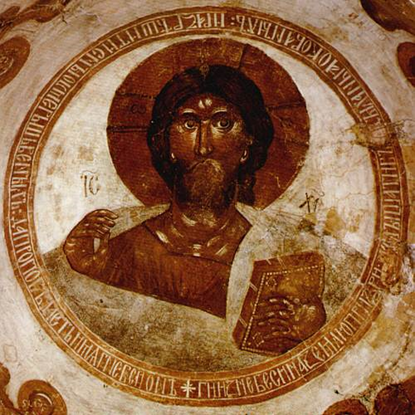
Posted on 10/07/2021 4:55:42 AM PDT by annalex
Our Lady of the Rosary on Thursday of week 27 in Ordinary Time ![]() Our Lady of the Rosary Parish, New Orleans Readings at MassLiturgical Colour: White. These are the readings for the feria
The day that is coming will burn up the wickedYou say harsh things about me, says the Lord. You ask, ‘What have we said against you?’ You say, ‘It is useless to serve God; what is the good of keeping his commands or of walking mournfully before the Lord of Hosts? Now we have reached the point when we call the arrogant blessed; yes, they prosper, these evil-doers; they try God’s patience and yet go free.’ This is what those who fear the Lord used to say to one another. But the Lord took note and heard them: a book of remembrance was written in his presence recording those who fear him and take refuge in his name. On the day which I am preparing, says the Lord of Hosts, they are going to be my own special possession. I will make allowances for them as a man makes allowances for the son who obeys him. Then once again you will see the difference between an upright man and a wicked one, between the one who serves God and the one who does not serve him. For the day is coming now, burning like a furnace; and all the arrogant and the evil-doers will be like stubble. The day that is coming is going to burn them up, says the Lord of Hosts, leaving them neither root nor stalk. But for you who fear my name, the sun of righteousness will shine out with healing in its rays.
Happy the man who has placed his trust in the Lord. Happy indeed is the man who follows not the counsel of the wicked; nor lingers in the way of sinners nor sits in the company of scorners, but whose delight is the law of the Lord and who ponders his law day and night. Happy the man who has placed his trust in the Lord. He is like a tree that is planted beside the flowing waters, that yields its fruit in due season and whose leaves shall never fade; and all that he does shall prosper. Happy the man who has placed his trust in the Lord. Not so are the wicked, not so! For they like winnowed chaff shall be driven away by the wind: for the Lord guards the way of the just but the way of the wicked leads to doom. Happy the man who has placed his trust in the Lord.
Alleluia, alleluia! I am the Way, the Truth and the Life, says the Lord; No one can come to the Father except through me. Alleluia!
Alleluia, alleluia! Open our heart, O Lord, to accept the words of your Son. Alleluia!
Ask, and it will be given to youJesus said to his disciples: ‘Suppose one of you has a friend and goes to him in the middle of the night to say, “My friend, lend me three loaves, because a friend of mine on his travels has just arrived at my house and I have nothing to offer him”; and the man answers from inside the house, “Do not bother me. The door is bolted now, and my children and I are in bed; I cannot get up to give it you.” I tell you, if the man does not get up and give it him for friendship’s sake, persistence will be enough to make him get up and give his friend all he wants. ‘So I say to you: Ask, and it will be given to you; search, and you will find; knock, and the door will be opened to you. For the one who asks always receives; the one who searches always finds; the one who knocks will always have the door opened to him. What father among you would hand his son a stone when he asked for bread? Or hand him a snake instead of a fish? Or hand him a scorpion if he asked for an egg? If you then, who are evil, know how to give your children what is good, how much more will the heavenly Father give the Holy Spirit to those who ask him!’ These are the readings for the memorial
The apostles all joined in continuous prayer with Mary, the mother of JesusAfter Jesus was taken up into heaven the apostles went back from the Mount of Olives, as it is called, to Jerusalem, a short distance away, no more than a sabbath walk; and when they reached the city they went to the upper room where they were staying; there were Peter and John, James and Andrew, Philip and Thomas, Bartholomew and Matthew, James son of Alphaeus and Simon the Zealot, and Jude son of James. All these joined in continuous prayer, together with several women, including Mary the mother of Jesus, and with his brothers.
The Almighty works marvels for me. Holy is his name! or Blessed is the Virgin Mary, who bore the Son of the eternal Father. My soul glorifies the Lord, my spirit rejoices in God, my Saviour. The Almighty works marvels for me. Holy is his name! or Blessed is the Virgin Mary, who bore the Son of the eternal Father. He looks on his servant in her nothingness; henceforth all ages will call me blessed. The Almighty works marvels for me. Holy his name! The Almighty works marvels for me. Holy is his name! or Blessed is the Virgin Mary, who bore the Son of the eternal Father. His mercy is from age to age, on those who fear him. He puts forth his arm in strength and scatters the proud-hearted. The Almighty works marvels for me. Holy is his name! or Blessed is the Virgin Mary, who bore the Son of the eternal Father. He casts the mighty from their thrones and raises the lowly. He fills the starving with good things, sends the rich away empty. The Almighty works marvels for me. Holy is his name! or Blessed is the Virgin Mary, who bore the Son of the eternal Father. He protects Israel, his servant, remembering his mercy, the mercy promised to our fathers, to Abraham and his sons for ever. The Almighty works marvels for me. Holy is his name! or Blessed is the Virgin Mary, who bore the Son of the eternal Father.
Alleluia, alleluia! Hail Mary, full of grace, the Lord is with thee! Blessed art thou among women. Alleluia!
'I am the handmaid of the Lord'The angel Gabriel was sent by God to a town in Galilee called Nazareth, to a virgin betrothed to a man named Joseph, of the House of David; and the virgin’s name was Mary. He went in and said to her, ‘Rejoice, so highly favoured! The Lord is with you.’ She was deeply disturbed by these words and asked herself what this greeting could mean, but the angel said to her, ‘Mary, do not be afraid; you have won God’s favour. Listen! You are to conceive and bear a son, and you must name him Jesus. He will be great and will be called Son of the Most High. The Lord God will give him the throne of his ancestor David; he will rule over the House of Jacob for ever and his reign will have no end.’ Mary said to the angel, ‘But how can this come about, since I am a virgin?’ ‘The Holy Spirit will come upon you’ the angel answered ‘and the power of the Most High will cover you with its shadow. And so the child will be holy and will be called Son of God. Know this too: your kinswoman Elizabeth has, in her old age, herself conceived a son, and she whom people called barren is now in her sixth month, for nothing is impossible to God.’ ‘I am the handmaid of the Lord,’ said Mary ‘let what you have said be done to me.’ And the angel left her. The readings on this page are from the Jerusalem Bible, which is used at Mass in most of the English-speaking world. The New American Bible readings, which are used at Mass in the United States, are available in the Universalis apps, programs and downloads. |
KEYWORDS: catholic; lk1-11; ordinarytime; prayer
Please FReepmail me to get on/off the Alleluia Ping List.
| Luke | |||
| English: Douay-Rheims | Latin: Vulgata Clementina | Greek NT: Byzantine/Majority Text (2000) | |
| Luke 11 | |||
| 5. | And he said to them: Which of you shall have a friend, and shall go to him at midnight, and shall say to him: Friend, lend me three loaves, | Et ait ad illos : Quis vestrum habebit amicum, et ibit ad illum media nocte, et dicet illi : Amice, commoda mihi tres panes, | και ειπεν προς αυτους τις εξ υμων εξει φιλον και πορευσεται προς αυτον μεσονυκτιου και ειπη αυτω φιλε χρησον μοι τρεις αρτους |
| 6. | Because a friend of mine is come off his journey to me, and I have not what to set before him. | quoniam amicus meus venit de via ad me, et non habeo quod ponam ante illum, | επειδη φιλος παρεγενετο εξ οδου προς με και ουκ εχω ο παραθησω αυτω |
| 7. | And he from within should answer, and say: Trouble me not, the door is now shut, and my children are with me in bed; I cannot rise and give thee. | et ille de intus respondens dicat : Noli mihi molestus esse, jam ostrium clausum est, et pueri mei mecum sunt in cubili : non possum surgere, et dare tibi. | κακεινος εσωθεν αποκριθεις ειπη μη μοι κοπους παρεχε ηδη η θυρα κεκλεισται και τα παιδια μου μετ εμου εις την κοιτην εισιν ου δυναμαι αναστας δουναι σοι |
| 8. | Yet if he shall continue knocking, I say to you, although he will not rise and give him, because he is his friend; yet, because of his importunity, he will rise, and give him as many as he needeth. | Et si ille perseveraverit pulsans : dico vobis, etsi non dabit illi surgens eo quod amicus ejus sit, propter improbitatem tamen ejus surget, et dabit illi quotquot habet necessarios. | λεγω υμιν ει και ου δωσει αυτω αναστας δια το ειναι αυτου φιλον δια γε την αναιδειαν αυτου εγερθεις δωσει αυτω οσον χρηζει |
| 9. | And I say to you, Ask, and it shall be given you: seek, and you shall find: knock, and it shall be opened to you. | Et ego dico vobis : Petite, et dabitur vobis ; quærite, et invenietis ; pulsate, et aperietur vobis. | καγω υμιν λεγω αιτειτε και δοθησεται υμιν ζητειτε και ευρησετε κρουετε και ανοιγησεται υμιν |
| 10. | For every one that asketh, receiveth; and he that seeketh, findeth; and to him that knocketh, it shall be opened. | Omnis enim qui petit, accipit : et qui quærit, invenit : et pulsanti aperietur. | πας γαρ ο αιτων λαμβανει και ο ζητων ευρισκει και τω κρουοντι ανοιγησεται |
| 11. | And which of you, if he ask his father bread, will he give him a stone? or a fish, will he for a fish give him a serpent? | Quis autem ex vobis patrem petit panem, numquid lapidem dabit illi ? aut piscem, numquid pro pisce serpentem dabit illi ? | τινα δε υμων τον πατερα αιτησει ο υιος αρτον μη λιθον επιδωσει αυτω η και ιχθυν μη αντι ιχθυος οφιν επιδωσει αυτω |
| 12. | Or if he shall ask an egg, will he reach him a scorpion? | aut si petierit ovum, numquid porriget illi scorpionem ? | η και εαν αιτηση ωον μη επιδωσει αυτω σκορπιον |
| 13. | If you then, being evil, know how to give good gifts to your children, how much more will your Father from heaven give the good Spirit to them that ask him? | Si ergo vos, cum sitis mali, nostis bona data dare filiis vestris : quanto magis Pater vester de cælo dabit spiritum bonum petentibus se ? | ει ουν υμεις πονηροι υπαρχοντες οιδατε δοματα αγαθα διδοναι τοις τεκνοις υμων ποσω μαλλον ο πατηρ ο εξ ουρανου δωσει πνευμα αγιον τοις αιτουσιν αυτον |
(*) In verse 8 "Yet if he shall continue knocking/Et si ille perseveraverit pulsans" in the translations is not in the original.

11:5–8
5. And he said unto them, Which of you shall have a friend, and shall go unto him at midnight, and say unto him, Friend, lend me three loaves;
6. For a friend of mine in his journey is come to me, and I have nothing to set before him?
7. And he from within shall answer and say, Trouble me not: the door is now shut, and my children are with me in bed; I cannot rise and give thee.
8. I say unto you, Though he will not rise and give him, because he is his friend, yet because of his importunity he will rise and give him as many as he needeth.
CYRIL OF ALEXANDRIA. The Saviour had before taught, in answer to the request of His apostles, how men ought to pray. But it might happen that those who had received this wholesome teaching, poured forth their prayers indeed according to the form given to them, but carelessly and languidly, and then when they were not heard in the first or second prayer, left off praying. That this then might not be our case, He shews by means of a parable, that cowardice in our prayers is hurtful, but it is of great advantage to have patience in them. Hence it is said, And he says unto them, Which of you shall have a friend.
THEOPHYLACT. God is that friend, who loveth all men, and wills that all should he saved.
AMBROSE. Who is a greater friend to us, than He who delivered up His body for us? Now we have here another kind of command given us, that at all times, not only in the day, but at night, prayers should be offered up. For it follows, And shall go into him at midnight. (Ps. 119:62.) As David did when he said, At midnight I will rise and give thanks unto thee. For he had no fear of awakening them from sleep, whom he knew to be ever watching. For if David who was occupied also in the necessary affairs of a kingdom was so holy, that seven times in the day he gave praise to God, (Ps. 119:164.) what ought we to do, who ought so much the more to pray, as we more frequently sin, through the weakness of our mind and body? But if thou lovest the Lord thy God, thou wilt be able to gain favour, not only for thyself, but others. For it follows, And say unto him, Friend, lend me three loaves, &c.
AUGUSTINE. (Serm. 105) But what are these three loaves but the food of the heavenly mystery? For it may be that one has had a friend asking for what he cannot supply him with, and then finds that he has not what he is compelled to give. A friend then comes to you on his journey, that is, in this present life, in which all are travelling on as strangers, and no one remains possessor, but to every man is told, Pass on, O stranger, give place to him that is coming. (Ecclus 29, 27.) Or perhaps some friend or yours comes from a bad road, (that is, an evil life,) wearied and not finding the truth, by hearing and receiving which he may become happy. He comes to thee as to a Christian, and says, “Give me a reason,” asking perhaps what you from the simplicity of your faith are ignorant of, and not having wherewith to satisfy his hunger, are compelled to seek it in the Lord’s books. For perhaps what he asked is contained in the book, but obscure. You are not permitted to ask Paul himself, or Peter, or any prophet, for all that family is now resting with their Lord, and the ignorance of the world is very great, that is, it is midnight, and your friend who is urgent from hunger presses this, not contented with a simple faith; must he then be abandoned? Go therefore to the Lord Himself with whom the family is sleeping, Knock, and pray; of whom it is added, And he from within shall answer and say, Trouble me not. He delays to give, wishing that you should the more earnestly desire what is delayed, lost by being given at once it should grow common.
BASIL. (Const. Mon. c. 1.) For perhaps He delays purposely, to redouble your earnestness and coming to him, and that you may know what the gift of God is, and may anxiously guard what is given. For whatever a man acquires with much pains he strives to keep safe, lest with the loss of that he should lose his labour likewise.
GLOSS. (ordin.) He does not then take away the liberty of asking, but is the more anxious to kindle the desire of praying, by shewing the difficulty of obtaining that we ask for. For it follows, The door is now shut.
AMBROSE. This is the door which Paul also requests may be opened to him, beseeching to be assisted not only by his own prayers, but those also of the people, that a door of utterance may be opened to him to speak the mystery of Christ. (Col. 4:3.) And perhaps that is the door which John saw open, and it was said to him, Come up hither, and, I will shew thee things which must be hereafter. (Rev. 4:1.)
AUGUSTINE. (Qu. Ev. l. ii. qu. 21.) The time then referred to is that of the famine of the word, when the understanding is shut up, (Amos 8:11.) and they who dealing out the wisdom of the Gospel as it were bread, preached throughout the world, are now in their secret rest with the Lord. And this it is which is added, And my children are with me in bed.
GREGORY OF NYSSA. Well does he call those children who by the arms of righteousness have claimed to themselves freedom from passion, shewing that the good which by practice we have acquired, had been from the beginning laid up in our nature. For when any one renouncing the flesh, by living in the exercise of a virtuous life, has overcome passion, then he becomes as a child, and is insensible to the passions. But by the bed we understand the rest of Christ.
GLOSS. (ordin.) And because of what has gone before he adds, I cannot rise and give thee, which must have reference to the difficulty of obtaining.
AUGUSTINE. (de Quæst. Ev. lib. ii. qu. 21.) Or else, the friend to whom the visit is made at midnight, for the loan of the three loaves, is evidently meant for an allegory, just as a person set in the midst of trouble might ask God that He would give him to understand the Trinity, by which he may console the troubles of this present life. For his distress is the midnight in which he is compelled to be so urgent in his request for the three. Now by the three loaves it is signified, that the Trinity is of one substance. But the friend coming from his journey is understood the desire of man, which ought to obey reason, but was obedient to the custom of the world, which he calls the way, from all things passing along it. Now when man is converted to God, that desire also is reclaimed from custom. But if not consoled by that inward joy arising from the spiritual doctrine which declares the Trinity of the Creator, he is in great straits who is pressed down by earthly sorrows, seeing that from all outward delights he is commanded to abstain, and within there is no refreshment from the delight of spiritual doctrine. And yet it is effected by prayer, that he who desires should receive understanding from God, even though there be no one by whom wisdom should be preached. For it follows, And if that man shall continue, &c. The argument is drawn from the less to the greater. For, if a friend rises from his bed, and gives not from the force of friendship, but from weariness, how much more does God give who without weariness gives most abundantly whatever we ask?
AUGUSTINE. (ubi sup.) But when thou shalt have obtained the three loaves, that is, the food and knowledge of the Trinity, thou hast both the source of life and of food. Fear not. Cease not. For that bread will not come to an end, but will put an end to your want. Learn and teach. Live and eat.
THEOPHYLACT. Or else, The midnight is the end of life, at which many come to God. But the friend is the Angel who receives the soul. Or, the midnight is the depth of temptations, in which he who has fallen, seeks from God three loaves, the relief of the wants of his body, soul, and spirit; through whom we run into no danger in our temptations. But the friend who comes from his journey is God Himself, who proves by temptations who has nothing to set before Him, and who is weakened in temptation. But when He says, And the door is shut, we must understand that we ought to be prepared before temptations. But after that we have fallen into them, the gate of preparation is shut, and being found unprepared, unless God keep us, we are in danger.
11:9–13
9. And I say unto you, Ask, and it shall be given you; seek, and ye shall find; knock, and it shall be opened unto you.
10. For every one that asketh receiveth; and he that seeketh findeth; and to him that knocketh it shall be opened.
11. If a son shall ask bread of any of you that is a father, will he give him a stone? or if he ask a fish, will he for a fish give him a serpent?
12. Or if he shall ask an egg, will he offer him a scorpion?
13. If ye then, being evil, know how to give good gifts unto your children: how much more shall your heavenly Father give the Holy Spirit to them that ask him?
AUGUSTINE. (ubi sup.) Having laid aside the metaphor, our Lord added an exhortation, and expressly urged us to ask, seek, and knock, until we receive what we are seeking. Hence he says, And I say unto you, Ask, and it shall be given you.
CYRIL OF ALEXANDRIA. The words, I say unto you, have the force of an oath. For God doth not lie, but whenever He makes known any thing to His hearers with an oath, he manifests the inexcusable littleness of our faith.
CHRYSOSTOM. (Hom. 23. in Matt.) Now by asking, He means prayer, but by seeking, zeal and anxiety, as He adds, Seek, and ye shall find. For those things which are sought require great care. And this is particularly the case with God. For there are many things which block up our senses. As then we search for lost gold, so let us anxiously seek after God. He shews also, that though He does not forthwith open the gates, we must yet wait. Hence he adds, Knock, and it shall be opened unto you; for if you continue seeking, you shall surely receive. For this reason, and as the door shut makes you knock, therefore he did not at once consent that you might entreat.
GREEK EXPOSITOR. (Severus Antioch.) Or by the word knock perhaps he means seeking effectually, for one knocks with the hand, but the hand is the sign of a good work. Or these three may be distinguished in another way. For it is the beginning of virtue to ask to know the way of truth. But the second step is to seek how we must go by that way. The third step is when a man has reached the virtue to knock at the door, that he may enter upon the wide field of knowledge. All these things a man acquires by prayer. Or to ask indeed is to pray, but to seek is by good works to do things becoming our prayers. And to knock is to continue in prayer without ceasing.
AUGUSTINE. (Serm. 105.) But He would not so encourage us to ask were He not willing to give. Let human slothfulness blush, He is more willing to give than we to receive.
AMBROSE. Now he who promises any thing ought to convey a hope of the thing promised, that obedience may follow commands, faith, promises. And therefore he adds, For every one that asketh receiveth.
ORIGEN. But some one may seek to know, how it comes that they who pray are not heard? To which we must answer, that whose sets about seeking in the right way, omitting none of those things which avail to the obtaining of our requests, shall really receive what he has prayed to be given him. But if a man turns away from the object of a right petition, and asks not as it becomes him, he does not ask. And therefore it is, that when he does not receive, as is here promised, there is no falsehood. For so also when a master says, “Whoever will come to me, he shall receive the gift of instruction;” we understand it to imply a person going in real earnest to a master, that he may zealously and diligently devote himself to his teaching. Hence too James says, Ye ask and receive not, because ye ask amiss, (James 4:3.) namely, for the sake of vain pleasures. But some one will say, Nay, when men ask to obtain divine knowledge, and to recover their virtue they do not obtain? To which we must answer, that they sought not to receive the good things for themselves, but that thereby they might reap praise.
BASIL. (in Const. c. 1.) If also any one from indolence surrenders himself to his desires, and betrays himself into the hands of his enemies, God neither assists him nor hears him, because by sin he has alienated himself from God. It becomes then a man to offer whatever belongs to him, but to cry to God to assist him. Now we must ask for the Divine assistance not slackly, nor with a mind wavering to and fro, because such a one will not only not obtain what it seeks, but will the rather provoke God to anger. For if a man standing before a prince has his eye fixed within and without, lest perchance he should be punished, how much more before God ought he to stand watchful and trembling? But if when awakened by sin you are unable to pray stedfastly to the utmost of your power, check yourself, that when you stand before God you may direct your mind to Him. And God pardons you, because not from indifference, but infirmity, you cannot appear in His presence as you ought. If then you thus command yourself, do not depart until you receive. For whenever you ask and receive not, it is because your request was improperly made, either without faith, or lightly, or for things which are not good for you, or because you left off praying. But some frequently make the objection, “Why pray we? Is God then ignorant of what we have need?” He knows undoubtedly, and gives us richly all temporal things even before we ask. But we must first desire good works, and the kingdom of heaven; and then having desired, ask in faith and patience, bringing into our prayers whatever is good for us, convicted of no offence by our own conscience.
AMBROSE. The argument then persuading to frequent prayer, is the hope of obtaining what we pray for. The ground of persuasion was first in the command, afterwards it is contained in that example which He sets forth, adding, If a son shall ask bread of any of you, will he give him a stone? &c.
CYRIL OF ALEXANDRIA. In these words our Saviour gives us a very necessary piece of instruction. For often-times we rashly, from the impulse of pleasure, give way to hurtful desires. When we ask any such thing from God, we shall not obtain it. To shew this, He brings an obvious example from those things which are before our eyes, in our daily experience. For when thy son asks of thee bread, thou givest it him gladly, because he seeks a wholesome food. But when from want of understanding he asks for a stone to eat, thou givest it him not, but rather hinderest him from satisfying his hurtful desire. So that the sense may be, But which of you asking his father for bread, (which the father gives,) will he give him a stone? (that is, if he asked it.) There is the same argument also in the serpent and the fish; of which he adds, Or if he asks a fish, will he for a fish give him a serpent? And in like manner in the egg and scorpion, of which he adds, Or if he ask an egg, will he offer him a scorpion?
ORIGEN. Consider then this, if the bread be not indeed the food of the soul in knowledge, without which it can not be saved, as, for example, the well planned rule of a just life. But the fish is the love of instruction, as to know the constitution of the world, and the effects of the elements, and whatever else besides wisdom treats of. Therefore God does not in the place of bread offer a stone, which the devil wished Christ to eat, nor in the place of a fish does He give a serpent, which the Ethiopians eat who are unworthy to eat fishes. Nor generally in the place of what is nourishing does he give what is not eatable and injurious, which relates to the scorpion and egg.
AUGUSTINE. (de Quæst. Ev. lib. ii. qu. 22.) Or by the bread is meant charity, because we have a greater desire of it, and it is so necessary, that without it all other things are nothing, as the table without bread is mean. Opposed to which is hardness of heart, which he compared to a stone. But by the fish is signified the belief in invisible things, either from the waters of baptism, or because it is taken out of invisible places which the eye cannot reach. Because also faith, though tossed about by the waves of this world, is not destroyed, it is rightly compared to a fish, in opposition to which he has placed the serpent on account of the poison of deceit, which by evil persuasion had its first seed in the first man. Or, by the egg is understood hope. For the egg is the young not yet formed, but hoped for through cherishing, opposed to which he has placed the scorpion, whose poisoned sting is to be dreaded behind; as the contrary to hope is to look back, since the hope of the future reaches forward to those things which are before.
AUGUSTINE. (Serm. 105.) What great things the world speaks to thee, and roars them behind thy back to make thee look behind! O unclean world, why clamourest thou! Why attempt to turn him away! Thou wouldest detain him when thou art perishing, what wouldest thou if thou wert abiding for ever? Whom wouldest thou not deceive with sweetness, when bitter thou canst infuse false food?
CYRIL OF ALEXANDRIA. Now from the example just given he concludes, If then ye being evil, (i. e. having a mind capable of wickedness, and not uniform and settled in good, as God,) know how to give good gifts; how much more shall your heavenly Father?
BEDE. Or, he calls the lovers of the world evil, who give those things which they judge good according to their sense, which are also good in their nature, and are useful to aid imperfect life. Hence he adds, Know how to give good gifts to your children. The Apostles even, who by the merit of their election had exceeded the goodness of mankind in general, are said to be evil in comparison with Divine goodness, since nothing is of itself good but God alone. But that which is added, How much more shall your heavenly Father give the Holy Spirit to them that ask him, for which Matthew has written, will give good things to them that ask him, shews that the Holy Spirit is the fulness of God’s gifts, since all the advantages which are received from the grace of God’s gifts flow from that source.
ATHANASIUS. (Dial. 1. de Trin.) Now unless the Holy Spirit were of the substance of God, Who alone is good, He would by no means be called good, since our Lord refused to be called good, inasmuch as He was made man.
AUGUSTINE. (Serm. 105.) Therefore, O covetous man, what seekest thou? or if thou seekest any thing else, what will suffice thee to whom the Lord is not sufficient?
Catena Aurea Luke 11

| Luke | |||
| English: Douay-Rheims | Latin: Vulgata Clementina | Greek NT: Byzantine/Majority Text (2000) | |
| Luke 1 | |||
| 26. | And in the sixth month, the angel Gabriel was sent from God into a city of Galilee, called Nazareth, | In mense autem sexto, missus est angelus Gabriel a Deo in civitatem Galilææ, cui nomen Nazareth, | εν δε τω μηνι τω εκτω απεσταλη ο αγγελος γαβριηλ υπο του θεου εις πολιν της γαλιλαιας η ονομα ναζαρετ |
| 27. | To a virgin espoused to a man whose name was Joseph, of the house of David; and the virgin's name was Mary. | ad virginem desponsatam viro, cui nomen erat Joseph, de domo David : et nomen virginis Maria. | προς παρθενον μεμνηστευμενην ανδρι ω ονομα ιωσηφ εξ οικου δαυιδ και το ονομα της παρθενου μαριαμ |
| 28. | And the angel being come in, said unto her: Hail, full of grace, the Lord is with thee: blessed art thou among women. | Et ingressus angelus ad eam dixit : Ave gratia plena : Dominus tecum : benedicta tu in mulieribus. | και εισελθων ο αγγελος προς αυτην ειπεν χαιρε κεχαριτωμενη ο κυριος μετα σου ευλογημενη συ εν γυναιξιν |
| 29. | Who having heard, was troubled at his saying, and thought with herself what manner of salutation this should be. | Quæ cum audisset, turbata est in sermone ejus, et cogitabat qualis esset ista salutatio. | η δε ιδουσα διεταραχθη επι τω λογω αυτου και διελογιζετο ποταπος ειη ο ασπασμος ουτος |
| 30. | And the angel said to her: Fear not, Mary, for thou hast found grace with God. | Et ait angelus ei : Ne timeas, Maria : invenisti enim gratiam apud Deum. | και ειπεν ο αγγελος αυτη μη φοβου μαριαμ ευρες γαρ χαριν παρα τω θεω |
| 31. | Behold thou shalt conceive in thy womb, and shalt bring forth a son; and thou shalt call his name Jesus. | Ecce concipies in utero, et paries filium, et vocabis nomen ejus Jesum : | και ιδου συλληψη εν γαστρι και τεξη υιον και καλεσεις το ονομα αυτου ιησουν |
| 32. | He shall be great, and shall be called the Son of the most High; and the Lord God shall give unto him the throne of David his father; and he shall reign in the house of Jacob for ever. | hic erit magnus, et Filius Altissimi vocabitur, et dabit illi Dominus Deus sedem David patris ejus : et regnabit in domo Jacob in æternum, | ουτος εσται μεγας και υιος υψιστου κληθησεται και δωσει αυτω κυριος ο θεος τον θρονον δαυιδ του πατρος αυτου |
| 33. | And of his kingdom there shall be no end. | et regni ejus non erit finis. | και βασιλευσει επι τον οικον ιακωβ εις τους αιωνας και της βασιλειας αυτου ουκ εσται τελος |
| 34. | And Mary said to the angel: How shall this be done, because I know not man? | Dixit autem Maria ad angelum : Quomodo fiet istud, quoniam virum non cognosco ? | ειπεν δε μαριαμ προς τον αγγελον πως εσται τουτο επει ανδρα ου γινωσκω |
| 35. | And the angel answering, said to her: The Holy Ghost shall come upon thee, and the power of the most High shall overshadow thee. And therefore also the Holy which shall be born of thee shall be called the Son of God. | Et respondens angelus dixit ei : Spiritus Sanctus superveniet in te, et virtus Altissimi obumbrabit tibi. Ideoque et quod nascetur ex te sanctum, vocabitur Filius Dei. | και αποκριθεις ο αγγελος ειπεν αυτη πνευμα αγιον επελευσεται επι σε και δυναμις υψιστου επισκιασει σοι διο και το γεννωμενον αγιον κληθησεται υιος θεου |
| 36. | And behold thy cousin Elizabeth, she also hath conceived a son in her old age; and this is the sixth month with her that is called barren: | Et ecce Elisabeth cognata tua, et ipsa concepit filium in senectute sua : et hic mensis sextus est illi, quæ vocatur sterilis : | και ιδου ελισαβετ η συγγενης σου και αυτη συνειληφυια υιον εν γηρει αυτης και ουτος μην εκτος εστιν αυτη τη καλουμενη στειρα |
| 37. | Because no word shall be impossible with God. | quia non erit impossibile apud Deum omne verbum. | οτι ουκ αδυνατησει παρα τω θεω παν ρημα |
| 38. | And Mary said: Behold the handmaid of the Lord; be it done to me according to thy word. And the angel departed from her. | Dixit autem Maria : Ecce ancilla Domini : fiat mihi secundum verbum tuum. Et discessit ab illa angelus. | ειπεν δε μαριαμ ιδου η δουλη κυριου γενοιτο μοι κατα το ρημα σου και απηλθεν απ αυτης ο αγγελος |
(*) Verses 32-33 breakdown differs in the translations.

1:26–27
26. And in the sixth month the angel Gabriel was sent from God unto a city of Galilee, named Nazareth,
27. To a virgin espoused to a man whose name was Joseph, of the house of David; and the virgin’s name was Mary.
BEDE. Because either the Incarnation of Christ was to be in the sixth age of the world, or because it was to serve to the fulfilling of the law, rightly in the sixth month of John’s conception was an angel sent to Mary, to tell her that a Saviour should be born. Hence it is said, And in the sixth month, &c. We must understand the sixth month to be March, on the twenty-fifth day of which our Lord is reported to have been conceived, and to have suffered, as also to have been born on the twenty-fifth day of December. But if either the one day we believe to be the vernal equinox, or the other the winter solstice, it happens that with the increase of light He was conceived or born Who lighteneth every man that cometh into the world. But if any one shall prove, that before the time of our Lord’s nativity or conception, light began either to increase, or supersede the darkness, we then say, that it was because John, before the appearance of His coming, began to preach the kingdom of heaven.
BASIL. (in Esai. 6.) The heavenly spirits visit us, not as it seems fit to them, but as the occasion conduces to our advantage, for they are ever looking upon the glory and fulness of the Divine Wisdom; hence it follows, The angel Gabriel was sent.
GREGORY. (Hom. 34, in Evan.) To the virgin Mary was sent, not any one of the angels, but the archangel Gabriel; for upon this service it was meet that the highest angel should come, as being the bearer of the highest of all tidings. He is therefore marked by a particular name, to signify what was his effectual part in the work. For Gabriel is interpreted, “the strength of God.” By the strength of God then was He to be announced Who was coming as the God of strength, and mighty in battle, to put down the powers of the air.
GLOSS. (interlin.) But the place is also added whither he is sent, as it follows, To a city, Nazareth. For it was told that He would come a Nazarite, (i. e. the holy of the holy.)
BEDE. (in Homil. de fest Annunt.) It was a fit beginning for man’s restoration, that an angel should be sent down from God to consecrate a virgin by a divine birth, for the first cause of man’s perdition was the Devil sending a serpent to deceive a woman by the spirit of pride.
AUGUSTINE. (de san. Virg. cap. vi.) To a virgin, for Christ could be born from virginity alone, seeing He could not have an equal in His birth. It was necessary for our Head by this mighty miracle to be born according to the flesh of a virgin, that He might signify that his members were to be born in the spirit of a virgin Church.
PSEUDO-JEROME. (Hieron. vol. xi. 92. De Assumpt.) And rightly an angel is sent to the virgin, because the virgin state is ever akin to that of angels. Surely in the flesh to live beyond the flesh is not a life on earth but in heaven.
CHRYSOSTOM. (sup. Mat. Hom. 4.) The angel announces the birth to the virgin not after the conception, lest she should be thereby too much troubled, but before the conception he addresses her, not in a dream, but standing by her in visible shape. For as great indeed were the tidings she receives, she needed before the issue of the event an extraordinary visible manifestation.
AMBROSE. Scripture has rightly mentioned that she was espoused, as well as a virgin, a virgin, that she might appear free from all connexion with man; espoused, that she might not be branded with the disgrace of sullied virginity, whose swelling womb seemed to bear evident marks of her corruption. But the Lord had rather that men should cast a doubt upon His birth than upon His mother’s purity. He knew how tender is a virgin’s modesty, and how easily assailed the reputation of her chastity, nor did He think the credit of His birth was to be built up by His mother’s wrongs. It follows therefore, that the holy Mary’s virginity was of as untainted purity as it was also of unblemished reputation. Nor ought there, by an erroneous opinion, to be left the shadow of an excuse to living virgins, that the mother of our Lord even seemed to be evil spoken of. But what could be imputed to the Jews, or to Herod, if they should seem to have persecuted an adulterous offspring? And how could He Himself say, I came not to abolish the law, but to fulfil it, (Matt. 5:18.) if He should seem to have had his beginning from a violation of the law, for the issue of an unmarried person is condemned by the law? (Deut. 23:17.) Not to add that also greater credit is given to the words of Mary, and the cause of falsehood removed? For it might seem that unmarried becoming pregnant, she had wished to shade her guilt by a lie; but an espoused person has no reason for lying, since to women child-birth is the reward of wedlock, the grace of the marriage bed. Again, the virginity of Mary was meant to baffle the prince of the world, who, when he perceived her espoused to a man, could cast no suspicion on her offspring.
ORIGEN. For if she had had no husband, soon would the thought have stolen into the Devil’s mind, how she who had known no man could be pregnant. It was right that the conception should be Divine, something more exalted than human nature.
AMBROSE. But still more has it baffled the princes of the world, for the malice of devils soon detects even hidden things, while they who are occupied in worldly vanities, can not know the things of God. But moreover, a more powerful witness of her purity is adduced, her husband, who might both have been indignant at the injury, and revenged the dishonour, if he also had not acknowledged the mystery; of whom it is added, Whose name was Joseph, of the house of David.
BEDE. (in Homil. de Annunt. sup.) Which last applies not only to Joseph, but also to Mary, for the Law commanded that every one should take a wife out of his own tribe or family. It follows, And the virgin’s name was Mary.
BEDE. Maria, in Hebrew, is the star of the sea; but in Syriac it is interpreted Mistress, and well, because Mary was thought worthy to be the mother of the Lord of the whole world, and the light of endless ages.
1:28–29
28. And the angel came in unto her, and said, Hail, thou that art highly favoured, the Lord is with thee: blessed art thou among women.
29. And when she saw him, she was troubled at his saying, and cast in her mind what manner of salutation this should be.
AMBROSE. Mark the virgin by her manner of life. Alone in an inner chamber, unseen by the eyes of men, discovered only by an angel; as it is said, And the angel came in unto her. That she might not be dishonoured by any ignoble address, she is saluted by an angel.
GREGORY OF NYSSA. (Diem Nat. Orat. in Christi.) Far different then to the news formerly addressed to the woman, is the announcement now made to the Virgin. In the former, the cause of sin was punished by the pains of childbirth; in the latter, through gladness, sorrow is driven away. Hence the angel not unaptly proclaims joy to the Virgin, saying, Hail.
GREEK EXPOSITOR. (Geometer) But that she was judged worthy of the nuptials is attested by his saying, Full of grace. For it is signified as a kind of token or marriage gift of the bridegroom, that she was fruitful in graces. For of the things which he mentions, the one appertains to the bride, the other to the bridegroom.
PSEUDO-JEROME. (Jerome sup.) And it is well said, Full of grace, for to others, grace comes in part; into Mary at once the fulness of grace wholly infused itself. She truly is full of grace through whom has been poured forth upon every creature the abundant rain of the Holy Spirit. But already He was with the Virgin Who sent the angel to the Virgin. The Lord preceded His messenger, for He could not be confined by place Who dwells in all places. Whence it follows, The Lord is with thee.
PSEUDO-AUGUSTINE. (Aug. in Serm. de Annunt. iii. app. 195.) More than with me, for He Himself is in thy heart, He is (made) in thy womb, He fills thy soul, He fills thy womb.
GREEK EXPOSITOR. (Geometer) But this is the sum of the whole message. The Word of God, as the Bridegroom, effecting an incomprehensible union, Himself, as it were, the same both planting, and being planted, hath moulded the whole nature of man into Himself. But comes last the most perfect and comprehensive salutation; Blessed art thou among women. i. e. Alone, far before all other women; that women also should be blessed in thee, as men are in thy Son; but rather both in both. For as by one man and one woman came at once both sin and sorrow, so now also by one woman and one man hath both blessing and joy been restored, and poured forth upon all.
AMBROSE. But mark the Virgin by her bashfulness, for she was afraid, as it follows; And when she heard, she was troubled, It is the habit of virgins to tremble, and to be ever afraid at the presence of man, and to be shy when he addresses her. Learn, O virgin, to avoid light talking. Mary feared even the salutation of an angel.
GREEK EXPOSITOR. (sup.) But as she might be accustomed to these visions, the Evangelist ascribes her agitation not to the vision, but to the things told her, saying, she was troubled at his words. Now observe both the modesty and wisdom of the Virgin; the soul, and at the same time the voice. When she heard the joyful words, she pondered them in her mind, and neither openly resisted through unbelief, nor forthwith lightly complied; avoiding equally the inconstancy of Eve, and the insensibility of Zacharias. Hence it is said, And she cast in her mind what manner of salutation this was, it is not said conception, for as yet she knew not the vastness of the mystery. But the salutation, was there aught of passion in it as from a man to a virgin? or was it not of God, seeing that he makes mention of God, saying, The Lord is with thee.
AMBROSE. She wondered also at the new form of blessing, unheard of before, reserved for Mary alone.
ORIGEN. For if Mary had known that similar words had been addressed to others, such a salutation would never have appeared to her so strange and alarming.
1:30–33
30. And the angel said unto her, Fear not, Mary: for thou hast found favour with God.
31. And, behold, thou shalt conceive in thy womb, and bring forth a son, and shalt call his name JESUS.
32. He shall be great, and shall be called the Son of the Highest: and the Lord God shall give unto him the throne of his father David:
33. And he shall reign over the house of Jacob for ever; and of his kingdom there shall be no end.
When the angel saw that she was troubled at this unusual salutation, calling her by her name as if she was well known to him, he tells her she must not fear, as it follows; And the angel said, Fear not, Mary.
GREEK EXPOSITOR. (Photius.) As if he said, I came not to deceive you, nay rather to bring down deliverance from deception; I came not to rob you of your inviolable virginity, but to open a dwelling-place for the Author and Guardian of thy purity; I am not a servant of the Devil, but the ambassador of Him that destroyeth the Devil. I am come to form a marriage treaty, not to devise plots. So far then was he from allowing her to be harassed by distracting thoughts, lest he should be counted a servant unfaithful to his trust.
CHRYSOSTOM. But he who earns favour in the sight of God has nothing to fear. Hence it follows, For thou hast found favour before God. But how shall any one find it, except through the means of his humility. For God giveth grace to the humble. (James 4:6, 1 Pet. 5:5.)
GREEK EXPOSITOR. (ubi sup.) For the Virgin found favour with God, in that decking her own soul in the bright robes of chastity, she prepared a dwelling-place pleasing to God. Not only did she retain her virginity inviolate, but her conscience also she kept from stain. As many had found favour before Mary, he goes on to state what was peculiar to her. Behold, thou shall conceive in thy womb.
GREEK EXPOSITOR. (Geometer.) By the word behold, he denotes rapidity and actual presence, implying that with the utterance of the word the conception is accomplished.
GREEK EXPOSITOR. (Sev. Antiochenus.) Thou shalt conceive in thy womb, that he might shew that our Lord from the very Virgin’s womb, and of our substance, took our flesh upon Him. For the Divine Word came to purify man’s nature and birth, and the first elements of our generation. And so without sin and human seed, passing through every stage as we do, He is conceived in the flesh, and carried in the womb for the space of nine months.
GREEK EXPOSITOR. (Geometer.) But since it happens also that to the spiritual mind is given in an especial manner to conceive the Divine Spirit, and bring forth the Spirit of salvation, as says the Prophet; therefore he added, And thou shalt bring forth a Son. (Is. 26:18.)
AMBROSE. But all are not as Mary, that when they conceive the word of the Holy Spirit, they bring forth; for some put forth the word prematurely, others have Christ in the womb, but not yet formed.
GREGORY OF NYSSA. (Orat. in Diem Nat.) While the expectation of child-birth strikes a woman with terror, the sweet mention of her offspring calms her, as it is added, And thou shall call his name Jesus. The coming of the Saviour is the banishing of all fear.
BEDE. Jesus is interpreted Saviour, or Healing.
GREEK EXPOSITOR. (Geom. sup.) And he says, Thou shalt call, not His father shall call, for He is without a father as regards His lower birth, as He is without a mother in respect of the higher.
CYRIL OF ALEXANDRIA. (de fide ad Theod.) But this name was given anew to the Word in adaptation to His nativity in the flesh; as that prophecy saith, Thou shalt be called by a new name which the mouth of the Lord hath named. (Is. 62:2.)
GREEK EXPOSITOR. (sup.) But as this name was common to Him with the successor of Moses, the angel therefore implying that He should not be after Joshua’s likeness, adds, He shall be great. (Josh. 1.)
AMBROSE. It was said also of John, that he shall be great, but of him indeed as of a great man, of Christ, as of the great God. For abundantly is poured forth the power of God; widely the greatness of the heavenly substance extended, neither confined by place, nor grasped by thought; neither determined by calculation, nor altered by age.
ORIGEN. See then the greatness of the Saviour, how it is diffused over the whole world. Go up to heaven, see there how it has filled the heavenly places; carry thy thoughts down to the deep, behold, there too He has descended. If thou seest this, then, in like manner, beholdest thou fulfilled in very deed, He shall be great.
GREEK EXPOSITOR. (Photius.) The assumption of our flesh does not diminish ought from the loftiness of the Deity, but rather exalts the lowness of man’s nature. Hence it follows, And he shall be called the Son of the Highest. Not, Thou shalt give Him the name, but He Himself shall be called. By whom, but His Father of like substance with Himself? For no one hath known the Son but the Father. (Matt. 11:27.) But He in Whom exists the infallible knowledge of His Son, is the true interpreter as to the name which should be given Him, when He says, This is my beloved Son; (Matt. 17:5.) for such indeed from everlasting He is, though His name was not revealed till now; therefore he says, He shall be called, not shall be made or begotten. For before the worlds He was of like substance with the Father. Him therefore thou shalt conceive; His mother thou shalt become; Him shall thy virgin shrine enclose, Whom the heavens were not able to contain.
CHRYSOSTOM. (non occ.) But since it seems shocking or unworthy to some men that God should inhabit a body, is the Sun, I would ask, the heat whereof is felt by each body that receives its rays, at all sullied as to its natural purity? Much more then does the Sun of Righteousness, in taking upon Himself a most pure body from the Virgin’s womb, escape not only defilement, but even shew forth His own mother in greater holiness.
GREEK EXPOSITOR. (Severus Antiochenus.) And to make the Virgin mindful of the prophets, he adds, And the Lord God shall give unto him the seat of David, that she might know clearly, that He Who is to be born of her is that very Christ, Whom the prophets promised should be born of the seed of David.
CYRIL OF ALEXANDRIA. (contra Julian lib. viii.) Not however from Joseph proceeded the most pure descent of Christ. For from one and the same line of connexion had sprung both Joseph and the Virgin, and from this the only-begotten had taken the form of man.
BASIL. (Epist. 236. ad Amphil.) Our Lord sat not on the earthly throne of David, the Jewish kingdom having been transferred to Herod. The seat of David is that on which our Lord reestablished His spiritual kingdom which should never be destroyed. Hence it follows, And he shall reign over the house of Jacob.
CHRYSOSTOM. (Hom. vii. in Matt.) Now He assigns to the present house of Jacob all those who were of the number of the Jews that believed on Him. For as Paul says, They are not all Israel which are of Israel, but the children of the promise are counted for the seed.
BEDE. Or by the house of Jacob he means the whole Church which either sprang from a good root, or though formerly a wild olive branch, has yet been for a reward of its faith grafted into the good olive tree. (Rom. 11:17.)
GREEK EXPOSITOR. (Geometer.) But to reign for ever is of none save God alone; and hence though because of the incarnation Christ is said to receive the seat of David, yet as being Himself God He is acknowledged to be the eternal King. It follows, And, his kingdom shall have no end, not in that He is God, but in that He is man also. Now indeed He has the kingdom of many nations, but finally he shall reign over all, when all things shall be put under Him. (1 Cor. 15:25.)
BEDE. Let Nestorius then cease to say that the Virgin’s Son is only man, and to deny that He is taken up by the Word of God into the unity of the Person. For the Angel when he says that the very same has David for His father whom he declares is called the Son of the Highest, demonstrates the one Person of Christ in two natures. The Angel uses the future tense (vocabitur, regnabit) not because, as the Heretics say, Christ was not before Mary, but because in the same person, man with God shares the same name of Son.
1:34–35
34. Then said Mary unto the angel, How shall this be, seeing I know not a man?
35. And the angel answered and said unto her, The Holy Ghost shall come upon thee, and the power of the Highest shall overshadow thee: therefore also that holy thing which shall be born of thee shall be called the Son of God.
AMBROSE. It was Mary’s part neither to refuse belief in the Angel, nor too hastily take unto herself the divine message. How subdued her answer is, compared with the words of the Priest. Then said Mary to the Angel, How shall this be? She says, How shall this be? He answers, Whereby shall I know this? He refuses to believe that which he says he does not know, and seeks as it were still further authority for belief. She avows herself willing to do that which she doubts not will be done, but how, she is anxious to know. Mary had read, Behold, she shall conceive and bear a son. (Is. 7:14.) She believed therefore that it should be, but how it was to take place she had never read, for even to so great a prophet this had not been revealed. So great a mystery was not to be divulged by the mouth of man, but of an Angel.
GREGORY OF NYSSA. (Orat. in Diem Nat. Christi.) Hear the chaste words of the Virgin. The Angel tells her she shall bear a son, but she rests upon her virginity, deeming her inviolability a more precious thing than the Angel’s declaration. Hence she says, Seeing that I know not a man.
BASIL. (235. Ep. Amph.) Knowledge is spoken of in various ways. The wisdom of our Creator is called knowledge, and an acquaintance with His mighty works, the keeping also of His commandments, and the constant drawing near to Him; and besides these the marriage union is called knowledge, as it is here.
GREGORY OF NYSSA. (sup.) These words of Mary are a token of what she was pondering in the secrets of her heart; for if for the sake of the marriage union she had wished to be espoused to Joseph, why was she seized with astonishment when the conception was made known unto her? seeing in truth she might herself be expecting at the time to become a mother according to the law of nature. But because it was meet that her body being presented to God as an holy offering-should be kept inviolate, therefore she says, Seeing that I know not a man. As if she said, Notwithstanding that thou who speakest art an Angel, yet that I should know a man is plainly an impossible thing. How then can I be a mother, having no husband? For Joseph I have acknowledged as my betrothed.
GREEK EXPOSITOR. (Geometer.) But mark, how the Angel solves the Virgin’s doubts, and shews to her the unstained marriage and the unspeakable birth. And the Angel answered, and said unto her, The Holy Spirit shall come upon thee.
CHRYSOSTOM. (Hom. 49 in Gen.) As if he said, Look not for the order of nature in things which transcend and overpower nature. Dost thou say, How shall this be, seeing I know not a man? Nay rather, shall it happen to thee for this very reason, that thou hast never known a husband. For if thou hadst, thou wouldest not have been thought worthy of the mystery, not that marriage is unholy, but virginity more excellent. It became the common Lord of all both to take part with us, and to differ with us in His nativity; for the being born from the womb, He shared in common with us, but in that He was born without cohabitation, He was exalted far above us.
GREGORY OF NYSSA. (Orat. in Diem Nat.) O blessed is that womb which because of the overflowing purity of the Virgin Mary has drawn to itself the gift of life! For in others scarcely indeed shall a pure soul obtain the presence of the Holy Spirit, but in her the flesh is made the receptacle of the Spirit.
GREGORY OF NYSSA. (Lib. de Vita Moysis.) For the tables of our nature which guilt had broken, the true Lawgiver has formed anew to Himself from our dust without cohabitation, creating a body capable of taking His divinity, which the finger of God hath carved, that is to say, the Spirit coming upon the Virgin.
GREGORY OF NYSSA. (in Diem Natal.) Moreover, the power of the Highest shall overshadow thee. Christ is the power of the most high King, who by the coming of the Holy Spirit is formed in the Virgin.
GREGORY. (18 Moral. c. 20. super Job 27:21.) By the term overshadowing, both natures of the Incarnate God are signified. For shadow is formed by light and matter. But the Lord by His Divine nature is light. Because then immaterial light was to be embodied in the Virgin’s womb, it is well said unto her, The power of the Highest shall overshadow thee, that is, the human body in thee shall receive an immaterial light of divinity. For this is said to Mary for the heavenly refreshing of her soul.
BEDE. Thou shalt conceive then not by the seed of man whom thou knowest not, but by the operation of the Holy Spirit, with which thou art filled. There shall be no flame of desire in thee when the Holy Spirit shall overshadow thee.
GREGORY OF NYSSA. (Orat. in Diem Nat.) Or he says, overshadow thee, because as a shadow takes its shape from the character of those bodies which go before it, so the signs of the Son’s Deity will appear from the power of the Father. (non occ. in Greg. Nyss.). For as in us a certain life-giving power is seen in the material substance, by which man is formed; so in the Virgin, has the power of the Highest in like manner, by the life-giving Spirit, taken from the Virgin’s body a fleshly substance inherent in the body to form a new man. Hence it follows, Therefore also that holy thing which shall be born of thee.
ATHANASIUS. (Ep. ad Epictetum.) For we confess that which then was taken up from Mary to be of the nature of man and a most real body, the very same also according to nature with our own body. For Mary is our sister, seeing we have all descended from Adam.
BASIL. (Lib. de Spirit. Sanct. c. v.) Hence also, St. Paul says, God sent forth his Son, born not (through a woman) but of a woman. For the words through a woman might convey only a notion of birth as a passing through, but when it is said, of a woman, (Gal. 4:4.) there is openly declared a communion of nature between the son and the parent.
GREGORY. (18 Moral. c. 52. super Job 28:19.) To distinguish His holiness from ours, Jesus is stated in an especial manner to be born holy. For we although indeed made holy, are not born so, for we are constrained by the very condition of our corruptible nature to cry out with the Prophet, Behold, I was conceived in iniquity. (Ps. 51:5.) But He alone is in truth holy, who was not conceived by the cementing of a fleshly union, nor as the heretics rave, one person in His human nature, another in His divine; not conceived and brought forth a mere man, and afterwards by his merits, obtained that He should be God, but the Angel announcing and the Spirit coming, first the Word in the womb, afterwards within the womb the Word made flesh. Whence it follows, Shall be called the Son of God.
GREEK EXPOSITOR. (Victor Presbyter.) But observe, how the Angel has declared the whole Trinity to the Virgin, making mention of the Holy Spirit, the Power, and the Most High, for the Trinity is indivisible.c
1:36–38
36. And, behold, thy cousin Elisabeth, she hath also conceived a son in her old age: and this is the sixth month with her, who was called barren.
37. For with God nothing shall be impossible.
38. And Mary said, Behold the handmaid of the Lord; be it unto me according to thy word. And the angel departed from her.
CHRYSOSTOM. (49 in Gen.) Seeing that his previous words had overcome the mind of the virgin, the angel drops his discourse to a humbler subject, persuading her by reference to sensible things. Hence he says, And, behold, Elisabeth thy cousin, &c. Mark the discretion of Gabriel; he did not remind her of Sarah, or Rebecca, or Rachel, because they were examples of ancient times, but he brings forward a recent event, that he might the more forcibly strike her mind. For this reason also he noticed the age, saying, She also hath conceived a son in her old age; and the natural infirmity also. As it follows, And this is the sixth month with her who was called barren. For not immediately at the beginning of Elisabeth’s conception did he make this announcement, but after the space of six months, that the swelling of her womb might confirm its truth.
GREGORY NAZIANZEN. (Carm. 18. de Geneal. Christi.) But some one will ask, How is Christ related to David, since Mary sprang from the blood of Aaron, the angel having declared Elisabeth to be her kinswoman? But this was brought about by the Divine counsel, to the end that the royal race might be united to the priestly stock; that Christ, Who is both King and Priest, might be descended from both according to the flesh. For it is written, that Aaron, the first High Priest according to the law, took from the tribe of Judah for his wife Elisabeth, the daughter of Aminadab. (Exod. 6:23.) And observe the most holy administration of the Spirit, in ordering that the wife of Zacharias should be called Elisabeth, so bringing us back to that Elisabeth whom Aaron married.
BEDE. So it was then, lest the virgin should despair of being able to bear a son, that she received the example of one both old and barren about to bring forth, in order that she might learn that all things are possible with God, even those which seem to be opposed to the order of nature. Whence it follows, For there shall be no word (verbum) impossible with God.
CHRYSOSTOM. For the Lord of nature can do all things as He will, Who executes and disposes all things, holding the reins of life and death.
AUGUSTINE. (contra Faust. l. xxvi. c. 5.) But whoever says, “If God is omnipotent, let Him cause those things which have been done to have not been done,” does not perceive that he says, “Let Him cause those things which are true, in that very respect in which they are true to be false.” For He may cause a thing not to be which was, as when He makes a man who began to be by birth, not to be by death. But who can say that He makes not to be that which no longer is in being? For whatever is past is no longer in being. But if aught can happen to a thing, that thing is still in being to which any thing happens, and if it is, how is it past? Therefore that is not in being which we have truly said has been, because the truth is, in our opinions, not in that thing which no longer is. But this opinion God can not make false; and we do not so call God omnipotent as supposing also that He could die. He plainly is alone truly called omnipotent, who truly is, and by whom alone that is, whatever in any wise exists, whether spirit or body.
AMBROSE. Behold now the humility, the devotion of the virgin. For it follows, But Mary said, Behold the handmaid of the Lord. She calls herself His handmaid, who is chosen to be His mother, so far was she from being exalted by the sudden promise. At the same time also by calling herself handmaid, she claimed to herself in no other way the prerogative of such great grace than that she might do what was commanded her. For about to bring forth One meek and lowly, she was bound herself to shew forth lowliness. As it follows, Be it unto me according to thy word. You have her submission, you see her wish. Behold the handmaid of the Lord, signifies the readiness of duty. Be it unto me according to thy word, the conception of the wish.
GREEK EXPOSITOR. (Geometer.) Some men will highly extol one thing, some another, in these words of the virgin. One man, for example, her constancy, another her willingness of obedience; one man her not being tempted by the great and glorious promises of the great archangel; another, her self-command in not giving an instant assent, equally avoiding both the heedlessness of Eve and the disobedience of Zacharias. But to me the depth of her humility is an object no less worthy of admiration
GREGORY. (sup.) Through an ineffable sacrament of a holy conception and a birth inviolable, agreeable to the truth of each nature, the same virgin was both the handmaid and mother of the Lord.
BEDE. Having received the consent of the virgin, the angel soon returns heavenward, as it follows, And the angel departed from her.
EUSEBIUS. (vel Geometer.) Not only having obtained what he wished, but wondering at her virgin beauty, and the ripeness of her virtue.
Catena Aurea Luke 1


Saint Pius V established this feast in 1573. The purpose was to thank God for the victory of Christians over the Turks at Lepanto—a victory attributed to the praying of the rosary. Clement XI extended the feast to the universal Church in 1716.
The development of the rosary has a long history. First a practice developed of praying 150 Our Fathers in imitation of the 150 Psalms. Then there was a parallel practice of praying 150 Hail Marys. Soon a mystery of Jesus’ life was attached to each Hail Mary. Though Mary’s giving of the rosary to Saint Dominic is recognized as a legend, the development of this prayer form owes much to the followers of Saint Dominic. One of them, Alan de la Roche, was known as “the apostle of the rosary.” He founded the first Confraternity of the Rosary in the 15th century. In the 16th century, the rosary was developed to its present form—with the 15 mysteries: joyful, sorrowful and glorious. In 2002, Pope John Paul II added the five Mysteries of Light to this devotion.
Reflection
The purpose of the rosary is to help us meditate on the great mysteries of our salvation. Pius XII called it a compendium of the gospel. The main focus is on Jesus—his birth, life, death, and resurrection. The Our Fathers remind us that Jesus’ Father is the initiator of salvation. The Hail Marys remind us to join with Mary in contemplating these mysteries. They also make us aware that Mary was and is intimately joined with her Son in all the mysteries of his earthly and heavenly existence. The Glory Bes remind us that the purpose of all life is the glory of the Trinity.
The rosary appeals to many. It is simple. The constant repetition of words helps create an atmosphere in which to contemplate the mysteries of God. We sense that Jesus and Mary are with us in the joys and sorrows of life. We grow in hope that God will bring us to share in the glory of Jesus and Mary forever.

Ad Majorem Dei Gloriam (To the Greater Glory of God)
From: Malachi 3:13-4:2 (RSV)
Sixth Exchange: The Righteous on the Day of the Lord
--------------------------------------------------------------------------------
[13] “Your words have been stout against me, says the Lord. Yet you say, ‘How have we spoken against thee?’ [14] You have said, ‘It is vain to serve God. What is the good of our keeping his charge or of walking as in mourning before the Lord of hosts? [15] Henceforth we deem the arrogant blessed; evildoers not only prosper but when they put God to the test they escape.’”
[16] Then those who feared the Lord spoke with one another; the Lord heeded and heard them, and a book of remembrance was written before him of those who feared the Lord and thought on his name. [17] “They shall be mine, says the Lord of hosts, my special possession on the day when I act, and I will spare them as a man spares his son who serves him. [18] Then once more you shall distinguish between the righteous and the wicked, between one who serves God and one who does not serve him.
[1] “For behold, the day comes, burning like an oven, when all the arrogant and all evildoers will be stubble; the day that comes shall burn them up, says the Lord of hosts, so that it will leave them neither root nor branch. [2] But for you who fear my name the sun of righteousness shall rise, with healing in its wings. You shall go forth leaping like calves from the stall.
*****************************************************
Commentary:
3:13-4:3. The question posed here is similar to that in the fourth “dispute” (2:17-3:5): if things go well for those who do evil and tempt God (v. 15), why should one obey the Lord’s commandments (v. 14)? The prophet’s reply is very similar to his previous one (cf. 3:2, 5): he announces a day of judgment when the wicked will be destroyed (4:1, 3). However, Malachi is more explicit than he was earlier as regards the reward of the righteous. The Lord is not unaware of the trials and worries of those who fear him; in fact he is like a great king who records in his annals (cf. Esther 6:1-3) the good deeds of the just (3:16). Therefore, the day when the Lord reveals himself will be for them a day of splendour and inexpressible joy (4:2), for they enjoy God’s special protection (3:17-18).
The expression “sun of righteousness” (4:2), applied to the coming of the Lord, is echoed in the New Testament Benedictus or canticle of Zechariah (cf. Lk 1:78). Therefore, it is not surprising that Christian tradition should apply it to Jesus Christ: “The Lord came in the evening to a world in decline, when the course of life was almost run; but when the Sun of justice came, he gave new life and began a new day for those who believed in him” (Origen, Homiliae in Exodum, 7, 8).
Effective Prayer
----------------
[5] And He (Jesus) said to them (the disciples), "Which of you who has a friend will go to him at midnight and say to him, 'Friend, lend me three loaves; [6] for a friend of mine has arrived on a journey, and I have nothing to set before him'; [7] and he will answer from within, 'Do not bother me; the door is now shut, and my children are with me in bed; I cannot get up and give you anything'? [8] I tell you, though he will not get up and give him anything because he is his friend, yet because of his importunity he will rise and give him whatever he needs. [9] And I tell you, Ask, and it will be given to you; seek, and you will find; knock, and it will be opened to you. [10] For every one who asks receives, and he who seeks find, and to him who knocks it will be opened. [11] What father among you, if his son asks for a fish, will instead of a fish give him a serpent; [12] or if he asks for an egg, will give him a scorpion? [13] If you then, who are evil, know how to give good gifts to your children, how much more will the Heavenly Father give the Holy Spirit to those who ask Him!"
***********************************************************************
Commentary:
5-10. One of the essential features of prayer is trusting perseverance. By this simple example and others like it (cf. Luke 18:1-7) our Lord encourages us not to desist in asking God to hear us. "Persevere in prayer. Persevere even when your efforts seem barren. Prayer is always fruitful" (St J. Escriva, The Way, 101).
9-10. Do you see the effectiveness of prayer when it is done properly? Are you not convinced like me that, if we do not obtain what we ask God for, it is because we are not praying with faith, with a heart pure enough, with enough confidence, or that we are not persevering in prayer the way we should? God has never refused nor will ever refuse anything to those who ask for His graces in the way they should. Prayer is the great recourse available to us to get out of sin, to persevere in grace, to move God's heart and to draw upon us all kinds of blessing from Heaven, whether for the soul or to meet our temporal needs" (St. John Mary Vianney, Selected Sermons, Fifth Sunday after Easter).
11-13. Our Lord uses the example of human parenthood as a comparison to stress again the wonderful fact that God is our Father, for God's fatherhood is the source of parenthood in Heaven and on earth (cf. Ephesians 3:15). "The God of our faith is not a distant Being who contemplates indifferently the fate of men--their desires, their struggles, their sufferings. He is a Father who loves His children so much that He sends the Word, the Second Person of the Most Blessed Trinity, so that by taking on the nature of man He may die to redeem us. He is the loving Father who now leads us gently to Himself, through the action of the Holy Spirit who dwells in our hearts" (St J. Escriva, Christ Is Passing By, p. 84).
13. The Holy Spirit is God's best gift to us, the great promise Christ gives His disciples (cf. John 5:26), the divine fire which descends on the Apostles at Pentecost, filling them with fortitude and freedom to proclaim Christ's message (Acts 2). "The profound reality which we see in the texts of Holy Scripture is not a remembrance from the past, from some golden age of the Church which has since been buried in history. Despite the weaknesses and the sins of every one of us, it is the reality of today's Church and the Church in all times. 'I will pray to the Father,' our Lord told His disciples, 'and He will give you another Counsellor to be with you for ever.' Jesus has kept His promise. He has risen from the dead and, in union with the eternal Father, He sends us the Holy Spirit to sanctify us and to give us life" (St J. Escriva, Christ Is Passing By, 12).
Disclaimer: Opinions posted on Free Republic are those of the individual posters and do not necessarily represent the opinion of Free Republic or its management. All materials posted herein are protected by copyright law and the exemption for fair use of copyrighted works.