Free Republic
Browse · Search
Religion
Topics · Post Article

Skip to comments.

Catholic Caucus: Daily Mass Readings 6-Aug-2021; The Transfiguration of the Lord
Universalis/Jerusalem Bible ^

Posted on 08/06/2021 4:46:25 AM PDT by annalex

August 6, 2021

The Transfiguration of the Lord


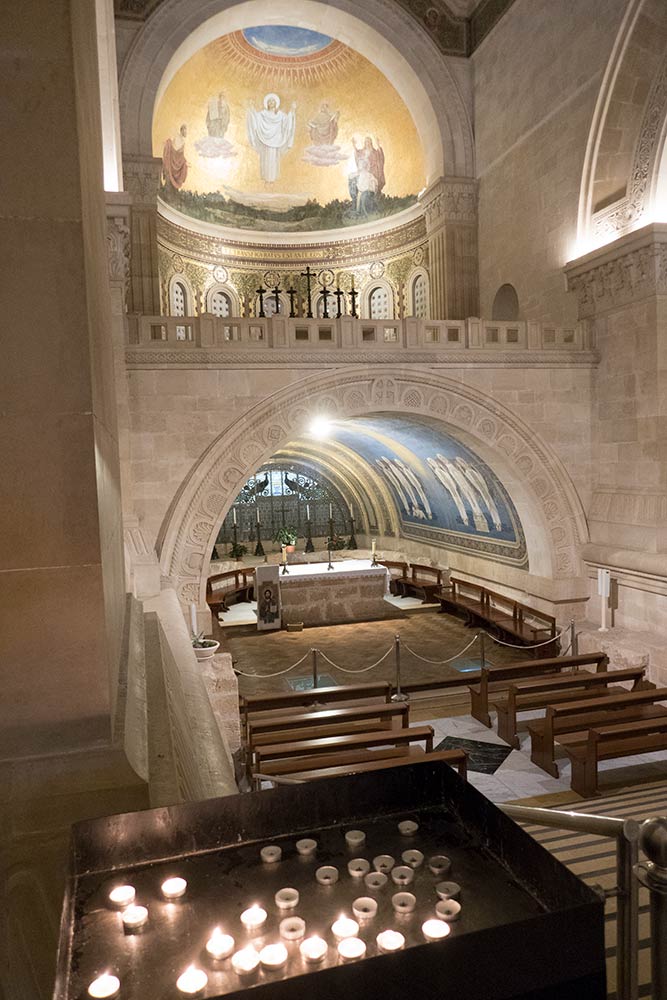
Church of the Transfiguration, Mount Tabor

Readings at Mass

Liturgical Colour: White.


When a Feast of the Lord is celebrated on a weekday there is only one reading before the Gospel, which may be chosen from either the first or second reading.

First reading
Daniel 7:9-10,13-14 ©

His robe was white as snow

As I watched:
Thrones were set in place
and one of great age took his seat.
His robe was white as snow,
the hair of his head as pure as wool.
His throne was a blaze of flames,
its wheels were a burning fire.
A stream of fire poured out,
issuing from his presence.
A thousand thousand waited on him,
ten thousand times ten thousand stood before him.
A court was held
and the books were opened.
I gazed into the visions of the night.
And I saw, coming on the clouds of heaven,
one like a son of man.
He came to the one of great age
and was led into his presence.
On him was conferred sovereignty,
glory and kingship,
and men of all peoples, nations and languages became his servants.
His sovereignty is an eternal sovereignty
which shall never pass away,
nor will his empire ever be destroyed.

Responsorial Psalm
Psalm 96(97):1-2,5-6,9 ©
The Lord is king, most high above all the earth.
The Lord is king, let earth rejoice,
  let all the coastlands be glad.
Cloud and darkness are his raiment;
  his throne, justice and right.
The Lord is king, most high above all the earth.
The mountains melt like wax
  before the Lord of all the earth.
The skies proclaim his justice;
  all peoples see his glory.
The Lord is king, most high above all the earth.
For you indeed are the Lord
  most high above all the earth,
  exalted far above all spirits.
The Lord is king, most high above all the earth.

When a Feast of the Lord falls on a weekday, there is no reading after the Psalm and before the Gospel.

Gospel AcclamationMt17:5
Alleluia, alleluia!
This is my Son, the Beloved:
he enjoys my favour.
Listen to him.
Alleluia!

GospelMark 9:2-10 ©

This is my Son, the Beloved

Jesus took with him Peter and James and John and led them up a high mountain where they could be alone by themselves. There in their presence he was transfigured: his clothes became dazzlingly white, whiter than any earthly bleacher could make them. Elijah appeared to them with Moses; and they were talking with Jesus. Then Peter spoke to Jesus: ‘Rabbi,’ he said ‘it is wonderful for us to be here; so let us make three tents, one for you, one for Moses and one for Elijah.’ He did not know what to say; they were so frightened. And a cloud came, covering them in shadow; and there came a voice from the cloud, ‘This is my Son, the Beloved. Listen to him.’ Then suddenly, when they looked round, they saw no one with them any more but only Jesus.
  As they came down from the mountain he warned them to tell no one what they had seen, until after the Son of Man had risen from the dead. They observed the warning faithfully, though among themselves they discussed what ‘rising from the dead’ could mean.

The readings on this page are from the Jerusalem Bible, which is used at Mass in most of the English-speaking world. The New American Bible readings, which are used at Mass in the United States, are available in the Universalis apps, programs and downloads.

You can also view this page with the Gospel in Greek and English.


TOPICS: Catholic; General Discusssion; Prayer; Worship
KEYWORDS: catholic; mk9; ordinarytime; prayer
For your reading, reflection, faith-sharing, comments, questions, discussion.

1 posted on 08/06/2021 4:46:25 AM PDT by annalex
[ Post Reply | Private Reply | View Replies]

To: All

KEYWORDS: catholic; mk9; ordinarytime; prayer;


2 posted on 08/06/2021 4:46:51 AM PDT by annalex (fear them not)
[ Post Reply | Private Reply | To 1 | View Replies]

To: annalex
Prayer thread for Salvation's recovery
3 posted on 08/06/2021 4:47:16 AM PDT by annalex (fear them not)
[ Post Reply | Private Reply | To 2 | View Replies]

To: nickcarraway; NYer; ELS; Pyro7480; livius; ArrogantBustard; Catholicguy; RobbyS; marshmallow; ...
Alleluia Ping

Please FReepmail me to get on/off the Alleluia Ping List.


4 posted on 08/06/2021 4:48:24 AM PDT by annalex (fear them not)
[ Post Reply | Private Reply | To 1 | View Replies]

To: annalex
Mark
 English: Douay-RheimsLatin: Vulgata ClementinaGreek NT: Byzantine/Majority Text (2000)
 Mark 9
29:1 AND after six days Jesus taketh with him Peter and James and John, and leadeth them up into an high mountain apart by themselves, and was transfigured before them. 9:1 Et post dies sex assumit Jesus Petrum, et Jacobum, et Joannem, et ducit illos in montem excelsum seorsum solos, et transfiguratus est coram ipsis.και μεθ ημερας εξ παραλαμβανει ο ιησους τον πετρον και τον ιακωβον και [τον] ιωαννην και αναφερει αυτους εις ορος υψηλον κατ ιδιαν μονους και μετεμορφωθη εμπροσθεν αυτων
39:2 And his garments became shining and exceeding white as snow, so as no fuller upon earth can make white. 9:2 Et vestimenta ejus facta sunt splendentia, et candida nimis velut nix, qualia fullo non potest super terram candida facere.και τα ιματια αυτου εγενοντο στιλβοντα λευκα λιαν ως χιων οια γναφευς επι της γης ου δυναται λευκαναι
49:3 And there appeared to them Elias with Moses; and they were talking with Jesus. 9:3 Et apparuit illis Elias cum Moyse : et erant loquentes cum Jesu.και ωφθη αυτοις ηλιας συν μωσει και ησαν συλλαλουντες τω ιησου
59:4 And Peter answering, said to Jesus: Rabbi, it is good for us to be here: and let us make three tabernacles, one for thee, and one for Moses, and one for Elias. 9:4 Et respondens Petrus, ait Jesu : Rabbi, bonum est nos hic esse : et faciamus tria tabernacula, tibi unum, et Moysi unum, et Eliæ unum.και αποκριθεις ο πετρος λεγει τω ιησου ραββι καλον εστιν ημας ωδε ειναι και ποιησωμεν σκηνας τρεις σοι μιαν και μωσει μιαν και ηλια μιαν
69:5 For he knew not what he said: for they were struck with fear. 9:5 Non enim sciebat quid diceret : erant enim timore exterriti.ου γαρ ηδει τι λαλησει ησαν γαρ εκφοβοι
79:6 And there was a cloud overshadowing them: and a voice came out of the cloud, saying: This is my most beloved son; hear ye him. 9:6 Et facta est nubes obumbrans eos : et venit vox de nube, dicens : Hic est Filius meus carissimus : audite illum.και εγενετο νεφελη επισκιαζουσα αυτοις και ηλθεν φωνη εκ της νεφελης ουτος εστιν ο υιος μου ο αγαπητος αυτου ακουετε
89:7 And immediately looking about, they saw no man any more, but Jesus only with them. 9:7 Et statim circumspicientes, neminem amplius viderunt, nisi Jesum tantum secum.και εξαπινα περιβλεψαμενοι ουκετι ουδενα ειδον αλλα τον ιησουν μονον μεθ εαυτων
99:8 And as they came down from the mountain, he charged them not to tell any man what things they had seen, till the Son of man shall be risen again from the dead. 9:8 Et descendentibus illis de monte, præcepit illis ne cuiquam quæ vidissent, narrarent : nisi cum Filius hominis a mortuis resurrexerit.καταβαινοντων δε αυτων απο του ορους διεστειλατο αυτοις ινα μηδενι διηγησωνται α ειδον ει μη οταν ο υιος του ανθρωπου εκ νεκρων αναστη
109:9 And they kept the word to themselves; questioning together what that should mean, when he shall be risen from the dead. 9:9 Et verbum continuerunt apud se : conquirentes quid esset, cum a mortuis resurrexerit.και τον λογον εκρατησαν προς εαυτους συζητουντες τι εστιν το εκ νεκρων αναστηναι

5 posted on 08/06/2021 4:49:41 AM PDT by annalex (fear them not)
[ Post Reply | Private Reply | To 4 | View Replies]

To: annalex

Catena Aurea by St. Thomas Aguinas

9:1–8

1. And he said unto them, Verily I say unto you, That there be some of them that stand here, which shall not taste of death, till they have seen the kingdom of God come with power.

2. And after six days Jesus taketh with him Peter, and James, and John, and leadeth them up into an high mountain apart by themselves: and he was transfigured before them.

3. And his raiment became shining, exceeding white as snow; so as no fuller on earth can white them.

4. And there appeared unto them Elias with Moses: and they were talking with Jesus.

5. And Peter answered and said to Jesus, Master, it is good for us to be here: and let us make three tabernacles; one for thee, and one for Moses, and one for Elias.

6. For he wist not what to say; for they were sore afraid.

7. And there was a cloud that overshadowed them; and a voice came out of the cloud, saying, This is my beloved Son: hear him.

8. And suddenly, when they had looked round about, they saw no man any more, save Jesus only with themselves.

PSEUDO-JEROME. After the consummation of the cross, the glory of the resurrection is shewn, that they, who were to see with their own eyes the glory of the resurrection to come, might not fear the shame of the cross; wherefore it is said, And after six days Jesus taketh with him Peter, and James, and John, and led them up into an high mountain apart by themselves, and he was transfigured before them.

CHRYSOSTOM. (Hom. in Matt. 65) Luke in saying, After eight days, does not contradict this; for he reckoned in both the day on which Christ had spoken what goes before, and the day on which he took them up. And the reason that he took them up after six days, was that they might be filled with a more eager desire during the space of these days, and with a watchful and anxious mind attend to what they saw.

THEOPHYLACT. And He takes with Him the three chiefs of the Apostles, Peter, as confessing and loving him, John, as the beloved one, James, as being sublime in speech and as a divine; for so displeasing was he to the Jews, that Herod wishing to please the Jews slew him.

PSEUDO-CHRYSOSTOM. (Vict. Ant. e Cat. in Marc.) He does not however shew His glory in a house, but He takes them up into a high mountain, for the loftiness of the mountain was adapted to shewing forth the loftiness of His glory.

THEOPHYLACT. And He took them apart, because He was about to reveal mysteries to them. We must also understand by transfiguration not the change of His features, but that, whilst His features remained as before, there was added unto Him a certain ineffable brightness.

PSEUDO-CHRYSOSTOM. (Vict. Ant. e Cat. in Marc.) It is not therefore fitting that in the kingdom of God any change of feature should take place, either in the Saviour Himself, or in those who are to be made like unto him, but only an addition of brightness.

BEDE. (in Marc. 3, 37) Our Saviour then when transfigured did not lose the substance of real flesh, but shewed forth the glory of His own or of our future resurrection; for such as He then appeared to the Apostles, He will after the judgment appear to all His elect. It goes on, And his raiment became shining.

GREGORY. (Mor. 32, 6) Because, in the height of the brightness of heaven above, they who shine in righteousness of life, will cling to Him; for by the name of garments, He means the just whom He joins to Himself. There follows, And there appeared unto them Elias with Moses, and they were talking with Jesus.

CHRYSOSTOM. (Hom. in Matt. 56) He brings Moses and Elias before them; first, indeed, because the multitudes said that Christ was Elias, and one of the Prophets, He shews Himself to the Apostles with them, that they might see the difference between the Lord, and His servants. And again because the Jews accused Christ of transgressing the law, and thought Him a blasphemer, as if He arrogated to Himself the glory of His Father, He brought before them those who shone conspicuous in both ways; for Moses gave the Law, and Elias was zealous for the glory of God; for which reason neither would have stood near Him, if He had been opposed to God and to His law. And that they might know that He holds the power of life and of death, He brings before them both Moses who was dead, and Elias who had not yet suffered death. Furthermore He signified by this that the doctrine of the Prophets was the schoolmaster to the doctrine of Christ. He also signified the junction of the New and Old Testament, and that the Apostles shall be joined in the resurrection with the Prophets, and both together shall go forth to meet their common King. It goes on, And Peter answered and said to Jesus, Master, it is good for us to be here; and let us make three tabernacles, one for thee, and one for Moses, and one for Elias.

BEDE. (ubi sup.) If the transfigured humanity of Christ and the society of but two saints seen for a moment, could confer delight to such a degree that Peter would, even by serving them, stay their departure, how great a happiness will it be to enjoy the vision of Deity amidst choirs of Angels for ever? It goes on, For he wist not what to say; although, however, Peter from the stupor of human frailty knew not what to say, still he gives a proof of the feelings which were within him; for the cause of his not knowing what to say, was his forgetting that the kingdom was promised to the Saints by the Lord not in any earthly region, but in heaven; he did not remember that he and his fellow-Apostles were still hemmed in by mortal flesh and could not bear the state of immortal life, to which his soul had already carried him away, because in our Father’s house in heaven, a house made with hands is not needed. But again even up to this time he is pointed at, as an ignorant man, who wishes to make three tabernacles for the Law, the Prophets, and the Gospel, since they in no way can be separated from each other.

CHRYSOSTOM.f Again, Peter neither comprehended that the Lord worked His transfiguration for the shewing forth of His true glory, nor that He did this in order to teach men, nor that it was impossible for them to leave the multitude and dwell in the mountain. It goes on, For they were sore afraid. But this fear of theirs was one by which they were raised from their usual state of mind to one higher, and they recognised that those who appeared to them were Moses and Elias. The soul also was drawn on to a state of heavenly feeling, as though carried away from human sense by the heavenly vision.

THEOPHYLACT. Or else, Peter, fearing to come down from the mount because he had now a presentiment that Christ must be crucified, said, It is good for us to be here, and not to go down there, that is, in the midst of the Jews; but if they who are furious against Thee come hither, we have Moses who beat down the Egyptians, we have also Elias, who brought fire down from heaven and destroyed the five hundred.

ORIGEN. (in Matt tom. xii. 40) Mark says in his own person, For he wist not what to say. Where it is matter for, consideration, whether perchance Peter spoke this in the confusion of his mind, by the motion of a spirit not his own; whether perchance that spirit himself who wished, as far as in him lay, to be a stumbling-block to Christ, so that He might shrink from that Passion, which was the saving of all men, did not here work as a seducer and wish under the colour of good to prevent Christ from condescending to men, from coming to them, and taking death upon Himself for their sakes.

BEDE. (ubi sup.) Now because Peter sought for a material tabernacle, he was covered with the shadow of the cloud, that he might learn that in the resurrection they are to be protected not by the covering of houses, but by the glory of the Holy Ghost; wherefore it goes on, There was a cloud that overshadowed them. And the reason why they obtained no answer from the Lord was, that they asked unadvisedly; but the Father answered for the Son, wherefore there follows, And a voice came out of the cloud, saying, This is my beloved Son, in whom I am well pleased.

CHRYSOSTOM. (Hom. in Matt. 56) The voice proceeded from a cloud in which God is wont to appear, that they might believe that the voice was sent forth from God. But in that He says, This is my beloved Son, He declares that the will of the Father and the Son is one, and that, save in that He is the Son, He is in all things One with Him who begot Him.

BEDE. (ubi sup.) He then whose preaching, as Moses foretold, every soul that wished to be saved should hear when He came in the flesh, He now come in the flesh is proclaimed by God the Father to the disciples as the one whom they were to hear. There follows, And suddenly, when they had looked round about, they saw no man any more, save Jesus only with themselves; for as soon as the Son was proclaimed, at once the servants disappeared, lest the voice of the Father should seem to have been sent forth to them.

THEOPHYLACT. Again mystically; after the end of this world, which was made in six days, Jesus will take us up (if we be His disciples) into an high mountain, that is, into heaven, where we shall see His exceeding glory.

BEDE. (ubi sup.) And by the garments of the Lord are meant His saints, who will shine with a new whiteness. By the fuller we must understand Him, to whom the Psalmist says, (Ps. 51) Wash me throughly from my wickedness, and cleanse me from my sin; for He cannot give to His faithful ones upon earth that glory which remains laid up for them in heaven.

REMIGIUS. Or else, by the fuller are meant holy preachers and purifiers of the soul, none of whom in this life can so live as not to be stained with some spots of sin; but in the coming resurrection all the saints shall be purged from every stain of sin. Therefore the Lord will make them such as neither they themselves by taking vengeance on their own members, nor any preacher by his example and doctrine, can make.

CHRYSOSTOM. Or else, white garments are the writings of Evangelists and Apostles, the like to which no interpreter can frame.

ORIGEN. (in Matt. tom. xii. 39) Or else, fullers upon earth may by a moral interpretation be considered to be the wise of this world, who are thought to adorn even their foul understandings and doctrines with a false whitening drawn from their own minds. But their skill as fullers cannot produce any thing like a discourse which shews forth the brightness of spiritual conceptions in the unpolished words of Scripture, which by many are despised.

BEDE. (ubi. sup.) Moses and Elias, of whom one, as we read, died, the other was carried away to heaven, signify the coming glory of all the Saints, that is, of all who in the judgment-time are either to be found alive in the flesh, or to be raised up from that death of which they tasted, and who are all equally to reign with Him.

THEOPHYLACT. Or else it means, that we are to see in glory both the Law and the Prophets speaking with Him, that is, we shall then find that all those things which were spoken of Him by Moses and the other prophets agree with the reality; then too we shall hear the voice of the Father, revealing to us the Son of the Father, and saying, This is my beloved Son, and the cloud, that is, the Holy Ghost, the fount of truth, will overshadow us.

BEDE. (ubi sup.) And we must observe, that, as when the Lord was baptized in Jordan, so on the mountain, covered with brightness, the whole mystery of the Holy Trinity is declared, because we shall see in the resurrection that glory of the Trinity which we believers confess in baptism, and shall praise it all together. Nor is it without reason that the Holy Ghost appeared here in a bright cloud, there in the form of a dove; because he who now with a simple heart keeps the faith which he hath embraced, shall then contemplate what he had believed with the brightness of open vision. But when the voice had been heard over the Son, He was found Himself alone, because when He shall have manifested Himself to His elect, God shall be all in all, yea Christ with His own, as the Head with the body, shall shine through all things. (1 Cor. 15:28).

9:9–13

9. And as they came down from the mountain, he charged them that they should tell no man what things they had seen, till the Son of man were risen from the dead.

10. And they kept that saying with themselves, questioning one with another what the rising from the dead should mean.

11. And they asked him, saying, Why say the Scribes that Elias must first come?

12. And he answered and told them, Elias verily cometh first, and restoreth all things; and how it is written of the Son of man, that he must suffer many things, and be set at nought.

13. But I say unto you, That Elias is indeed come, and they have done unto him whatsoever they listed, as it is written of him.

ORIGEN. (in Matt. tom. xii. 43) After the shewing of the mystery on the mount, the Lord commanded His disciples, as they were coming down from the mount, not to reveal His transfiguration, before the glory of His Passion and Resurrection; wherefore it is said, And as they came down from the mountain, he charged them that they should tell no man what things they had seen, till the Son of man were risen from the dead.

CHRYSOSTOM. (Hom in Matt. 56) Where He not only orders them to be silent, but mentioning His Passion, He implies the cause why they were to be silent.

THEOPHYLACT. Which He did lest men should be offended, hearing such glorious things of Him Whom they were about to see crucified. It was not therefore fitting to say such things of Christ before He suffered, but after His resurrection they were likely to be believed.

PSEUDO-CHRYSOSTOM. (Vict. Ant. e Cat. in Marc.) But they, being ignorant of the mystery of the resurrection, took hold of that saying, and disputed one with another; wherefore there follows, And they kept that saying with themselves, questioning one with another what the rising from the dead should, mean.

PSEUDO-JEROME. This, which is peculiar to Mark, means, that when death shall have been swallowed up in victory, we shall have no memory for the former things. It goes on, And they asked him, saying, Why say the Scribes that Elias must first come.

CHRYSOSTOM. (non occ.) The design of the disciples in asking this question seems to me to be this. We indeed have seen Elias with Thee, and have seen Thee before seeing Elias, but the Scribes say that Elias cometh first; we therefore believe that they have lied.

BEDE. (ubi sup.) Or thus; the disciples thought that the change which they had seen in Him in the mount, was His transformation to glory; and they say, If Thou hast already come in glory, wherefore doth not Thy forerunner appear? chiefly because they had seen Elias go away.

CHRYSOSTOM. (Hom. in Matt. 57) But what Christ answered to this, is seen by what follows, And he answered and told them, Elias verily cometh first, and restoreth all things; in which He shews that Elias will come before His second advent. For the Scriptures declare two advents of Christ, namely, one which has taken place, and another which is to come; but the Lord asserts that Elias is the forerunner of the second advent.

BEDE. (ubi sup.) Again, He will restore all things, that is to say, those things which Malachi points out, saying, Behold, I will send you Elijah the prophet, and he shall turn the heart of the fathers to the children, and the heart of the children to their fathers; (Mal. 4:5, 6) he will yield up also to death that debt, which by his prolonged life he has delayed to render.

THEOPHYLACT. Now the Lord puts this forward to oppose the notion of the Pharisees, who held that Elias was the forerunner of the first advent, shewing that it led them to a false conclusion; wherefore he subjoins, And how it is written of the Son of man, that he must suffer many things, and be set at nought. As if He had said, When Elias the Tishbite cometh, he will pacify the Jews, and will bring them to the faith, and thus be the forerunner of the second advent. If then Elias is the forerunner of the first advent, how is it written that the Son of man must suffer? One of these two things therefore will follow; either that Elias is not the forerunner of the first advent, and thus the Scripture will be true; or that he is the forerunner of the first advent, and then the Scriptures will not be true, which say that Christ must suffer; for Elias must restore all things, in which case there will not be an unbelieving Jew, but all, whosoever hear him, must believe on his preaching.

BEDE. (ubi sup.) Or this, And how it is written: that is, in the same way as the prophets have written many things in various places concerning the Passion of Christ, Elias also, when he comes, is to suffer many things, and to be despised by the wicked.

CHRYSOSTOM. (ubi sup.) Now as the Lord asserted that Elias was to be the forerunner of the second advent, so consequently He asserted that John was the forerunner of the first; wherefore He subjoins, But I say unto you, that Elias is indeed come.

GLOSS. (non in Gloss. sed ap. Chrys ubi sup.) He calls John Elias, not because he was Elias in person, but because he fulfilled the ministry of Elias; for as the latter will be the forerunner of the second advent, so the former has been that of the first.

THEOPHYLACT. For again, John rebuked vice, and was a zealous man, and a hermit like Elias; but they heard him not, as they will hear Elias, but killed him in wicked sport, and cut off his head; wherefore there follows, And they have done unto him whatsoever they listed, as it is written of him.

PSEUDO-CHRYSOSTOM. (Vict. Ant. e Cat. in Marc.) Or else, the disciples asked Jesus, how it was written that the Son of man must suffer? Now in answer to this, He says, As John came in the likeness of Elias, and they evil intreated him, so according to the Scriptures must the Son of man suffer.

Catena Aurea Mark 9

6 posted on 08/06/2021 4:50:27 AM PDT by annalex (fear them not)
[ Post Reply | Private Reply | To 5 | View Replies]

To: annalex


Transfiguration

Fra Angelico

1440-42
Fresco, 181 x 152 cm
Convento di San Marco, Florence

7 posted on 08/06/2021 4:53:31 AM PDT by annalex (fear them not)
[ Post Reply | Private Reply | To 6 | View Replies]

To: annalex


Transfiguration of Christ

Crete
c. 1550
Egg tempera on wood, 77 x 51 cm
Ikonen-Museum, Recklinghausen

8 posted on 08/06/2021 4:54:02 AM PDT by annalex (fear them not)
[ Post Reply | Private Reply | To 7 | View Replies]

To: annalex


Transfiguration

Basilica of Transfiguration, Monastery of St. Catherine
Early 7th c.
mosaic
Mount Sinai

9 posted on 08/06/2021 4:56:13 AM PDT by annalex (fear them not)
[ Post Reply | Private Reply | To 8 | View Replies]

To: annalex
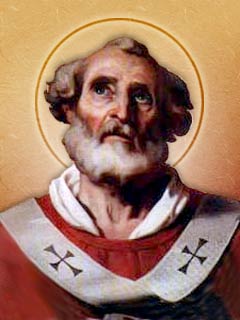
St. Hormisdas was born in 450 in Italy. He was married and widowed before becoming a priest. On July 21, 514, he was chosen as pope, to succeed St. Symmachus.

Hormisdas ended the Acacian Schism, which had divided the Eastern and Western Churches since 484. The Church in Constantinople reunited with the Church in Rome in 519, thanks to a confession known as the Formula of Hormisdas.

St. Hormisdas died on August 6, 523. He is the father of Pope St. Silverius.


angelusnews.com
10 posted on 08/06/2021 5:00:54 AM PDT by annalex (fear them not)
[ Post Reply | Private Reply | To 9 | View Replies]

To: annalex

11 posted on 08/06/2021 5:02:06 AM PDT by annalex (fear them not)
[ Post Reply | Private Reply | To 10 | View Replies]

To: annalex
NAVARRE BIBLE COMMENTARY (RSV)

Ad Majorem Dei Gloriam (To the Greater Glory of God)

From: Daniel 7:2-10, 13-14

Daniel's Vision
---------------
[2] Daniel said, "I saw in my vision by night, and behold, the four winds of heaven were stirring up the great sea. [3] And four great beasts came up out of the sea, different from one another. [4] The first was like a lion and had eagles' wings. Then as I looked its wings were plucked off, and it was lifted up from the ground and made to stand upon two feet like a man; and the mind of a man was given to it. [5] And behold, another beast, a second one, like a beat It was raised up on one side, it had three ribs in its mouth between its teeth, and it was told, 'Arise, devour much flesh.' [6] After this I looked, and lo, another, like a leopard with four wings of a bird on its back and the beast had four heads, and dominion was given to it. [7] After this I saw in the night visions, and behold, a fourth beast, terrible and dreadful and exceedingly strong, and it had great iron teeth, it devoured and broke in pieces and stamped the residue with its feet It was different from all the beasts that were before it, and it had ten horns. [8] I considered the horns, and behold, there came up among them another horn, a little one, before which three of the first horns were plucked up by the roots and behold, in this horn were eyes like the eyes of a man, and a mouth speaking great things. [9] As I looked, thrones were placed and one that was ancient of days took his seat; his raiment was white as snow, and the hair of his head like pure wool; his throne was fiery flames, its wheels were burning fire. [10] A stream of fire issued and came forth from before him a thousand thousands served him, and ten thousand times ten thousand stood before him; the court sat in judgment,and the books were opened.

[13] I saw in the night visions, and behold, with the clouds of heaven there came one like a son of man, and he came to the Ancient of Days and was presented before him. [14] And to him was given dominion and glory and kingdom, that all peoples, nations, and languages should serve him; his dominion is an everlasting dominion, which shall not pass away, and his kingdom one that shall not be destroyed.

***********************************************************************
Commentary:

7:1-12:13. Up to the end of chapter 6, Daniel has been the interpreter of kings' dreams; now his own dreams are interpreted for him by an angel or heavenly being: the interpreter explains dreams (chaps. 7-8), the meaning of Scripture (chap. 9), and a vision (chaps. 10-12); and Daniel himself notes it all down.

Daniel had announced to Nebuchadnezzar the end of time as part of the interpretation of his dream (cf. 2:28); now Daniel is told when it will happen (cf. 12:5-12); for him (cf. 2:28); he is given a more specific revelation in which the figure of the tyrannical Antiochus IV (described here symbolically) is depicted as the epitome of evil and his death will mark the end of the present age (cf. 11:45-12:1). Earlier, Daniel's wisdom was seen as a divine gift to be used for the benefit of foreign kings; now it is depicted as coming from a revelation in which God speaks to Daniel through heavenly messengers and tells him about the meaning of human history--a revelation that he must commit to writing, as a source of comfort and hope for the chosen people. "Revelation has set within history a point of reference which cannot be ignored if the mystery of human life is to be known. Yet this knowledge refers back constantly to the mystery of God which the human mind cannot exhaust but can only receive and embrace in faith. Between these two poles, reason has its own specific field in which it can enquire and understand, restricted only by its finiteness before the infinite mystery of God" (John Paul II, Fides Et Ratio, 14).

7:1-28. This chapter marks the end of the part of the book written in Aramaic; in it we again find elements seen in chapter 2 (where the Aramaic part began); these include: the arrangement of history into four periods (symbolized there by metals, here by beasts) and the establishment of an everlasting kingdom at the end. Thus, the chapter closes the Aramaic section and acts as a kind of introduction to the chapters (in Hebrew) in which Daniel receives and writes down divine revelations. Chapter 8 is written in Hebrew and it explains chapter 7; and this pattern continues: chapter 9 is explained by chapter 10; and 11 by 12. Daniel first outlines his dream or vision, and it is then interpreted by an angelic being. In this chapter the content of the dream is given in vv. 1-14, and its interpretation in vv. 15-28. Vision and interpretation constitute a single event, an account of which Daniel writes down, as he mentions at start (cf. v. 1) and finish (cf. v. 28). Daniel's "signature" at beginning and end confirms the truth of his vision and the truthfulness of what he has written for the reader.

7:1-14. In chapter 5 the picture drawn of Belshazzar suggested that he stood figuratively for the sacrilegious King Antiochus IV. It is not surprising, then, that this dream of Daniel's is set in the first year of Belshazzar's reign, given that the climax of the prophecy (the little horn) concerns Antiochus IV. God is going to intervene definitively when irreligion is at its worst. There are two scenes in the vision--the beasts coming out of the sea (vv. 2-8) and the divine court and judgment (vv. 9-14).

7:2-8. The Great Sea (the Mediterranean: v. 2), out of which the beasts arise, stands for the world of gloom and chaos. Although earlier prophets did use animals as symbols for empires (a crocodile for Egypt, cf. Ezek 32; an eagle or a monster for Babylon, cf. Ezek 17:3; Jer 51:34), the winged beasts of Daniel's vision are reminiscent of Mesopotamian statues. The lion with eagle's wings stands for Nebuchadnezzar a proud man, he was brought low and later given back his reason (4:16, 34); the empire of the Medes is depicted as a bear ready to attack, and that of the Persians as a leopard, fleet of foot. The fourth beast resembles no animal, but its teeth of iron show it to be the Greek empire of Alexander the Great and his successors (cf. 2:40). Of those successors, (symbolized by the horns), attention is focused on Antiochus IV, the horn with eyes that speaks blasphemy (cf. vv. 8, 25). The gravity of those challenges to God's authority will be underlined in Revelation 13:5 in its description of the beast that is given power by the dragon. The worst sin of the powers of the world is their opposition to God and his laws. Interpreting the words of this passage as a prophecy in the strict sense, that is, as a prediction of something that will happen in the future, some Fathers read the last of the horns as being the Antichrist of whom the Revelation to John will have much to say (cf. Rev. 13:11-18; 17:16; 19: 19-21).

7:9-14. Divine judgment is passed on the kingdoms in this scene. God is depicted as being seated on a throne in heaven, his glory flashing out and angels all around. Judgment is about to take place, and it will be followed by execution of the sentence. The books (v. 10) contain all the actions of men (cf. Jer 17:1; Mal 3:16; Ps 56:8; Rev 20:12). The seer is shown history past (not laid out according to chronology) all the empires are included in one glance), and he notes that a more severe sentence is passed on the blasphemous horn than on the other beasts. They had their lives extended (v. 12), that is, their deprivation of power did not spell the end; but the little horn is destroyed forthwith. "Following in the steps of the prophets and John the Baptist, Jesus announced the judgment of the Last Day in his preaching (cf. Dan 7:10; Joel 3-4; Mal 3:19; Mt 3:7-42)" (Catechism of the Catholic Church, 678).

The one "like a son of man" who comes with the clouds of heaven and who, after the judgment, is given everlasting dominion over all the earth, is the very antithesis of the beasts. He has not risen from a turbulent sea like them; there is nothing ferocious about him. Rather, he has been raised up by God (he comes with the clouds of heaven) and he shares the human condition. The dignity of all mankind is restored through this son of man's triumph over the beasts. This figure, as we will discover later, stands for 'the people of the saints of the Most High' (7:27), that is, faithful Israel. However, he is also an individual (just as the winged lion was an individual, and the little horn), and insofar as he is given a kingdom, he is a king. What we have here is an individual who represents the people. In Jewish circles around the time of Christ, this "son of man" was interpreted as being the Messiah, a real person (cf. "Book of the Parables of Enoch"); but it was a title that became linked to the sufferings of the Messiah and to his resurrection from the dead only when Jesus Christ applied it to himself in the Gospel. "Jesus accepted Peter's profession of faith, which acknowledged him to be the Messiah, by announcing the imminent Passion of the Son of Man (cf. Mt 16:23). He unveiled the authentic content of his messianic kingship both in the transcendent identity of the Son of Man 'who came down from heaven' (Jn 3:13; cf. Jn 6:62; Dan 7:13), and in his redemptive mission as the suffering Servant: 'The Son of Man came not to be served but to serve, and to give his life as a ransom for many' (Mt 20:28; cf. Is 53:10-12)" (Catechism of the Catholic Church, 440).

When the Church proclaims in the Creed that Christ is seated at the right hand of the Father, she is saying that it was to Christ that dominion was given; "Being seated at the Father's right hand signifies the inauguration of the Messiah's kingdom, the fulfillment of the prophet Daniel's vision concerning the Son of man; 'To him was given domination and glory and kingdom, that all peoples, nations, and languages should serve him; his dominion is an everlasting dominion, which shall not pass away, and his kingdom one that shall not be destroyed' (Dan 7:14). After this event the apostles became witnesses of the 'kingdom [that] will have no end' (Nicene Creed)" (Catechism of the Catholic Church, 664).

12 posted on 08/06/2021 6:03:17 AM PDT by fidelis (Defeatism and despair are like poison to men's souls. If you can't be positive, at least be quiet.)
[ Post Reply | Private Reply | To 4 | View Replies]

To: fidelis
From: 2 Peter 1:16-19

The Transfiguration, an Earnest of the Second Coming
----------------------------------------------------
[16] For we did not follow cleverly devised myths when we made known to you the power and coming of our Lord Jesus Christ, but we were eyewitnesses of His majesty. [17] For when He received honor and glory from God the Father and the voice was borne to Him by the Majestic Glory, "This is My beloved Son, with whom I am well pleased," [18] we heard this voice borne from heaven, for we were with Him on the holy mountain.

Prophecy and the Second Coming
------------------------------
[19] And we have the prophetic word made more sure. You will do well to pay attention to this as to a lamp shining in a dark place, until the day dawns and the morning star rises in your hearts.

***********************************************************************
Commentary:

16-18. The transfiguration of Jesus Christ, at which the voice of God the Father was heard (verses 16-18), and the testimony of the Old Testament prophets (verses 19-21) are a guarantee of the doctrine of Christ's second coming.

"The power and coming of our Lord Jesus Christ": this phrase sums up the purpose of apostolic preaching: "power" indicates that Jesus Christ is God and is almighty like the Father; the "coming (literally "Parousia") means the same as His manifestation in glory at the end of time. This is not a matter of "myth"; it will be as real as His sojourn on this earth, of which the Apostles are "eyewitnesses". When speaking of the Transfiguration, the sacred writer refers to the "majesty" of Jesus Christ (an attribute which He always possesses, because He is God) and the "voice" of the Father confirming Christ's divine nature (cf. Matthew 17:5). The simple line of argument is that if Jesus Christ allowed His divinity to be glimpsed just for a moment, He will also be able to manifest it in its fullness and forever at the end of time.

"On the holy mountain": this wording indicates that he is referring to the transfiguration and not to the baptism of our Lord (Matthew 3:16-17). The mountain is described as "holy" because a theophany occurred there; similarly, in the Old Testament Zion is called a "holy mountain" because God revealed Himself there (cf. Psalm 2:6; Isaiah 11:9).

19-21. "The prophetic word" finds its complete fulfillment in Jesus Christ (cf. Hebrews 1:1). This does not refer to a particular prophecy; at that time "the prophetic word" meant the messianic prophecies or (more usually) all the Old Testament insofar as it proclaims the enduring salvation to come.

These verses encapsulate the whole notion of biblical prophecy—its value, interpretation and divine origin. They also show the close connection between the Old and the New Testaments. "The books of the Old Testament, all of them caught up into the Gospel message, attain and show forth their full meaning in the New Testament (cf. Matthew 5:17; Luke 24:27; Romans 16:25-26; 2 Corinthians 3:14-16) and, in their turn, shed light on it and explain it" (Vatican II, Dei Verbum, 16).

By reaching their fulfillment in Jesus Christ, the Old Testament prophecies confirm the truthfulness of what Jesus said and did. Together with the Transfiguration they constitute a guarantee of the second coming of the Lord.

The comparison of prophecy to the morning star is a very good one, for that star is designed to bring light and announce the coming of day. Similarly, the fullness of Revelation which begins with the earthly life of Christ will reach its climax when He comes in glory.

13 posted on 08/06/2021 6:03:54 AM PDT by fidelis (Defeatism and despair are like poison to men's souls. If you can't be positive, at least be quiet.)
[ Post Reply | Private Reply | To 12 | View Replies]

To: fidelis
From: Mark 9:2-10

The Transfiguration
-------------------
[2] And after six days Jesus took with Him Peter and James and John, and led them up a high mountain apart by themselves; and He was transfigured before them, [3] and His garments became glistening, intensely white, as no fuller on earth bleach them. [4] And there appeared to them Elijah with Moses; and they were talking to Jesus. [5] And Peter said to Jesus, "Master, it is well that we are here; let us make three booths, one for You and one for Moses and one for Elijah." [6] For he did not know what to say, for they were exceedingly afraid. [7] And a cloud overshadowed them, and a voice came out of the cloud, "This is My beloved Son; listen to Him." [8] And suddenly looking around they no longer saw any one with them but Jesus only. [9] And as they were coming down the mountain, He charged them to tell no one what they had seen, until the Son of Man should have risen from the dead. [10] So they kept the matter to themselves, questioning what the rising from the dead meant.

***********************************************************************
Commentary:

2-10. We contemplate in awe this manifestation of the glory of the Son of God to three of His disciples. Ever since the Incarnation, the divinity of our Lord has usually been hidden behind His humanity. But Christ wishes to show, to these favorite disciples, who will later be pillars of the Church, the splendor of His divine glory, in order to encourage them to follow the difficult way that lies ahead, fixing their gaze on the happy goal which is awaiting them at the end. This is why, as St. Thomas comments (cf. Summa Theologia, III, q. 45, a. 1), it was appropriate for Him to give them an insight into His glory. The fact that the Transfiguration comes immediately after the first announcement of His passion, and His prophetic words about how His followers would also have to carry His cross, shows us that "through many tribulations we must enter the kingdom of God" (Acts 14:22).

What happened at the Transfiguration? To understand this miraculous event in Christ's life, we must remember that in order to redeem us by His passion and death our Lord freely renounced divine glory and became man, assuming flesh which was capable of suffering and which was not glorious, becoming like us in every way except sin (cf. Hebrew 4:15). In the Transfiguration, Jesus Christ willed that the glory which was His as God and which His soul had from the moment of the Incarnation, should miraculously become present in His body. "We should learn from Jesus' attitude in these trials. During His life on earth He did not even want the glory that belong to Him. Though He had the right to be treated as God, He took the form of a servant, a slave (cf. Philippians 2:6)" (St J. Escriva, Christ Is Passing By, 62). Bearing in mind WHO became man (the divinity of the person and the glory of His soul), it was appropriate for His body to be glorious; given the PURPOSE of His Incarnation, it was not appropriate, usually, for His glory to be evident. Christ shows His glory in the Transfiguration in order to move us to desire the divine glory which will be given us so that, having this hope, we too can understand "that the sufferings of this present time are not worth comparing with the glory that is to be revealed to us" (Romans 8:18).

2. According to Deuteronomy (19:15), to bear witness to anything the evidence of two or three much concur. Perhaps this is why Jesus wanted three Apostles to be present. It should be pointed out that these three Apostles were specially loved by Him; they were with Him also at the raising of the daughter of Jairus (Mark 5:37) and will also be closest to Him during His agony at Gethsemane (Mark 14:33). Cf. note on Matthew 17:1-13.

7. This is how St. Thomas Aquinas explains the meaning of the Transfiguration: "Just as in Baptism, where the mystery of the first regeneration was proclaimed, the operation of the whole Trinity was made manifest, because the Son Incarnate was there, the Holy Spirit appeared under the form of a dove, and the Father made Himself known in the voice; so also in the Transfiguration, which is the sign of the second regeneration [the Resurrection], the whole Trinity appears—the Father in the voice, the Son in the man, the Holy Spirit in the bright cloud; for just as in Baptism He confers innocence, as signified by the simplicity of the dove, so in the Resurrection will He give His elect the clarity of glory and the refreshment from every form of evil, as signified by the bright cloud" (Summa Theologiae, III, q. 45, 1.4 ad 2). For, really, the Transfiguration was in some way an anticipation not only of Christ's glorification but also of ours. As St. Paul says, "it is the same Spirit Himself bearing witness with our spirit that we are children of God, and if children, then heirs, heirs of God and fellow heirs with Christ, provided we suffer with Him in order that we may also be glorified with Him" (Romans 8:16-17).

10. That the dead would rise was already revealed in the Old Testament (cf. Daniel 12:2-3; 2 Maccabees 7:9; 12:43) and was believed by pious Jews (cf. John 11:23-25). However, they were unable to understand the profound truth of the death and Resurrection of the Lord: they expected a glorious and triumphant Messiah, despite the prophecy that He would suffer and die (cf. Isaiah 53). Hence the Apostles' oblique approach; they too do not dare to directly question our Lord about His Resurrection.

Daily Word for Reflection—Navarre Bible Commentary

14 posted on 08/06/2021 6:04:09 AM PDT by fidelis (Defeatism and despair are like poison to men's souls. If you can't be positive, at least be quiet.)
[ Post Reply | Private Reply | To 13 | View Replies]

Disclaimer: Opinions posted on Free Republic are those of the individual posters and do not necessarily represent the opinion of Free Republic or its management. All materials posted herein are protected by copyright law and the exemption for fair use of copyrighted works.

Free Republic
Browse · Search
Religion
Topics · Post Article

FreeRepublic, LLC, PO BOX 9771, FRESNO, CA 93794
FreeRepublic.com is powered by software copyright 2000-2008 John Robinson