God bless you.
44. Jesus cried and said, He that believes in me, believes not on me, but on him that sent me.
45. And he that sees me sees him that sent me.
46. I am come a light into the world, that whosoever believes in me should not abide in darkness.
47. And if any man hear my words, and believe not, I judge him not: for I came not to judge the world, but to save the world.
48. He that rejects me, and receives not my words, has one that judgeth him: the word that I have spoken, the same shall judge him in the last day.
49. For I have not spoken of myself; but the Father which sent me, he gave me a commandment, what I should say, and what I should speak.
50. And I know that His commandment is life everlasting: whatsoever I speak therefore, even as the Father said to me, so I speak.
CHRYS. Because the love of human praise prevented the chief rulers from believing, Jesus cried and said, He that believes in Me, believes not on Me, but on Him that sent Me: as if to say, Why are you afraid to believe in Me? Your faith through Me passes to God.
AUG. He signifies to them that He is more than He appears to be, (for to men He appeared but a man; His Godhead was hid.) Such as the Father is, such am I in nature and in dignity; He that believes in Me, believes not in Me, i.e. on that which He sees, but in Him that sent Me, i.e. on the Father. [He that believes in the Father must believe in Him as the Father, i.e. must believe that He has a Son; and reversibly, he who believes in the Son thereby believes in the Father.] And again, if anyone thinks that God has sons by grace, but not a Son equal and coeternal with Himself, neither does he believe in the Father, who sent the Son; because what he believes in is not the Father who sent Him.
And to show that He is not the Son, in the sense of one out of many, a son by grace, but the Only Son equal to the Father, He adds And He that sees Me, sees Him that sent Me; so little difference is there between Me and Him that sent Me, that He that sees Me, sees Him. Our Lord sent His Apostles, yet none of them dared to say, He that believes in Me. We believe an Apostle, but we do not believe in an Apostle. Whereas the Only Begotten says, He that believes in Me, does not believe in Me, but on Him that sent Me. Wherein He does not withdraw the believer's faith from Himself, but gives him a higher object than the form of a servant, for that faith.
CHRYS. He that believes on Me, believes not in Me, but on Him that sent Me: as if He said, He that takes water from a stream, takes the water not of the stream, but of the fountain. Then to show that it is not possible to believe on the Father, if we do not believe in Him, He says, He that sees Me, sees Him that sent Me. What then; Is God a body? By no means; seeing here is the mind's vision.
What follows still further shows His union with the Father. I am come a light into the world. This is what the Father is called in many places.
He calls Himself the light, because he delivers from error, and disperses the darkness of the understanding; that whosoever believes in Me should not abide in darkness.
AUG. Whereby it is evident, that He found all in darkness. In which darkness if they wish not to remain, they must believe in the light which is come into the world. He says in one place to His disciples, you are the light of the world; but He did not say to them, you are come a light into the world, that whosoever believes on you should not abide in darkness. All saints are lights, but they are so by faith, because they are enlightened by Him, from Whom to withdraw is darkness.
CHRYS. And to show that He does not let His despisers go unpunished, from want of power, He adds, And if any man hear My words and believe not, I judge him not.
AUG i.e. I judge him not now. He does not say, I judge him not at I the last day, for that would be contrary to the sentence above, The Father has committed all judgment to the Son. And the reason follows, why He does not judge now; For I came not to judge the world, but to save the world. Now is the time of mercy afterward will be the time of judgment.
CHRYS. But that this might not serve to encourage sloth, He warns men of a terrible judgment coming; He that rejects Me, and hears not My words, has one that judges him.
AUG. Mean time they waited to know who this one was; so He proceeds: The word that I have spoken, the same shall judge him at the last day. He makes it sufficiently clear that he Himself will judge at the last day. For the word that He speaks, is Himself. He speaks Himself, announces Himself. We gather too from these words that those who have not heard, will be judged differently from those who have heard and despised.
AUG. I judge him not; the word that I have spoken shall judge him: for I have not spoken of Myself. The word which the Son speaks judges, because the Son did not speak of Himself: for I have not spoken of Myself: i.e. I was not born of Myself.
AUG. I ask then how we shall understand this, I will not judge, but the word which I have spoken will judge? Yet He Himself is the Word of the Father which speaks. Is it thus? I will not judge by My human power, as the Son of man, but as the word of God, because I am the Son of God.
CHRYS. Or, I judge him not, i.e. I am not the cause of his destruction, but he is himself, by despising my words. The words that I have just said, shall be his accusers, and deprive him of all excuse; the word that I have spoken, the same shall judge him.
And what word? This, viz. that I have not spoken of Myself, but the Father which sent Me gave Me a commandment what I should say, and what I should speak. All these things were said on their account, that they might have no excuse.
AUG. When the Father gave the Son a commandment, He did not give Him what He had not: for in the Wisdom of the Father, i.e. in the Word, are all the commandments of the Father. The commandment is said to be given, because it is not from him to whom it is said to be given. But to give the Son that which He never was without, is the same as to beget the Son who never was not.
THEOPHYL. Since the Son is the Word of the Father, and reveals completely what is in the mind of the Father, He says He receives a commandment what He should say, and what He should speak: just as our word, if we say what we think, brings out what is in our minds.
And 1 know that His commandment is life everlasting.
AUG. If life everlasting is the Son Himself, and the commandment is life everlasting, what is this but saying, I am the commandment of the Father? And in the same way in the following; Whatsoever I speak therefore, even as the Father said to Me, so I speak, we must not understand, said to Me, as if words were spoken to the Only Word.
The Father spoke to the Son, as He gave life to the Son; not that the Son knew not, or had not, but that He was the Son. What is meant by, as He said to Me, so I speak, but that I am the Word who speaks. The Father is true, the Son is truth: the True, begat the Truth. What then could He say to the Truth, if the Truth was perfect from the beginning, and no new truth could be added to Him? That He spoke to the Truth then, means that He begat the Truth.
Catena Aurea John 12
Today is
Optional Memorial of Saint Isidore
Lectionary: 564A
Readings for today's memorial are from the Common of Holy Men and Women, #737-742.
I could not locate these. If anyone knows how to navigate the "Common of Holy Men and Women" online, please teach me.
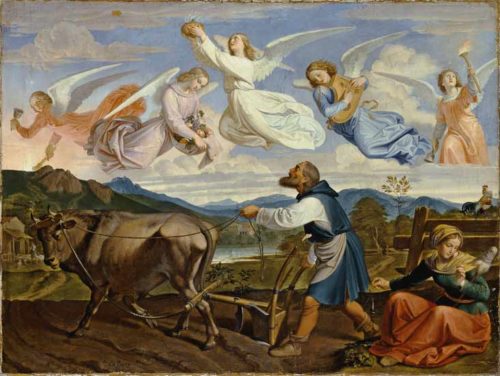
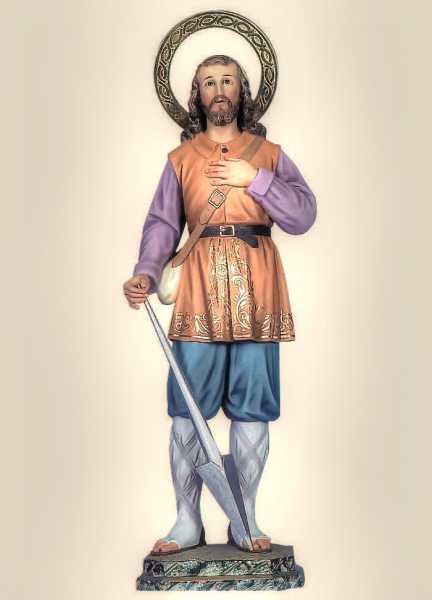
Saint Isidore the Farmer’s Story
Isidore has become the patron of farmers and rural communities. In particular, he is the patron of Madrid, Spain, and of the United States National Rural Life Conference.
When he was barely old enough to wield a hoe, Isidore entered the service of John de Vergas, a wealthy landowner from Madrid, and worked faithfully on his estate outside the city for the rest of his life. He married a young woman as simple and upright as himself who also became a saint—Maria de la Cabeza. They had one son, who died as a child.
Isidore had deep religious instincts. He rose early in the morning to go to church and spent many a holiday devoutly visiting the churches of Madrid and surrounding areas. All day long, as he walked behind the plow, he communed with God. His devotion, one might say, became a problem, for his fellow workers sometimes complained that he often showed up late because of lingering in church too long.
He was known for his love of the poor, and there are accounts of Isidore’s supplying them miraculously with food. He had a great concern for the proper treatment of animals.
He died May 15, 1130, and was declared a saint in 1622, with Saints Ignatius of Loyola, Francis Xavier, Teresa of Avila, and Philip Neri. Together, the group is known in Spain as “the five saints.”
Reflection
Many implications can be found in a simple laborer achieving sainthood: Physical labor has dignity; sainthood does not stem from status; contemplation does not depend on learning; the simple life is conducive to holiness and happiness. Legends about angel helpers and mysterious oxen indicate that his work was not neglected and his duties did not go unfulfilled. Perhaps the truth which emerges is this: If you have your spiritual self in order, your earthly commitments will fall into order also. “[S]eek first the kingdom [of God] and his righteousness,” said the carpenter from Nazareth, “and all these things will be given you besides” (Matthew 6:33).
Saint Isidore the Farmer is the Patron Saint of:
Farmers
Laborers
Another Saint of the Day for May 15 is Saint Dymphna.
St. Isodore the Farmer