
Posted on 05/13/2003 2:16:40 PM PDT by pabianice
In March, the Democratic Peoples Republic of Korea fired its second missile in two weeks from Sinsang-ri over the East Sea. The first test launch in February failed due to faulty parts, according to the Japanese Defense Ministry. The tests were believed timed to coincide with the large-scale South Korea-U.S. joint military drill being held in March, and they coincided with increased tensions along the peninsula and the recent interception of a US E-3 aircraft by DPRK aircraft. In February, another North Korean jet violated the West Sea border with the South.
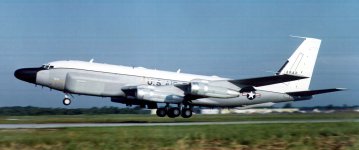
Nonetheless, E-3 ISR flights are scheduled to continue off North Korea, according to US military sources, and policymakers have reportedly rejected the idea of sending an armed fighter escort. According to The Washington Post, the US and its allies in the area have reluctantly accepted the fact that, short of full war, the DPRK cannot be stopped from producing nuclear weapons. With latest estimates now suggesting the DPRK’s uranium enrichment technology to be “decrepit,” strategy has reportedly switched to keeping them from selling the few weapons they are likely to be able to make within the foreseeable future. The “total red line” for the US would be the sale of nuclear weapons material to the US’ enemies, according to Rep. Mark S. Kirk (R-Ill.). Adding to a non-confrontational stance is the surprising message to Washington from the new South Korean president, Roh Moo Hyun, saying his government “would rather have a nuclear North Korea than a chaotic collapse of the government there.”
North Korea had sandbagged the Bush administration in October by revealing that it had been pursuing a program to produce highly enriched uranium and in recent months, North Korea has taken a series of steps escalating the dispute with the US, including conducting missile tests and intercepting US ISR aircraft. According to the Post, the Pentagon is now taking care that future ISR flights will not be surprised, as “…advanced detection systems [such as AEGIS, AWACS, or U-2 aircraft] will be trained on the area to detect the approach of any North Korean aircraft.”
(Excerpt) Read more at navlog.org ...
I'll bet they meant P-3. E-3 doesn't do ISR, it does R and C-cubed. In either event, I hope they provide F-15s, F-16s, F-18s, and/or F-14s as escorts. NK has been known to shoot down US aircraft, and attack US ships, near but outside, its territory.
Disclaimer: Opinions posted on Free Republic are those of the individual posters and do not necessarily represent the opinion of Free Republic or its management. All materials posted herein are protected by copyright law and the exemption for fair use of copyrighted works.