I've heard of this sort of thng. On a physical plane:
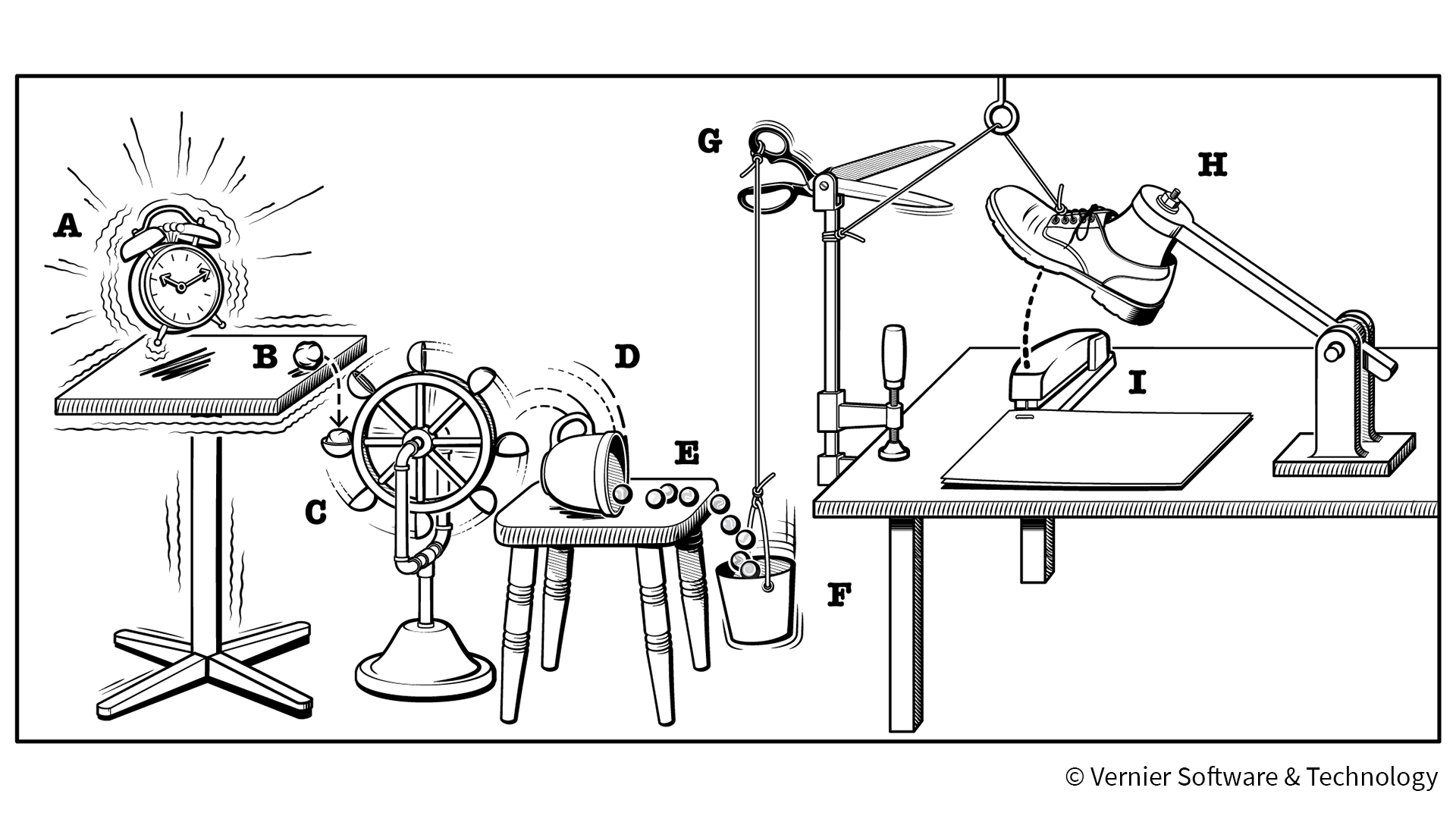
But instead of stapling the boot comes down on the head of the last guy in line.
Posted on 08/25/2026 4:02:55 PM PDT by GrootheWanderer
And now you understand Bessent’s obsession. The entire funding base of the US government is, at the margin, LEVERED. The buyers are not holding the bonds with their own money.. they are holding them with borrowed money, rolled overnight, against collateral that gets marked to market daily. That is a magnificent machine when repo is cheap and calm, and a doomsday device if repo ever seizes: a repo spike forces margin calls, margin calls force bond sales, bond sales push yields up, higher yields trigger MORE margin calls.. and suddenly the buyer of last resort is selling into a falling market. The 2019 repo blowup and the March 2020 dash-for-cash were the dress rehearsals. With hedge funds now the marginal buyer of the biggest bond market on earth, a repeat is not an inconvenience.. it is a fiscal crisis with a one-day fuse.
What could possibly go wrong?"
Honestly, the only reason anyone ever bought a US Debt Security is that, in essence, it’s the only game in town.
More stable and predictable than gold.
So, while these assets are marked to market daily, so is gold. And gold swings wildly.
And if you have a LOT of money, you have a bunch of these assets both directly and indirectly. You always get your principal back...with interest.
In fact, so stable and predictable that large nations and the largest international banks hold trillions.
The Communist Marxist WEF do not want it to go on forever. They need America brought to heel just like the UK.
They will rattle the cages at any political opportunity, to make things go wobbly for the mid terms.
One learns that Andreas Steno Larsen is Danish, resident in Copenhagen, and calls himself "Serial entrepreneur always looking for the next 5-10x - CIO Steno Global Macro / Research @ Real Vision 🍌 · Andreas Steno Larsen is CIO of Steno Global Macro Invest (ASMR Wealth) and founder of Steno Research. Previously, he was the youngest-ever Global Chief Strategist at the Northern European bank...." [ LinkedIn Danmark ]
Those wacky European "financialization" folks....
By the way, in his LinkedIn account he misspells the bank's name.... North Europe, not "North European...." But he'll hedge fund you money for you. In his fund opened in late 2024. And then merged and renamed only a year later. Consistency. Denmark.
The globalists are annoyed because they already had a planned controlled USA economic demolition into a CBDC and digital IDs.
Now the USA thinks it can run the freedom train for longer than year 2030. I will be watching if we can just make it past mid March 2027.
The spread between the Secured Overnight Financing Rate (SOFR) and the Effective Federal Funds Rate (EFFR) is +2 basis points.
Currently:
SOFR: 3.65%
EFFR: 3.63%
It seems to be coming to some kind of a tipping point. My guess -- not a wager, because I don't bet -- is that the globalists may well be finding themselves in waters they do not control, manage or define.
It seems to be also coming down to "finance" versus "production," with reasonably available and reasonably affordable energy being a big and bigger issue. The "green" and Club of Rome mentality alongside any notion of "controlled demolition" requires true believers believe a lot, and are willing to mount the Jacobin barricades.
A wee look back to the Jacobin win-for-awhile revolution is among the models I tend use in mulling things over.
I've heard of this sort of thng. On a physical plane:
But instead of stapling the boot comes down on the head of the last guy in line.
I seem to recall something called “reverse repos” was the cause of one of the global financial crises we’ve had in recent decades.
All those hedge funds, when the old "bank run" phenomenon occurs for them, will be interesting entities to watch. Some already are requiring waiting periods or partial withdrawals, because liquidity is not always done at the flip of a switch.
By the way, I surely enjoyed the graphic! There was a stapler, but not a tack nailer.... :)
COVID came along as the repo market was cracking in late 2019.
It gave the Fed cover to start the 'willy-nilly' phase of asset purchases and inflation Bernanke said was the playbook in 2002:
https://www.federalreserve.gov/boarddocs/speeches/2002/20021121/default.htm
The conclusion that deflation is always reversible under a fiat money system follows from basic economic reasoning. A little parable may prove useful: Today [2002] an ounce of gold sells for $300, more or less. Now suppose that a modern alchemist solves his subject's oldest problem by finding a way to produce unlimited amounts of new gold at essentially no cost. Moreover, his invention is widely publicized and scientifically verified, and he announces his intention to begin massive production of gold within days. What would happen to the price of gold? Presumably, the potentially unlimited supply of cheap gold would cause the market price of gold to plummet. Indeed, if the market for gold is to any degree efficient, the price of gold would collapse immediately after the announcement of the invention, before the alchemist had produced and marketed a single ounce of yellow metal.
What has this got to do with monetary policy? Like gold, U.S. dollars have value only to the extent that they are strictly limited in supply. But the U.S. government has a technology, called a printing press (or, today, its electronic equivalent), that allows it to produce as many U.S. dollars as it wishes at essentially no cost. By increasing the number of U.S. dollars in circulation, or even by credibly threatening to do so, the U.S. government can also reduce the value of a dollar in terms of goods and services, which is equivalent to raising the prices in dollars of those goods and services. We conclude that, under a paper-money system, a determined government can always generate higher spending and hence positive inflation.
Of course, the U.S. government is not going to print money and distribute it willy-nilly (although as we will see later, there are practical policies that approximate this behavior)[ed note: prescient prediction of the 2020 debt orgy and Fed purchases thereof]. Normally, money is injected into the economy through asset purchases by the Federal Reserve. To stimulate aggregate spending when short-term interest rates have reached zero, the Fed must expand the scale of its asset purchases or, possibly, expand the menu of assets that it buys. Alternatively, the Fed could find other ways of injecting money into the system--for example, by making low-interest-rate loans to banks or cooperating with the fiscal authorities. Each method of adding money to the economy has advantages and drawbacks, both technical and economic. One important concern in practice is that calibrating the economic effects of nonstandard means of injecting money may be difficult, given our relative lack of experience with such policies. Thus, as I have stressed already, prevention of deflation remains preferable to having to cure it. If we do fall into deflation, however, we can take comfort that the logic of the printing press example must assert itself, and sufficient injections of money will ultimately always reverse a deflation.
They can't print gold, they can only ban holding it.
They can't print bitcoin, which is much harder to ban.
Bitcoin is a sense represents Hayek's hope expressed in 1984:
https://youtu.be/EYhEDxFwFRU?t=1162
"I don't believe we should ever have good money again before we take the thing out of the hands of government. We can't take them violently out of the hands of government, all we can do is by some sly, roundabout way introduce something they can't stop." - F.A. Hayek, 1984
1) The FDIC regulates that banks keep at least x% of their customers deposits in cash in case of a potential bank run.
2) Repo deposits are basically IOUs between the Federal Reserve and banks regarding ownership of U.S. treasuries that the FDIC is allowing banks to use in place of cash (not the entire portion of the bank's required cash holdings, but some of it).
3) Thus the banks would rather have as much of their FDIC cash requirement as possible invested in treasuries so they can get a wee bit of overnight interest on them, as long as they can honestly report to the FDIC that the treasuries are fungible like cash because they're repos.
4) Thus every night the Federal Reserve and banks swap hands on the ownership of US treasuries, depending on how much each bank is allowed to own as that day's portion of cash holdings, and the Federal Reserve pays the bank for owning the treasuries, and eventually the U.S. Treasury pays the Federal Reserve back when the Treasury does regular dividend payments to treasury owners.
All to allow banks to satisfy their liquidity requirements with the FDIC, but make some interest, and with the Federal Reserve using that as another leverage tool on how much to increase/decrease the money supply ostensibly to keep inflation from going out of hand but keep unemployment down. Kind of like they do with interest rates.
Misery never rests and undertakers never go out of business.
Disclaimer: Opinions posted on Free Republic are those of the individual posters and do not necessarily represent the opinion of Free Republic or its management. All materials posted herein are protected by copyright law and the exemption for fair use of copyrighted works.