Skip to comments.
Tariffs Helped a South Carolina Town. They Left American Shoppers Worse Off.
Wall Street Journal ^
| February 8, 2025
| Chao Deng
Posted on 02/08/2025 4:26:49 AM PST by karpov
NEWBERRY COUNTY, S.C.—Just before the start of Donald Trump’s first term, this small county with acres devoted to chicken and egg farming made a bid to revive its manufacturing glory days. The timing was perfect: Trump was talking about imposing tariffs on imports, and foreign companies looking to avoid them were open to setting up shop in the U.S.
The county landed Korean manufacturer Samsung Electronics, whose washing machine factory now employs more than 1,500 workers and brings the county $1 million each year in tax revenue. Two other Korean firms followed Samsung to Newberry to supply parts for its washing machines, adding hundreds more jobs for the county.
“I see a day when Samsung invests in a lot more than washing machines in South Carolina,” said Rick Farmer, Newberry County’s economic development officer. He talks about a “Samsung effect” that includes a residential housing plot that went up shortly after the company’s arrival.
Tariffs are once again the thrust of Trump’s economic plan for his second term. This past week, he put in place an extra 10% tariff on all goods from China, after putting off his other plans to impose 25% tariffs on Canadian and Mexican imports.
Trump’s tariff strategy this time has already exacted concessions from other nations, chiefly on drugs and immigration. He has outlined broader aims for tariffs as well: to correct trade imbalances while giving new life to American manufacturing by compelling big companies to make things in the U.S.
...
The tariffs may have led to an additional 1,800 washing machine jobs created by Samsung and other firms. But price increases caused by the tariffs cost U.S. consumers about $1.5 billion annually, according to a study in the American Economic Review, or more than $800,000 per job created.
(Excerpt) Read more at wsj.com ...
TOPICS: Business/Economy; US: South Carolina
KEYWORDS: tariffs
Navigation: use the links below to view more comments.
first 1-20, 21-27 next last
Full article. The costs of tariffs are much higher than the income produced by the jobs created.
1
posted on
02/08/2025 4:26:49 AM PST
by
karpov
To: karpov
And if the products are produced with slave labor the costs of tariffs are even more.
To: karpov
Get the tariffs, get the jobs back into the USA. Or become the land of the Eloi with the morlocks in China doing the manufacturing. The morlocks eat the Eloi. Do not let the morlocks in China take over. The USA needs manufacturing.
3
posted on
02/08/2025 4:40:38 AM PST
by
Trumpet 1
(US Constitution is my guide.)
To: karpov
The Wall Street Journal is a shill for open borders, and is ant-Trump also.
To: Trumpet 1
Well said! It was a rather stupid article seemingly written by a Morlock.
The WSJ is just the Free Traitor equivalent of the New York Times, much of the time.
To: outpostinmass2
Before trump even walked through the door the egg issue was his, these people are stupid
To: outpostinmass2
And if the products are produced with slave labor the costs of tariffs are even more. The products were produced by South Carolina workers.
To: karpov
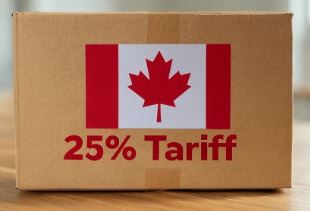
The great North American Trade War lasted almost a day before both Mexico and Canada bowed the knee. In the face of proposed 25% U.S. tariffs on goods imported from those countries, both Mexico and Canada quickly promised actions demanded by President Trump, specifically to stop allowing their borders to be a supply route for an army of narco-terrorists who use fentanyl as a weapon of mass destruction against U.S. citizens.
For the national economies of both Canada and Mexico, the United States is their major export market, and both are heavily dependent on access to the U.S. If a 25% tariff were imposed on our neighbors, it would obviously be devastating to them. Or would it?
Principled Free Traders have argued ad nauseum that tariffs only hurt the country imposing the tariffs, and therefore the United States’ appropriate response to trade barriers and tariffs imposed on us by countries such as China should be no response at all. Instead, they argue that we should just continue to import their goods, even though our exports are blocked. In other words, they argue that the U.S. should unilaterally surrender to foreign mercantilism. So why shouldn’t Canada unilaterally surrender to U.S. trade barriers and just live with crushing U.S. tariffs?
In the words of a prominent Principled Free Trader whom I often quote, “Trade isn’t fair. Americans should pray it never gets fair.” Well shouldn’t Canadians also then revel in the United States imposing unfair tariffs on their country. I scanned the Twitter feeds and bylines of some of the Principled Free Traders I follow and I couldn’t find anything resembling a think piece advising Canadians that “Trade isn’t fair. Canadians should pray that it never gets fair.”
The arguments that these unilateral free traders consistently make include:
- “Tariffs are a tax on consumers.” Yet there was widespread consensus that Canada would have to issue retaliatory tariffs on the U.S. Where were the free traders, and why weren’t they scolding Canada for imposing a “tax on its consumers” with their proposed retaliatory tariffs?
- “Consumers enjoy lower prices in countries that don’t impose tariffs.” Again, shouldn’t the free traders have been imploring Canada to preserve lower consumer prices by unilaterally surrendering to America’s tariffs?
- “Tariffs hurt the country that imposes the tariffs.” Japan and South Korea famously imposed protective tariffs against the US auto industry to keep American automobiles out of their markets in the post-war era and beyond. The free traders will argue that this only hurt those countries, as you can tell by how badly their auto industries are...thriving. Anyhow, if tariffs hurt the tariffing country, shouldn’t Canadians have punished the United States by doing absolutely nothing in response to American tariffs? That would teach us a harsh lesson according to free trade principles.
- “Outsourcing jobs to countries that impose tariffs helps consumers.” When an American plant closes and the jobs go to a foreign country with protective tariffs that block American goods, the free traders rejoice. If they were truly principled, you’d think they’d be consistent and suggest that Canadian manufacturers could simply move jobs to the U.S. to avoid our tariffs and gain access to our market. Of course, the free traders would never suggest that, because their objective is to eliminate American manufacturing jobs, not increase them.
- “People who lose their jobs due to offshoring can simply find better jobs.” Again, if Canadian manufacturers would just move their jobs to the U.S. to avoid the tariffs, then those displaced Canadian workers would have a great opportunity to go find better jobs outside of manufacturing.
Let me offer up here that I generally favor reciprocal free trade with Canada, and that I do not desire a nasty trade war with our northern neighbor. But I absolutely support Trump threatening (and imposing if necessary) a harsh tariff to compel Canada to stop allowing narco-criminals access to my country. I’m also pretty disgusted to have learned that despite the North American Free Trade Agreement, Canada has continued to block American dairy products by imposing high tariffs. “Free trade” that blocks American agricultural products is not what I understood free trade to mean.
Last weekend, before the U.S. – Canada tariff issue was (temporarily?) resolved, The Free Press published a story on just how painful the tariffs would be for Canada.
It’s hard to overstate the harm Trump-imposed tariffs could do to Canada.Trevor Tombe, an economist at the University of Calgary who has modeled the impact of a 25 percent tariff on the Canadian economy, told me he sees “an economic hit to Canada that is roughly equivalent to your typical recession, resulting in a 2.6 percent drop in Canada’s GDP.”
That’s weird, because the Principled Free Traders have assured me that here in the United States, the destruction of as many industries as possible, and putting as many Americans as possible out of work, actually strengthens a country’s economy.
Small businesses are especially at risk. In 2022, 81.8 percent of Canadian small business exports went to the United States. These companies are so dependent on cross-border trade that Trump’s 25 percent tariff, coupled with Canada’s retaliatory tariffs, will likely affect 82 percent of them, according to a survey by the Canadian Federation of Independent Business.
Interesting. Apparently it would be deleterious to Canada’s economy if its industrial exports were eliminated. That certainly makes sense, but the free traders have told me repeatedly that their ideal is for the United States to import 100% of our products, with all of our manufacturing offshored. If losing the export component of the economy is good for the U.S., shouldn’t it also be good for Canada?
In fact, pragmatic Canadian businesses are already considering heading south: “With these tariffs, we will either sell the business to a U.S. company or move our business there,” Darrin Smith told me.
Huh? So if the tariffs are imposed, Canadian manufacturers would have to move manufacturing to the United States and create jobs here if they want access to our market? Apparently so…
[The founder and CEO of Canadian clothing brand Sophie Grace] told me that with a quarter of her sales coming from the U.S., she is one of those considering a move. To her, it is a simple matter of getting “behind the tariff wall,” she said.
I don’t want to see Canada harmed, and I don’t want to see Canadians hurting, but I’m glad that the threat of punitive tariffs compelled the Canadian government to respond to the national security crisis at our border. I hope that the 25% tariffs don’t ultimately have to be imposed.
That said, if there is a near consensus that “Trump’s tariffs” and a massive loss of jobs would be devastating to Canada, how is there an intellectual argument that when the same actions are taken against the United States in the name of “free trade” that it’s not equally harmful to our country?
8
posted on
02/08/2025 4:57:53 AM PST
by
Bratch
To: karpov
9
posted on
02/08/2025 5:08:02 AM PST
by
Wuli
To: Trumpet 1
The globalists in the White House, Congress, academia, foreign governments and corporate America destroyed America’s tariffs and quotes which had allowed the US to rise from the economic devastation of the Civil War to become the greatest industrial power on the planet by 1900. The US then sustained that position until the 1990’s when tariffs and quotas were dropped, foreign goods poured in, and US companies dismantled their domestic supply chains in favor of government subsidized Asian supply chains using essentially slave labor.
Not only did tariffs allow the US to build a diversified domestic supply chain in the face of competition form mercantilist European nations, the development of integrated and highly diversified manufacturing, along with bountiful domestic energy supplies, allowed the US to become highly self sufficient in manufacturing and large scale agriculture during the first half of the 20th century. Without a diversified domestic manufacturing infrastucture the US would not have been able to supply war materials to supply European nations in WWII and its own military forces in Europe and Asia. Self sufficiency in manufacturing and agriculture permitted the US to win WWII and sustain its position as the global military power since WWII.
However, the poor economic decisions of the 1990’s to abandon self sufficiency and outsource manufacturing have put this nation in strategic peril. Integrated supply chains from raw material to finished product cannot be recreated overnight. It took the US 35 years to build them in the second half of the 19th century. It has taken China the same amount of time to become the diversified industrial power it is today.
Remember, the men and women who operated equipment and ran the pre 1990’s domestic supply chains are retired or dead. The critical knowledge will have to be relearned. Unfortunately we also allowed our education system to atrophy. The math, science and reasoning skills needed for 21st century manufacturing are not an important part of the curriculum in America’s primary, secondary, and college education system.
If we reinstate tariffs and other measures to make the investment in rebuilding domestic supply chains worthwhile, it will take about 30 years to resume our position as the #1 industrial power on the planet. Our survival depends on our leaders looking back at our history and analyzing the rise of England in the 1700’s and 1800’s as well as China from 1990 to 2025. If they fail to then understand the value of tariffs, we are destined to become a third world country once the dollar loses its reserve currency status and the government is forced to declare bankruptcy in order to shed the crushing debt load. When that occurs, it will be foreign banks and foreign nations who dictate the terms of our people’s future.
President Trump recognizes time is running out. The US economy and culture has been transformed from a lean mean fighting machine with a can do spirit to an obese lethargic spoiled lazy adult living off the inheritance of past generations and piling up debt to sustain a lifestyle it can no longer afford. Either we suck it up, and experience some pain getting back on the treadmill, or our children will become slaves of a foreign empire.
10
posted on
02/08/2025 5:16:17 AM PST
by
Soul of the South
(The past is gone and cannot be changed. Tomorrow can be a better day if we work on it.)
To: karpov
Why does just about every country on earth use tariffs if they are as bad for the economy as this article claims? I guess they don’t read The WSJ. lol.
Silly article, takes a snap shot of a very limited situation that is not generalizable to the economy at large. Economies that offshore their high paying and wealth creating manufacturing jobs end up like, well, us, in debt and welfare dependent. America is actually a case study of what happens.
That trillion dollar trade deficit with China helps us how? How much tax revenue would that generate if those products were made here? How much wealth would be created? There is also a multiplier effect for manufacturing jobs. For each manufacturing job there are an additional 2x or 3x supporting jobs that are created. Which means more wealth and tax revenue. Having good jobs for less educated people serves another purpose, it offers social stability. How much money would be saved if people worked instead of turning to a life of crime, were able to take care of their families instead of go on welfare, etc?
There are also national security concerns. In China’s case, we are actually building up a military of a potentially hostile country. Not smart.
To: karpov
It is my understanding that tariffs overall cost less than income tax.
When Americans do factory work, they have little to no need for welfare funded by income tax.
To: Bratch
““Consumers enjoy lower prices in countries that don’t impose tariffs.” Again, shouldn’t the free traders have been imploring Canada to preserve lower consumer prices by unilaterally surrendering to America’s tariffs?”
I worked for a manufacturing company in the 1990’s and early 2000’s when production was sent offshore. If free trade economists were correct, as companies offshored production they should have lowered prices to consumers. That did not happen. Prices held and actually increased 2-3% per year in line with inflation after production was outsourced and higher margins were realized..
The increased margins from outsourcing went to higher bonuses and salaries for senior executives and to fund huge company stock buybacks which enriched Wall Street investment banks and senior corporate executive receiving lucrative annual stock option awards.
Main Street Americans suffered the loss of good paying middle class jobs. The “savings” from lowering tariffs flowed to the upper 1%, thereby increasing wealth disparity in the country. The loss of tariff revenue was made up through deficit spending by the federal government and contributed to our $36 trillion national debt.
13
posted on
02/08/2025 5:24:52 AM PST
by
Soul of the South
(The past is gone and cannot be changed. Tomorrow can be a better day if we work on it.)
To: karpov
The Wall Street types like to import stuff made in cheap labor countries because they get to keep most of the price for themselves.
If stuff gets made in the USA, ordinary Americans get a large part of the price and Wall Street types get less.
To: karpov
I prefer a restricted/blocked currency.
Trades of say American engines for an equal valued amount of Mexican auto parts would be tariff-free. Democrats and RINOs in DC should not be given more money to squander.
If GM simply bought Mexican auto parts, it might have to pay an unblocking tax of 10% in January 2026 going up by 1% monthly to 22% in January 2027 and to 34% in January 2028...
If Jose wanted to send money to Maria in Mexico, he might have to pay an unblocking tax of 10% in January 2026 going up by 1% monthly to 22% in January 2027 and to 34% in January 2028. If Jose simply paid for American food from El Paso and Maria paid for freight, neither would pay an unblocking percentage.
To: Wuli
Tariffs are a wall. If you want a door, you must alter your behavior.
We want nicer neighbors coming in, not the wall, unless to keep out not very nice neighbors.
The goal is nicer neighbors coming in.
To: karpov
Any goods that could possibly incur tariffs are non-necessary items. If they are that important, they can be manufactured here. We are not dependent on any other countries resources.
17
posted on
02/08/2025 6:16:07 AM PST
by
bk1000
(Banned from Breitbart)
To: karpov

.
18
posted on
02/08/2025 6:31:51 AM PST
by
cuz1961
To: Brian Griffin
If Jose wanted to send money to Maria in Mexico, he might have to pay an unblocking tax of 10%
\/
buying a money order at wallmart i was behind a woman asking what was the cheapest way to send 5,900 to peru...
the illegeals are rushing to get their ill gotten $ gains out of our country and back to their homes in south america before they are deported so they can retire and live like kings off our back imho.
19
posted on
02/08/2025 6:38:36 AM PST
by
cuz1961
To: karpov
Funny how they call tariffs a tax on consumers because the company will pass the higher cost on to the consumers. But they don’t ever call higher corporate taxes a tax on consumers.
20
posted on
02/08/2025 6:42:28 AM PST
by
IYAS9YAS
(There are two kinds of people: Those who can extrapolate from incomplete data.)
Navigation: use the links below to view more comments.
first 1-20, 21-27 next last
Disclaimer:
Opinions posted on Free Republic are those of the individual
posters and do not necessarily represent the opinion of Free Republic or its
management. All materials posted herein are protected by copyright law and the
exemption for fair use of copyrighted works.
FreeRepublic.com is powered by software copyright 2000-2008 John Robinson