Posted on 09/08/2021 6:06:37 AM PDT by Red Badger
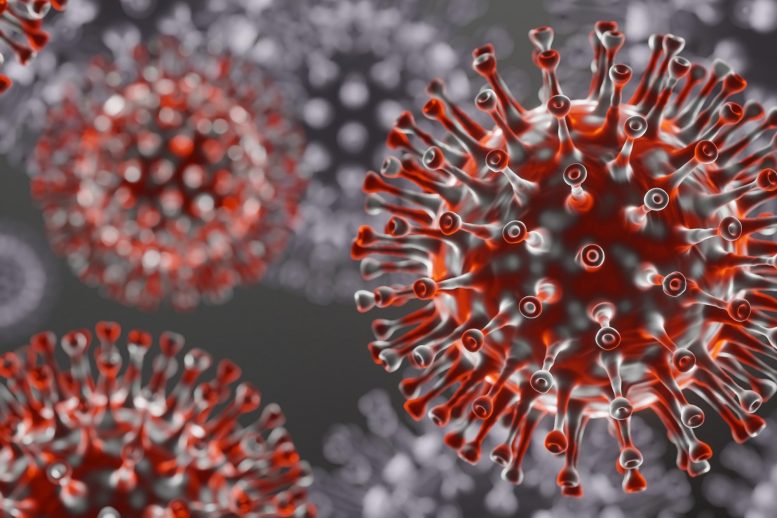
The World Health Organization (WHO) has added another coronavirus variant to its list to monitor. It’s called the mu variant and has been designated a variant of interest (VOI). What this means is that mu has genetic differences to the other known variants and is causing infections in multiple countries, so therefore might present a particular threat to public health.
It’s possible that mu’s genetic changes might make it more transmissible, allow it to cause more severe disease and render it more able to escape the immune response driven by vaccines or infection with previous variants. This in turn might leave it less susceptible to treatments.
Note the word might. A VOI is not a variant of concern (VOC), which is a variant that has been proven to acquire one of those characteristics, making it more dangerous and so more consequential. Mu is being monitored closely to see if it should be re-designated as a VOC. We have to hope not.
There are four other VOIs being watched by the WHO – eta, iota, kappa and lambda – but none of these have been reclassified as a VOC. That might be the case with mu as well, but we have to await further data.
What makes mu particularly interesting (and concerning) is that it has what the WHO calls a “constellation of mutations that indicate potential properties of immune escape”. In other words, it has the hallmarks of being able to get around existing vaccine protection.
Where is it spreading? Mu was first seen in Colombia in January 2021, when it was given the designation B1621. It has since been detected in 40 countries, but is thought to currently be responsible for only 0.1% of infections globally.
Mu has been much more prevalent in Colombia than anywhere else. When looking at coronavirus samples that have been genetically sequenced, 39% of those analysed in Colombia have been mu – though no mu samples have been recorded there in the past four weeks.
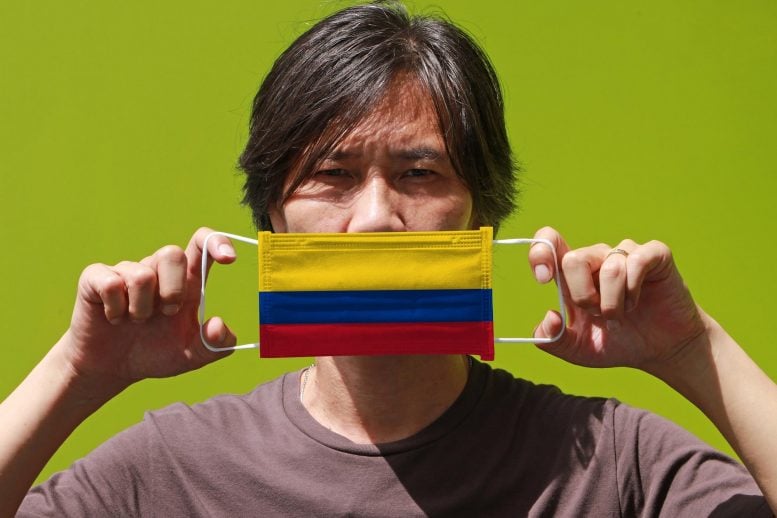
Mu initially spread in Colombia, though infections now appear to have subsided.
In contrast, 13% of samples analysed in Ecuador have been mu, with the variant making up 9% of the samples sequenced in the last four weeks, while in Chile just under 40% of sequenced samples have turned out to be mu over the last month. This suggests that the virus is no longer circulating in Colombia, but is being transmitted in other nearby South American countries.
So far, 45 cases have been identified in the UK through genetic analysis, and it looks like they came from overseas. However, as not all COVID-19 cases end up being sequenced to see which variant they are, it’s possible that mu’s prevalence in the UK could be higher.
How dangerous is it? The key questions are whether mu is more transmissible than the currently dominant variant, delta, and whether it can cause more severe disease.
Mu has a mutation called P681H, first reported in the alpha variant, that is potentially responsible for faster transmission. However, this study is still in preprint, meaning its findings have yet to be formally reviewed by other scientists. We can’t be sure of P681H’s effects on the virus’s behaviour just yet.
Mu also has the mutations E484K and K417N, which are associated with being able to evade antibodies against the coronavirus – the evidence on this is more concrete. These mutations also occur in the beta variant, and so it’s possible that mu might behave like beta, which some vaccines are less effective against.
Mu also has other mutations – including R346K and Y144T – whose consequences are unknown, hence the need for further analysis.
But can mu actually evade pre-existing immunity? As yet there’s only limited information on this, with a study from a lab in Rome showing that the Pfizer/BioNTech vaccine was less effective against mu compared to other variants when tested in a lab-based experiment. Despite this, the study still considered the protection offered against mu by the vaccine to be robust. Really, we don’t yet know whether mu’s mutations will translate into increased infection and disease.
Striking reports on mu have been appearing, though. In late July, a news station in Florida reported that 10% of samples sequenced at the University of Miami were mu. In early August, Reuters reported that seven fully vaccinated residents of a nursing home in Belgium had died from an outbreak of mu. However, these are limited snapshots of the variant’s behaviour.
What happens next? Mu is the first new variant to be added to the WHO’s list since June.
When a variant is designated of interest, the WHO carries out a comparative analysis of the characteristics of the new variant, assessing how it compares to others that are also being monitored by asking its member states to gather information on the variant’s incidence and effects. This is currently underway, and means that Public Health England is keeping a close eye on it.
In Kenya, only 1.5% of people have been fully vaccinated against COVID-19.
The designation of mu as a VOI reflects the widespread concern over the possibility of new variants emerging that might prove problematic. The more transmissible delta variant taking hold in many countries, especially among the unvaccinated, shows how quickly and significantly viral variants can change the course of the pandemic.
Every time the virus reproduces inside someone there’s a chance of it mutating and a new variant emerging. This is a numbers game. It’s a random process, a bit like rolling dice. The more you roll, the greater the chance of new variants appearing. The main way to stop variants is global vaccination.
The emergence of mu reminds us of how important that goal remains. Many people, especially in developing countries, remain unvaccinated. We must get vaccines to these countries as quickly as possible, both to help the people there who are vulnerable but also to stop new variants from emerging. Otherwise, our exit from the pandemic will be set back, possibly for months on end.
Written by Luke O’Neill, Professor, Biochemistry, Trinity College Dublin.
This article was first published in The Conversation.
Whatever the problem, mandatory vaxxes are always the answer.
(if you are a Pfascist....)

There will always be “variants” because viruses mutate.
Take your zinc and live your life. Most of the talk about “variants” is just an effort to explain why the shots don’t work and you need another one.
Well Pu!!
It’s not good to have Pu in your well.......................
This will be another importation courtesy of the Biden administration due to its border policies.
When they run out of Greek Letters, then they will use the names of STARS!..................
And masks, don’t forget to mask up 9 or more! and social distance!.................
Not that it really matters, but I find it curious that the new Covid virus is often referred to as “mu”, using lowercase m.
The only other time I recall seeing that is with a large fish called
the “gar”.
Nevertheless, Im sure the world will keep turning.
It will end when they get to Chi Xi Sigma variant
 ... We have 'Alligator Gars' here.................
I think you’re mostly right.
Why do we act as if this is so unique amongst viruses?
Never mind so horribly fatal?
Lots of us survived!
I would really like to read the specific details about where and how they collect and isolate the virus samples. And then about the process and frequency that they use to do such detailed DNA analysis to determine what variants exists and the specifics about where they are and in what amount. Or, is it like the rest of this CCP bioweapon stuff, most of it is just computer generated projections based on wild guesses.
Do they taste like “Chicken of the Sea”?
Maybe here:
https://onlinelibrary.wiley.com/doi/10.1002/jmv.27247
https://www.nature.com/articles/s41586-021-03324-6
https://www.ncbi.nlm.nih.gov/pmc/articles/PMC8364171/
https://www.barrons.com/articles/who-variant-of-interest-mu-51630499402
Don’t eat them, bony fish.
They are like reeling in a log. They will even come up to the boat and wait for you to give them something.
I have even ‘petted’ one alongside the boat............
Like oversized Koi.
Essentially, yes. They look dangerous but are fairly harmless.
And they are a protected species, But I still see them from time to time thrown up on the bank by ignorant assholes and left to die..................
We ate a couple of them. A fluffy white meat. My father in law chopped the fish in about 4 inch pieces with a hatchet. Then just take the knife around the inside of the skin. Cutting the skin will dull a knife. He had a piece of the skin in the yard the entire summer and the lawnmower never could destroy it.
Disclaimer: Opinions posted on Free Republic are those of the individual posters and do not necessarily represent the opinion of Free Republic or its management. All materials posted herein are protected by copyright law and the exemption for fair use of copyrighted works.