NOW THIS 1 HAS NO REAL REPLACEMENT, MOSS OR RAGS WERE THE ORIGINAL.

Posted on 05/08/2021 4:36:51 AM PDT by Kaslin
Last month, the world celebrated Earth Day. Earth Day is an annual event that was created to promote environmentalism. It was first held on April 22, 1970 and is now celebrated globally by over 1 billion people in more than 193 countries. In the years since the creation of Earth Day, we've seen the topic of environmentalism become extremely politicized on the left.
But conservatives, like the rest of the country, support a cleaner environment. We’re just interested in mainstream practical ways to accomplish it – ways that build on core strengths of our nation including personal responsibility and free-markets.
Instead of allowing the focus to stay on areas of broad agreement – protecting our lands and rivers from pollutants for example – some activists have hijacked the issue of the environment to make it unnecessarily partisan. This doesn’t help the environment or our nation.
Ironically, some of the proponents of the partisan brand of environmentalism actively oppose efforts to really improve our planet.
Consider Coca-Cola. They’ve been in the news for their “woke” activism including promoting critical race theory in the workplace and supporting the Atlanta All Star Game boycott.
Americans of all stripes want cleaner air and water and millions of them regularly engage in commonsense measures to do their part. One of the biggest of those measures is recycling. But thanks to the efforts of beverage companies like Coca-Cola much of that activity is wasted. It’s wasted because even though Coke cans and bottles are among the biggest sources of container waste in the U.S. and globally, Coca-Cola and the beverage industry refuse to embrace a simple solution – reusing the very waste they created.
Households all across the country regularly gather, sort and place plastics and aluminum in bins to ensure that they reach recycling centers, and in the process, they do the lion's share of the work needed to minimize pollution.
But the very companies that create these waste products prefer to make “virgin” products instead of reusing the old cans and bottles. This has led to an explosion in the need for landfills.
For years, The Container Recycling Institute (CRI) has studied container and packaging waste issues, and they have come to a conclusion that much of the blame for our overflowing landfills rests with Coca-Cola.
In fact, as far back as 1997, CRI estimated that out of the 10 billion plastic Coke bottles that were sold in the U.S., over 6 billion were disposed of at a cost to American taxpayers. Over the past two decades the problem has gotten worse and now green activist groups like Break Free From Plastic have branded “Woca-Cola” the world's most polluting brand in regard to plastic waste.
Although you may not hear about it on a daily basis, the issue of waste management is becoming a serious matter all across the country. Consider, a recent report in Texas concluded that beverage containers comprised nearly 20 percent of all roadside litter. A similar study in Ohio estimated that roughly a third of all roadside litter came from beverage containers. The American Beverage Association’s Northeast Litter Survey found that littered beverage containers accounted for almost 10 percent of all litter in Vermont, Maine, and New Hampshire. In the state of Pennsylvania, a filthy floating garbage patch, comprised heavily of plastic debris on the northern bank of the Monongahela River, was the subject of multiple news reports.
Unfortunately, these materials will, over a period of several years, break down into harmful microplastic elements and be eaten by the local fish and wildlife, much of which may eventually make its way to local dinner tables.
According to some studies, Coca-Cola alone could keep about 200 million pounds of bottles out of the waste stream in one year if they used just 25 percent recycled content in their plastic bottles instead of the less than 10 percent, they do now.
Some states have started to work in a bi-partisan manner to address the problem through new legislation. Sadly, much of this effort fails to properly assign responsibility to the party most culpable – Coca-Cola. States taking the lead on the issue include California and Washington among others.
But still, more must be done. Companies that create the problem should play a greater role in solving it. One of the most innovative ideas is to create a recycling market by having minimum recycling content incentives and requirements. Instead of accepting that fewer than 10 percent of the plastic bottles created by Coca-Cola and the beverage industry will be from recycled content, we could insist that they reuse at least 25 percent.
When considering the claims made by Coke to be a progressive corporation and the fact that the net operating revenues were over 33 billion in 2020, it is obvious that they can certainly afford to work harder towards collecting and repurposing the garbage they create. At the very least, it shouldn’t be another issue where the expense falls on the shoulders of the already tapped out U.S. taxpayer.
Bunk! This article is pure trash ... Literally.
As cool as it might be to bash Coke for the stupid claims they made about the GA election law, picking this topic really hurts Town Hall more than Coke. I usually like reading their content.
For the writer to imply that Coke is somehow responsible when a customer throws an old beverage container onto the side of the road is akin to a customer blaming a gun manufacturer because their firearm was used to kill someone. Companies cannot be held responsible for the actions of their customers.
And the nice thing is for them....there is absolutely no way to EVER prove it.
The world got scammed.
Enter COVID.
NOW THIS 1 HAS NO REAL REPLACEMENT, MOSS OR RAGS WERE THE ORIGINAL.
Just as I don't know a single person who buys the Town Hall rag, I don't know a single person who "celebrates" earth day.
Unlike metropoloid dinosaur media journos who are all in with leftist thought-trash - some of us don't recognize fake "holidays" invented by pagans, druids and commies.
Read deeper. The article's complaint is that disposed plastic items break down into microparticles that affect the streams and fish, making their way to our dinner tables, and that Coke's use of just 10% recycled plastic to make their bottles is far below the acceptable baseline of 25%.
In other words, the article wants them to make a less polluting form of litter.
Still attempting to hold Coca-Cola accountable for the deeds of the customer as the company loses control when the beverage leaves the store.
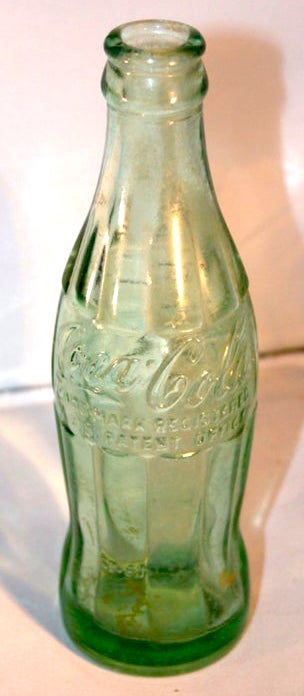
When I was kid, Coca-Cola was sold in glass bottles, and many of those were recycled because they came with a $0.05 deposit. Even then, I rode my bike up and down the highway picking up bottles to earn a few bucks. The deposit was actually worthwhile because a Whataburger, fries, and a drink came to $1.64!
Disclaimer: Opinions posted on Free Republic are those of the individual posters and do not necessarily represent the opinion of Free Republic or its management. All materials posted herein are protected by copyright law and the exemption for fair use of copyrighted works.