Posted on 04/20/2020 9:15:25 AM PDT by Kaslin
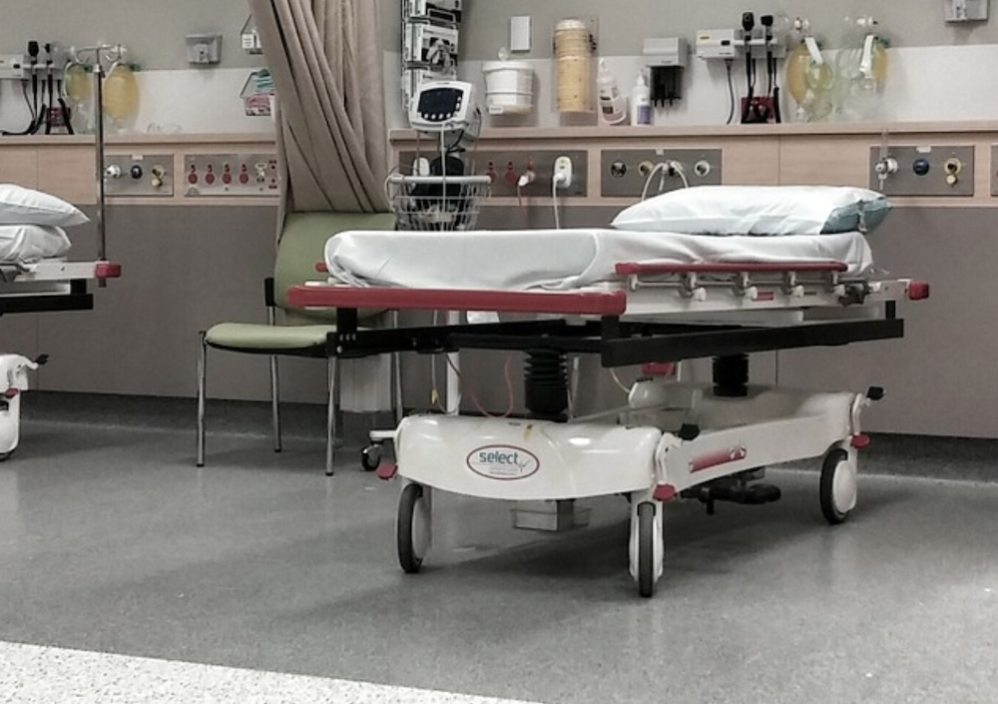
It may seem odd that hospitals are empty as planned medical procedures are canceled, but to subject your body to the stress of surgery and recovery would put you in danger needlessly.
The recent article “I Can’t Get My Hip Surgery Because Of Coronavirus Even Though Nobody Is In Our Hospital” highlighted the very real problems coronavirus has created in all our communities. It is true that necessary preparations have compounded challenges and left many suffering in ways that are not immediately obvious. As a physician dealing with COVID-19, I have a different perspective.
My heart goes out to you, Anonymous. I am so sorry your surgery has been delayed, your plans wrecked, and your pain prolonged. It’s hard, and it’s not fair. You bring up a valid point that the enormous splash of the Wuhan virus can make it easy to overlook the expanding ripples, which reach into every person’s life. Indeed, it is hard to imagine anyone anywhere who has not been affected by this pestilence.
There’s not much I can say to make it easier. I want you to know your suffering is not going unnoticed.
You are right that hospitals have been emptied in anticipation of a wave of COVID-19. In some places, that wave hasn’t yet arrived. I know some people are concerned this may be an overreaction, but I would caution them against jumping to conclusions. This thing is far from over; it isn’t even halftime yet.
It may seem odd that hospitals are empty as planned medical procedures are canceled. You’re right that “elective” doesn’t mean “unnecessary,” just “not an emergency.” To have any procedure, however, even one less invasive than hip surgery, risks exposing the patient and everyone with whom he interacts to COVID-19. We know the virus can attack anyone, but it preys especially on those whose health status is marginal. Simply put, to subject your body to the stress of surgery and recovery would put you in danger needlessly.
While the true extent of the damage in China has likely been severely understated, the whole world saw what happened in Europe, first in Italy then in Spain. Medical professionals everywhere said to themselves in February, This is coming here. Italy didn’t have time to prepare, but we do. If we don’t make use of the time, we will experience a similar tragedy.
Sure enough, the wave appeared on our shores: New York, New Jersey, San Francisco, Seattle. By the time we had our preparations well underway, we had an even more vivid demonstration of what we would see if we didn’t expand our capacity to care for patients by every possible means.
Granted, we don’t know exactly how quickly this will progress, and at the beginning of March we knew even less. It wouldn’t hit everywhere at once, but like any wave, it would wash across the country. While it would hit big cities sooner, rural areas couldn’t expect to be spared, and they may be less capable of absorbing a sudden spike in illness.
I illustrated this to my friends and family with simple back-of-the-envelope math. Our town has a population of about 20,000. Suppose one person in 10 in our small town were to get the virus in a relatively short timeframe. It’s unlikely but not completely implausible: the tiny city-republic of San Marino in northern Italy hit the 10 percent mark. In my town, that’s 2,000 people.
CDC estimates that of those who get sick, roughly 80 percent will be affected mildly, 15 percent will be severely ill, and 5 percent will be critically ill. That means of those 2,000 people, 300 will be severely ill — more than three times the capacity of our hospital.
We would need up to 100 ventilators for the 5 percent who are critically ill, and we have far, far fewer than that. Imagine this in every small town in America, and proportionately more in larger hospitals. While models varied widely, some suggested even worse scenarios. The scale of this pandemic could be catastrophic, and that isn’t hyperbolic.
Our hospital started a respiratory triage clinic, open 12 hours a day and six days a week. It is run with two goals: 1) Keep sick patients out of primary care offices, and 2) keep patients who aren’t truly desperately sick out of the emergency room. Offices are down to skeleton crews to minimize exposure but are still committed to taking care of patients who simply need to receive regular care.
Make no mistake, this comes at a cost to everyone. Patients can’t get in with specialists. Some patients struggle to see their own physician. My friend’s spouse is perilously ill for non-coronavirus reasons, but necessary treatments have been delayed because of the complications COVID-19 places on the entire system.
Mothers who have delivered are discharged earlier than usual. Elective surgeries are canceled, as you point out. We try to get people out to make space for sick patients when they begin to arrive, minimize the exposure of already-sick patients to COVID-19, and make as many ventilators (including those used for elective surgeries) available as possible.
Meanwhile, doctors are studying guidelines for how to handle situations nobody should have to face. How do you tell a sweet grandmother she’s going to die because she needs a ventilator and there aren’t any? How do you tell a man’s family he’s being taken off a ventilator to face certain death because he isn’t improving, and it’s being given to someone with a better chance of recovery? How do you guide a family through their last conversation with a beloved mother over a screen? Nobody wants these things to happen, but we must prepare for the contingency.
At the same time, the hospital and community are finding creative ways to reach out to our neighbors who suffer from chronic disease, chronic pain, mental health ailments, or just plain loneliness. A temporary transportation system has been developed to bring food to patients who are food insecure. Hospital associates are being prepared to do jobs outside their normal duties in case we find ourselves shorthanded.
Hospitals throughout the area have run short on personal protective equipment (PPE) and have had to repurpose supplies in ways they were not originally designed for. Our community has generously donated PPE. A local hotel has agreed to provide temporary housing to medical workers and first responders who feel the risk of bringing the virus home to their families is too great.
I can’t say every town is blessed with an exceptionally well-run hospital, compassionate medical staff, and supportive community the way ours is. If yours isn’t, I pray you may be spared the worst of this disease, as well as your own medical condition. But while my most ardent wish is for this plague to pass as soon as possible, I also see it bringing out the best in many people around me.
Please, Anonymous, don’t give up hope. Your suffering may be hidden, but it is not utterly invisible. And while many people suffer quietly in this calamity, numerous others are doing hidden acts of service in communities throughout the nation to bring mercy.
Small hpsoitals, largely in rural areas are getting double whacked by the ban on elective surgeries
First, their patient population has a high number of Medicaid/Medicare patients. ObamaCare was already hurting them. They have real costs (inflated as some suggest) paid at less than real cost market value.
Second, some say 70% of their revenues come from elective surgeries. And now these are no more.
One in my old home town will probably not survive. (my prediction)
I had surgery January 27...just before this insanity got underway.
The doctor sounds very sincere.
I was told by my Veterans hospital to stay away for the month of April except for dire emergency situations.
The main reason is I may expose myself to patients with the Corona Virus when they were at their most contagious.
Lucky for me, I don’t really need to visit the hospital now anyway. My appointments can be conducted by telephone for now.
We will see how it all looks after Cinco de Mayo.
This is CRazy!!! People get infections all the time in hospitals!
“The wave” that will never end.
Notice how it was sold as “Flatten the Curve” and now had morphed into holding off “the wave”.
Kind of how global warming morphed into climat change.
There is some common sense in the link BUT saying Grandma would die because there is no ventilator is fear mongering.
Even Cuomo admitted no one who needed a ventilator couldn’t get one.
Yep. Many smaller hospitals will be bankrupted and closed because of this. A closed hospital has NO beds.
#2 Are Trying to be Prepared
It's pretty hard to be prepared when you have to shut down because you are bankrupt.
#3 Communities Offer Hope Through Creative Solutions
The above is the most feel-good statist tripe I have ever read from The Federalist in my life.
The author Matthew Surburg is a family physician in central Indiana. He has been working 12-hour shifts three days a week in his community's Respiratory Triage Clinic.
There will be a wave after the WuHu flu of delayed health care.
Clear out the nursing homes. Drag out bodies from their stay-in-place holding cells. Delay scheduled surgeries. Keep hospitals empty for the big wave of Rona patients that are supposed to be on the way.
Makes perfect sense. /s
Glad you were able to get in before the shutdown.
My son and I got our last haircuts just before the shutdown. Not quite the same as you, of course.
Now we need another haircut. Hopefully you don’t need another surgery.
My elective surgery was canceled. But the hospital is 250 miles away, in Fort Worth.
kick the can
Were warned Easter week would be "the worst seen - yet!"
Never happened, did it?
Now that troops are getting restless, very restless, the "experts" are predicting yet another scary future week - so stay in and don't ask any questions or pressing the elected officials that are demanding you stay home, stay in and SHUT UP!
He’s a cuck. And that surgery might be someone who cant go back to work. It just be someone deeply suffering. It’s utterly unjustified to furlough huge swaths of staff when it’s supposedly a crisis. The fact that they are following all these healthcare workers tells me it’s not really a crisis
My fear is a toothache! I need a haircut too,
“How do you tell a sweet grandmother she’s going to die because she needs a ventilator and there aren’t any? How do you tell a man’s family he’s being taken off a ventilator to face certain death because he isn’t improving, and it’s being given to someone with a better chance of recovery? “
So where, specifically, has this happened? Cuomo is giving away those unused ventilators now. Where, precisely, is there a ventilator shortage? The medical community lives this drama.
As long as I see TickTock videos of dancing nurses, I know exactly what I’m watching. And it’s not a crisis.
Disclaimer: Opinions posted on Free Republic are those of the individual posters and do not necessarily represent the opinion of Free Republic or its management. All materials posted herein are protected by copyright law and the exemption for fair use of copyrighted works.