Posted on 03/18/2020 6:51:26 AM PDT by Kaslin
In recent days, we have seen our government officials appreciate that the coronavirus is the gravest risk to US public health in decades, leading to unprecedented restrictions on social activity. Protecting human life is rightly the primary priority of our public officials, but this will come at an extraordinary economic cost. Travel has ground to a halt, restaurants are shuttered, malls desolate, and roads empty. The coronavirus poses one of the gravest risks to our economy in decades, and we must respond more forcefully than ever before to safeguard it.
Now, no one likes bailing out a company that made foolish business decisions. In a functioning capitalist economy, some businesses fail. However, businesses like your local restaurant could face bankruptcy just because of the necessary response to the virus. If a government forces a business to close (as they are restaurants, international air travel, etc), isn’t it actually the fair thing to do to provide that business some financial assistance for the economic loss they suffer to protect society’s health? We are asking businesses to shutter for the good of the country, and so we should stand by them,
Acting decisively is incredibly urgent, as hard-working Americans are already losing their job. Senator Rob Portman reported initial jobless claims in Ohio surged to 45,000 last week from 6,500 previously; for perspective, they peaked at 41,000 during the Great Recession of 2008-2009. This surge in job losses is likely national; Connecticut, for instance, is seeing a spike to 30,000 from 3,500. We must act to stop Americans from losing their jobs due to the virus, and if we don’t act soon, this risks spiraling out of control into a severe recession.
Increasingly, Washington is rallying behind the idea of sending cash to Americans. While a noble idea, it simply is not good enough. If you are a waiter who lost your job, a $2,000 check can help meet your near-term cash needs (groceries, rent, etc), but it does not provide the stability and peace of mind of a job and the recurring paycheck it provides. After a recession, it usually takes *several years* to regain lost jobs. While cash payments will soften the blow over the next two months, resultant unemployment ensures that the economic damage of the virus will linger well after the virus is defeated. This is unacceptable and avoidable.
We need a policy that gets cash into the economy quickly and also keeps Americans employed. Cash payments meet the first criteria, but fail the second, as many small businesses won’t be able to make payroll with their businesses closed for weeks. And so, I implore our policymakers to contemplate a different response. The Federal government should pay the entire payroll of every company in America for the next two months (capped at a $200,000 salary for any one employee). Americans earn $9.465 trillion in annual wages, salaries, and tips, so paying 2 months’ payroll with a $200k employee cap would inject $1.2-1.4 trillion into the economy.
This plan would mean not a single American will lose their job over the next two months due to the virus because the federal government will be paying the payroll of every corporation in America. This would be constructed via an immediately refundable tax credit to businesses to cover their payroll.
Now, we only want to provide aid to companies that need it. Some like AT&T or Verizon will see minimal impact from the virus while restaurants face existential threats. However, it’s very difficult to provide aid in a targeted way while also getting cash out quickly. That is why the best path is to give cash to everyone and then claw it back from those who didn’t need it. As such, I would propose that companies face a 100% tax on 2020 profits above their 2018/2019 average up to the size of the payroll credit. This would be payable in April 2021.
So, if a company’s pre-tax profit in 2020 was $2.1 billion after averaging $2 billion in 2018/19 and they had received $100 million in payroll tax credits in March through May, they would pay that money back. In effect, they merely received a 12-month interest-free loan (which will help with liquidity strains facing the private sector) but no tax cut. Conversely, the local restaurant that sees its profits drop 50% won’t have to pay back any of its tax credit. Consequently, only businesses that were adversely impacted by the virus will receive tax cuts greatly reducing the cost of this bill. We protect the jobs of employees at risk without unnecessarily giving tax relief to un-impacted companies.
This proposal to cover 2 months of payroll economy-wide, which could be extended if necessary, means we can focus entirely on social distancing measures without worrying about a resultant rise in unemployment. The claw-back mechanism also ensures this program is targeted to those businesses truly facing a challenge due to the virus. This approach will ensure Americans stay employed and that the economy can quickly bounce back, rather than suffer from excess unemployment for months after the virus is defeated. Covering payroll for employers may not be as politically “catchy” as sending checks out, but this approach is the most effective potential approach to mitigating the economic impact of the virus and should be the centerpiece of our coronavirus economic response. Congress should implement this policy immediately. Every day we wait, tens of thousands of jobs are endangered.
Remind me again how much some of the airlines spent on stock buyback?
Great idea. Now get the government printing presses rolling 24/7. I mean, how else is the government going to make payroll for all these business for the foreseeable future?
Wow.
“The Federal government should pay the entire payroll of every company in America for the next two months”
Never let a crisis go to waste.
I’ll do my part by visiting my pub three times a week instead of once or twice, after they reopen. They’ve been doing meals to go since the closure, but the profit is really in the drink sales.
This is a virus. An anomaly to our economic system. Business didn’t cause this. Nobody did. It just happened.
Waiters and others who lose their jobs can get unemployment. It is the gig economy workers who are really screwed here.
I would propose suspending all federal taxes for a year as well.
IIRC, it was more than 90%.
Not one penny to Wall Street! Any bailout should go directly to Main Street.
Place a 100% federal income tax on all rent, car, lease and mortgage payments due and payable in the next 90 days.
That April 1 rent payment? Now due July 1.
Simple and costs Uncle Sam less than nothing.
Standard unemployment should cover employees.
Waive 2019 and 2020 self-employment taxation on request in exchange for a future personal eight percent SS payout reduction.
The point is that there won’t be jobs for them to go back to. I actually think this is a good plan - the fastest way to get the economy up and running again and restore confidence - and consumer power. One thing I have realized, personally, is how much modern economies are dependent on consumers, not only producers. You can produce all you want but unless somebody buys it, what does it matter?
Also, industries such as travel and hospitality, while they may seem somewhat frivolous and unnecessary according to Greta, are actually vital to the functioning of the modern economic world.
I think people are going to appreciate our world much more than they did a couple of weeks ago.
Wiemarch Germany here we come!
The point is that those who are getting unemployment don’t need a survival bailout. They already have one instituted by our unemployment system.
What the government has done is so overregulate employment that companies get around making staffing commitments—and hire as many freelancers and non-employee employees as possible. Those are the ones who need help outside of our unemployment system.
What if there was a “black swan insurance pool” where companies paid in a small amount every month but which could then file claims against when unforseen events like this occur? Similar to flood insurance based on 100 and 500 year floods. Some limits would obviously apply but it would be a shared risk mitigation approach rather than a bailout or handout to accomplish the same thing this guy proposes.
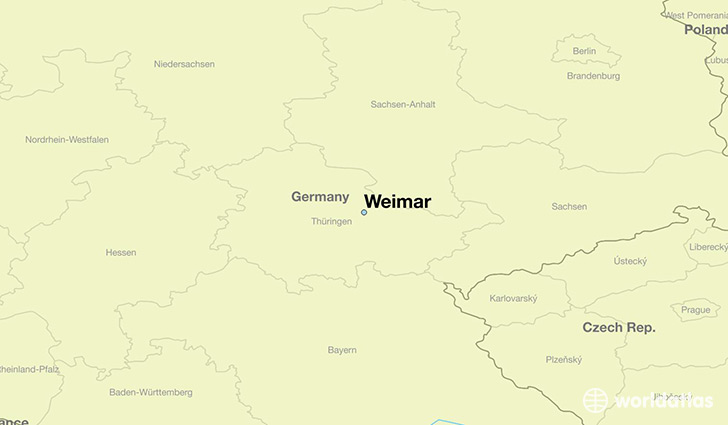
Weimar is a city found in Thuringia, Germany. It is located 50.98 latitude and 11.33 longitude and it is situated at elevation 220 meters above sea level.
Weimar has a population of 64,727 making it the 4th biggest city in Thuringia. It operates on the CEMT time zone, which means that it follows the same time zone as Erfurt.
I think people are going to appreciate our world much more than they did a couple of weeks ago.
Just how many U.S. citizens having English as a first language do you know who are employed in restaurant, hospitality, tourism, travel, landscape, and construction venues? Really. This is not 1960 anymore.
Not one cent to any company that has done a stock buyback for a few years.
A prudent business would keep cash in reserves.
I have exactly the same sympathy for the airlines and other companies that have bought back massive shares instead of investing and saving as I do for any idiot who saves nothing, spends every cent they make and then is hosed when a cash crunch comes.
Sure, stock buybacks are great, but United should have kept that 20 billion for EXACTLY such a contingency as this. It’s their choice in a free market to reward stockholders and/or executives, but it shouldn’t be our responsibility to bail them out.
Disclaimer: Opinions posted on Free Republic are those of the individual posters and do not necessarily represent the opinion of Free Republic or its management. All materials posted herein are protected by copyright law and the exemption for fair use of copyrighted works.