|
~The FReeper Canteen Presents~ Happy St. Patrick's Day! 
March 17 marks the fifth-century death of the patron saint, Saint Patrick and for over a thousand years, has been celebrated as a religious feast day.
According to history, St. Patrick was a missionary to Ireland and he became an adored figure for Irish Catholics as the person to bring Christianity to the Emerald Isle.
In times gone by, canonizations were carried out on a regional level, meaning that Patrick has never officially been canonized by a Pope although he is included on the list of Saints. The feast day was only officially placed on the Catholic Church’s liturgical calendar in the early 1600s with thanks to Waterford-born Franciscan scholar Luke Wadding.
From then on it has been a holy day of obligation for Catholics (they are obliged to participate in the Mass). Until the 1700s, St. Patrick’s Day was celebrated predominantly in Ireland where it was a somber religious occasion spent mainly in prayer. 
St. Patrick’s Day didn’t become an official Irish public holiday until 1903 with the introduction of the Bank Holiday (Ireland) Act 1903. This act was introduced by Irish Member of Parliament James O’Mara, who was also responsible for the law that required the closing of pubs on March 17.
The typical Irish family celebration before the 1970s and before the uplift of the ban on drinking was very different from the party atmosphere associated with the day now. As St. Patrick’s Day generally falls within the Christian season of Lent, Mass was attended in the morning with the afternoon set aside for celebrations. The Lenten prohibition against meat was lifted for the day and families sang and danced and celebrated during a time that is normally more somber on the Christian calendar.
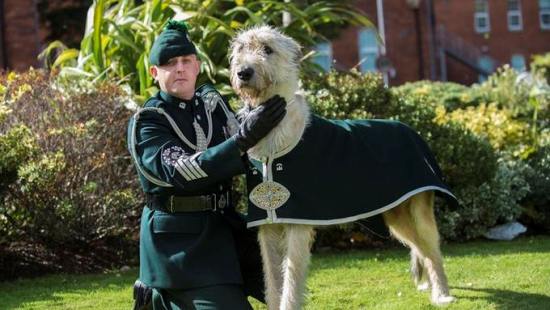
In fact, before the drinking ban was repealed, there was only one place in Ireland where one could buy a tipple on March 17: The Royal Dublin Dog Show.
When did the meaning of Saint Patrick’s Day change?
The evolution of St. Patrick’s Day into the ruckus it’s now associated with may, in fact, have been solely an Irish-American construct. Despite the fact that the feast day has been observed in Ireland since the 9th or 10th century, it was in New York City that the first parade took place when in 1762 Irish soldiers serving with the English military marched through Manhattan to a local tavern.
Patriotism amongst Irish immigrants in America continued to grow with the New York Irish Aid societies holding the first official parade in 1848 - the world’s oldest civilian parade and the largest in the United States. The first parade in the Irish Free State did not take place until 1931.

The promotion of Paddy’s Day in Ireland truly began in 1995 when the Irish Government realized the potential tourism benefits of celebrating the day and the opportunities for the country to sell its culture and sights to the rest of the world.
This resulted in the creation of the St. Patrick’s Day Festival and has amassed to the multi-day celebration in Dublin in which approximately one million people take part annually.
While this is a recent phenomenon - the now traditional shamrock ceremony in the White House only being started in 1952 by Ireland’s ambassador to the United States, John Hearne - there were other times in history in which St Patrick's Day was used as a day on which Irish culture could be placed to the forefront. 
From the 18th century onward, as a result of the Penal Laws in Ireland, some Irish people began to use St. Patrick’s Day as a means of promoting Irish culture and tradition. So as to show their Irish Christian pride, the tradition of wearing of shamrocks began but the day still revolved around the Catholic religion.
There have been calls by some to bring back the old pre-70s traditions and to return to the religious feast day. In 2007, theologian Fr. Vincent Twomey argued for this return to religion in an article for The Word magazine. Fr. Twomey claimed that the day needed to be reclaimed as a Church festival and taken back from the secular and vulgar festival that it had become.

Within the Church itself, there are certain traditions that are still retained although they may go unnoticed by the larger corporate events. As St. Patrick’s Day sometimes falls during Holy Week, and the church avoids holding feast days during certain solemnities such as Lent, there have been times when the feast day has moved to a different day. This happened as early back as 2008 when St. Patrick’s Day was celebrated by the Church on March 14 although the separate secular events continued on the national holiday. This will not happen again until 2160.

FR CANTEEN MISSION STATEMENT~Showing support and boosting the morale of our military and our allies military and the family members of the above. Honoring those who have served before.
Please remember: The Canteen is a place to honor and entertain our troops. The Canteen is family friendly. Let's have fun! We pray for your continued strength, to be strong in the face of adversity. We pray for your safety, that you will return to your families and friends soon. We pray that your hope, courage, and dignity remain unbroken, so that you may show others the way. God Bless You All ~ Today, Tomorrow and Always |


