Posted on 07/30/2017 5:18:39 AM PDT by Kaslin
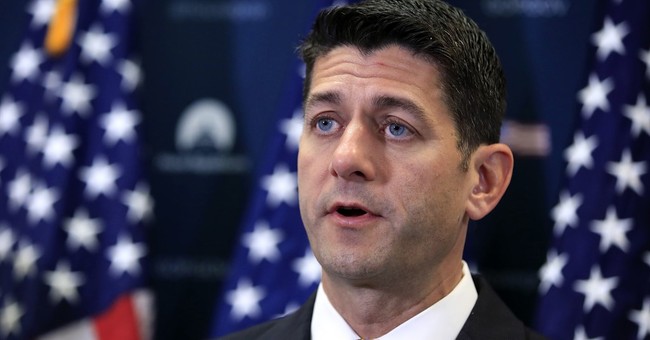
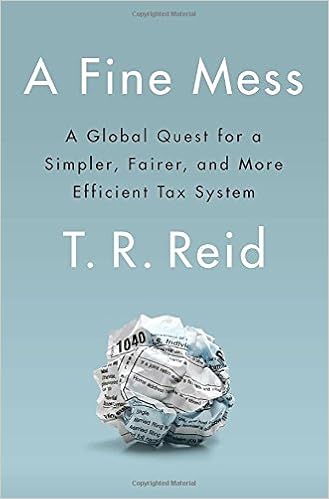
Paul Ryan and his fellow members of Congress are forging ahead in an attempt to rearrange the deck chairs of our tax system before we all sink under the code’s voluminous verbiage. Many House members -- particularly in the Republican Party -- have moved toward simplification. T.R, Reid has authored A Fine Mess, his take on our tax system and how it compares to other countries, which some people are using as a benchmark for how to tackle the current tax entanglement.
Mr. Reid has produced a very readable analysis of taxes with very few errors considering he is a layman on the issue. But Reid is an experienced foreign correspondent who told me “My mission was to educate my readers on how other societies operate in regard to issues like their health or tax system.” Reid stated his goal was “Comparative policy analysis through looking at other countries.” Reid previously produced a “baker’s dozen” books varying from the birth of the microchip to analysis of the health care system.
There are a couple of major concepts Reid focuses on in his book. One that he really latched onto is BBLR (broad based, low rates). This principle espouses tax systems that eliminate most deductions and lowers the tax rates to make a more equitable and efficient tax system. Reid spent an extensive part of his book touting how many countries have implemented this concept and how the American tax system has become weighed down with too many exceptions, exemptions, credits and deductions that needlessly destroy the tax structure and provides preferences for preferred parties. No more picking winners and losers.
Reid told me that he has been overwhelmed by the positive response of tax practitioners to this concept. He echoed my statements that CPAs and other preparers do not want a tax code this complicated. It is not feathering their nests – it is just making their job unmanageable as it engulfs preparers in doubt about whether they have properly complied with the rules for which the government has expanded penalties against them.
I asked Reid if he knew why the tax code was as complicated as it is today. He gave me some of the standard answers like lobbyists and lawyers etc. I told him it is simple – it is because it can be. With the advent of sophisticated computer systems tax policy people can write complex, interlocking tax policies that could not be complied with when all returns were done by hand. But what is the best policy? It was clear Reid’s research showed that getting rid of most of the complications will inspire positive activity and be more equitable to taxpayers.
The other topic Reid emphasized was that 176 countries have a value-added tax (VAT) system, and one major country (U.S.) plus some underdeveloped ones do not have the VAT. He is a proponent of adopting the system; but, fairly, wrote about some of the downsides of the VAT --i.e., like it is a hidden tax that keeps rate raises buried by most countries. Likewise, it does not replace the income tax system once enacted – it only creates a new significant revenue source for governments. Most European countries started with low VAT rates, but now the Euro Zone requires its members have a minimum VAT at 15% with Hungary at 27%.
I asked Reid if the VAT is such a better tax system (a consumption tax that reaches a very broad base of taxpayers which many conservative thinkers really like and many liberals think is regressive), why has the U.S. outperformed most of these economies? I suggested that it may be because the system is such an onerous requirement for businesses to comply with, particularly since the businesses are responsible for collecting and reporting the tax with full responsibilities falling on their shoulders. These challenges may account for the relative lack of business start-ups in other countries compared to the U.S.
Reid stated “The U.S. corporate tax is not working.” It had been bringing in 33% of federal tax revenues in the 1960’s, but is now down to less than 9%. That is despite the fact that we have the highest rate in the world at 35%, only exceeded by French rates. But the French rates do not have the addition of our state rates. Forty-four states tax corporate income at between 4% and 12% layered on top of the federal rate. The biggest challenge to our high corporate rate comes from so many countries having cut their corporate rates to attract international businesses, and we cannot operate as an isolated island impervious to the competing world.
At minimum the corporate tax system has to be revised, the top rate lowered, simplification enacted and repatriation allowed at an attractive rate so that the billions of dollars earned and banked by American corporations can be brought home to help expand operations in the U.S.
A broad-based revision of the tax system needs to occur. The Republicans in Congress need to be joined by the Democrats to move simplification along. Reid points out that U.S. tax revision seems to happen every 32 years. It occurred in 1954 and 1986. It appears 2018 is in line for the next major overhaul.
Our tax system is stifling growth for our economy and harming the income of average Americans. Anyone who does not come to the table to help should be held responsible.
And, NOT talked about:
- extra-Constitutional govt\welfare requiring an ever greater %\quantity of $$$
- the 47%+ NOT paying taxes a/o the ~5% (via EITC) getting a check not of their own $$$.
Take care of #1 and #2 (IMO, a non-prebat Fair Tax) and THEN talk.
Though, I’m sure the ‘great’ squish in the House ‘leadership’ will put together another 20yr, back-loaded ‘budget’ and supply some ‘ideas’ /s
Trust us on tax reform, just like you trust us on repealing and replacing health care! :P
Unless the size and scope of government is addressed, unless social security/medicare/medicaid is addressed, tax reform will be kabuki theater. Folks will believe congress is acting, but behind closed doors they will be discussing how to deceive and manipulate citizens into thinking they've gotten a heck of a deal.
Not only would it save 70% of the current over $1 TRILLION yearly compliance and economic opportunity cost of the current tax system, but also "drain the swamp" of most of the 30,000 (!!) tax lobbyists now in Washington, DC.
Without my CPA (who is a fine fellow btw) I would be lost in the morass of tax laws, deductions etc...
Sadly, it is the truth.
Tariff plus a NRST is the answer our founders would choose. But what did they know...
Why waste bits & bytes?
The uniparty will do nothing.
And sadly even cant guarantee your taxes are correct.
Flat tax is the answer but they wont do it.
We are bogged down in political games and obstinate ignorance.
I wish the whole mess would be destroyed.
This. Mo tax forms, set % withheld from your check, no 47% receiving more than paid in, no tax shelters, no deductions, no guessing by the govt how much they will receive. A big plus is that almost the entire IRS would have to go find a job in the real world.
Representative apportionment.
Take last years spend, divide it out to a per Senator and per representative basis. Charge each state with the combined bill for their representation. Require the states to pay their tax bill before they are allowed to spend money on any state programs. Let the states collect the taxes how they want from their citizens.
You didn’t read the article, did you?
Costs include all the government employees and facilities, and the costs in time and money on the part of businesses and individuals to comply.
Does anyone know? Really....This is a serious question.
Each state receives a bill based upon the population over age 18 as determined by the last census. Let the states figure out how to collect it.
Result:
The most compassionate and least economically destructive means of collecting the tax will emerge!
Please read my post #15. Would this work?
Disclaimer: Opinions posted on Free Republic are those of the individual posters and do not necessarily represent the opinion of Free Republic or its management. All materials posted herein are protected by copyright law and the exemption for fair use of copyrighted works.