
Posted on 01/05/2016 8:44:24 AM PST by Kaslin
Battening down the hatches. That's what America and much of the rest of the world seem to be doing today, in an eerie re-enactment, though to much less of a degree, of what America and the world did in the 1930s. The result then wasn't very pretty. The result now is unknown.
One way the hatches are being battened down is that the volume of world trade has been declining, and not just temporarily, in response to the financial crisis of fall 2008.
Consider something that most people don't think much about: international trade. Listening to the political dialogue this year, one might suppose that increased trade only drains jobs from advanced countries like the United States.
But in a broader perspective, greater trade produces greater productivity and growth. "International shipments broaden the pool of customers for a given product," writes The Wall Street Journal's William Mauldin, "and enhance competition and specialization, cutting prices for consumers."
Go to your local Wal-Mart or one of its competitors and you will see the effect. Prices for clothing and food have tended to decline over the last 40 years, something American consumers may take for granted, but which they may come to miss if trade flows stagnate.
And that may be happening. International trade dropped sharply after the financial crisis in 2008, rebounded in 2010, but has grown only about 3 percent a year since, compared to a 6 percent annual rate from 1983 to 2008. In that period world trade grew faster than the world economy as a whole. Now it is growing slower.
That's reminiscent of something far more drastic that happened in the early 1930s. As the famous spiral graph of economic historian Charles Kindleberger shows, world trade volumes declined by 67 percent between January 1929 and March 1933. That was almost double the 38 percent decline in world production.
This decline was exacerbated by trade restrictions, starting with the United States' Smoot-Hawley Tariff Act of 1930, which inspired higher tariffs and trade barriers in Europe and elsewhere. Nations trying to protect themselves from harm hurt the world as a whole -- and themselves.
So it's a little chilling to see that the poll leaders for both parties' presidential nominations -- Donald Trump and Hillary Clinton -- are opposing the Trans-Pacific trade agreement negotiated by the Obama administration. And that Majority Leader Mitch McConnell has withdrawn it for the next year from consideration in the Senate, the house of Congress usually more amenable to free trade. Meanwhile, negotiations for a trans-Atlantic trade agreement have not reached fruition.
Another factor is at work: a sharp slowdown in China's growth rates, to what level, no one is sure. From 1982 to 2008 China's double-digit annual growth rate helped power world economic growth, lifting hundreds of millions out of poverty there and providing increasingly inexpensive consumer goods and high-tech products in advanced countries.
For the Chinese, that growth rate restores China to its natural position as a great economic power, after an unpleasant 140-year interval of rebellion, revolution, civil war and Communist oppression. For the world, it has been a boost to growth whose magnitude is unlikely ever to be replicated.
The prospect of stagnant world trade and growing trade barriers may be cheered by those who think that will bring back the auto assembly plants of the 1960s. But battening down the hatches tends to make the air inside stale and to hinder the ship from moving forward.
A similar phenomenon may be happening: tightening of the borders. Some of this is necessary and beneficial. There is no reason to tolerate mass low-skill illegal immigration (which in fact has vastly diminished, down toward zero in the case of Mexico, since 2007).
And there are good reasons to be especially watchful about Muslims seeking visas or green cards, given the significant amount (though low percentage) of terrorists who are likely to be in their numbers. This is not nativism or bigotry but common sense.
But tightening the borders has already reduced the flow of visiting students and tourists -- not a good thing. Neither is our politicians' inability to encourage more high-skill immigration.
These developments, again, are not nearly as dire as the situation in the 1930s, when immigration was close to zero and we blocked the entry of most Jewish and political refugees from Nazi-threatened Europe. That decade was brought to a close by world war. Let's hope that battening down the hatches today doesn't come to a similar end.
Finally, Orin will be contained.....
Sheesh, 17 paragraphs to shill for the TPP, Barone?
Reminscent of the 1930s? Yeah right.
People know instinctively things that have been drilled out of the heads of degreed economists. Little things like: you can’t keep printing money forever or the economy will crash, you can’t keep interest rates near zero forever or the economy will crash, you can’t run a deficit forever or the economy will crash, etc...
We have all seen this coming....
Pray for our nation and its people.
” the volume of world trade has been declining, and not just temporarily, in response to the financial crisis of fall 2008”
From 2000 to 2008 Americans had been buying all sorts of junk using the equity in their homes as ATM machines. This came to a crashing halt when the housing bubble came to an end.
“in a broader perspective, greater trade produces greater productivity and growth. ‘International shipments broaden the pool of customers for a given product,’ writes The Wall Street Journal’s William Mauldin, ‘and enhance competition and specialization, cutting prices for consumers.’”
Many Americans have lost jobs due to globalization. They don’t consume as much when they have lower or no income.
“As the famous spiral graph of economic historian Charles Kindleberger shows, world trade volumes declined by 67 percent between January 1929 and March 1933...This decline was exacerbated by trade restrictions, starting with the United States’ Smoot-Hawley Tariff Act of 1930, which inspired higher tariffs and trade barriers in Europe and elsewhere. “
Throughout the 1920s we had the Fordney-McCumber tariff which was nearly the same as Smoot-Hawley, and the 1920s economy ‘roared’.
Smoot-Hawley was a minor factor in the Depression. The big cause was the collapse of the American banking system over the years 1930-33 and Smoot-Hawley had nothing to do with that.
Why should "tightening the borders" have any effect AT ALL on visiting students and tourists, both of which categories are LEGAL entrants? Unless they are terrorists POSING as students and tourists??
The 50% of working age people who don’t have jobs in America aren’t going to miss the cheap imports because they can’t afford them anyway.
The Great Depression was not related to Smoot Harley. Those tariffs weren’t passed until a year and a half into the Depression. And even then they applied to less than 50% of imported goods and they weren’t popular and they were quickly repealed.
However, what people don’t realize is that we had tariffs averaging at least 20% for decades before the Great Depression. We had them all through the roaring ‘20’s and the economy did just fine. In fact the economy was stronger thanks to the import tariffs.
What’s more, imports represented only 5% of GNP then and exports were only 4% of GNP. But industrial production fell some 64%. So there was no way International trade was big enough to account for the depression.
What caused the Great Depression was the fairly new Federal Reserve. The Fed thought they had issued too much liquidity keeping up with the roaring economy and thought they needed to resemble more of the gold standard. So they tightened up the monetary reigns and sent everything crashing. And they didn’t have a mechanism to help out the banks once they did. So the banks closed along with every business that was dependent on loans from the banks.
Today, we need to restore the import tariffs, so that American manufacturing gets a break from the relentless off shoring and so that some jobs can come back.
I am not sure if this is the case but I think one of the most important distortions that Barone may not be detecting is the collapse of oil prices.
Taking oil from over 100$ a barrel to less than 40 is a massive decrease in the financial volume of trade.
It is however one of the most important accomplishments of American ingenuity.
It also puts the US in the position of becoming an energy exporter. That is really good news not bad news.
China IS our manfacturing base. The US industries who have been offshoring manufacturing to china over the last two decades have tied the US economy, and the chinese economy together at the hip. If the chinese go down, they drag the US down with them, and NOBODY will be able to escape it, financially and literally.
“But tightening the borders has already reduced the flow of visiting students and tourists — not a good thing.”
Since when? Michael Barone is out of his mind.
TPP isn’t just a free trade agreement its ceding the sovereignty of the United States to an international council. Its BS. We don’t need to be in a trade pact with 43 other countries and China slipping in the back door later.
What we need to do is make trade agreements that are beneficial to the USA with individual countries.
This is bulk cargo, like grain or ore.
To put it into perspective:
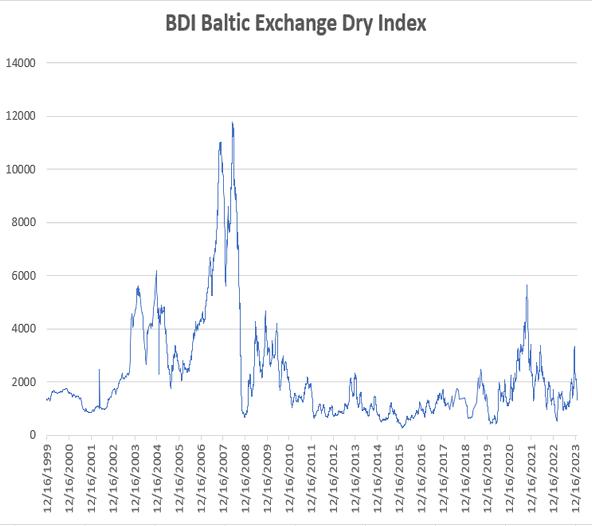
Michael- If you think the heart of the problem is political or financial, you’re missing the point.
Short version: We mustn’t keep the ship from sinking because we need fresh air.
Disclaimer: Opinions posted on Free Republic are those of the individual posters and do not necessarily represent the opinion of Free Republic or its management. All materials posted herein are protected by copyright law and the exemption for fair use of copyrighted works.