Posted on 12/31/2015 7:30:26 AM PST by Lorianne
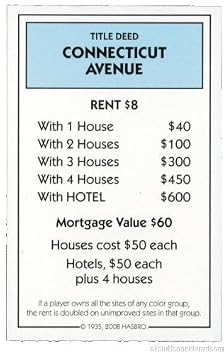
Fannie Mae and Freddie Mac are turning to crisis-era tools to reduce their exposure to mortgage losses and spark a new market for financing home buyers. Beginning in 2016, the two government-controlled housing giants will ramp up sales of a new type of security that will transfer most of the cost of defaults on all but their safest mortgages to private investors. The securities will be based on the value of a pool of underlying mortgages—but only indirectly, making them a derivative similar to those that figured in the financial crisis seven years ago. The insurance-like products are called Connecticut Avenue Securities by Fannie Mae and Structured Agency Credit Risk by Freddie Mac. Standard-issue bonds from the housing giants protect investors from the risk that home buyers will stop making payments on their loans.
With the new securities, however, investors could lose some or all of their principal if the underlying mortgages default. The effort marks a notable return to financial engineering in housing finance—elements of which served useful purposes before bloating in the years leading to the crisis. The new securities ultimately could help reduce the government’s role in mortgages by persuading investors to take on the risk of default. Right now, the U.S. housing market relies almost entirely on guarantees from Fannie, Freddie or other government-backed entities. The companies, along with government agency Ginnie Mae, back most mortgages and issued 96% of all mortgage bonds in the first 10 months of the year, according to trade publication Inside Mortgage Finance.
Banks used to issue hundreds of millions of dollars worth of mortgage bonds that didn’t carry Fannie or Freddie’s guarantees, but that market dried up after the financial crisis. Proponents hope the new securities could help restore investors’ appetite for mortgage risk.
(Excerpt) Read more at wsj.com ...
Jesus, the same damn people who got bailed out last time are at it again.
If ONLY somebody could have warned us and let the creeps fail... /s
I was one of about 1000 term employees hired by the FDIC in 2008-2009 in the aftermath of the financial crisis.
Next time, it won't be 500 community banks that will have to be shut down. Much larger banks will be in the crosshairs.
Wall Street should be paying attention to the travails of GOPe. Luntz is wrong: we aren't out for revenge, we're simply saying "no more" to crony capitalists and their handmaidens in DC.
I’d be interested if the returns were high enough - say 20% per year. That means you’d get all of your money back by the end of Trump’s first term, and anything after that would be pure profit.
LOL that’s hilarious.
I bet they did appropriate the name from the game ... which only makes sense.
I worked for Fannie Mae back in the 80’s in their computer operations center, and even then I was amazed at the opulence of their headquarters building on Wisconsin Avenue NW, expensive artwork worthy of a museum, furnishings, floors and lighting that compared favorably with anything in the White House, executive offices more than suitable for any Governor or President, the only phrase that came to mind regarding the waste of taxpayer funds was “a fool and their money are soon parted”.
It is all Monopoly Money to them. Just another round of waste.
Not especially certain of how MBS were structured, as Canadian banks generally don’t deal in MBS, but I would not be surprised at 20-30% discounts to begin with.
As the French say, “Plus ca change, plus c’est la meme chose.” Will people be dumb enough to buy into another bubble? Let’s see, O’Venal was re-elected in ‘12. I’d say, “Most definitely, YES!”
They don’t go to market without knowing it will be sold pretty quick.
Just wait 5-10 years the dollar (and all fiat currencies) will be "Monopoly Money" to ALL of us!!
Yes, and if only we could have a President who really understood finance and the games these clowns play at public expense... /s
“OK how many people are going to be lining up to assume this new ‘risk’ product?”
Probably a lot because F&F deal in conforming loans.
Fannie and Freddie were both investor owned companies listed on the New York Stock Exchange by the time you worked there. They only began life as government agencies.
There was no legal obligation for the American taxpayer to bail out Fannie and Freddie. That decision belongs entirely to Dubya. The companies could have been allowed to fail with investors taking the hit.
Disclaimer: Opinions posted on Free Republic are those of the individual posters and do not necessarily represent the opinion of Free Republic or its management. All materials posted herein are protected by copyright law and the exemption for fair use of copyrighted works.