
I can see why there were no buyers. That should have been turned into ashes decades ago.
Posted on 07/17/2013 8:00:44 AM PDT by nuconvert
If you needed more proof that art theft is a futile, dead-end job, look no further than the Kunsthal heist of 2012. After the theft of seven masterpieces worth tens of millions of dollars ——a Picasso, two Monets, and a Matisse, among others—it appears that the mother of one of the suspects said she burned their cache of high-priced art partly because the thieves couldn't find any buyers.
(Excerpt) Read more at news.yahoo.com ...
or made it look like they did...
If true, they need to execute the mother. Painfully.
Let’s see - I stole some priceeiss works of art. I am unable to sell them. Authorities suspect me of the crime. The smart move here is to burn them, right? After all, everyone will just forget about them and leave me alone if they find out I destroyed the art, right? Everybody knows that leaving the pieces anonymously at the local museum would send the authorities into a blind fury - probably resulting in MUCH harsher sentencing when I am captured, right?
This is pure lunacy!
Stolen priceless paintings are a VERY long term investments. The original thief must die and be forgotten. The next generation has to keep it a secret and finally pass on. The third generation must know nothing about the ancient heist. And the fourth generation must discover them in their obvious ownership in a foreign country with hope the original holder of the treasures have turned over ownership, gone out of business, etc.
Doubtful.
The art world is filled with scoundrels.
One of the better bits is that they figured out years ago that the general public cannot tell the difference between a good forgery and the real thing. So why display the real thing, where it is exposed to fire, theft, vandalism by insane people, and just ordinary wear and tear? Instead, keep the real thing in a temperature and humidity controlled vault, just for the experts.
If a work is stolen, they have the choice of pretending it was stolen for the insurance money, or quietly letting the big players know that it was a fake. But they can also fence forgeries to be sold to the rich and gullible, on condition that nobody knows they have the stolen artwork.
Often, insurance companies make a deal with art thieves to get back the work, no questions asked, for more money than the thieves could get selling it through a fence.
But the thieves might use the earlier trick of making several forgeries, then selling them as soon as they steal what they think is the real thing.
Cash strapped museums themselves have been known to sell their real works to serious collectors, yet continue to display fakes for the box office.
For pure entertainment, I recommend Orson Welles amusing movie F for Fake (1973).
http://www.youtube.com/watch?v=KWZUG0-nn_Q
If you can’t sell them, hold them for ransom.
Bingo.
The key is to never sell the stolen art.
Fakes are created and sold as the original and each buyer keeps their fakes in secrecy, thinking they have the original.
The thieves then create a news story that the original was destroyed so that the gallery, whom is often in cahoots with the thieves, can collect insurance.
Art theft is an old game.
I can see why there were no buyers. That should have been turned into ashes decades ago.
For somewhat less entertainment you could read Tom Wolfe's latest novel, Back To Blood.
First book I've ever read that is noisy. You'll know what I mean by that if you've read it.
Naked Or Nude? Wesselmann's Models Are A Little Bit Of Both
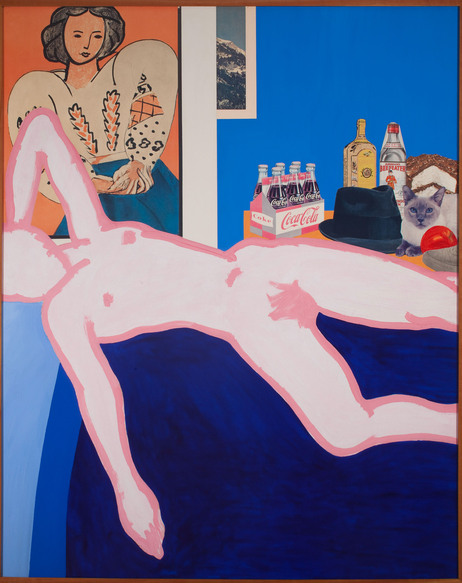
...it appears that the mother of one of the suspects said she burned their cache of high-priced art partly because the thieves couldn't find any buyers.The Japanese bid up the price of art back in the 1970s-80s when they were feeling their oats; if we follow the money, we'll probably find that many of the buyers today (particularly the surreptitious buyers) are probably OPEC billionnaires who maintain gaudy European mcmansions.
Disclaimer: Opinions posted on Free Republic are those of the individual posters and do not necessarily represent the opinion of Free Republic or its management. All materials posted herein are protected by copyright law and the exemption for fair use of copyrighted works.