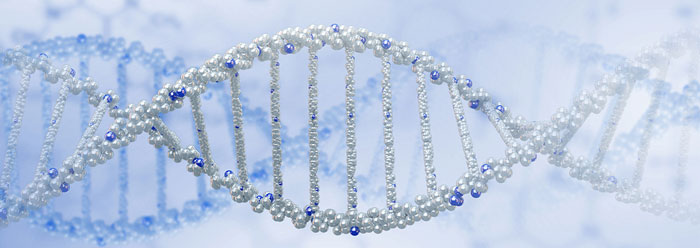
Image from article.
Posted on 04/05/2013 7:15:53 AM PDT by fishtank
Complexity of Cell's 'Molecular Shredder' Revealed by Jeffrey Tomkins, Ph.D. *
When genes in the cell are turned on, the result is the production of gene copies called messenger RNAs, or mRNAs. The mRNAs are then used as templates to make proteins, the key molecules that enable the cell to function. But what happens to the excess mRNAs when they are no longer needed or the RNAs that have errors in them? They certainly can't remain active in the cell or serious problems would ensue.
A good analogy for the cell's solution to this problem is the example of a common office and household machine. When we have sensitive documents around that are no longer needed, we use a handy specialized machine called a 'paper shredder' to effectively eliminate the documents and the information they contain so it doesn't fall into the wrong hands. In the cell, a similar, but a far more complex machine has recently been characterized and described in a new publication in the journal Nature.1
When mRNAs are no longer needed in the cell, complex molecular machines called exosomes are recruited to "shred" them into basic molecules that can then be recycled. The process is considerably more complex than the example of a human sliding a piece of paper into an office shredder. When mRNAs or other types of RNAs are no longer needed in the cell, they are targeted and tagged with other specialized RNAs. When they are first formed, RNA molecules are single-stranded, but when they get tagged for destruction, they become double-stranded. It is these double-stranded RNAs that are recognized by the exosome. Amazingly, the exosome is multi-purpose in function: it not only shreds the unwanted RNAs, it also processes other RNAs—ones that still need to be utilized in the cell—by performing precision trimming operations.
The exosome itself, is a large complex of specifically arranged protein subunits that have been pieced together by other complicated cell machinery to make a complex, multi-function precision machine. While scientists understood the various proteins involved in the construction of the exosome, they did not fully understand how it worked. Using advanced microscopy techniques, researchers have obtained an atomic-level resolution picture of the exosome caught in the act of processing an RNA molecule.
In an interview, the lead author of the study stated, "It is quite an elaborate machine: the exosome complex forms a hollow barrel formed by nine different proteins through which RNA molecules are threaded to reach a tenth protein, the catalytic subunit, that then shreds the RNA into pieces."2 Not only is the exosome very elaborate in its structure, but it exhibits a common bio-engineering theme called irreducible complexity—meaning that all the parts are required all at once for it to function. The lead author of the study highlights this feature by stating, "Cells lacking any of the ten proteins do not survive and this shows that not only the catalytic subunit but also the entire barrel is critical for the function of the exosome."2
Much is yet to be learned about this amazing cell machine such as how the exosome is selectively targeted by the RNAs tagged for degradation, and how it functions and is regulated in different compartments within the cell.
In addition to refuting random evolutionary processes for its existence, the complex exosome molecular machine shows every sign of carefully crafted system engineering.
References
Makino, D. L. et al. 2013. Crystal structure of an RNA-bound 11-subunit eukaryotic exosome complex. Nature. 495 (7439): 70-75.
Max Planck Institute of Biochemistry. 2013. Researchers unravel the structure of the machinery for RNA disposal. ScienceDaily. Posted on www.sciencedaily.com March 7, 2012, accessed March 12, 2013.
*Dr. Tomkins is Research Associate at the Institute for Creation Research and received his Ph.D. in Genetics from Clemson University.
Article posted on March 25, 2013.
Image from article.
Is that an exosome ?
It’s hard to tell one DNA from Another. They all look alike.
Thanks for the Friday laugh. Much appreciated.
ICR cites a short little article about the actual Nature paper and fancies it up with the magical thinking of ICR creationists. Again, no actual research here, merely just picking at real work done by real science.
Work that now shows that the eukaryotic “molecular shredding” process is nearly identical to the prokaryotic process; albeit with different chemical compounds. Of course, to people with brains, this is a rather clear example of conservation through evolution - an efficient RNA-level process that has worked before which has been conserved over vast periods of time and enormous numbers of speciation events.
Note, nowhere in Nature or in the article this one was gleaned from was the term, “Irreducibly complex” ever used.
I guess the footnotes with links to the articles showing the ‘machinery’ involved means nothing....you actually need the words ‘irreducible complexity’?

If you have studied the cell, you should realize its complexity. I have spent most of my life studying biological systems. The spontaneous generation of complex systems occurs no where in the universe. Every complex system contains information that came from somewhere. The very same principles apply to complex systems created by humans. You need to think about this and look around at not just the cell, but this world, and its relationship to the cosmic world.
All you need to make one of these is some mud and lightning and before you know it, you got complex molecular shredders. Makes sense, Riiiiiiiiiight!
Arguments from incredulity carry no weight with me.
To believe that even a single cell could arise by chance 4 billion years ago from the primordial soup on earth takes more faith than even I have in The Author of Life-The Lord Jesus Christ. Congratulations on that faith.
To then believe that that single cell would go from there to a reproducing complex cell and then to multicellular life and then over the next 4 billion years, without going extinct anywhere along the way, evolve into all plant life and animal life that we see today, and including the male and female design of most animal life, is the faith of a fools. Enjoy your laugh.
Romans 1:22 Professing to be wise, they became fools.
Faith is the belief in something in the absence of evidence. You are proud of your faith. I am proud of the fact that I do not believe in anything which does not have evidence. That is our difference.
You have difficulty accepting vast swaths of time and the biological and chemical processes that can occur and accumulate during that time. That’s nothing for me to laugh at. Citing Bronze Age goat herder mythology as a way of sticking it to me has absolutely zero effect on me. The idea that you think it does, well, I guess that’s worth a chuckle.
Cheers.
As the declaration of spontaneous generation of complexity by magic carry none with me.
Do you have any formal education as a scientist? Just curious, how little or much in what field?
I’m guessing you really know very little about living systems? It seems from your comments you have a few superficial clues to your credit? Obviously you worship the atheist philosophy and have probably done a great deal of searching for God, expecting him to fall at your feet. Belief in God is strictly a human endeavor and is found no where in lower life forms. It is an inborn drive and will not end just because you declare it so.
Keep searching and remember that God will not conform to your notion of what you would like him to be. It is a bit like a human attempting to communicate with an ant. What do you suppose the ant thinks? Does he think his arrogance will assist him in making sense of his state in life and where he came from? I am guessing nothing would ever convince you.
Not sure where you have come up with notion of scientific community not believing in spontaneous generation of life. More than 50% believe that first life was indeed spontaneous—the information, the constituents of nucleic acid, the amino acids, the fatty membranes, the ion balance, all just came together in a primordial soup.
My background is BS in chemistry with emphasis in biochemistry (chemistry of life), DVM, and a PhD. Been working in the life sciences for more than 3 decades. I have about 100 publications in the refereed literature, 4 dozen book chapters and several hundred talks delivered to the scientific community.
Impressive. As a trained scientist then, you should realize that “I am guessing nothing would ever convince you” is completely untrue.
Rather, nothing so far in my life has convinced me of the existence of any god or supernatural event. If, however, falsifiable and repeatable evidence is presented that does point to the existence of a god, I will absolutely be convinced.
True, I’m not holding my breath. Science continues to make the God of the Gaps ever more insignificant. But one never knows.
Science is simply describing the world in which we live using what limited senses we have and the instruments humans create. The assumptions we make as scientists are legion. Much of what we assume is clearly not based on experimental evidence.
You are crossing over into an area about which I am comfortable saying, “perhaps we don’t know that now, but I’m confident we will some day.” It sounds like you, OTOH, would rather say, “that is unknowable and metaphysical and unmeasurable and unobservable and therefore supernatural.”
Disclaimer: Opinions posted on Free Republic are those of the individual posters and do not necessarily represent the opinion of Free Republic or its management. All materials posted herein are protected by copyright law and the exemption for fair use of copyrighted works.