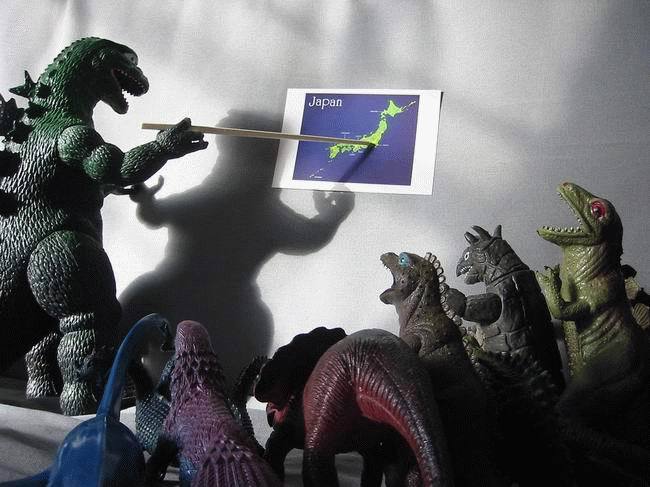
"And we are pretty sure that this is where the giant glowing fireball that landed on the school playground came from. Revenge is at hand."
Posted on 04/14/2011 12:16:48 PM PDT by DTogo
The videos started popping up as soon as the earthquake and tsunami hit Japan last month. They show the ground beneath japan seemingly coming alive, moving and swelling like ocean waves. Water also seems to appear out of nowhere. One video in particular caught the eye of Glenn Beck on radio this morning. It’s called “liquefaction.” But how does it happen? We have the answers for you....
(Excerpt) Read more at theblaze.com ...
日本 ピング (kono risuto ni hairitai ka detai wo shirasete kudasai : let me know if you want on or off this list)
The is why FEMA is scared to death of a New Madrid quake.
Am I understanding correctly, that the soil itself becomes a liquid??
The article also mentions that the town of Uruyasu was built on landfill. This is true for part of San Francisco as well.
Southern California coastal area is on a shelf. Terra firma is not so firm after all.
very interesting thanks
Pretty much. Here’s the best video I’ve seen that shows liquification effects.
Under this Regime, think of all the Red State voters that would “go away.”
Excellent demonstration!
This is best received as an example of thixotropy
You have compressed the sand and expelled the water.
This phenomena caused a great deal -- if not most -- of the property damage in the Alaska Quake of 1964. I don't know about the rest of the country, but in California, engineers must test for soil liquefaction potential in certain sites before construction. It's the soil composition and water retention properties that create the condition. Rocks don't liquefy.
Plenty of interesting videos there.
Thx.
When shaken, the grains become separated by the pore fluid (water, most commonly) which was in the spaces between the grains, and as such, there is almost no resistance to objects sinking into the ground because the grains in the soil are not supporting each other.
Areas supported by bedrock are not the ones at risk, but river terraces, flood plains, and filled in areas next to bays can be, depending on the soil/sediment types between the surface and bedrock.
most of downtown Tokyo, is built on reclaimed land....some of the most expensive real estate in the world, built on a swamp...
I suspect, that if the after shocks continue, that Nuclear plant could disappear into the ocean, and drop 12000 feet to the bottom of the sea....I lived in Tokyo, for 10 years...
That’s wild!!!
The Fukushima Daiichi nuclear plant appears to be built on real (non re-claimed) coastal land; less liquefaction but obviously at greater risk for a tsunami as recently demonstrated.
"And we are pretty sure that this is where the giant glowing fireball that landed on the school playground came from. Revenge is at hand."
Is quicksand similar to that? What about the phenomenon of buried rocks and tires working their way to the surface?
It is entirely possible that larger objects would float back to the surface if they were less dense than the sand/water slurry they sank in. If a tire is set in upright or a plank on end, it will sink, but given time they will re-orient and 'float' to the surface--the process impeded by the need for the grains of sand to move around the tire, so it would be considerably slower than the same behaviour in water. It is possible that wood, for instance could waterlog, and either that or other substances decay, losing that bouyancy which would cause them to come up.
Oddly enough, the phenomenon was part of the plot in the movie Haleluia Trail (Lee Marvin, et al). The whiskey barrels came floating up in the end...
Thanks, Joe.
I think there is a lot more to this phenomenon than we pay attention to.
Disclaimer: Opinions posted on Free Republic are those of the individual posters and do not necessarily represent the opinion of Free Republic or its management. All materials posted herein are protected by copyright law and the exemption for fair use of copyrighted works.