Posted on 11/13/2009 6:33:51 AM PST by Ravnagora
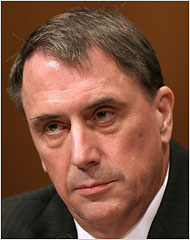
Yesterday the New York Times reported the Norwegian financial newspaper Dagens Naeringsliv’s revelations that Peter Galbraith, a former US diplomat and advisor to the Kurdish regional government in northern Iraq, stands to make hundreds of millions of dollars in profit from Iraqi oil revenues.
Galbraith’s profits would result from his cashing in on his links to the Kurdish regional leadership, and his role in drafting Iraq’s Constitution, shortly after the 2003 US invasion of Iraq. In 2004, Galbraith helped the Kurds arrange deals with Norwegian oil firm DNO and prepare for negotiations on the Iraqi Constitution, including controversial provisions on how to divide Iraq’s oil revenues. During the 2005 negotiations, the Times noted, Galbraith worked to ensure the draft included “clauses that he maintains will give the Kurds virtually complete control over all new oil finds on their territory.”
Galbraith stood to benefit enormously from these clauses, Dagens Naeringsliv revealed last month. On June 30, 2004—the day after the successful conclusion of the Kurd-DNO negotiations—the Kurdish regional leadership had given Galbraith a major stake in undiscovered oil fields on its territory. Oil analysts quoted by the Times estimate his five-percent stake in the newly-discovered Tawke oilfield alone would be worth at least $115 million.
There are indications, moreover, that Galbraith may make even larger sums from the affair. After a falling-out with Galbraith in 2008, DNO sold a stake in the oil fields to the Kurdish regional government, apparently trying to cut Galbraith and a Yemeni business partner out of the deal. Galbraith and his partner sued DNO for compensation, which Dagens Naeringsliv estimates at $525 million. A ruling is expected early next year.
DNO attempted to recoup the money by charging it as “operating expenses” to the Kurds, who tried to pass the expense on to Baghdad.
The Iraqi central government in Baghdad refuses to recognize all the oil contracts signed by the Kurdish government prior to the ratification of the Constitution, maintaining they are illegal. Baghdad is therefore refusing to pay Galbraith, and insisting that the Kurds find the money from the 17 percent of Iraqi oil revenues allotted to them under Iraq’s current revenue-sharing agreement.
The Iraqi Parliament’s failure to pass an Iraqi oil law has made it impossible to settle this disagreement between Baghdad and the Kurdish authorities.
Galbraith’s attempt to extort hundreds of millions of dollars from Iraq is unanswerable evidence of the neocolonial character of the US occupation of that unfortunate country. Far from being a war against al-Qaeda terrorists or Iraqi weapons of mass destruction—which were crude inventions of a US government determined to justify a war to a skeptical and hostile public—the 2003 invasion was an imperialist adventure offering well-connected operators the chance to make fortunes.
Moreover, it is ever clearer that a central element of the occupation was the theft of Iraq’s oil resources. The Times’ article on Galbraith comes only one week after the revelation that southern Iraq’s huge West Qurna oil field has been divided between Exxon-Mobil and Royal Dutch Shell.
The New York Times itself described the Galbraith story’s potential to “inflame” Iraqi public opinion. In a comment that demonstrates its own political complicity with the theft of Iraq’s oil, it crudely described Iraqi sentiment that “the true reason for the American invasion of the country was to take its oil” as “a conspiracy theory.” This is in the middle of a story describing the looting of hundreds of millions of dollars in Iraqi oil revenue!
The participation of Galbraith, a prominent former diplomat with Democratic sympathies, in the plundering of Iraq testifies to American liberalism’s complicity in the crimes of US imperialism—which finds perhaps its most finished expression in the Obama administration’s continued occupation of Iraq.
Peter Galbraith, the son of prominent liberal economist John Kenneth Galbraith, was a professional staffer for the US Senate Committee on Foreign Relations from 1979 to 1993. In the late 1980s, during the Iran-Iraq war, he documented the massacre of Iraqi Kurds by Saddam Hussein, then a US ally.
From 1993 to 1995, during the dissolution of the former Yugoslavia, he served as US envoy to Croatia. He communicated to Croatian leader Franjo Tudjman the Clinton administration’s approval for Operation Storm, Croatia’s 1995 ethnic cleansing campaign that drove 200,000 Serbs from the Krajina area.
Appearing last year before the International Criminal Tribunal for the former Yugoslavia (ICTY), Galbraith stated that the US had an “understanding attitude” towards the operation. He claimed that he would not have asked Washington “to give it the green light” if he had believed Tudjman intended to remove Serbs. However, he had previously admitted that Tudjman and his associates were known to want an “ethnically clean country.”
After a stint at the National War College and working for the UN in East Timor, he resigned from US government service, going into business in the Middle East. He was also appointed—at the Obama administration’s request—to the United Nations mission in Afghanistan, leading a campaign to denounce Afghan president Hamid Karzai’s reelection as fraudulent and criticizing UN official Kai Eide.
A prominent aspect of Galbraith’s work in the Middle East was his sympathy for Kurdish separatism, acquired during his work on Iraq as a Senate staffer. Contacted by the New York Times, Galbraith confirmed that he had an “ongoing business relationship” with DNO during Iraq’s constitutional negotiations. He added: “I undertook business activities that were entirely consistent with my long-held policy views. I believe my work with DNO (and other companies) helped create the Kurdistan oil industry which helps provide Kurdistan an economic base for the autonomy its people almost unanimously desire.”
In fact, Galbraith’s own actions are the clearest demonstration that the Kurdish separatists’ alleged “autonomy” is nothing of the sort. Wedged between two larger, hostile powers—Turkey to the north, and the rest of Iraq to the south—they are generally at the mercy of shifts in broader regional politics, and their oil industry in particular is the target of unscrupulous operators like Galbraith.
Galbraith’s views played a significant role in the Democratic Party’s fraudulent attempts to portray itself as a representative of popular antiwar sentiment, while it planned to continue occupying Iraq after the departure of President George W. Bush. Galbraith specialized in giving a moralistic, pseudo-democratic veneer to Democratic plans to reduce US troop commitments in Iraq by imposing a ruthless, Yugoslav-style ethnic partition on the country.
On this basis, he became a prominent advisor on foreign policy questions to Democratic politicians, including Senator (now Vice President) Joe Biden and the chairman of the Senate Foreign Relations Committee, John Kerry.
Thus, in a November 2005 Washington Post column titled “What Are We Holding Together,” he wrote: “As a moral matter, Iraq’s Kurds are no less entitled to independence than are Lithuanians, Croatians, or Palestinians... The United States should focus now not on preserving the unity of Iraq but on avoiding a spreading civil war.” He concluded: “Iraq’s political settlement can pave the way for a coalition exit” by US and allied forces from Iraq.
Ultimately, however, the Bush administration opted for a massive military rampage through Iraq, the so-called “surge,” in an attempt to crush opposition to the central government. It preferred not to risk inflaming the broader regional tensions that an ethno-religious partition and civil war threatened to trigger.
In this regard, the Times’ timing in publishing this story—which has been circulating in the Scandinavian press for a month—is significant. It comes as the US attempts to manage growing ethnic tensions in northern Iraq, as politicians debate the status of ethnic minorities in key oil-rich regions such as Kirkuk in the run-up to January’s national elections. US officials, including Vice President Biden, have reportedly pressured Kurdish politicians to allow more Arab and Turkmen residents onto the lists of approved voters.
*********
BUsh BUsh BUsh, Oh wait, he is a leftest appointed by Bill Clinton. Never Mind
Public service
Galbraith was a professional staff member for the U.S. Senate Committee on Foreign Relations from 1979 to 1993, where he published many reports about Iraq and took a special interest in the Kurdish regions of Iraq. In 1987, he uncovered Saddam Hussein’s systematic destruction of Kurdish villages and a year later wrote the “Prevention of Genocide Act of 1988” which would have imposed comprehensive sanctions on Iraq because of the gassing of the Kurds. The bill unanimously passed the Senate but was opposed by the Reagan Administration as “premature” and did not become law.
In 1993, President Bill Clinton appointed Galbraith as the first United States Ambassador to Croatia. In 1995, he was the co-mediator and principal architect of the Erdut Agreement that ended the war in Croatia by providing for the peaceful reintegration of Serb-held Eastern Slavonia.
From 2000 to 2001 he served with the United Nations in East Timor, where he was head of the UNTAET political section and Cabinet Member for Political Affairs and Timor Sea in East Timor’s first Transitional Government. He was East Timor’s lead negotiator for maritime boundaries with Australia and produced two agreements, including the 2002 Timor Sea Treaty, that effectively quadrupled East Timor’s share of the petroleum resources between the two countries.
He was also a Professor of National Security Strategy at the National War College, in 1999 and between 2001-2003.[2] In 2003, he resigned from the U.S. government service after 24 years
Rampage?
Where is the outrage, tar and feathers???

Actually it's evidence that Galbraith is a crook.
Whenever you see terms like “neo-colonialism, and imperialism “ in an article you know where it’s coming
from, “Rampage” is what you can expect plus some Bush
bashing thrown in for good measure.
The left doesn’t realize that their lexicon gives them
away.
The time-line is important to determine whether Peter Galbraith obtained these concessions either personally or through his Yemeni partner, while either an employee of the U.S. government or while he had a fiduciary duty to the U.S. government. My instinct is that he must disgorge any profit. The U.S. should be a party to the litigation. I'm sure there is a foundation that can intervene to see this happen.
"Imperialism" I don't mind, but "neo-colonialism"? WTH?
Can't say if and/or where this sot fits-in to the mosaic you're assembling, Liz.
If he does though, you'd know.
Hence the >ping< so you w/don't miss it.
Don’t hold your breath. He’s a big lib, therefore he will skate.
“I’m sure there is a foundation that can intervene to see this happen.”
The foundation that you speak of has many special interests that funds it’s life blood. This country’s current crop of politicians are not patriots, and they do not care to divulge nor destroy the source of their wealth.
I see this story as being a fact. Why else would we not drill for our own oil.
Oh that---- (/sarc). When the pukeneos duped Bush into Iraq----they told him hundreds of $millions of oil money would pay for Iraq war.....which would be over in a jiffy.....and cost no more that "$20 billion."
===========================================
LAUGH BREAK If you thought the war in Iraq was a good idea based on the idea of spreading freedom you’re an "idealist." If you thought it was a good idea because there is a ton of oil in that part of the world you're a "realist." If you thought both things you're a "neocon."
===============================================
HOLD THIS THOUGHT Pouring trillions of tax dollars and wasting young American lives in Iraq had one purpose: "it made the region safe for conniving pukeneo poobah Richard Perle to go into the oil business." Read on.
Richard Perle Linked to Iraq and Kazakhstan Oil Deal
Tuesday, July 29, 2008, by Susan Schmidt and Glenn R. Simpson
The Wall Street Journal (requires registration)
Copyright © 2008 Dow Jones & Company, Inc
EXCERPT Influential former Pentagon official Richard Perle has been exploring going into the oil business in Iraq and Kazakhstan, according to people with knowledge of the matter and documents outlining possible deals.
Mr. Perle, one of a group of security experts who began pushing the case for toppling Iraqi dictator Saddam Hussein about a decade ago, has been discussing a possible deal with officials of northern Iraq’s Kurdistan regional government, including its Washington envoy, according to these people and the documents. It would involve a tract called K18, near the Kurdish city of Erbil, according to documents describing the plan. A consortium founded by Turkish company AK Group International is seeking rights to drill there, the documents say.
Potential backers include two Turkish companies as well as Kazakhstan, according to individuals involved. AK’s chief executive is Aydan Kodaloglu, who, like Mr. Perle, has been involved with the American Turkish Council, an advocacy group in Washington. (NOTE: RINO Guiliani's Texas law firm has two offices in Kazakhstan; he held a fund-raiser there for his failed presidential bid.)
Phyllis Kaminsky, who identified herself as the U.S. contact for Ms. Kodaloglu, said she herself was aware of the drilling plan but referred questions about it to Mr. Perle. “Richard would know the most,” Ms. Kaminsky said. “He is involved, I know that.”
People with knowledge of the discussions said they involve Alexander Mirtchev, a Washington consultant and adviser to the government of Kazakhstan, and an associate of his, Kaloyan Dimitrov. Mr. Perle has attended events promoting the interests of Kazakhstan, an oil-rich nation whose ruler, Nursultan Nazarbayev, is involved in a long-running U.S. investigation of 1990s-era oil-company bribery.
Mr. Perle has publicly lauded President Nazarbayev as “visionary and wise,” according to a publication distributed by the Kazakh embassy in Washington. Mr. Perle said by email that Mr. Mirtchev is a friend of his who once spent a night at his vacation home in France. Mr. Perle said Mr. Mirtchev is “justly…proud of his influence on the liberalization of the Kazakh economy.”
Asked about pursuing oil concessions, Mr. Perle said, “I am not involved in any consortium involving Mr. Mirtchev or Mr. Dimitrov, nor am I ‘framing plans for a consortium’” involving either one.
A lawyer for Mr. Dimitrov didn’t respond to questions about oil discussions.A spokesman for Qubat Talabani, the Kurdistan regional government’s representative in the U.S., confirmed that the envoy had been approached by Mr. Perle.
Kurdish authorities have been granting oil-drilling contracts even though Iraq’s central government and the Bush administration want them to hold off until a national oil law is passed. The K18 concession, which is estimated to hold 150 million or more barrels of oil, would potentially be operated by Houston-based Endeavour International, according to documents and people familiar with the discussions.
Mr. Perle also has explored obtaining an oil concession in Kazakhstan in tandem with a northern Iraq deal, according to people familiar with those discussions.
Mr. Perle, who was an assistant Defense secretary in the Reagan administration, is known for his strong support of Israel and hawkish views on arms control.
In the early days of the Bush administration, Perle was one of the most influential proponents of U.S. military action to oust Iraq’s President Hussein. Mr. Perle was chairman of the Defense Policy Board, which advises the Pentagon, but resigned in March 2003 amid criticism of his role as an adviser to a telecom company that was seeking U.S. government approval for a sale to Asian investors
Copyright © 2008 Dow Jones & Company, Inc http://online.wsj.com/article/SB121729971113092303.html?mod=googlenews_wsj
We didn't lose sons, daughters, brothers, sisters, moms and dads so these maggots could line their filthy pockets.
/mark
Thanks, Liz.
I wondered, you answered. :^)
"LAUGH BREAK If you thought the war in Iraq was a good idea based on the idea of spreading freedom you’re an 'idealist.' If you thought it was a good idea because there is a ton of oil in that part of the world you're a 'realist.' If you thought both things you're a 'neocon.'"
Whew...makes me a Paleocon?
Now I know what I am, too. ;^) LOL
Disclaimer: Opinions posted on Free Republic are those of the individual posters and do not necessarily represent the opinion of Free Republic or its management. All materials posted herein are protected by copyright law and the exemption for fair use of copyrighted works.