Posted on 09/02/2009 7:34:50 AM PDT by SeekAndFind
The historic vote in Japan's recent national election, in which the Liberal Democratic Party which ruled nearly continuously for more than six decades has lost control of the government, is testament to deep undercurrents of discontent in a country whose economy is no bigger today than it was in 1996. The victorious Democratic Party, which touts Keynesian stimulus and more protections for Japanese firms, didn't inspire confidence among voters, according to polls, but the party carried the day anyway with an electorate hungry for change.
But change will come slowly for Japan because the roots of its economic problems are deep and not always well understood. Yes, the country is struggling under a mountain of debt accumulated during a decade of public works spending that didn't do much to boost the economy. And government policies and regulations still protect large segments of the economy.
But the source of Japan's economic malaise is partly cultural in nature and not easily solved by policy tweaks. The country has been at the forefront of a trend that is spreading rapidly among nations, a steep drop in birthrates that has resulted in a rapidly aging population and workforce. In the process Japan is losing what the economist Julian Simon once called the ultimate resource--that is, people, especially a vibrant, entrepreneurial, risk-taking young population.
Getting the entrepreneurial edge back won't be easy, but it's vital. As Simon argued for much of his professional life, population growth drives prosperity because it challenges society to come up with daring, inventive ways to serve people's needs, and for much of its history humanity has responded to the challenge. "The standard of living has risen along with the size of the world's population since the beginning of recorded time," Simon wrote in The Ultimate Resource. "The most important benefit of population ... growth is the increase it brings to the stock of useful knowledge. Minds matter economically as much as, or more than, hands or mouths."
This is not, of course, the standard line in the popular media these days. Instead, some 211 years after Malthus argued that human population growth strains the earth's ability to provide for us ("The power of population is indefinitely greater than the power in the earth to produce subsistence for man"), one of the abiding messages of the environmental movement, now widely accepted by ordinary folks, is that the earth is overcrowded and will soon be running short of resources. In a recent online poll conducted by The Economist, 80 percent of those surveyed said the world would be better off with fewer people. National Geographic's website has an entire section devoted to overpopulation with an image gallery replete with photos of crowded train stations and city streets. Books with titles like Maybe One: A Personal and Environmental Argument for Single-Child Families line the library stacks.
The long-term trends, however, suggest exactly the opposite problem. Birthrates have been falling in the industrialized world for more than a century now and worldwide since the 1970s. They are now predicted to drop below what's known as replacement levels somewhere 2040 and 2050. Shortly thereafter the world's population itself will peak and begin declining, unless something momentous changes.
The declines are not confined to a few developing nations, but are occurring nearly everywhere. In his excellent book The Empty Cradle, Phillip Longman, a scholar at the New America Foundation, points out that birthrates fell in every Middle Eastern country during the 1990s. Mexico's birthrate has plummeted from about six births per women to just above two per women since the 1970s--meaning that the country's rate is already below population replacement level. Similar declines are occurring all over Latin America and Asia, and have already occurred in Europe. Here in the United States birthrates have also been falling, although they remain above replacement levels thanks to births among recent immigrants and among members of religious groups that tend to encourage larger families.
Japan is already arriving at the place where the rest of the world is going. The country's birthrate has plummeted since the 1950s and has been below replacement level (2.1 births per woman in developed countries) for decades. Today it is at a mere 1.2 births. As a result, Japan now has the highest proportion of residents over the age of 65 (20 percent) in the world, and the health ministry estimates the country's population will decline by 25 percent by 2050 despite long-life spans among the Japanese. At that point, 40 percent of the population would be over 65.
While some population experts believe that a falling birthrate initially provides a "demographic dividend" to an economy as the resources that might go into child rearing get diverted elsewhere, the long-term consequences are anything but a bonus. The first and obvious problem is the strain on the country's pension system as fewer workers support more retirees. Next, Japan and other countries with rates well below replacement level (Italy, Germany and Spain, for instance), are likely to start experiencing labor shortages--a far cry from today's worry about rising unemployment. Over the next 20 years, in fact, Japan's workforce may shrink by an astonishing one-fifth. That means that the average Japanese worker will have to become that much more productive just to support current levels of spending on pensioners and other demands. Incremental growth in the economy will require even bigger productivity gains from workers.
But numbers alone don't tell the story of the threat to long-term prosperity. As Simon suggested, a shrinking workforce and population translate into a loss of innovation and entrepreneurial activity that's not easily replaced. Longman argues we already see the consequences of demographic change in Japan's recent economic struggles.
"There is... plenty of evidence to suggest that population aging itself works to depress the rate of technological and organizational innovation," Longman writes. "Cross-country comparisons imply, for example, that after the proportion of elders increases in a society beyond a certain point, the level of entrepreneurship and inventiveness begins to drop." Not only are older workers likely to be more conservative and less risk-taking by nature, but when a growing share of a country's gross domestic product must go to support retirees, that crowds out investment in new ventures.
But dry talk of economics belies the larger cultural issues that declining birthrates portend. In places like Japan and Italy we are seeing the environmentalist's paradise. The result: children are rapidly disappearing from much of society, schools closing, playgrounds are empty, and emergency services crews are overburdened by calls to serve an aging population without much of an extended family to help them in their declining years. In these places, the term "extended family" will soon come to mean three or for people, at most. This is uncharted territory for modern humanity. The implications are not clear but will certainly be profound.
So far the response to this problem has been tepid in Japan and in Europe, though some European policy makers who now see the consequences are starting to rue that they didn't begin addressing the issue of falling birthrates decades ago. Japan's new government has proposed one policy innovation--giving families cash handouts of roughly $270 a month per child. This is based on the widely held notion that falling birthrates are at least in part due to the changing economics of raising children spurred on by urbanization: When families began moving in great numbers off farms and into cities children became a net cost rather than a net contributor to the family economy. Still, in a modern society where the cost of raising a child can amount to several hundred thousand dollars, the Japanese proposal will be a small incentive, at best.
The Japanese have resisted other proposals to boost population, including opening up their doors to more immigrants. Indeed, as unemployment has risen in the current downturn the Japanese have done the opposite, which is to send some foreign workers home. Now, Japan's population problems are already so acute that it would take a massive influx of foreign workers to make a difference, and that's unlikely.
In his book Longman suggests a whole range of policy changes aimed at creating better incentives for having children. As he points out, in industrialized societies parents today bear the cost of raising children, but it is society which gets the benefits when those children grow into productive adults. To provide a more equitable distribution of benefits, Longman suggests among other things giving parents that raise children who complete at least a high school education higher social security or pension benefits in recognition that tomorrow's workers will pay for the benefits that tomorrow's retirees receive.
But reversing the worldwide trend may require much more than that because fertility is not some switch that a species simply turns off and on at will. With each day that goes by the problem gets tougher to solve in places like Japan because the number of child-bearing adults is already significantly below what it was decades ago. That means that even a return of birthrates to replacement levels or higher will only build the population slowly. Some demographers describe the problem as a pyramid standing on its head, with each successive generation working from a smaller base, and it's happening virtually everywhere.
In an age in which popular books and TV series fantasize about what the planet would be like without humans (environmental porn, I call it), many countries need to invest in renewing their ultimate resource.
-- Steven Malanga is an editor for RealClearMarkets and a senior fellow at the Manhattan Institute
“40 percent of the population would be over 65.” You can outsource all you want, but this statistic should chill the Japanese. An old population does not invent (all things being equal, always exceptions), does not innovate, and above all, does not have the entrepreneurial energy to move a nation forward. Quite the contrary, the geezers almost inherently demand more resources, more services, while pumping less back into society.
LS, do you think that's right? Yes, the elderly do require more medical care, by definition (not a problem if you don't have socialized medicine), but otherwise I think they tend to have more money to "pump into society" than the other sectors. As for entrepreneurial energy, there are legions of retirees who start new businesses and I'm quite sure that if they are the inventive type, they continue to invent. Require more resources and services? What, more roads, policemen and fire trucks? More welfare? I don't know about all this.
Before the Global Warming liberal lie - there was the "Population Bomb" liberal lie. We're paying for that bit of idiocy now... so is Japan.
You simply have no evidence that I can think of anywhere in history of a rapidly aging nation hanging onto power or economic competitiveness.
Don’t forget John Browning. I don’t think these guys stopped contributing to society as they aged, though. And I don’t think, probably, that the availability and use of capital is to be sneezed at.
LS, by definition young people at numbers beyond their elders are needed for population growth (along with perhaps immigrants), which may be what we are really looking at here.
I’m not necessarily arguing with the premise that an elderly society is less able to be competitive (although I might argue this), some limits on contributions by the elderly would seem to be somewhat self evident just due to the lesser amounts of personal energy retained by the elderly, but I am arguing with some of what was put forward in support of the premise.
We have a very young president currently, I note, and I think his leadership likely to limit American competitiveness, perhaps permanently. Would that we had a more elderly guy, like Churchhill or Ronald Reagan.
The Japanese better start building those robots we see in anime.
Oh, no question you can have a young fool who is far worse than an old fool, mainly because he does more ;)
You know, LS, young people by necessity have to go out and build little worlds for themselves, accomplish great things. For the elderly, although many wield great power, the need to rebuild the world is gone for most, or the chance is over. Ultimately, your premise may be correct.

An inventor is generally a particular type of personality - they don't undergo a personality change just because they're old. My 85-year-old dad is still a tinkerer and is still building oddball stuff - like a squirrel proof bird feeder and a pulley arrangement for clerestory windows . . . .
Two problems.
1. Immigration is only about a tenth as effective as increasing the natural birthrate for the simple reason that people who immigrate are not youths, and they will be using up social security when they age. Even if Japan were to open the floodgates, I don’t believe even with the entire pool of population (100 million), would be sufficient to turn the tide.
2. Where are they going to get immigrants from? Taiwan has the same problem, so does China. Korea is below replacement. China is a net importer, as is Taiwan and Korea. They could get some from the Philippines, which is the only nation which is still growing in that entire region, and there they have to compete directly with Canada and the US.
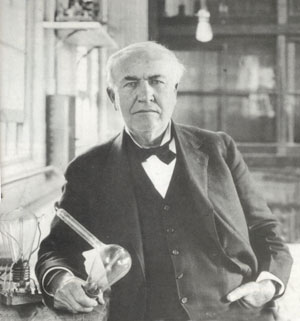
As for the wizard of menlo park, would you rather have him at the age of 15, or at the age of 85? Your choice.
But I thought that less people was good for the world, right you lefties?
But why is that the choice? Why not 75? or 65?
Like I said, exceptions. Can older people be creative? Sure. But the odds that you will get a man or woman over 65 founding a Fortune 500 company are lower than getting a GM without a union.
“I think he would be more useful even at 85. Except he was dead then (he died age 84).
But why is that the choice? Why not 75? or 65?”
Why would you choose only 20 years of the work of the Wizard of Menlo Park, rather than his entire lifespan? That’s the point I’m trying to drive home.
But someone who has been an inventor will continue, absent intervention like a serious accident or disease, to invent for his whole life. It's like writers or musicians - they have to; it drives them.
So you can't say that they're "worth less" at 65 or 85 than at 15. They are valuable for their entire lives - and they are rare. And you can't predict at age 15 WHO these people are going to be - they have to develop themselves.
So the answer is, we cannot know. That is why all life is to be treasured and defended.
Immigration simply would not work in Japan, unless immigrants were willing to be a lesser, barely tolerated grade of citizen.
Disclaimer: Opinions posted on Free Republic are those of the individual posters and do not necessarily represent the opinion of Free Republic or its management. All materials posted herein are protected by copyright law and the exemption for fair use of copyrighted works.