

Posted on 07/19/2008 11:19:42 AM PDT by sukhoi-30mki
FARNBOROUGH 2008: Why the Eagle stays near the top perch
More than a quarter-of-a-century after it first flew and 24 years after its first Farnborough appearance, the F-15 Eagle is still sitting near the top of the fighter tree. Still in service with the USAF and continuing to play a vital front-line role with the air forces of Israel, Japan, Saudi Arabia and South Korea, the F-15 is winning orders in competition with newer fighters.
Boeing remains confident of future sales and is convinced it can keep its production line open. It says the F-15 offers a range and payload advantage that is “unsurpassed by any other tactical aircraft”, and is offering it in markets where the shorter-range F/A-18E/F Super Hornet may be deemed unsuitable.
The type remains in production for both South Korea and Singapore at a rate of 12 aircraft in 2010 and 15 in 2011, and these orders will keep the St Louis line ‘hot’ until the third quarter of 2012. Boeing needs a new order by next year if a production gap is to be avoided.
The F-15K Slam Eagle developed for Korea is viewed by Boeing as being the first of a new generation of Advanced F-15 variants, which combine the latest upgrades from USAF F-15C fighters and F-15E Strike Eagle variants in a single airframe. These aircraft also have the JHMCS helmet sight and AIM-9X missiles. Although the aircraft uses the original mechanically scanned AN/APG-63(V)1 radar this incorporates all of the AN/APG-70’s air-to-air and air-to-ground modes and adds new air-to-ground capabilities.
Korea has already added an extra 21 Pratt and Whitney-engined F-15Ks to its original order for 40 GE-powered jets, and has an outstanding requirement for up to 60 more fighters.
A version of the F-15E has been proposed to satisfy Japan's F-X requirement. Japan already has 200 F-15C/Ds in service and Boeing believes that its F-15FX proposal is well-placed, promising to fulfil Japanese aspirations for local manufacturing with an open architecture avionics system that will allow the integration of indigenous equipment, and with an AESA radar based on that of the F-15SG.
I have some of the first refueling pictures, I took in 1975 or 6 when they in the testing phase I’d have to hunt my old flying records.


It was always easier to work the engines in a 15 than in a 16, especially the first F100 series engines. The BUC on the 100-200 was a pain in the butt to rig and work with.
Thanks for posting about the F-15.
Great shot of my ole’ girl, the F-100D! That was the one they were showing inverted before the accident.....Memories.
Thanks for the link, great story.
I wonder, if the pilot had known he was missing a wing, they would have punched out. It is also a miracle he didn't catch fire.
I dunno about the independent horizontal stabs. If you watch the video again, you’ll know if the pilot knew his right hand wing was severed. It didn’t catch fire because it wasn’t hit by a stinger missile that blew up a center fuel tank of a 747. ;-)
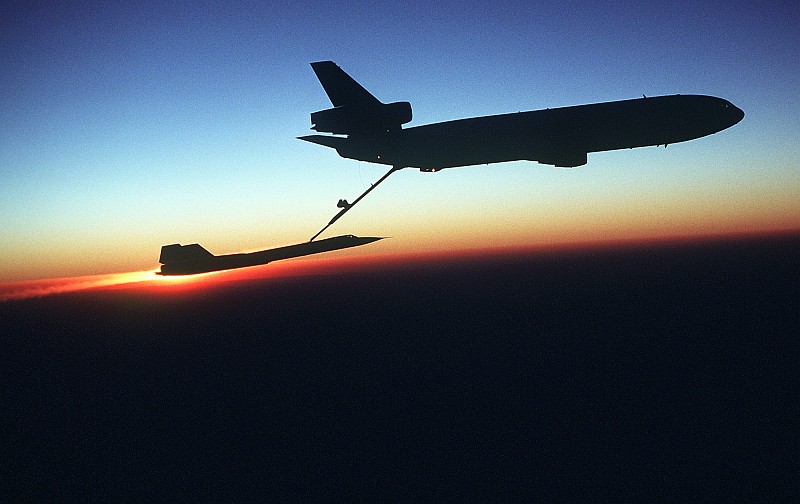
They used the KC-135Q, we had the JP-7 in separate tanks, I don’t know if the KC-10 was ever used I was long retired when if came along.
I watched the link and the pilot said he would have if he had known.
I watched the video, and missed that. Thanks.
Kool pictures, it’s a 10 alright, I was way retired then, besides I switched jobs and the last few years was PMEL lab chief.
Disclaimer: Opinions posted on Free Republic are those of the individual posters and do not necessarily represent the opinion of Free Republic or its management. All materials posted herein are protected by copyright law and the exemption for fair use of copyrighted works.