Posted on 01/31/2008 4:46:53 PM PST by SJackson
Forty years ago today the North Vietnamese and Vietcong launched the general offensive/general uprising, known to history as the Tet Offensive after the Vietnamese new year’s holiday during which it began. It was a last-ditch attempt at a quick win in a war the Communists knew they were losing. They thought that a series of attacks in South Vietnam’s urban centers would spark a civil uprising against the regime in Saigon, and the people would join them at the barricades. But within days it was clear the offensive had failed, and the general uprising was not forthcoming. By the end of the operation the NVA and VC had lost upwards of 45,000 killed, inflicting less than 4,500 losses on U.S. and South Vietnamese forces. Yet Tet was a great embarrassment to the United States, and many saw it as a defeat.
There has been resurgent interest in Tet in recent years, given the war in Iraq and the propensity to debate policy by way of analogy. We periodically see articles anticipating, predicting, even proclaiming another Tet, either as a cautionary tale or because some would like to see history repeat.
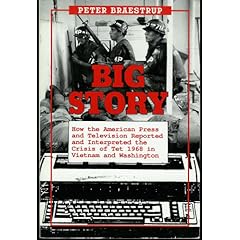
Tet is commonly viewed as a watershed event in the war, the critical turning point when the American public, frustrated over having been misled about the progress of the conflict, finally abandoned Johnson. The president summed it up himself after watching Walter Cronkite’s report from the battered city of Hue declaring the war unwinnable. “If I’ve lost Cronkite,” he said, “I’ve lost Middle America.” Other influential voices in the media joined in the chorus. Political opportunists — the “hawks who turned dove in mid-flight” to use John P. Roche’s memorable phrase — piled on. A month later a disheartened Johnson suspended bombing over 90 percent of North Vietnam and declared his intention not to seek his party’s nomination, as a means of showing Hanoi he sincerely wanted peace. Thus a decisive military victory was turned into a political defeat.
Most of that story line is true, but Tet was not the point at which Johnson lost Middle America. In fact the public had abandoned LBJ over a year earlier. According to Gallup the crossover point where more Americans opposed Johnson’s handling of the war than supported it was December 1966. By August of 1967 he could only muster a 27-percent approval rating as a war leader. This number rose somewhat before Tet — up to 39 percent in January 1968 — but the “collapse” recorded in the Gallup poll the week after the battle was only four points.
Americans grew discouraged with Johnson because his administration was not trying to win. Defense Secretary McNamara was pursuing an esoteric limited-war strategy intended to bring about a negotiated settlement that enshrined the status quo. But Americans understand war as a “win or lose” proposition, preferably “win.” We had not sacrificed over 16,000 Americans by the beginning of 1968 to achieve a draw. And a hard-line Leninist like Ho Chi Minh viewed negotiations as simply a good time to reload.
But disapproval of Johnson’s handling of the war did not mean opposition to the war effort per se. At the low point of LBJ’s public support, only 32 percent of the American people wanted to withdraw from South Vietnam; 50 percent wanted to escalate, to seek not a tie but a win.
Most Americans wanted Johnson to be tougher. This was true even among the youth. According to Gallup, in May 1967 Hawks outnumbered Doves on college campuses 49 percent to 35 percent. But wait, wasn’t 1967 the Summer of Love, Flower Power, Abby Hoffman, and the Yippies trying to levitate the Pentagon? Yes, but that stuff played better in the media than the kinds of things the young Hawks were into. You don’t win any prizes for photos of kids studying and getting haircuts.
The immediate impact of Tet was to make America even more bellicose. Gallup data showed that the percentage of self-described Hawks in the general population rose from 52 percent in December 1967 to 60 percent in the immediate wake of the battle. The corresponding percentage of Doves dropped from 35 percent to 24 percent. A contemporaneous Harris survey also showed strong support for a vigorous response to the communist attack.
The problem was not Middle America, it was Lyndon Johnson. Instead of responding to the communists’ desperation attack with renewed vigor — instead of taking advantage of a severely weakened enemy by imposing terms through massive conventional retaliation — Johnson essentially folded. Westmoreland’s request for reinforcements was denied, the bombing campaign in the North was radically scaled back, and Hanoi was so stunned by the turn of events it thought Johnson was attempting some kind of trick.
The North Vietnamese claim that they had meant to target the American political system all along. A 40th-anniversary article claims that the Communists sought to influence not only the 1968 election but 1964 and 1972 as well. (Considering that two of those were incumbent landslides they did very poorly.) But General Vo Nguyen Giap, who commanded the North Vietnamese forces during Tet, recently called the “flawed” offensive “yet another costly lesson paid for in blood and bone.” They may have won but definitely not in the way they intended.
Ironically the notion that Tet was intended as a symbolic attack originated with our own policymakers. This idea was in Johnson administration talking points from day one. Since it was self-evidently absurd that the Communists were hoping to win — because, really, how could they? — they had to be aiming for something else. Johnson was mirror-imaging; U.S. combat actions were intended to “send a message,” so we assumed the enemy’s were too. Thus by downgrading Communist objectives to something attainable, Johnson helped them attain it. High-profile but hopeless attacks, such as that on the U.S. embassy in Saigon, set the wheels in motion, and press coverage did the rest.
The legacy of Tet from the point of view of our adversaries is that it is possible to defeat the United States by targeting its political will. But they cannot hope to achieve this when our country has strong leadership. When crises erupt people will rally behind a forceful leader. This is the relevance of Tet in this election year. From the standpoint of national security, it is critical to elect a president with the dynamism, charisma, and ineffable personal qualities that make a great leader. It is not something found in bulging briefing books or clever talking points. It resides in the content of one's character. As a voter, you know it in your gut. This one won’t let us down. This one will fight. This one will win.
— James S. Robbins is the director of the Intelligence Center at Trinity Washington University, and author of a forthcoming book on the Tet Offensive.
Today is the 50th anniversary of Explorer 1, the first USA satellite, and it is still up there somewhere.

Thanks to that probe, we learned abit about the Van Allen Radiation Belts.
General Giap counted the Western media as his greatest ally outside the USSR and PRC.
IF my memory is correct many New Hampshire voters voted for Gene McCarthy because they thought he was a hawk rather than a dove.
It was only ten years from Explorer 1 to Tet. Something to ponder, or not.
40th anniversary of Tet Offensive marked
Army Times
http://www.armytimes.com/news/2008/01/army_history_080131w/
By Fred L. Borch and Robert F. Dorr - Special to the Times
Posted : Thursday Jan 31, 2008 10:42:42 EST
Just over 40 years ago, on Jan. 30, 1968, the North Vietnamese and Viet Cong launched a series of widespread and coordinated attacks against U.S. and allied forces in South Vietnam.
The assault coincided with Tet, the beginning of the lunar year and an important holiday in Vietnam. Although U.S. and South Vietnamese troops held fast against the attacks and inflicted massive casualties, what amounted to a military victory on the battlefield became, in some respects, a defeat for U.S. political goals. Public opinion in the U.S., already beginning to turn against the war, looked at Tet as evidence that U.S. participation in Vietnam was too costly.
The intent of the North Vietnamese and their Viet Cong allies was to crush the Army of (South) Vietnam, the ARVN, and trigger a popular uprising among the civilian population against the South Vietnamese government. To achieve these goals, the enemy attacked five major cities, 36 provincial capitals and 64 district capitals. Additionally, they attacked numerous hamlets and the Tan Son Nhut Air Base near Saigon. Finally, in an attempt to deliver a decisive psychological blow, the enemy attacked — and penetrated — the U.S. Embassy in Saigon.
U.S. troops at Tan Son Nhut withstood the attack but did so in an extraordinary reversal of roles: Most of the ground troops were Air Force and most of the air cover was provided by the Army.
The enemy had deceitfully agreed with the South Vietnamese to a cease-fire to celebrate Tet. Although U.S. military intelligence discerned that an attack might occur, the information was ignored for three reasons. First, the Americans believed that the enemy would not violate the cease-fire. Second, senior U.S. commanders did not think that the North Vietnamese and Viet Cong were capable of launching major combat operations. Third, the Army and Marines were preoccupied with the ongoing siege at Khe Sanh, which had started Jan. 21 and would last 77 days.
Although there was hard fighting, American and South Vietnamese forces quickly repelled enemy troops from the cities. The only exception was the ancient city of Hue, which was not liberated until Feb. 25. When U.S. and South Vietnamese finally retook that city, they discovered 5,800 civilians dead — many of whom had been brutally executed by the North Vietnamese and Viet Cong.
While enemy losses will never be known for certain, North Vietnamese and Viet Cong casualties are thought to have been about 52,000. American, South Korean, New Zealand and Australian forces had about 6,300 killed and some 20,000 wounded in action. The South Vietnamese had about 11,600 casualties.
There is no doubt that Tet was a decisive military defeat for the North Vietnamese and Viet Cong. But, as President Lyndon B. Johnson had been insisting in public statements that the enemy was incapable of launching major attacks, Tet had a far-reaching impact on both the Johnson administration and American public opinion. After Tet, more and more Americans turned against the war and Johnson refused to increase the troop levels sought by Gen. William C. Westmoreland at Military Assistance Command, Vietnam. Most historians believe that Tet played a significant role in Johnson’s March 31 announcement on national television that there would be a partial bombing halt and that he would not seek re-election in November 1968.
———
Fred L. Borch retired from the Army after 25 years and is now working as the Regimental historian for the Army JAG Corps. He is the author of “The Silver Star,” a history of America’s third highest award for combat heroism. His email address is borchfj@aol.com. Robert F. Dorr, an Air Force veteran, lives in Oakton, Va. He is the author of “Air Combat,” a history of fighter pilots. His e-mail address is robert.f.dorr@cox.net.
Not a bad article...However, I will never forgive Cronkite for his leading role in turning the typically superficial majority of Americans’ thoughts to giving up while they were chewing on their hamburgers getting the only dose of “political insight” they were capable of accessing.
Cronkite bears some responsibility for the our pull-out, the later collapse of the South, and the horros that followed. He was and is a lying sack of ****.
horros = horrors
bump
He should include Democrats in Congress as well!
“What we still don’t understand is why you Americans stopped the bombing of Hanoi. You had us on the ropes. If you had pressed us a little harder, just for another day or two, we were ready to surrender! It was the same at the battles of TET. You defeated us! We knew it, and we thought you knew it. But we were elated to notice your media was definitely helping us. They were causing more disruption in America than we could in the battlefields. We were ready to surrender. You had won!”
General Vo Nguyen Giap in his memoirs
LBJ — so tough on his political enemies, so weak on our nation’s enemies. The more things change . . .
Great read.
Disclaimer: Opinions posted on Free Republic are those of the individual posters and do not necessarily represent the opinion of Free Republic or its management. All materials posted herein are protected by copyright law and the exemption for fair use of copyrighted works.