 "This is a pretty seismic event," Lancet editor Dr. Richard , who was not involved in the research for the article. "It undermines the very purpose of WHO."
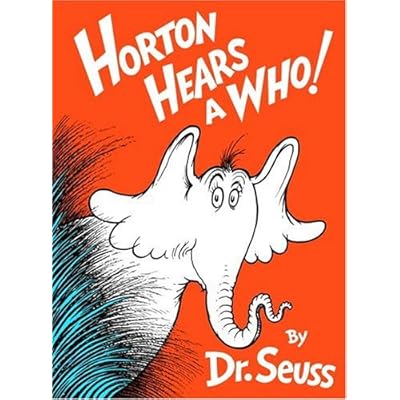
LOL! But nobody picked up on the (also obvious) Dr Seuss references?!
Posted on 05/09/2007 5:52:06 AM PDT by BufordP
| WHO's Director of Research Policy Dr. Tikki Pang said that some of his WHO colleagues were shocked by The Lancet's study, which found that the WHO is neglecting key evidence in its research, but he acknowledged the criticism had merit, and explained that time pressures and a lack of both information and money sometimes compromised WHO work.
When developing "evidence-based" guidelines, the World Health Organization routinely forgets one key ingredient: evidence. That is the verdict from a study published in The Lancet online Tuesday. The medical journal's criticism of WHO could shock many in the global health community, as one of WHO's main jobs is to produce guidelines on everything from fighting the spread of bird flu and malaria control to enacting anti-tobacco legislation. "This is a pretty seismic event," Lancet editor Dr. Richard Horton, who was not involved in the research for the article. "It undermines the very purpose of WHO." The study was conducted by Dr. Andrew Oxman and Dr. Atle Fretheim, of the Norwegian Knowledge Centre for Health Services, and Dr. John Lavis at McMaster University in Canada. They interviewed senior WHO officials and analyzed various guidelines to determine how they were produced. What they found was a distinctly non-transparent process. "It's difficult to judge how much confidence you can have in WHO guidelines if you're not told how they were developed," Oxman said. "In that case, you're left with blind trust." WHO issues about 200 sets of recommendations every year, acting as a public health arbiter to the global community by sifting through competing scientific theories and studies to put forth the best policies. WHO's Director of Research Policy Dr. Tikki Pang said that some of his WHO colleagues were shocked by The Lancet's study, but he acknowledged the criticism had merit, and explained that time pressures and a lack of both information and money sometimes compromised WHO work.
"We know our credibility is at stake," Pang said, "and we are now going to get our act together." WHO officials also noted that, in many cases, evidence simply did not exist. Data from developing countries are patchy at best, and in an outbreak, information changes as the crisis unfolds. To address the problem, they said, WHO is trying to develop new ways to collect information in poor regions, and has proposed establishing a committee to oversee the issuance of all health guidelines. The Lancet study -- conducted in 2003-04 through analyzing WHO guidelines and questioning WHO officials -- also found that the officials themselves were concerned about the agency's methods. One unnamed WHO director was quoted in the study as saying: "I would have liked to have had more evidence to base recommendations on." Another said: "We never had the evidence base well-documented." Pang said that, while some guidelines might be suspect and based on just a few expert opinions, others were developed under rigorous study and so were more reliable.
For example, WHO's recent advice on treating bird flu patients was developed under tight scrutiny. Oxman also noted that WHO had its own quality-control process. When its 1999 guidelines for treating high blood pressure were criticized for, among other things, recommending expensive drugs over cheaper options without proven benefit, the agency issued its "guidelines for writing guidelines," which led to a revision of its advice on hypertension.
"People are well-intended at WHO," Oxman said. "The problem is that good intentions and plausible theories aren't sufficient." It remains to be seen how WHO's 193 member countries will react to The Lancet study, released just before WHO's governing body -- the World Health Assembly -- meets next week at U.N. headquarters in Geneva to decide future health strategies. "If countries do not have confidence in the technical competence of WHO, then its very existence is called into question," said Horton, the journal's editor. "This study shows that there is a systemic problem within the organization, that it refuses to put science first." WHO Director-General Dr. Margaret Chan, who took over the position this year, will be under pressure to respond to the study's criticism. "We need a strong WHO," which in recent years "has seen its independence eroded and its trust diminished," Horton said. "Now is a fabulous opportunity for WHO to reinvent itself as the technical agency it was always meant to be." |
Just a minor problem. Nothing to worry about. Only a little non-science in the UN.
Again.
...and when they reach a conclusion that they don’t like, they bury it in the basement.
“If countries do not have confidence in the technical competence of WHO, then its very existence is called into question,” said Horton, the journal’s editor. “This study shows that there is a systemic problem within the organization, that it refuses to put science first.”
That deaf, dumb and blind kid, sure plays a mean pinball.
Let those who are stupid enough to put their trust in “peer review” resulting in “consensus” - (integrating truths and untruths in order to “move forward”) - take note.
Peer-review is only as competent, altruistic, and non-politically motivated as the “peers” doing the “reviewing”.
I'll take a shot--the judge at the Sandy Berger case?
Tikki, can you hear me?
Substitute MSM or Democratic Party for WHO and it relates the same truth. All that matters is "caring."
Whoever funds a study, whoever researches a study will figure out a way to get the results they want.
Whoever funds a study, whoever researches a study will figure out a way to get the results they want.
“Whooooo are you? Hoo hoo. Hoo hoo.”
I see a great career opportunity for Mike Nifong.
"This is a pretty seismic event," Lancet editor Dr. Richard , who was not involved in the research for the article. "It undermines the very purpose of WHO."LOL! But nobody picked up on the (also obvious) Dr Seuss references?!
Abbott: "First base."
Sadly this is only the tip of the iceberg. Look at the WHO’s treatment of Taiwan. The WHO has completely sold out its constitutionally-mandated goal of “health for all” by signing a secret memorandum of understanding with China giving Beijing the first right to refusal in any health matter concerning Taiwan.
WHO member states are just as blameworthy, as year after year they vote down Taiwan’s attempt to participate as an observer (a status already afforded the Knights of Malta, the Int’l Red Cross and the Palestinian Authority).
The worst of it is that Taiwan is no mere medical backwater; it has one of the best health care systems in the world and could do a lot to help the WHO track and contain potential pandemics.
I’m sure that was unintentional. Horton Hears a Who is a pro-life book.
“A person’s a person no matter how small.”
I hope the authors of this article have security protection now, after blowing the lid off of WHO pronouncements.
:) ...thought about Dr. Suess. Thanks for posting. More important than reading a WHO report.
The road to hell is paved with good intentions. I think that's why there are so many politically motivated "made up" crises, while so many real ones get ignored (because they aren't convenient to the agenda).
This is libs eating their own. WHO has done some good things in the past, but they seem to be stretching themselves way too thin, as well as taking on socialist viewpoints rather than sticking with nonpolitical public health (of which there is plenty).
But this is also an indictment of the whole “evidence-based medicine” field. They have an incredibly narrow view of what evidence is. Almost all evidence presented in a court of law would not meet their definition of evidence.
Disclaimer: Opinions posted on Free Republic are those of the individual posters and do not necessarily represent the opinion of Free Republic or its management. All materials posted herein are protected by copyright law and the exemption for fair use of copyrighted works.