
Click here: to donate by Credit Card
Or here: to donate by PayPal
Or by mail to: Free Republic, LLC - PO Box 9771 - Fresno, CA 93794
Thank you very much and God bless you.
Posted on 10/07/2026 8:30:08 PM PDT by nickcarraway
Ancient Greek papyri show that people used diagrams to solve and understand practical math problems nearly 2,000 years ago. A study led by Thomas Kelly finds that the drawings helped readers organize numbers, follow calculations, and check results. The research examines Greek mathematical papyri from Greco-Roman Egypt, mainly dating from the first four centuries A.D.
The texts contain practical geometry problems involving land, buildings, and three-dimensional objects. Unlike formal proofs, these problems usually provide measurements followed by steps for calculating an answer. They offer another view of mathematics in ancient Greece, showing how geometry could be applied to practical calculations.
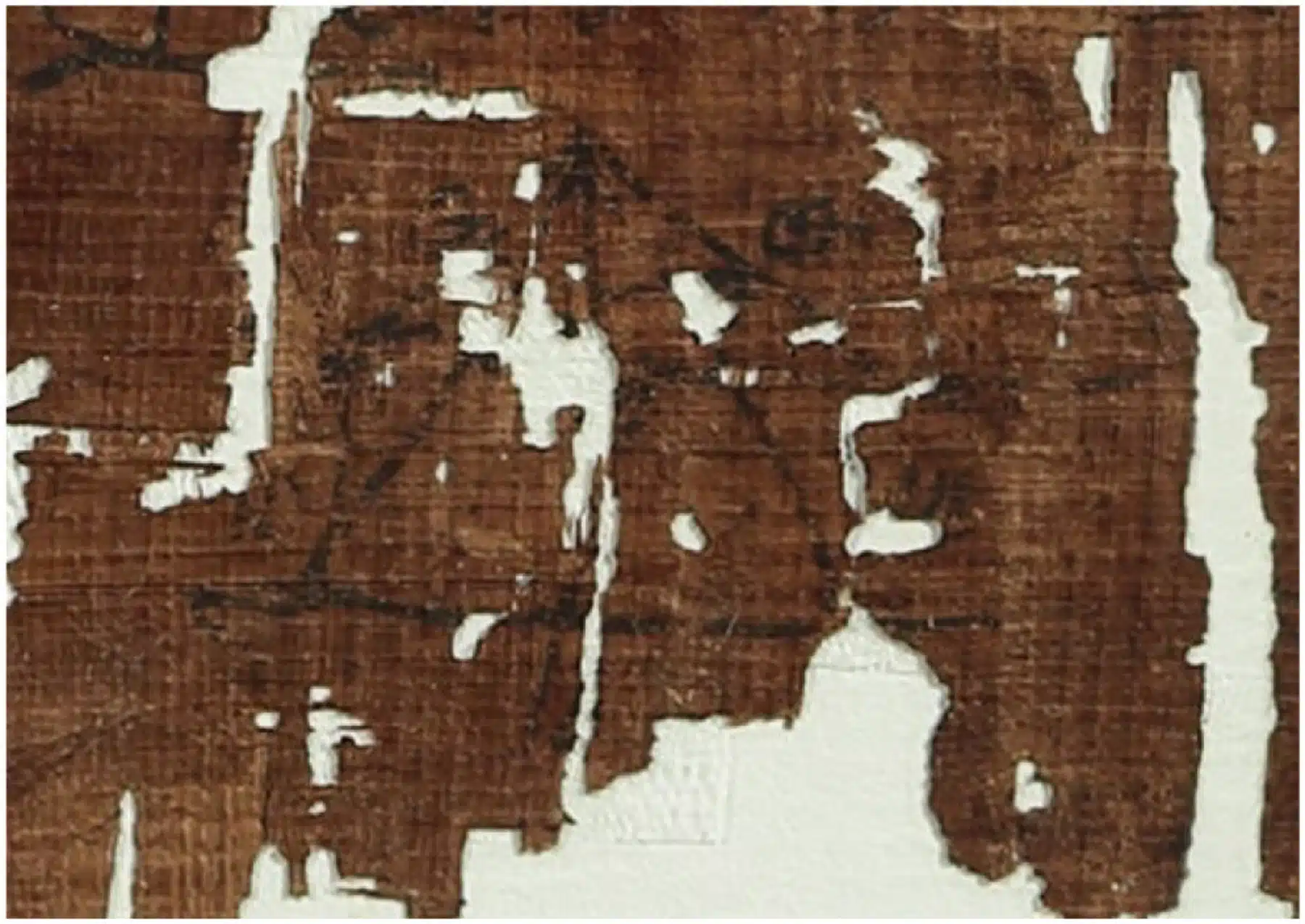
Diagrams served as mathematical tools Kelly examined diagrams preserved across 10 papyri containing Greek geometry problems. They depict triangles, circles, quadrilaterals and solid forms such as pyramids, cylinders and cuboids. Some drawings show measurements given in a problem. Others contain intermediate calculations or final results.
In more complex examples, the diagrams functioned as visual workspaces. Scribes placed numbers beside lines or inside sections of a shape, connecting each value to the part it described. This was particularly useful when complex shapes were divided into simpler ones. One problem, for example, breaks an irregular field into a rectangle and two triangles. Their areas could be calculated separately and then combined.
Accuracy was not always the priority The diagrams were often not drawn to scale. Scribes instead appear to have favored familiar representations of geometric shapes. Right triangles were commonly drawn with the right angle at the lower left and the base longer than the height. That pattern sometimes remained even when the measurements showed the triangle should have been taller than it was wide.
Grecian Delight supports Greece
The approach differs from the formal mathematical tradition associated with figures such as Euclid and the development of geometry. In the papyri, recognizing the type of shape could matter more than representing its proportions accurately. Papyrus itself created difficulties. Most lines appear to have been drawn freehand, while circles were apparently made without compasses. Some diagrams contain corrected or repeated lines, preserving traces of the drawing process.
Numbers turned drawings into working spaces The placement of labels followed recognizable patterns. Measurements of lines generally appeared outside a shape and close to the relevant side. Areas were often written inside figures. Final results could appear to the right. Some diagrams also contain intermediate numbers produced during calculations. Kelly suggests these markings may have served as memory aids, helping users keep track of several values while working through a problem.
In some papyri, the drawing was essential to understanding the calculation. Certain numerical information appeared in the diagram rather than the written instructions. One striking example comes from P. Bagnall 35. Its diagram appears between the statement of the problem and the calculation. The arrangement suggests readers were expected to understand the mathematical object through both words and images before moving to the solution.
Papyrus preserves ancient problem-solving Another example comes from a papyrus associated with Soknopaiou Nesos in Egypt and tentatively dated to the first or second century A.D. One problem explains how to calculate the area of a semicircle using measurements associated with land. A diagram shows the semicircle and its dimensions. Together, the text and drawing guide the reader through the calculation. Other discoveries of ancient Greek papyri preserved in Egypt have also provided rare direct evidence of Greek writing from antiquity.
The study suggests the diagrams were not simply illustrations added to mathematical texts. In some cases, they helped readers visualize a problem, track calculations, and verify the final answer. They could even show information that the written problem left unstated. In one case involving a right triangle, the diagram helps determine which of two possible numerical solutions should be used.
Kelly’s analysis therefore provides a closer look at practical mathematics in the ancient Greek world. The papyri show that diagrams formed part of the problem-solving process, combining words, numbers and images into a visual method for working through geometry nearly 2,000 years ago.
|
|
Click here: to donate by Credit Card Or here: to donate by PayPal Or by mail to: Free Republic, LLC - PO Box 9771 - Fresno, CA 93794 Thank you very much and God bless you. |
Disclaimer: Opinions posted on Free Republic are those of the individual posters and do not necessarily represent the opinion of Free Republic or its management. All materials posted herein are protected by copyright law and the exemption for fair use of copyrighted works.