
Posted on 10/06/2026 4:59:01 AM PDT by CharlesOConnell
So, admit it, you'd get a kick out of listening to "Little Duece Coup". Here it is.
1978, Wheatland CA, rice-fields country--driving on Hwy 99, you have to close your windows because of pesticides in the rice paddies-- north of Sacramento, south of Marysville-Yuba City; Hancock Gas Station.
(Hwy 99, Tule fog, "Death Alley", UC Davis Med Center Sacramento had the #1 trauma E.R. in the world in the late 1970s, until it was defunded, E.R. Surgeons as skilled as "battlefield" trauma surgeons in Beirut, Lebanon or Northern Ireland.)
I can't find a photo, but the station had a standard, baked-enamel gas station sign, about 8 x 5 feet, with octanes by car make.
Fine, except that on the right was octane 125 - crop dusters only use 100 octane. What?
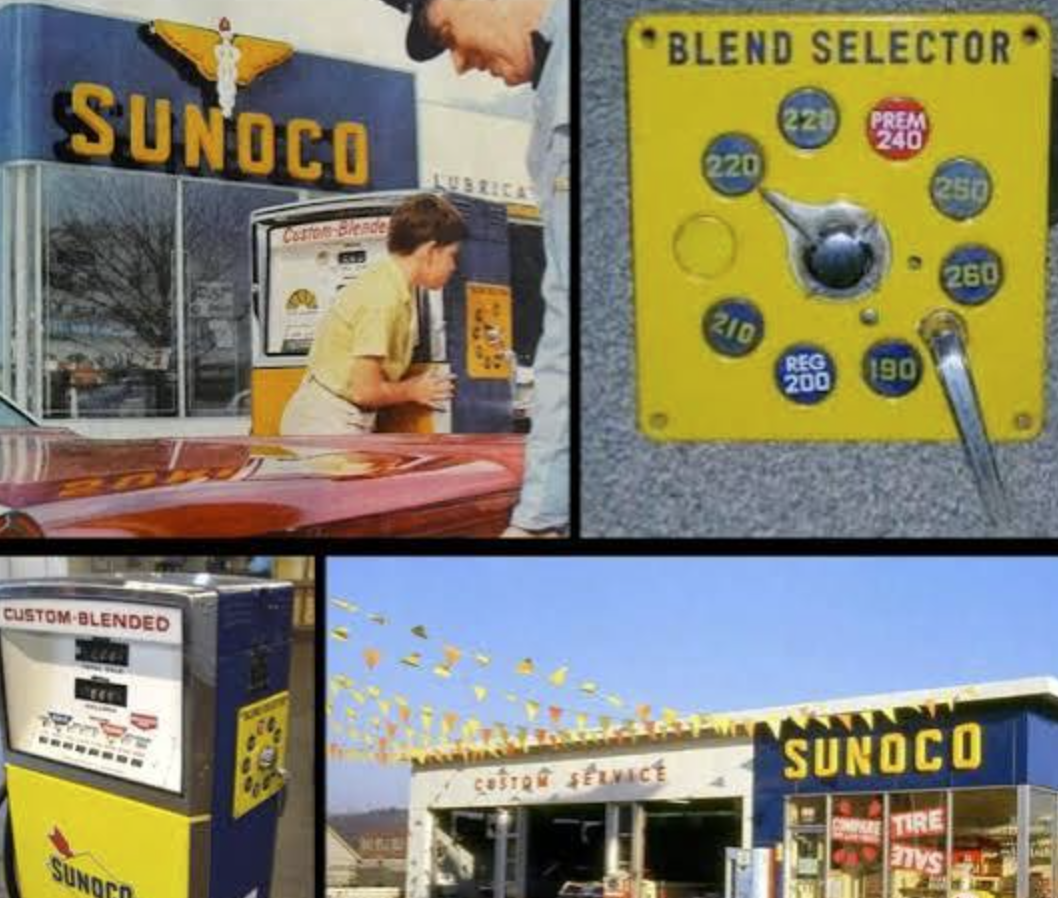
(A Sunoco display does show a pump with different fuel grades, though I don't know why they're 190-260.)
So, what's the "legal" explanation? See the first comment.
Jerry Reed: East Bound and Down (Smokey and the Bandit)
So, naturally, at 11:00 pm on a Saturday night, the station owner is posted out there with a shotgun asking, "son, what are you going to use that 125 octane for? A little crop dusting at night?"
Right.
Dierks Bentley - What Was I Thinkin'?
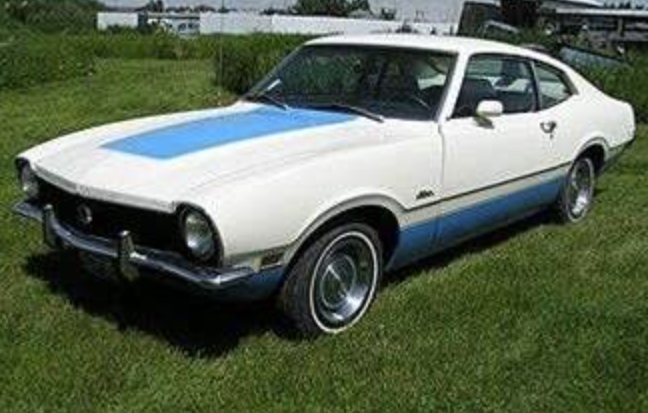
I had a little 1978, Pinto bigger brother, Maverick with a 302 ci (5.0L) Windsor V8. I was over 30, but something about it just brought out the kid in me. God got it away from me without my crashing.
Round, Round, Get Around, I Get Around
Steve Miller Band - Living in the U.S.A.

|
Click here: to donate by Credit Card Or here: to donate by PayPal Or by mail to: Free Republic, LLC - PO Box 9771 - Fresno, CA 93794 Thank you very much and God bless you. |
Q. What octane aviation fuel do crop dusters use?
A. Crop dusters (agricultural aircraft) use 100 octane aviation gasoline (Avgas 100 or Avgas 100LL) if they are powered by piston engines. However, many modern crop dusters run on a completely different fuel type altogether.
Because agricultural aircraft fall into two major engine categories, their fuel requirements depend entirely on the engine type:
1. Piston-Powered Crop Dusters (100 Octane)
Older or smaller agricultural planes—such as the classic Grumman Ag Cat or piston-engine Piper Pawnee models—utilize spark-ignition piston engines.
• The Fuel: They use Avgas 100LL (Low Lead), which is dyed blue, or Avgas 100, which is dyed green. Both possess an aviation lean octane rating of 100.
• Why High Octane? These aircraft require a high octane rating to prevent engine knocking (spontaneous detonation under high compression), allowing high-performance engines to safely pull heavy loads of chemicals or seeds during short, intense takeoffs.
2. Turbine-Powered Crop Dusters (Jet A / No Octane Rating)
The vast majority of large, modern high-production crop dusters—like the Air Tractor (e.g., AT-802) and Thrush Aircraft lines—do not use gasoline or octane-rated fuel at all.
• The Fuel: They are powered by turboprop engines (like the ubiquitous Pratt & Whitney Canada PT6A) and run on Jet A or Jet A-1 fuel.
• Why Jet Fuel? Jet fuel is a kerosene-based fuel. Because turbine engines rely on continuous combustion rather than spark-induced cycles, jet fuel does not have an "octane rating". Turbine engines offer significantly higher horsepower, better reliability, and greater payload capacity for intensive agricultural operations.
The octane rating of the fuel is specified with the grade, its rich mixture octane rating is 130 that allows high performance engineering... Show all
You said: Why would a Hancock gas station in Wheatland CA, rice paddy country, carry 125 octane fuel, as I saw it in 1978?
Why would a Hancock gas station in Wheatland CA, rice paddy country, carry 125 octane fuel, as I saw it in 1978?
The 125-octane fuel seen at a Hancock gas station in Wheatland, California in 1978 was not standard automotive fuel; it was almost certainly aviation gasoline (Avgas) or a specialized racing fuel blend targeted specifically at local agricultural operations and regional motor sports.
Independent, regional West Coast brands like Hancock (frequently featuring their famous "Cock of the Walk" rooster logo) often operated in rural farm towns and carved out a niche by offering specialized bulk and specialty fuels that major corporations didn't focus on.
There are three perfectly intersecting reasons why a station in Wheatland carried this specific fuel in 1978:
1. The Proximity to Crop Dusters (The Rice Paddy Connection)
Wheatland sits directly in California's Central Valley rice and agricultural country, heavily reliant on crop dusters.
• In the 1970s, older piston-engined crop dusters (like the Grumman Ag Cat or Stearman) were incredibly common.
• While standard Avgas 100/130 or 100LL was rated at 100 octane under "lean" cruise conditions, its "rich" mixture rating (used for high-power takeoffs with maximum payloads) was 130 octane. A 125-octane rating perfectly fits right into this high-grade aviation/piston fuel spectrum.
• Because local ag-pilots operated out of private, dirt, or rural farm strips rather than major airports, local independent gas stations frequently kept a dedicated pump or tank of aviation-grade fuel to fill up fuel tenders (trucks) driven out to the fields.
2. The 1970s Lead Phase-Out (Automotive vs. Off-Road Fuel)
The year 1978 was a volatile transitional period for fuel. The EPA began mandating the phase-out of leaded gasoline for highway vehicles in 1975, introducing catalytic converters.
• By 1978, standard premium gas at a regular automotive pump had dropped significantly in octane (down to about 91–93 octane).
• High-compression engines—common in older agricultural vehicles, heavy-duty farm trucks, and tractors—began to suffer from severe engine knocking on standard unleaded gas. Independent stations stepped in to sell leaded racing or aviation fuel "for off-road/farm use only" to local farmers trying to keep their older high-compression machinery running smoothly.
3. Regional Dirt Track Racing
The Yuba-Sutter and Sacramento area has always had a massive dirt track and sprint car racing culture (such as the nearby Marysville Raceway or the historical Sacramento Raceway). Independent stations in the valley frequently sold high-octane racing fuel at the pump to local racers who would haul their cars or fuel jugs to the station on Friday and Saturday nights.
Summary
The 125-octane fuel was a highly leaded, specialized blend. In a town like Wheatland, it served a dual purpose: fueling piston-engine crop dusters operating off local farm lanes and keeping the high-compression engines of local agricultural equipment and race cars running at a time when standard gas stations were being forced to drastically lower their octane ratings.
It was nice, but there is a short life and an eternal eternity.
Jesus Christ is your only hope.
Go To Heaven.
Diesel fuel is rated by cetane.
CC
Arguably Jimmy Doolittle’s biggest contribution to the war effort was not the bombing of Tokyo (which was a huge morale booster). Instead, it was his development of high-octane (100 vs. 87 in common use) aviation fuel in the prewar years. This had a huge impact on aircraft performance favorable to the USAAC vs. the Luftwaffe, and USN vs. Japan.
I think of 65 through Wheatland, 70 to the west and 99 further west and south. All the horsepower under the hood is worth nothing when you're crawling up 99 or 70 in the fog so thick you could only see one roadway stripe at a time.
And driving through the fog in the orchards where every so often you'd come up out of the fog on a small bridge over a levee, just to drop back down again for a few more miles until the next one.
Racing through the orchards near Wheatland was captured well in the 1974 film "Dirty Mary, Crazy Larry".


“Why High Octane? These aircraft require a high octane rating to prevent engine knocking (spontaneous detonation under high compression)”
True, but the underlying benefit of a high-compression engine is that it is more efficient. However it requires higher octane fuels, which burn smoothly rather than detonate at the higher compressions. Offsetting the engine’s higher efficiency is the higher cost of high-octane fuels, but the high-compression engines as used in aircraft allow for a smaller, lighter engine, which is worth the extra fuel cost.
The higher the octane the slower the gasoline burns.
High speed and horsepower engines require the spark to fire well in advance of top dead center. For this to be possible the “flame front” must slow down or the fuel burns so rapidly the pistons cock sideways in the cylinder on the compression causing an audible ‘ping’ . The tetraethyl lead additive allowed this slowing of the flame to happen. When the need to advance the spark exceeded the available fuel octane of 130 “water injection” was used to slow the flame even further. All this was engineered during WW2.
After the war the auto engine manufacturers took advantage of the technology to produce higher and higher horsepower engines. A side effect of the lead was the gray deposits on the exhaust valves and especially seats. The gray lead had the handy benefit of cushioning the closing exhaust valves which utilized enormous spring pressures to prevent “valve float” at high speeds. When taken away in the 70’s the valves started to bang their way into the cylinder heads.
And the first muscle car era died.
I have family all over that area - many ended up with COPD or other lung issues - I think from all the pesticides, particulates, smoke and stirred up dust. Several got “valley fever.” Only one of them smoked and he went down with lung cancer, probably exacerbated by the horrible air all throughout the valley.
I’ve been in that Tule Fog on the 99 - where you can’t see the end of the hood of the car. Best advice I heard is to get over as far to the right as you can, open the driver’s door and drive right along the line on the far right side of the road very slowly until you can exit the freeway - and if you’re caught up in a pile-up, do not exit your car.
“The higher the octane the slower the gasoline burns. ...”
Interesting stuff. I didn’t know much of what you tell us.
Were there ever valve mechanisms that used cam force to help close the valves?
Don’t piston aircraft engines still used leaded gas?
Cam force…not that I know of. Interesting idea. My guess is there is probably technology that does it nowadays …electric solenoids maybe? Formula 1 racers are cutting edge. Maybe there?
I’m retired now, spent my working life in several different areas of mechanical wonderment. Started out making my living as a FAA licensed ‘Airframe & Powerplant’ mechanic in 1971 just as they were about to take the lead out. All my instructors and subsequent superiors were from the days of great big round engines and great big V engines. WHAT STORIES!
Now I spend some of my time rebuilding antique flathead boat engines for others and myself.
Which can result in “burning” valves (they get spot-welded to the head). It’s why I had to ditch my 1972 Torino: it had 4 burnt valves. As it was just a bare-bones 4-door sedan, it wasn’t a huge loss. That led to me buying the ‘87 T-Bird that I still have.
Were there ever valve mechanisms that used cam force to help close the valves?
= = =
A desmodromic valve is a reciprocating engine poppet valve that is positively closed by a cam and leverage system, rather than by a more conventional spring.
Check Ducati motorcycles.
Disclaimer: Opinions posted on Free Republic are those of the individual posters and do not necessarily represent the opinion of Free Republic or its management. All materials posted herein are protected by copyright law and the exemption for fair use of copyrighted works.