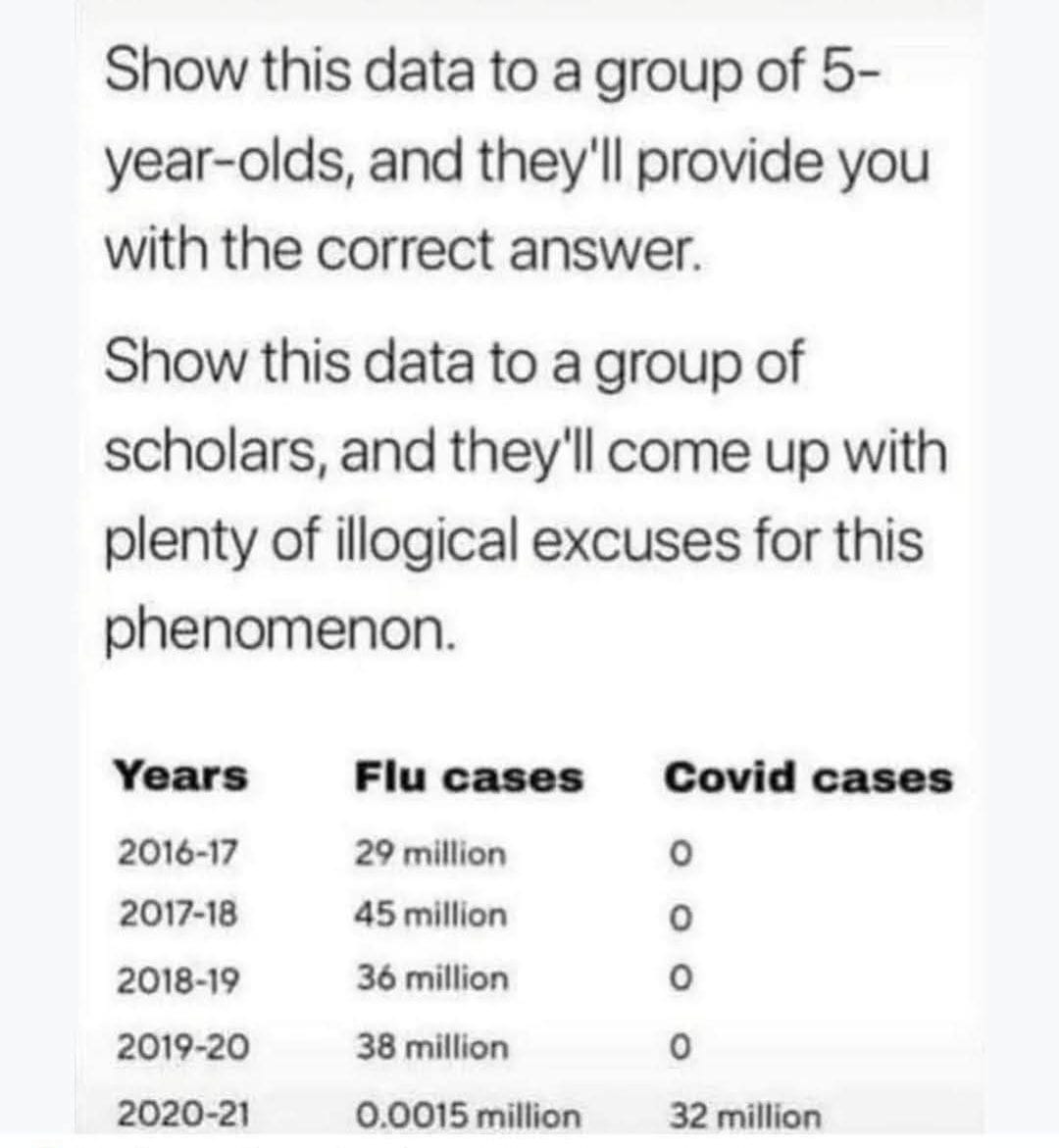
Yes, the magical COVID-1984, the first virus in history that beat Influenza - well, at least for a year or two.

Posted on 06/07/2026 8:47:14 PM PDT by SeekAndFind
The Black Death: A Global History. By Thomas Asbridge. Random House; 544 pages; $38. Allen Lane; 560 pages
The disease seems to have emerged in Asia. It soon reached Europe, ravaging Italy first. It killed millions, often quickly. Many people perished at home, or died within a few hours or days of receiving medical treatment. So large was the death toll and so great was the danger of contagion that funerary customs were disrupted. People fled cities. All this was true of covid-19. It was also true of the Black Death.
As Thomas Asbridge describes in detail, the medieval plague was much deadlier. Many towns and cities lost almost half their inhabitants in the first wave of the disease, in the mid-14th century; subsequent waves were smaller but nonetheless terrifying. In Damascus a poet observed that “The plague sat like a king on a throne.” One English village was hit so hard that it did not recover its pre-plague population until the 19th century.
Although medieval people were used to sudden death, the plague devastated them. “I am overwhelmed, I can’t go on,” wrote Gabriele de’ Mussis, an Italian chronicler who lived through the first wave. A Byzantine woman, seeming only half alive herself, stared at her sisters’ graves and wept. The Black Death spurred pogroms, as Christians claimed that Jews were spreading disease by poisoning the water supply (during the attacks they made sure to destroy records of debts they owed).
But the disease also changed society and art, frequently for the better. The most enjoyable sections of “The Black Death” describe how some people did well out of the pandemic. In Cairo, gravediggers raised their fees. There was a boom in religious art in Italy, because so many plague victims left money for paintings in their wills. Venetian citizenship became easier to obtain. In 1349, as the plague carried away English clergymen, a bishop advised that the dying could make their final confession to a layperson—“even to a woman”.
A pestilence that was assumed to have been sent by God disrupted and intensified religious life. Russians built timber churches in a single day to show their piety. A new group, the flagellants, publicly lashed their bodies with whips. Perhaps the pandemic encouraged anti-clericalism and even prepared the ground for Martin Luther, Mr Asbridge suggests. He does not push that point too far, which seems wise, given the 170-year gap between the outbreak of plague and the 95 theses.
“The Black Death” draws on a wide range of sources, from administrative records to wills and diaries. It contains many portraits of people who lived through the plague. Several of these portraits could be shorter—indeed, the book could be shorter, as it occasionally goes into numbing detail—but some are wonderful. Best of all is the description of Alexandre Yersin, a headstrong scientist who rushed to Hong Kong during a plague outbreak in 1894. He was the first to identify the bacterium, which is named after him: Yersinia pestis.
The book makes two big claims, and amply proves both of them. Mr Asbridge, a historian of the Crusades, shows that the plague affected the Islamic world at least as profoundly as Christian Europe. Cairo may have suffered more than any other city. Some Islamic scholars reiterated the orthodox view that the disease was not contagious and that people must not on any account flee infected places. Many Muslims seem to have ignored them. The Ottomans were especially pragmatic, which may help to explain how they increased their power and influence in the region.
Mr Asbridge’s second claim is subtler. Although medieval and early modern people harboured theories about the plague that strike modern readers as ignorant, they tried their best, he argues. The authorities made broadly sensible decisions. Physicians risked and often lost their lives treating plague victims. That their treatments were rarely effective does not diminish their bravery (and one expensive Italian remedy, theriac, helpfully contained opium). In London plague victims were buried in mass graves, but neatly, with their feet pointing east.
People dealt bravely with covid-19, too. Yet the authorities made decisions, especially about restricting personal freedoms, that now strike many as appalling. The vaccines that have saved many lives and have allowed normal life to resume have given rise to conspiracy theories. Dealing with a germ that is far less lethal than Y. pestis has been hard and contentious. Modern people should think before they use the word “medieval” as an insult. ■
“To compare that to the effects of Covid-19 is a monstrous deception.”
But if the Economist says it, don’t we have to believe it? They are sciency Yourapeons, you know.
“To compare that to the effects of Covid-19 is a monstrous deception.”
But if the Economist says it, don’t we have to believe it? They are sciency Yourapeons, you know.
There is no evidence that "millions of lives were saved by the vaccines".
And the COVID-19 treatment was not a vaccine. It was a supposedly temporary genetic modification using injected mRNA to produce toxic spike proteins that might create antibodies against COVID-19.
It did not actually work very well and had a lot of unexpected side effects.
There is plenty of evidence showing adverse results from the mRNA treatments.
In particular, the life insurance company actuaries spotted problems in the first year of COVID. The "all cause" death rates for persons accepting two or more treatments were substantially higher than persons who never took any mRNA treatments. The hazard was visible in age groups from 20-60.
That difference persists to this day.
Military wives who were instructed to take the mRNA treatments that were required for their husbands had six times the miscarriage rate compared to wives who refused the mRNA treatments.
And we have all hear the stories about turbo-cancers and myocarditis, and strokes, and premature menopause in young women. Governments do not want to fund studies that might show the correlation between these events and the mRNA treatments.
There is zero evidence that statement is true. The Jim Jones Jab manufacturers won't even make that claim.
It should be called Fauci's Fort Detrick Virus because that's where it was created and who ordered it. It was only sent over to Wuhan because the low-bidder klowns at Fort Detrick kept screwing up safety procedures.
Yes, the magical COVID-1984, the first virus in history that beat Influenza - well, at least for a year or two.
A doctor's mask and gown for treating plague victims:
.png)
Some re-creations:


flamberge wrote: “There is no evidence that “millions of lives were saved by the vaccines”.
Really?
Key Evidence from Large-Scale Cohort Studies
Four-Year Population Study (JAMA): A massive national cohort study published in JAMA Network Open tracked over 28 million individuals for nearly four years. The findings revealed that vaccinated individuals had a 25% lower risk of death from any cause and a 74% lower risk of death from severe COVID-19 compared to the unvaccinated.
European Registry Data (Norway): A 2026 study published in BMJ Public Health analyzed over 4.6 million individuals from 2021 through 2023. Across all analyzed age brackets, individuals who were fully vaccinated experienced lower unadjusted and adjusted all-cause mortality rates than those who had never been vaccinated.
U.S. Centers for Disease Control (CDC) Tracking: Data evaluating non-COVID mortality rates across multiple U.S. health systems found that individuals receiving two or more doses of mRNA vaccines had significantly lower Standardized Mortality Ratios (SMRs) for natural, non-COVID causes of death compared to their unvaccinated peers.
flamberge wrote: “And the COVID-19 treatment was not a vaccine. It was a supposedly temporary genetic modification using injected mRNA to produce toxic spike proteins that might create antibodies against COVID-19.”
It most certainly was a vaccine and it saved millions.
flamberge wrote: “In particular, the life insurance company actuaries spotted problems in the first year of COVID. The “all cause” death rates for persons accepting two or more treatments were substantially higher than persons who never took any mRNA treatments. The hazard was visible in age groups from 20-60.”
Death rates increased during a pandemic and you want to blame it the vaccines that reduced the death rates.
flamberge wrote: “Military wives who were instructed to take the mRNA treatments that were required for their husbands had six times the miscarriage rate compared to wives who refused the mRNA treatments.”
First of all show me the proof of that statement.
While the vaccine does not cause miscarriages, getting a COVID-19 infection during pregnancy does carry severe medical risks. Catching COVID-19 before or during the first trimester doubles to triples the risk of experiencing a miscarriage.
flamberge wrote: “And we have all hear the stories about turbo-cancers and myocarditis, and strokes, and premature menopause in young women. Governments do not want to fund studies that might show the correlation between these events and the mRNA treatments.”
Those studies have been funded, have been completed and have not shown the vaccines caused those things. BTW, ‘turbo cancer’ is a term created by anti-vaxxer propagandists. It’s not a medical definition.
T.B. Yoits wrote: “There is zero evidence that statement is true. The Jim Jones Jab manufacturers won’t even make that claim.”
Actually, Pfizer does claim the vaccines saved millions of lives.
Disclaimer: Opinions posted on Free Republic are those of the individual posters and do not necessarily represent the opinion of Free Republic or its management. All materials posted herein are protected by copyright law and the exemption for fair use of copyrighted works.