Posted on 04/25/2026 12:58:21 PM PDT by MtnClimber
In a democracy, citizens must have the right to express their frustration with those who govern them.
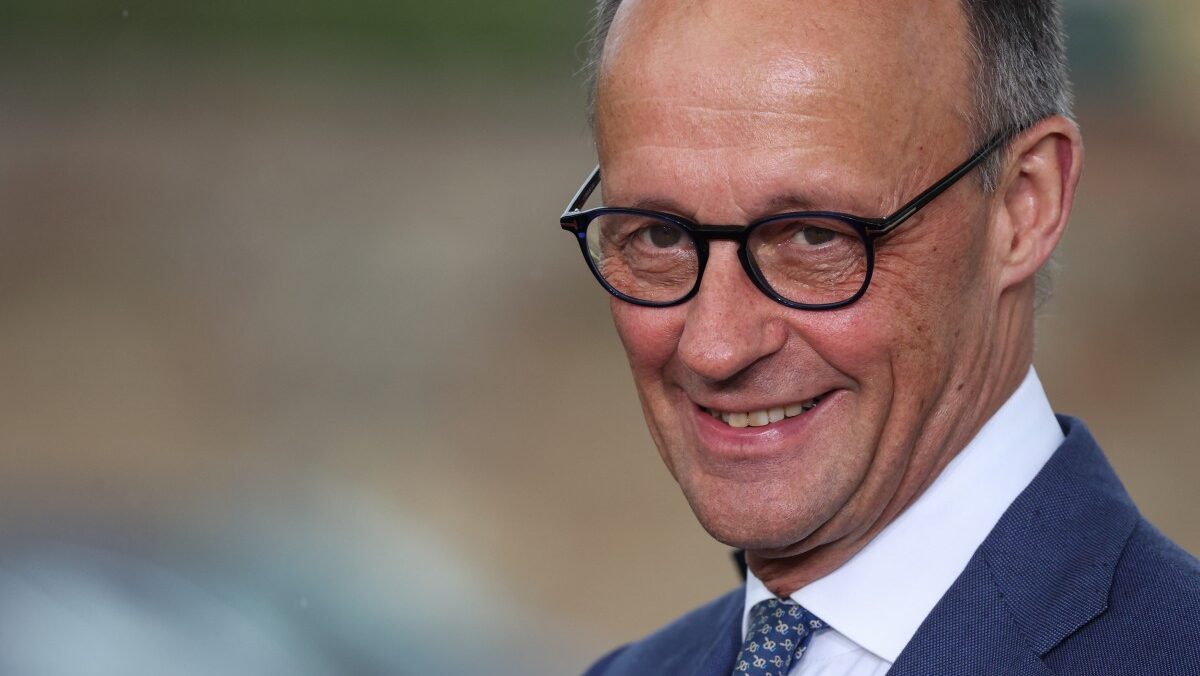
It’s not looking good for German Chancellor Friedrich Merz. Plagued by dismal approval ratings, he has also acquired a reputation for being thin-skinned, censorious, and authoritarian.
Last week, the Higher Administrative Court of Berlin-Brandenburg ordered Merz’s office—the Federal Chancellery—to disclose information on proceedings related to alleged insults against him, including which public prosecutor’s offices are investigating the cases and under which file numbers the proceedings are being conducted. In total, this involves approximately 300 cases.
The news caused a stir and has the potential to evolve into a full-blown scandal. Most importantly, it has put Germany’s repressive anti-free speech Paragraph 188 of the Penal Code back in the spotlight—something that anyone with an interest in free speech must welcome.
The law criminalises insults, defamation, and slander against public figures—i.e., politicians. The court ruling was set in motion, not least, by the now-famous case of pensioner Andreas Hüttner, who has become something of a free speech martyr after being placed under the scrutiny of the public prosecutor’s office—and facing a formal investigation—because he posted a picture of Merz as Pinocchio, complete with a long nose, on Facebook.
The proceedings were finally dropped in March of this year, but the ‘Pinocchio backlash,’ as the case might be called, has stuck as a symbol of Merz’s litigiousness against ordinary citizens. It has also helped expose as a farce our politicians’ justifications for Paragraph 188.
Passed by Parliament in 2021 with the support of a broad coalition of all established parties, the law was a consequence of the social upheavals that followed the refugee crisis of 2015. Its stated aim was to combat right-wing extremism and hate crime—it is, in fact, part of a broader legislative package to that effect. The penalties it imposes for “public insults” directed at political leaders that are “likely to significantly impede their public activities” are up to three years’ imprisonment or heavy fines.
Modelled on the Weimar Republic’s 1922 Law for the Protection of the Republic (Gesetz zum Schutz der Republik), its aggressive and defensive character was clear from the start. It was justified in part by the shocking 2019 murder of local politician Walter Lübcke (CDU), whose killing was compared to that of Jewish Foreign Minister Walther Rathenau in 1922. But the differences are stark: the Weimar era, unlike the late 2010s, had been soaked in violence and political murder in the aftermath of the First World War and a failed revolution. The state judiciary of that era was characterised by its unwillingness—or inability—to punish far-right violence. While Rathenau was murdered by a paramilitary group notorious for its aggressive antisemitism and closeness to high military circles, Lübcke’s killer is considered a lone perpetrator: an extremist, xenophobic oddball who had attracted attention for violent behaviour since childhood.
More than a symptom of distorted historical consciousness, the 2021 law reflects our parliamentarians’ indifference to—or outright rejection of—the principle of free speech. Rushed through parliament with the support of all established parties, it embodies the concept of ‘militant democracy’ that has defined German politics for years, a concept always rooted in a deep suspicion of free speech and of the power of ordinary citizens. The public sphere, so the story went, needed to be protected from a debilitating verbal toxicity—amplified by social media—that threatened to corrode democracy itself.
This narrative was accompanied by studies showing that local politicians in particular had come under increasing pressure (Lübcke, too, had been a local politician who faced criticism for defending the housing of asylum seekers in his area). But it soon became clear that the new law not only treats politicians as a protected caste; it is also a tool in the hands of the powerful to intimidate rebellious and angry citizens. Its slippery-slope character is easy to demonstrate, with the figures rising exponentially: according to police statistics, there were 4,792 charges in 2025, up from 4,500 in 2024, 2,600 in 2023, and 1,400 in 2022.
Only a handful of cases have made headlines, but those that have offer no less reason to doubt the law’s repressive nature than the Pinocchio case itself. Among the most prominent examples:
- Stefan Niehoff, a Bavarian pensioner who died aged 65 in February of this year, had his home raided in the early hours of a November 2024 morning and his computer confiscated—because he had shared a satirical meme, inspired by a well-known hair care brand, referring to then Federal Minister of Economics Robert Habeck (Green Party) as a “Professional Idiot.”
- A man was charged and sentenced to a fine of €2,250 in 2024 for shouting the words “bitch,” “Jew murderer,” and “child murderer” at Marie-Agnes Strack-Zimmermann—now an MEP for Renew Europe and former deputy leader of Germany’s liberal FDP. It has since emerged that Strack-Zimmermann filed an astonishing 1,900 charges between February 2023 and September 2024 alone. Among her other targets was a pensioner charged for an X post—with 25 followers—that read, “Strick-Strack-Zimmermann—that’s the grandma from the henhouse, the old warmongering sow!”
- In 2023, a man was charged after calling several members of the Bundestag “lobby whores” (Lobby Nutten) in two social media posts and referring to a female politician as an “arsehole Goebbels imitator” in another. In July 2025, he was finally acquitted in a high-profile third-instance court ruling.
Though many cases have ended in acquittal—while many others have not—the law has fostered a climate of repression and distrust. For those charged, court hearings have come with enormous financial costs and personal stress, with cases dragging on for months or even years. The fact that the accusation itself—often accompanied by the confiscation of mobile phones or computers—functions as a punishment in its own right was highlighted in a 2025 episode of the American CBS newsmagazine 60 Minutes, titled “Policing the Internet in Germany, Where Hate Speech and Insults Are a Crime.”
Paragraph 188 is unworthy of any free society. In a democracy, citizens must have the right to express their frustration with those who govern them. Attempts to suppress that frustration mean evading precisely the debates and struggles that demand political clarification—and that should therefore be seen as hallmarks of a healthy democracy, not threats to it.
The overtly authoritarian nature of Section 188, and scandals such as the Pinocchio backlash, have led at least a few prominent politicians—though arguably still far too few—to advocate for its repeal. Among them are Jens Spahn, head of the CDU/CSU’s joint parliamentary group in the Bundestag, and Wolfgang Kubicki, vice chairman of the FDP, a party desperately trying to reinvent itself after a series of devastating electoral defeats.
It is welcome news that two more significant voices are now calling for the abolition of this shameful paragraph. But we should harbour no illusions: the low regard in which the majority of parliamentarians from the established parties hold free speech was demonstrated once again in January of this year, when a proposal to abolish the paragraph—introduced by the right-populist AfD—was defeated, with 440 MPs voting against and 133 in favour. It is not only the cordon sanitaire that prevents these parliamentarians from voting with the AfD but their genuine conviction that they are fighting the ‘far right’ by censoring what they deem to be harmful speech.
The best hope of ridding Germany of this paragraph lies with its citizens—those who, like Hüttner, refuse to be intimidated. It is these citizens who must, and hopefully will, continue to stand up for the most basic right of any free society: the right of every person to say what they think.
Until the European citizens make the EU socialists “hurt” then it will not stop.
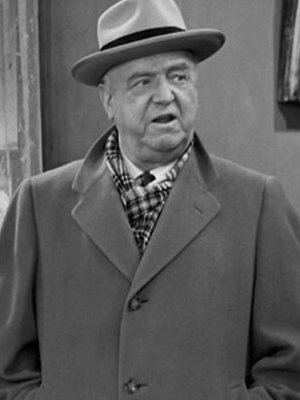
(I know. This might confuse anyone under 60.)
First thing that came to my mind! (I’m 73)
Regards,
How true.
Sadly, people in the previous German administration were just as easily offended (dear Mr. Habeck, I am looking at you…).
Disclaimer: Opinions posted on Free Republic are those of the individual posters and do not necessarily represent the opinion of Free Republic or its management. All materials posted herein are protected by copyright law and the exemption for fair use of copyrighted works.