Question to ChatGPT
There is a news report that the German government, through the Ministry of Construction, has just proposed a new bill that “would give municipalities the right of first refusal if a potential buyer of property has ‘anti-constitutional aspirations.’”
How does the right of first refusal relate to a long history of law and custom, through "the Trustee Family" concept in "Family and Civilization" of Carle Clark Zimmerman, back to the account in the Biblical Book of Ruth of property rights claimant Boaz, and how did this concept develop in the Code of Justinian, the Roman Twelve Tables of the Law and the Code of Hammurabi?
ChatGPT Response
A right of first refusal sits inside a very old legal idea: land is not merely a commodity, but a trust embedded in family, kin, and polity. In that older view, ownership is not absolute in the modern market sense. It is layered. A holder may possess and use land, but others — kin, co-heirs, neighbors, the city, the sovereign — may have a prior moral or legal claim to keep it from passing into alien hands.
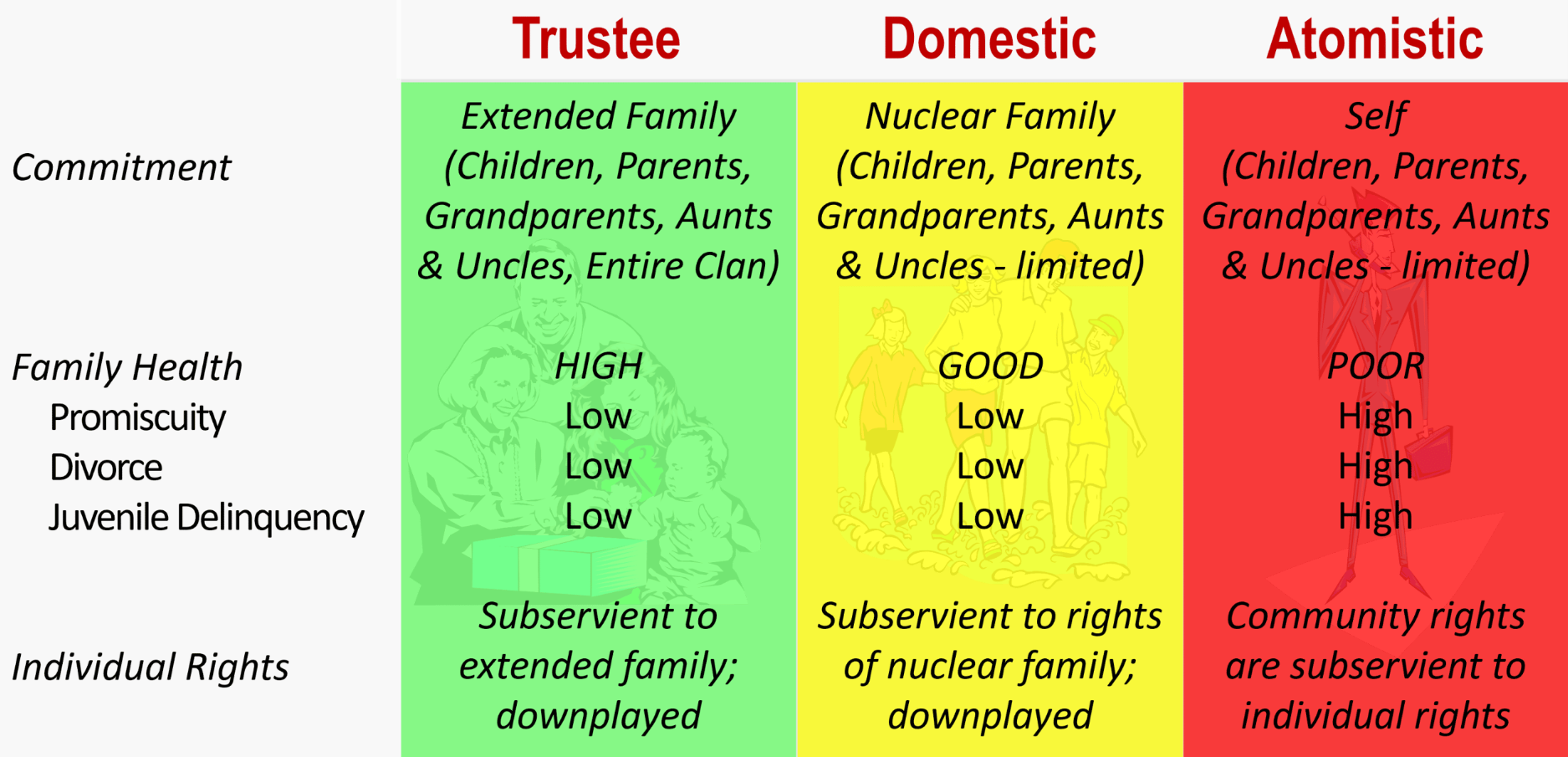
That is close to what Zimmerman was getting at with the “trustee family” idea in Family and Civilization: the family is not just a collection of consumers but a continuing corporate body, holding property across generations. In that framework, property is stewarded, not merely spent. A preemptive purchase right preserves the family line, household continuity, and the social order built around them. A right of first refusal is thus a market-era survival of a much older rule: before land leaves the moral community to which it belongs, those nearest to it get the first chance to reclaim or keep it.

That same logic appears in Ruth. Boaz is not just a bidder in an open market. He acts within a redemption structure: there is a nearer kinsman who has the prior claim, and only after that man declines does Boaz step in. The point is not free alienability; the point is that land and lineage are tied together, and a kinsman-redeemer has precedence. That is very close in spirit to later rights of preemption: the nearest legitimate claimant gets first option.
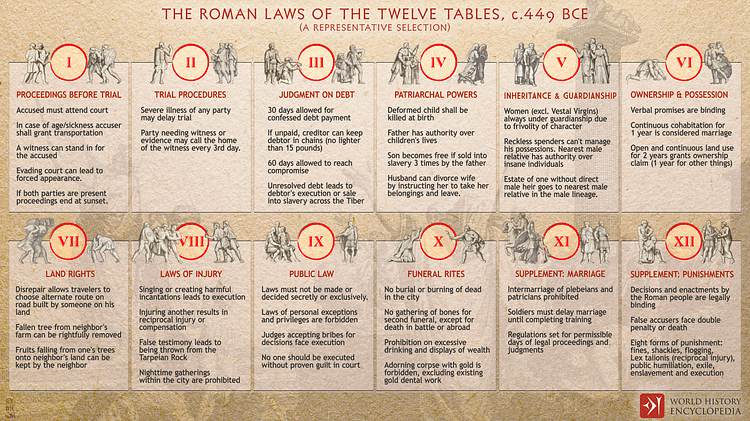
In the Roman world, the same broad instinct developed in more juristic form. The Twelve Tables were early and severe, but they already assumed that family property stood inside an agnatic order: household continuity mattered more than abstract individual autonomy. Roman law did not yet state a modern “right of first refusal” in those exact words, but it strongly tied inheritance, guardianship, and property transmission to the family line. Over time, especially in the later imperial and Byzantine tradition, Roman law became more explicit about preemption and redemption rights in co-ownership, emphyteusis, neighborhood relations, and family settlement. By the Justinianic period, the legal order had become much more systematic about ranking claims and preserving existing relational interests before sale to outsiders. The mature Roman tradition thus helped turn a customary kin-first instinct into a more technical legal doctrine.
In the Code of Hammurabi, the pattern is older and harsher, but familiar. Land, house, debt, marriage, and inheritance are treated as parts of a single household order. The code is deeply concerned with keeping patrimonial assets within the family and regulating transfer when distress, debt, widowhood, or orphanhood threaten the household. Again, one does not find the exact modern real-estate phrase, but one does find the same civilization-forming principle: property transfer is constrained by prior duties to family continuity and social rank.
So the long arc looks like this:
- Hammurabi: property exists inside household order and status obligations.
- Twelve Tables: family continuity and agnatic structure limit purely individual freedom over property.
- Justinian: these older instincts are refined into more technical doctrines of ranked claims, redemption, and preemption.
- Ruth/Boaz: the biblical version shows the same thing in narrative form — land is redeemed through kin before it can drift outward.
- Zimmerman’s trustee family: modern sociology restates the old rule as a civilizational principle — the family holds property in trust across generations.
So, in that light, a modern municipal right of first refusal is structurally similar, though not morally identical. It takes an old form — priority to an incumbent community claimant before transfer to a disfavored outsider — and transfers it from kinship and household to the state or municipality.
That is the crucial shift. Historically, preemption usually protected:
- family,
- lineage,
- co-heirs,
- neighbors,
- or a settled local order.
In the modern administrative state, the same legal mechanism can be repurposed to protect not the family trust, but the ideological trust of the regime. The form is ancient; the beneficiary has changed.