They sail past Dybbøl, the scene of the climactic battle of the Second Schleswig War in 1864, where Prussia defeated Denmark and annexed a whole new stretch of coastline.
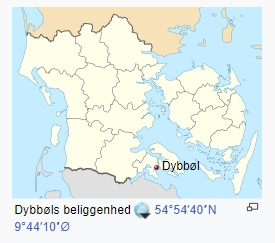
sounds unlikely, as Dybbøl is on the Baltic coast, not the North Sea coast.
Posted on 12/29/2024 6:22:20 AM PST by Twotone
Early on in The Riddle of the Sands, Erskine Childers' 1903 novel about espionage and conflict between the Great Powers, there's a moment that's either wildly prescient or a statement of simple, brutal facts. Carruthers, a minor employee in the British Foreign Office, has sought to escape London's late summer doldrums by accepting an invitation to join Davies, an old friend from Oxford, on a sailing expedition around the Frisian Islands, where the coasts of Germany and Denmark meet.
Used to wearing white flannel and blue blazers on luxurious pleasure yachts, Carruthers is shocked to discover that the Dulcibella, Davies' boat, is cramped and well-used, and that his eccentric friend expects him to put in some hard graft helping him crew it around the vast tidal mud flats behind the islands of Juist, Norderney and Borkum. They sail past Dybbøl, the scene of the climactic battle of the Second Schleswig War in 1864, where Prussia defeated Denmark and annexed a whole new stretch of coastline.
The war unified the German states into a single country that was now demanding respect from the rest of the world, and Davies for one is impressed.
"Germany's a thundering great nation," he tells Carruthers. "I wonder if we shall ever fight her." In just over a decade Davies would get his answer, after Childers' own novel had helped stoke the simmering geopolitical tension that would explode into global war in August of 1914.
Back in the distant days of 2019 when Mark undertook a serialization of Childers' only novel here, he wrote that "there was a sense in the air that sooner or later Europe would come to war. Did Britain appreciate the threat from Imperial Germany? No, thought Childers..."
(Excerpt) Read more at steynonline.com ...
Great read—I have it on my phone to read while flying.
You too have discovered the beauty of using Kindle on an iphone
They sail past Dybbøl, the scene of the climactic battle of the Second Schleswig War in 1864, where Prussia defeated Denmark and annexed a whole new stretch of coastline.
sounds unlikely, as Dybbøl is on the Baltic coast, not the North Sea coast.
Bkmk
I just use Apple Books.
WIKI
The first episode in the saga of German unification under Bismarck came with the Schleswig-Holstein Question. On 15 November 1863, Christian IX became king of Denmark and duke of Schleswig, Holstein, and Lauenburg, which the Danish king held in personal union. On 18 November 1863, he signed the Danish November Constitution which replaced The Law of Sjælland and The Law of Jutland, which meant the new constitution applied to the Duchy of Schleswig. The German Confederation saw this act as a violation of the London Protocol of 1852, which emphasized the status of the Kingdom of Denmark as distinct from the three independent duchies. The German Confederation could use the ethnicities of the area as a rallying cry: Holstein and Lauenburg were largely of German origin and spoke German in everyday life, while Schleswig had a significant Danish population and history. Diplomatic attempts to have the November Constitution repealed collapsed, and fighting began when Prussian and Austrian troops crossed the Eider river on 1 February 1864.
Initially, the Danes attempted to defend their country using an ancient earthen wall known as the Danevirke, but this proved futile. The Danes were no match for the combined Prussian and Austrian forces and their modern armaments. The needle gun, one of the first bolt action rifles to be used in conflict, aided the Prussians in both this war and the Austro-Prussian War two years later. The rifle enabled a Prussian soldier to fire five shots while lying prone, while its muzzle-loading counterpart could only fire one shot and had to be reloaded while standing. The Second Schleswig War resulted in victory for the combined armies of Prussia and Austria, and the two countries won control of Schleswig and Holstein in the concluding peace of Vienna, signed on 30 October 1864.
https://en.wikipedia.org/wiki/Unification_of_Germany
Thanks much for finding the exact quote! 👍🏻
I looked up a plot summary and they did indeed start out in the Baltic at Flensburg.
Disclaimer: Opinions posted on Free Republic are those of the individual posters and do not necessarily represent the opinion of Free Republic or its management. All materials posted herein are protected by copyright law and the exemption for fair use of copyrighted works.