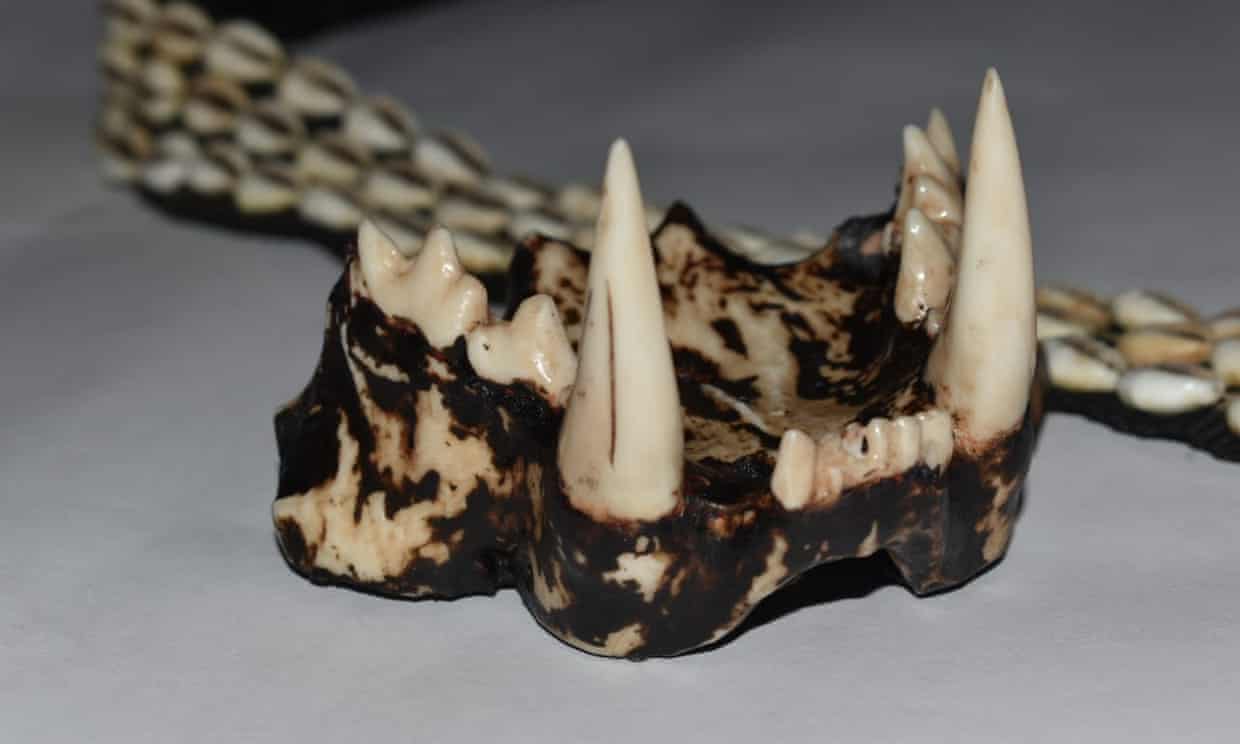
A 3D replica of a clouded leopard’s fangs. Machetes used by Arunachal Pradesh’s Nyishi tribe traditionally incorporate the animal’s jawbone. Photograph: Arunachal Ivory and Ornaments
Posted on 08/03/2023 6:45:27 AM PDT by SJackson
A 3D replica of a clouded leopard’s fangs. Machetes used by Arunachal Pradesh’s Nyishi tribe traditionally incorporate the animal’s jawbone. Photograph: Arunachal Ivory and Ornaments
In the lowland rainforests of Arunachal Pradesh in north-east India, tigers, clouded leopards, eagles and hornbills dot the landscape. The area is also home to the Nyishi community, the largest Indigenous tribe in the state, where the men traditionally don a byopa, an elaborate handwoven cane cap with the upper beak and casque of a great hornbill attached to the top edge, and an eagle’s claw at the back. They also wield a machete fitted either with the short, squat jaw of the clouded leopard or the much larger one of a tiger.
“The tiger rules the jungle. The eagle rules the sky. Wearing their parts implies inhabiting their mighty spirit, protecting the people. It’s a status symbol,” says Nabam Bapu, an entrepreneur from the Nyishi tribe based in the state’s Papum Pare district.
But hunting rare animals and wearing their body parts when wildlife numbers are declining in the state has always troubled Bapu. In January 2020, he teamed up with his friend Anang Tadar, a tech innovator, to provide an alternative to the traditional headgear by replicating the animal parts using a 3D printer.
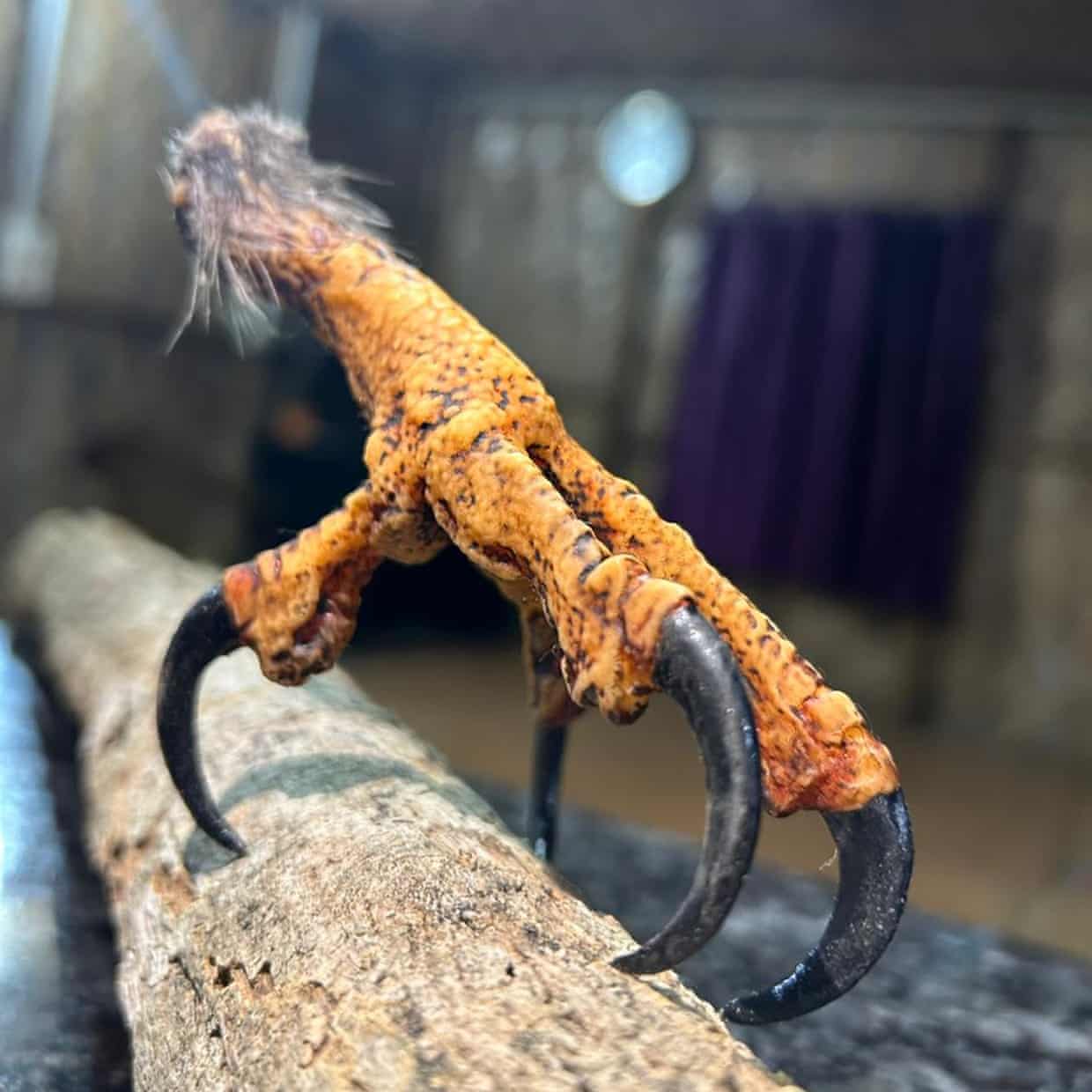
A replica of an eagle’s talons, a symbolic part of headgear traditionally worn by men in the Nyishi community. Photograph: Arunachal Ivory and Ornaments
“Not everyone can afford the wild animal parts. Can you imagine the price of tiger teeth on the black market? It’s in the range of 400,000 to 500,000 rupees [£3,800-£4,700],” says Bapu.

Arunachal Ivory and Ornaments’ technical consultant Anang Tadar (left), and the company’s founders, Likha Nana and Nabam Bapu.
(Excerpt) Read more at theguardian.com ...
This will make these items more accessible to poorer people. Then these items will become less of a status symbol, and the rich will find items that are even more rare to wear.
So this isn’t about dental work for nearly extinct tigers?
I suspect this won't deter true believers, but probably will create a market for trinkets.
You’re probably right.
Status is important to some, no matter which culture, but Asian cultures seem to be more extreme. I suspect you’re correct that something else more rare will be sought by the wealthy.
The backward people
Disclaimer: Opinions posted on Free Republic are those of the individual posters and do not necessarily represent the opinion of Free Republic or its management. All materials posted herein are protected by copyright law and the exemption for fair use of copyrighted works.