He died in the tragic Apollo 1 fire, along with Ed White and Roger Chaffee.
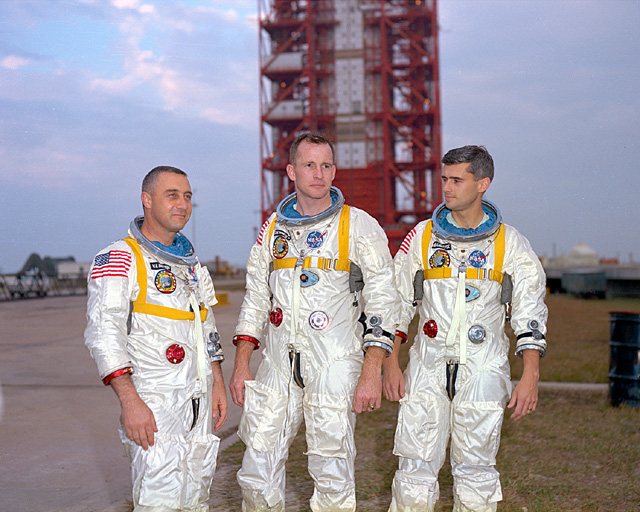
Real American Heroes.
“He played Gus Grissom in “The Right Stuff”. A great portrayal of somebody who knew he was being screwed over for something not his fault.” [M1903A1, post 24]
Col Gus Grissom’s Mercury capsule was fished out of the Atlantic in July 1999.
Analysis of the machinery and circuitry was inconclusive at that time.
Subsequent digital film enhancement and interpretation indicates static discharge from the recovery helicopter may have ignited the initiator for the explosive bolts on the hatch - before the helo could hook up.
The hatch jettison system on Mercury capsules were a last-minute modification are were not tested extensively. Grissom was present at the only ground test a short time before his suborbital flight.
System documentation is spotty in the archives. Best remaining data indicates fulminate of mercury was the initiating explosive. It’s notoriously unstable and very sensitive to electrical discharges. It was used in percussion caps and priming compounds, but was dropped from production of ammunition in the 1890s because it attacks brass.
Helicopters are notorious for building up static electrical charges. The possibility that electrical discharges during spacecraft recovery operations could pose risks was recognized early on and written about in NASA manuals.
Several authors have suggested that Grissom panicked and manually blew the hatch. Unlikely: at the time, he was the most experienced Air Force test pilot among the initial seven astronauts. He’d flown 100 combat missions during the Korean War, in the F-86.
https://airandspace.si.edu/stories/editorial/sinking-liberty-bell-7-gus-grissoms-near-fatal-mission
https://astronomy.com/news/2021/07/did-static-electricity-blow-the-hatch-of-liberty-bell-7
He died in the tragic Apollo 1 fire, along with Ed White and Roger Chaffee.
Real American Heroes.
Great post.
Every so often we use helicopters to haul gear into remote sites using a net and cable. EVERY day the pilot reminds us to let the cable touch the ground first to discharge the static before we touch it.