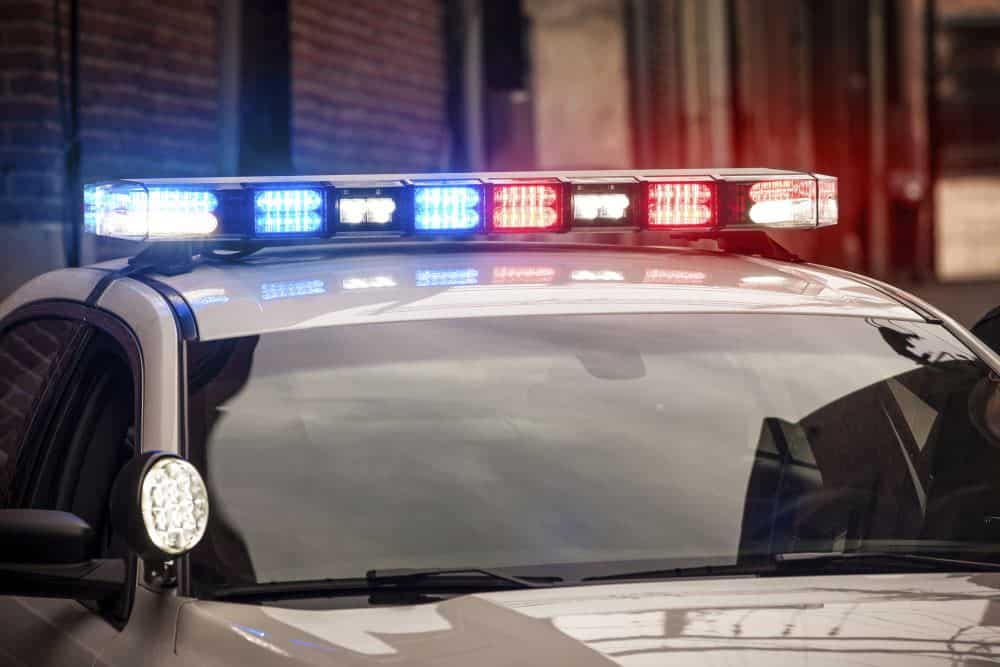
Posted on 07/01/2021 6:47:17 AM PDT by COBOL2Java
We all know carrying a concealed firearm in public doesn’t automatically make us criminals, but for a cop that is always on alert and prepared to deal with some of the most violent people on the earth, seeing a gun on a person will most likely make the cop more on guard. Depending on the officer and their experience, this instant shot of adrenaline at the sight of a firearm could potentially lead to some unpleasant interactions or incidents.
When you get pulled over for a traffic stop, it is best to always maintain courtesy and to stay level-headed. This applies to those who do not carry, but for us, it is even more important to keep our cool and work it so that our encounter with the police goes smoothly and without incident.
Here a few tips to help yourself have a good interaction with the police during a traffic stop:
No police officer wants to approach your window and immediately see your gun sitting on the passenger seat. The last thing you want to do is get the cop already on edge with you before they even take a look at your driver’s license. Make it a habit to keep your gun concealed (if allowed by your state laws) and in a safe place in your vehicle.
While it may not be against the law to get angry or even to curse at a police officer, it is still a foolish move. As it is stated when an officer reads a person’s Miranda rights: anything you say can and will be held against you in a court of law. So keep your words short, simple, and civil. Picking a verbal or physical fight with an officer will most likely be a waste of time, and may end up with you in handcuffs. Know your rights and if you are courteous and mindful, your chances of having a painless police interaction will multiply very quickly.
After pulling your vehicle to the side, it is wise to turn off the engine, turn off the radio or any music, and to lay both hands on the steering wheel before the officer approaches you. Other than when the officer requests your driver’s license and registration, it is a good idea to still keep your hands on the steering wheel. This allows the officer to see that you are not reaching for anything incriminating or for any weapon. If you need to reach for anything with your hands, tell the police beforehand so that they know where your hands are going and what you are doing. Do NOT touch a police officer, even jokingly or in a harmless way – the officer can interpret it very differently.
Have you noticed that many cops these days are quite young and less experienced compared to previous generations? This is not to say that these officers are incapable of fulfilling their public duty, but with inexperience there can be misinformation, including when it comes to CCW laws. As a carrier, it is your job to know what the law is in your state and county, not only as a personal responsibility, but also for protection. If a young rookie is unaware of the local CCW laws and you have a gun on you without any legislative backup to share, then you might find yourself in an uncomfortable situation with the police. This is not to say that you have to be bragging your CCW rights when the cop does not inquire or provoke you. It’s just following the good old saying: “knowledge is power”.
Finally, there’s the big question on whether or not to inform the police officer during a traffic stop on whether you have a concealed weapon on you. Many carriers will insist that you make absolutely no mention of it. Others will say it is a big help to let the police know beforehand. The best thing I ever heard is to only bring it up if the situation calls for it.
The best thing to do is hand over your concealed carry permit with your driver’s license. It lets the officer know that you are a concealed carrier. Some states actually require you to inform the police officer before he asks. Alaska, Arizona, Oklahoma, Nebraska, and a few others. Know if you’re in one of those states and know where your CCW permit has reciprocity. Texas requires that you hand over your concealed carry permit once the officer asks for identification. Georgia is (strangely) the only state that has absolutely no requirement. In general, most states would recommend you inform the officer at the first available moment but only a few actually require it. Nevertheless, if you have your concealed carry firearm on you – have your permit ready.
And along with all of these tips, always just try to be calm, civil and cooperative. If you feel that your CCW rights were violated, always remember to take down the officer’s name and badge number, and then file a complaint with the precinct later. Always know your rights, maintain common sense, and show that you are an educated, responsible gun owner and carrier.
Free advice to new CHL:
Do NOT rely upon the linked website (one glaring error begets many). Case in point, for Oregon it states “if asked”; this is patently wrong (at least THIS month; that could change quickly, and with recent legislation, on a jurisdiction basis, giving even MORE credence to my advice below).
I suggest using that map/site to go find similar resources in your state pursuant to your own unique laws as we have in Oregon, such as:
https://oregonchl.org/frequently-asked-questions/
https://www.oregonfirearms.org/faq
The other common sense advice is academic for most of ‘us’.
As far as I’m concerned, a cop doesn’t need to know that I have a gun unless he gives me a reason for him to be looking down the barrel. Hold your cards close.
That said, I would show my permit if asked, or when showing my normal ID. But I don’t think it’s right. It’s none of his business. Just like my MMA status is none of his business.
BTT
I ccw right side 4 o’clock and have wallet in left front cargo pocket.
I believe that is incorrect.
On 16 June, 2021, Governor Greg Abbott signed HB 1927, the Texas Constitutional Carry bill.
I would add: Don’t exit the vehicle until asked (ordered) as this tends to get them rather excited. Guy freaked and started yelling: “GET BACK IN THE CAR” when I opened the door to meet him at the back.
In years past, this was a common practice. Get pulled over, meet them at the back of the vehicle, exchange pleasantries, move along.
Now, you sit there hoping to leave alive. Strange world.
In years past, this was a common practice. Get pulled over, meet them at the back of the vehicle, exchange pleasantries, move along.
Now, you sit there hoping to leave alive. Strange world.
You're right, things have changed...
I know that this is getting old, but blacks didn’t start having “the conversation” with their kids because of police violence. Everybody, who was a responsible parent, had those conversations. The school used to teach it in drivers education.
And I got the conversation because I lived in East Texas and the Texas Rangers would put you in the ground if you looked at them wrong. We always kept our hands on the wheel, didn’t reach for license or insurance papers till they told us to. And if they asked if we had a gun, we told the truth.
Never had an issue with the cops and never thought I would, because respect went a long way.
I was shocked the first time I was pulled over in North Carolina after moving there. We have a requirement to notify the officer when stopped. I rolled the window down, and he asked me for my license and registration. I told him my firearm was in the center console with my papers. He said — and I kid you not — “I don’t care about that. Just your papers.”
I knew right then I wasn’t living in New Jersey any longer…
When he runs your plate if it is your car he will already know your status. It’s best to hand over your permit with your license so it does not look like you are trying to hide something
Polite words, with a calm, even, and friendly voice will almost always help in any situation. In a traffic stop, I hand over both my drivers license, and my CCW permit. Most of the older cops know that those of us who bother to go through the process are the good guys, and handing the CCW over will actually lower whatever tension may be present.
Last time I was stopped, the cop asked if I was currently armed, and I replied in the affirmative and added "otherwise what would be the point"? He laughed and made a comment that I wouldn't believe how many people have the card, but don't bother to carry. We chatted a bit about why he stopped me, (it was completely legit) and the encounter ended without a citation.
Ha, I was stopped in Arizona on a highway and the DPS officer asked if I had any weapons with me. My response was, “yes, of course I’m lawfully armed,” and he laughed so hard he almost fell over. Then we had a physics discussion about following too closely (someone cut me off and slammed on the brakes ahead of me when they saw the ) followed by a discussion about ticket quotas and how body cam and patrol car footage can be retrieved when contesting tickets and ultimately I ended up with a warning...
“I believe that is incorrect.
On 16 June, 2021, Governor Greg Abbott signed HB 1927, the Texas Constitutional Carry bill.”
HB 1927 doesn’t go into effect until 1 Sept. In TX, when an officer runs your plate, he’ll know if you have a LTC, and likely ask you if you have a firearm in your car when he first talks to you. He likely also knows if you have insurance in place.
General information, having worked with police over the years (and being stopped once), and having a boss that’s ex-Las Vegas PD:
Always best to have your LTC, your driver’s license and insurance card in your hand with your window rolled down, and BOTH hands on the top of the steering wheel when he gets to your window. If you have a passenger, they should put their hands on the dash during the stop. If it’s at night, turn on your interior light.
He’ll likely ask you if you have a firearm in the car. Best to tell him yes (or no) and where it is located, and that you’ll keep your hands in sight at all times.
Being pleasant and cooperative, regardless of what you think about being stopped, is better AND safer than being disagreeable, sullen and argumentative. Winning an argument with a cop during a traffic stop is a losing proposition.
Thanks for the thoughtful advice. I read that Sept. 1 thing about 5 minutes after I posted!
I noticed that.
Arizona law says that you must inform an officer IF you’re asked.
Also, if under 21, the weapon must be visible.
I told him my handgun was in an OWB holster on my left hip. He asked what it was. I told him, "Sig Sauer P239." His eyes lit up and he started talking about his Sig collection.
Then I told him about my Sigs.
Then he wrote me a ticket for speeding.
In Maryland, only the State Police have access to your Carry License data (called a Maryland Wear/Carry Handgun Permit [WCHP]). Local police don't have that on their computers.
One of my firearms instructors was pulled over by a County Cop (PG County). Maryland has no duty to inform, but he was asked. He presented his WCHP, and the cop looked at the card and said he never heard of such a thing. He politely asked the officer if he could please check with his superior, who informed the cop of his error. Took a while, but my instructor was able to drive off. He also told us to avoid being pulled over in PG County, LOL.
When I took my class, the instructor recommended that if asked if there is a gun in the vehicle to first respond that you’re a licensed conceal carry permit holder.
Agreed 100%
.
PoPo pulls me over
It’s My Job to make
Him feel “At Ease.”
I tried it The
Other way, not good.
Disclaimer: Opinions posted on Free Republic are those of the individual posters and do not necessarily represent the opinion of Free Republic or its management. All materials posted herein are protected by copyright law and the exemption for fair use of copyrighted works.